


I love playing in nature and want to enjoy it even more. These thoughts and ideas create new products and value. Today we introduce "Arumu Socks," a natural sock designed by mountain professionals to balance comfort and performance. After two years of planning and step-by-step trial and error, it has finally been released. What is the "thought" behind this product?
Professional Mountain Guide Ryuta Asahi
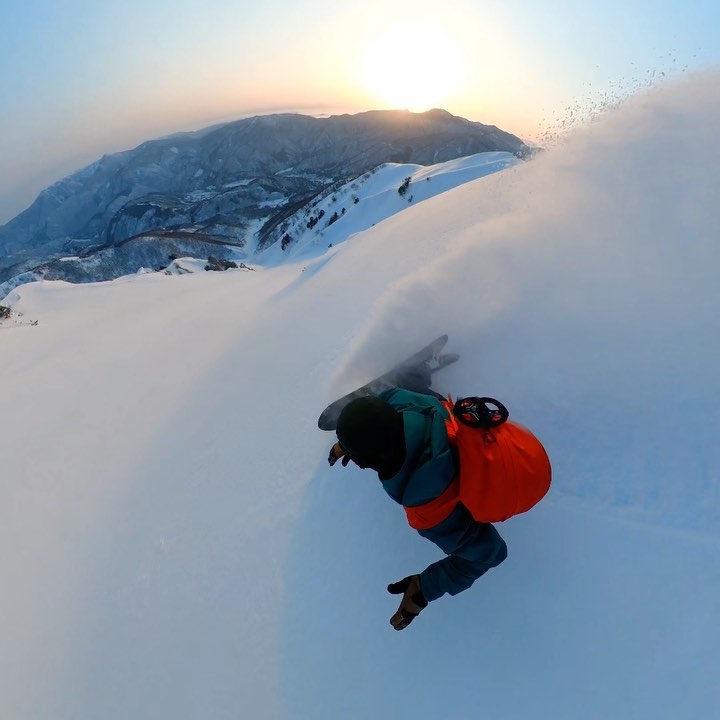
Asahi Ryuta started out in the mountains with backcountry snowboarding, but decided to become a guide, wanting to offer mountain trips that would allow him to share the charm of the mountains and nature that he felt. In the 19 years since starting "Rhythm Works," Asahi has been climbing mountains throughout the four seasons, following the rhythm of nature
"Walking in the mountains, feeling the soil, touching rocks, snow, water and greenery. Through various fieldwork activities, you can experience moments of becoming one with nature. I believe that the more time you have for such activities, the richer your life will be."
Recently, Asahi has been devoting his passion to his work as a guide. That passion is making socks called "Walking Socks." After two years of planning, it seems the time has finally come to bring this idea to fruition
What prompted this?
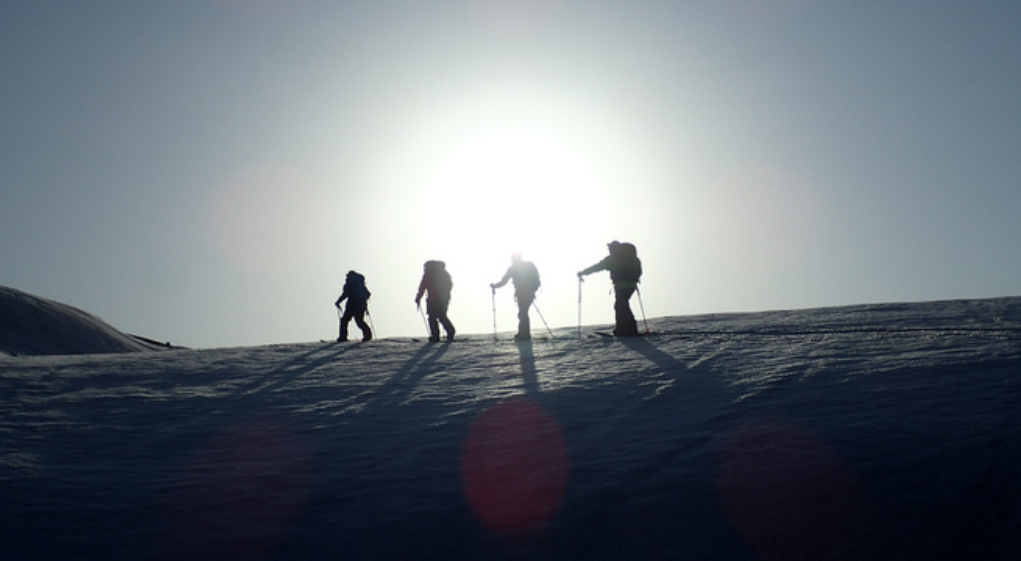
As a guide, I take guests into the mountains. From Hotaka in summer to Shirakawa-go in winter, to Tateyama in spring... The natural scenery before my eyes and the weather in the mountains are constantly changing. However, there is one thing that remains constant no matter what mountain trip I take: "walking on my own two feet."
"About 15 years ago, there weren't many merino wool snowboard socks. Merino wool is excellent at absorbing moisture and drying quickly, keeping you cool in the summer and warm in the winter. It's also comfortable to wear and has excellent odor and antibacterial properties, making it ideal for the mountains. I also work as a winter mountain guide, so I thought it would be nice to have merino wool socks for snowboarding as well
It just so happened that my senior's family ran a sock factory, and we had talked about making socks someday, but time passed and the idea died down. Then, exactly two years ago, I pulled a muscle in my calf. I wondered what the cause was. That got me thinking about my feet, and it gave me the opportunity and time to really think about socks."
It started with discomfort
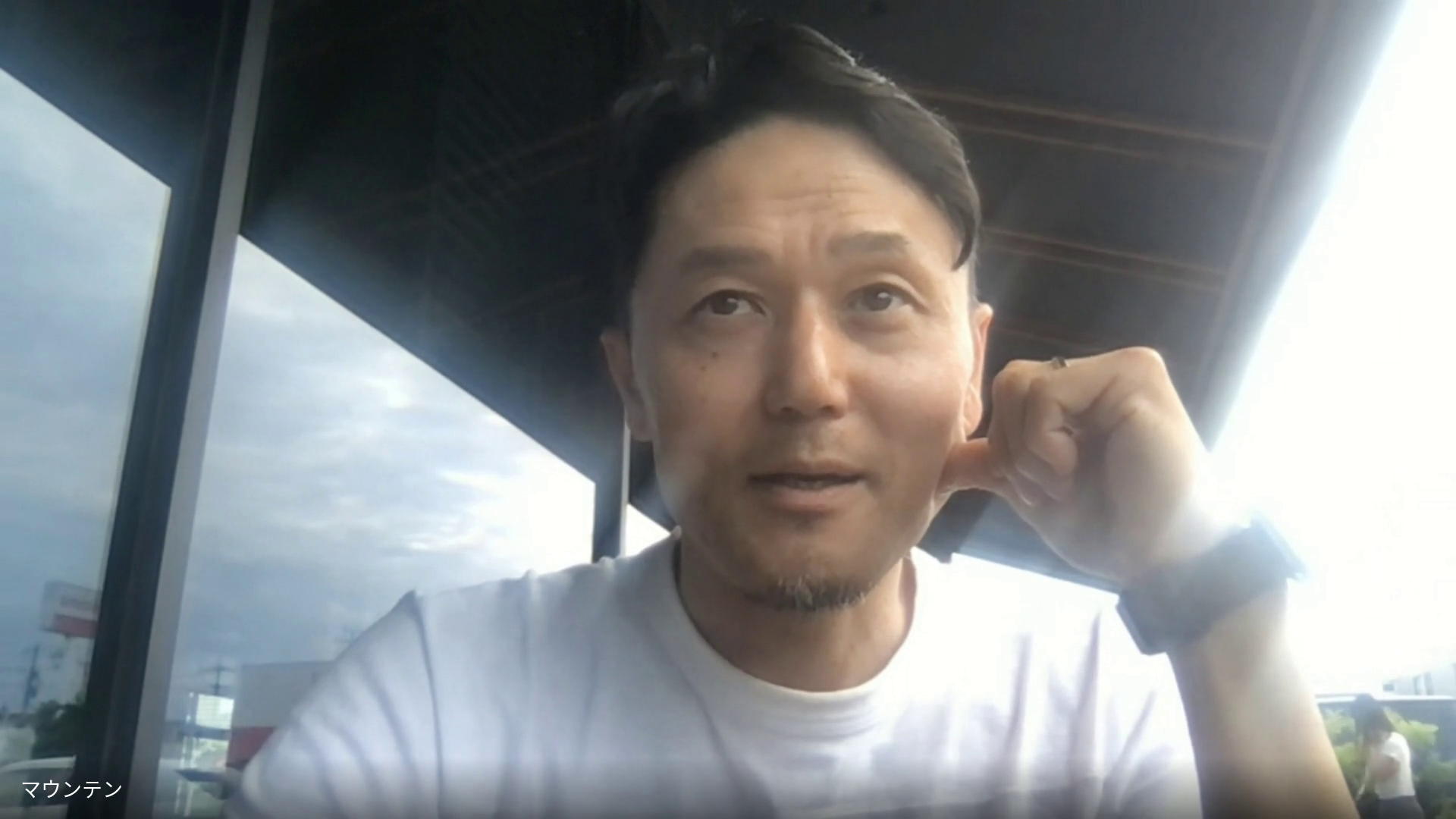
"Thanks to the help of a chiropractor, I was able to recover in three weeks from a torn calf muscle that would have normally taken about three months. I was reassessing my foot movement, and when I tried on the socks I'd been wearing up until then, I felt a strange sensation in many places. In other words, they were uncomfortable."
What exactly was the "discomfort"?
"For example, socks with compression on the calf. They're fine for short periods of time when you're skiing on the slopes, and they do improve your performance, but when you go into the backcountry, even a day trip involves walking all day. If the pressure is too strong, you'll end up tiring. It's something that's bothered me up until now, and I thought it was just something I couldn't do, but then I got injured and it started to bother me..
That's when I thought, I want to make socks that fit me better, socks that I want to wear myself. If I were to make them myself, I would carefully consider the compression on the calf and the ankle design."
The motivation to make socks that he had almost forgotten was rekindled, and Asahi got to work
The birth of "Walking Socks"
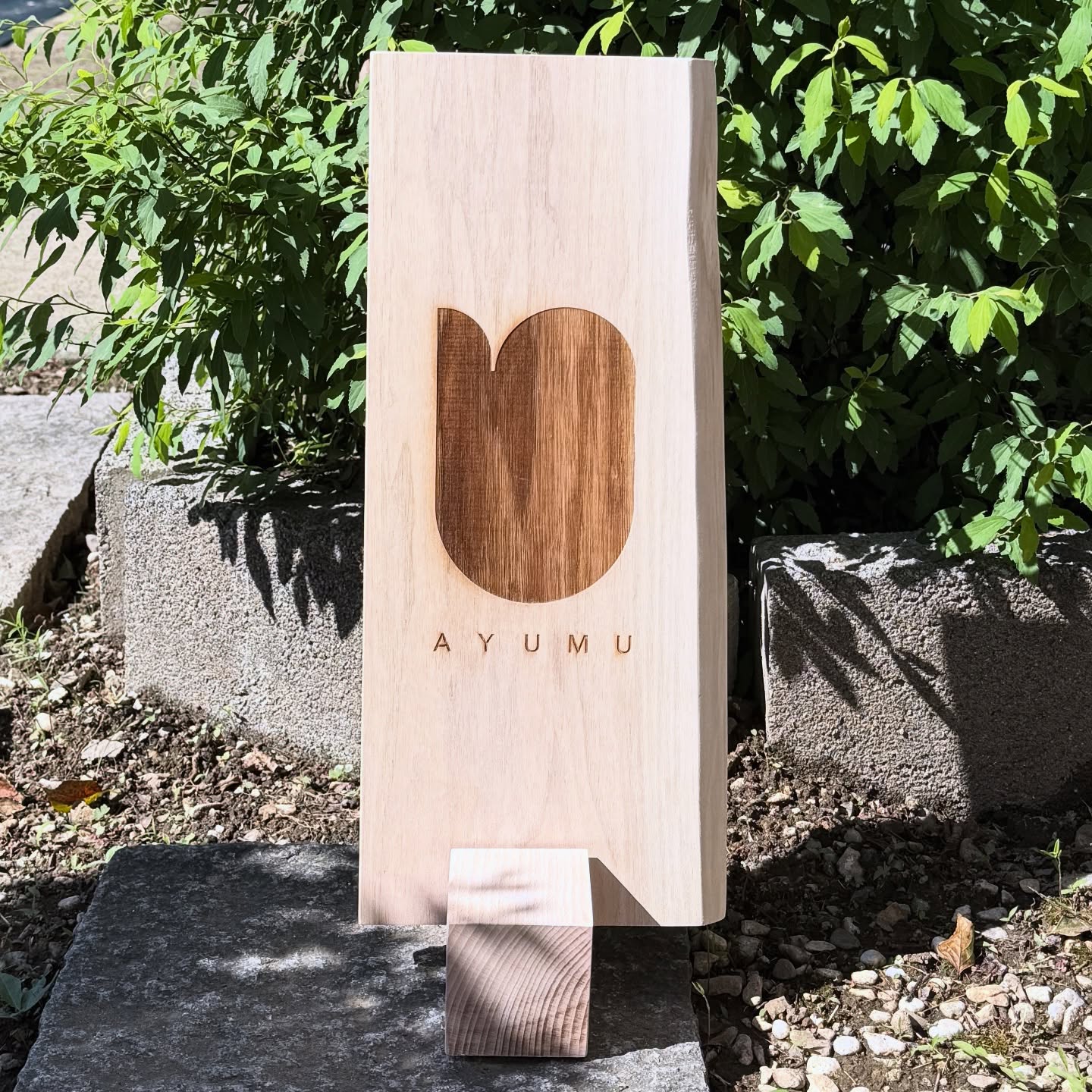
Asahi spent two years taking one step at a time, naming the brand, designing the logo, creating samples, and conducting field tests
"The brand name is a play on the word 'walk' ('walk') and the Japanese word 'arumu' (walking). As the main style will be tabi socks, I wanted a name that sounded Japanese. I also asked a snowboarder designer who designs Japanese patterns and family crests to come up with the logo. I also like family crests, so I really like it
Why did you choose the tabi style? This shape is especially good for active movement in the mountains. I've always been particular about socks and have tried many different types. But I think the tabi style is the best. Tabi socks were born in Japan in ancient times and have been passed down culturally, so I think our ancestors put a lot of thought into the shape. I thought that five-fingered socks would be a bit different."
they ?
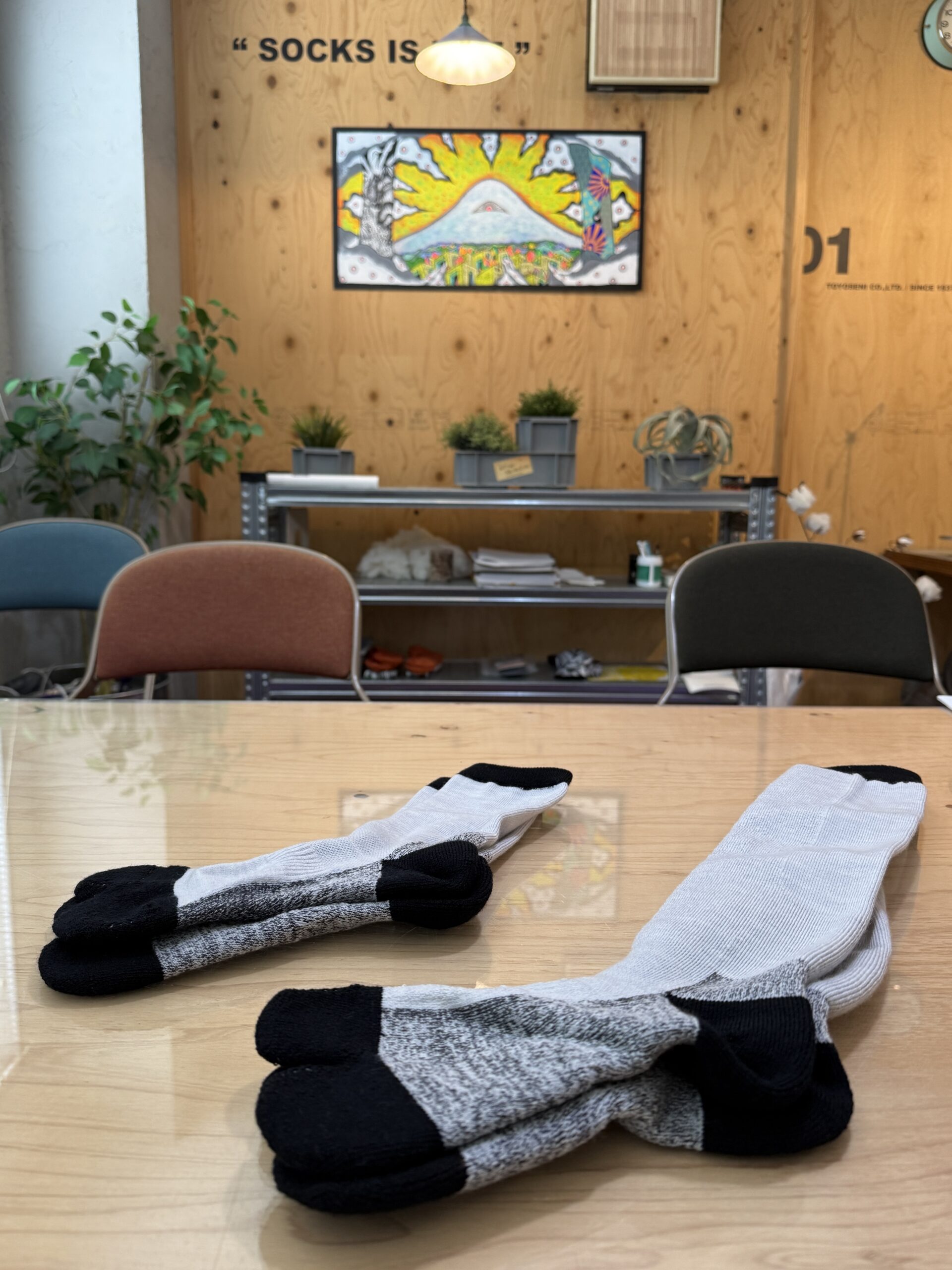
"Walking Socks" were born from the long time and rich experiences he has gained from spending nearly 20 years in the mountains throughout the four seasons. "If I'm going to make something, I want to make something that feels good to wear." Asahi focused on comfort, functionality that doesn't restrict movement, and simplicity
Let's take a look at the key points of each
"Loose and tight" is the combination we want
"The truth is, I have a severe bunion. If I wear shoes that don't fit or socks that are shaped the wrong way, it feels really uncomfortable. Also, when I go hiking or skiing, I like to be able to move my feet inside my boots. That's why I'm particular about not restricting foot movement
Also, an Oriental medicine doctor who helped me when I was injured told me,
"The calf acts as a pump, improving blood circulation. For example, for women and others whose feet are prone to swelling because their blood pumping function is weak, socks are designed to promote circulation by applying pressure, but for people with strong muscles, socks can actually hinder movement and make their feet tired. They're unnecessary." That made sense to me.
So, it's best to leave it loose where you want it to be. As a result, the ankles are tight enough, and the calves are loose and roomy. So that you don't get tired when wearing them. The material is made of stretchy terry cloth, which is designed to not be bulky when worn
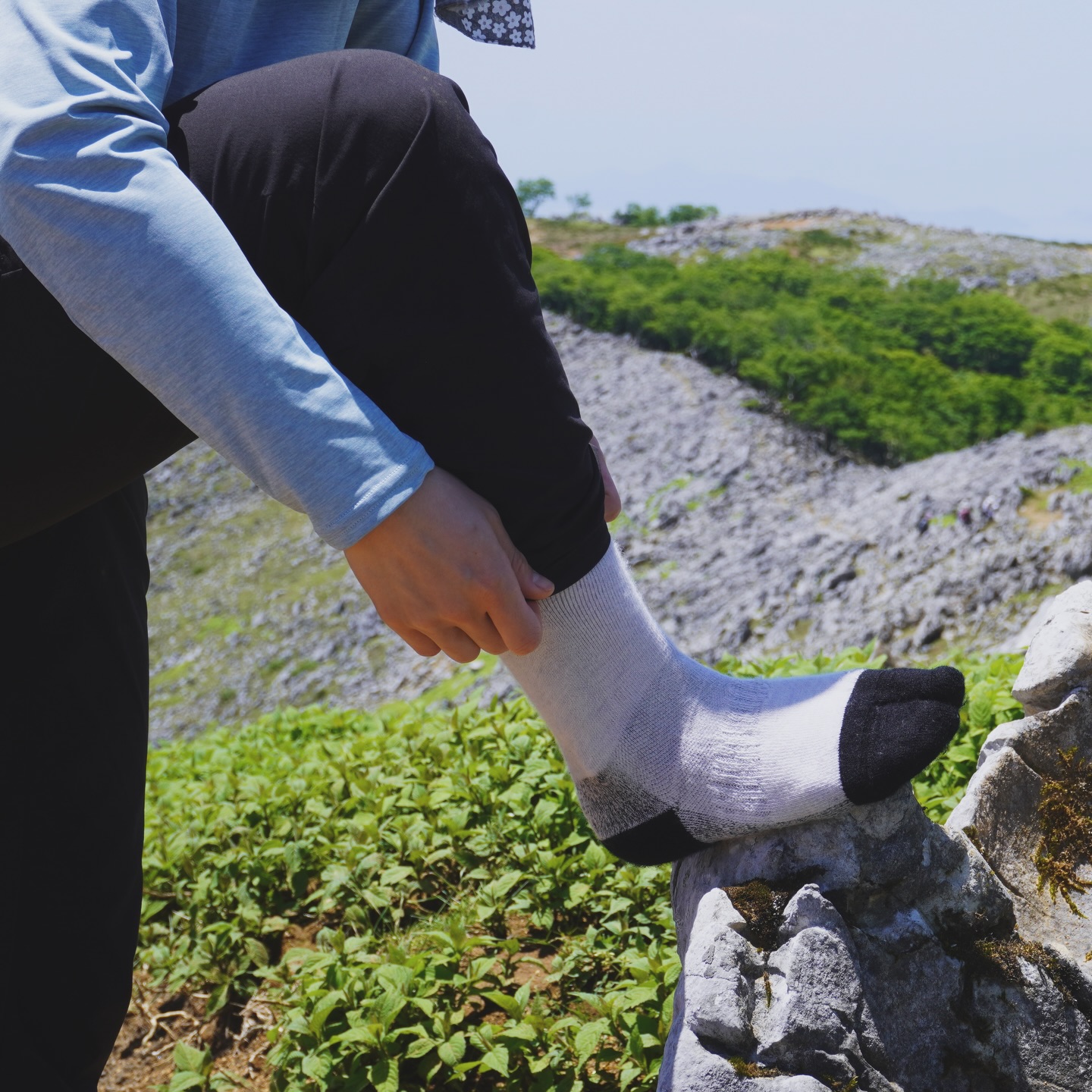
From the heel to the toes, especially the widest part from just before the ball of the foot, the front is loose and wide so that the toes can spread out. The heel is tight and the front is easy to open, so the toes can move easily inside the socks and use their strength
The design is an exquisite combination of loose and tight, which gives it a comfortable feel
Keep the final ingredients simple
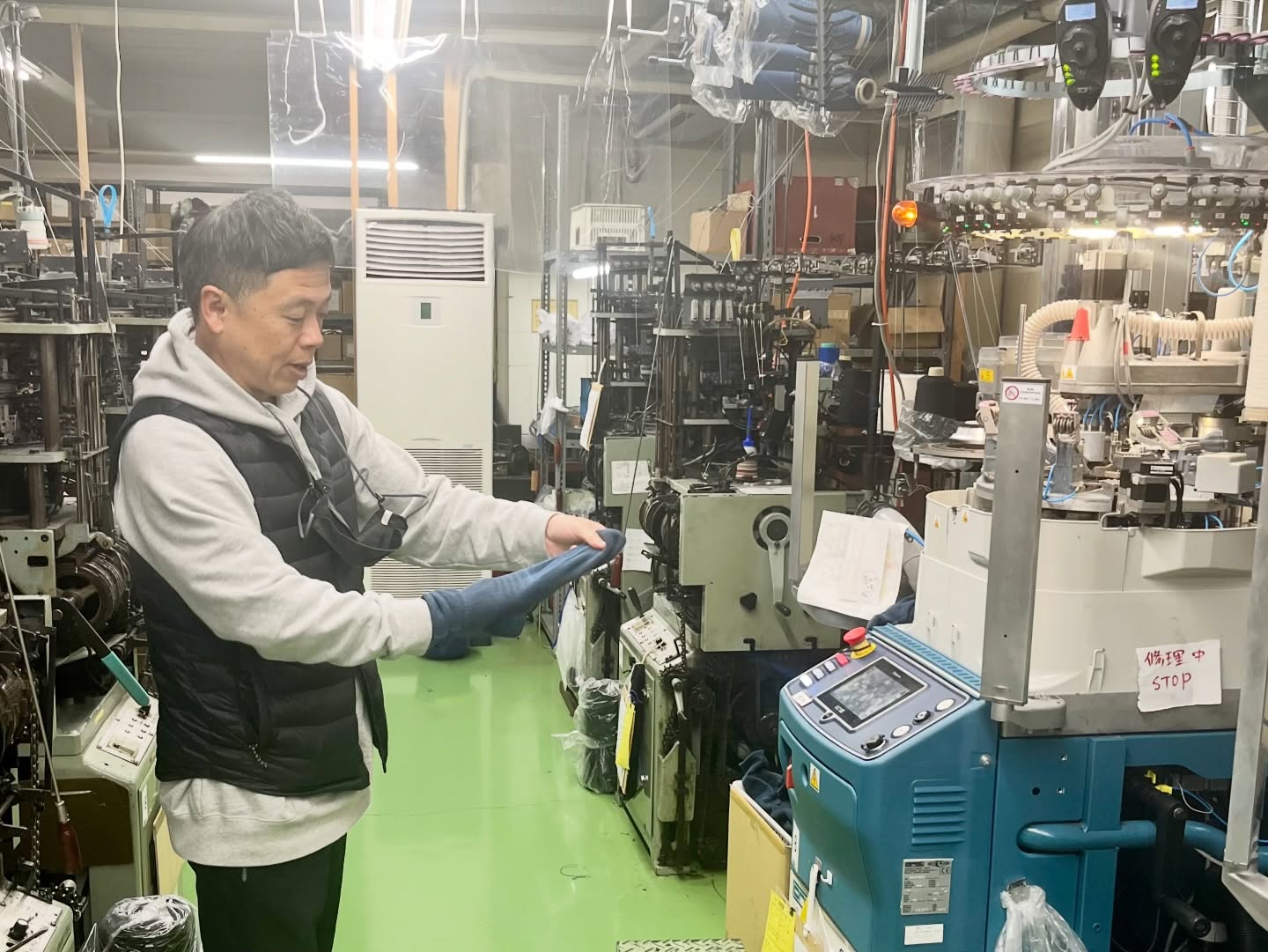
"Arumu Socks" are made by Toyo Seni, a leading artisan factory in Japan that was founded 80 years ago and is located in Seki City, Gifu Prefecture
"Initially, I was planning to make socks using Mino Washi, a Japanese paper material that is a specialty of the Mino region of Gifu Prefecture, and wool that is a specialty of Oshu, Aichi Prefecture, where I live. I thought it would be interesting to combine the moisture-absorbing and lightweight properties of Mino Washi with the properties of Oshu wool. However, it took two years from the idea to the end, and as I tried out many samples, I learned that there were pros and cons. So, in the end, I simply went back to merino wool (laughs)
We place great importance on being able to see the background, from the origin of the raw materials to the processing process, and we place great importance on being able to see the background, from selecting the ranch, managing the raw wool, to processing."
The wool used is 100% merino wool, which is treated to prevent shrinkage even after washing. The soles and heels, which are prone to sliding, are reinforced with synthetic fibers, with minimal synthetic fiber used, but the shoes are basically made almost entirely of merino wool
Merino wool 89% | Nylon 10% | Polyurethane 1%
This "high merino wool content" is also a major feature of Walking Socks.
"Because these are meant to be used in the mountains, you want to make sure you know what kind of material they are made of before making a selection. I will convey this idea through the comfort of the shoes," says Asahi
The design is minimalist
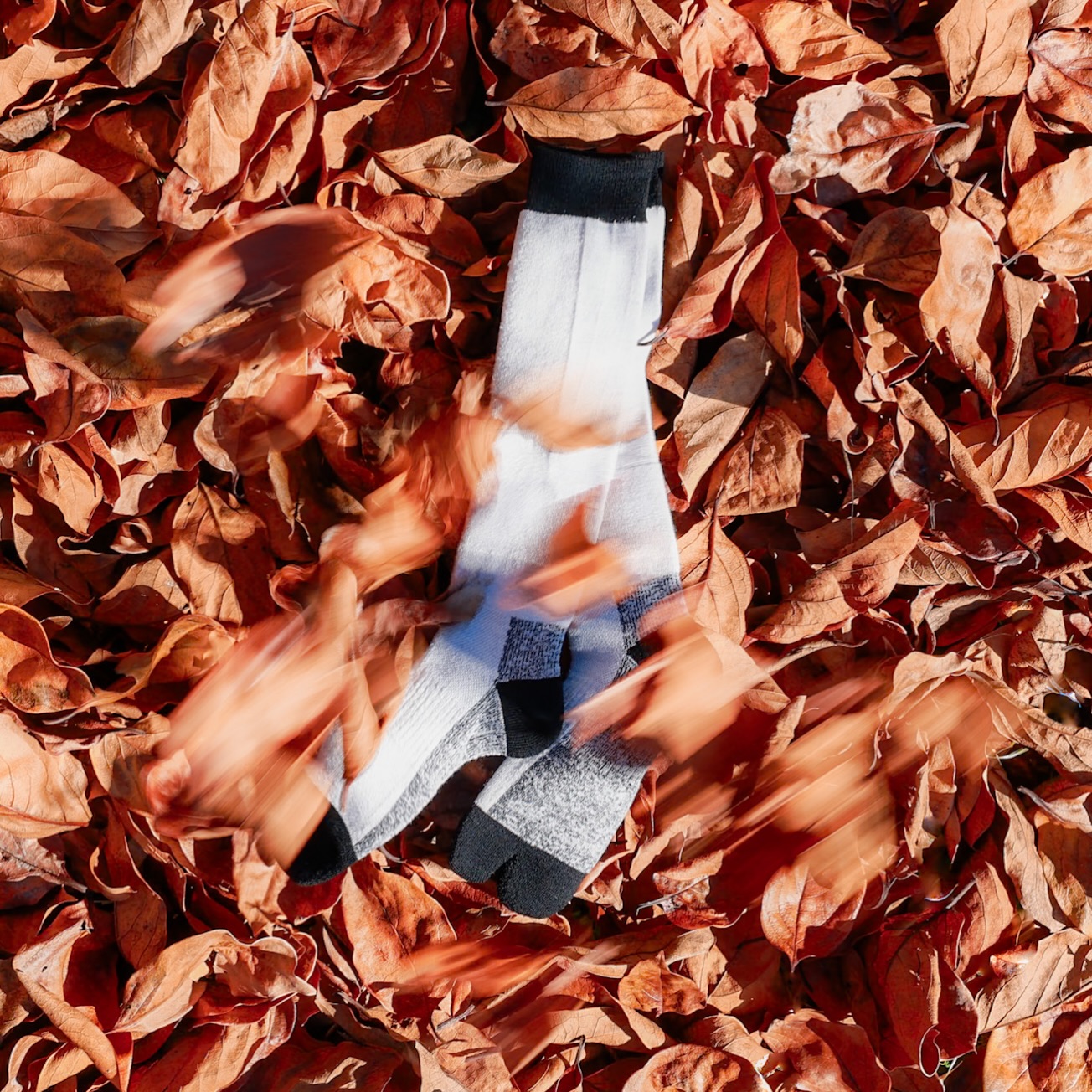
"At first, I was thinking of developing two types, one for mountain climbing and one for skiing, but in the end they ended up being the same (laughs). I made samples for both, but the mountain climbing version was so good that I thought, 'This one can be used for both.' So, I'm starting with a length called 'Tall.'"
When you think about skiing, the feeling of the boots on the soles of your feet is very important, and you want a more delicate feeling. I like relatively thin socks, so I made thin, warm ones, but in the end, they ended up being medium-thick as well (laughs)
I thought that the medium thickness would be too hot and make you sweat too much and feel bad, but when I made it, it wasn't bad. In the end, I wore the same medium thickness on a recent mountain climb and it was completely comfortable with no issues. So I thought that it could basically be used in any season except midsummer. The final version was made of medium thickness terry cloth
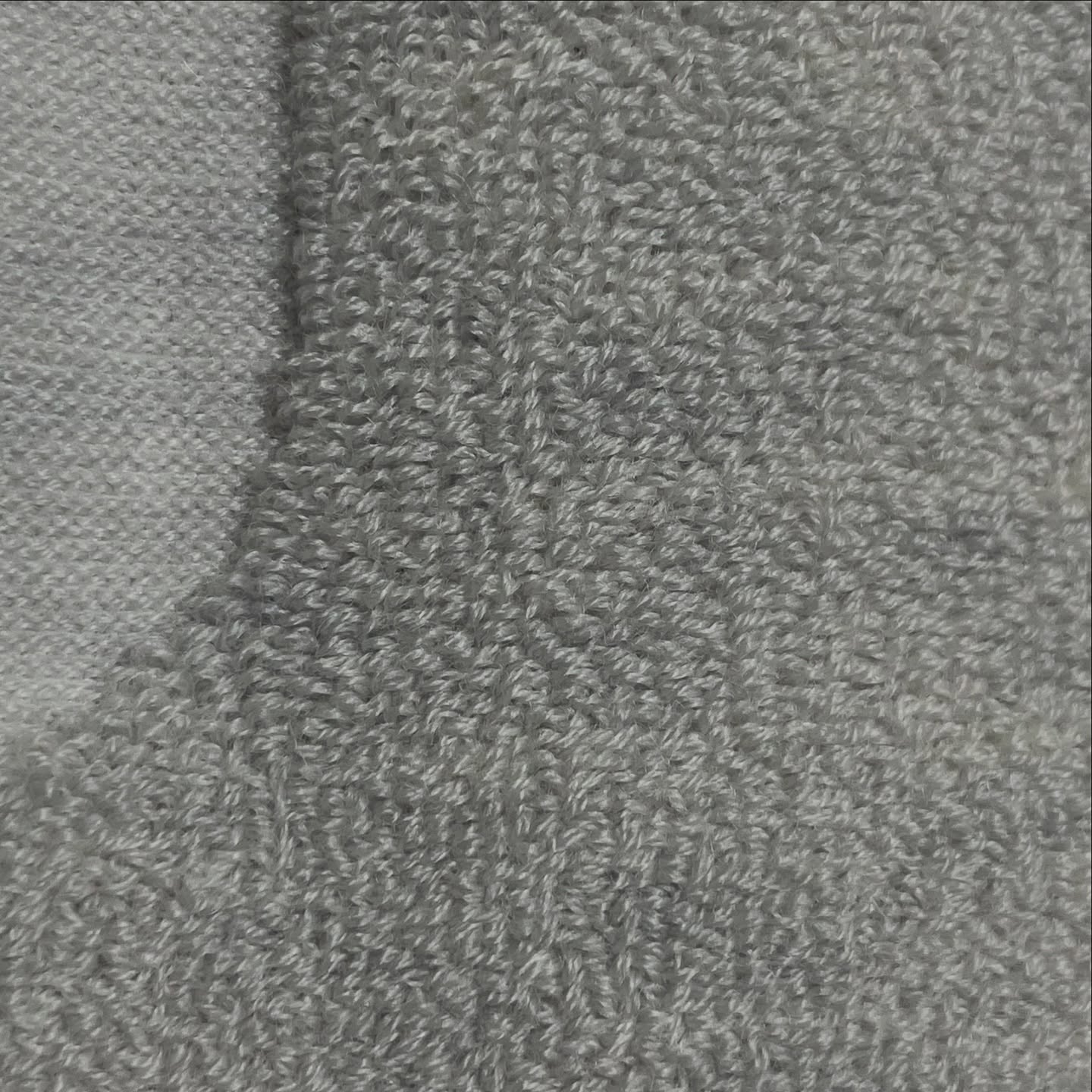
Because it's 100% wool, there's almost no moisture, and you don't even feel it. You don't feel any sweat. It stays dry all the time. While regular knit fabrics have a flat surface, terry knits feature looped fibers. In terms of feel, the fabric is medium-thick, but the looped fibers create a layer of air that keeps you warm and acts as a cushion and protection, making it soft and comfortable to wear
Until now, when I wore boots for a long time, my feet would rub against the boots and hurt, but since I started wearing these socks, the pain has lessened and now it's almost gone."
"In the end, they all ended up being medium thickness," says Asahi with a wry smile, but this was the answer he arrived at through repeated efforts, making and testing samples, and painstaking work that required time and patience. Rather than clinging to the initial hypothesis that "it should be like this," he believes in his own well-honed intuition and updates the product, a stance that is typical of a hands-on guide
The importance of socks
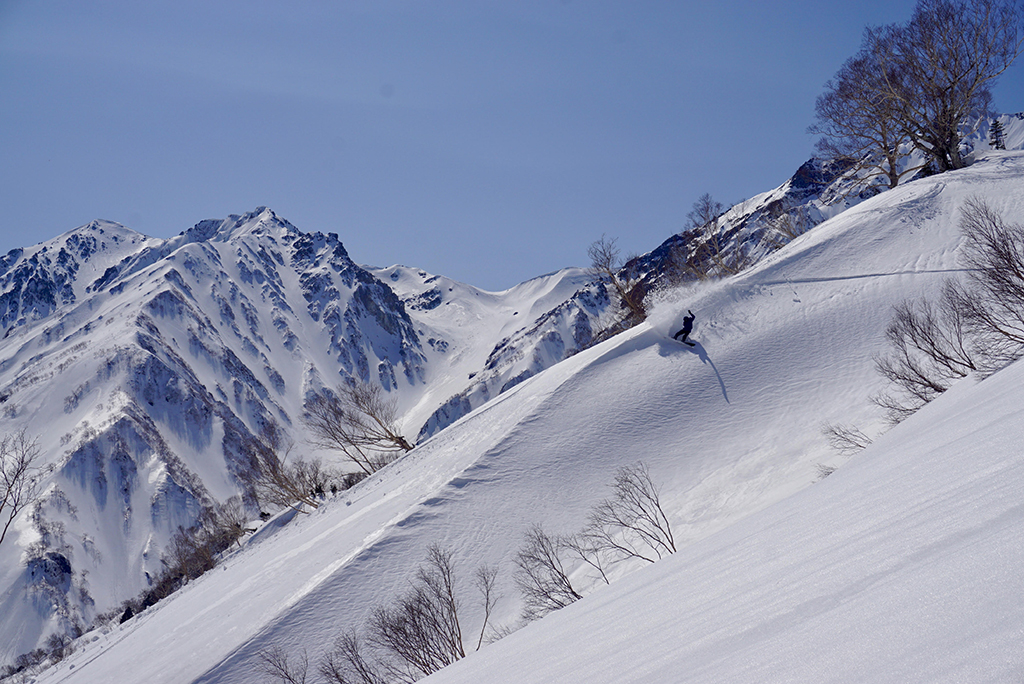
What happens when you change your socks when skiing or snowboarding? We can't help but touch on the importance and limitations of socks
"Socks act as a joint that connects shoes and feet. No matter how good your shoes are, if they don't fit your feet properly, your performance won't improve. That's why I think socks are an important intermediary item that helps shoes and feet work together well
More than just a cushioning material, socks also facilitate the smooth connection between your shoes and your feet, enhancing the potential of your boots, hiking boots, and your feet. This also enhances your skiing potential. Even if your shoes aren't of particularly high quality, I think socks can sometimes improve your performance potential
Your skating performance changes depending on whether or not you can spread your toes. The soles of your feet are the key. Nowadays, shoes have evolved, but the ability to balance and control with your toes, which are supported by shoes, has decreased
With this in mind, wide, barefoot shoes (thin soles and wide toes that give the feeling of being barefoot) are becoming popular. This movement to restore the original function of the human foot is taking place mainly in the US and is spreading to Japan as well. I can no longer wear shoes from two years ago because my toes have become more spread out since I started wearing barefoot shoes. It also reduces the strain on my lower back, which reduces fatigue
Just like barefoot shoes, the "Arumu Socks" are wide and have plenty of space, so your toes can spread out and activate their movement. This makes it easier to maintain balance and encourages natural, effortless movement in your feet. This should help you avoid getting tired even in the mountains."
Socks are like guides
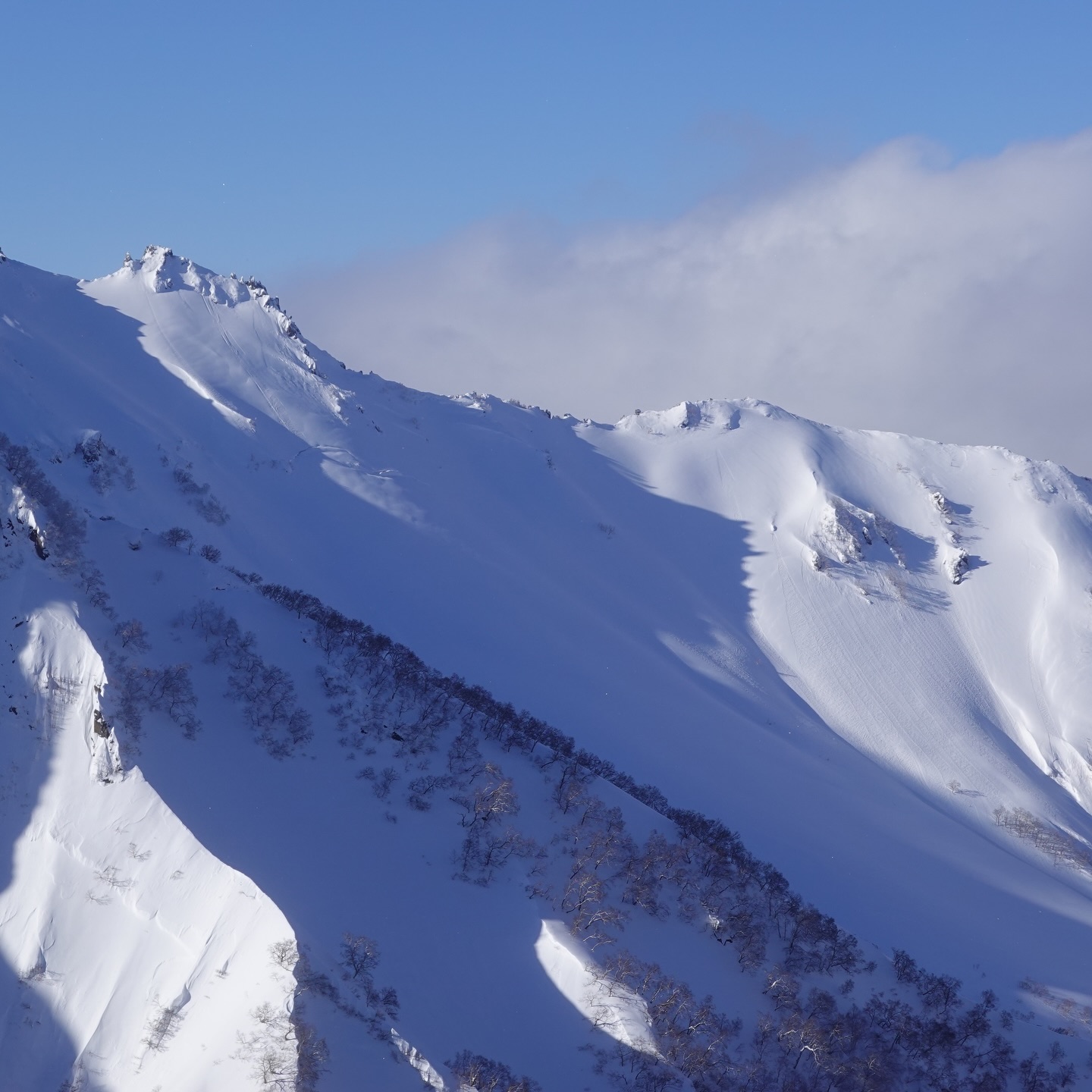
Mountain guides work in the mountains, entrusted with people's lives.
Asahi laughs and says that becoming a guide was "just a coincidence," but his expression is filled with a strong love for the mountains and pride as a professional guide.
"I think that guides, like socks, play an indirect role, helping to make people's time in life more comfortable and enriching
My job is to effectively connect guests with nature. People change, and so does the natural environment. The key to guiding is matching these two and connecting people with nature in a comfortable rhythm. Socks connect the body with nature through the feet. How comfortably you can connect your feet with nature affects your performance. It's similar to guiding
In the past, I was more interested in quantity than quality, and I just wanted to be in the mountains. I just wanted to ski. But now it's different. I want quality and precision in my time in the mountains. The important thing is to use the things I use and wear that I like and that I'm satisfied with, and to enrich my time in the mountains
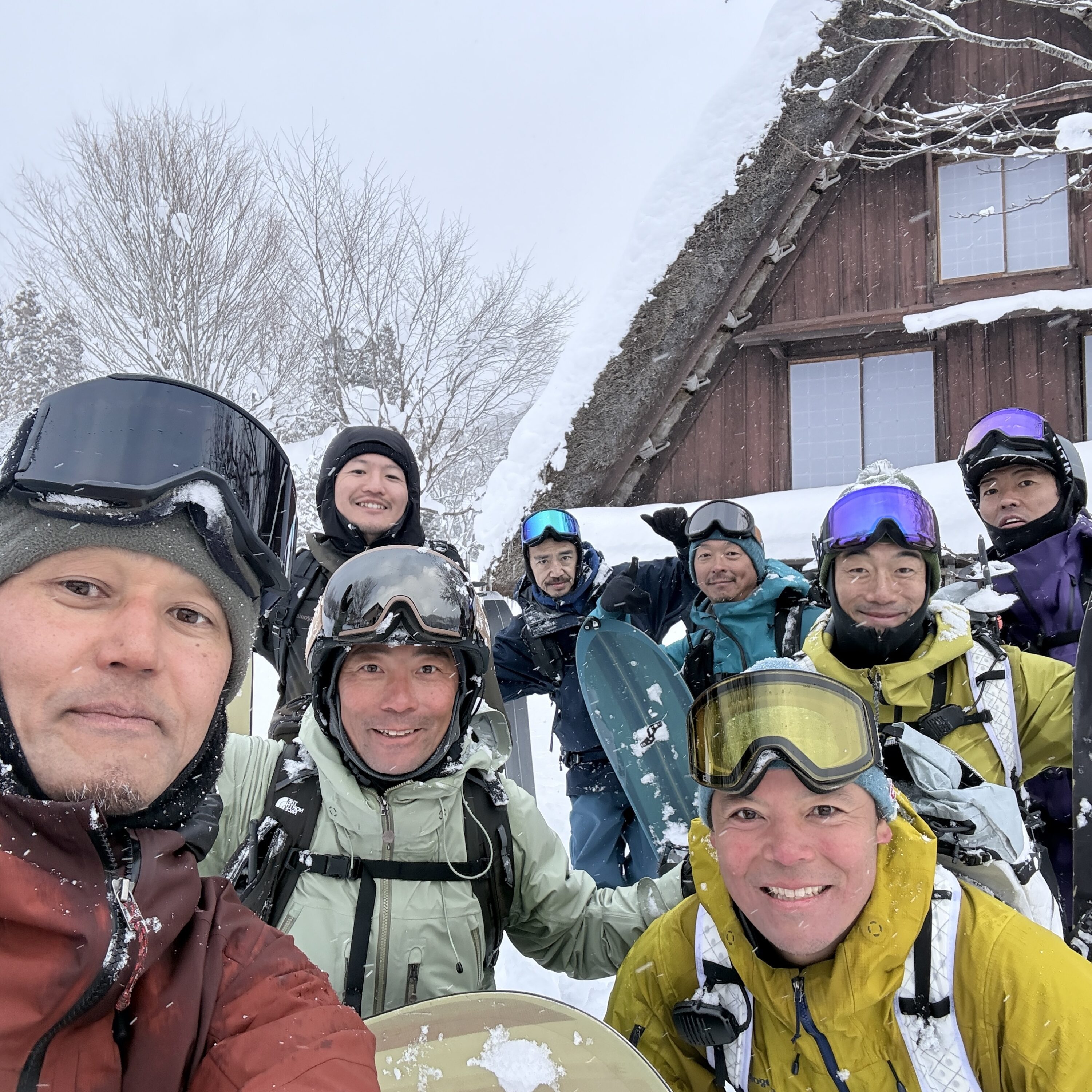
I want these "Walking Socks" to be worn by people who simply love the mountains, or by people for whom skiing or snowboarding is an essential part of their lives. I want them to "walk together" with the irreplaceable time they spend in the mountains. I want them to be worn by people who cherish such time
What kind of person am I? Well, I'm a bit odd. I have a lot of preferences.
But preferences make me happy.
I think they're necessary to make life interesting."
This commitment led to the creation of "Walking Socks." Don't you want to try them on?
AYUMU Socks – Tall +
*Until the online store is ready, you can order via DM on ayumu.socks
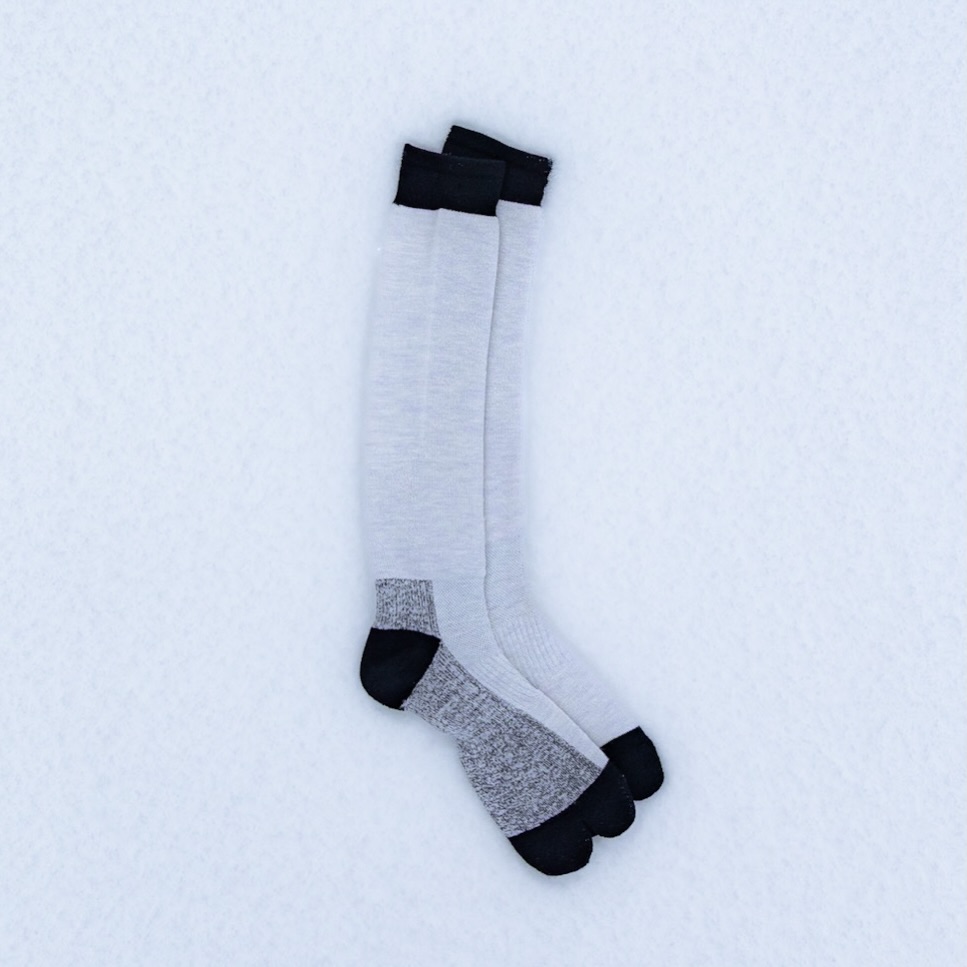
Size | Size (Unisex)
SM: 22.0 – 25.0 cm ML: 25.0 – 28.5 cm
¥5,800 (tax included) / MADE IN JAPAN
Features | Features
Comfortable enough to wear all day. Supervised by mountain guides with a focus on "comfort."
Simple design with a tabi-style, relaxed fit. Suitable for skiing, snowboarding, snowboarding, and
even snow mountain climbing, including backcountry skiing, and provides stable comfort even in cold environments. From everyday wear to the winter field.
Material:
89% Merino wool, 10% Nylon, 1% Polyurethane
. Moisture-wicking, quick-drying, odor-resistant, and highly durable, it's resistant to pilling.
Made with high-quality wool from quality ranches, including non-mulesing wool, and traceable
.
Functions |
Tabi construction: Supports stability and balance when stepping in
. Non-tight design: Considers lymphatic flow and reduces stress.
Heel support: Designed to prevent slippage without interfering with blood flow.
Pile knit: Balances comfort and warmth.
Reduces chill and ensures cushioning
Pile from shin to toe: Reduces impact and improves comfort.
Calf area: Designed without pile to reduce pressure.
Surface support structure: Combines various elements for gentle support.
Walking Socks

Ayumu LLC
6-1 Goura, Nishiasai, Asai-cho, Ichinomiya-shi, Aichi 491-0113
Contact: info@ayumusocks.com
Instagram: ayumu.socks
Editor: Chise Nakagawa