


We asked top athletes about "the one shot that changed their life." Because of that one shot... We trace the story that each shot tells and the thoughts that went into it
Shun Okumura is currently one of the most talked-about athletes, having placed second at the All Japan Technical Ski Championships for three consecutive years. What was the jump that changed his life?
~The run of a lifetime~
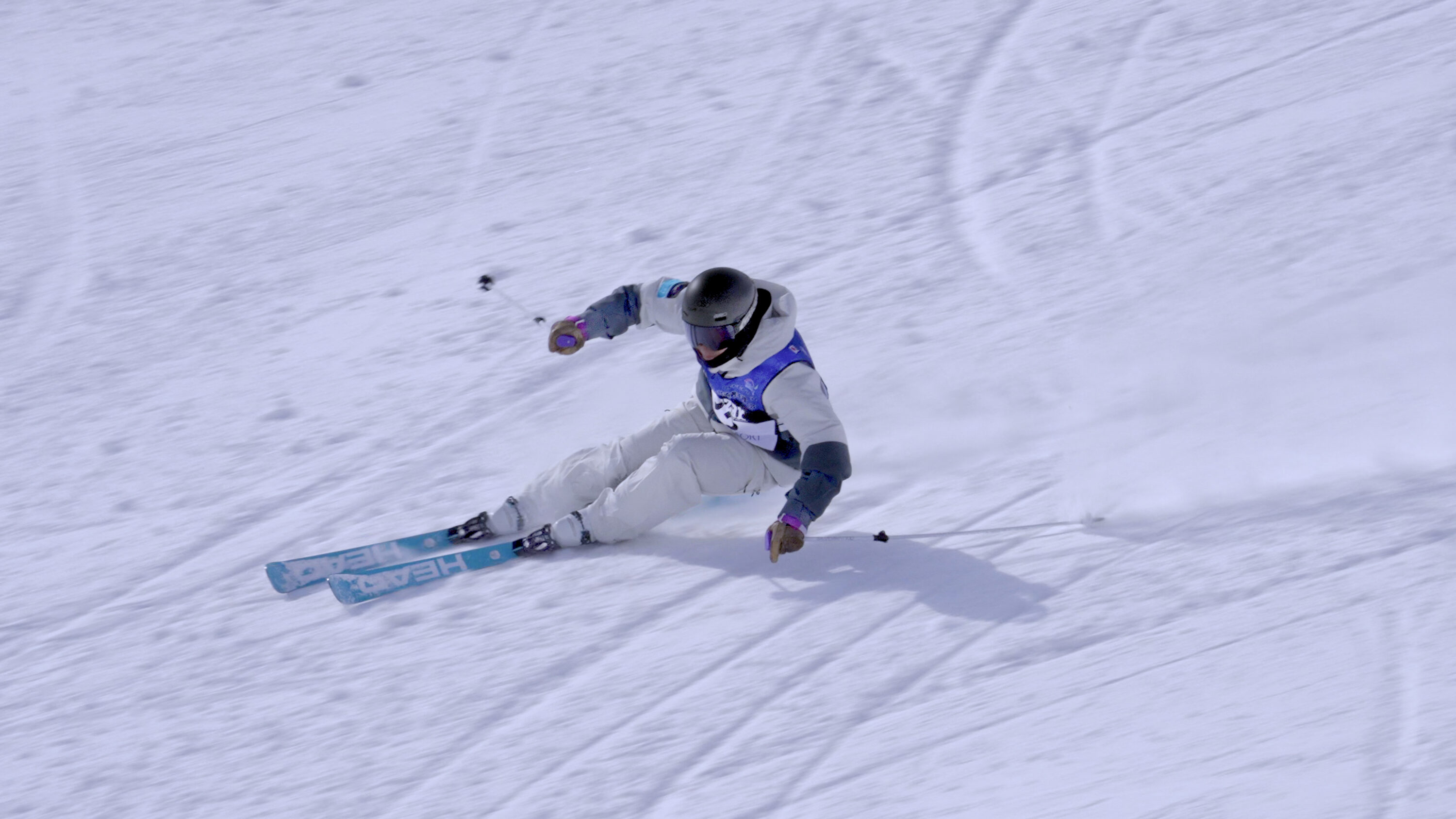
A run in the finals of the 59th All Japan Technical Ski Championships in 2022, where he competed for the first time, in the "Tight Turns, Space Restrictions" category
A young man who once devoted himself to alpine skiing and dreamed of competing in the Olympics, embarked on a new phase in his life on the stage of the technical selections after a single short turn. His skiing combines the rationality of the sport with the beauty that captivates the spectators. We spoke to Okumura Shun about his views on skiing, his technical theories, and his determination to make a living from skiing, centered around the "one run that changed his life."
A path paved by competitive spirit
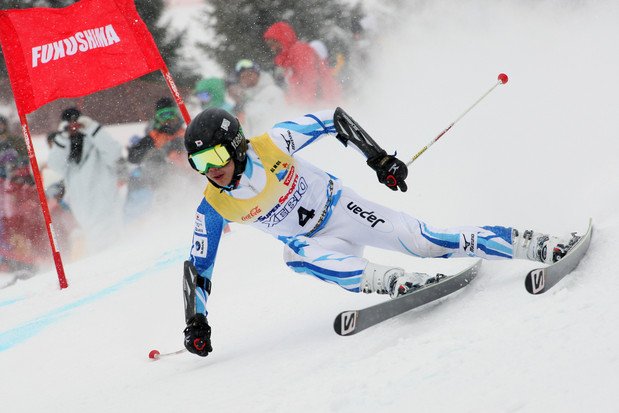
Shun Okumura was born in Joyo City, Kyoto Prefecture in 1996. He grew up in a place far removed from snow, and skiing was a leisure activity enjoyed on a few family trips a year. His "skiing" journey began when he was in the third grade of elementary school. After winning a children's race at Blanche Takayama Ski Resort, he decided to "start competing in competitions," and entered the world of alpine skiing
"That year, there was a competition at Kitashiga Yomase, where junior skiers from Nagano Prefecture competed, and I took part, but came in last, which was disappointing. I decided to take up alpine skiing seriously. I joined Kaiwa Toshihiro's racing team and spent my winter and spring holidays at training camps. From then on, I was completely immersed in skiing, and by the time I was in sixth grade, I was achieving good results in Nagano prefecture competitions. My coach at the time was taking some of the skiers back to his hometown of Abashiri, Hokkaido. That's when I decided I wanted to go to Hokkaido too!"
Why would an elementary school student from Kyoto go to a junior high school in Abashiri to go skiing?
"At the time, more than skating itself, I really enjoyed knowing who I won or lost to. I loved winning and losing, and I was particular about it. Even though I felt strong in Nagano, I easily came in last in the Hokkaido competition. At the time, the skaters from Hokkaido were on a different level of speed. I felt a sense of regret, but I also had a longing to go to Hokkaido."
Competitive spirit paved the way
A refined brat
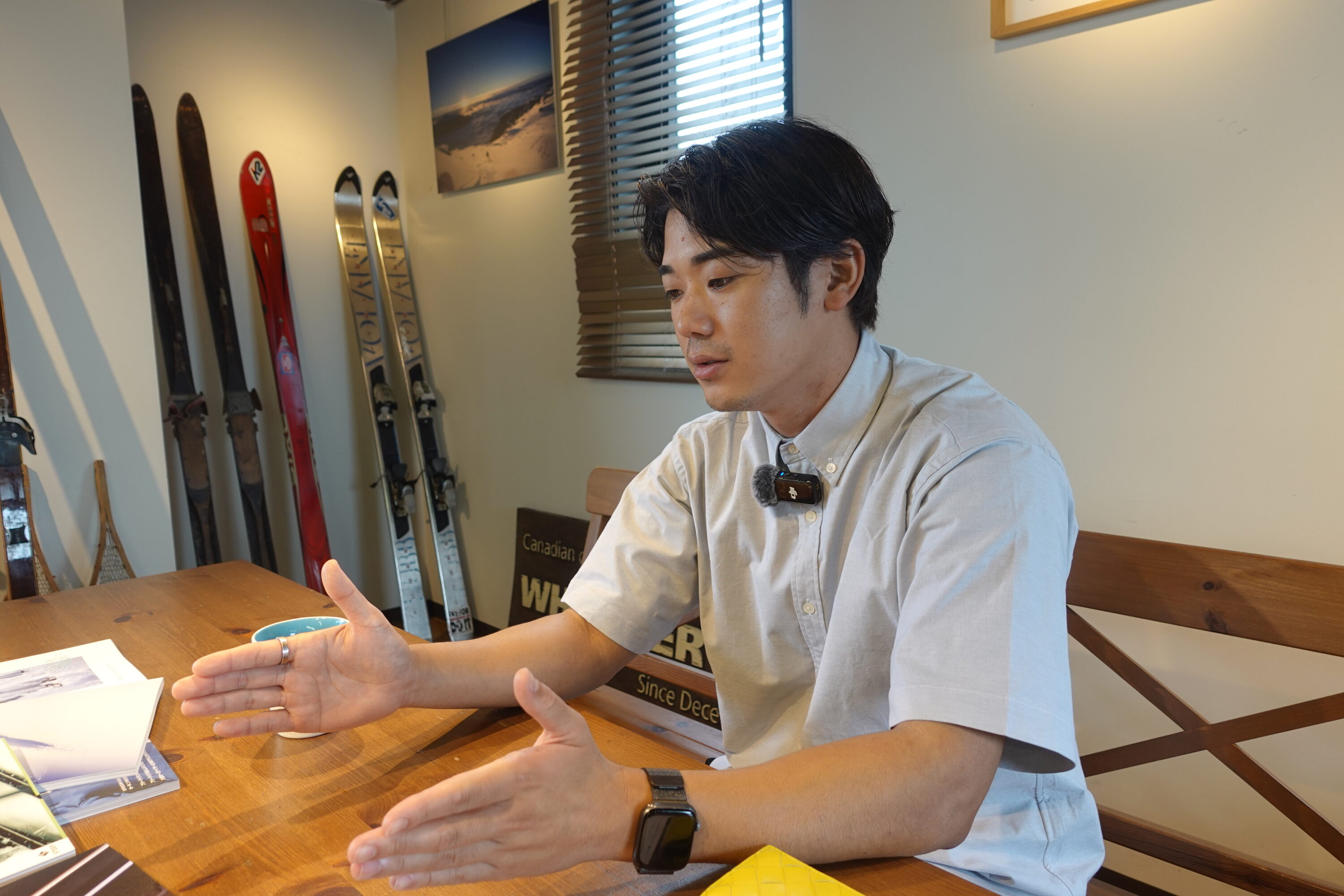
Okumura Shun is calm and composed, and the air he carries himself and the way he speaks exude a certain elegance, so much so that it's hard to imagine him skiing aggressively on the snow
"I was a real brat, very cheeky! (laughs) I was always mischievous. But I really loved skiing. When I was in elementary school, even after the Yomase Ski Resort closed for the day, I would go rail riding on fallen trees beside the courses or make jumps and play. Even now, I still love playing on skis
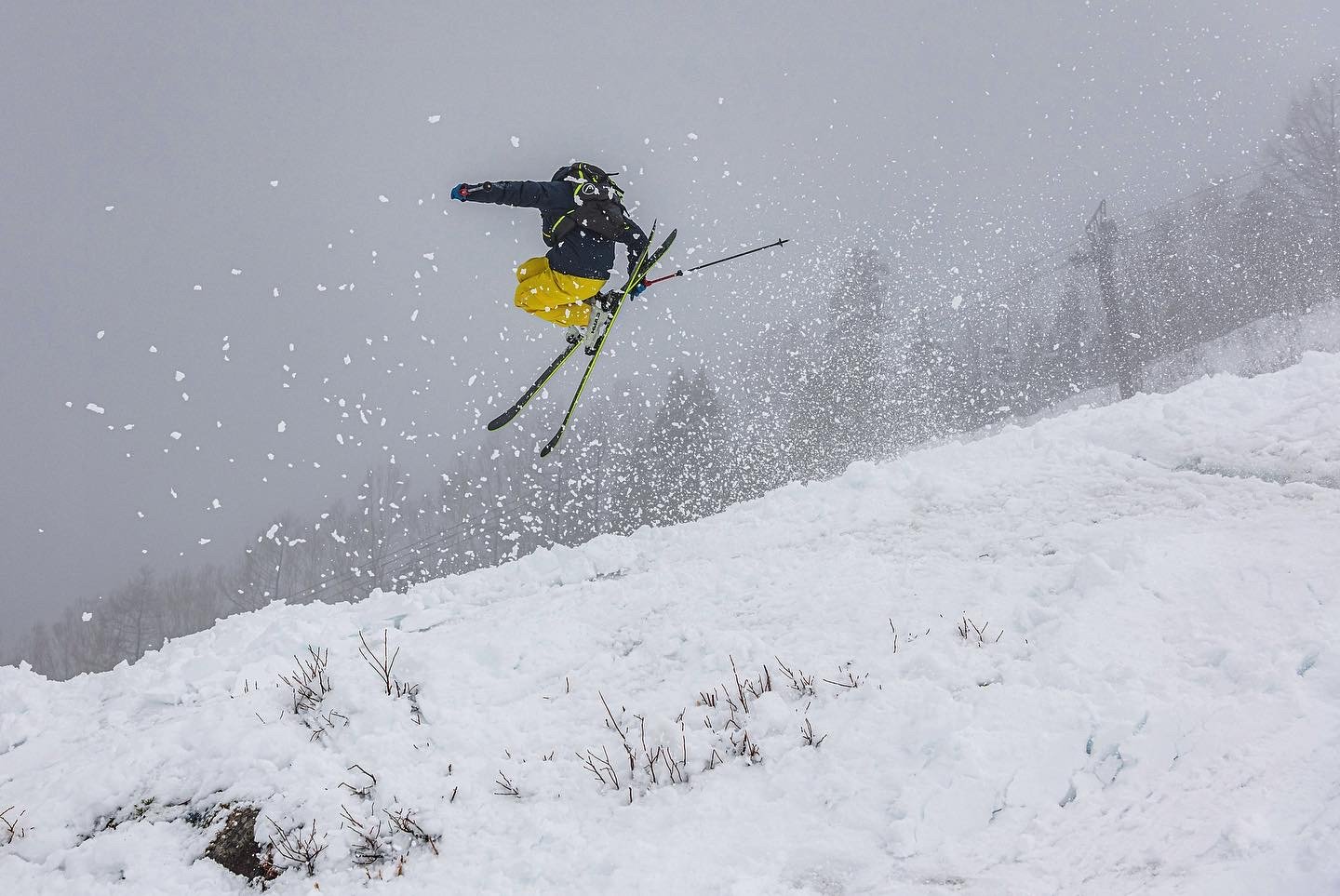
In Abashiri, I just devoted myself to practice, and my results started to improve, and I think I got as high as 6th in the All Japan Junior High School Championships. In the middle of my first year of high school, I transferred to Otaru Hokusho High School."
Speaking of the Hokuto Ski Club, it is a prestigious school renowned as the strongest in Japan, having produced former skiers such as Tetsuya Okabe, Akira Sasaki, and Kentaro Minagawa. It is easy to imagine the talent and potential of Shun Okumura, given that he received an offer from the school to join
"My dream was to compete in the Olympics, become famous, and open a pizza shop (laughs). That's why I thought Hokuto, where there were W-Cup level athletes, would be a good environment. But the training was tough. There was no menu, and I felt like my body would break down if I continued. So I learned to slack off, or rather, to cut corners, in a good way
My first and last ZONE experience
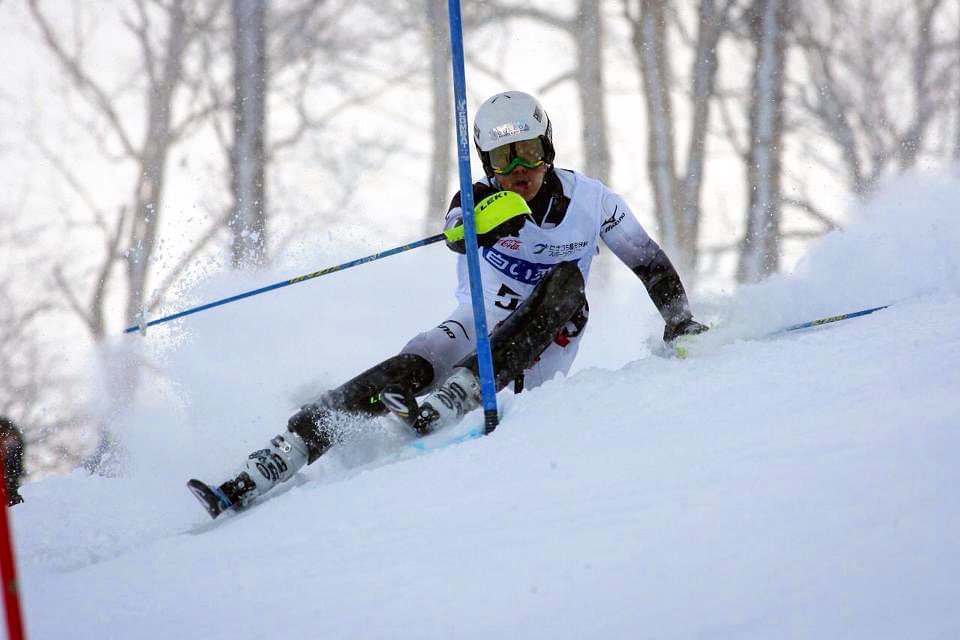
"During the second slalom run at the Inter-High School Championships in my second year of high school, I experienced 'entering the zone' for the first time. I can still remember how to set up the poles if I close my eyes and ski. I was 55th at the start of the first run, but I managed to finish 11th. So for the second run, I decided to go for it, and the scenery around me seemed to stop. I had plenty of time to handle the poles, and when I finished I was in first place. I still can't forget that feeling."
He went on to study at the strong Tokai University in Sapporo, Hokkaido, but he didn't perform as well as he had hoped and was dropped from the national team
"When I was in my second year of university, I thought that if the W-Cup or the Olympics were not within my reach, I would put an end to competitive skiing and pursue a career. I thought about becoming a school teacher, but decided to work for a specialized trading company. I was then assigned to Osaka, so naturally I left skiing behind. However, when I showed up at the Osaka Custom Fair, I was asked if I wanted to be a rider, and I was also invited to take basic skiing lessons
But I couldn't imagine making a living from skiing. But when the idea of changing jobs came up in my second year of working life, I thought again about basic skiing and the industry, and I thought maybe there was a possibility of making skiing my job as a business, and that it would work. So I quit my job. I knew that in order to seize this opportunity, I needed to first master my skills."
This is where Shun Okumura's challenge to compete in the technical selection began at the age of 25
On the path to basic skiing

"The truth is, I had only seen basic skiing once, in my fourth year at university (laughs). It was different to alpine skiing techniques, so I wondered what was so great about it. The vast majority of alpine skiers have never seen basic skiing. But at the time, I had friends from the university alpine skiing federation who were competing in the technical competition, so I went to support them at the technical competition in Rusutsu. That was the first time I saw Kuriyama Mirai's short turn free program, and I was honestly amazed, thinking, 'Wow, her basic skills are amazing!' I think that experience stayed in my mind for a while. So there wasn't much of a gap between me and the idea of doing basic skiing
And there was one other impressive thing that happened
The first season after I started basic skiing, there were no technical competitions due to COVID-19, but I was invited to a photo shoot for a magazine in early spring. I was the only unknown newcomer. I felt like I was out of place, but then a top skier in his 40s who was riding the lift with me asked me all sorts of questions about my technique. "How do you do that?" It was a shock, as in alpine skiing, where pride is so high, it's not a culture where you ask or get taught by someone. It was so frank and open, and it made a strong impression on me that basic skiing is a great sport."
Techniques required for basic skiing
He signed with HEAD and was being praised as a promising new athlete, but..
"The truth is, at first I just thought, 'I just need to skate well, right?' (laughs).
Around that time, Ryu (Takeda Ryu) had already started winning technical competitions. Ryu was a senior at Hokuto, and when I was in high school he was active in the North American Nor-Am Cup, and we were all excited about it. I knew Ryu was the best, so of course he'd win! I thought.
However, when I actually tried it, I realized that the idea that being fast in alpine skiing means you're strong in the technical selection is a completely different matter. It's said that the evaluation criteria for the technical selection are now leaning more towards alpine skiing, but "showy skating" and purely fast alpine skiing are completely different. I think that speed in lateral movement is quite important to make it look good, and although alpine skiers are super fast vertically, they don't intentionally make movements sideways so as not to lose time, so on the contrary, they don't look "good." It's about the beauty of the appearance
Today's basic skiing is all about making it look fast and beautiful. I don't think you'll get results unless you fully understand that difference. That's incredibly difficult. I think that's why there are so many skiers who are strong in alpine skiing but don't get results in the basics
In my opinion, in alpine skiing you strip away all unnecessary elements and focus on one technique, but in the basics, the strong ones are those who have a variety of techniques and are good at choosing and using them depending on the situation. That's what I think, and there is a huge difference
When I started basic skiing, I thought of it as a completely different competition and sport, so I never had any thoughts like, "Why is it like this when alpine skiing is like this?" That's zero now. So even when my coach told me something, I just thought, "Oh, so this is what the basics are like," and I think it was good that I was able to just go at it honestly and without prejudice."
True to his word, Okumura Shun immediately rose to the top of the stage in his first appearance at the technical competition
Here we will briefly introduce what kind of event the All Japan Ski Technical Championships is
How the All-Japan Technical Ski Championships Works:
Skiers aiming to advance to the Technical Championships must first join a prefectural ski association and participate in prefectural qualifying rounds. Top skiers advance to regional (block) qualifying rounds. The top 20-30 skiers from each region, such as Hokkaido, Tohoku, Kanto, and Hokuriku, qualify for the All-Japan Technical Championships (final round), which typically attracts around 300 skiers. Over several days, skiers compete in a variety of disciplines, including natural turns, large turns, tight turns, and rough terrain. Only 30 men and 15 women advance to the "Super Final" on the final day. Just hearing about the journey is enough to make you dizzy. It's surprising how easily 3,000-4,000 skiers participate in the qualifying rounds each year, aiming to advance to the Technical Championships.
The one jump that changed Shun Okumura's skiing life

It was the final of the first year of the technical competition, and it was a competition on "small maneuverability with space restrictions."
"My first year's goal was to make it to the Super Final. There hadn't been any competitions for two years due to the COVID-19 pandemic, and expectations from the manufacturers were high, but I finished the qualifying round in 50th or 60th place. There was a big gap to 30th place, so I thought, "Isn't this tough?" and "I can't do this anymore, maybe I should just have a beer" (laughs). But at the end, I was in the second group with short turns and the course was still beautiful, so I thought I'd have fun
For the first time in short turns, there was a 5.5m limit, and I thought, "I'll just skate exactly within the specified width," and dutifully traced the entire width. My eyesight is poor, so I couldn't see the score at first, but after a moment, the gallery erupted in excitement. I looked closely and saw I'd received a high score of over 280 points, and I was like, "Wow, I'm doing it!" It was an emotional experience, skating in front of an audience and getting the crowd excited. It was an experience of "becoming one with the audience," something you don't get in alpine skiing. At that moment, I truly felt that there was something to be communicated through my skating. My coach and I were both incredibly happy that I'd skated exactly as we'd practiced together and received such a high score, and thanks to that run, I was able to secure a spot in the Super Final
Up until then, no one had ever attempted a short turn that complied with the width regulations. 5.5m is a bit of a tricky length for a short turn, and if you want to trace an accurate turn at that width, you need to have a strong carving element to make a 5.5m turn. Shifting your skis will make the turn smaller
I think it all started from here. The idea that short turns are something you do with carving became one of the basics. I think this one turn changed the concept of basic skating, so I'm glad about that too. So if I had to choose one turn that changed my life, I think it would have to be this one."
One short turn changed Okumura Shun's perspective on skating. The moment he discovered a meaning other than "winning or losing," he became captivated by the "charm of expression" and vowed to continue pursuing performances that would thrill the hearts of those watching
The way of skating that I want to continue questioning

"For me, the technical selection is a place for expression. Winning or losing is important, but I want to skate in a way that appeals to and communicates with the audience."
Since then, Shun Okumura has continued to evolve his skating while valuing the balance between competition and artistry. In order to create captivating skating, he focuses on "timing" and "how to present it."
"I intentionally slightly change the timing of putting weight on and taking weight off. This allows for lateral movement, which makes the performance look more impressive. If there is no movement, it looks boring, so one of my themes is to show good movement
Another person I think is cool is Akira Sasaki's skating. When I was crazy about alpine skiing, Akira was very active on the world stage, and I'm definitely from that generation (laughs). His style of skating, leaning so close that your hands touch the snow, was really cool. That was the origin of what makes him cool. I still try to imitate it (laughs)."
Beauty, coolness, and the power to appeal to the audience - this fusion is the essence of Okumura Shun's skating

“I think the quality of short turns has changed a lot. Unlike the basic skiing short turns of the past, where you shift your feet, sharp short turns with stronger alpine elements have become mainstream. It’s an interesting movement, and I can relate to it a lot
However, I don't think that technical selection and alpine skiing are the same, and I keep saying that. It's true that technique is leaning more towards alpine skiing now, but I've always had doubts about whether that's really all there is to it. I think there should be other events, such as "the basics" like wedeling, or even powder, ungroomed snow, and natural moguls, and I want people who are good at a variety of techniques to be the "skillful and strong" people in the technical selection
People tend to think that I skate with full carving, but in fact, that's not the case at all; I ski with a lot of offsetting. In terms of my technique. So at first glance, people might think that my style of skating is narrow, but I personally train in both offsetting and carving, so I think I can show off both. However, nowadays, it's becoming a trend to award points just for carving, so discerning spectators can argue about whether something is old or not. I think that's what makes the technical selection so interesting, but I hope that the competition will include a variety of situations where skaters can skate."
What's next for Shun Okumura

"I haven't won yet. I can't keep losing like this. I'll definitely win."
Yes, for the past three years, he has come so close to winning that he has had to settle for second place overall in the technical competition. As someone who is "particular about winning and losing," taking the top spot from his senior, Ryu Takeda, is a mission he absolutely wants to accomplish. However, that is not Okumura's only goal
"I want to change the atmosphere in the industry that says, 'You can't make a living from skiing.' Increasing the number of people who ski is important, but first of all, it's also extremely important to create a foundation that allows professional skiers to make a living from skiing. I want to make it an industry where people can actually make money, so I'm not secretive about the fact that I ski to make money."
His experience as a businessman has given him the perspective to view skiing as a business venture. In fact, he is currently a member of the company "Speeren" and is involved in a variety of business developments centered around skiing, including the development and sale of the original poles "SILVERRATIOO," a mobile school business, creating opportunities for children to experience skiing for the first time, and an employee benefit program that provides sports relaxation to general companies

"Skiing is a special experience that takes you to a completely different world, a world beyond the everyday. No matter how much skiing I've done, the snowy scenery that catches my eye as I emerge from the tunnel is always moving and uplifting. I think the greatest appeal of skiing is being able to get away from the real world and feel the great outdoors with your whole body. This isn't just relaxing for adults; it's also connected to education, and I think that even if children just have that kind of experience, society will move in a very positive direction."
The vision is endless
"I want to win the All Japan Championships as soon as possible, and use that influence to influence the running of the tournament, as well as the way skiers live. I want to give form to a variety of ideas and thoughts. I really want to pave the way for the next generation of skiers to know that they can make a living doing the sport they love. That's why I absolutely want to win."
His eyes were filled with extraordinary determination to win this winter's competition
One skate can open up a path in life,
and Okumura Shun will no doubt continue to prove this.
Profile
SHUN OKUMURA

Born February 2, 1996 in Kyoto Prefecture.
Affiliated with Spalen Co., Ltd./SPALANT.ATHLETE. Discovered alpine skiing and achieved top prizes, including second place in the SL at the National High School Ski Championships and second place in the GS at the All-Japan Student Championship Ski Championships. He also competed on the national team and competed both domestically and internationally. After graduating from university, he worked as a businessman before moving into the world of basic skiing.
In 2022, he made his debut at the 59th All Japan Technical Ski Championships, and has been the runner-up for three consecutive years since then. With his bold and photogenic style, he is a talented skier who carries the weight of Japan's basic skiing world on his shoulders