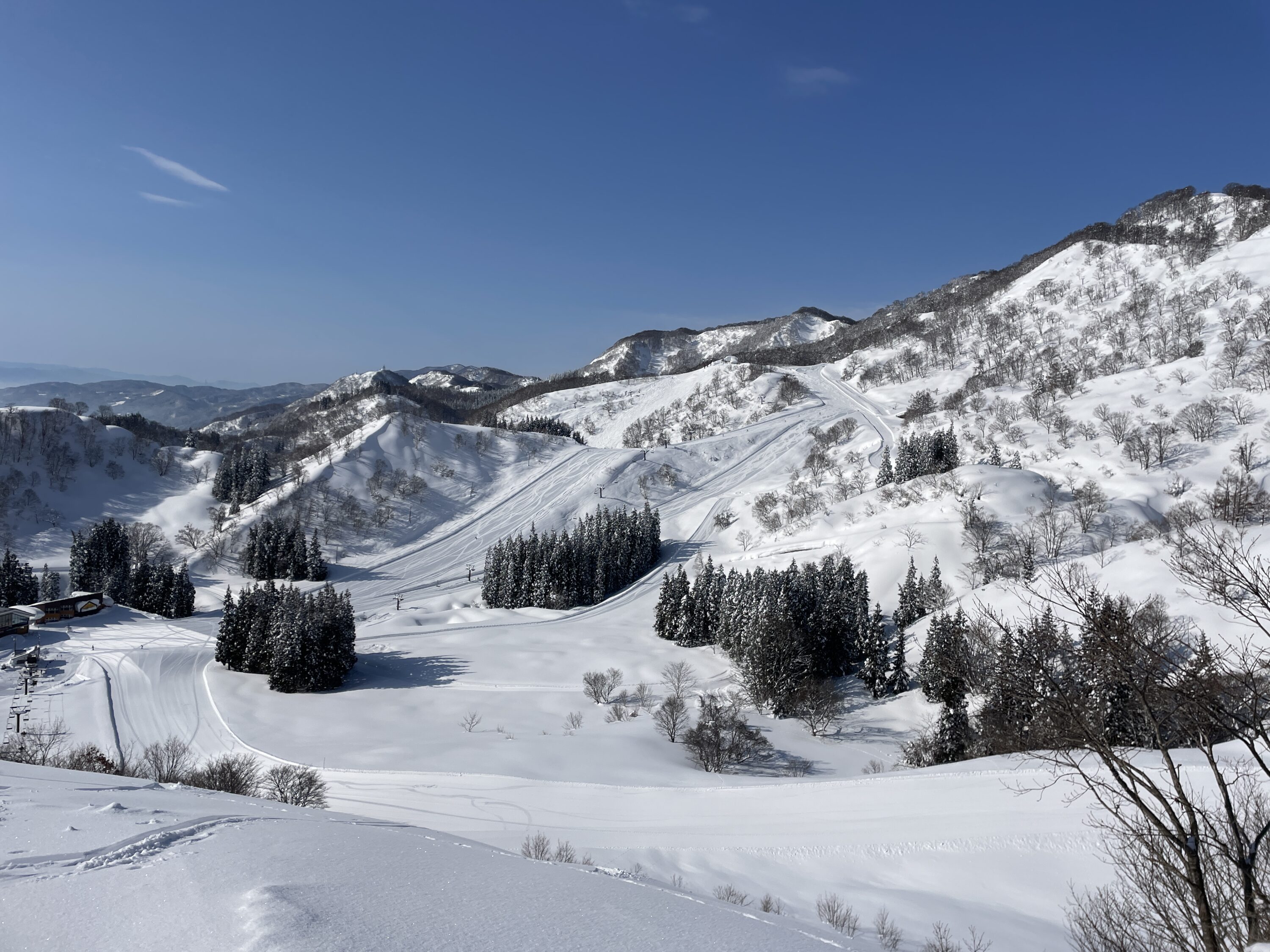
Togari Onsen Ski Resort, located at the foot of the Sekita Mountain Range spanning Nagano and Niigata prefectures and known for its heavy snowfall, is embarking on a major reform this winter.
The mastermind behind it is Hiroshi Hamaguchi, 49, an active racing driver and owner of an investment company in Tokyo. In July 2025, he acquired all the shares of the ski resort's operating company and assumed the position of Representative Director and President.
He went to the United States to study basketball as a student, started a data marketing company for athletes at the age of 27, and established Hamaguchi Asset Management Co., Ltd. in 2001. In 2008, at the age of 32, he began working as a racing driver. Hamaguchi has been the European Series Champion in Europe's top GT races to this day, and is also a Crown holder, the highest technical qualification in skiing.
Mr. Hamaguchi has an unusual career path for a ski resort operator. How did he come to manage Togari Onsen Ski Resort?
To explore the background and his vision for the future, we interviewed him at Togari Onsen in the autumn, where large-scale renovations are progressing rapidly.
Raising my son to be a mogul skier

ー--You're from Tokyo, when did you start skiing?
I think I was in kindergarten. My dad was on the Keio University ski team, so I used to ski behind him.
When I was in elementary school, I was taken to places like Naeba during the height of the bubble economy, more often by my friends' families than by my dad. After that, I stopped skiing completely. I started again because I wanted my own son to take up skiing.
ー--So there's been quite a gap, then. When did you reconnect with your son?
It was about 10 years ago, when my son was 3 years old. I really love sports, so I wanted my child to play sports too.
However, April to October is the car racing season, and I'm mostly in Europe, so I thought winter sports would be better, and I had played a little myself in the past.
ー--Did you go out with your son quite often?
Yes, we skied almost every weekend. In the beginning, we often went to Kagura Ski Resort. My son gradually grew to love skiing, and he enrolled in the Kagura ski school, and he got his first-grade certification when he was in first grade of elementary school.
After that, when we realized that he needed to practice quite seriously to aim for prizes, I decided to take lessons with him, and I also started to seriously dedicate myself to practicing skiing.
ー--That 's amazing, and the result is a Crown (*1)!
That's right. My son is a mogul skier now, and I travel around the world with him during my time off to ski so he can practice. It would be a waste to just watch while my son practices with his coach, wouldn't it? I
wanted to improve myself, so I asked skier Ryuji Kuwahara (*2) to teach me while they were practicing. I
received intense training from him as a private coach and was able to obtain my crown.
ー--Was there a particular reason that led your son to pursue mogul skiing?
I thought mogul skiing was really cool! I'm too old to do it myself, so I was wondering how I could get my son to try mogul skiing.
When he got over a few bumps, I'd say, "Wow! You're so good!! You should become a mogul skier!" I managed to get him hooked, and he really did get into it (laughs).
ー--That 's amazing! So, that's why you joined Togari's mogul team?
Initially, I enrolled him in a ski school in Kandatsu run by Nobuyuki Nishi (*3), and from there, it was suggested that he should join a team, so he joined the mogul team TR-J, led by Nobuyuki Nishi's senior, Hatsumu Kihara.
For about five years now, I've been going to Togari Onsen Ski Resort, their main training ground, with my son.
*1 Crown: Above the Grade 5 to Grade 1 badge tests certified by the All Japan Ski Federation, there is a prize test, and the Crown Prize qualification is the highest level and proof of aiming for the pinnacle of skiing technique.
*2 Ryuji Kuwahara:Former Japanese national mogul skiing representative who competed in the World Cup and other world competitions. He opened a mogul skiing school in 2015. He is also an active skier in the All Japan Technical Skiing Championships.
*3 Nobuyuki Nishi:Former Japanese national mogul skiing representative who competed in three consecutive Olympic Games. He is currently the principal of the Fusion Bump School at Kandatsu Snow Resort in Niigata Prefecture, and is dedicated to training the next generation of skiers.
Reasons for considering the acquisition of Togari Onsen Ski Resort

--Whatーwere your first impressions of Togari Onsen Ski Resort?
I first visited about eight seasons ago, and at the entrance to the ski resort there was an old, oversized iron pole or sign that read "Togari Onsen Ski Resort." To be honest, the moment I saw it, I was shocked and thought, "Wow! This is so Showa era!" (laughs). It
was removed when the resort was renovated, though. I'm sure it's an everyday sight for the locals, but I was really surprised by the signs and buildings there.
--Whenーdid you start thinking about acquiring a ski resort?
About three years ago, there was talk that we might not be able to practice at this ski resort anymore. It
was really just a rumor, but the talk was that the ski resort might close after the National Sports Festival (*4). Half jokingly, half seriously, some young people from the area would say to me, "Hamaguchi-san, can't you do something about it?" and even though I would say, "There's nothing I can do about that," it stuck in my mind.
--Whatーkind of changes in your feelings did you experience leading up to the actual acquisition?
First, I thought a lot about what would be necessary if I were to manage this place, and I researched every possible aspect related to that.
In the end, there was no offer from the ski resort to buy it, nor did I ask to buy it.
These things are a matter of fate, so if it was truly meant to be, the ball would come to me. I didn't throw the ball myself, but quietly waited and watched how things unfolded.
--I see. So the talks progressed smoothly at various times.
The best part was the coincidence that my legal counsel and the lawyer who handled Togari's civil rehabilitation (*5) 10 years ago were the same person.
When we were discussing the rumors I mentioned earlier, I asked that lawyer, "What do you think about operating or acquiring a ski resort?" He replied, "I was involved with a ski resort during civil rehabilitation 10 years ago, so please ask him for details." I then asked, "I might consult with him then. By the way, what's the name of the ski resort?" He said, "Togari Onsen." I was like, "Wow!"
He remembers every single asset, down to the smallest piece of furniture in the office, so I was sure it wouldn't turn into anything shady, and he assured me, "I can help make it a win-win situation for both of us." From there, he spoke to the former president, and things progressed from there.
--Itーreally is fate. But even so, you're an active racing driver and you also run a company, weren't you overwhelmed?
I have my hands full. I really have my hands full. I can't do it anymore (laughs).
--Whatーwas your biggest concern when you started working on it?
My main job is M&A consulting, but what makes it different from buying and selling real estate or cars is that I have to think not only about the ski resort but also about the "people" who work there. No matter how good the ski resort is, it won't work if you don't get along with the people in the company.
I only knew a few people at the ski resort beforehand, so I didn't know what it would be like until I actually joined, and that was my biggest concern. The team I work on year-round is small, with only six people, but everyone is very family-like and welcoming, which I'm really glad about.
*4 National Sports Festival. The alpine skiing competition for the 2028 "Shinshu Yamanami National Sports Festival" will be held at Togari Onsen Ski Resort.
*5 Civil rehabilitation. In 2013, Togari Kanko, which operates Togari Onsen Ski Resort, applied to the Nagano District Court for the application of the Civil Rehabilitation Act due to deteriorating business conditions, and Shiga Kenki Co., Ltd. was entrusted with the operation.
Our philosophy and vision for ski resort management

ー--You started your own business when you were young, so I imagine you'll be able to make good use of your experience and knowledge from that time. What are your thoughts on managing a ski resort?
I believe that "management" and "operation" are two different things, and this applies not only to ski resorts.
I think most ski resorts and most companies are "operating," but whether they are "managing" is another matter. Management naturally requires management know-how, but it also requires capital and a management team. In the case of
Togari Onsen Ski Resort, there were some who helped us when we went through civil rehabilitation 10 years ago, but they didn't inject capital, so I think the management team, including the former president, probably couldn't do anything even if they had things they wanted to do.
This time, I decided from the beginning that I wanted to take Togari in a different direction. I figured that we probably would
n't be able to change things if we just tried to get by without spending any money, so I decided to just go for it and cut the budget myself. At first, I considered hiring a president because we're in Nagano, but that wouldn't allow me to implement what I had in mind, so I decided to do it myself.
ー--That 's wonderful. I imagine you have various reform plans and challenges, but could you tell us about your big vision?。
The big vision is to "bring people to this town." The denominator of human traffic is so small that no matter what we do, I don't think it will be possible to create a platform as a business.
Restaurants are only open in the winter, so naturally there's no reason for people to flock there. We believe that unless we build the town around the platform of the ski resort, the town itself won't thrive. That was the first thing we did, and we decided to bring three restaurants from Tokyo to enhance our food and beverage offerings.
Significant changes to restaurants and courses

ー--Could you tell us more specifically about the three restaurants?
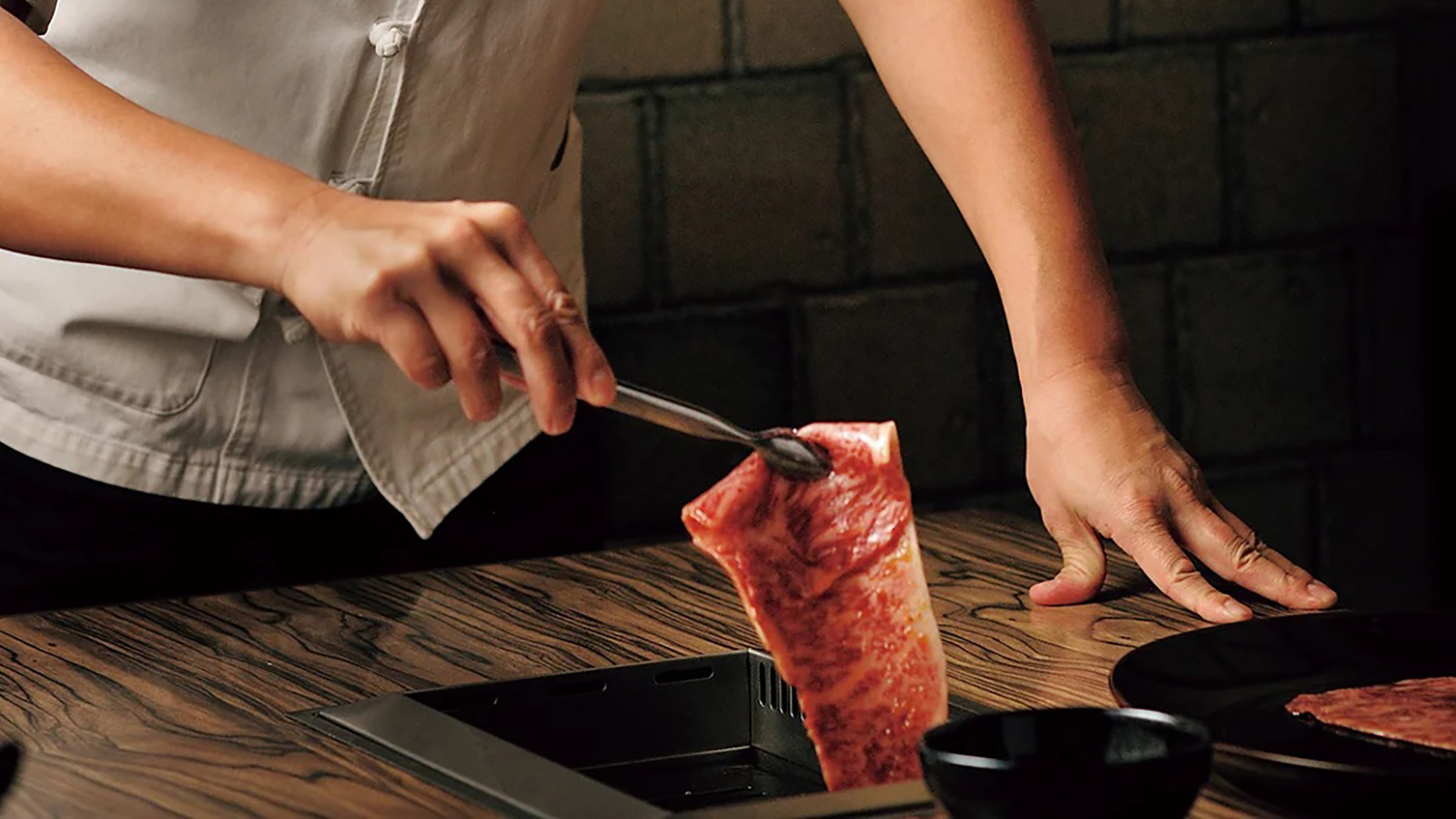
The former "Starry Night Restaurant" will be replaced by "Yakiniku Jumbo." Lunch will include set meals, beef bowls, and hamburgers, while dinner will be yakiniku (grilled meat). It will be open year-round.
The main dining hall, "Rest House Togari," will be operated by "Camel Kitchen," a subsidiary of Camel Coffee, which also operates KALDI. This season will only see renovations to the interior and exterior, and the menu will change from next season.
Another addition is the ramen shop "Chuka Soba Hajime," which will be open year-round inside the "Akatsuki no Yu" facility. It is a popular shop in Omotesando famous for its tsukemen (dipping noodles). And this is an original addition, but a cafe is currently under construction at the mountaintop.
--Yearー-round operation and a cafe at the summit! That's wonderful! How will the ski slopes change?
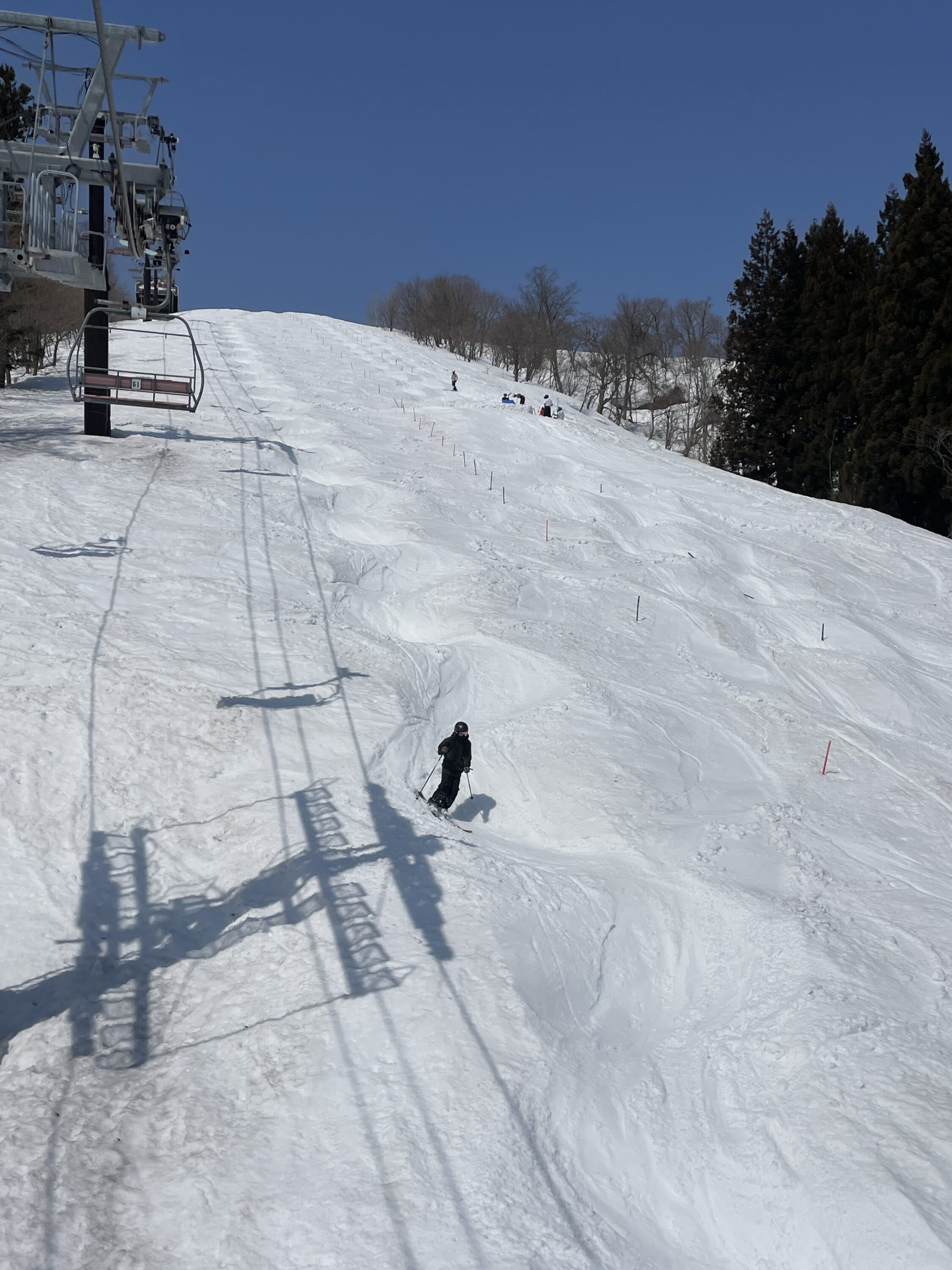
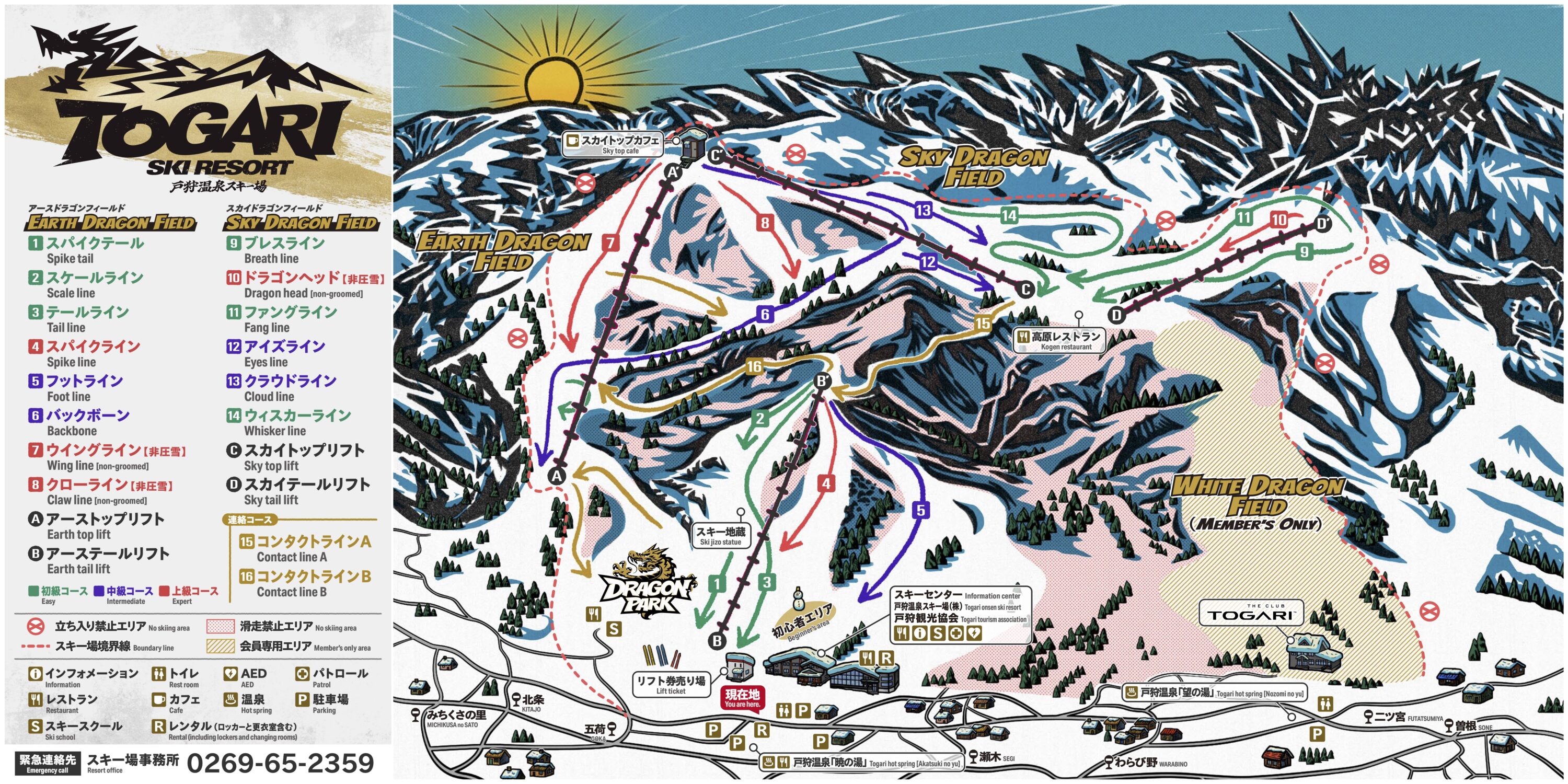
The current Gohonmatsu course at the bottom will be reborn as a full-scale park called "Dragon Park." Large kickers and jib items of about 15 meters will be built. This, along with a dynamic course with a series of moguls, will be renamed "Spike Line" and become the longest mogul course in Japan at 300 meters. The mogul course, which previously had two lanes, will be increased to four lanes, half of which will be for skiers and the other half open to the public.


ー--Four lanes! That's amazing. Is it being built by the mogul team?
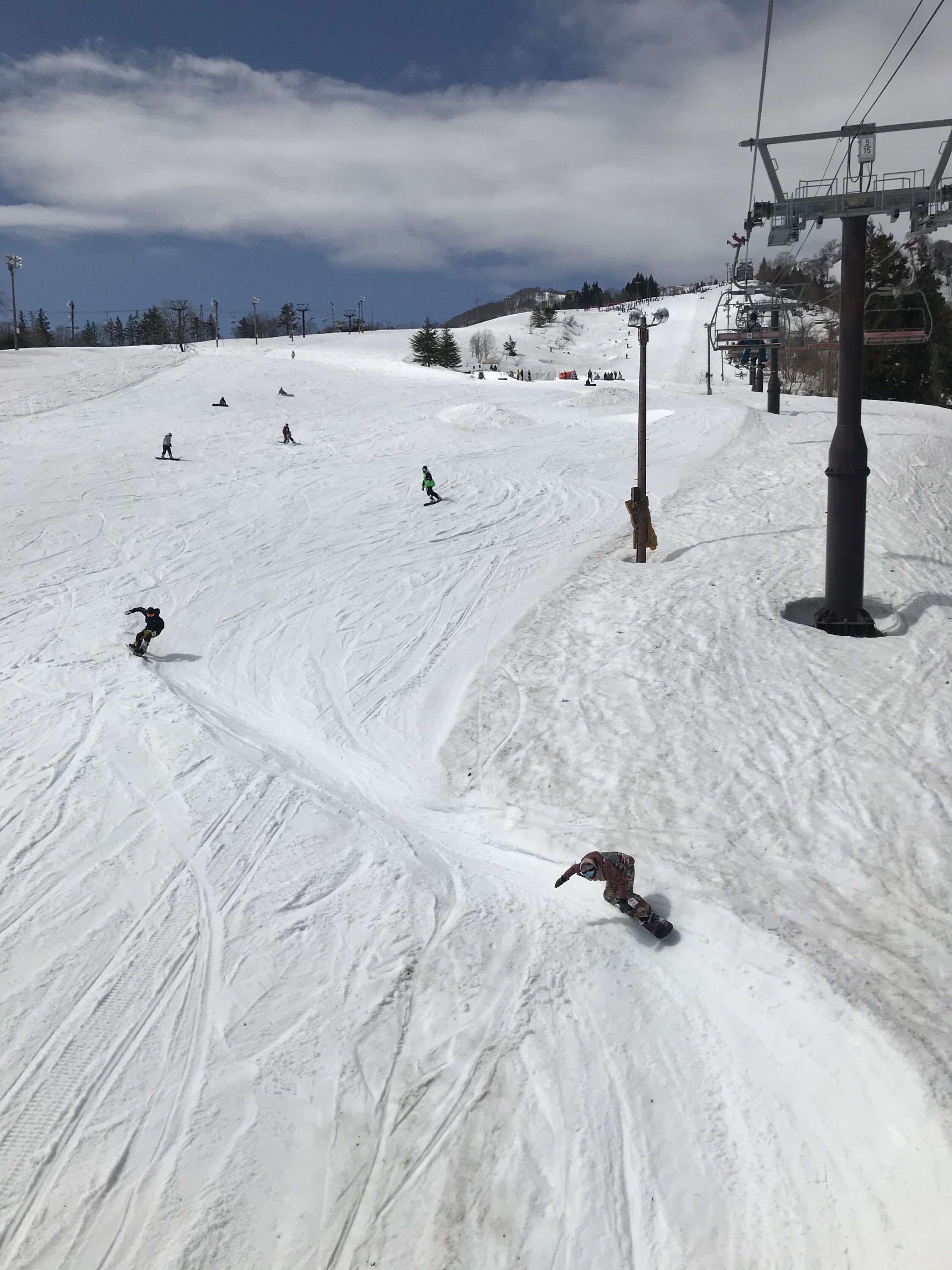
I've been involved in creating the courses a lot up until now, but we've now hired someone to maintain it throughout the season. The old Imoha course next door is popular for its packed snow, but it gets rough in the afternoon, so we plan to pack it down at least once during the day. We want to make this a slope where you can enjoy carving.

ー--So all the course names will be changed too, right?
That's right. The ski resort logo and other things are inspired by the dragon.
I was born in the Year of the Dragon, and I love dragons. My son's name also has the character for dragon in it. I hope that we can all rise up in life together with Togari, like a rising dragon.

A members-only ski slope project to shape the future of Togari
--Whatーwill happen to the Orion ski slope, which is currently closed?
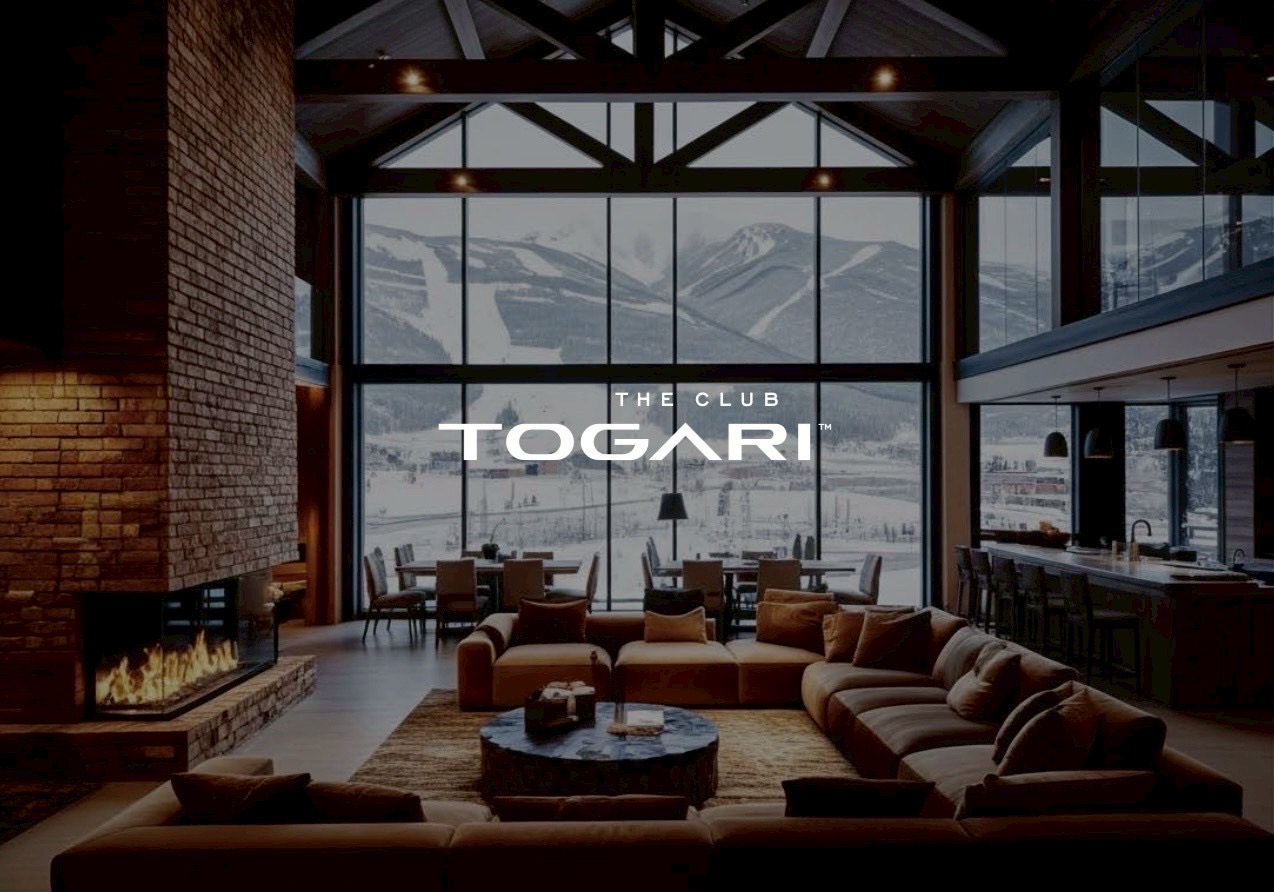
This place is going to change quite a bit. It will reopen as a members-only ski resort called "THE CLUB TOGARI".
Along with selling memberships, we will build villas at the base of the slopes and sell them to members. Members will be able to ski on private slopes with their guests, use a members-only clubhouse, and we also plan to create original merchandise. Sales will begin this season, and the resort will launch next season.

ー--How much does a membership cost?
The planned selling price for the first phase is 20.4 million yen. This is the price before construction begins, so it may change.
In my own business, I sell memberships for a members-only circuit in Chiba in a similar way, and we started selling them for 18 million yen, and now they're going for around 50 million yen.
ー-- Are the people who buy memberships at the circuit Japanese?
70% of our customers are Japanese. We estimate that over 60% of the customers at "THE CLUB TOGARI" will be Japanese.
To be honest, as a ski resort, I believe we will 100% fail if we don't do this. The current business model of operating lifts, selling lift tickets, and serving food at the slopes is simply not profitable. So,
when I thought about what kind of business we should do to survive, I believe this core business is the development on the Orion side, and if we can't do this, I don't think this town has a future.
This is clear. There is no other option.
ー--I see, so it's a reality that you can't survive without such dynamic reforms. Private slopes are practically nonexistent at Japanese ski resorts.
There aren't any in Japan, or even in Asia. There are about three private clubs in the US, but private slopes are rare even around the world.
Togari is about 20 minutes from Iiyama Station on the Hokuriku Shinkansen, making it a hub for the area. It would be boring to just purchase a membership and ski on the Orion side, so it would be nice to stay in Togari and use it as a base for visiting nearby ski resorts like Nozawa Onsen and Madarao Kogen.

Looking at an even bigger vision, we'd like to start with development on the Orion side and then build a gondola from there to "Tondaira" (which has been renamed "Sky Dragon Field" this season).
If we could build a gondola, we could operate for a total of one month longer. However, currently, building just one gondola costs around 5 billion yen, so as I mentioned earlier, it would be impossible to recoup that cost just from ski resort operations. We would like to build the gondola once we have a clear prospect of development in that area.

Inbound tourism measures and approaches to young people
ー--More and more ski resorts in the Hokushin area are now taking measures to attract inbound tourists. What are your thoughts on inbound tourism?
I'm not the type to rely too much on inbound tourism. Currently, the inbound tourism rate at Togari is less than 1%.
So, in terms of potential for growth, there's a lot of room for improvement, but we're not necessarily pursuing that. I think Togari has been supported by many people because it's easy to get to, including its affordability, so I have no intention of changing that.
While we're reforming the main slopes, we'll keep the base the same, and I'm thinking we could even shift towards a more upscale market by making the Orion side a membership-only facility.
Just because someone is an inbound tourist doesn't mean they'll necessarily spend money. Some foreigners cheat on lift tickets or eat dinner at convenience stores.
So, I think it would be better to target well-mannered, affluent Asians, as this would prevent the town from collapsing.
ー--Conversely , Togari now has a large number of young customers who come on bus tours. What are your thoughts on that?
I think those people are important.
I know Togari is being criticized for taking on too many low-paying customers, but I believe that Togari wouldn't be what it is without those people. In fact, I want to make it easier for young people and beginners to rent, so I've bought about 300 new rental sets.
ー--That 's wonderful. Eventually, those young people will grow up and come back, so they're a very important target group, aren't they?
We'd like to focus more on day-trippers.
This ski resort is based around guesthouses, so it's not as well-known as you might think, but it's actually incredibly accessible.
You can take the Shinkansen from Tokyo Station at 7:52 AM, arrive at Iiyama Station at 9:43 AM, ski all day, enjoy a hot spring bath, eat at Yakiniku Jumbo, and then catch the 7:28 PM Shinkansen to be back at Tokyo Station by 9:16 PM. We want to promote the fact that you can have plenty of fun here.
The power of the team behind the revolution

ー--With so many new ideas and major reforms, I imagine the ski resort staff and local residents are quite surprised, aren't they?
Well, from my perspective, everyone was pretty conservative, so whenever I came up with a big idea, they'd immediately say, "No, no, wait a minute," or "No, that's impossible." But after about a month and a half, nobody said "it's impossible" anymore. I guess they'd given up and thought, "This guy's going to do it no matter what I say" (laughs).
From then on, they switched gears and thought, "We have to follow this guy," and thankfully, they started looking for ways to make it happen.
ー--That 's wonderful, the power to move even conservative people, I'm really looking forward to it.
I know it sounds strange coming from me, but everyone really follows along, don't they? (laughs)
There are a lot of talented kids in the next generation in our town, and I think that if everyone can start realizing their dreams, this town will see a completely different and positive shift in the future within 10 years.
Everyone is afraid to take that first step, so I hope I can be the catalyst for that.

As the interview concluded, the rain stopped and a large rainbow appeared in front of Togari Onsen Ski Resort.
It was as if it were a bridge connecting the new president, Hamaguchi, who is striving to forge a new future, with the people who have long nurtured this region. This
is not just a pipe dream; we can expect Togari Onsen Ski Resort to evolve into a new model case for ski resorts in Japan.
Interview photos: Naohiro Kobayashi
Photography assistance: Penticton, a baked curry restaurant