

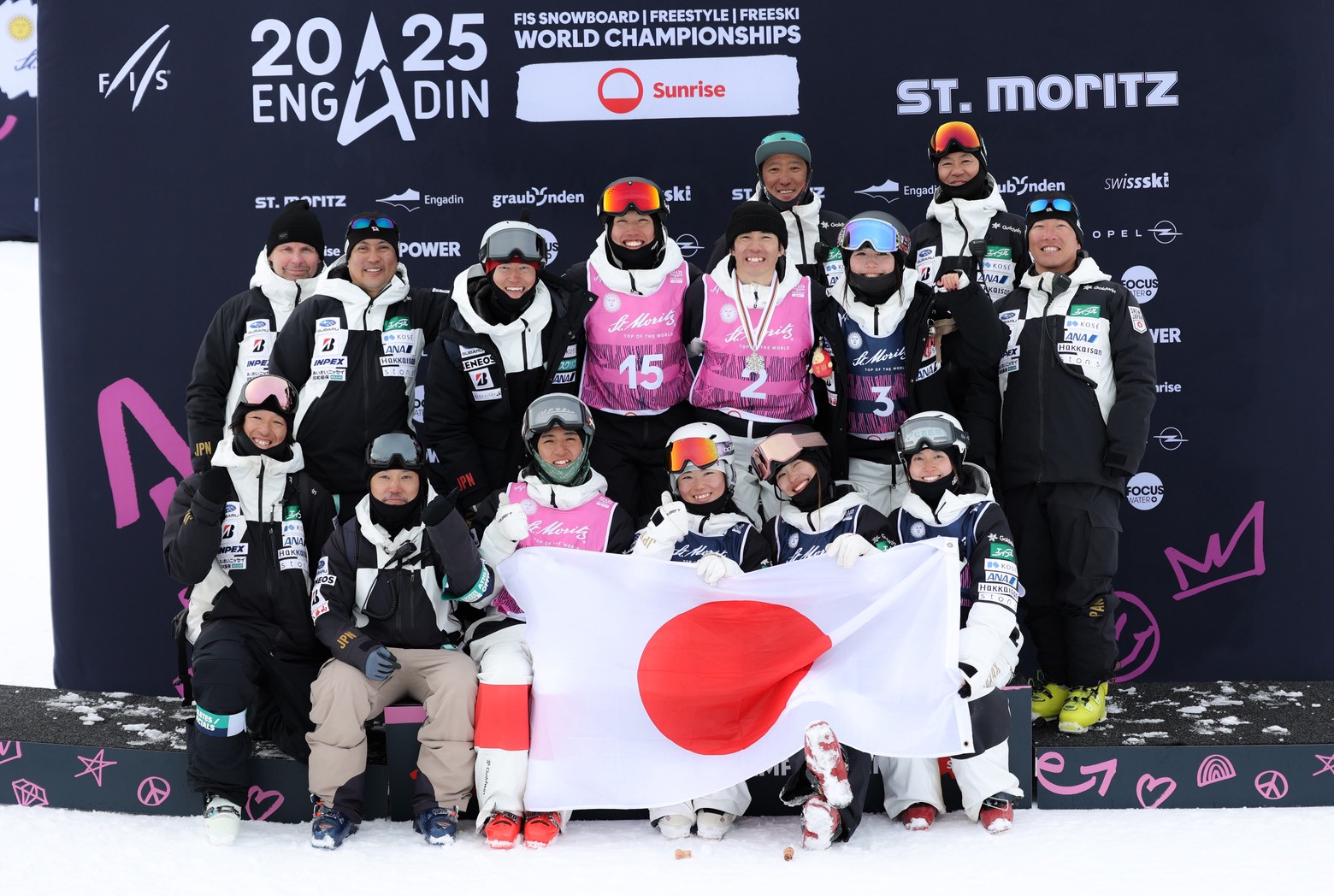
What kind of people are the coaches of Japan's national ski team, and what kind of work do they do? We would like to delve into this topic, which is rarely covered even in specialist magazines. In this first of two articles, we spoke with Yuta Shiro, head coach of the Japanese mogul team, who is expected to win a medal at the Milan-Cortina Olympics. First, we would like to focus on the highly responsible role of the head coach and how the workload is shared
The head coach acts like a manager of the team

"The job of a national team coach is not just to provide technical guidance. It is a wide-ranging job."
In a team that includes underage players, the coach is expected to provide guidance, responsibility, and supervision
"As head coach, I'm in a position to manage the team. In business terms, it's like being a manager. I manage the budget and think about the overall strategy."
Managers are always expected to improve performance, and if any problems occur, they are held responsible. Coach Shiro, who we spoke to this time, was active as a player in the 2000s and has a wealth of experience as a coach
He became head coach in the 2018-19 season and is the backbone of the Japanese mogul team, having participated in the past three Winter Olympics: Sochi, Pyeongchang, and Beijing
"When we travel overseas, I decide what the best schedule would be and make the preparations. It's also my job to arrange airfare and accommodation. Another
important job is selecting and appointing other coaches and trainers, and I'm also responsible for gathering the opinions of the coaches when creating various standards and submitting them to the sports headquarters."
In professional baseball teams and J.League clubs, there is a manager above the head coach, who may then have a general manager or someone in a similar role above him,
but in the case of the national ski team, the head coach essentially doubles as both manager and general manager.
"Ultimately, we discuss and decide with the relevant director of the Ski Association of Japan (SAJ), but whatever the event, the head coach's decision is respected and is generally adopted."
Coaching staff with various roles
Currently, the national freestyle moguls team is made up of S-rated athletes Horishima Yukimasa, who won the 2025 World Championship moguls, Tomitaka Hinako, who came in second in the same moguls, and Yanagimoto Rino, who came in third overall in the 2025 World Cup dual moguls, with A-rated and B-rated athletes below them making up the top team
In addition, there are about 30 players in the development category, designated D. In order to participate in the Olympics, World Championships, World Cup, etc., in principle, players must be certified as SAJ's designated training players, in other words, they must join the national team
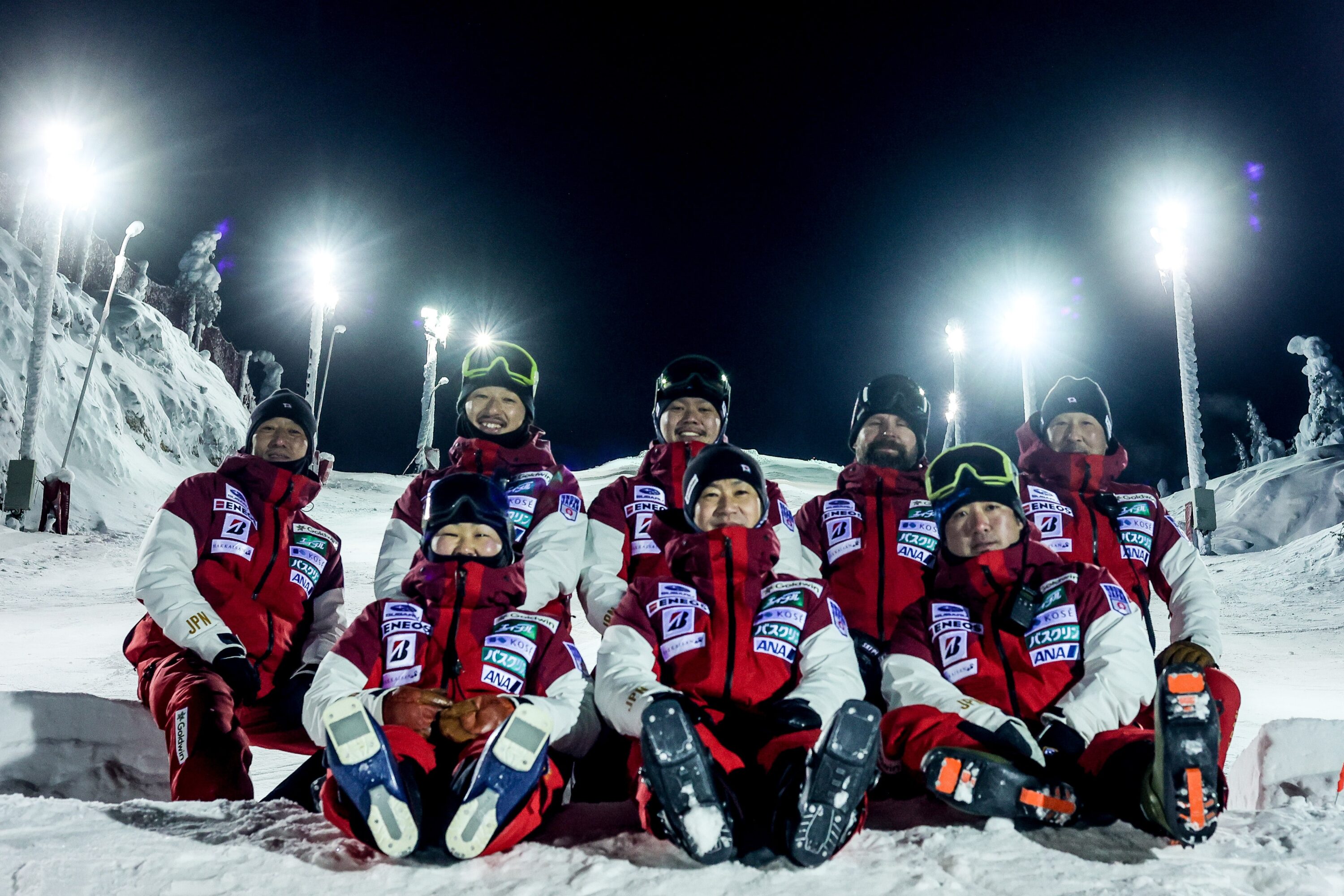
Supporting this huge pyramid is the coaching staff
In addition to the head coach, there is one chief coach and five technical coaches, as well as a secretary, doctor, physiotherapist, strength coach, and nutritionist, all of whom contribute to the team in their respective areas of expertise
"In the case of moguls, the workload of the head coach is extremely heavy. That's why the secretary supports me in my practical work. However, I don't leave all the detailed work to the secretary.
For example, I'm the only one who can decide the dates for trips. Sometimes a tournament is canceled due to a lack of snow, and there's an open schedule until the next tournament.
In that case, I have to decide whether to stay in the area or return to Japan.
Therefore, once the specific details have been decided to a certain extent, the secretary will arrange tickets and accommodation through SAJ's partner company, JTB."
A secretary's job is not just to arrange air tickets and accommodation
"Because the team and players receive support from the government, the secretary is also responsible for the administrative matters. The secretary covers the parts of the work that I cannot handle."
The chief coach's role is to solidify the foundation
The chief coach is the person whose name is next in line to the head coach on the roster
The current coach in charge of this role is Shigeru Kobayashi, the oldest member of the team and a former national team athlete. With his trademark long mohawk hair, he was known as "Mohawk Kobayashi" and was a familiar face on TV ski programs in the 1990s
He has a long history as a coach of the national team, and was acquainted with Nagano Olympic gold medalist Satoya Tae and World Cup and World Championship winner Uemura Aiko during their active playing days
"The chief coach is in a position to bring together the coaching staff. Coach Kobayashi has a wealth of experience both as a player and as a coach, and is a very reliable person, so we have consulted on various matters.
I have been with Coach Kobayashi in all three Olympics that I have participated in. Rather than directly strengthening the national team, my role is to strengthen the system that allows players to join the national team, including developing excellent coaches in each region."
In other words, he is someone who works not only for the national team, but also for the base of the pyramid below it, and works on a total basis to make the foundation solid. Coach Jo emphasizes that this aspect is important in order for Japanese mogul skiers to become even stronger
"Soccer coaches need a license. No matter how high your coaching skills, you can't become a coach without a license.
On the other hand, the Ski Federation as a whole, not just the moguls federation, does not have a fully established coaching licensing system. That's why we are currently working with the JSPO (*1) to create a coaching qualification. We believe that in the future, the number of qualified coaches should increase. When that happens, I think the role of the chief coach will become even more important."
*1 = Abbreviation for the Japan Sport Association, a public interest incorporated foundation that runs the National Sports Tournament and other events, as well as the certified sports instructor (coach qualification) system
Moguls is a relatively new sport. It was made an official Olympic sport in the 1990s, so it is still a young sport. Compared to 20 years ago, the training and development system is quite mature. However, Coach Jo believes that it is still in the development stage and needs to be further improved
Why the head coach is absent
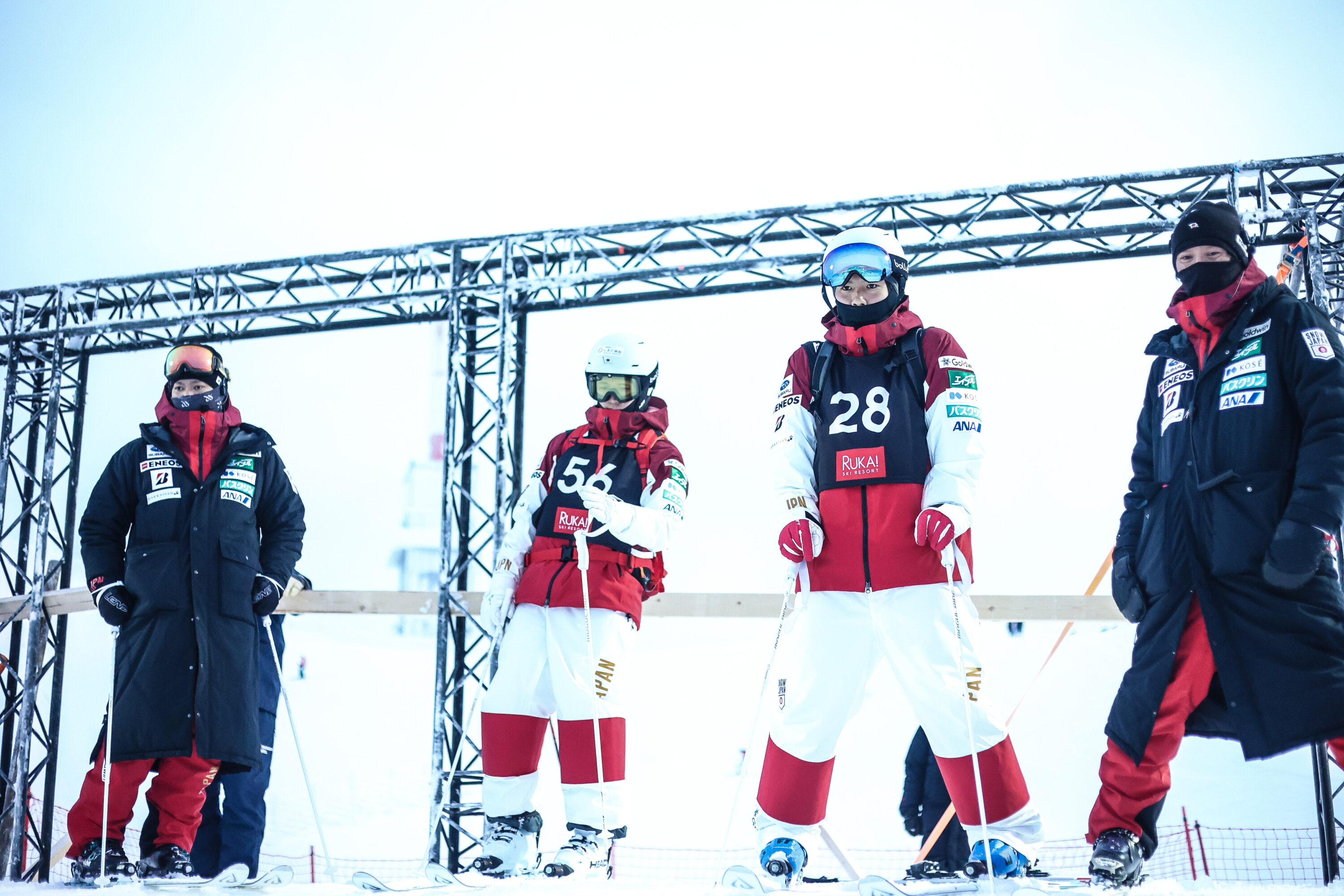
Coach Shiro has been in charge of on-site leadership as head coach since the 2018-19 season, but since last season he has taken a step back and not accompanied the team on overseas tours
"One of the reasons is that I actually had an injury and that injury has not yet fully recovered. I will be participating in meetings online and providing support from Japan as I go into the Olympic season.
Five technical coaches will be going to the competition sites, and I have asked Coach Shimatani to handle the on-site management duties that I previously handled."
Looking at it from another perspective, the Japanese team can compete at the Olympics even if Coach Jo is not there. This shows that they have the strength to do so
Olympic gold medalist coaches Japan team
The technical coaches who are in charge of the field are literally technical instruction coaches.
In terms of the system, the coaches do not give uniform instruction to everyone, but rather individual instruction. Coach A is in charge of coaching players B and C, and coach D is in charge of coaching players E and F, and so on.
"While I was working as head coach, I also provided technical guidance to specific athletes up until the Beijing Olympics. Shimatani Hiroyuki, Endo Hisashi, and Janne Lahtera were all members of the team from the Beijing Olympics onwards."
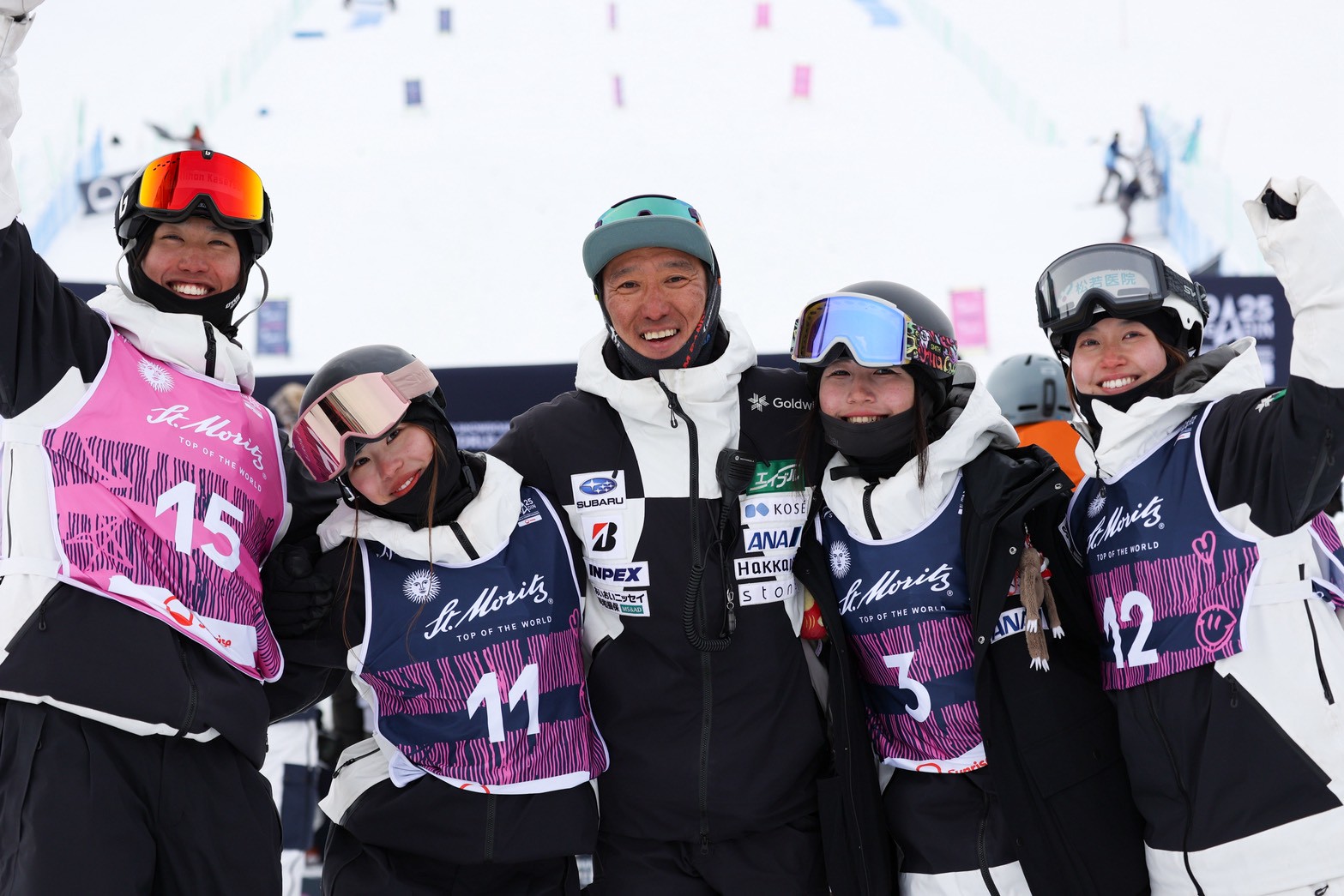
Coach Shimatani Hiroyuki has competed in international competitions since the mid-1990s and has extensive experience coaching moguls.
Coach Endo Hisashi placed 7th at the Vancouver Olympics and has experience on the World Cup podium. He was the ace of the Japanese men's team before Yukimasa Horishima and is close to the current athletes.
Finnish coach Janne Lahtela won a silver medal at the 1998 Nagano Olympics and a gold medal at the 2002 Salt Lake City Olympics. He was a world-class athlete with ample experience winning the World Cup.
The Japanese team began inviting coaches from overseas in the 1990s, but Janne Lahtela is the biggest name among them, and it is noteworthy that his skills and experience are being poured into the Japanese team. In recent years, the team has also strengthened its coaching staff.

"The Japanese team has many players who will be competing in the World Cup, so to ensure that the instruction given to each individual player is not diluted, we added coach Taniguchi Takeho last season and coach Tateda Shunya this season. This season is also the Olympic season, so these two new coaches will also accompany us on overseas tours
At the time of the Beijing Olympics, Shimatani and Endo had just become coaches for the World Cup team, so they accompanied the team full-time to increase their experience. Now, Taniguchi and Tateda will also be experiencing the Olympics, which will surely increase their experience as coaches. It's still a long way off, but I hope that by the 2030 Olympics, the two of them will be able to lead the team."
Coach Jo's decision to step back is also intended to foster the development of younger coaches, who will gain experience playing in big overseas games, which will be an asset to the entire team
Part 2 is here
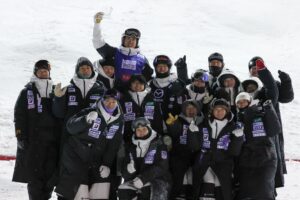
Freestyle Moguls Coaching Staff
・Head coach: Yuta Joh (born December 4, 1982)
・Chief coach: Shigeru Kobayashi (born June 28, 1966)
・Technical coach: Hiroyuki Shimatani (born August 29, 1974)
・Technical coach: Takashi Endo (born July 4, 1990)
・Technical coach: Janne Lahtera (born February 28, 1974)
・Technical coach: Takeho Taniguchi (born July 17, 1994)
・Technical coach: Shunya Tateda (born October 25, 1991)
・Doctors: Hirofumi Katsuta, Sorao Koiwa
・Physiotherapists: Jun Setoguchi, Jun Hyodo
・Physiotherapist: Mizuki Tokutomi
・Strength coaches: Hideyoshi Ito, Takahiro Nishimura
・Nutritionist: Ayumi Ito
Photo by Sho Endo