

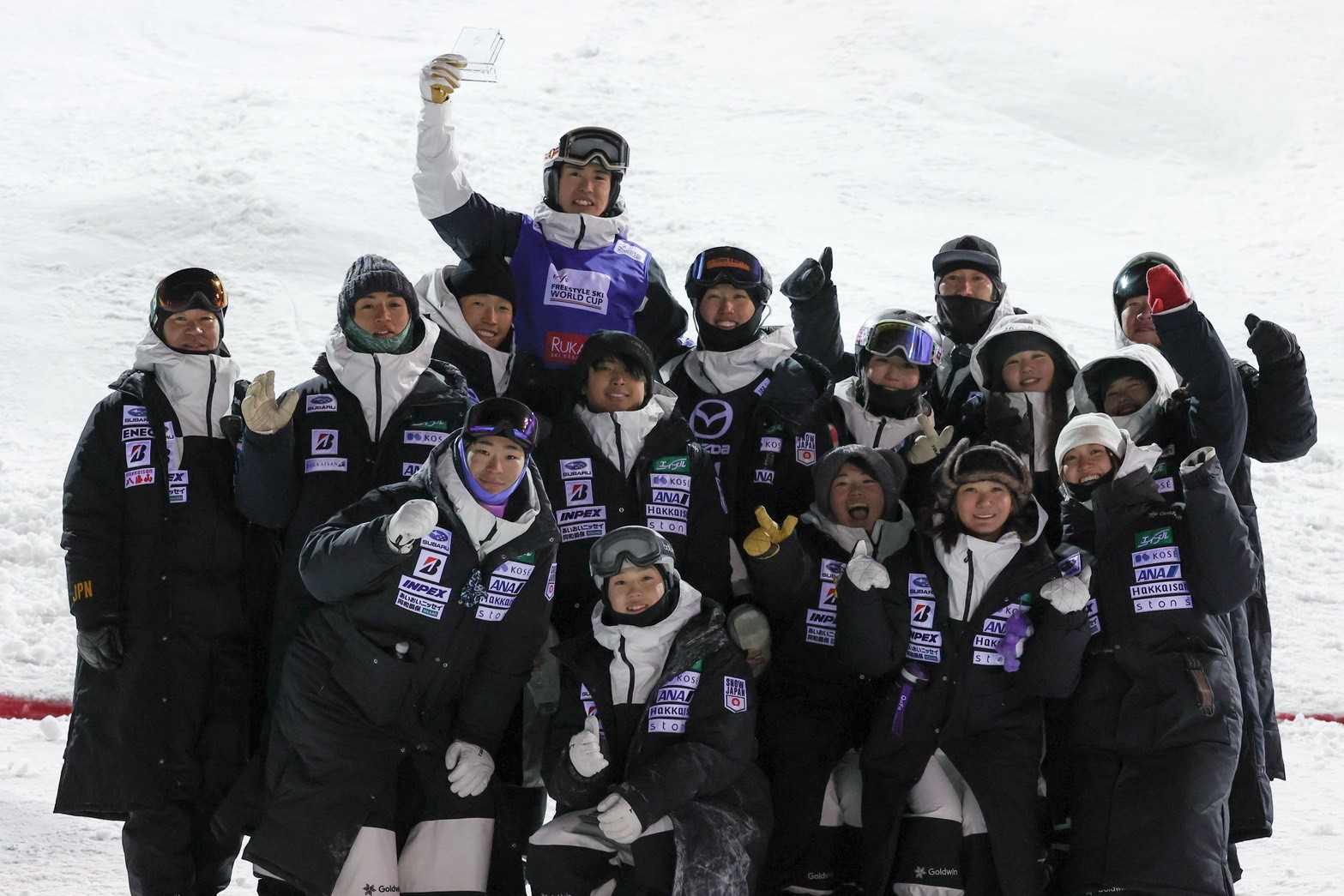
What kind of people are the coaches of Japan's national ski team, and what kind of work do they do? We'd like to delve into this rarely discussed topic. This time, we spoke with Yuta Shiro, head coach of the Japanese mogul team, who is expected to win a medal at the Milan-Cortina Olympics ( click here ). In the second part, he reveals the real story of the relationship between coach and athlete.
Technical coaches work with players on a assigned basis
As mentioned in the first part, Japan's national mogul team has head coach Shiro, chief coach Kobayashi Shigeru, and five technical coaches who are in charge of the field: Shimatani Hiroyuki, Endo Takashi, Janne Lahtera, Taniguchi Takeho, and Tateda Shunya
The five technical coaches do not all instruct everyone in the same way; instead, each coach is assigned a specific player and focuses on providing instruction to that player
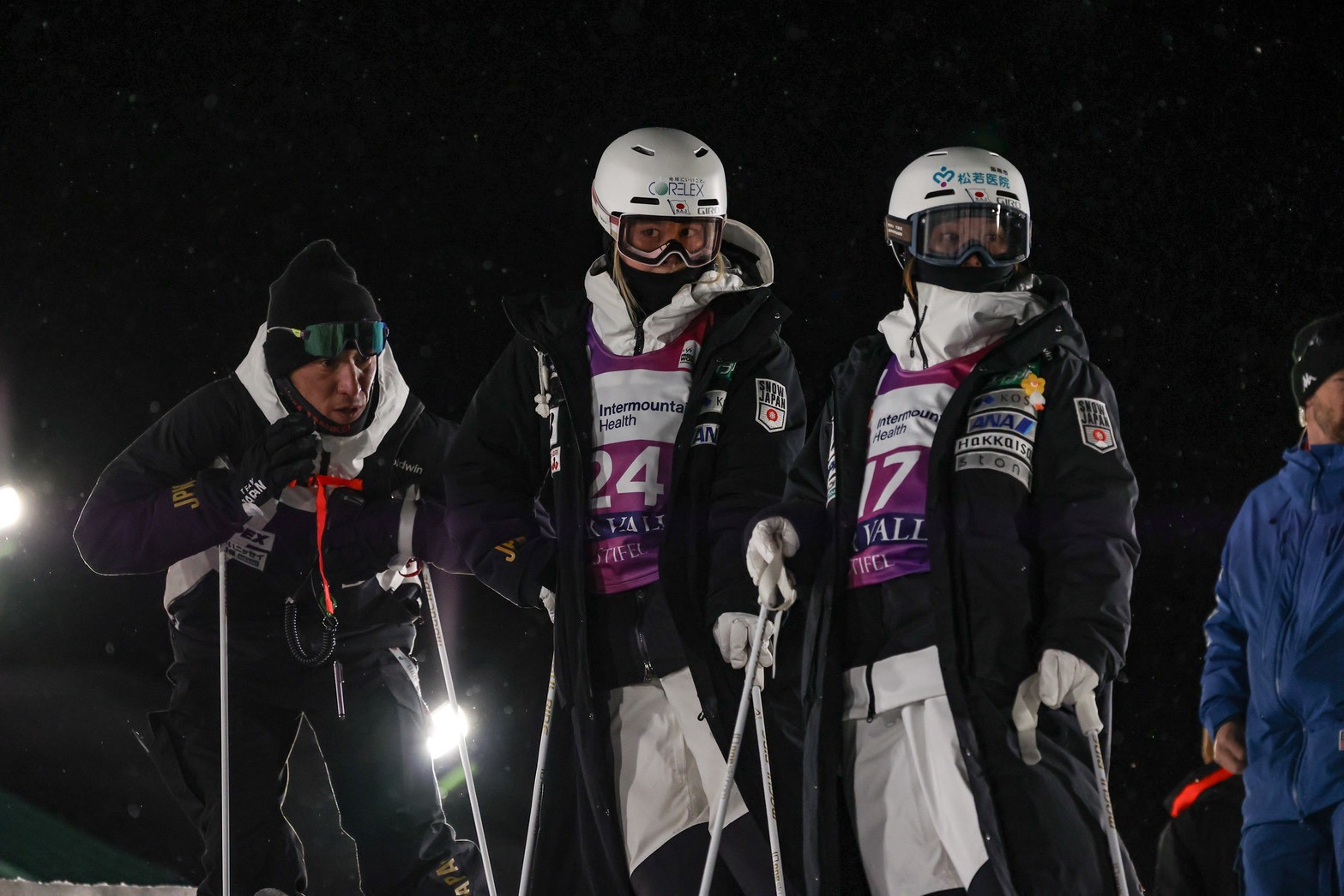
For example, the coach who oversees Horishima Yukimasa is Janne Lahtera. In this way, technical coaches are assigned to provide technical guidance to several players, but the players they supervise have different technical levels, personalities, strengths and weaknesses. How do they follow up on these aspects?
"They have their own rigid way of doing things and don't push away players who can't keep up. All the coaches adjust and adapt their teaching methods according to the personality and characteristics of the players, striving to help them perform to their full potential
However, for example, if there is a player who is cheerful and proactive and eager to absorb everything, and another player who is quiet and reserved, it will be difficult for the coach to teach both players at the same time, so adjustments will be necessary."
As professionals, coaches always think and act to achieve the best results, but players and coaches are also human beings, and sometimes misunderstandings occur
"After all, the amount of time you spend with someone can make a difference. If you spend a lot of time together, you get to know their personality, so you can provide appropriate coaching. That difference is quite noticeable."
Coach Shiro told me this related anecdote:
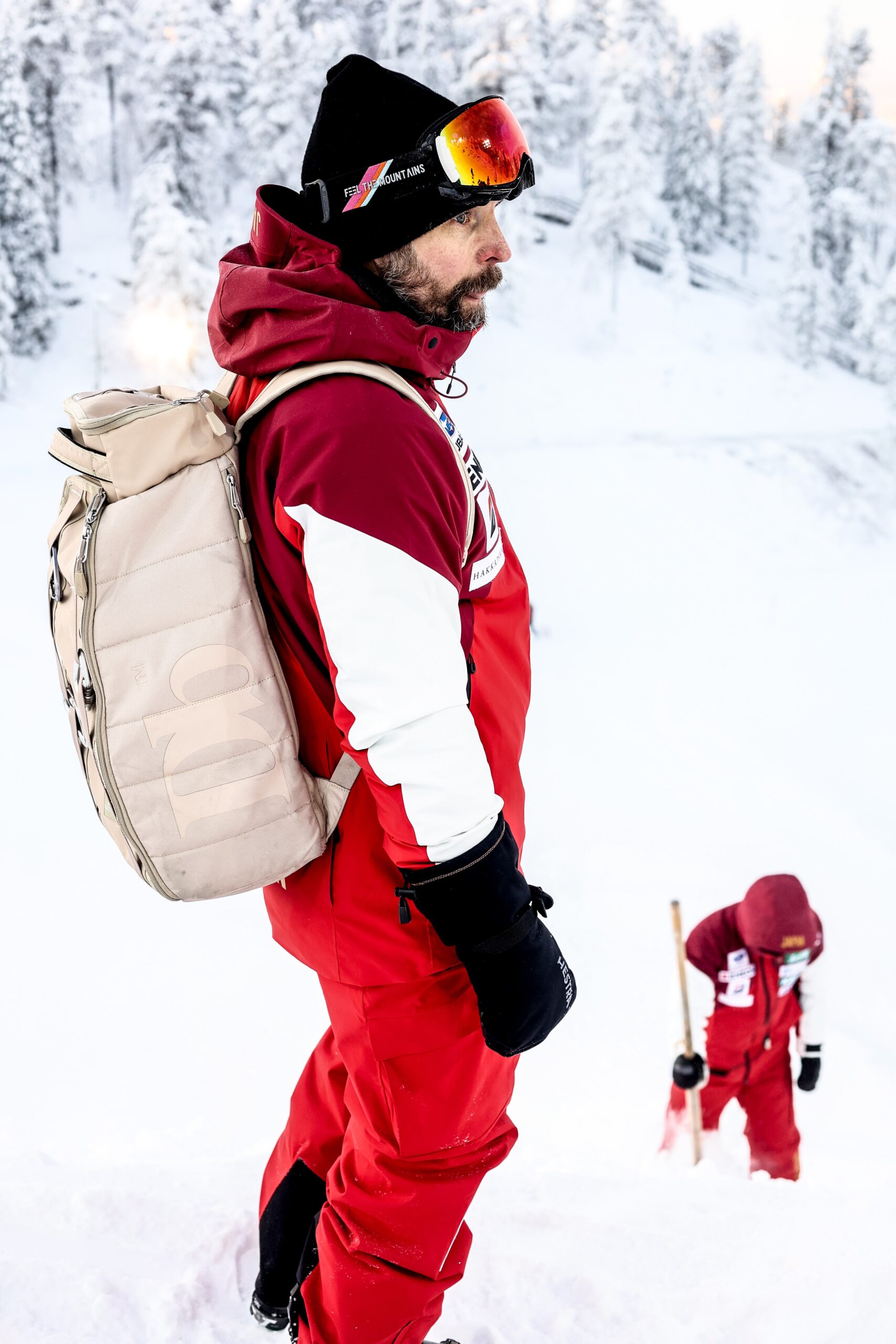
"Coach Janne always says, 'Make sure you practice basic turns on flat slopes.' Just because it's moguls doesn't mean you have to practice only on mogul slopes. He says basic ski control techniques are important. That's why we practice plowbogens thoroughly. He's really good at it himself. He
also says things that even someone who isn't a top skier like Horishima can understand, so it's easy for less experienced skiers to understand. At the same time, he can speak intuitively based on his experience of being at the top of the world. That's also a strength for the whole team.
However, some players may not understand this and may feel that it is not suited to them. It is also true that there is a language barrier and subtle nuances may not be conveyed
Because we are all human beings, it is inevitable that there will be times when our feelings do not match. This is not limited to athletes and coaches.
In addition, the Japanese mogul team tries not to stress athletes out by continuing to receive instruction from a coach they feel is not a good fit.
"We allow players to choose their own coaches. So sometimes they change coaches. That's totally OK. It's up to the players to decide whether they're a good fit or not."
The attitude of "players first" is consistently maintained
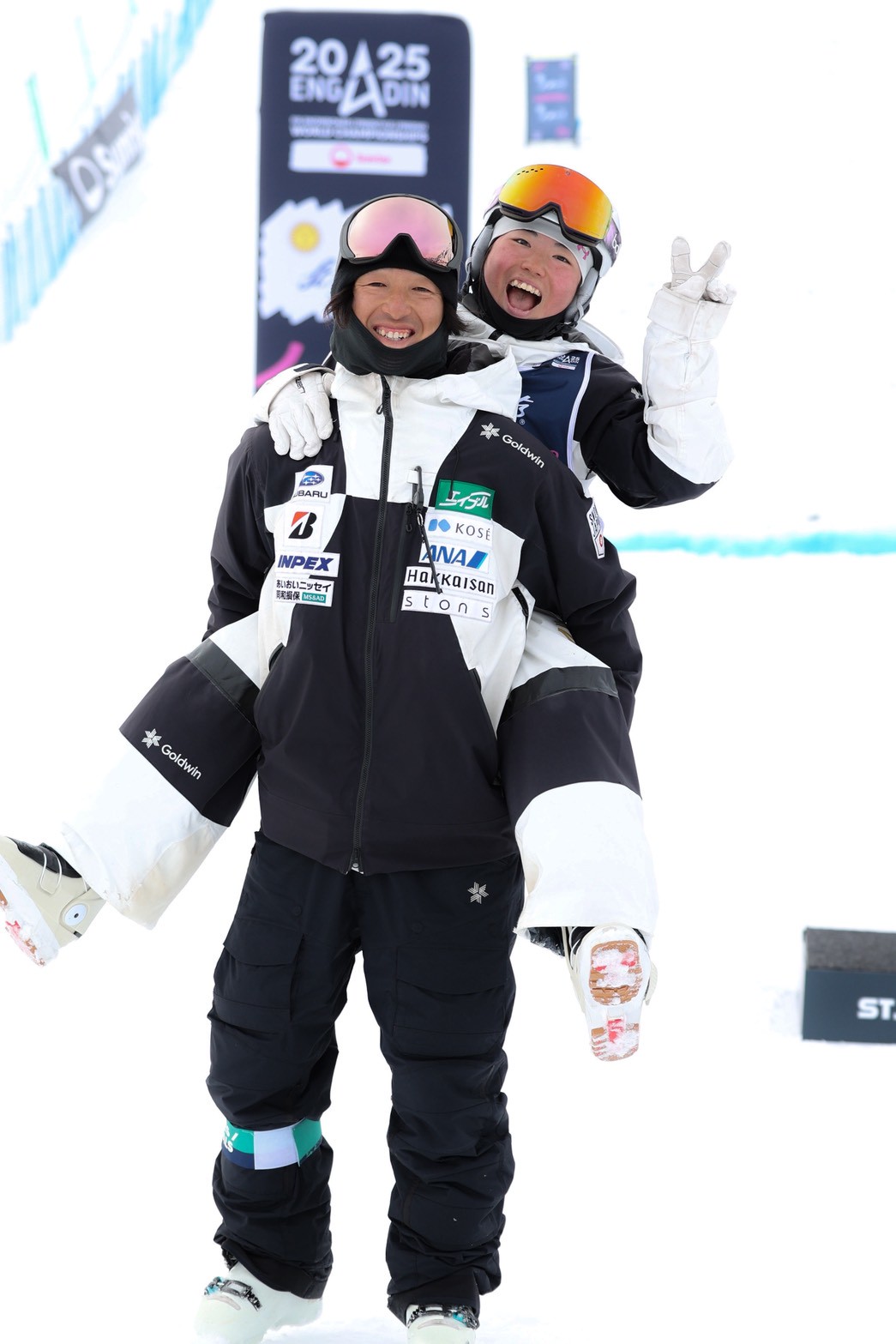
Support for Yukima Horishima's solo practice
Making the most of each athlete's strengths and compensating for their weaknesses requires individualized treatment for each athlete.
A typical example of this is the treatment of Horishima. Since 2024, Horishima has been away from the team during the off-season to train independently at a huge indoor ski resort in Oslo, Norway.
This is to improve the perfection of his "cork 1440," the most difficult quadruple rotation on a diagonal axis.
"In that sense, the current Japanese team may look disjointed from the outside, as if everyone is being selfish and doing whatever they want. But that's not the case at all. We
're simply striving to bring out the best in our players. If we don't do that, we won't be able to beat the world's top players. That's why we're letting Horishima do what he wants."
A coaching system that emphasizes traditional athletic discipline and conservative precedent-following cannot win on the world stage.
This may be true for any sport these days.
Division of roles at the tournament venue
Technical coaches mainly instruct the skiers in their charge on techniques, but at competitions they work together with the entire team, sharing information and making the best decisions instantly.
If you watch a TV broadcast of moguls, you can see them standing in the start and finish areas at the competition site. How are their roles divided?
"During regular practice and official practice, we watch from the finish line area. It's only once the competition has begun that the coaches take the starting position. We are always in contact with the athletes and support them so that they can be in the best frame of mind until the start. It
makes the athletes feel more at ease if the coaches who normally train them are next to them at the start. In the current system, it is Coach Shimatani and Coach Endo who are at the start.
Also, by observing the process leading up to sending the athletes off at competitions, we can create regular practice menus that reflect the start at the competition. We can give advice such as, 'This is how it was at the starting line back then, so you should have this same mindset in practice as well.'"
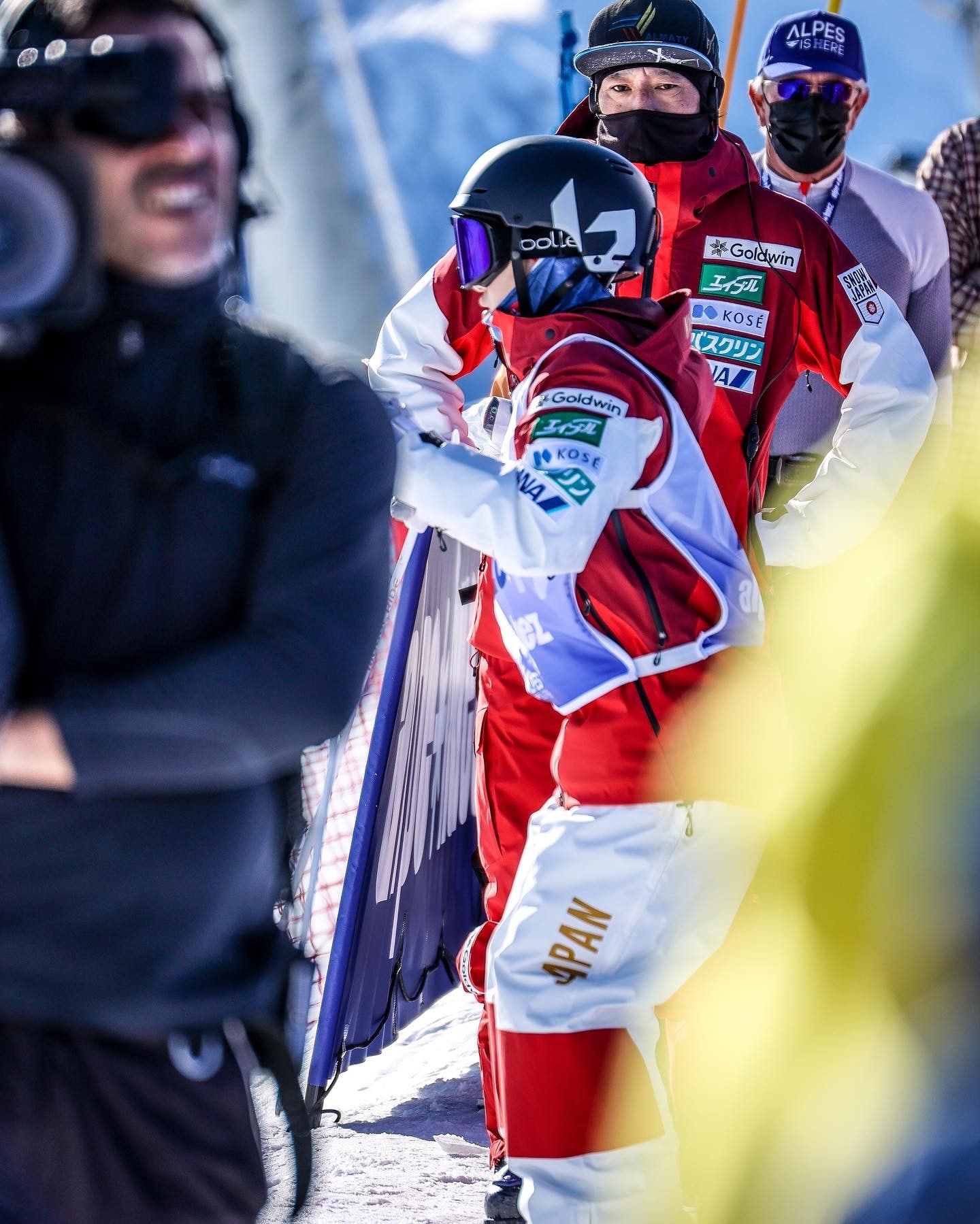
However, coach Janne Lahtera does things differently
"Janne is a little different. He says, 'I don't need to be at the start to understand,' and he looks at the whole picture from the finish line and thinks about strategy. He gives accurate advice to athletes, including those he doesn't normally see directly. That's Janne's style."
The information obtained at the start and the finish line is different. Sharing this information and making appropriate decisions in an instant will produce the best results
"When I go to the venue, I do the same thing. I watch the skates of various skaters in the finish area and check how the judges are giving out their scores. Then I send information like, 'Today's trend is like this,' or 'This skater is getting this kind of score,' to the starting coach
Janne talks directly with Horishima about how she will skate in the finals and how she will do it next time. She shares this with her superior, Coach Endo, who checks it and, since he can also see the air, makes fine adjustments such as, "Let's fly in this direction" or "The speed was like this, so let's reduce it," and sends her out. In this way, the cooperation among the coaches is going very well at the moment."
A coach was present next to the air platform
Although they may seem disjointed, they can come together as a team when the time comes. It is inevitable that a Japanese team that can achieve this will become stronger.
Furthermore, starting this season, the team's on-field formation has been strengthened.
"Ideally, we would have dedicated coaches not only in the start and finish areas, but also near each of the two air platforms. If they could check the air from close range, they would be able to give more appropriate advice.
However, many other countries are unable to do this due to budgetary and other issues. However, starting this season, Japan has been able to set up a system where Coach Taniguchi and Coach Tateda, who are good at teaching airs, are stationed near the air platforms."
Even when Coach Shiro is away from the field, the overall coaching system will definitely be improved by having a full system in place with coaches at four checkpoints: the start, first air, second air, and finish
What are the qualifications to become a coach?
Finally, I would like to consider the question, "How can I become a coach for the national mogul team?"
"Ideally, we would like to see a licensing system that everyone can agree on and that is transparent. Some people may think that the current system is stuck in a non-transparent state."
Coach Shiro has a strong philosophy for building a system.
In reality, aside from foreign coaches, most coaches are selected from former mogul skiers with a proven track record of coaching in the region. However, there are many such people across the country. How do you choose from among them?
"Right now, we are filling in the gaps. We are adding coaches to fill in the gaps. We needed a coach to stand next to the air stand, so we asked Coach Taniguchi and Coach Tateda, who are highly skilled in teaching air, to join us.
Both of them can provide comprehensive technical instruction, but the deciding factor was that they are good at air."

There is a saying that "a great player does not make a great coach." While playing ability and experience are useful for coaching, technical ability and coaching ability are two different things
The current success of the Japanese team shows that Janne Lahtera possesses both of these qualities.
On the other hand, Coaches Taniguchi and Tateda have not had spectacular results in international competitions. Coach Shiro himself has not competed in the Olympics as an athlete. Achievements as an athlete and coaching ability are two different things.
Difficult money issues
The selection of a coach is also influenced by very practical issues
"There is a system in place whereby a coach accompanies a player to a single tournament, but the player feels confused when receiving advice from a coach who does not normally coach them. It is also difficult for the coaches to work, so they are rarely employed. Nowadays, it is an absolute requirement that a coach can be signed on an annual contract. The same goes for trainers."
However, it seems that there is some uncertainty as to whether ski coaching can be considered a profession
"We've promised Janne, who we invited from Finland, that he will be able to earn a living from his training, but I think it will be difficult for the other coaches to survive for a year on their coaching fees alone.
Therefore, our conditions are that they have other sources of income and that they are also able to work as coaches."
Most instructors at typical ski schools also have other sources of income during the off-season.
This is something of a given for those working in the ski industry, but when it comes to balancing this, it's not realistic for any former skier to become a coach.
However, the current Japanese team has assembled the best members under the limited conditions they have. This is why the overall level has improved so significantly.
Aiming for "multiple Olympic medals" with a solid coaching system
Coach Jo's goal this season is to win multiple medals at the Olympics.
Starting at the Milan-Cortina Olympics, in addition to the traditional single moguls, dual moguls, in which two skaters ski at the same time and the winner advances, will become an official event.
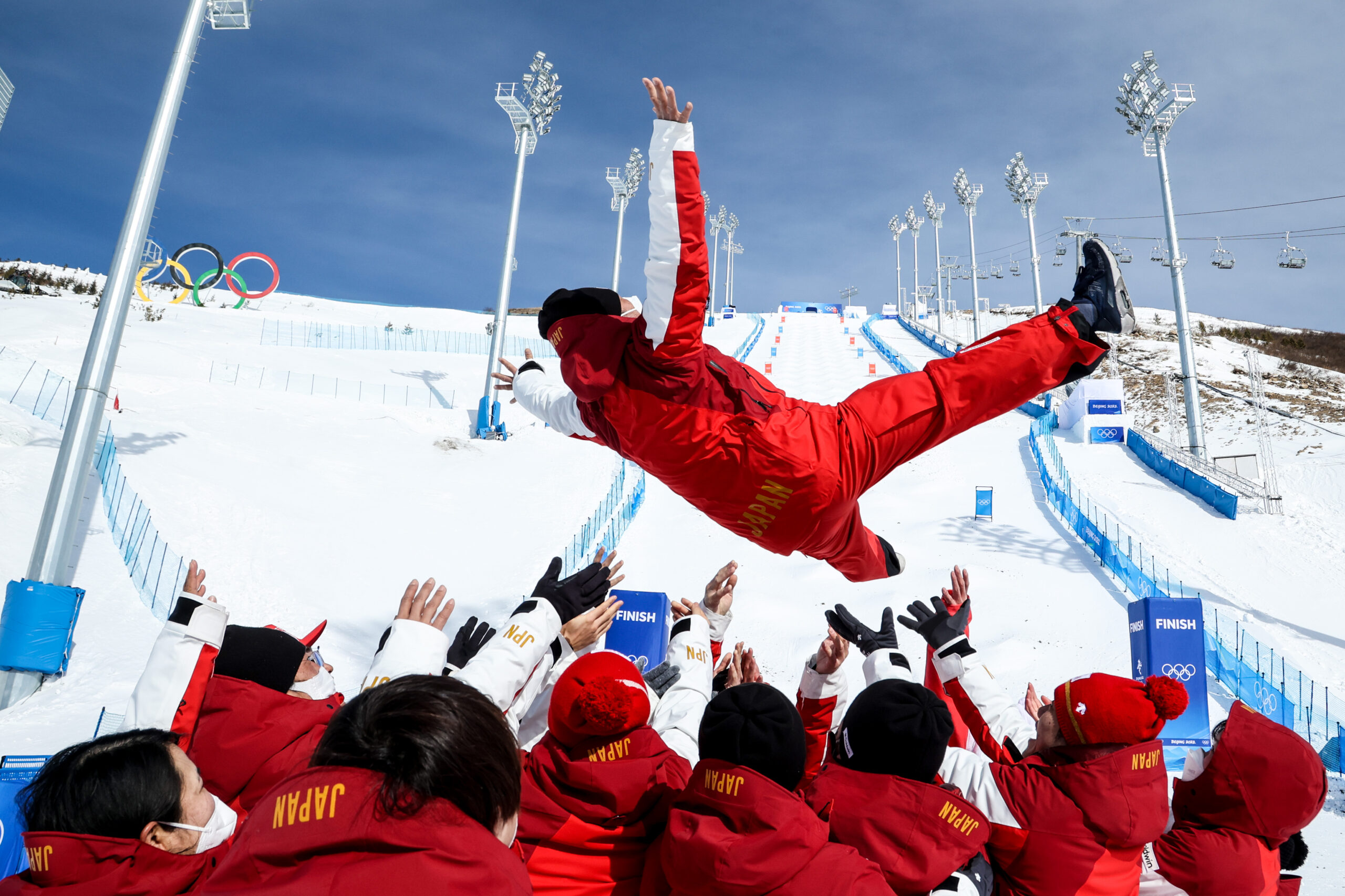
In other words, the number of moguls events has increased from the previous two (men's and women's moguls) to four (men's and women's dual moguls), and the number of medals awarded has increased from six to 12.
Looking at it more positively, "multiple medals" does not necessarily mean two. Gold medal favorite Horishima Yukimasa could win two, and the possibility of the women's team winning two is not zero.
With such expectations, we await the opening of the Olympics.
▶Milan-Cortina Olympic Schedule
2026
February 10: Women's Mogul Qualifying, Men's Mogul Qualifying
February 11: Women's Mogul Final
February 12: Men's Mogul Final
February 14: Women's Dual Mogul Final
February 15: Men's Dual Mogul Final
Photo by Sho Endo