


Nozawa Onsen Village is known for its heavy snowfall. At the foot of its ski resort, water is generating electricity.
The Honzawa Small Hydroelectric Power Plant—it's not just the introduction of renewable energy. It's a manifestation of the village's determination to "create their own future" amidst a changing climate, a life lived in harmony with the snow.
Introduction
The Sustainable Resort Alliance (SRA), initiated by Protect Our Winters Japan (POW JAPAN), a general incorporated association working to address climate change, is a network of ski resorts committed to zero carbon emissions and sustainability, aiming to protect "winter" from climate change and connect ski resorts to the future. One of the SRA
members that is pushing forward with its distinctive initiatives is Nozawa Onsen Ski Resort in Nagano Prefecture.

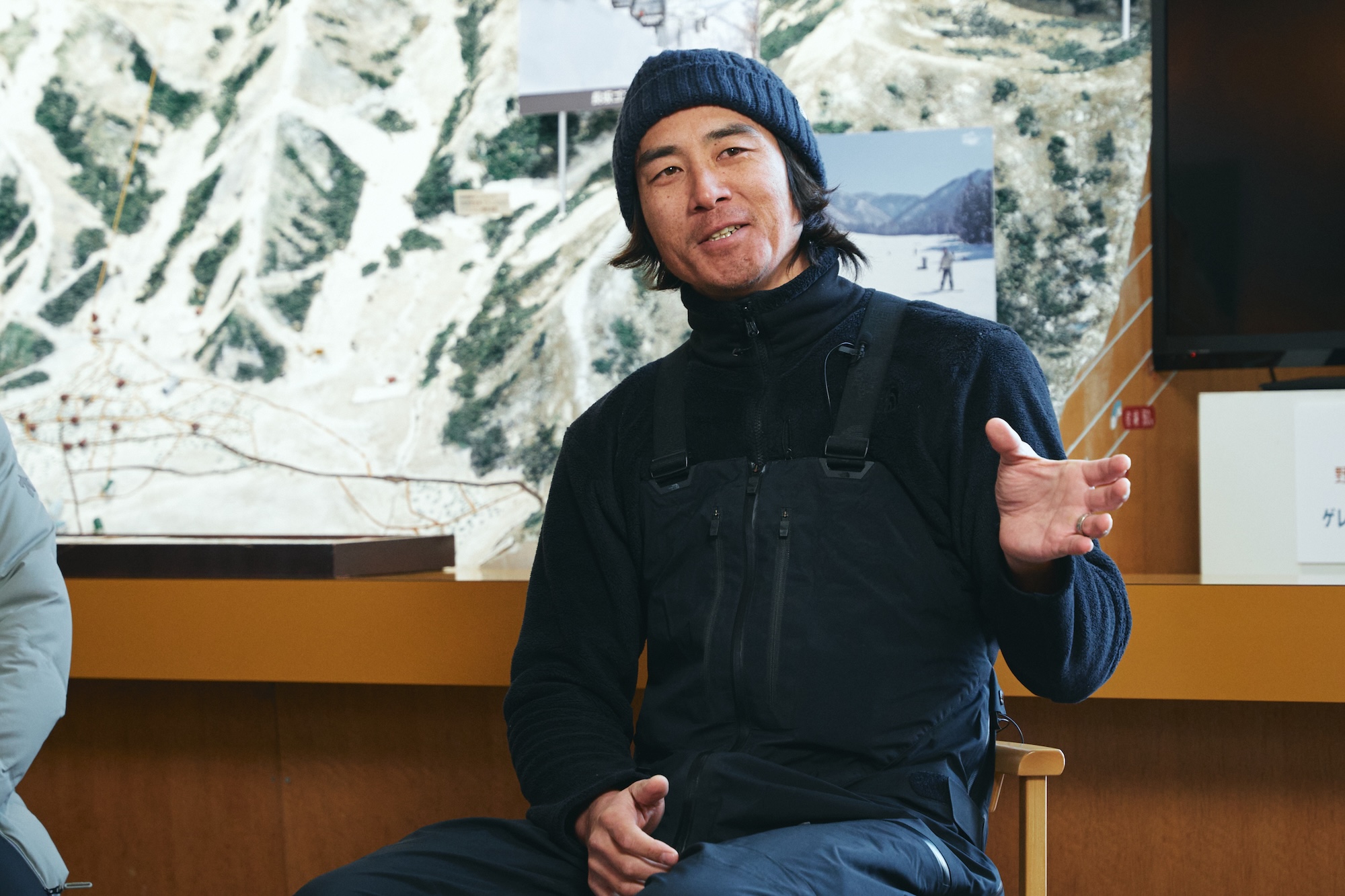
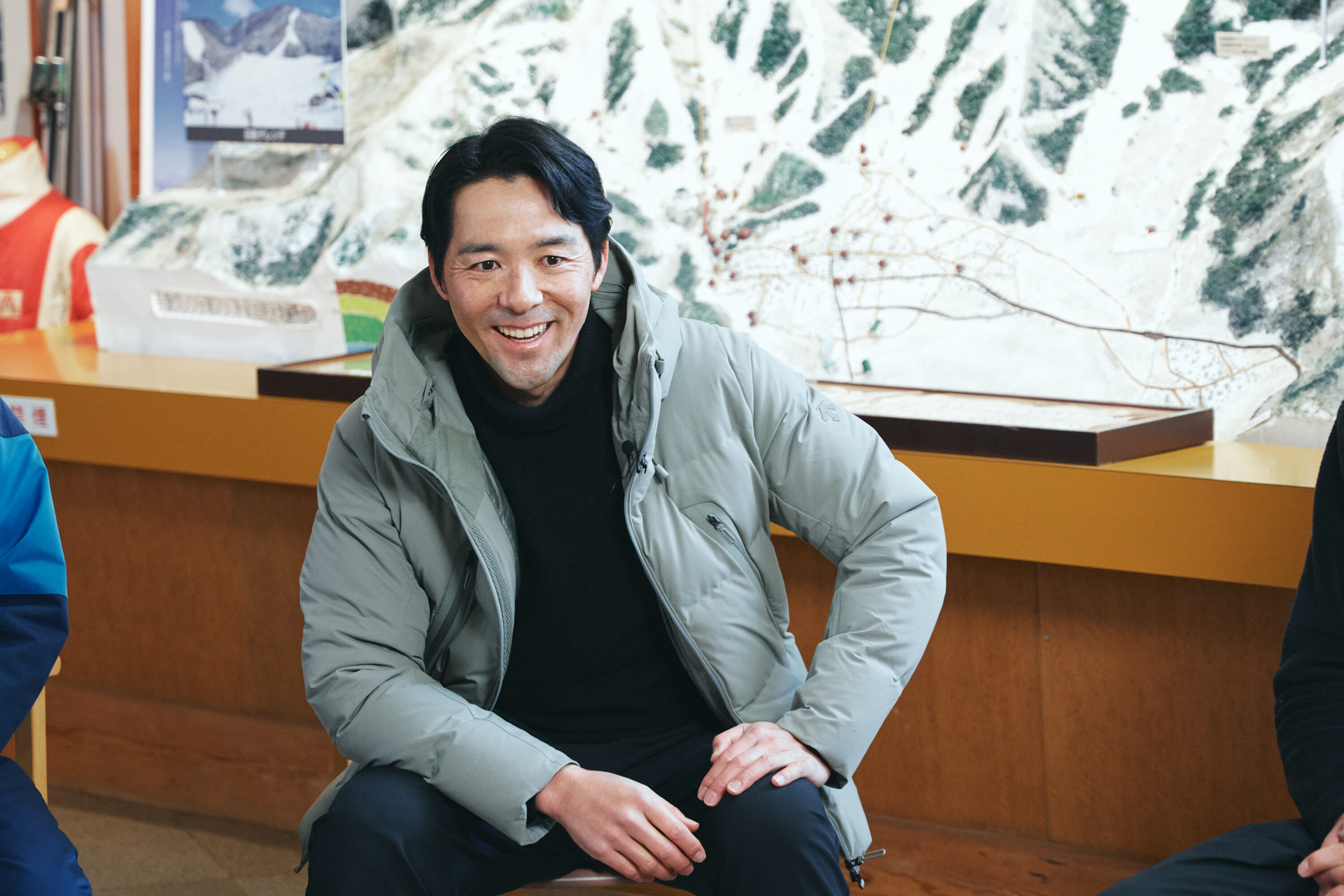
This time, we will convey the attitude of Nozawa Onsen, which has been dedicated to the present, past, and future, based on interviews with three people: Mr. Yudai Ueno, the mayor of Nozawa Onsen Village (center in the photo); Mr. Koji Takazawa, a director of the ski resort (left in the photo); and Mr. Kenji Kono, a POW ambassador (right in the photo)
A village of snow is also a village of water
We boarded the Nagasaka Gondola at Nozawa Onsen Ski Resort and ascended to higher altitudes. As we went up the Skyline course towards the Yunomine area, we could see a stream flowing through the beech forest below

It's "Honzawa"
In winter, it turns into snow, and in spring, it becomes meltwater that flows into the Chikuma River and Shinano River, eventually emptying into the sea. Nozawa Onsen is located upstream of the Shinano River
"I believe that those of us who live upstream have a responsibility to deliver clean water downstream. The water cycle begins in the mountains. I think that if villages and ski resorts like ours, which live in the mountains, take the lead in taking measures that do not harm the natural environment, it will help to make Japan as a whole cleaner.
Furthermore, I think it will lead to the Earth moving in a positive direction."
Mr. Kono's words encapsulate how this village has interacted with nature and how it intends to move forward

Water is the foundation of this village.
As hot springs, for daily life, for agriculture, and as snow, it is an indispensable element that has supported the very life of the village. The Honzawa Small Hydroelectric Power Plant was created by utilizing a portion of that water flow.
In the operation of ski resorts, which use large amounts of electricity, there is a growing momentum to transition to renewable energy due to environmental concerns. Thanks in part to POW's persistent awareness campaigns, progress is being made little by little, but there is still much room for improvement
Amidst all this, the village teamed up with the ski resort to embark on a hydroelectric power project, overcoming numerous difficult challenges to make it a reality. Even at this very moment, the water flowing through Nozawa Onsen is generating electricity.
Furthermore, that electricity is directly used for the village's daily life and the operation of the ski resort.
I want people to understand just how valuable this is.
"I've started to think seriously about energy."
One of the triggers that led the village and ski resort to focus on renewable energy was the Great East Japan Earthquake of 2011
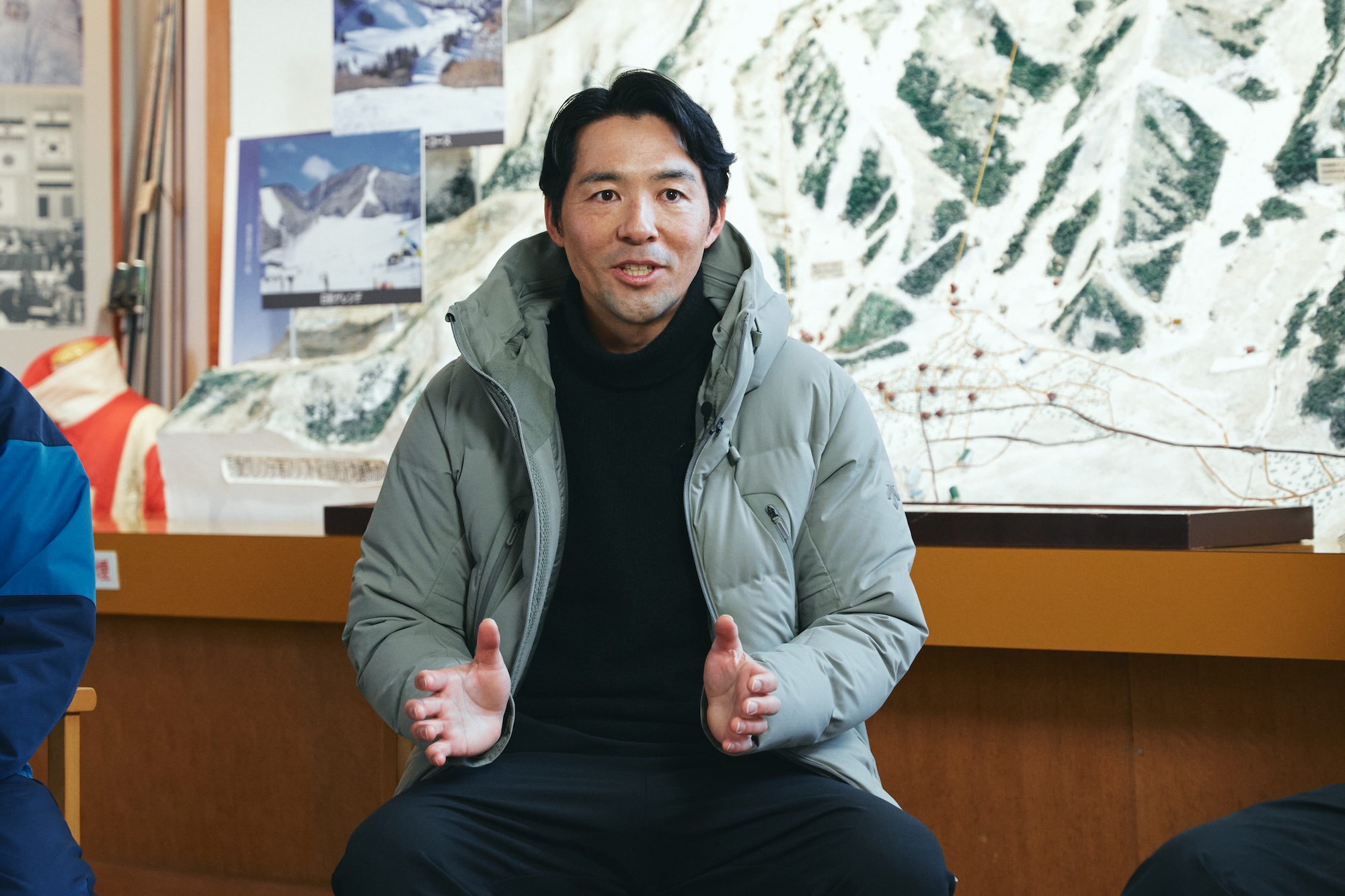
"I've started to think seriously about energy."
Mayor Ueno recalls:
"Electricity is not something to be taken for granted. The village and the local government began to seriously consider how to manage the energy in their own region, including production, usage, and the overall state of energy."
We conducted extensive research to determine the extent to which we could utilize renewable energy
Then, in 2011, we formulated the 'Nozawa Onsen New Energy Vision.' Currently, various initiatives are underway in accordance with that plan."
This "Nozawa Onsen New Energy Vision" is not merely an environmental protection plan. It is a strategy toward "self-reliance," where the villagers create and use their own energy. Based on this vision, the village first put the "Makune River Small Hydroelectric Power Plant" into operation in 2022

This facility, operated directly by the village, generates approximately 20 million yen in annual revenue from selling electricity. This revenue is used for the maintenance and upkeep of the power generation facility and for improving water and sewage infrastructure
Mayor Ueno also said:
"The installation of hydroelectric power plants and solar panels at elementary and junior high schools were already included in the vision. In addition, although we haven't yet started working on them, the new energy vision includes all sorts of possibilities, such as the use of geothermal energy from hot springs, biomass, and snow storage."
Because this village has relied on nature for its livelihood and tourism, we feel a strong sense of responsibility to take responsible actions towards the environment."
On the other hand, I also have the feeling that the way it snows is not the same as it used to be
According to Mr. Kono
"According to data from the Japan Meteorological Agency, the average snowfall in Nozawa Onsen has decreased by 4 meters compared to 40 years ago. That's a decrease of 1 meter every 10 years, and numerically speaking, it would mean that it won't snow at all in 90 years...
Extreme weather events like torrential snowfall of 80 cm in one night or heavy rain in the middle of winter are no longer considered unusual."
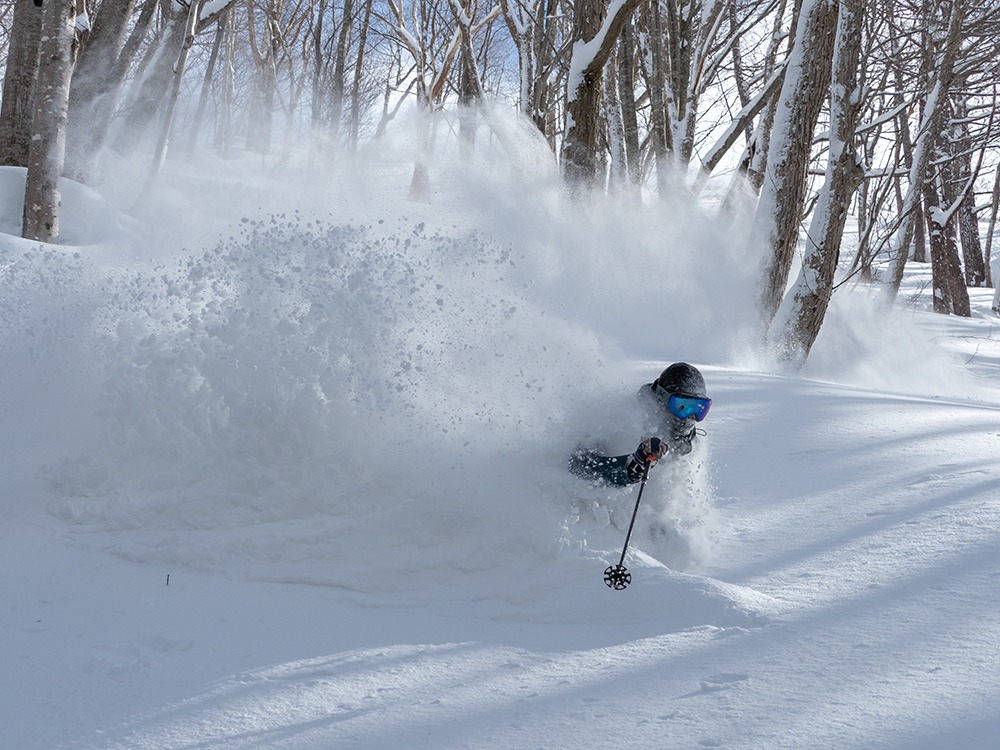
In such circumstances, I believe it is extremely important for the entire village to take action to curb this trend."
That's precisely why action was necessary
Two massive obstacles hindering the project
While the aforementioned Makunegawa Small Hydroelectric Power Plant prioritized profit, the Honzawa Small Hydroelectric Power Plant chose the path of consuming all of its electricity itself. Behind this choice was a sense of crisis felt by village officials during inspections in Austria and Slovenia
Having personally experienced the gap between the high level of environmental awareness abroad and the current situation in Japan, the staff considered what Japan, and Nozawa, could promote as the number of inbound tourists increased.
Rather than simply taking as much water as possible and turning it into money, they decided to use only the necessary amount while protecting the river's ecosystem.
To demonstrate this stance, it was essential to consume all of the water themselves.
"We never considered selling electricity from the beginning. We thought it would be best to generate the electricity we use ourselves. We also thought
this initiative would serve as a way to promote Nozawa Onsen Ski Resort as an environmentally conscious resort that utilizes natural energy, to raise awareness among customers about choosing a clean ski resort, to educate villagers, and even to encourage other ski resorts to adopt similar practices."
Mayor Ueno's words succinctly express the true nature of this power plant
However, things didn't go so smoothly. Realizing this project required overcoming unprecedented legal and technical challenges
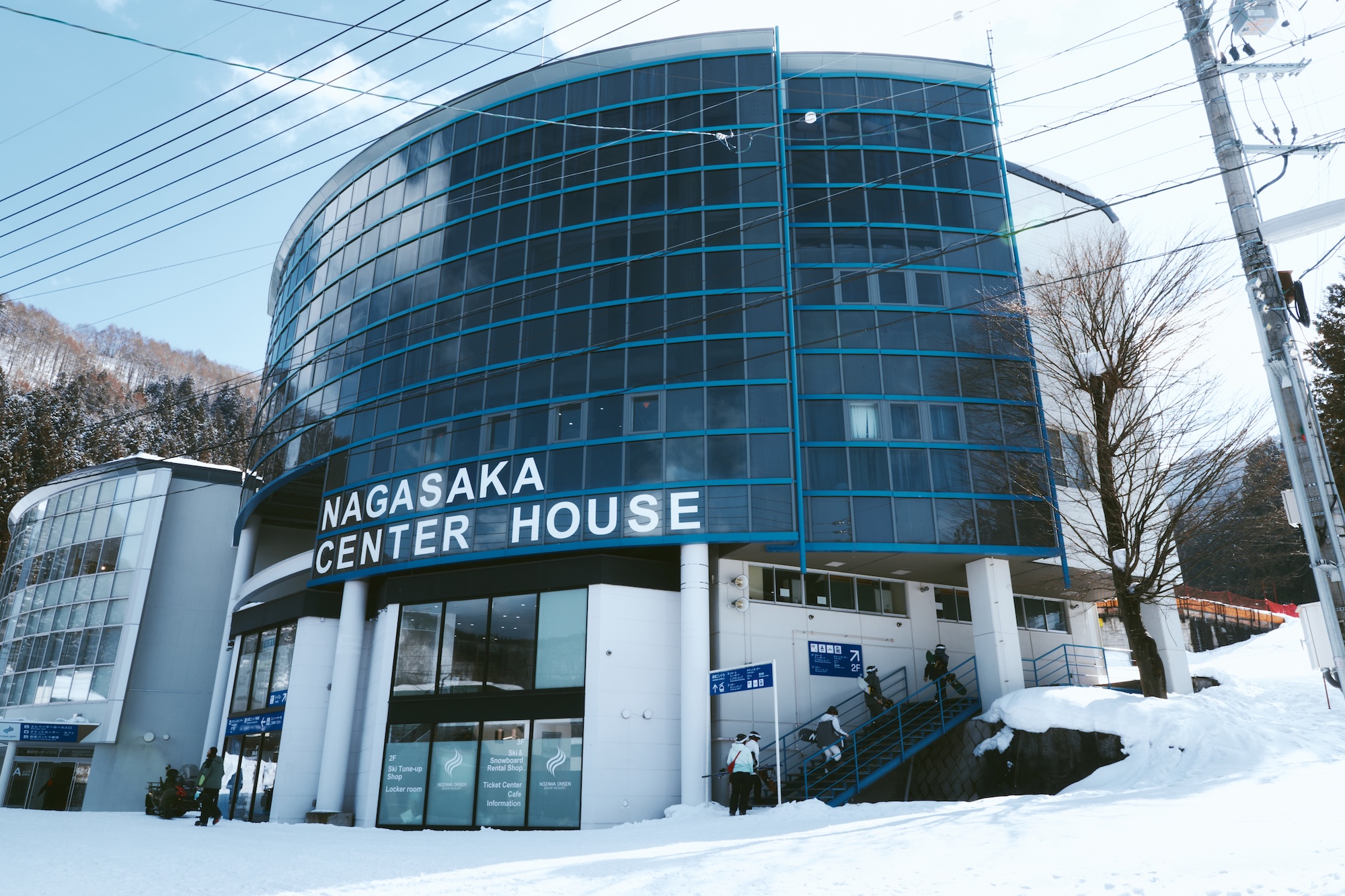
One obstacle was the Electricity Business Act and the need for a private power line. The distance from the power plant to the Nagasaka Center House at the ski resort is about 200m. Initially, they thought it would be easy to lay power lines, but they encountered an extremely high hurdle: the requirement to be a "power business operator (electricity company)" in order to transmit electricity to a location that is not adjacent to the power plant
The solution to this problem lies in the unique operational structure of Nozawa Onsen
Although the ski resort is privately operated, the facilities are owned by the village. Therefore, it is reasonable to interpret that Nozawa Onsen Village is responsible for both generating and using the electricity. Combined with the fact that the entire underground route was on village-owned land, it miraculously became possible to lay the privately owned power line
Another challenge is the real-time power supply to commercial facilities. There are virtually no examples worldwide of supplying hydroelectric power to commercial facilities used by users in real time
A breakdown in the elevators during business hours would be a major problem. Developing a software program that completely guarantees the supply of electricity is extremely difficult.
The programmers in charge of the project repeatedly conducted meticulous tests in short bursts of time in the center house after the ski resort staff had gone home. Those days of struggle as the deadline loomed created the heart of this power plant.
Power generation for "use," not for "sale."
So, what exactly does it mean to "use the electricity we generate ourselves"?
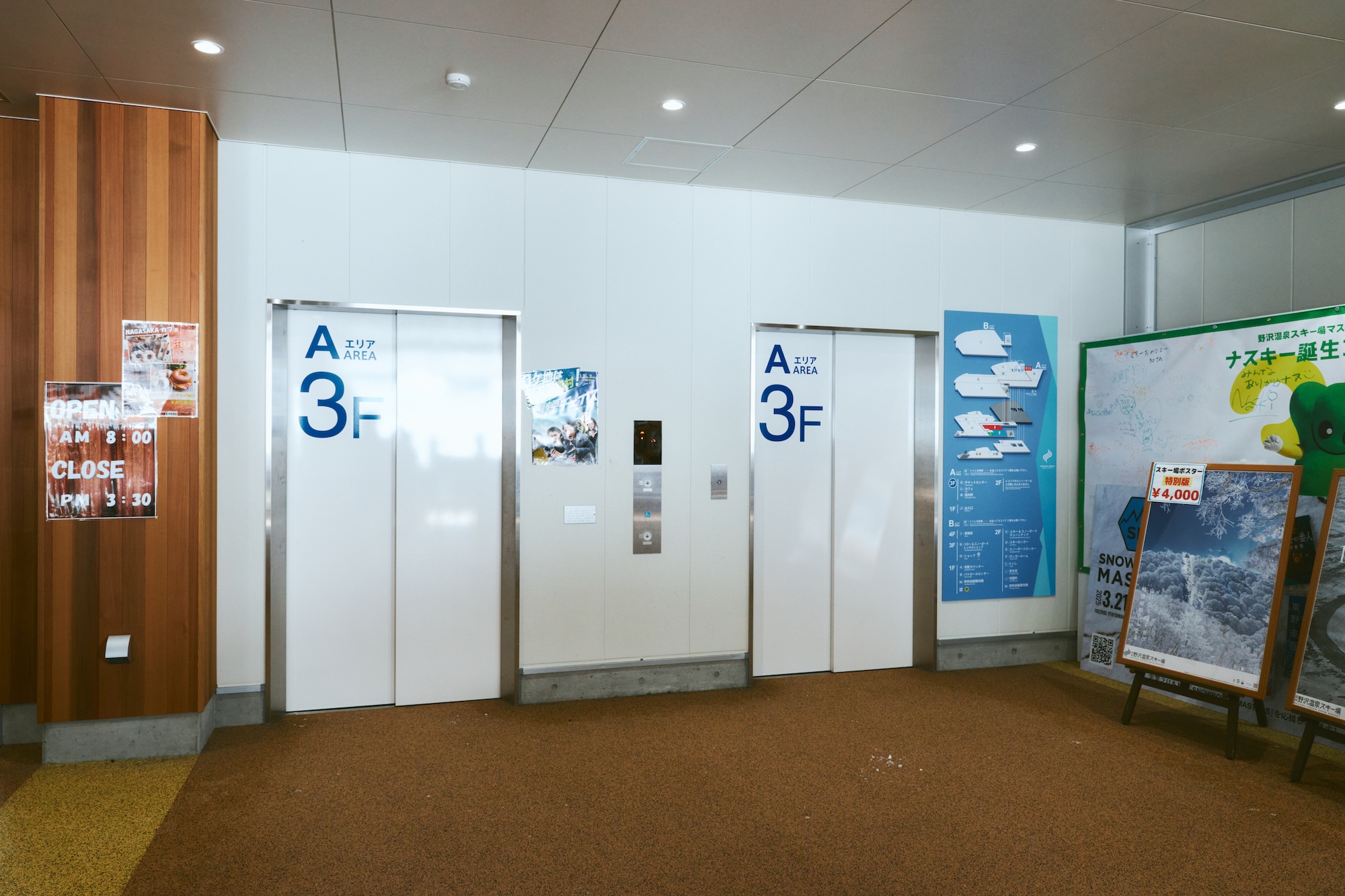
"The Nagasaka Center House building has three elevators, and those, along with electric heaters and other heating equipment, are powered by electricity generated from this small-scale hydropower plant. With the operation of this plant, we have been able to reduce the electricity consumption of the Center House by about 32%."
Calculating the exact reduction rate is extremely complex when you include energy storage and transmission data, but if you combine it with the "Shinshu Green Electricity (100% hydropower)" used in the Nagasaka Gondola, it's safe to say that the heart of the ski resort is already part of a large renewable energy cycle."
Mr. Takazawa, who oversees the ski resort, gave me that answer
The core of this system lies in its complete automation, eliminating human intervention. Normally, output adjustment and current control during restart are extremely delicate and dangerous tasks. However, in pursuit of maintenance-free operation and cost reduction, fully automated operation has been achieved
Specifically, a computer detects the building's power demand in real time and instantly calculates the optimal amount of water. The water turbine is automatically shut off according to the energy storage status, preventing excessive use of river water and contributing to ecosystem protection. Furthermore
, this system, which ensures a stable power supply while monitoring the site, is unique in its ability to incorporate control programs that thoroughly eliminate blackout and fire risks.
"I think it's very significant that this cycle—where natural energy generated in-house through small-scale hydropower is directly used in facilities that our customers utilize—is visible."
Since there are hardly any similar cases nationwide, we believe this is a very pioneering initiative."
Mayor Ueno's words became more passionate
Preserving the unique character of Nozawa Onsen
The maximum water usage at the Honzawa Small Hydroelectric Power Plant is 9.3 liters per second. Not all of the flowing water is used for power generation. 70% of the water used for power generation is taken out, and 30% is left in the stream to maintain its flow. All the water used for power generation is also returned to the stream
"We prioritized the idea of not putting a burden on nature, and the premise was not to alter the natural flow. Water naturally flows here. We borrowed it within the bounds of that flow, without putting undue strain on it. That was the philosophy behind our design."
We've also installed a fish ladder, creating a system that coexists with existing agricultural waterways. I felt that forcing nature to be unnatural wouldn't be in line with Nozawa's style."

Mayor Ueno's words reflect the attitude of this village
The Honzawa Small Hydroelectric Power Plant is by no means a massive facility. It's small-scale by national standards.
However, the intention behind it is clear. Mayor Ueno continues:
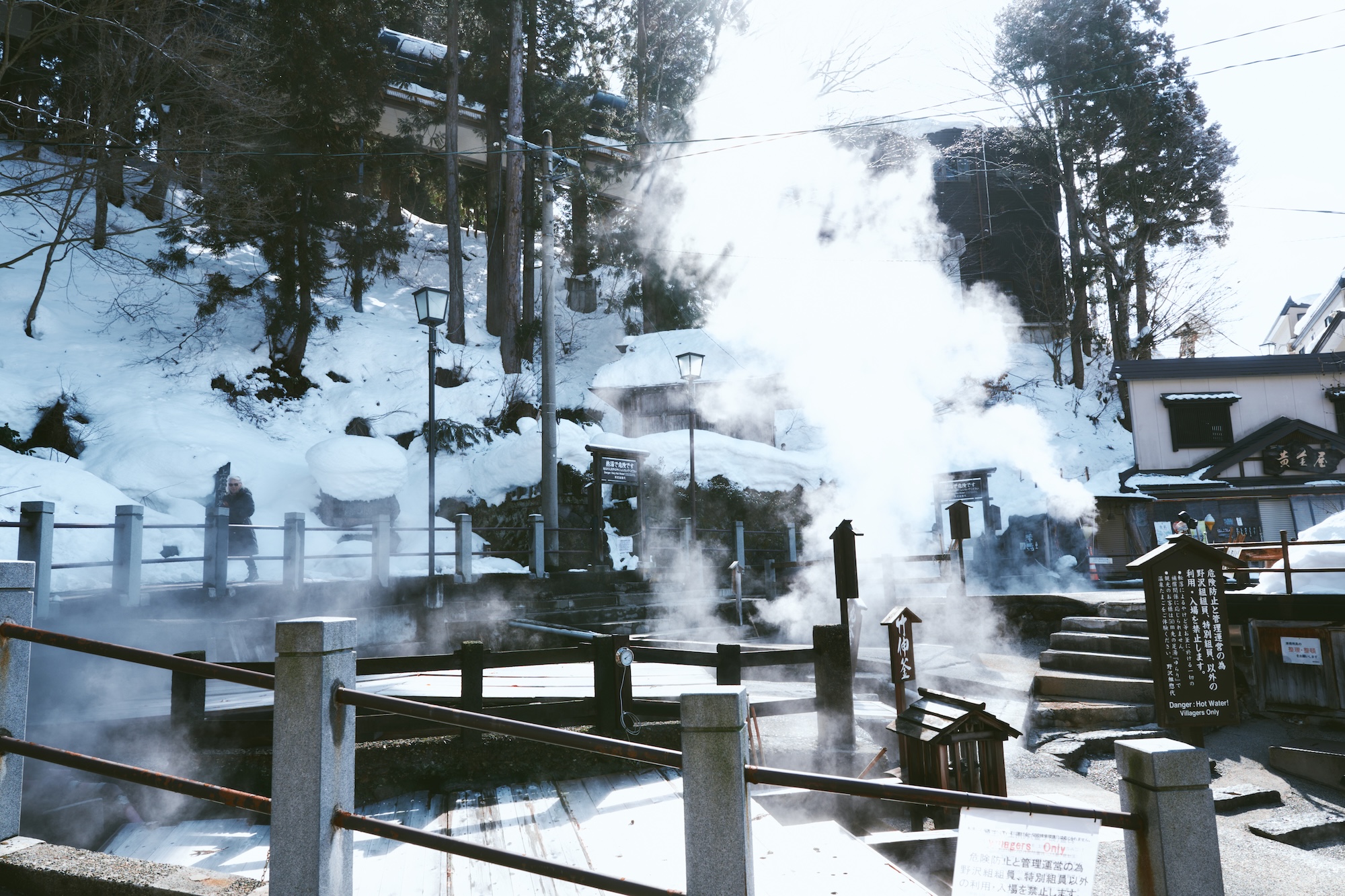
"Nozawa has always been a village that we have forged our own path. That includes the ski resort we developed 100 years ago, and even before that, when we dug an artificial pond, turned a waterwheel to generate electricity, and created an electric hot spring resort.
We, the villagers of Nozawa, have an identity that is like that of a challenger. I think that because this spirit is so deeply rooted, this initiative has also been well-received by the villagers."
Government projects involving land often face difficulties in negotiations with landowners and can take an enormous amount of time. However, in the case of this small-scale hydroelectric power development, there were almost no such problems; understanding was readily obtained, and the project proceeded smoothly
The pioneering spirit inherent in the villagers' character was also directed towards their energy
"We will protect our own village ourselves."
It's a decision to become independent, and it's a practical action that goes beyond mere words
Inheriting and passing on the use of natural energy
The progress of the small-scale hydroelectric power generation in Honzawa is shown on a digital signage (electronic display) installed at the gondola station, making it easy for even elementary school students to understand, and automatically displaying in real time how much electricity is being generated and how it is being recycled

"I thought it was important to let people see. To see how the place where I'm skating is being supported."
That's what Mr. Takazawa said
This signage was actually much smaller at first. However, the larger it is, the easier it is to see and the greater its appeal. The village officials and ski resort staff shared the desire to push the limits of what was possible, and with the ski resort providing financial support, it was made to this large size
And another must-see is the waterwheel power plant that you can see on your right when you ride the Shin-Nagasaka Gondola

"This place where the power plant was built actually has a long history; long ago, people who lived here built a building, speared fish in the river, and used water to turn waterwheels and generate hydroelectric power. It's very meaningful and moving to think that
now, in the same place, using hydropower in the same way, we're able to generate enough electricity to power such a large facility... I'd be happy if people knew about that too."
Also, we deliberately wrote "HYDROELECTRIC POWER" in English on the power generation facility. It stands out well and is easy to understand, isn't it?
As this village becomes more internationalized, I hope this will be an opportunity for overseas guests to learn about Nozawa Onsen's sustainable initiatives."
Mayor Ueno said
The Honzawa Small Hydroelectric Power Plant is a testament to uncompromising passion, much like the popular TV documentary series "Project X." Here you will find timeless romance and the story of pioneers
The future is in our hands
Students from Nozawa Onsen Junior High School also attended the completion ceremony for the Honzawa Small Hydroelectric Power Plant, held on May 23, 2025. Mr. Takazawa was deeply impressed by their presence

"I thought that this might give the next generation, who will be responsible for the future of the village, a sense of responsibility to protect their own village themselves, or an opportunity to think about a future where they have to provide for themselves.
The ski resort is now in its 103rd year, and we really have to continue to protect the ski resort that our predecessors built for us."
Of course, a ski resort powered entirely by renewable energy is an ideal that we would like to strive for, but on the other hand, ski resorts have inherent contradictions, such as the use of snow groomers and the large amount of water used to create snow. We want to resolve these issues as much as possible and work together to protect the future of ski resorts. That's what we believe."
"Nozawa Onsen has a long history passed down by our predecessors, and the ski resort has been there for over 100 years. It's a region where life and tourism are almost 100% supported by natural resources such as hot springs and snow, so water is an indispensable and precious thing. Now that water is being used to generate electricity, yet another value has been added to the benefits we receive from natural resources."
I think it will take some time, but I believe the villagers' awareness of the natural environment will increase more and more. I hope that this heightened awareness will gradually spread to the customers who come to Nozawa Onsen."
According to Mr. Kono
The initiatives being pursued by Nozawa Onsen through a joint effort between the public and private sectors are changing the values of the entire village.
The village office has seen a dramatic increase in inquiries from owners of small guesthouses asking, "Can we install solar panels in our place?" and "Are there any subsidies for insulation?"
A growing belief is emerging that they want to demonstrate their commitment to the environment to their guests.
Mayor Ueno concluded with these words
"I know that new initiatives are always challenging, but I believe that other municipalities can certainly do this as well. We have taken the lead in this challenge, overcome various hurdles, and accumulated experience, so we should not keep this know-how to ourselves, but rather share it with others and hope that it will be put to good use."
We can't easily change the world by working alone, so we want to expand this circle as much as possible. I hope that everyone at the ski resorts will work together to further advance these efforts, so I ask for your cooperation!
The snow-covered village is beginning to build its future with water.
It is the village's resolve, entrusted to the water of the stream flowing beneath its feet. It is an update of the pioneering spirit that has continued for 115 years, and a responsible choice for the next generation.
That choice will create a lasting cycle that continues into the future.
Nozawa Onsen's challenge for the future has only just begun.
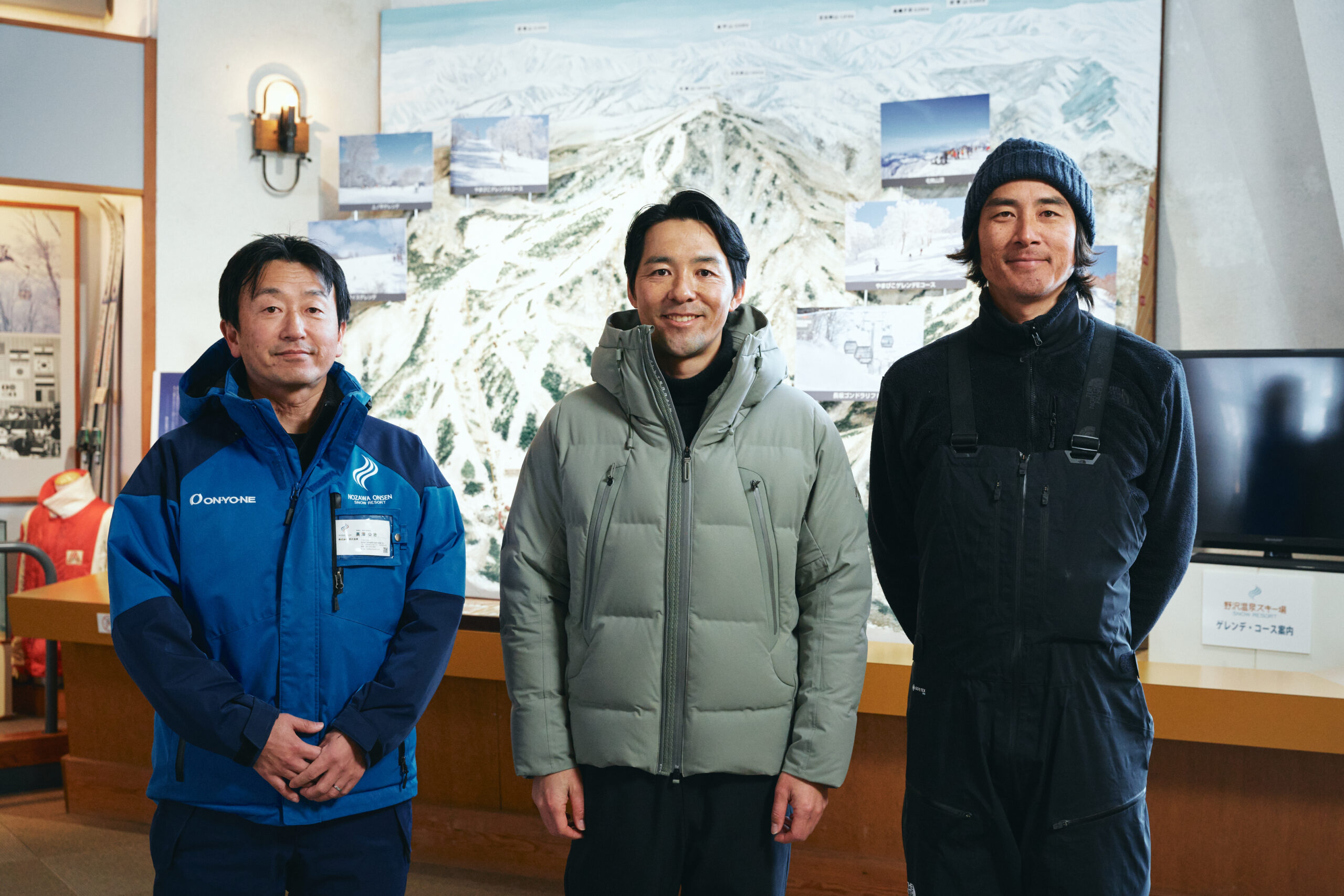
Left: Koji Takazawa, born in 1974. He made his World Cup debut in 1995 as a Nordic combined skier. In 1999, he won the Nordic combined event at the 77th All Japan Ski Championships. He currently serves as a director of Nozawa Onsen Ski Resort Co., Ltd
Center: Yudai Ueno, born in 1981. During his active career, he competed in ski cross and halfpipe. After retiring from competition, he opened "COMPASS HOUSE," a specialty shop for freestyle skiing and cycling in Nozawa Onsen, and has been promoting the activity. Since 2025, he has served as the mayor of Nozawa Onsen Village
Right: Kenji Kono, born in 1983. He competed in the Ski Cross World Cup for 12 years, traveling the world. He has also participated in the X-Games twice. Currently, while handling the ski brand Vectorglide, he continues to promote the charm of Nozawa Onsen throughout the year by operating accommodations and restaurants
Information
Nozawa Onsen Ski Resort
7653 Toyosato, Nozawa Onsen Village, Shimotakai District, Nagano Prefecture
Official website: https://nozawaski.com/
Official social media: Instagram │ Facebook │ X │
POW Japan
Official Website: https://protectourwinters.jp/ Official
Social Media: Instagram | Facebook | YouTube
Edit by Chise Nakagawa
Special Thanks by POW Japan