

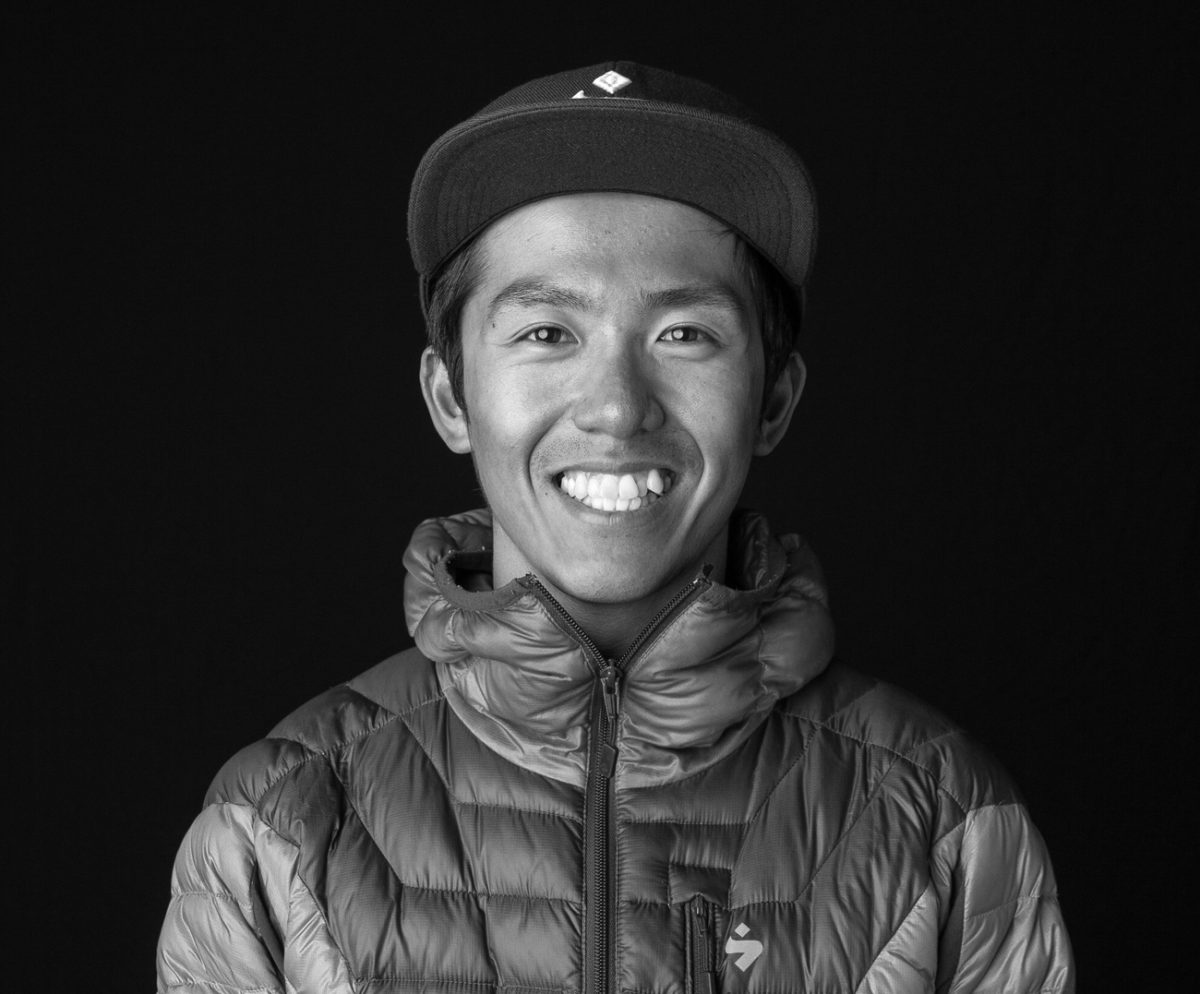
Photo/Yoshiro Higai
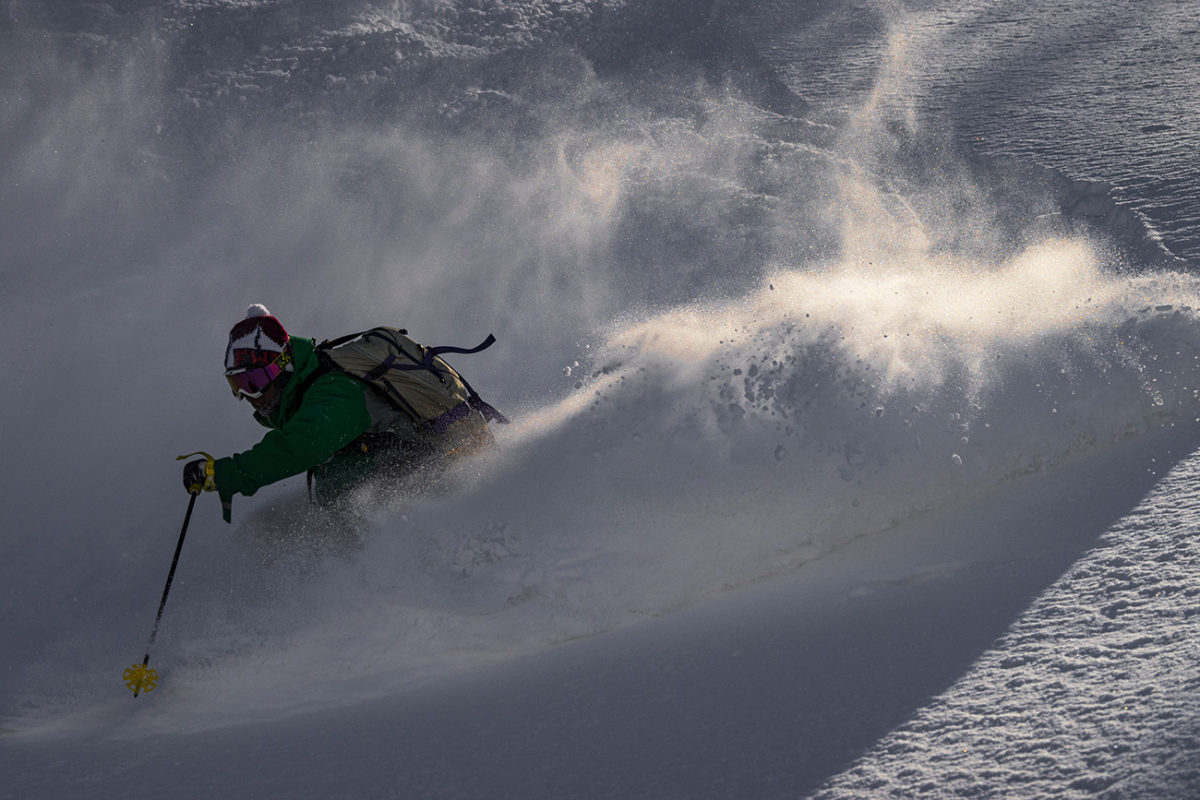
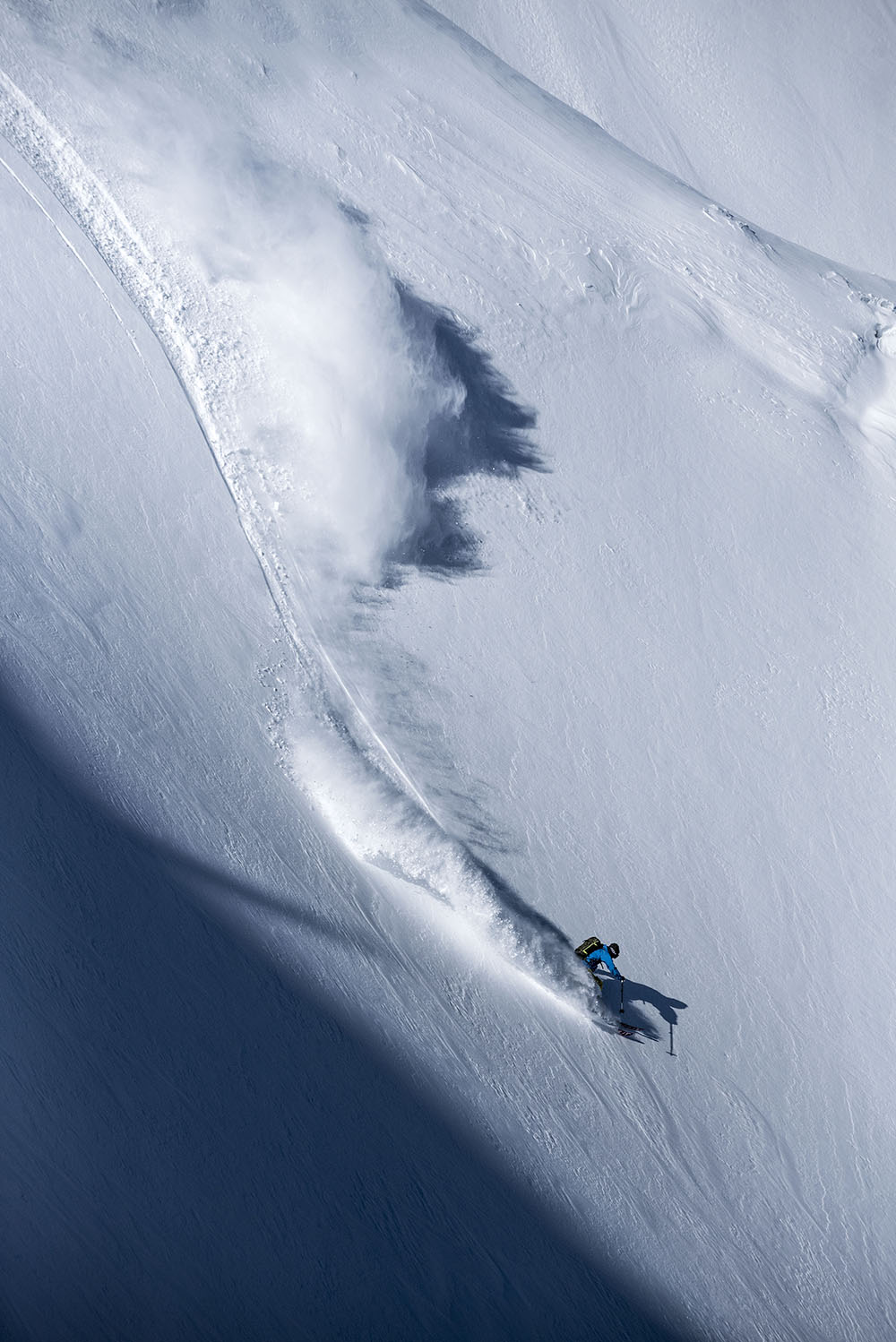
While continuing to work as a tail guide at a backcountry guide service in Hakuba, he also hones his skills as a rider, taking part in freeride competitions, and travels overseas every year to spend his time at his best. What's surprising is that since his second year of high school, he has unwaveringly aimed to be both a ski guide and a skier. Rather than simply going with the flow or escaping reality, he has lived a very goal-oriented, constructive, and positive ski bum life. We caught up with this young freeskier, Shimomura Yuta, to find out what he has been up to and what his future holds
[Profile]
Shimomura Yuta:
Born in Kimobetsu, Hokkaido in 1993. He started skiing at the age of two and began competing in alpine and cross-country skiing. In junior high and high school, he competed in the National Junior High School Ski Championships and the Inter-High School Championships as a cross-country skier. In his second year at Kutchan High School, he discovered backcountry skiing and went on to study at the International Nature and Outdoor College in Myoko. After graduating, he joined Color Sports Club in Hakuba and worked as a tail guide, while also continuing to photograph, travel, and compete in freeride competitions as a rider.
As a full-time skier living in Hakuba,
what do you do in the summer?
──What kind of work do you do during the green season right now?
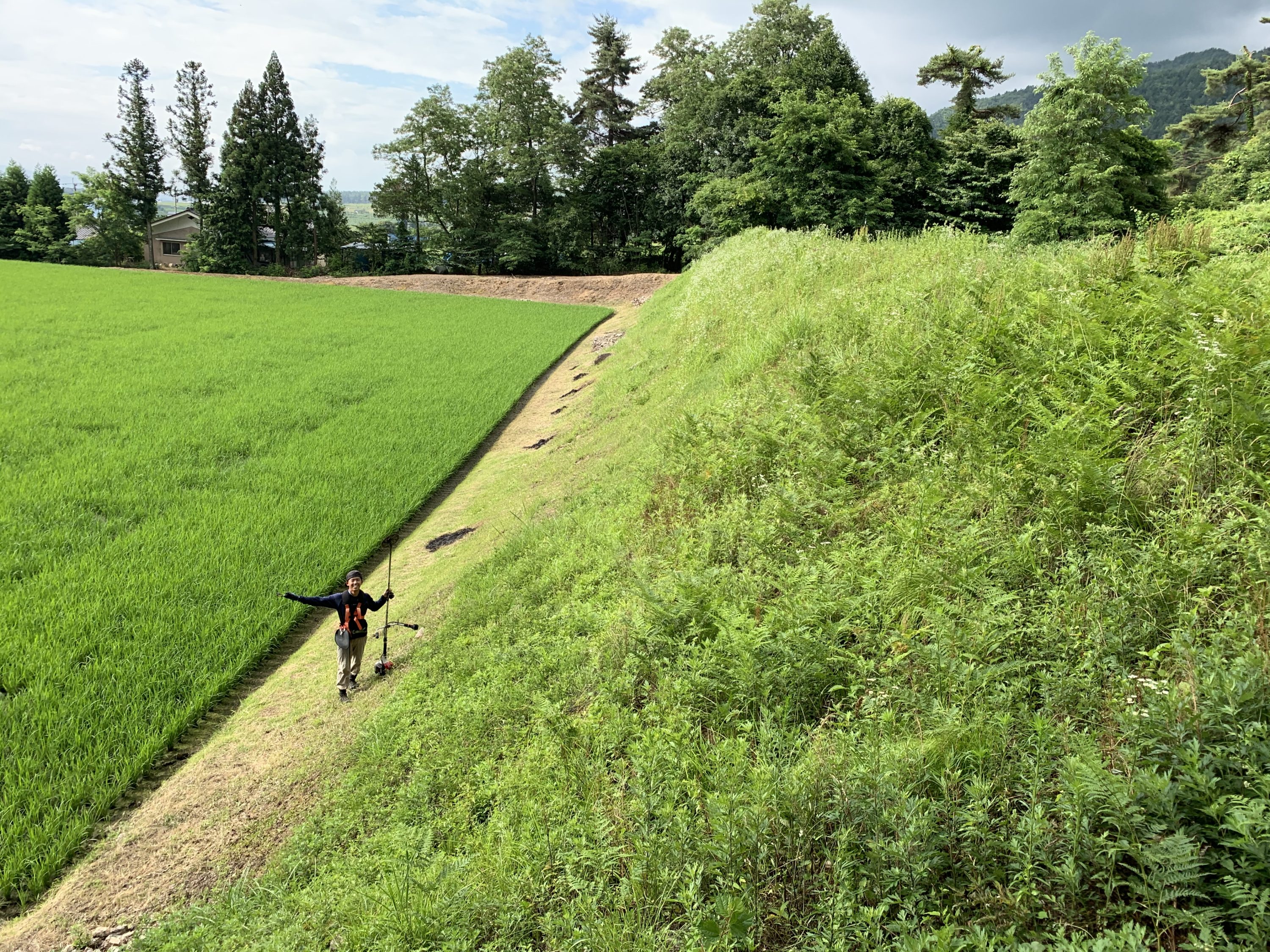
This summer I worked in agriculture. I'm a rice farmer. After the rice planting, there's a lull in work, so in June, July, and August, I took on weed-cutting work in addition to farming. Now it's time for the rice harvest, so farm work will get busy again, but that work will finish at the end of October, and then the Tateyama ski season (※1) starts in November. Basically, this period doesn't clash with the ski season at all, so it's a job that fits my lifestyle perfectly (laughs)
──They say that farmers don't have weekends, but can they take days off?
Basically, I worked one day a week. But the mowing season was tough. The area I was in charge of was quite large, and the rainy season was long this year, so the work didn't progress very well. So I had almost no days off in June and July. The owners of the rice fields and farms can't manage them themselves. That's why I was contracted to do the work, but most of the time it was on mountain slopes or stone walls, and the areas couldn't be mowed by machine. It was hot every day, and it was hard work, doing it by hand
--So how much income will you make?
In terms of mowing, I was in charge of an area of 20-25 chobu (1 chobu = about 10,000 m2), which is the equivalent of a little over 300 rice paddies. I worked for 20 days straight, took a day or two off, and then worked for another 20 days. I did this three times in total. I did it with a senior colleague at work.
Including funds for overseas travel, my goal is to have around 800,000 yen in expenses for winter activities. Mowing three times will earn you a decent income, but it's not enough to cover winter expenses.
──Have you always done that job in the summer?
No, until last year I was working in the mountains. I was a member of the Hakuba Mountain Resident Team (※2) for one season, and I also worked as a canyoning guide in the summer. Other than that I did a lot of work in Tateyama
──Is your job at Tateyama to be a hut keeper or something?
No, I was in the photography department (※3) at Hotel Tateyama. My job was to take commemorative photos of tourists on the Tateyama Kurobe Alpine Route, but actually, among all the jobs at Tateyama, I was in one of the departments that finished work before the evening. So, after work, I would go skiing almost every day and enjoy sunset rides, making it the perfect job for a skier
──So this year you didn't go into the mountains and instead chose to work in agriculture at the foot of the mountains. Is this because of the impact of COVID-19?
No, I had decided around autumn last year that I wouldn't be working in the mountains. In the end, it was good that I continued to work even after COVID-19 hit. So, I had already decided what I wanted to do from spring onwards before the season began, and that was because I wanted to take a good look at the path I wanted to take as a skier
*1 [Tateyama Ski Season]
The Tateyama Kurobe Alpine Route closes at the end of November. The powder season lasts for two to three weeks from early November, when snow begins to accumulate, until the end of the month. The spring ski season begins when the Alpine Route reopens in late April.
*2 [Hakuba Mountain Residency Team]
A summer patrol team for the Ushiro-Tateyama mountain range. The team members are civilians commissioned by the Nagano Prefecture Mountain Accident Prevention Council (Mountain Accident Prevention Council). They are stationed at each mountain hut, providing advice to climbers, maintaining the mountain trails, and responding to accidents.
*3 [Hotel Tateyama Photography Club]
Murodo, the highest point on the Tateyama Kurobe Alpine Route, is located at an altitude of 2,400m. This commemorative photo service is run by Hotel Tateyama, which is adjacent to the terminal. If you have been to Tateyama, you will have seen it at the Murododaira exit of the terminal.
Inspired by Daisuke Sasaki in the movie "END OF THE LINE" and
convinced of his dream of a career in skiing through "Fall Line"
──I heard you were originally born in Hokkaido, but when did you come to Hakuba?
Six years ago. I have been playing at Color Sports Club (※4) since I was 21 years old, and I am now 27, so next winter will be my seventh season
What were you doing before that?
Before coming to Hakuba, I was a student at an outdoor vocational school in Myoko. I was born in Kimobetsu, Hokkaido, and after graduating from high school I enrolled in i-nac (*5). After quitting ski racing in my second year of high school, I discovered backcountry skiing, and the first DVD I bought was Daisuke Sasaki's "END OF THE LINE" (*6)
At the time, there were many other videos that influenced me, like Mighty Jamming (※7). But the first DVD I bought was "END OF THE LINE." I thought it was cool, and from there I admired Daisuke Sasaki. As a result, I decided that since we only have one life, I should pursue my passion, skiing. With that in mind, I enrolled at i-nac, where Daisuke was an instructor
──Hmm, I see. I'd like to ask director Yaman (Yamada Hiroyuki※8) about it
Actually, I met Yaman in Girdwood, Alaska (※9) a few years ago. I greeted him and said, "You're Yamada, right?" and told him that I'd actually bought "END OF THE LINE" and been fascinated by this world... He was so happy and said, "Oh, is that so?" and has been very helpful to me every time I go to Alaska since then. Usually when I go to Alaska, Yaman is there too
──The fact that you first met in Girdwood, Alaska, is quite a typical story for both of you
I was staying with a local friend in Girdwood. He asked me, "Do you know YAMA?" but I had no idea what he meant... Then, he invited me out for drinks saying, "There's a famous live show tonight," and Yaman was there
──Yaman must feel a sense of responsibility for having made such a big difference in someone's life
It completely changed my life (laughs). This past March, I was debating whether to go to Alaska or not, when Yaman contacted me and gave me lots of advice, but in the end I decided to forgo the trip this season
──What kind of skiing did you do until high school?
I started competing in the lower grades of elementary school, but from junior high onwards I focused on cross-country skiing. Kimobetsu, where I was born and raised, is a popular area for Nordic skiing, especially cross-country skiing, and Kimobetsu High School even won the Inter-High School Championships. However, I also did alpine skiing in elementary school, and when I was playing, I would ski. My house was about 10 minutes from Rusutsu Ski Resort, so I often went skiing at night
--Why did you quit ski racing at that time in high school when you were so active?
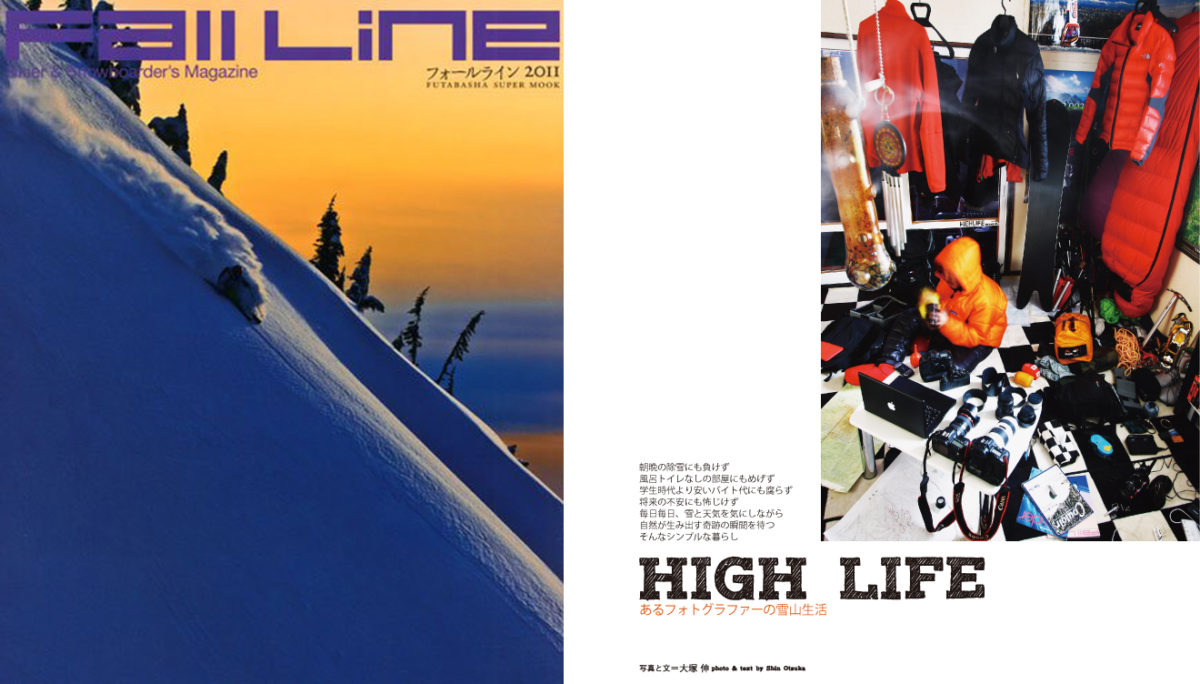
It was the fall of my second year of high school. I simply began to question whether I should continue competing; it would cost money, and I would only be causing trouble for my parents. One day, while I was feeling frustrated, I came across "Fall Line" in a bookstore and started browsing. It made me realize, "Oh, so there's skiing like this." It stayed in the back of my mind, and I quit competing before the season started
──It's getting to be time to talk about Yaman
It had a big impact on me. The issue I picked up at the bookstore at the time was from 2011, and I still vividly remember the article that focused on the lifestyle of Otsuka Shin (*10), who lives at the foot of Mount Yotei. Even as a high school student, I was shocked to learn that someone living such a life and doing such activities in such a place was so close to where I lived
I've felt a sense of responsibility
The photo of him pitching a tent inside his house was also very striking. He has a phrase I like: "To devote your life to what you love, it's important that you take pride in your actions." These are important words that still live in my heart
──That's a problem
It was around this time that I started frequenting a coffee shop called "Sprout Outdoor Espresso" in front of Kutchan Station. The owner, Mr. Toge, also loves skiing and kayaking, and there were old issues of "Fall Line" lined up on the shelves in the back, which I would read through. I thought that maybe this shop would lead to new opportunities or help me meet someone. So I started going there regularly
──I see
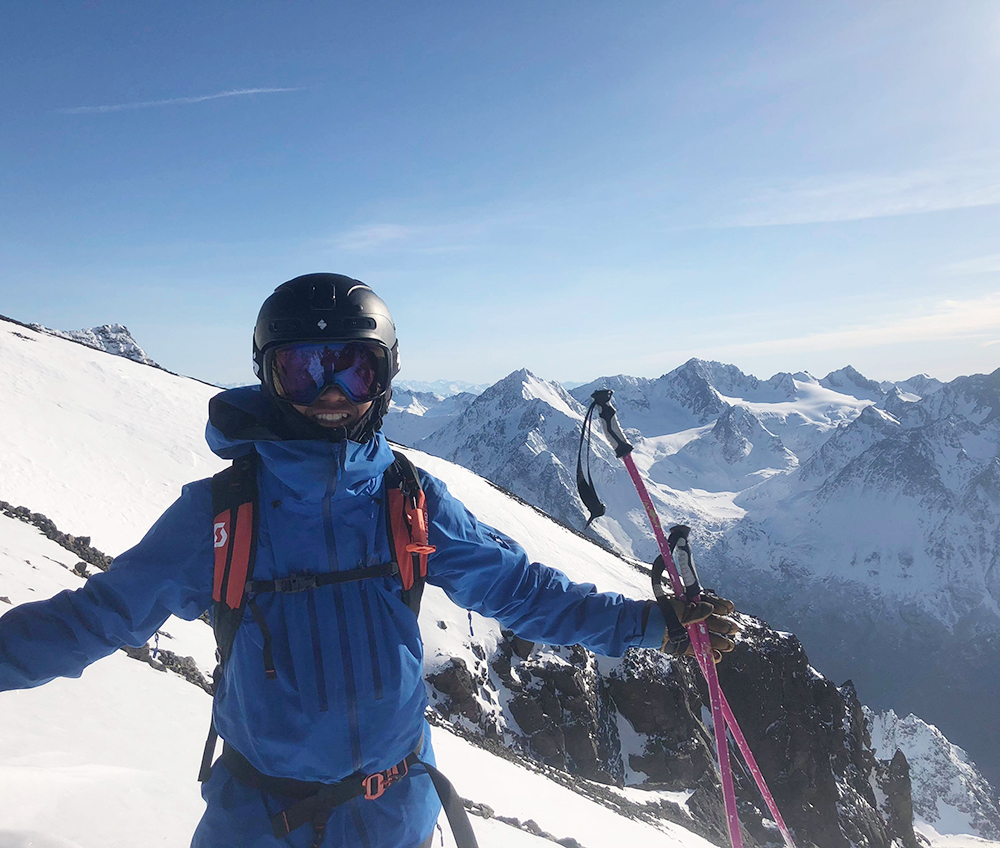
My first backcountry adventure was also taken by Toge-san from Sprout. I borrowed all my gear except for my clothing, boots, and backpack, and climbed Mount Yotei in February. The weather forecast wasn't good, but when we went skiing, the sky cleared brightly, and I could see all the way from the Niseko ski resort below to the town of Kutchan in the distance. What's more, I was able to ski on the finest settled powder (*11). Looking back now, it's a miracle that I was able to ski in such good conditions. It was intense for my first backcountry adventure, and I feel like I was given the ultimate baptism of fire
*4 [Color Sports Club]
Hakuba's first backcountry tour service, established by Tomohiro Shakawa in 2000. As a guide service that focuses on skiing rather than traditional mountain skiing, it is a pioneer in Japan alongside Niseko's Powder Company.
*5 [i-nac (International Nature and Environment Outdoor College)]
A vocational school specializing in outdoor activities located in Myoko City, Niigata Prefecture. It offers courses in outdoor guides, instructors, and outdoor education, and in addition to full-time lecturers, it also has a luxurious and diverse lineup of special lecturers who are field specialists, such as Daisuke Sasaki.
*6 [END OF THE LINE]
Released in the fall of 2009. A feature-length documentary film about Sasaki Daisuke, directed by photographer Yamada Hiroyuki. It is notable for its emphasis on the visual beauty of 16mm film and for the comments from many people involved. Incidentally, the interviews were conducted by me, Terakura.
*7 [Mighty Jamming]
Filmed and directed by Hiroyuki Nishio, also known as "jackie." This freeski movie label is not limited to any particular genre, and features main riders such as Taisuke Kusunoki, Toru Kawaguchi, and Yoshiya Urata, covering everything from powder to free runs, parks, and street jibs.
*8 [Yamada Hiroyuki]
He started his career as a snowboard photographer and has served as a director of photography for commercials for top brands such as Panasonic and Toyota. He won the Japan Photo Award in 2013. He is currently an associate professor at Nagaoka Institute of Design while also working as a photographer.
*9 [Girdwood]
A beautiful town facing a secluded bay, about an hour's drive south from Anchorage, the capital of Alaska. It is the base town for the Alyeska Resort and also serves as the base for the Chugach Helicopter. It is a ski and snowboard town that is equally as popular as Valdez.
*10 [Otsuka Shin]
Snowboard photographer. Debuted in 2010 with the cover photo of "Fall Line." Based in Makkari Village at the foot of Mt. Yotei in winter and Tateyama in summer. For the past few years, he has been stationed at Tateyama Murodo in summer, where he works as a ptarmigan observer.
*11 [Fine-quality settled powder]
After snowfall, the snow settles over time, which allows your skis to glide more smoothly. Fresh powder that you can tread on endlessly is great, but powder that has settled over time, allowing the snow to glide even more smoothly, is also exquisite.
He studied under his idol Daisuke Sasaki in Myoko and
was shocked by the Northern Alps in Hakuba.
──What was your first impression when you enrolled in i-nac, an outdoor vocational school, and met your idol, Sasaki Daisuke?
Daisuke's classes started in the second year, but I had the opportunity to help out with his Myoko tour in the winter of my first year. He had previously given me an autograph on "THE END OF LINE," so it seems he remembered me and called out to me
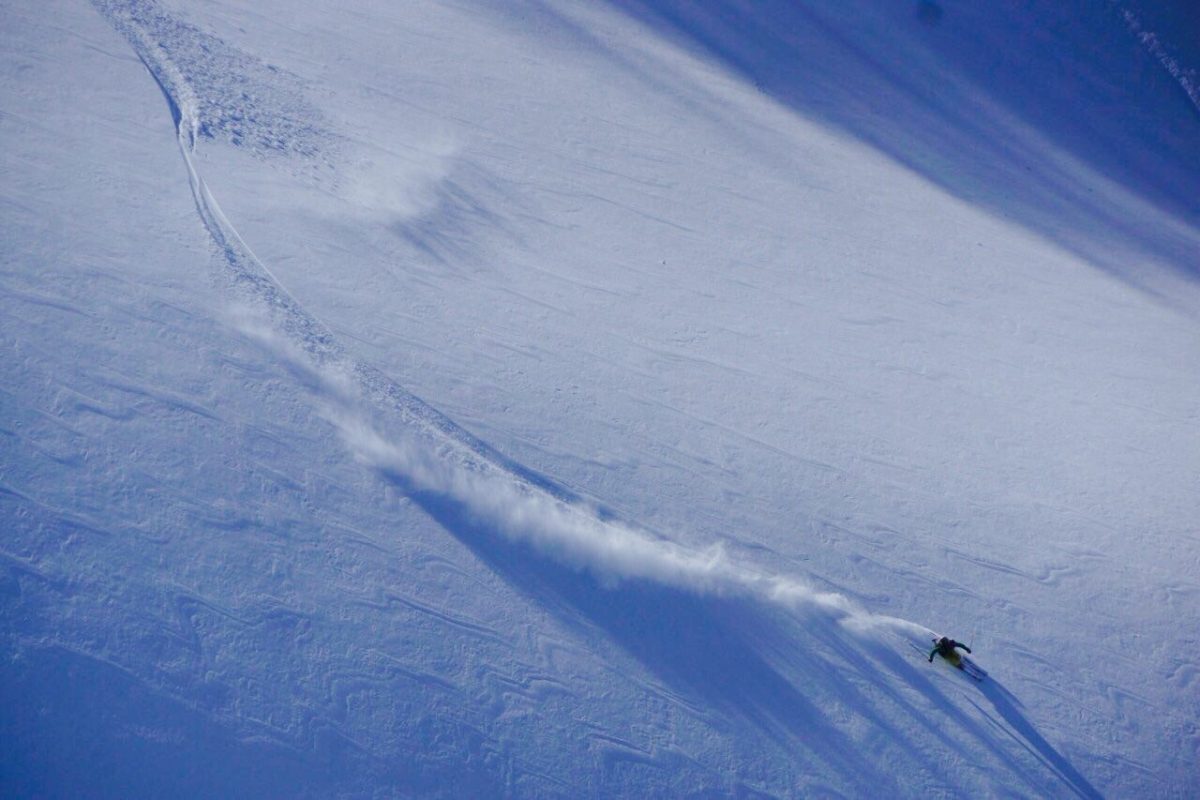
That was the first time I saw Daisuke skate live, and it was shocking. It was like he was inhuman, almost animalistic. Watching him skate up close was more powerful than I had imagined. It was amazing, as I had expected
What do you study at this school?
The course I enrolled in was the Mountain Professional Department, a three-year course that allows you to obtain a mountaineering guide qualification. There were also other courses on mountain biking, climbing, nature conservation, and outdoor education. In addition to Daisuke, the instructors were active guides and climbers such as Kuroda Makoto, Kato Naoyuki, Hantani Yasuhiro, Nakano Toyokazu, and Masumoto Ryo, and both the lectures and practical training were very in-depth
──Can I obtain a guide qualification after graduation?
Ultimately, students will take the exam for the Japan Mountain Guides Association (*12), but there is also a written exam and an actual field guiding exam in their third year, so students are exempt from the material covered in the school curriculum. If they pass these exams, they will receive the JMGA Certified Mountain Guide Stage II qualification upon graduation
──Did you plan to become a guide after graduating from vocational school?
Ever since I entered vocational school, I had wanted to become a backcountry ski guide. But before that, I thought that if I wanted to make a living as a skier, I needed to perfect my own skiing. I could still become an official guide in the future, but now was the time to improve my skiing. So I decided to work as a staff member at Color Sports Club in Hakuba while also skiing in Hakuba
──Have you ever thought about returning to Hokkaido to ski? There are guide services in Hokkaido too
I didn't think about it at all. I came to Hakuba for the first time during the summer season in my first year of vocational school, and when I saw the Northern Alps for the first time in my life, I was shocked. I had no idea such amazing mountains existed in Japan. I thought this was the place for me, so when the season started, I bought a season pass without hesitation and started going to the Hakuba ski resort
──I see
In the spring of my second year, I had the opportunity to train at Color Sports Club. First, I participated in a Color tour as a guest, and asked Tone-san (※13) if I could train there. After that, I brought along an essay in which I wrote my passionate thoughts and formally requested to be trained there. So, I stayed in my car in Hakuba and attended Color Sports on every day of the tour
──Is your role a tail guide?
No, just the tail of the tail guide. Of course I wasn't paid, but I was able to borrow staff tickets to cover the cost of the gondola and lift tickets. Looking back, I guess it was just my youth... (laughs). Anyway, I figured I'd rather just go for it than regret it later
──Why did you choose Color Sports Club?
I came across an article about Color Sports Club in a magazine and learned about Tone's activities. I thought, "Ah, if there are people like this, I should go there."
Also, in the winter of my second year of high school, there was a Vector Glide test drive event in Niseko, and I wore the Cordova skis that I had received from my elementary school teacher. Apparently it was unusual for a high school student to be wearing Cordova skis, so Akiba-san (※14) called out to me, and as we talked, he said to me, "If you're going to Myoko Technical College, there's a guy named Furuse Kazuya (※15) in Hakuba, and if you have the chance, you should ski with him."
So when we decided to work in Hakuba, we decided it was definitely Color Sports Club, where Tone and Kazuya are also members

 Click here for "Part 2"
*12 [Japan Mountain Guides Association, Public Interest Incorporated Association]
The largest mountain guide association in Japan, known as "JMGA." Although it is not a national qualification, it is the most widely accepted guide qualification system in the country, with various qualifications, including the International Mountain Guide, serving as a guideline for selecting qualified guides.
*13 [Tone-san = Tonokawa Tomohiro]
Representative of Color Sports Club. A pioneer of Hakuba backcountry who opened up many lines in the Ushiro-Tateyama mountain range in the midwinter season, not in the spring. He has also recorded many first downhill runs in skiing history, including on Fukiage II Peak. Many of the current standard tour courses are his lines.
*14 [Mr. Akiba = Masayuki Akiba]
Producer and developer of VectorGlide, known as a "racing spec fat ski." The Cordova was the first VectorGlide model, and its basic design has remained unchanged for over 15 years since its introduction.
*15 [Kazuya Furuse]
After a long career as a ski bum overseas, spending summers at club fields in New Zealand and winters at Jackson Hole, he settled in Hakuba and became a ski guide at Color Sports Club. In 2020, he became independent and launched "Locus Guide Service."
[Editor + Writer]
Chikara Terakura
After working for Miura Dolphins, headed by Yuichiro Miura, for 10 years, he became involved in moguls and freeskiing for nearly 30 years as an editorial staff member at BRAVOSKI. He currently works as the editor-in-chief of "Fall Line" while also working as a freelancer in various media. He has been writing a series of interviews for the mountaineering magazine "PEAKS" for over 10 years.
Cooperation: sputnik inc.