

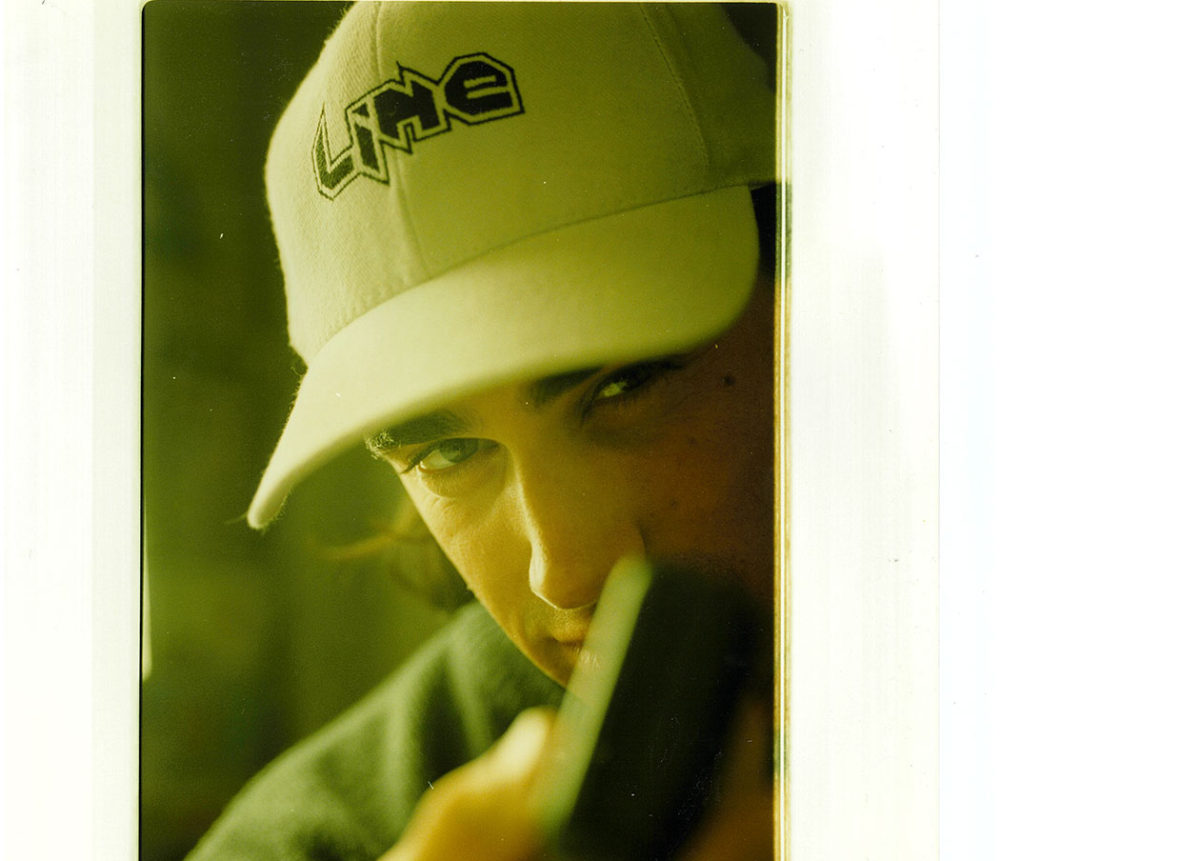
I could see it with my own eyes, the future of skiing
The Origin of FreeSkiing
When unraveling the origins of freeskiing, there are companies and people who always come to mind. No one in the world would deny that their trajectory has become the history of freeskiing. The undeniable freeride icon is LINE and its founder, Jason Levinthal
Since he revolutionized the ski industry in the late 1990s, Jason has not only created and nurtured LINE and Eric Pollard in the process of unstoppable evolution. We delve into the unique story that led to the current "J skis."
"Safe to say that if you enjoy skiing today, J Lev is someone you have to thank for that."
- Tetongravity.com

LINE: Its roots and potential
The heart and soul of Jason Levinthal, a young ski lover studying engineering design at a New York university, exploded into innovative creativity and a major project: "Reconstructing the ski industry from the ground up." Founded in 1995, LINE is a youthful, energetic company that suddenly jumped into the shoes of a long-established, established manufacturer
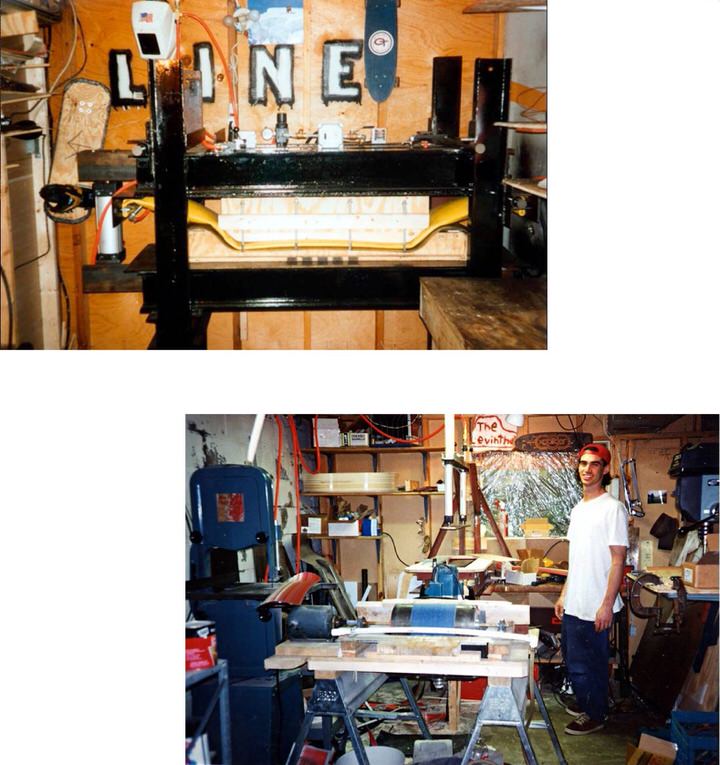
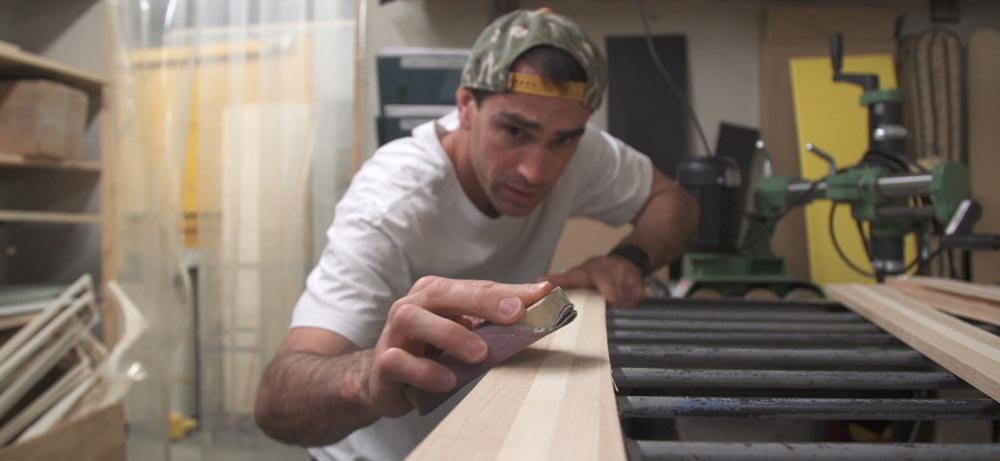
It all started in Jay's (Jason's nickname) garage. Jay, who was making short skis that were neither skis nor snowboards as his graduation project, had a catchphrase: "Nothing is impossible."
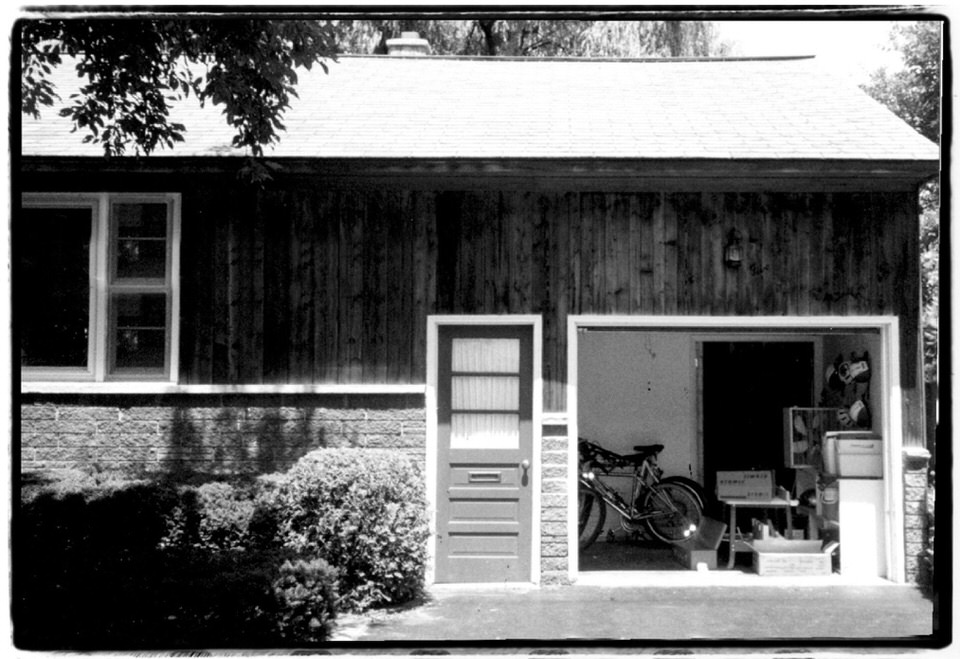
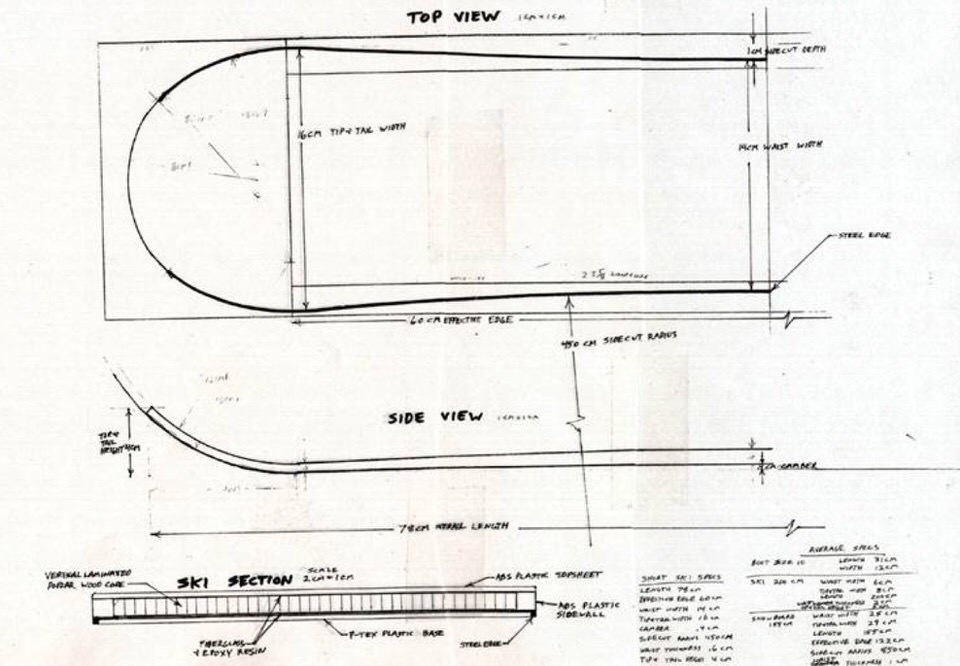
"The skis that finally took shape were twin-tip shaped skis. At the time, they were completely different from conventional skis and were incredibly strange. When you actually rode them, the way they moved was even stranger than it looked. By strange, I mean that they had infinite possibilities. It only took a few rides to realize that. We did fakies, scraped the handrails, and even did tricks that had previously only been possible on inline skates, almost perfectly, on these strange skis."
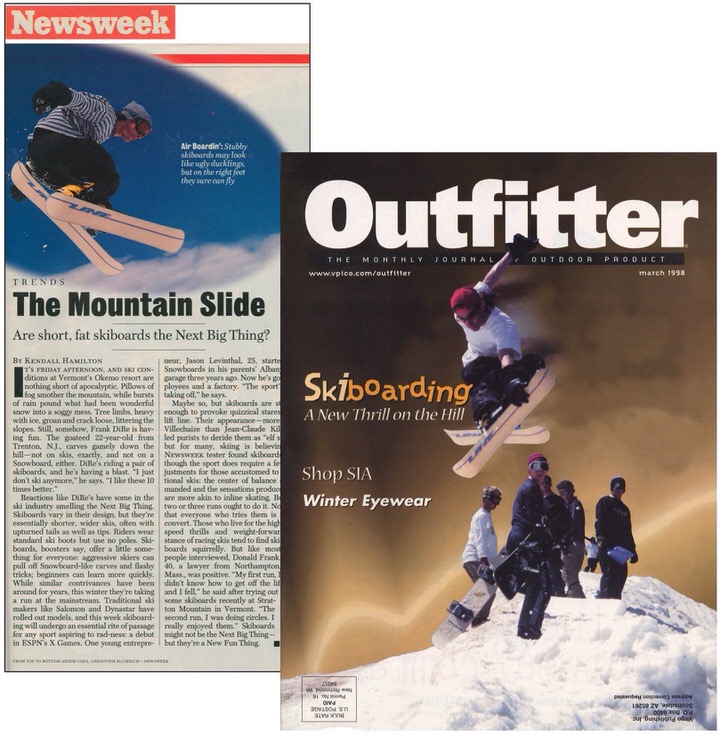
An order for 1,000 skiboards came in from Japan
In the spring of 1996, Jason exhibited his short skis, or "skiboards," at a trade show in Las Vegas. Dealers were met with cold looks. However, one Japanese person became interested in their unusual design: Mr. Tanaka, a buyer at Evernew Co., Ltd., a major wholesaler of sporting goods. Two weeks later, Evernew placed an astonishing order for 1,000 skis. Jason couldn't believe his eyes. 1,000 skis? Because up until that point, Jason had only made 30 skis himself
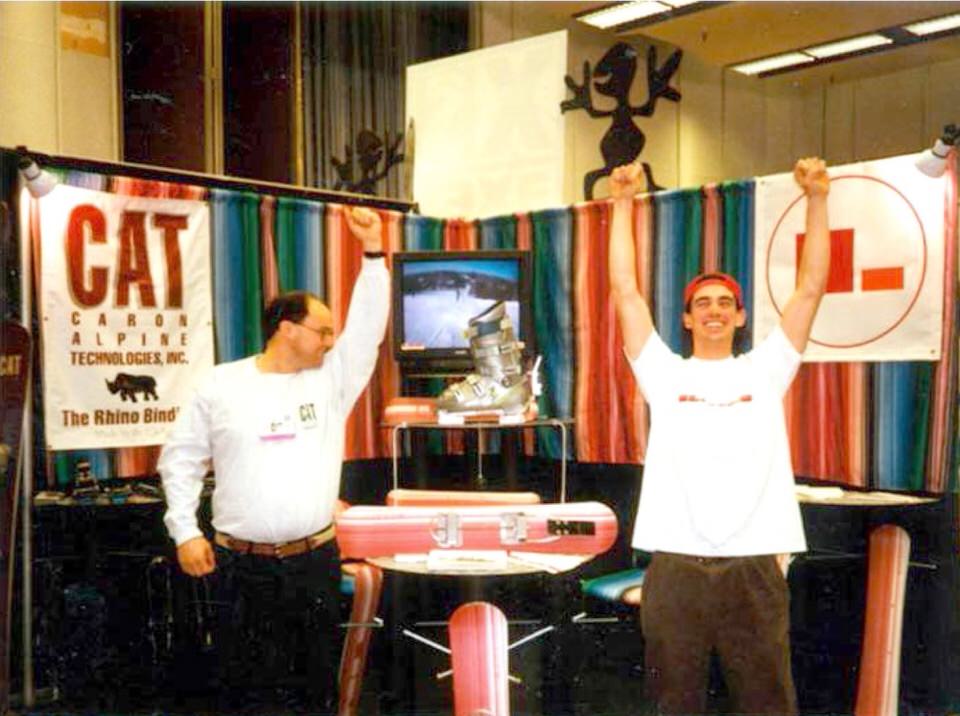
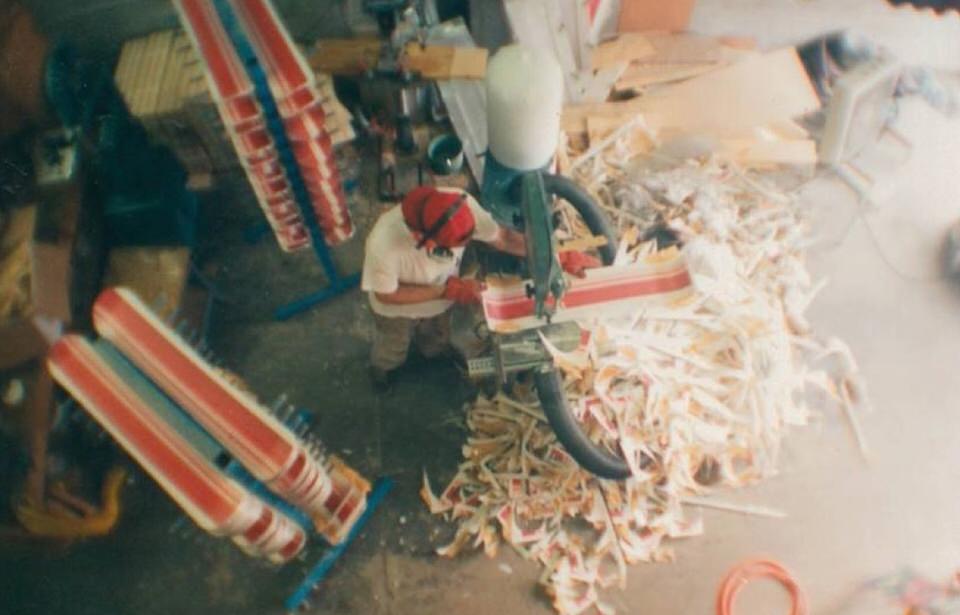
But Jason wasn't discouraged. Convinced that this was a great opportunity for him, he gathered together all the people he could find, including his university classmates and local acquaintances, and worked tirelessly, even sacrificing sleep, to build a skiboard in his garage
The following year, in 1997, SALOMON sensationally released the "Snowbrade" globally. Things began to develop rapidly with the entry of the top brand in the ski industry. SALOMON's clever strategy, leveraging its financial resources, created the perfect scenario for making skiboards a hit. In Japan, a rider team called "Team One-day" was formed, and they fully demonstrated the excitement of this new skiing style, offering freedom that rivals that of snowboarding, in the media and at events
Yudai Ueno, who has been a leader in the Japanese freeskiing world for many years, actually made his freeskiing debut with Team One-day at the age of 15
Armed only with a passionate heart, he takes on the ski world
"We had no history, no name, and no money; all we had was a passionate heart for the sport. It sounds like a joke to think we could take on the ski industry with just that, but we had youth, passion, and fresh ideas that no one else had. Yes, we even had a vision for the future of skiing. We knew that with this, we could capture the hearts of kids who were tired of the old-fashioned world of skiing and become leaders
Skiing seemed practically dead. We at LINE believed we could give skiing new life again, by doing it in a completely new way and with completely new ideas."
What was born from the space to ride on just under 100cm of snow was so new and so big. Just by riding on one, you can imagine how different the world looked. It offered a view never seen before, a floating sensation never felt before. As wings to the sky, a toy that allowed you to feel G (gravity), a point of contact with nature, and a tool for self-expression, skiboards undoubtedly had a huge impact on the skiing world and created a new worldview
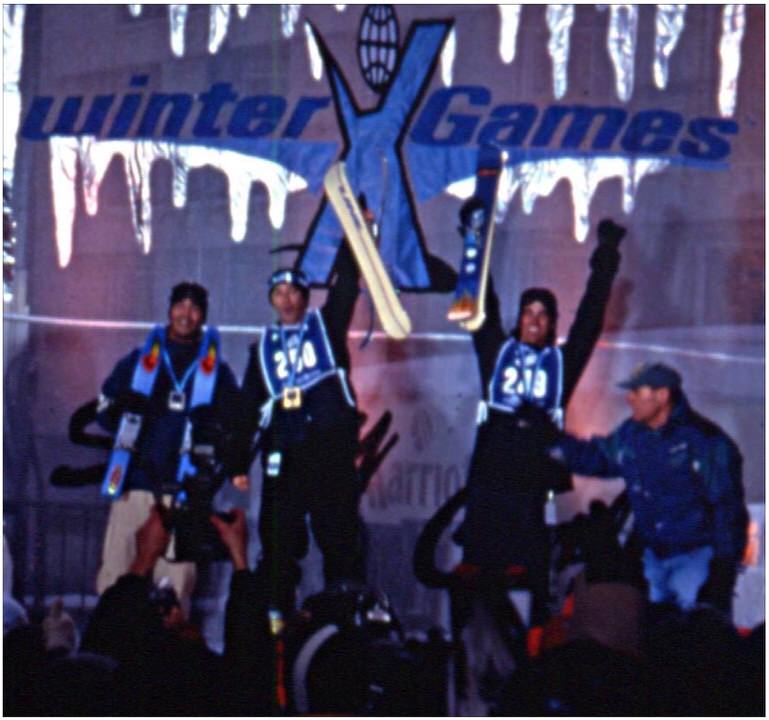
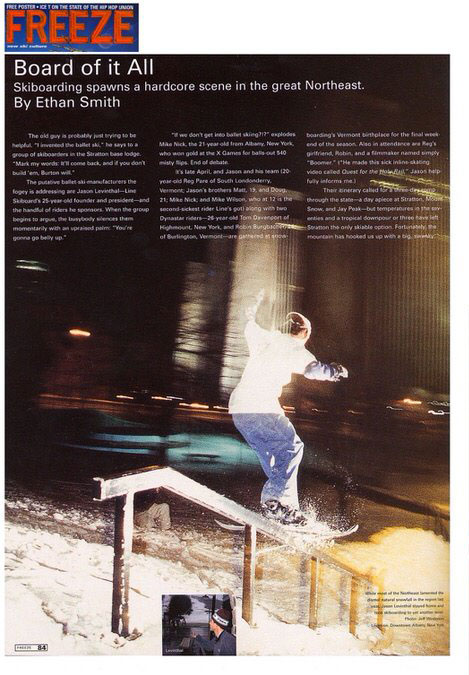
Skiboards were included as an event for the first time at the 1998 ESPN Winter X-Games, and Jason competed in the slopestyle event, landing a 540 and making it onto the podium. The winner was Jason's best friend, Mike Nick. Of course, he rode a LINE skiboard, and effortlessly landed a 1080, a feat that no skier had achieved at the time, astonishing the whole of America. Furthermore, the US freeski magazine FREEZE, which was selling like hotcakes at the time, featured skiboards and included a photo of Jason skiing down a rail in an article. This was the first time that rail riding by skiers, rather than snowboarders, was officially recognized
Riding on the global success of skiboards, LINE adapted its unique style to longer skis. In 1998, they produced the first 100% geometric twin-tip skis. At the time, LINE was the only manufacturer of true twin-tip skis with the same height at the tip and tail, and they even obtained a patent in the USA. A new chapter in ski history was written
Everything was born in Jay's mind, colored, shaped, and developed into a new style
"The first two years of starting LINE were tough, but I was committed to promoting the value of this new sport and creating new styles and products."
SKI NEEDS THE FUTURE.
Yes, skiing needed a future.
Jay's uncanny ability to see what's next quickly allowed him to pick out talented and skilled kids. To be a LINE rider means to be an athlete who creates new styles, because the heart and soul of LINE is expressed through the creative performances of its riders
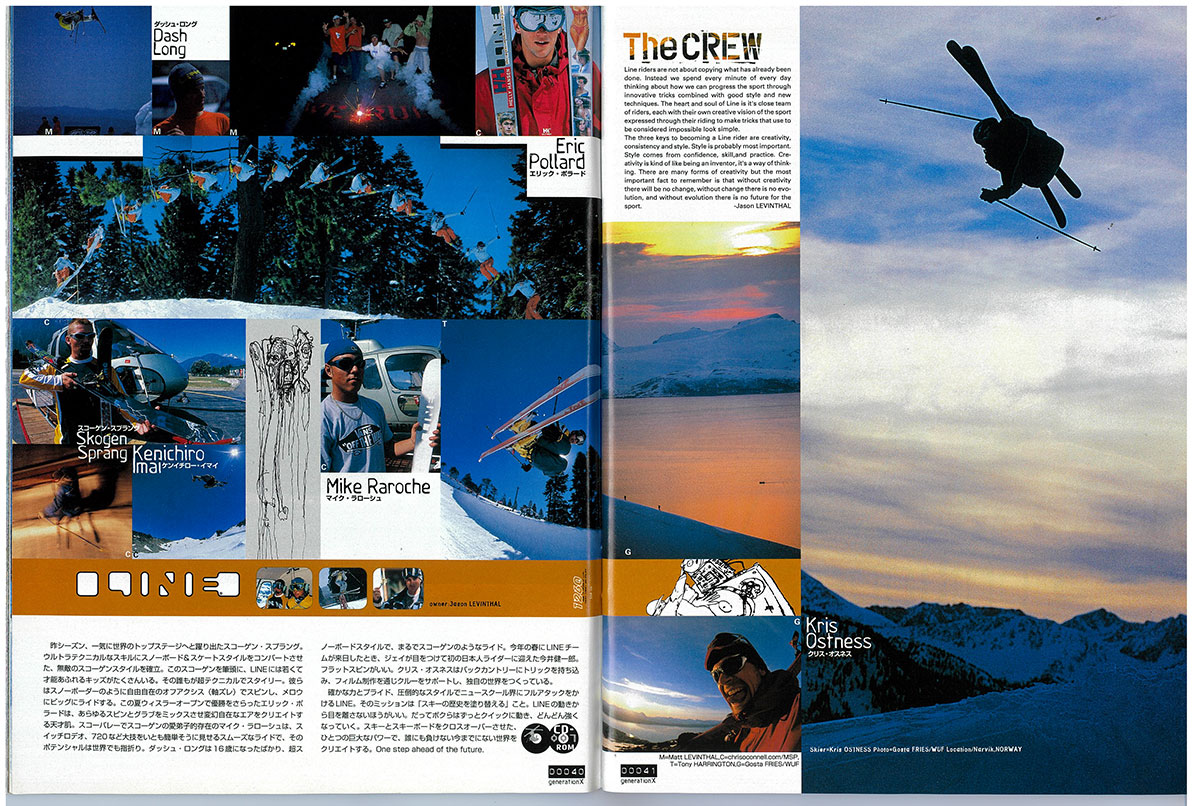
At this time, Eric Pollard, who was only 14 years old, was chosen to be the face of LINE SKI
The moment I saw Eric skate, I knew he was the one
"His flowing, mellow rotations, his long grabs right up until the landing, his beautiful movements and style were so different from others that it was enough to tell me just how much talent he had. The moment I saw 14-year-old Eric skate on Mt. Hood, I knew he was the one. At the time, I was looking for a skiboard rider, so I immediately put skiboards on Eric
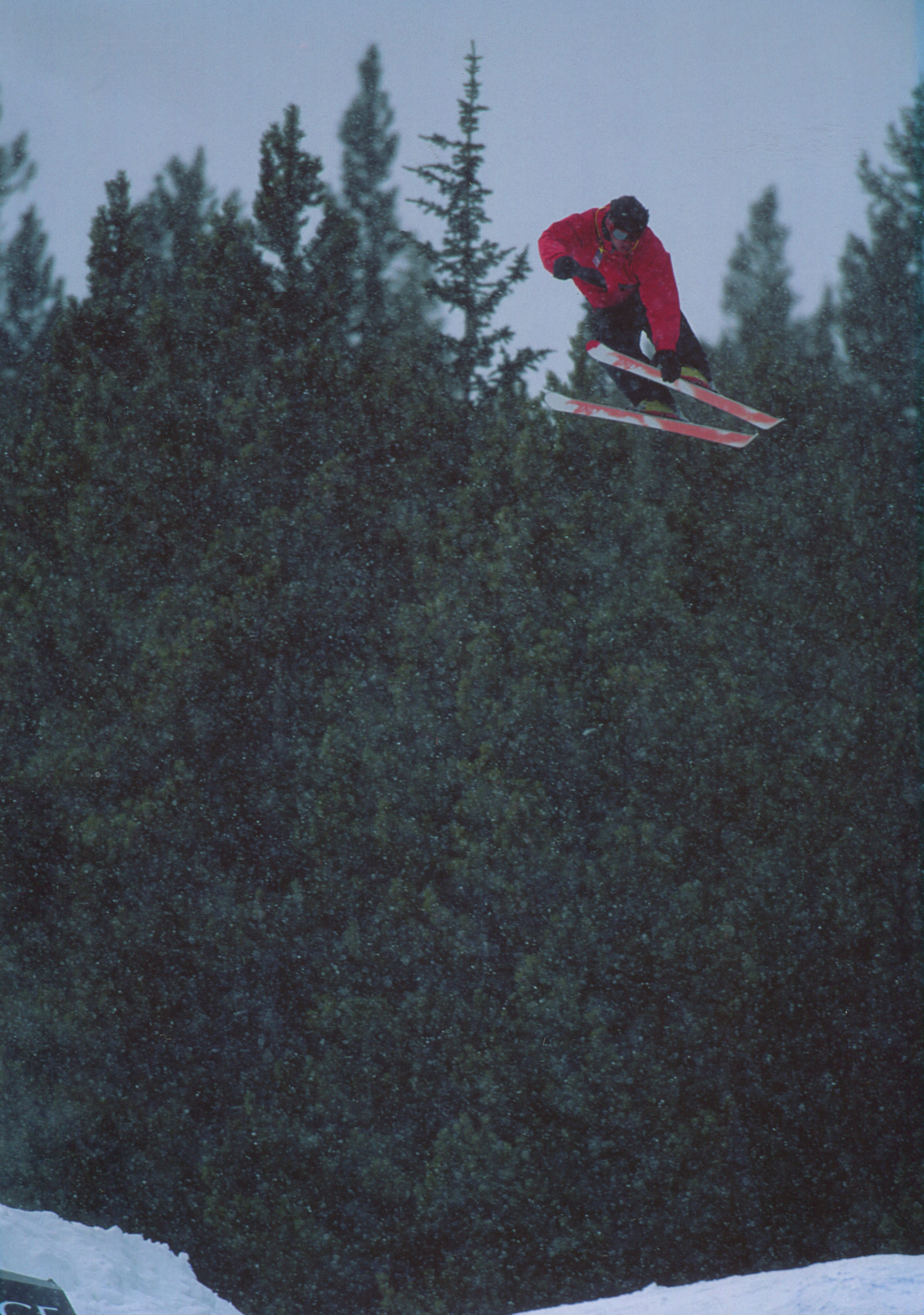
He could do anything. Rodeo or Misty. And he did it with a style that's hard to put into words. I remember being really impressed. Eric's riding was characterized by not moving a muscle in the air, which made it look so smooth and fluid, and beautiful.
Eric rode both skiboards and longboards for about two years. As soon as LINE released twin-tip skis, he brought them to the new school scene. He soon won the Whistler Open Big Air. It was time for this 16-year-old kid who was always acting cool and acting stupid to become a real rock star."
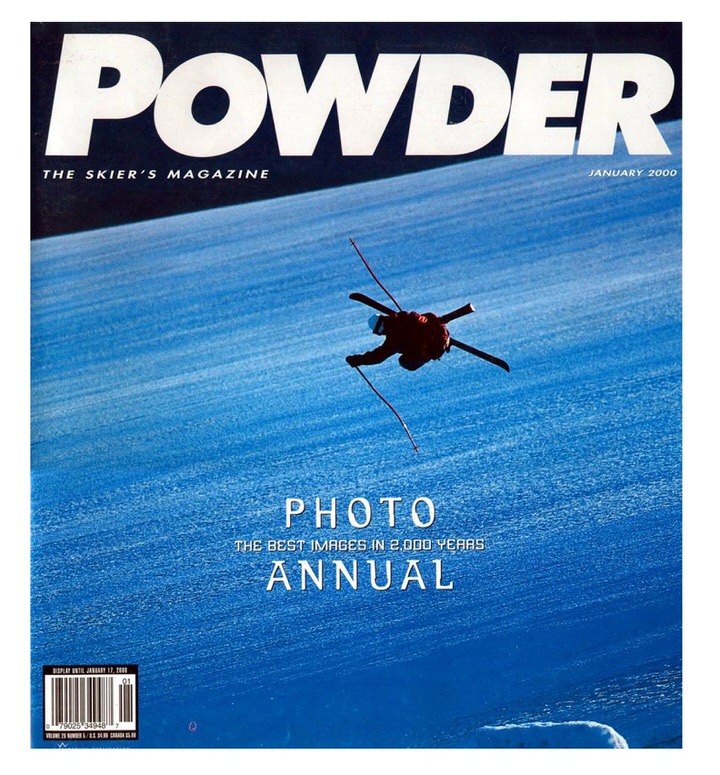
Eric Pollard was instantly thrust into the spotlight and rose to stardom. At the same time, Chris Ostness, already famous as an innovative skier at the time and for whom LINE produced his first signature model, appeared on the cover of the USA ski magazine "POWDER" in 2000. This was the first time that the prestigious ski magazine had featured a twin tip on its cover
Towards a brand with an unparalleled presence
A completely new era had begun. From then on, LINE and the LINE team's success knew no bounds. They released new ski designs one after another, and Eric Pollard's signature models were also released one after another. Jason says:
"Eric always had his own ideas, years ahead of his time. What he was thinking and what he wanted to do. He always tried to figure out what would work and what wouldn't, and make it happen as much as possible. That was both fun and difficult
"Eric had some crazy ideas that we couldn't have imagined at the time. He wanted to do the same things in powder as he does in the park, so he wanted a 150mm wide, 170cm long ski that was sturdy, yet super soft, with a crazy big rocker (laughs). Can you imagine that?
We made tons of prototype skis. Most of them were crazy things that no one had ever seen before, that no one had ever ridden (laughs). They were mostly just jokes, but we were serious about them. But thanks to that experience, Eric and I learned a lot about ski design, and our engineers learned a lot too. And so we eventually developed a design that would become mainstream in the market and be welcomed by all skiers."
The most important thing has always been riding. And giving form to the truths discovered through riding. Jason, a master ski craftsman who creates skis from a single piece of board with his own hands, and Eric, a young teenager who asserts his right to freedom through riding, have collaborated to produce one innovative ski after another
LINE has become a brand with an unparalleled presence as a pioneer of freeskiing, and the LINE team has grown into a ``style master'' crew, gaining a solid position and overwhelming support from users
In 2006, LINE became a subsidiary of K2
LINE's momentum was unstoppable. Just when it seemed like that was the case, in 2006, LINE suddenly became a subsidiary of K2. Jason also transferred his management of LINE to K2, and business-wise, K2 absorbed LINE. Jason hasn't said much about this, but it's said that the background to this was the failure of a development project for the revolutionary "Reactor" binding, which Jason desperately wanted to make a reality
Originally, K2 had a strong focus on extreme skiing and mogul skiing. With riders such as Glen Plake, who made mogul skiing popular, and charismatic big mountain skiers Seth Morrison and Kent Kreillter, K2 was supported by a core demographic of skiers. For K2, a street-style brand like LINE, which is enthusiastically supported by popular young kids, must have been the perfect opportunity to expand their market
Jason, who was still managing LINE while still based in Burlington on the East Coast, was soon approached by the president of K2 with a big proposal
K2 President's challenge? I'll take it.
"He said, 'Hey, J, can you do something about this?' He brought me a black lump. When I looked closely, I saw it Raichle boots. He said he had bought the mold from Raichle and wanted it back on the market so it could be sold. But he had no money to spend, so he asked me to use LINE's resources to do something about it. None of the 300 employees at K2 at the time wanted to do that job (laughs).
Reichel has long been a boot for hardcore alpine racers, and its performance was proven by Downhiller's Bode Miller, who was on the podium at the Alpine W-Cup. I also liked the unique wire hold and soft flex, so I wore Reichel
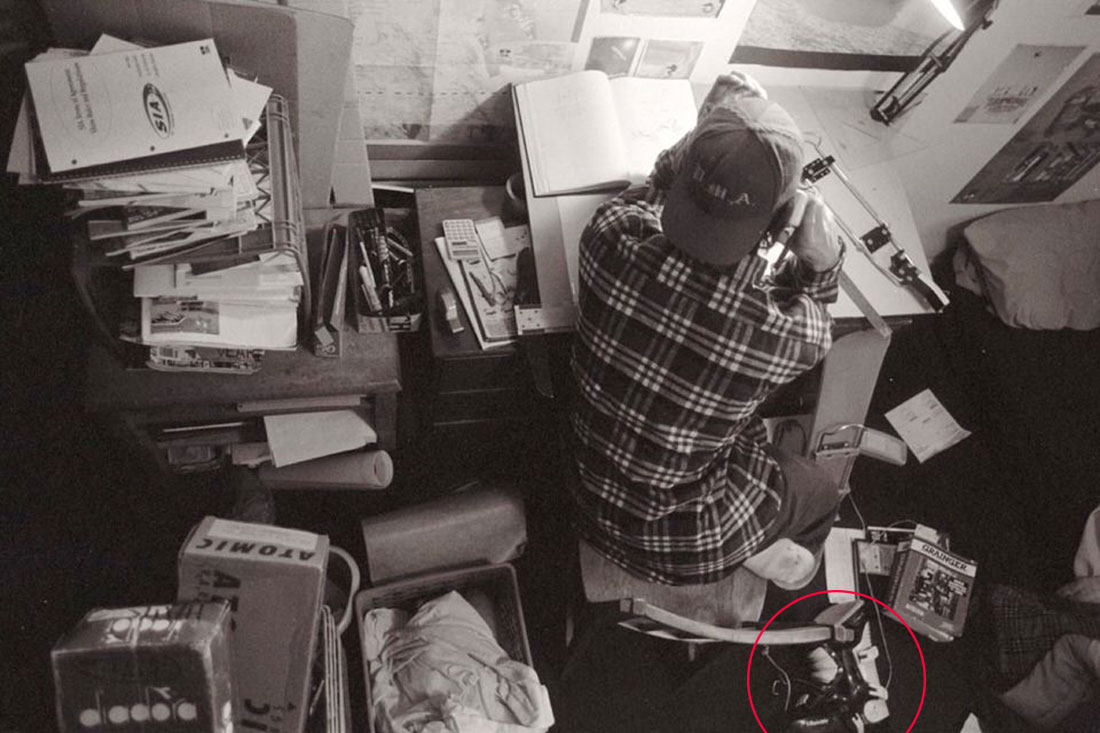
The soft flex actually makes it great for freeriding because it absorbs shock. Everyone knew about it, including Seth Morrison, and it was a big seller on eBay
They wanted me to sell 20,000 pairs in the first year. They said, "If someone like you is interested, surely we can do it? What do you think? Are you going to do it or not?" It was like a challenge to me, having entered the K2 culture. Of course I accepted. I said, "Yeah, I'll do it." Because I wanted to prove that I had the ability to run the ski business, and that it wasn't just about LINE. I believed in them. I thought that Reichel's mold would be a good fit for me to work on at K2."
In 2008, FULLTILT boots were born.
It was Jason who initiated it.
"From there it was a challenge. I asked myself, 'How can I take these old, smelly boots and bring them back to market as a cool new product without physically changing them?' You can't change the mold. Also, the kids had a fixed image of the Reichel as being super old and not really a freeski boot
In the face of such adversity, the answer I came up with was to present it as a "cool item like NIKE." My goal was NIKE sneakers and their culture. In order to make it look like fashion, I came up with something unique that no one in the industry had done with ski boots in terms of graphics, silhouette, design, color usage, tongue specifications, everything. All while making use of the Likel mold
As a result, the FULLTILT is a boot with a striking presence
And then there was marketing. But I had absolutely no money to spend. The only resources I could use were the sales connections I'd cultivated through LINE and professional riders. But I knew that if I used a rider, the impact on our image would be immeasurable. For this, there was no question; the face of K2, the charismatic Seth Morrison. I made Seth, a rock star in the world of big mountain extreme skiing, the first main character and wrote the story around him. Next was Tom Wallisch, who was also active in freestyle competitions."
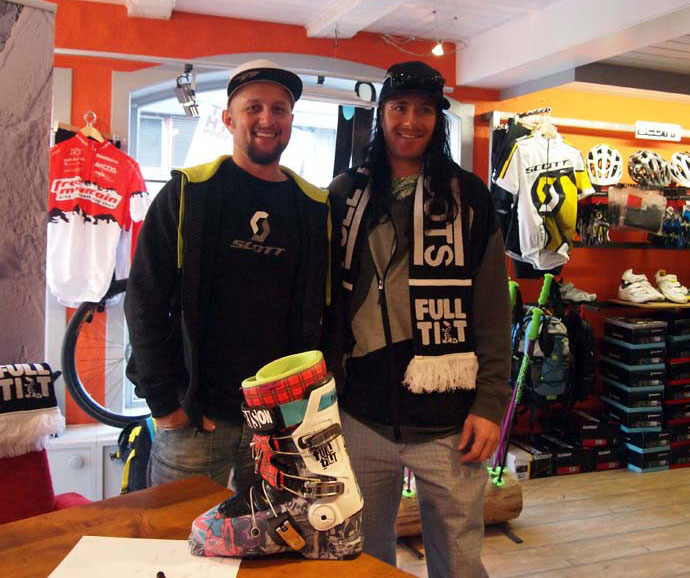
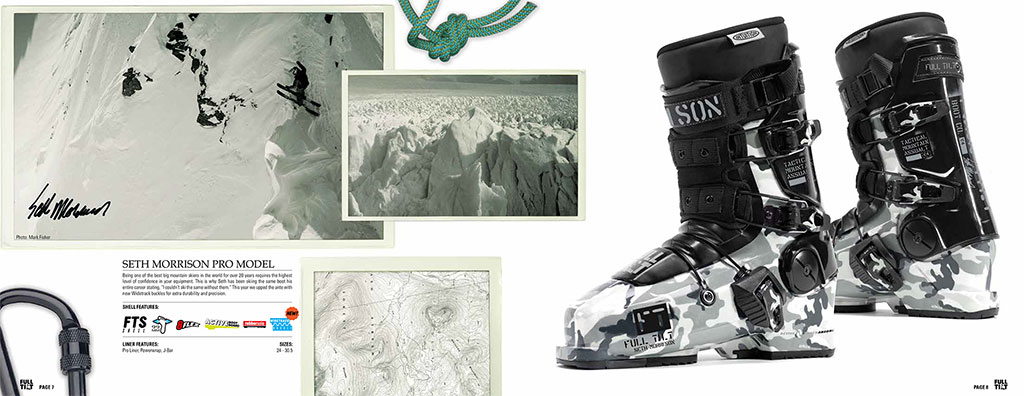
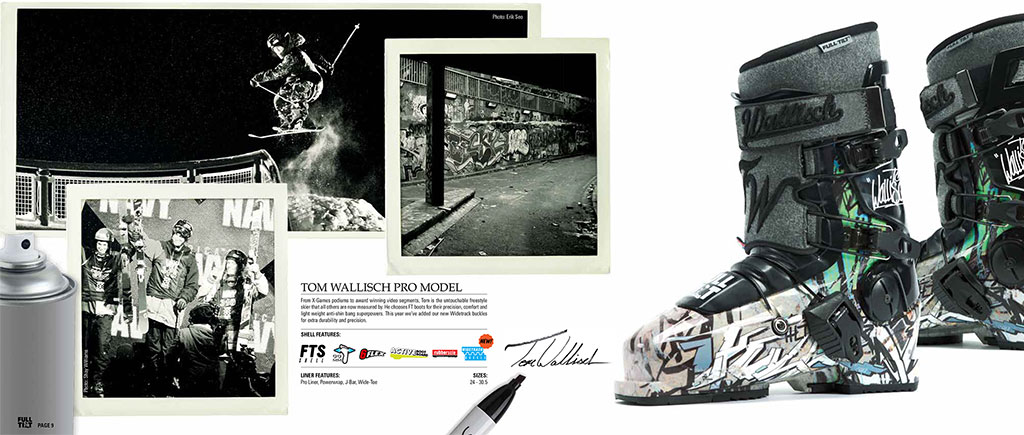
"Unlike skiing, there are hardly any professionals who have strict contracts with ski boots.
'Do you like the boots you're wearing now?'
'No? Oh really, I see, how about these? (holds out a full tilt)' '
Do you like them? I see, then here you go! I'll take them.'
And that's it! (Laughs) That was the end of it (laughs). Around that time, social media was just starting to become popular, so I started using it to spread the word."
Thus, FULLTILT boots were born in 2008. Now a top boot brand in the freeskiing world and boasting immense support, FULLTILT has been reborn by LINE founder Jason and has made a comeback to the skiing world with a completely new look
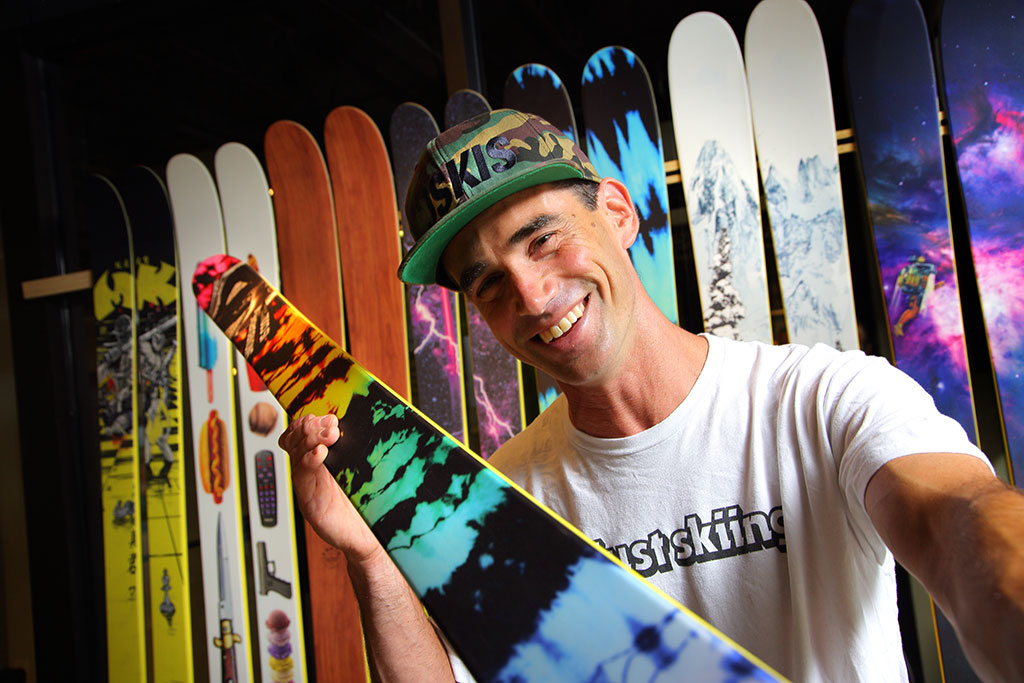
This new ski company J,
with a mission to do things different in skiing.
The mission of this new ski company "J" is to do something "different" in skiing
Here we will present it in interview format
-I had heard that FULLTILT was produced by Jay, but I had no idea there was an episode like this. That's interesting!
Jason: Yeah (laughs) It was actually an interesting job. I was able to prove the ski business skills I had cultivated at LINE at K2. I wonder how many pairs we sold in the first year. I think we sold about 30,000 pairs
-FT boots are very popular among freeskiers in Japan
Jason: Oh really? I had no idea about that. I'm honestly so happy that it's so highly acclaimed in Japan
-But why did you leave K2 after such success? Jay was with K2 for eight years and founded his own company, "J," in 2013
Jason: It was the right time. I've been doing the same thing for 17 years now. I've done everything I could at LINE, and I've grown it from making a few thousand pairs in my garage to selling 40,000 pairs worldwide
I've worked relentlessly and passionately to advance the sport I love: skiing. I've collaborated with some of the world's smartest engineers, cutting-edge factories, and some of the world's greatest athletes, legends, and pioneers. I've created over 1,000 ski prototypes
K2 is truly a mega-company, and a great company, but because it's so big, there were inevitably many limitations. At K2, I felt like I'd reached the limits of my creative potential and the speed at which I could move. I also had a lot of new ideas. At the time, e-commerce was emerging and online sales were just starting to become more powerful, and social media and digital media were becoming more widespread, so I felt like I couldn't keep doing the same things I had been doing. So I started my own company, "J," again. But I had to start everything from scratch again (laughs)
Doing what you truly want to do is "J"
-Jay is the kind of person who can't stay in one place (laughs)
Jason: That's right (laughs). I wanted to do what I truly wanted to do. "J" is about realizing what I believe in, and its mission is to do something completely different in all aspects of skiing
-What exactly do you mean?
Jason: First, we bring innovative products to the market at a speed that defies conventional wisdom. Changing models every year is just too slow. We intentionally produce limited editions in small batches, giving each pair a serial number and even hand-signing them ourselves. This makes ski users feel special, like they're one of the very few skiers we've chosen. We create an attachment to the model and brand, and cultivate loyal customers with a high rate of repeat purchases
I also cut out all the people who come between the user and the manufacturer: distributors, salesmen, shops. Selling directly to users dramatically speeds up the business cycle, and of course, deliveries are quicker too. With no intermediate costs, I can set more reasonable prices. But buying products solely through a website can be a bit risky, so I set up a demo center based at a snow resort and created a system where users can actually test ride the bike. After checking out the ride, if they like it, they can make a purchase. This system is sure to be a delight for users
We treat users not as customers but as colleagues, and communicate with them in real time through our website and social media, valuing their feedback and using it in our marketing and promotions, including development
And users can see everything I do every day, including my business successes and failures, all without holding anything back on Facebook, Instagram, Twitter, etc
FOLLOW @J_SKIS ON INSTAGRAM
What I'm learning through the ski business is something everyone can learn too. By showing our customers what it's like to run a ski company, we've made each and every customer feel like they're a partner owner of J, and that together we're partners spreading the soul and joy of this sport all over the world. In fact, we hand-sign a thank-you message card for each customer who buys a pair of skis.
In this way, "J" has built its own unique community and is running very smoothly.
▲From Jason's Instagram: 100 limited edition collaboration models sold out in just 6 hours
▲From Jason's Instagram: Sending handwritten messages to each person
Everything is done in the internet. You don't need professional footage of Alaska.
That's the kind of era we live in now.
-Indeed, if you look at the website https://jskis.com/ , you can clearly see that stance.
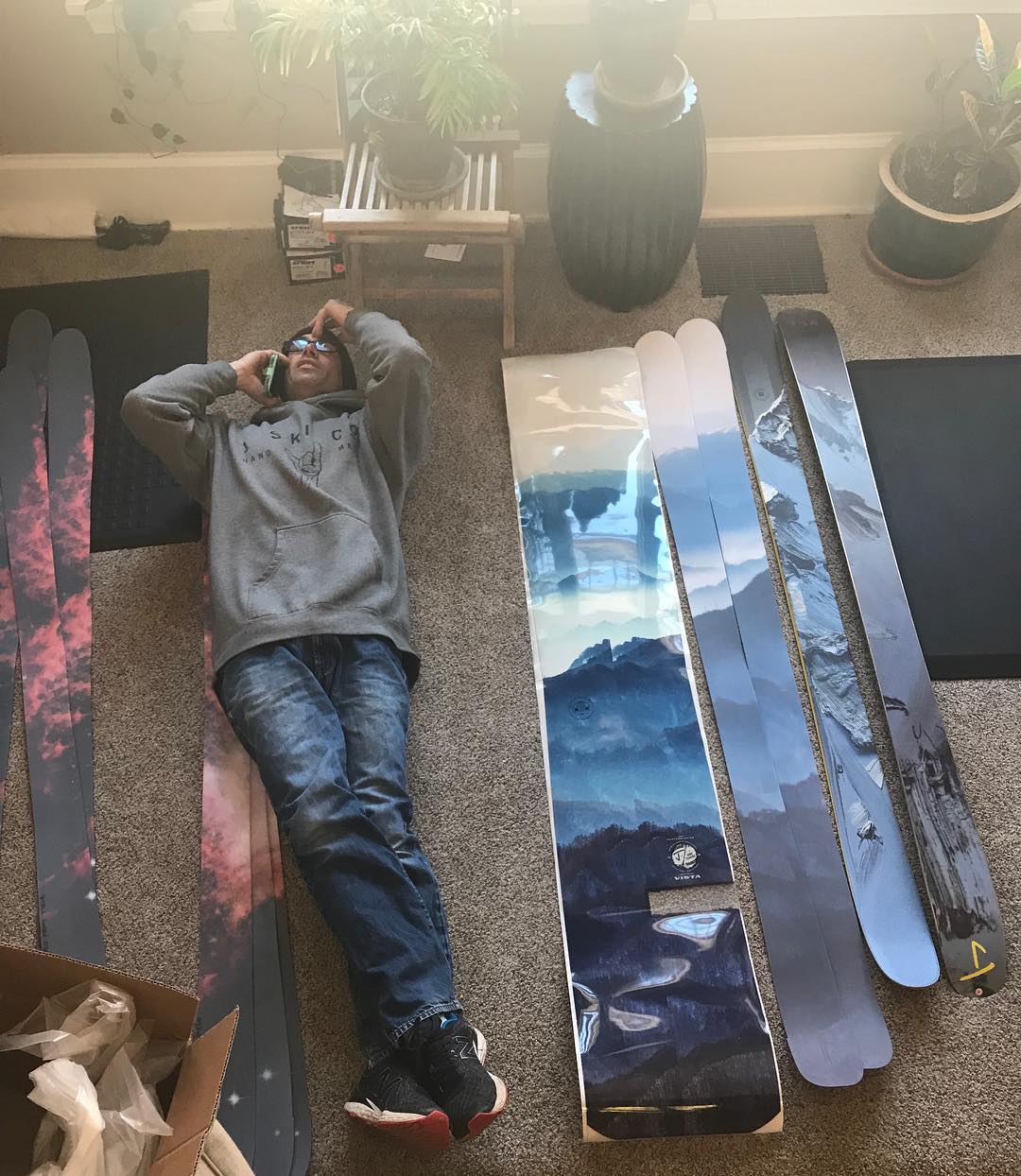
Jason: Nowadays, the entire business is completed with just one website. There is no interaction with agents or shops, no exhibitions, and we don't even need an office. Due to COVID-19, I haven't been to the office at all for a year (laughs). But business is progressing normally every day. We're fully remote, and this room in my house is our global market
Yes, we don't even need professional riders. Because nowadays, everyone is scrolling through their phones, no one is watching the X-Games, and no one is interested in it. We can just film ourselves skating and post it, and that's the best thing. Every amateur is like their own film company
If you're watching a video of a dream-like powder line taken from a helicopter in Alaska on your smartphone, a video of 14-year-old kids doing backflips while hip-hop dancing will be even more ridiculous and funnier and get more views. That's the kind of era we live in. That's why ski movies and magazines are almost nonexistent
In the past, it was common to pay "millions to get filmed by TGR" or "millions to get it on the cover of Powder magazine." In fact, when we had 4FRNT, we paid $20,000 (2 million) to get filmed by TGR! And we only got 40 seconds of footage, which is the same as nothing. It's crazy, but that was the system. Yep, we really wasted money on 4FRNT
I bought "4FRNT" to save my team and my brand.
I also wanted to prove the strength of my business.
-That's right! Speaking of which, you bought 4FRNT from Jay. And then you sold it to a venture company
Jason: Yeah. Wow, that was really crazy (laughs). 4FRNT was a riders' company that started in 2002, but things weren't going as planned and we were on the verge of collapse. As of 2017, we hadn't made a single profit in the 15 years up until then
They raised funds from investors, distributed only 5,000-6,000 skis to around 100 ski shops through around 15 distributors, and their pro riders went to Alaska to shoot videos... they were just throwing money away every day. The investors were getting fed up because they couldn't recoup their investments, no matter how much time passed. No one was willing to invest anymore, and they gave up.
I didn't really need to be involved in that, but when they got to the point where they had given up and were about to shut down the business, I thought, "What are you talking about?" After all, LINE and 4FRNT were pioneering rider companies at the time, and we were both based on the East Coast of the USA. I loved the 4FRNT brand, so I thought it would be a shame to let it disappear like that.
We shared a passion. I knew I had to save it and rebuild it somehow. I had an idea that could revive 4FRNT. At the time, I knew it was time for my company, J Skis, to move away from distributor sales and start direct marketing
So I told Matt Sterbenz, who founded 4FRNT, that the first thing we had to do was cancel all the orders we had received from shops. That was in July three years ago. We all called to cancel orders, started from scratch, and switched to direct sales. We also stopped filming rider videos and sponsoring events. All of that. And three years later, we somehow managed to survive
▲From Jason's Instagram: Managing J and 4FRNT at the same time was hellishly busy
But those three years were really tough, and I worked until midnight every day. I was constantly under stress. I left my brand, J Skis, to another partner and worked solely for 4FRNT. But I'd staked my whole life on pushing the ski business forward and proving that I could do it, so I couldn't give up. Finally, just barely, I managed to get the balance of my income and expenses back to a healthy state, and at that moment I said, "All right! I'm done!" and let it go (laughs)
-I went that far to help my friend
Jason: My friends and my brand. I also wanted to prove my own strength and a new way of doing business that I believed in. I realized that selling through an agency would only make you lose money, but selling directly would make you a profit. Even if the product is good as an artwork, it's no good if no one uses it, and it's not a business if it's not profitable. But I don't want to get too far in the business, I just want to do something that works, and make it work. Never give up
-Who is Jay's biggest influence?
Jason: In terms of my business career, it would have to be Jake Burton, the founder of Burton. My hometown, Burlington, is where Burton's headquarters is located, so I would often visit the headquarters. Of course, I've spoken to Jake as well. I think what he's done with snowboarding has been a huge inspiration to me
What kind of person am I?
-What kind of person do you see yourself as, Jay?
Jason: Haha, that's an interesting question. I'm super hyper and have a shorter interest span than my 16-year-old son. I love constant change and get bored quickly if things stay the same. But it's precisely because I get bored so easily that my creative sensibility is constantly on the lookout for the next interesting, new thing. So I think that's a good thing. I prefer creating new things to operating something. I feel comfortable being constantly busy. I love thinking, especially looking at and thinking about things from different perspectives
-That's true. What is something that Jay values?
Pretty much don't give up. Think different.
Try things different. If you fail, just go get up and try again in a different way, eventually you will figure it out.
-By the way, Eric started his own brand "Season." What do you think about it? Also, when Jay left K2 and started "J", didn't Eric invite him?
Jason: Yeah. Eric was doing really well with K2 LINE at the time, so I just decided that getting the most out of LINE was the best choice for him. Eric knew I was always happy to welcome him. That was enough for him.
And Eric's new brand, "Season.Eqp," is great! When we were with LINE, I was too busy to skate at all, but Eric was always skating. Now it's the other way around. It's hilarious (laughs). Poor Eric, you're probably not going to have time to skate. I'll just have plenty of time to skate! Sorry Eric, keep it up (laughs).
-By the way, can you buy "J" skis from Japan?
Jason: Of course. Just order online and you're done. However, there's a delivery cost of $200 (about 20,000 yen) to Japan. Speaking of Japan, SKIBUM Guy (Mr. Inaba, CEO of Skibum Trading Co.) from Hakuba contacted me with interest. He's kind of curious, he's practically crazy (laughs). He came to me in Burlington with such enthusiasm that he wanted to sell J Skis. He said he shares my spirit of realizing my dreams through the ski business.
-J Skis are sold on Ski Bum Shokai's website
Jason: That's right, they also have a demo center in Hakuba. Be sure to try them out. They're all really fun skis
-What are your vision and goals for the future?
Jason: Skating a lot! (laughs)
It's just skiing.
It's just skiing, but it's still skiing, right?
-Jason Levinthal
Special thanks to Jason Levinthal.
Listener: Chise Nakagawa (CAST).
Interview recorded: June 8, 2021.
Interviewer/Editor:
Chise Nakagawa
At university, she joined the ski club and became immersed in alpine skiing. Later, she worked on the production of a snowboarding magazine at Yama to Keikokusha, traveling overseas to places like Alaska, Scandinavia, and Europe. In 1999, she partnered with the US magazine FREEZE to launch the freeskiing magazine Generation-X. She traveled the world following the X-Games and filmmaking. Having worked with the LINE team based in the USA, Jason Levinthal was her soulmate (best friend) from the start.