

Click here for " Part 1"
Why and how did Daisuke Sasaki
aim to become an international mountain guide?
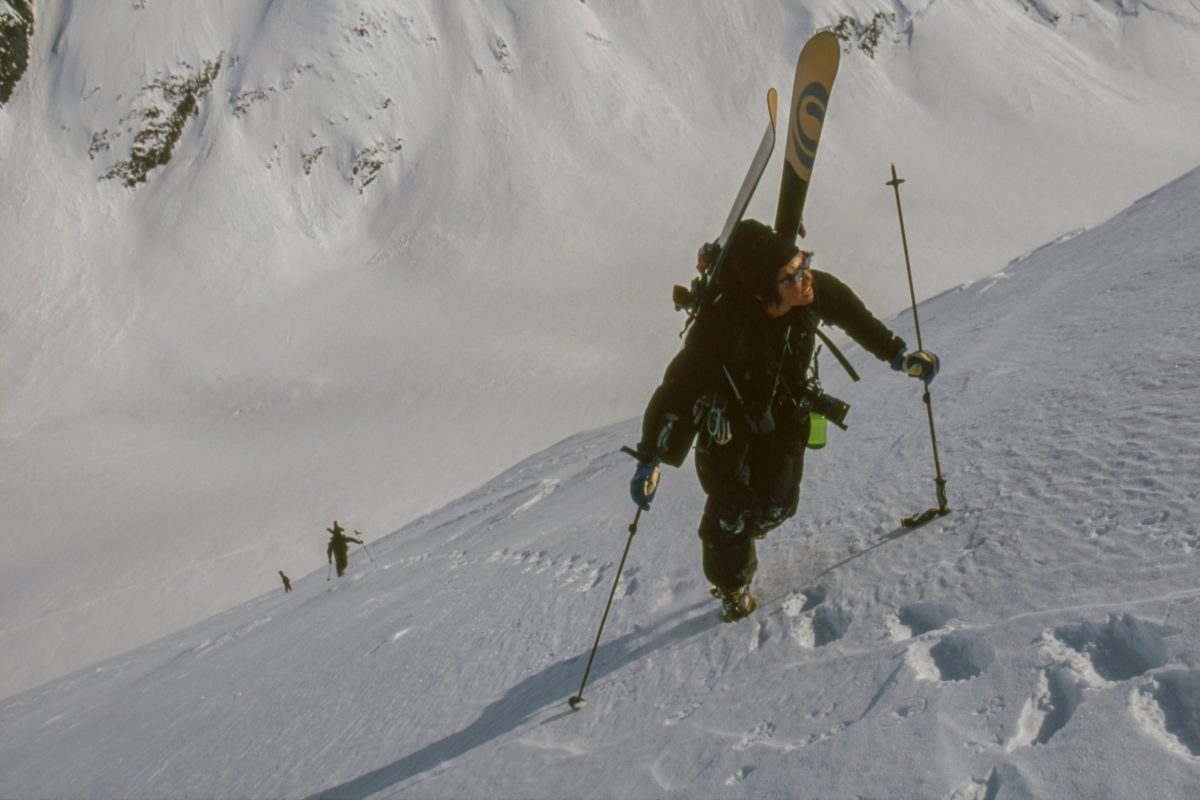
──He started trying to get an international mountain guide qualification at the age of 31 and it took him six years to obtain it
Well, you have to learn glacier guiding and take a certification exam, which doesn't exist in Japan, and you also need experience climbing and assisting guides locally, so you have to go to Europe multiple times. It does take a fair amount of time, but for a Japanese person, it's not that long
──How many times did you travel back and forth to Europe to become an international mountain guide?
I've been there four times just for tests and exams, but if you include the year I was injured, I've been there five times
──What do you mean by injury?
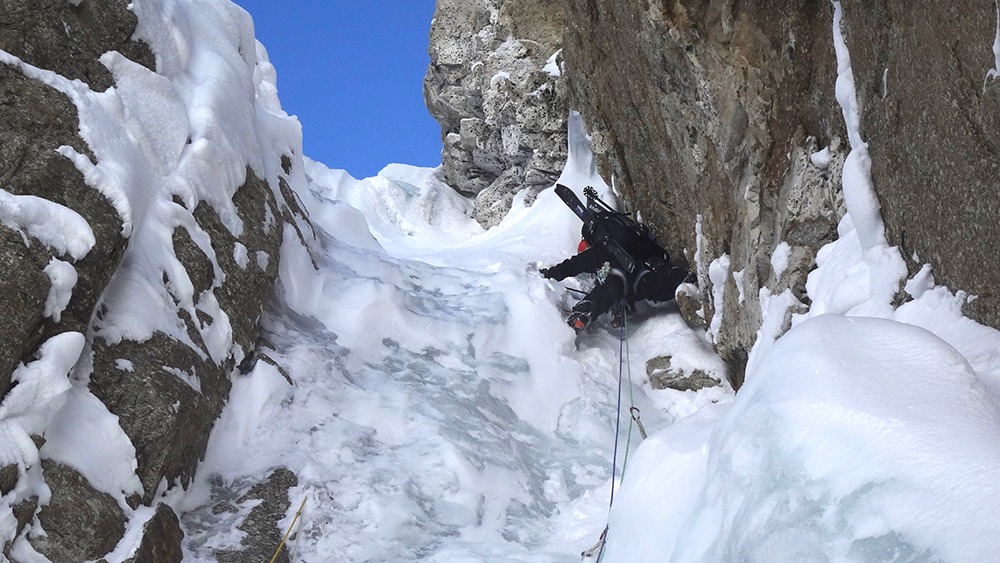
It happened twice. One was the day after my exams. I went skiing with my fellow guides, like, "The exams are over, so let's all go skiing, yay!" But I fell into a crevasse on the glacier, broke my face, cracked the base of my femur, and had to be rescued. I think I said "yay" a little too much
The other thing was that right before the exams started, I fell over in a random place and broke my arm, which meant I missed a season. After that, I had to work as an assistant guide in Europe both in summer and winter, so including that, I spent seven years in Europe
──I heard that falling into a crevasse was quite dangerous
It was absolutely dangerous. In terms of height, I fell from a height higher than a telephone pole. I couldn't see the bottom, and there was a crevasse extending further down. I fell with my skis on, but when I came to, I had no poles or skis or anything else. I must have been unconscious for about 10 to 20 minutes. When I got up, I was covered in blood and could see a hole at the top. It was about 2 or 3 meters wide. There was smooth ice on both sides, and it was shiny and I thought for a moment it was kind of pretty
Did you try to escape on your own?
At first, I thought I had no choice but to escape on my own, because I thought the two friends I had gone skiing with would have fallen in as well. But I had hurt the base of my femur, so I could only move by dragging my leg. After calming down for a while, I tried moving again, but it was still painful, and I couldn't climb up. I was thinking, "What should I do?" when a rescue team member came down. I was the only one who had fallen, and my friend who saw me contacted the ski resort
──By the way, did you have an axe or crampons?
No. In fact, I had no harness, no helmet, nothing. Well, I had a knife, so I ended up having to carve steps into the ice with it to climb up. Luckily, rescuers arrived early, because if I had done that, I would have fallen further to the bottom
What about your other broken arm?
That year, I went to the European Alps about two weeks before the exam with a Japanese guide who was also taking the exam, to train together. While climbing, my partner fell and broke his ankle, and we had to be rescued by helicopter. It was a multi-pitch route with over 10 pitches. Afterwards, I visited him in the hospital, helped him pack his bags to return home, and sent him off at the airport with a "Goodbye, take care!"
The next morning, around 6:30, I left the inn in a hurry to grab my luggage and go to the exam venue, but I slipped on a wet, grassy slope and broke my hand when I put it down. I should have taken the stairs down, but I took a shortcut, which was a mistake. I still went to the exam venue, but it was still too painful to climb up, so I was the only one who dropped out. That was the end of my year
──So, aside from skiing, how did you develop your climbing skills?
I don't think I've done anything particularly special. Nowadays, as a guide, it's enough if you can climb around 5.10b in approach shoes, or around late 5.11 (※11) in climbing shoes. Guiding doesn't require such a high grade. That's not what's important. Also, I had plenty of time back then, so I often went climbing Mt. Mizugaki (※12), and I had some savings from my youth, so I was able to climb relatively well
──What about saving money when you were young?
When I was 19 or 20, I went on a climbing trip to North America. My partner was Suigo Mugitani, a classmate from junior high school who was in the mountaineering club at Shinshu University. We went on a two-month trip together in the fall for two consecutive years, one month each for free climbing and big wall climbing. At that stage, I was able to climb up to 5.12. That was the money I saved up then
──Where did you climb the big wall?
I climbed the Nose and Shield (※13) of El Cap once each. It was fun, the vertical world. I also went to the East Face of Byobuiwa Rock and the East Face of Maruyama in Hotaka for big wall training
──That was when you were training to ski with the Dolphins, right?
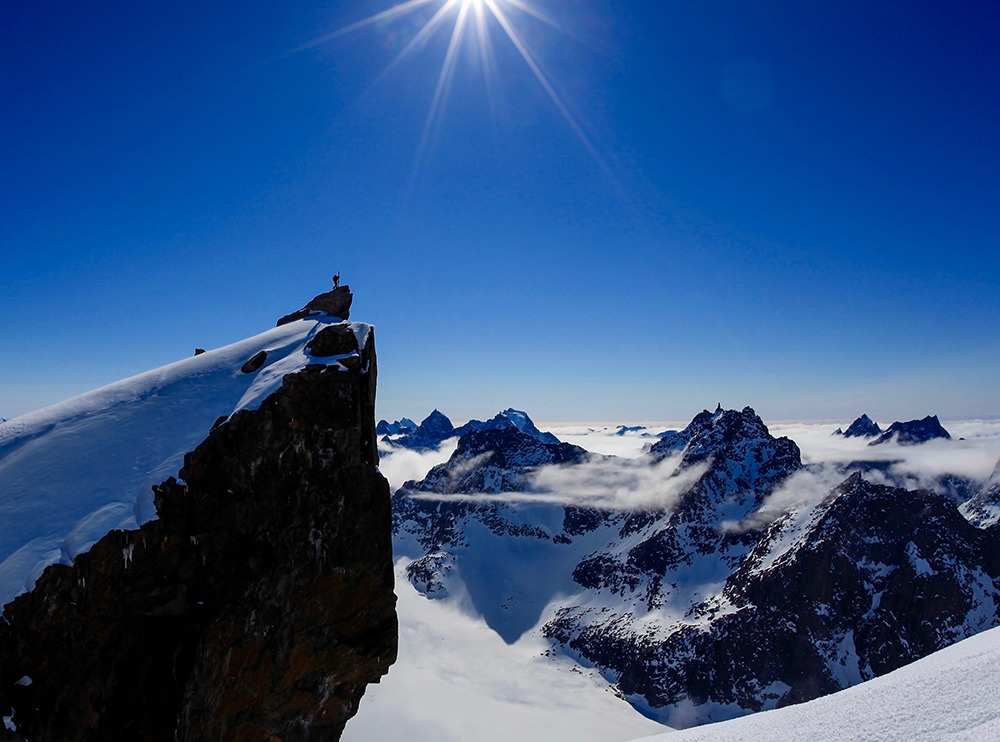
Well, that's true. I had always admired the world of climbing, and being able to do both skiing and mountain climbing was something that not many other Japanese people had, so I simply put that experience to good use in my challenge to become an international mountain guide
──When you decided to become a guide, did you aim to become an international mountain guide from the beginning?
No, at first I just admired Miyashita-san. However, I think that by the time I joined Nomad, Miyashita-san was already an international mountain guide. To be "international," you have to be able to climb mountains and ski. So I thought that I was pretty close to that. At the time, I don't think there were many Japanese guides who were good at both
──That's true
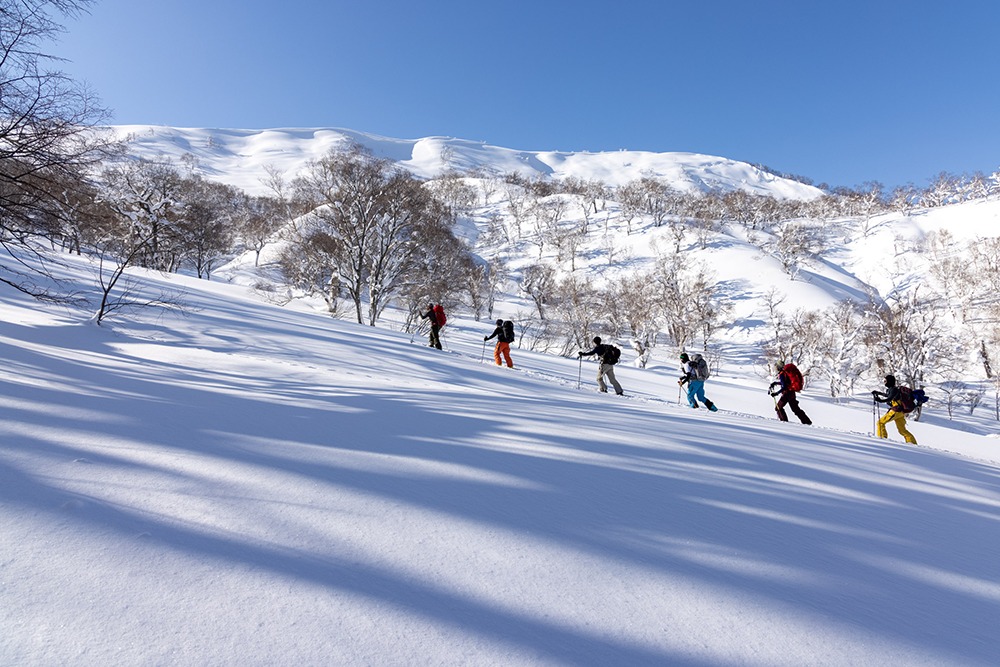
The other main reason is that I can guide people around the world, which I have enjoyed. In the end, isn't that what it comes down to? I guess it was inevitable, since I have a global base. I want everyone to enjoy the snowy mountains of the world, which I have enjoyed myself. That is the most important base for a guide, so I thought that international qualification was absolutely necessary for that
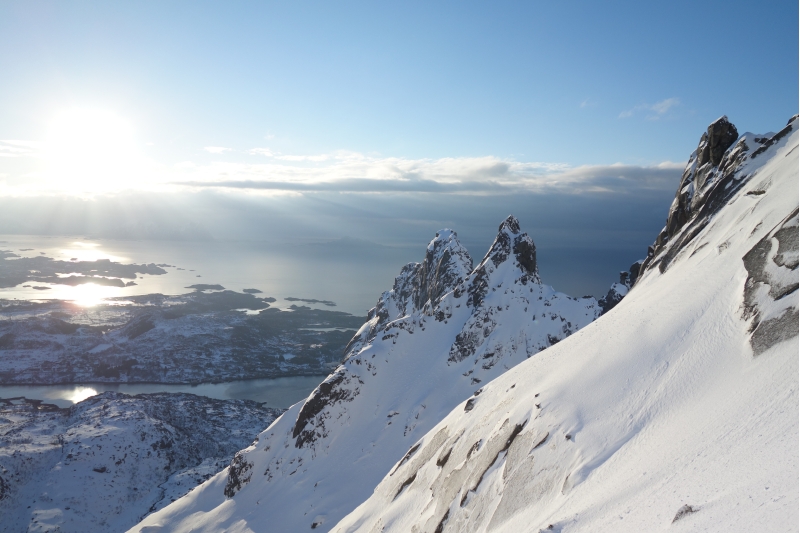
*11 [Approach shoes: about 5.10b; climbing shoes: about 5.11+]
Route climbing grades are expressed as "5.@@", with supplementary notations such as "a-d" and "+/-". Beginners can climb around 5.6-5.8 on a given day, and once they get used to it, they can climb 5.9. By going to a climbing gym, you can climb 5.10, but 5.11 requires continued training and a fair amount of effort. There are different grades in bouldering
*12 [Mount Mizugaki]
Located in northern Yamanashi Prefecture, near the border with Nagano Prefecture, this is one of Japan's leading granite free climbing areas, along with Ogawayama. Compared to Ogawayama, which can be enjoyed by beginners to experts, this area has a wealth of difficult multi-pitch routes with successive high-grade pitches, and continues to be loved by serious climbers
*13 [El Capitan nose and shield]
El Capitan, towering over Yosemite National Park in California, is the world's largest granite monolith, with an elevation difference of 900m. "The Nose" is a first-time ascent route with over 30 pitches, and usually takes 3-4 days to complete. "The Shield" is less climbed than the Nose, and is a more difficult big-wall climb
Daisuke Sasaki becomes an international mountain guide
*Reprinted from "2015 Fall Line vol.2"
In July of this year, Sasaki Daisuke officially became an international mountain guide certified by the International Mountain Guides Association (IFMGA). He had obtained domestic mountain guide qualifications in his twenties, but to guide in major mountain ranges overseas, he needed this international mountain guide qualification. He wanted to put an end to his career as a skier in his twenties and continue to provide high-quality work as a mountain guide in his thirties. For Sasaki, this international mountain guide qualification was an important milestone in his journey
Sasaki's passion wasn't just limited to the job of being able to guide in mountains overseas. He has been on expeditions with the "Namarashekkei-X" crew to various parts of the world, including the Kuril Islands, Greenland, and Patagonia, and has also gained considerable experience in high-altitude mountaineering, starting with climbing Island Peak (6,189m) in the Nepalese Himalayas at the tender age of 17, followed by skiing down Manaslu (8,163m) from 7,400m, skiing down from the summit of Mount McKinley (6,190m) in Alaska, and skiing down from 6,900m at Mustagh Tata in China (7,546m)
However, to the international mountain guides he met on mountains overseas, Sasaki was simply another climber from Japan. Sasaki, who wanted to continue his activities on the world's mountains, wanted to stand shoulder to shoulder with them and communicate with them on an equal footing. To do that, he had no choice but to rise to the same level. He says that this desire was strong
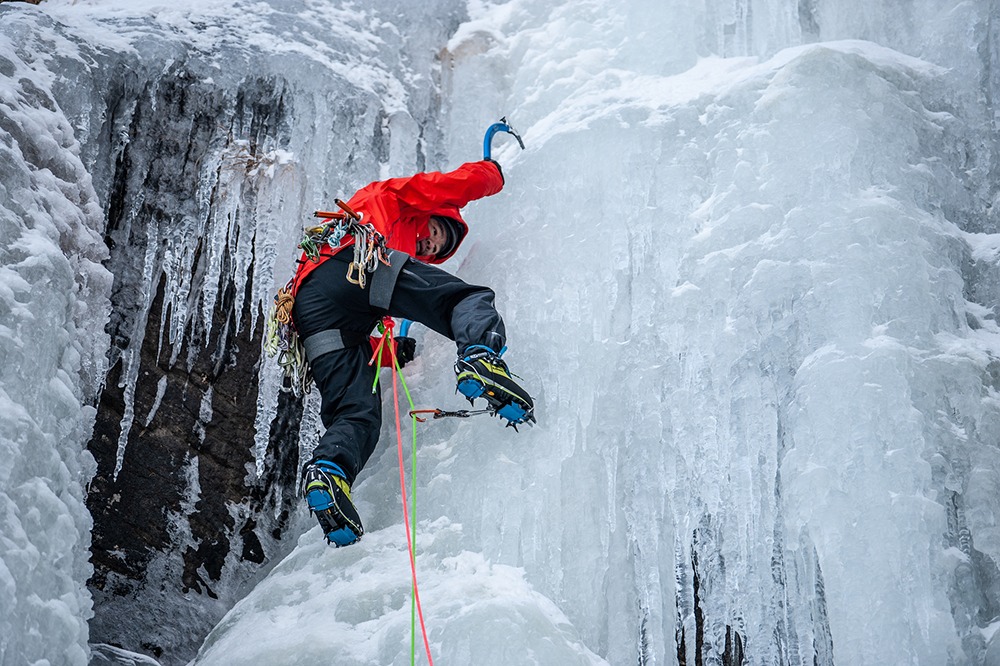
Sasaki began to aim specifically for becoming an international mountain guide in 2008. This was the year that he entered the second season of filming for the documentary film "END OF THE LINE," in which he plays the lead role and which marks the culmination of his career as a skier. After finishing filming for the season, Sasaki traveled to France in the spring and took glacier training in Chamonix
There is something that is required to obtain an international mountain guide qualification that is not available in Japanese mountain guide qualifications: skills on glaciers. This is an essential technique when guiding mountains around the world, which are often approached from glaciers. However, the only way to master this skill is to train in the European Alps, where glaciers are abundant. This is how I continued my glacier training in the Alps over the next four seasons
For Japanese mountain guides, this glacier training was a major obstacle. The training itself lasted two weeks, but they had to arrive in the area at least two weeks beforehand to acclimate their bodies to the mountain environment. This meant that the stay usually lasted a month. Not only were the skills impossible to practice in Japan, but the repeated travel and accommodation costs were a considerable burden
To become an international mountain guide from Japan, there are two steps to take. First, you must complete the required glacier training and then meet the strict climbing record requirements set by the International Mountain Guides Federation. These climbing records are strict: more than 10 winter rock climbs in Japan, more than 6 rock climbs overseas, and more than 20 ski tours lasting more than 8 hours
After completing this, you will be certified as an International Aspiran Guide. It is like an internship before becoming a full-fledged guide. From here, you will gain more than 20 days of practical experience as an Aspiran guide overseas and more than 20 days of glacier training
It is an extremely long journey, and only after meeting these requirements will one be eligible to take the exam to become a certified guide
During this time, Sasaki continued climbing both in Japan and overseas, and in 2009 he even went to Antarctica as a field assistant for the Antarctic Research Expedition. He also narrowly escaped death after falling into a crevasse after completing glacier training, and then broke his hand in town just before the exam, ruining the season. After six years of this, he finally obtained his international mountain guide qualification
Incidentally, the current system, which requires practical experience equivalent to that of the International Mountain Guides Federation overseas, was introduced only recently, and Sasaki was one of the first people to obtain the qualification
In reality, it's unclear whether Sasaki will be able to recoup the investment he's made so far from the expanded work that comes from the "international qualification" he's spent so much time and money on. But for Sasaki, this is a minor issue. Influenced by Naoki Uemura, he set his sights on mountains in his teens, and has since traveled to mountains all over the world. His curiosity to learn about the wider world and the exhilaration and wonder of enjoying the great outdoors are what drive him to do so. His job from now on will be to convey this to others through guiding. This is what motivates Sasaki
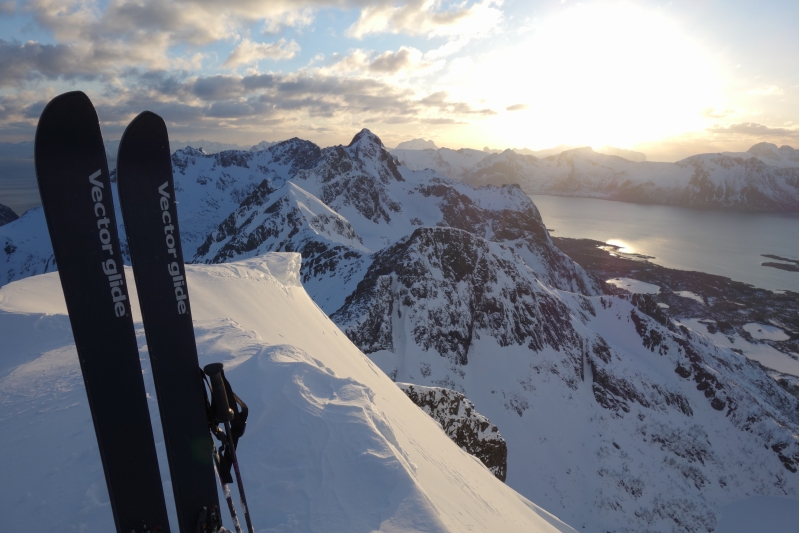
In search of ultimate self-sufficiency,
he also tried his hand at hunting.
──I heard you recently got a hunting rifle license and are hooked on hunting?
I had been interested in Ainu culture for a while, reading books by CW Nicole and Michio Hoshino. When I was younger, I was fascinated by Ainu culture and made bows and arrows. It wasn't until I started reading the works of Fumiyoshi Hattori (*14) that I remembered that specifically. I felt like I was being invited to join in
When did you get your hunting license?
Last year. I had been thinking about it for two or three years, but I was so busy I couldn't make a schedule. Then COVID hit, and I thought, this is it! The exam is usually held two or three times a year, but last year it was only held once, but the timing was right and everything went smoothly and I passed
So you actually went hunting?
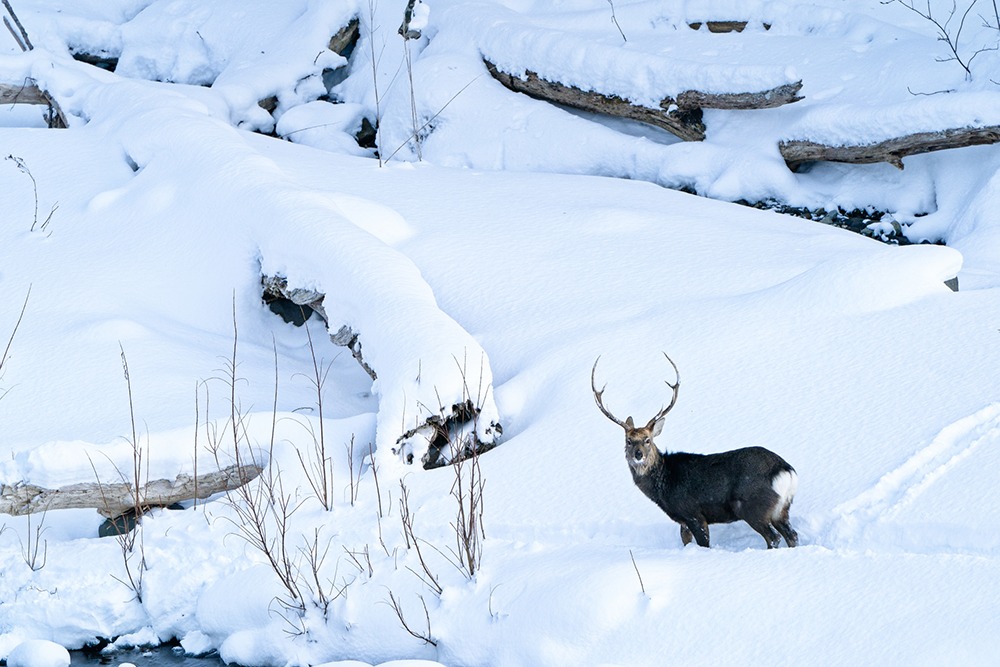
Ezo deer appear behind my house. I recently noticed some footprints and thought, "I can hunt them near my house." Hunting is permitted from October 1st in Hokkaido, but I was ready around November. From then on, I went there every day to check for footprints, and even cut back the tree branches and bamboo so that they didn't look unnatural. I kept going back and looked every day, and there they were
First, a fawn came out. I knew I couldn't shoot it. The second time, it was a mother and her calf, and I thought I'd finally shoot, but I was so nervous and my breathing was so heavy I couldn't shoot. The third time, there was a magnificent buck, and when I shot it, it ran away. It didn't come back for about two weeks after that, but I went to check on it every day, and it came out where I was aiming, so I was able to shoot it..
──Haha
Well, butchering it was quite a challenge. It was a Hokkaido deer weighing about 100kg, so I dragged it about 100m to a parked pickup truck, put it on the back of the truck, took it home, hung it in the garage and butchered it. My kids came to see it, and surprisingly they didn't mind, which was great
--I guess that's what I feel: Ah, so I've finally gone over to that side
It's the ultimate form of self-sufficiency that I've dreamed of since I was a child
--How much meat does one animal weigh when butchered?
The amount of meat was so huge that I gave it away to a lot of people and quickly bought a refrigerator that could fit three heads
--Did you enjoy the venison you caught?
It was really delicious. I think I was able to drain the blood quite well, and even people who are used to eating venison said it was delicious. I think it went well
──You also grow vegetables in your home garden in the summer, right?
That's right. That's the wife's role. We haven't gotten to that point yet, but if we wanted to, we could get by without buying vegetables
--Have you been fishing?
I only fished when I was really hungry. I don't like catch-and-release fishing. From the fish's perspective, sometimes bait floats by. You think, "Be careful, that's fake," but then you think, "This is it!" and take a bite, and you've been caught
So you run desperately to survive, but in the end you're pulled ashore and you're thinking, "Oh no, it's over. I tried my best, but I'm going to die," and then you get slapped around and told, "Nice fight," and they take a picture of you limply, and then they say, "That was awesome, let's play again if we have the chance," and let you go. I guess it's fine because your life is saved, but I don't want that
──That's certainly true (laughs)
Well, hunting is also a form of preparation, so to speak. I was making preparations in case I couldn't work as a guide because of COVID-19. I thought about doing snow removal work if I lost my job, and also about hunting deer to secure a source of protein for the summer. I also bought a winter chainsaw -- one with a heated grip so my hands wouldn't freeze -- in the fall, so I could build up a reserve
──A self-sufficient system in anticipation of a situation in which people are unable to work due to the coronavirus
In the end, I had to cancel most of my summer guide work. It's the same with anything in nature, but when it's not okay, it's not okay. When such an unknown threat attacks, I don't push myself and just stay still. I know that it's difficult, but if you can endure it, I think it's better to endure it
*14 [Hattori Fumiyoshi]
He is known as a "survival mountaineer." He is known for his climbing style, which involves entering the mountains with minimal equipment and basically procuring food locally, but as this style has escalated, many of his books have focused on hunting
has been Daisuke Sasaki's
best moment so far?
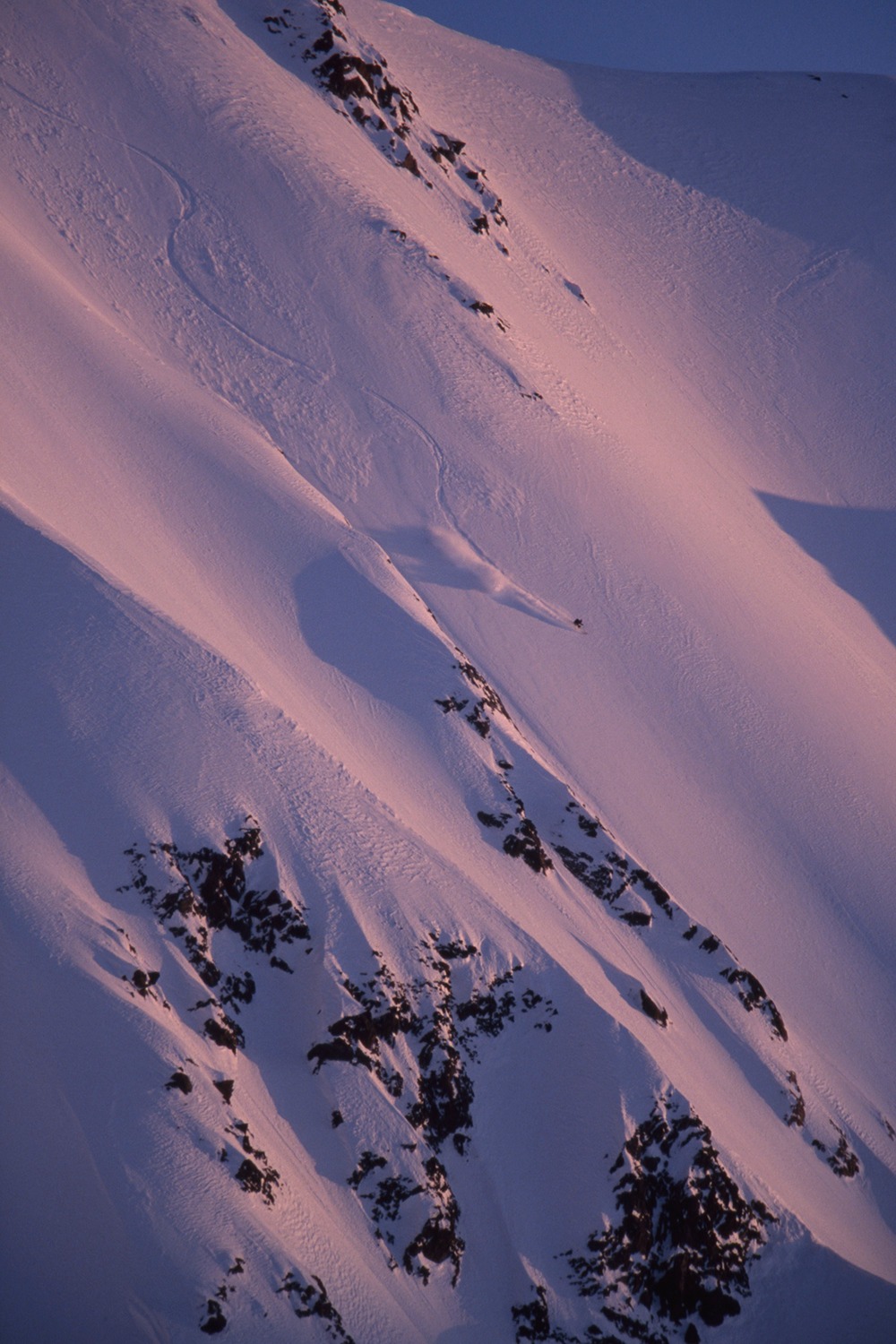
──Counting from when you were 20 years old and placed 8th in your first WESC appearance, this year marks your 25th year as a performer. What was the most memorable event for you?
One was a near-fatal crevasse fall. That was the most dangerous thing I've ever done. My greatest moment was onsighting a 5.12-degree crack at Indian Creek. That was the moment that really shook my soul
--Not skiing?
As for skiing... well, where is it? Probably the one in Alaska that was the final scene of "END OF THE LINE" (*17). That might be the culmination of my career
The run along the ridge I skied just before that was also good. If the snow had been even a little harder and I'd bounced off, it would have been all over, but I was able to take that line at high speed with confidence. I was on edge, or maybe I was riding well, or maybe I was in the zone... It's scary to think about it now
──I watched "END OF THE LINE" again the other day and it wasn't bad. What did you think of it?
Well, there were parts where I thought I could do a little more, but there were also parts where I wondered if this was all I could do in three years. But I had already decided to go to Antarctica after that, so I decided to make the switch from professional skier to guide. I think I was able to give my best there, and it was a great opportunity. I was grateful
──When I interviewed Shimomura Yuta for this "STEEP," he said, "It all started when I saw 'END OF THE LINE' and admired Sasaki Daisuke." Hearing that, I was deeply moved, realizing that there really is a connection
When I go to training sessions for university students, there are students in the mountain ski club who say, "I started skiing after watching NHK's Rishiri mountain skiing." I've never seen a young person say, "I started skiing after watching Denali mountain skiing," but whether it's good or bad, I think it does have an influence
──I think there is definitely a trend or ripple effect like that
The other day, I was skiing at Sapporo International and saw some university students tackling the powder with a great feeling. When I saw that, I thought, "Ah, so there are people who ski like that." There is our generation, and then there is the next generation, Taisuke (Kusunoki Taisuke) and his friends, and there is a generation that looks up to us and is influenced by us to some extent. Taisuke and his friends aren't necessarily looking up to us, but they are still skiing the mountains and tackling the powder. A new generation is emerging that looks up to them, and I think that kind of trend is really good
──It's like it's been passed down, or connected
I happened to be on the gondola with these university students. I think they were probably university students somewhere in Sapporo, and they said, "Oh no, class is starting," and started participating in the online class in the gondola. You can hear everything that's going on in the gondola. I guess that's how they count as attendance. Then, when they got off the gondola, they just went skiing. They were saying, "Yeeeees!" There are still a lot of people like this out there (laughs)
──That's a nice story (laughs). So how do you balance climbing and skiing? For example, on Denali, I accomplished something valuable through both climbing and skiing
Well, I think it's fun to take on new challenges and challenge yourself using all your abilities. So, even though I'm currently guiding, I'm happy when I feel that my level of knowledge and judgment has improved since last year. That means that every day I'm in different fields and environments, and with different customers, and I feel like I've been able to provide good guidance. In the process, I feel like I'm growing more and more, and that's what I enjoy
This doesn't just apply to sliding, but also to climbing. The training I received in this way came in handy when I hunted. I was able to perfectly capture the movements, behavior, corrections, and location of the deer by applying what I had learned from my activities in nature. That made me very happy. In nature, there is only one truth
──When was the best time you've ever given guiding?
I don't remember much about that, but I'm not sure. I've been to Lofoten in Norway twice so far, and it might have been the first time. I think my true talent lies in providing good guidance in places I've never been to before
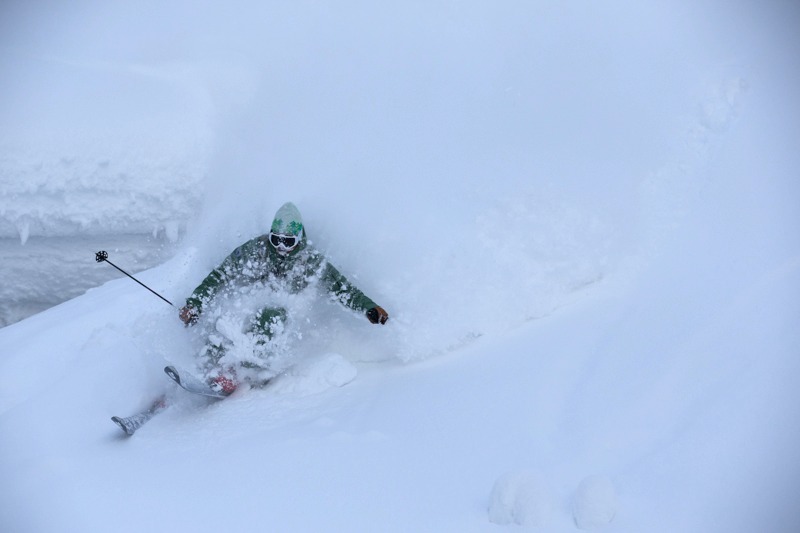
What's the best powder you've ever had?
This season. It may have happened before, but I can't remember it for a while. But this year was definitely good. I could just ski normally and then overhead. I often heard customers say, "I can't see in front of me and I can't ski." The low temperatures this year have been continuing, so that's helped
──Why do you never get bored of skiing on such great snow every year?
Well, I think it's because there's no better way to have fun than this. The joy of being able to freely play on the natural terrain. There's nothing like it
*15 [Indian Creek]
A famous climbing area in Utah. Characterized by sharp cracks stretching out from the red sandstone, it is also known as the "Mecca of Cracks."
*16 [On-site]
A climbing term that denotes the highest possible rating among various climbing methods. It refers to starting a route on the first attempt without a trial climb and completing it. If you hang on to the rope to rest or fall and have to climb back up, your rating will be lowered by one rank and called a "redpoint."
[Editor + Writer]
Chikara Terakura
After working for Miura Dolphins, headed by Yuichiro Miura, for 10 years, he became involved in moguls and freeskiing for nearly 30 years as an editorial staff member at BRAVOSKI. He currently works as the editor-in-chief of "Fall Line" while also working as a freelancer in various media. He has been writing a series of interviews for the mountaineering magazine "PEAKS" for over 10 years.