

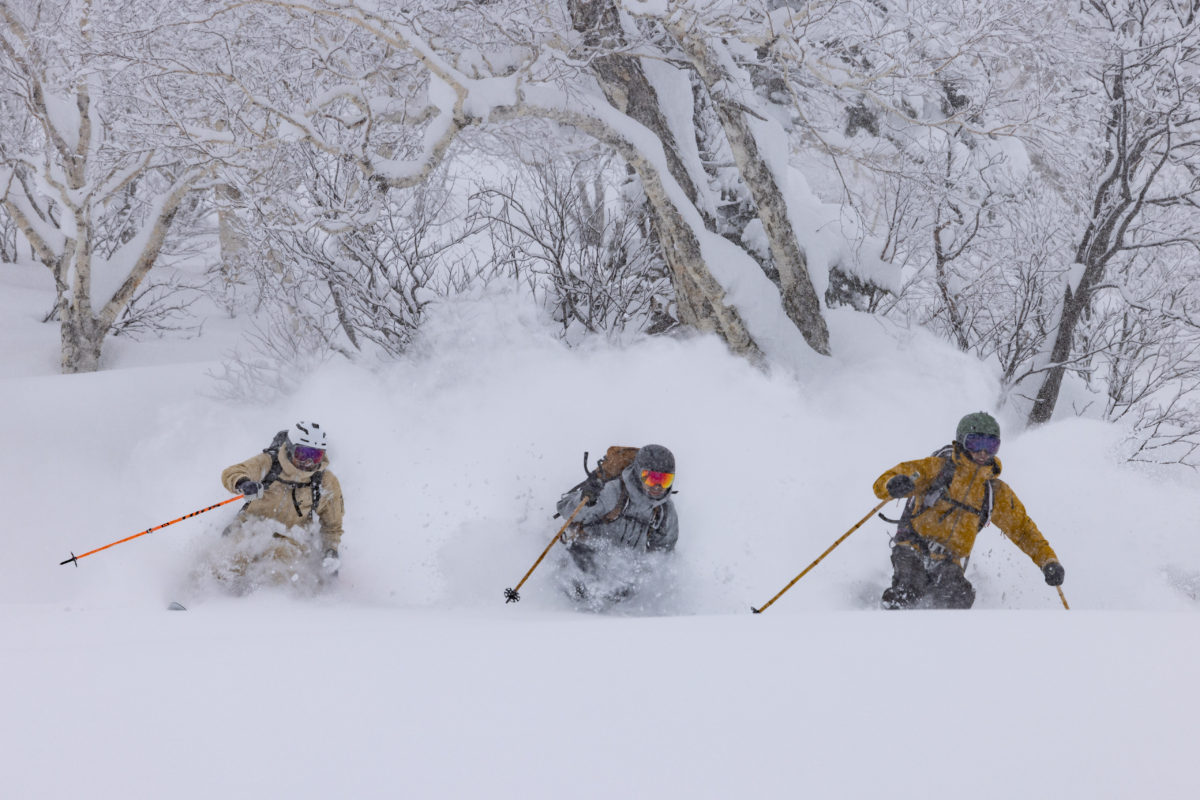
Three skaters in perfect sync. On the left is Shunta Kimura, in the middle is Yasushi Chiba, and on the right is Mr. Imahara, who often skates with the other two.
Photo/Yusuke Kunimi
There are two skiers who ski the mountains of Hokkaido, recording their adventures on video. Their names are Chiba Yutaka and Kimura Shunta. The videos they quietly upload to social media for their own satisfaction have been quietly gaining attention, so we decided to take a closer look at what kind of skiers they are. They don't actively participate in competitions, nor do they make a name for themselves by making videos. We interviewed these two skiers to find out more about their honest and unwavering approach to skiing
My desire to ski gradually grew during my university years,
and I made good use of the school's system for skiing.
-First of all, could you tell us about your skiing history?
Kimura:"I'm from Aichi Prefecture, and I'm interested in outdoor education and the outdoors, so I came to Iwamizawa to study the Outdoor Studies program in the Sports Education course at Hokkaido University of Education, a national university. I
had never skied before, but a senior asked me, 'Do you want to try skiing?' and when I said 'yes,' he told me to buy telemark skis on Yahoo! Auctions. They were Fischer Watea 78 skis, and I got them for 30,000 yen including boots. My ski wear was Columbia, which my senior was wearing. I didn't know anything about telemark skiing, so I was like, 'Is this okay!?' because my skis were the only ones where the heels lifted up. I've been doing telemark skiing ever since."
Chiba: "I'm from Sapporo. I have six siblings, and my two older brothers skied, so I've been skiing with them since I was about two years old. They bought me a season pass for Moiwayama Ski Resort, which was close to where we lived at the time, and drove me there and back. Sometimes they'd forget to pick me up though (laughs). I went to
the same university as Shunta, the University of Education, but the campus was different, so I was in Asahikawa. From middle school until my fourth year of university, I was in the soccer club, so I didn't have many opportunities to ski seriously until I graduated.
When I got to university, the grounds would get buried in snow, so I would just go to Kamui or Santa (Present Park), which are close to Asahikawa, from time to time. Even now, I've always skied for fun, not competitively."
-Where and how did you two meet?
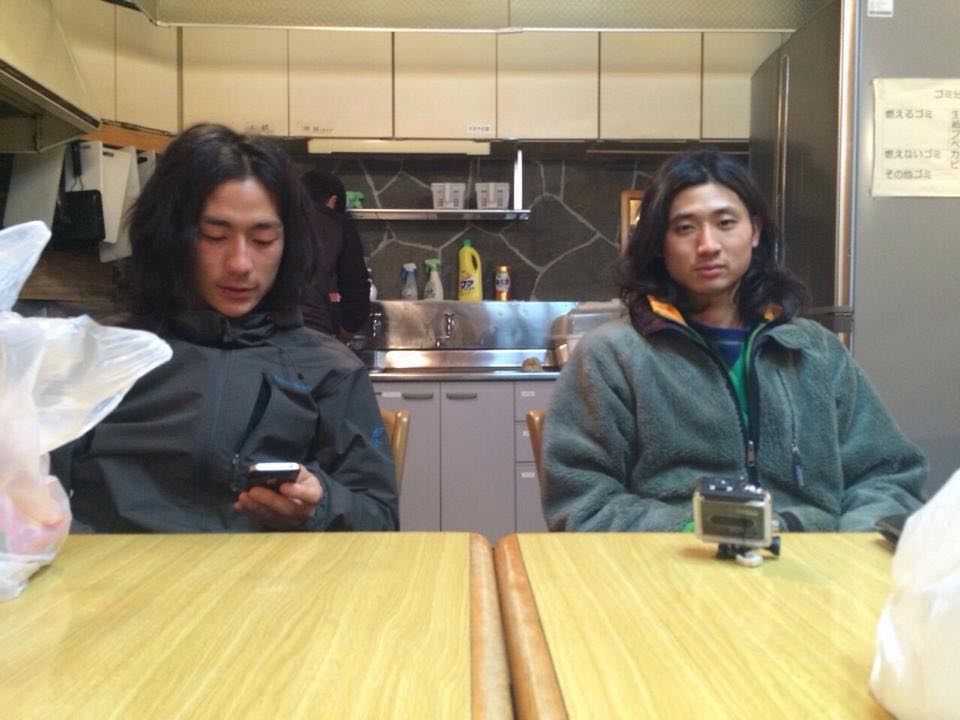
Kimura:"We were on different campuses, but we had mutual friends. So we met for the first time in our third year of university."
Chiba: "That's right. I remember skiing together properly at Sandan-yama."
Kimura:"I don't remember at all."
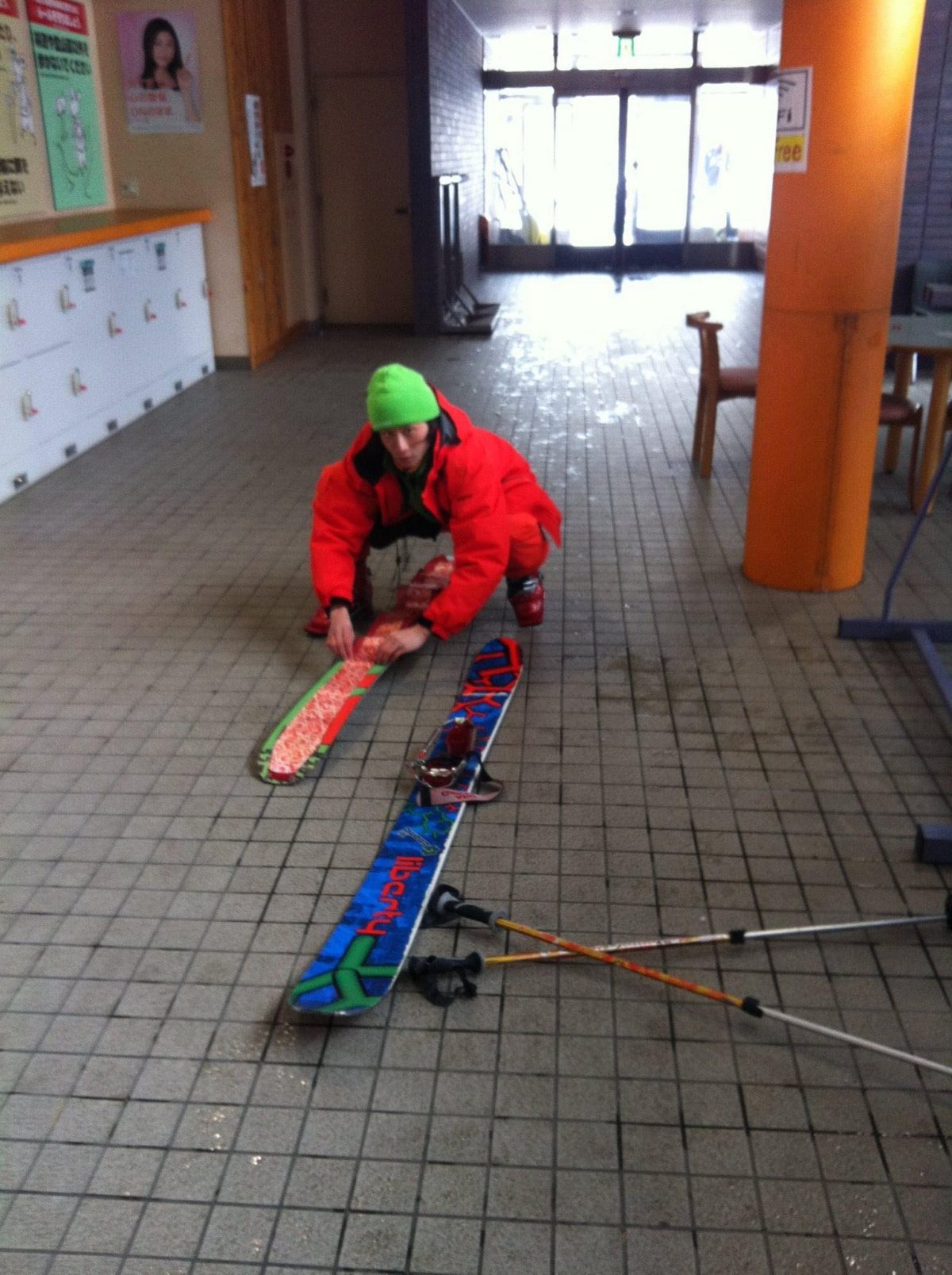
Chiba: "Back then, Shunta was wearing the same Salomon jumpsuit that Mark Abumar wore. It was baggy, and he was wearing Liberty Genome boots, and he was even telemark skiing in it. Well, I didn't really know much about telemark skiing, so I just thought he was incredibly fast at traversing."
Kimura:"Traverse!? Isn't it supposed to be sliding?"
Chiba: "My skating felt like it had a bit of a limiter removed. I don't know if it was good or bad, but I still don't really know (laughs). Back then, I was really into jumping off cliffs. I still am, but I remember us pushing each other. If there was a cliff, we'd jump higher and higher. Looking back now, it wasn't that high, but we were pushing each other and gradually pursuing bigger jumps. It was after I started watching Hodj (Erik Jorefson) that I became conscious of his style, his cliff jumps that felt like he was soaring straight up."
-You met in your third year of university and started skating together, but even at your age you still push each other and skate like buddies. What was the trigger that led to that?
Kimura:"I wonder what it is?"
Chiba:"Among the people around me who liked Cliffhanger and jumping, and who I could push each other with, there was no one other than Shunta. When I returned from studying abroad in my fourth year of university, we talked about wanting to skate together, but we never really had the opportunity.
Then, when COVID-19 spread, Shunta's work decreased, and he had more time to skate in his private life, so we started skating together."
Kimura: "That's right. Before COVID-19, I used to help out as a guide for an inbound tourism company during the winter. It was surprisingly busy during the season, so I didn't have much time to ski with my close friends. So, I started doing that last year."
--You mentioned studying abroad, but was that a kind of training for skiing?
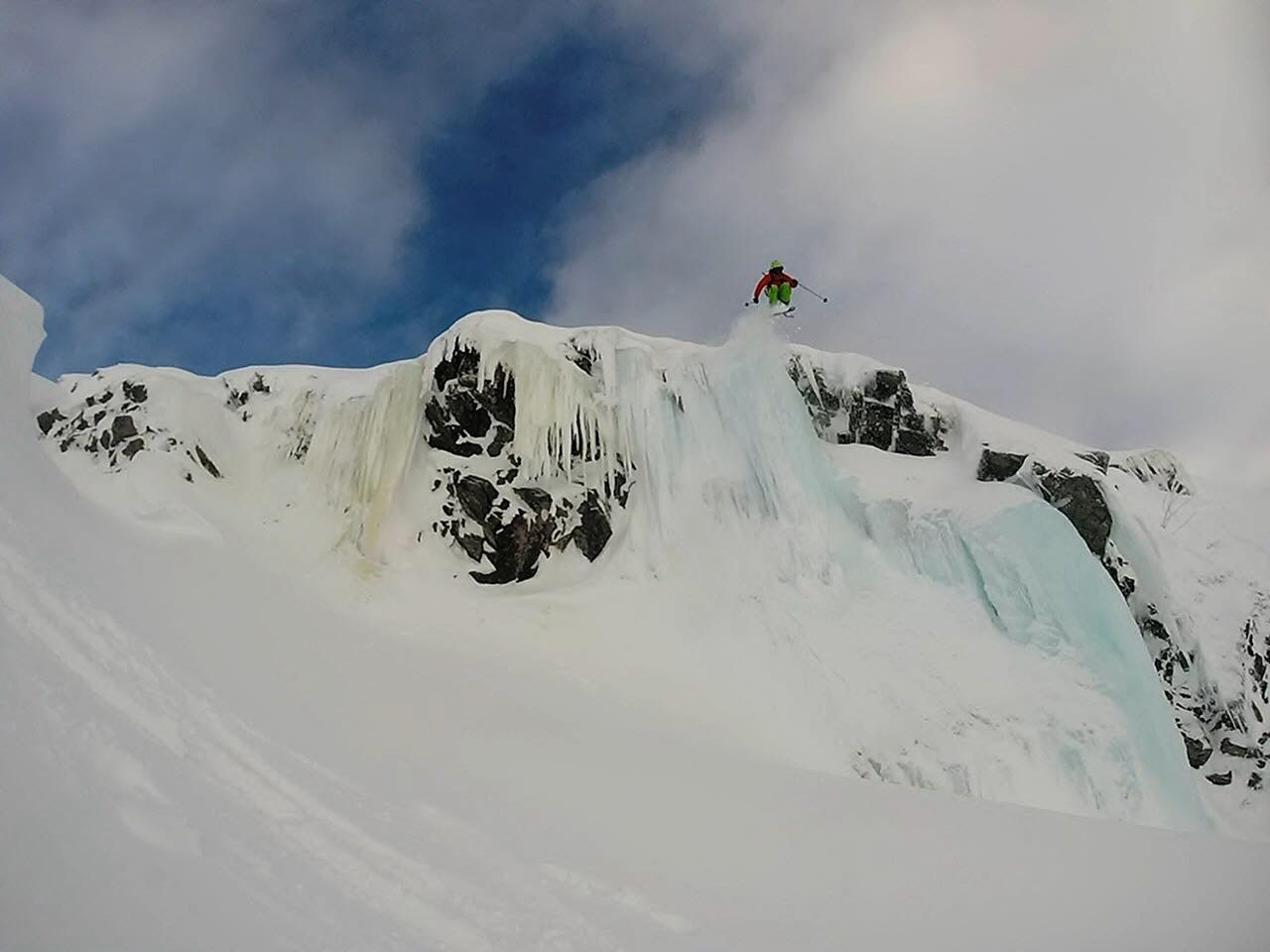
Chiba: "Hokkaido University of Education has an exchange student program. If you do an exchange student program for a year, your graduation will be delayed by a year, but the tuition for that year is free. The host university is also free, so you only have to pay for living expenses. To be honest, I decided to study abroad for skiing. They have partner universities all over the world, and I didn't want to go somewhere with a lot of Japanese people. Also, because of skiing and mountains, I narrowed it down to Bergen in Norway and Calgary in Canada.
There are score requirements to apply for the exchange program, and I tried my best, but I didn't make it to Calgary, so I went with Bergen. There are hardly any exchange students in either of them. I thought either one would be fine.
By the way, Alaska is at a level that Shunta could go to."
Kimura:"Stop it, stop it (laughs)"
Chiba:"I thought that if I became a teacher, I wouldn't be able to ski freely. So I decided to go to Norway for a whole season just to ski."
--Where did Shunta go?
Kimura:"For me, it was Anchorage, Alaska. I was torn between that and Fairbanks, but Anchorage had good ski spots like Turnagen Pass and Hatcher Pass, so I thought the environment was better. I met some mountain-loving older guys there who would always take me skiing on weekends. However... I was so broke that I couldn't pay my university dorm fees, so I was forced to leave before Christmas, haha."
-So?
Kimura: "Since I was on a student visa, I was actually supposed to be in Alaska, but I was in trouble because I didn't have a place to live. So I asked around and someone I knew said I could use a minibus parked at a ski resort called Stevens Pass in Washington State as my bed for the season. So I went there in January. I bought a season pass and commuted to the ski resort by minibus until April. Then the university contacted me and found out I wasn't in Alaska, so my study abroad period, which was supposed to last until August, was terminated... (laughs)"
Chiba: "You got yelled at a lot, haha."
Kimura:"I was made to write a really long letter of apology (laughs). I might not have even been able to get my university credits, but somehow I managed to graduate."
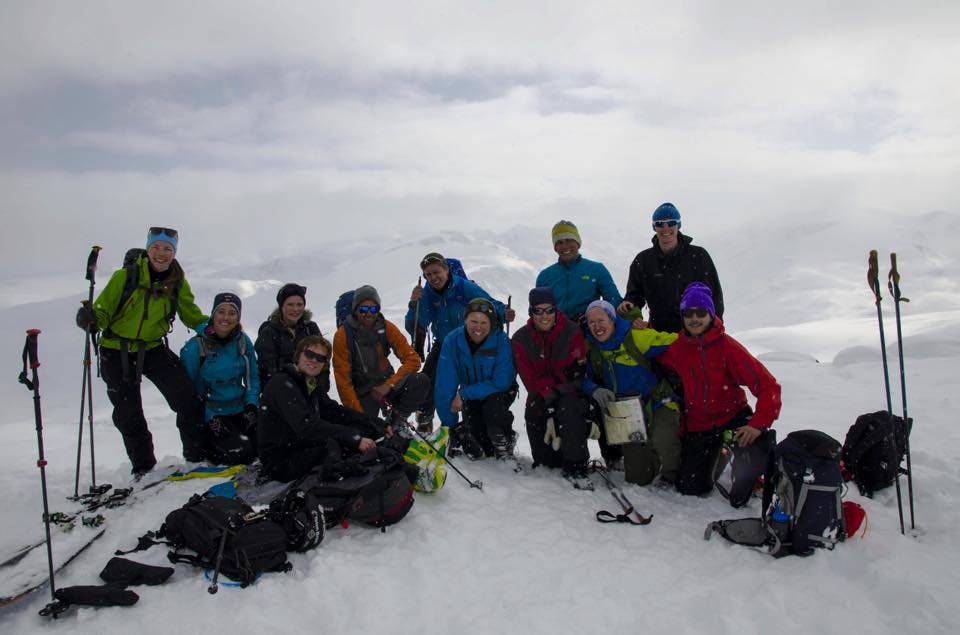
-Where did you get the motivation to start telemark skiing in college and go to Alaska?
Kimura: "For the first year or two, I just skied at ski resorts. I wasn't at a level where I could go backcountry (BC), and even when I went into the mountains, I couldn't do anything, and I could barely make it down. The very first slope of Sandan-yama looked like a wall to me. But then, in my third year, I met Chiba-chan and watched her ski, and I genuinely thought, 'That's cool, I want to get better.'"
It's strange to say I admired him, but that's what I thought. He pushed me to want to ski at that level. That was my third or fourth year. I also wanted to go abroad, and if I could ski, that would be even better."
Is it fate that we're skiing in the age of drones!?
A system where two people ski and film each other.
-How much do you two ski during the season?
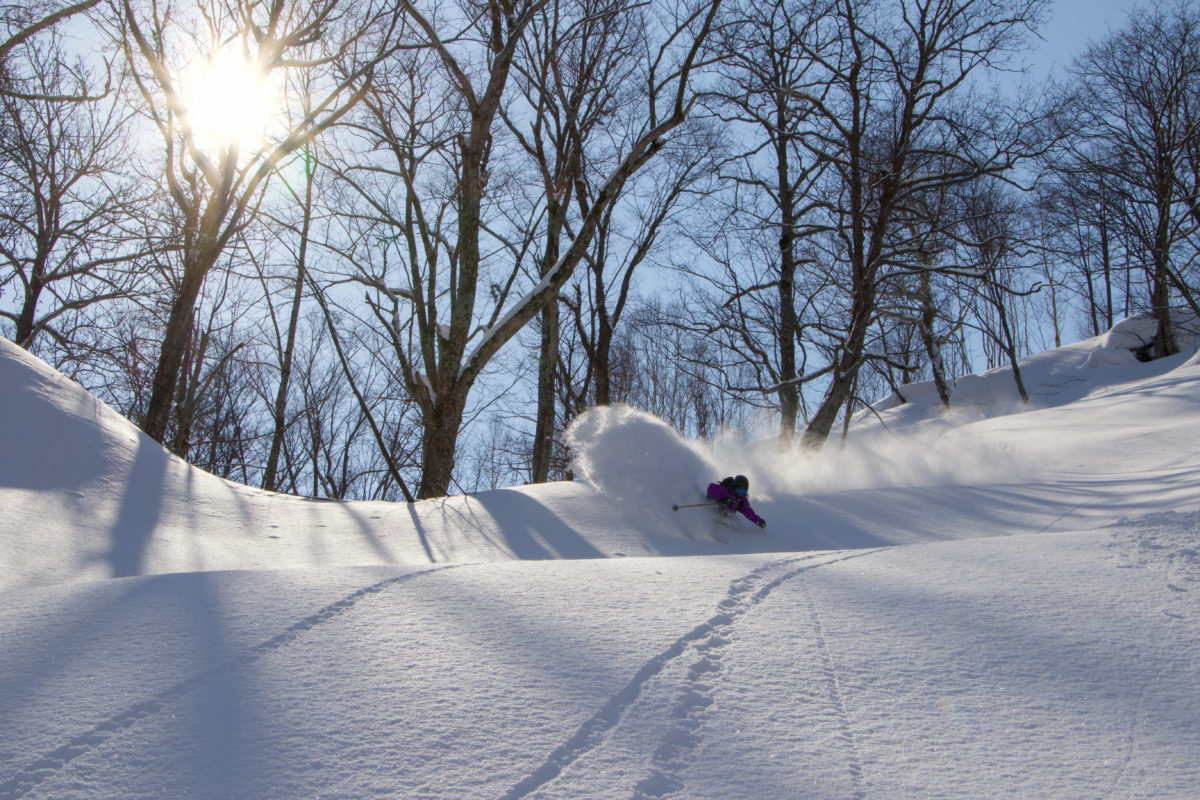
Chiba: "I'm an elementary school teacher, so I spend my holidays skiing all the time, usually around 60 to 70 days. But since my holidays follow the calendar, there are good and bad days. Last season the weather wasn't great, so I only skied for a little over 50 days. Shunta should have skied a bit more than that."
Kimura:"That's right. I work as a guide, so I ski about 100 days a season."
--How often do you two ski together?
Kimura:"We started skiing together after Chiba-chan's school went on winter break. Since then, we've been skiing together almost every weekend."
--The weather and mountain conditions will also play a role, but where will you be skiing?
Kimura: "Since we both live in Sapporo, we often go to nearby places like Mt. Yotei and Mt. Shiribetsu. We can get there in less than an hour and a half from where we live. We can get a long run down the slopes, so we went there a lot."
Chiba: "I went to Mount Yotei about one in three times."
-When you go to BC, is it usually just the two of you?
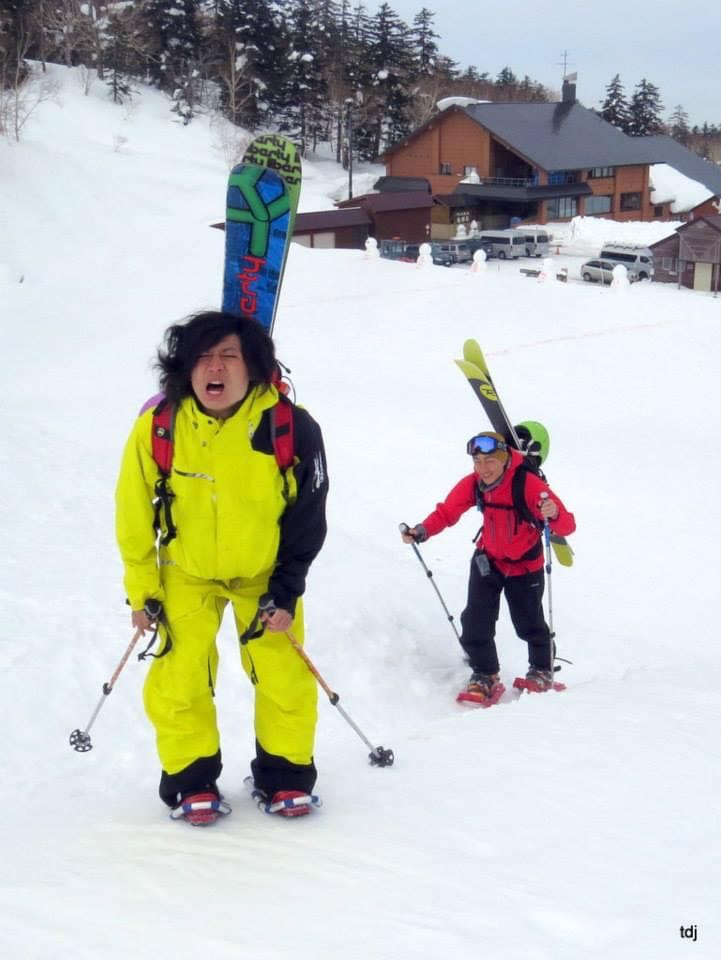
Chiba: "There's one more person. When it's just Shunta and me, the conversation doesn't last long... His name is Imahara, and he lives in Sapporo. He's originally from Hokkaido University's mountain skiing club. He knows about avalanches, rescue, and weather forecasting, and he's incredibly fast at hiking. He's the leader of the snowshoeing team, so he really pushes us on the uphill. Lately, he's figured out that we're conserving our energy, so he's stopped making the path for us (laughs)."
The day before we head out to the mountains, the three of us check the weather, the wind, and the snow conditions, and then we aim to head to a spot in Hokkaido with good weather. Most of our trips are one-off, day trips
-Do you ever go on overnight trips?
Kimura: "Basically, no matter where we go, we almost always come back to our home in Sapporo. At the beginning of the season, the northern part of Hokkaido is good, so we've stayed at an internet cafe in Asahikawa a couple of times. It might also be because neither of us drinks alcohol. We don't go out for dinner or to a hot spring after skiing and say, 'That was a great day!' I think that's a bit unusual."
Chiba:"Laughs"
Q: You two are skiers, but you also take photos and videos of each other's riding. We'll ask you about your methods later, but what is your purpose?
*Chiba has dropped a drone-centric video titled "earn your turns" on his Instagram account . In Chiba's words, "earn your turns" means "to think about and focus on each line by earning the time you spend climbing and sliding on your own two feet." Not only is Chiba's aggressive riding impressive, but the video, which captures various mountain areas in Hokkaido from the air, is a must-see.
Chiba: "Hmm, I guess it's self-satisfaction for me. I don't usually think about things like that at all, so I thought about it for a bit, and it is self-satisfaction, but it is also a place for expression. And also, I think it's a way to give back to the people who support me with my gear, to return the favor for the support they've given me."
Kimura: "We had been filming videos among ourselves before that. We thought it would be a small way to give back to the manufacturers if we could get it out into the media. But since last season, we've been doing it all ourselves because the places we go are pretty niche, and we walk for 6 or 7 hours, so there are very few cameramen or people who can work with us. There are hardly any in our community either. So, if we want to leave a record of it on video, we figured filming it ourselves is the best option."
--I see. So your main goal is to give back to the manufacturers for their support? What do you hope to achieve by expressing yourself through video?
Chiba: "How is it, Kimura-kun?"
Kimura: "I love telemark skiing. My theme is how to ski in a cool way in nature, so it would be great if I could express that in backcountry skiing. However, I don't particularly have any desire to compete in freeride competitions. It's not like we're just masturbating, but we have a strong desire to just ski, to do telemark skiing."
Telemark skiing is not a popular sport, so I hope that more people will see me ski and want to try it. I hope to create a strong community like that in Hokkaido. That's one of my goals, and it's an extension of the fun I have."
-What do you think makes a cool telemark ski?
Kimura: "Alpine skiing is incredibly fast, and the sense of speed is overwhelmingly different. So, my goal is to push down steep slopes, jump over cliffs, and get down quickly on the unstable telemark skis. In my opinion, there aren't many people who can go as fast as Chiba-chan and go straight down the slopes. If you watch the videos, you can see it clearly, but I think there are few people in Japan who can ski at that speed on slopes and down ravines. I think it would be cool if I could express that with telemark skiing. I haven't seen that kind of skiing with telemark skis very often."
-What about Chiba-kun?
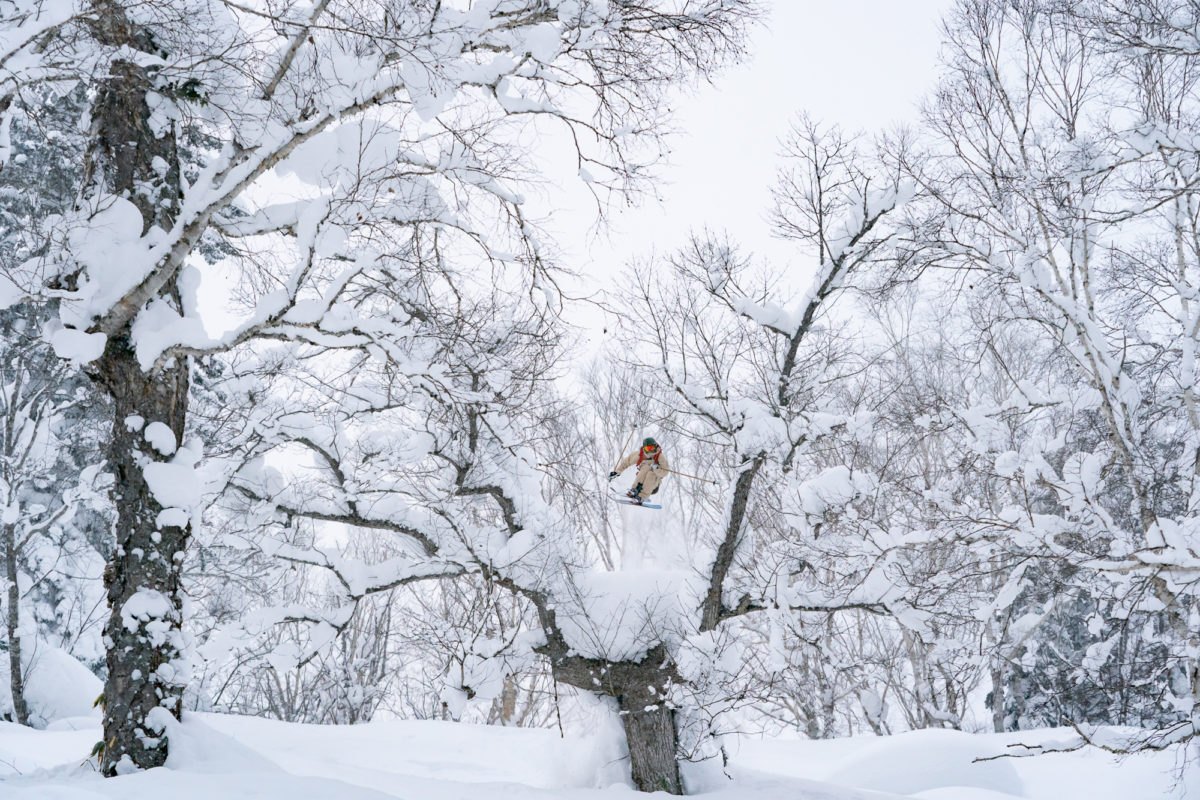
Chiba: "Well, when I think about it, leaving a record on video is something to be proud of. Dropping down steep slopes vertically. It's the same with the poles (deer horns) that I make myself, but at its core, I don't want to have what everyone else has, and I want to do things that nobody else is doing."
There are a few videos of the mountains in Hokkaido, but there aren't many objective aerial views of skiing in amazing places or records of how fast people are skiing. So I feel like it's my destiny as a skier in this drone era. I think this is the time for me to be the first person in Hokkaido to do so, a pioneer
But drones are really troublesome. They're heavy, and if they crash, it can be costly and stressful. Even just skiing on the mountain is a lot of fun, but when everything goes well and comes together, the feeling of accomplishment is just incredible
To be honest, I hate climbing mountains. But once I get that feeling, I can't go back to a ski resort. My goal is to use a drone to take photos of all the places where people have ever climbed mountains, and to become the standard for mountain skiing in Hokkaido."
Kimura:"That's pretty annoying, lol."
Chiba: "If the video is uploaded to the web, anyone can watch it anytime. I want people to think, 'I want to surpass the skating in this video.'"
-Who was the one who suggested working with drones in the first place?
Kimura: "I was the one who started using drones at TAC Tokachi Adventure Club. I was taking videos alongside my rafting guide work. Before that, there was another person who was doing the filming, but they couldn't work together as much anymore. So we decided to do it ourselves. We're gradually practicing so that everyone can film equally. We
have one drone and two transmitters, so anyone can film. When one person goes down the raft, we lower the drone all the way down and then raise it again. That way, people who go down later can also be filmed. It's become a style where we can film as we go down the raft."
--You're using two transmitters for one drone. Does that cause a lot of problems?
Chiba: "At first, there were a lot of problems. First of all, the battery. When it gets cold, the drone won't take off. The gimbal freezes up and won't move. Also, I learned something when I crashed it once. I was using an iPhone connected to the transmitter as a monitor while controlling it, but when it crashed, the connection between the iPhone and the transmitter suddenly cut off, and I didn't know where I was flying. I looked into why, and it turns out that iPhone 10s and later models have a liquid detection function.
In winter mountains, even a tiny amount of moisture can trigger it and cut the connection off. After experiencing and researching all sorts of minor troubles like that, I now use an iPhone 7 Plus, which doesn't have a liquid detection function, as a monitor. There are so many problems, so to be honest, I don't like drones (laughs)."
--It seems like there are a lot of stresses other than just skiing
Chiba: "That's right, we often get to take photos of the first person, then when we're about to take photos of the second person, we have to wait for the weather to clear up, and in the end we can't take any photos at all. I just want to be able to ski comfortably."
Kimura: "There's a certain stress in having to dig a snow cave and wait until the conditions are right to fly the drone. And it's not just a matter of sliding down and feeling happy. I'm always worried about whether I'll be able to get good shots and what the weather will be like when it's my turn. If only there was someone else who could do it all by themselves with the drone... We're doing this while also facing the risk of avalanches, so I feel like it's quite a lot of effort."
-Do you only take photos with drones?
Chiba: "Last season, I only used a drone and a GoPro. Sometimes Kei-san (Sato Kei) would take me along to shoots. And sometimes I'd go with people I met in the mountains who are into photography. We'd go if the climb wasn't too long and we could adjust our pace."
Kimura:"I'm thinking of buying a gimbal so I can do tracking shots with my DSLR."
Chiba: "But you can't do that on the big line."
Kimura:"That's right. Besides, we don't think about shooting on days with bad weather. We're fine with anything other than big slopes."
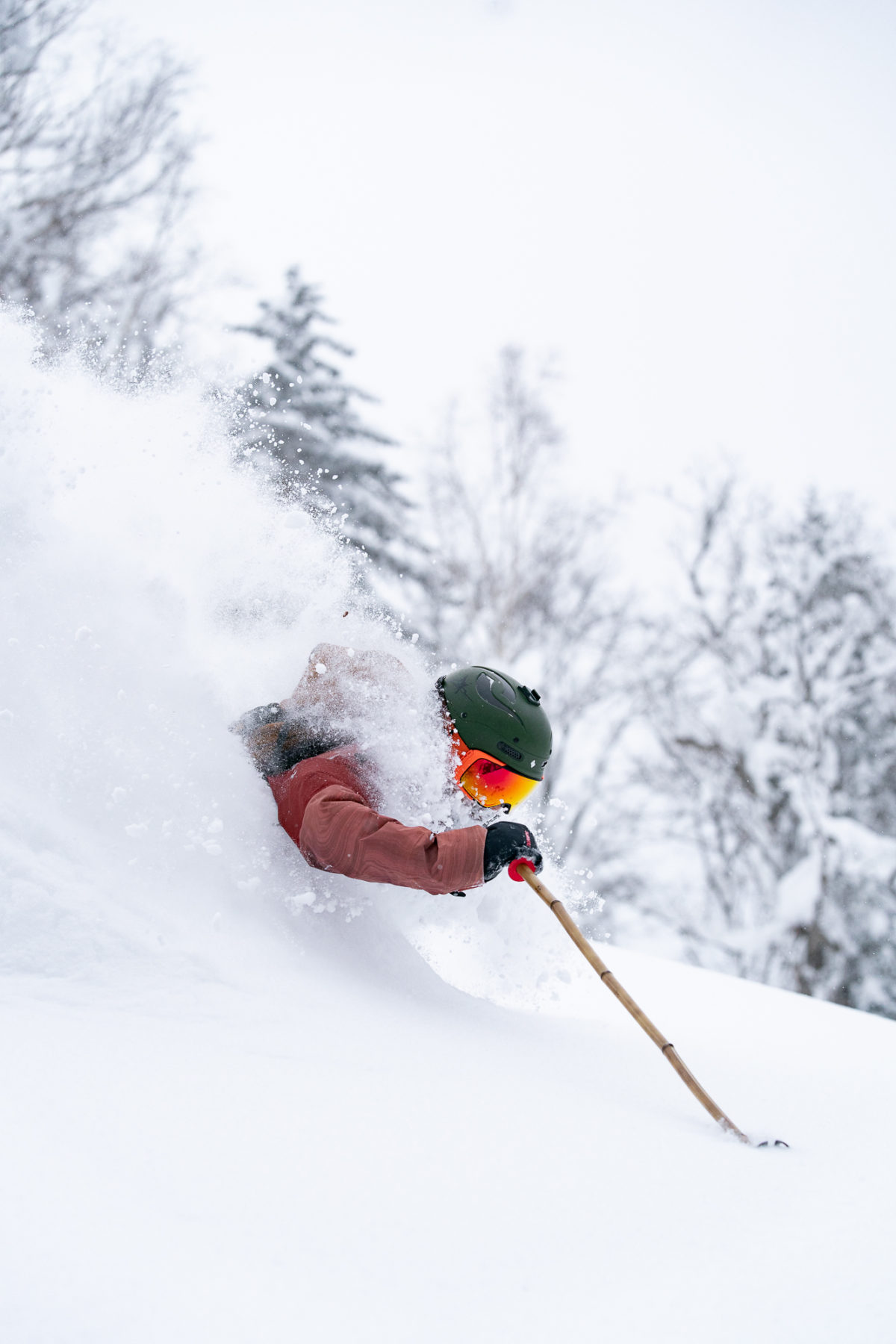
Chiba: "Especially in the last few seasons, I feel like I've been neglecting deep powder."
Kimura: "That's right. You often go to the hard-packed areas. The conditions are good everywhere except for the slopes you want to ski, but the lines you want to ski are icy. It doesn't seem like you're really enjoying the powder."
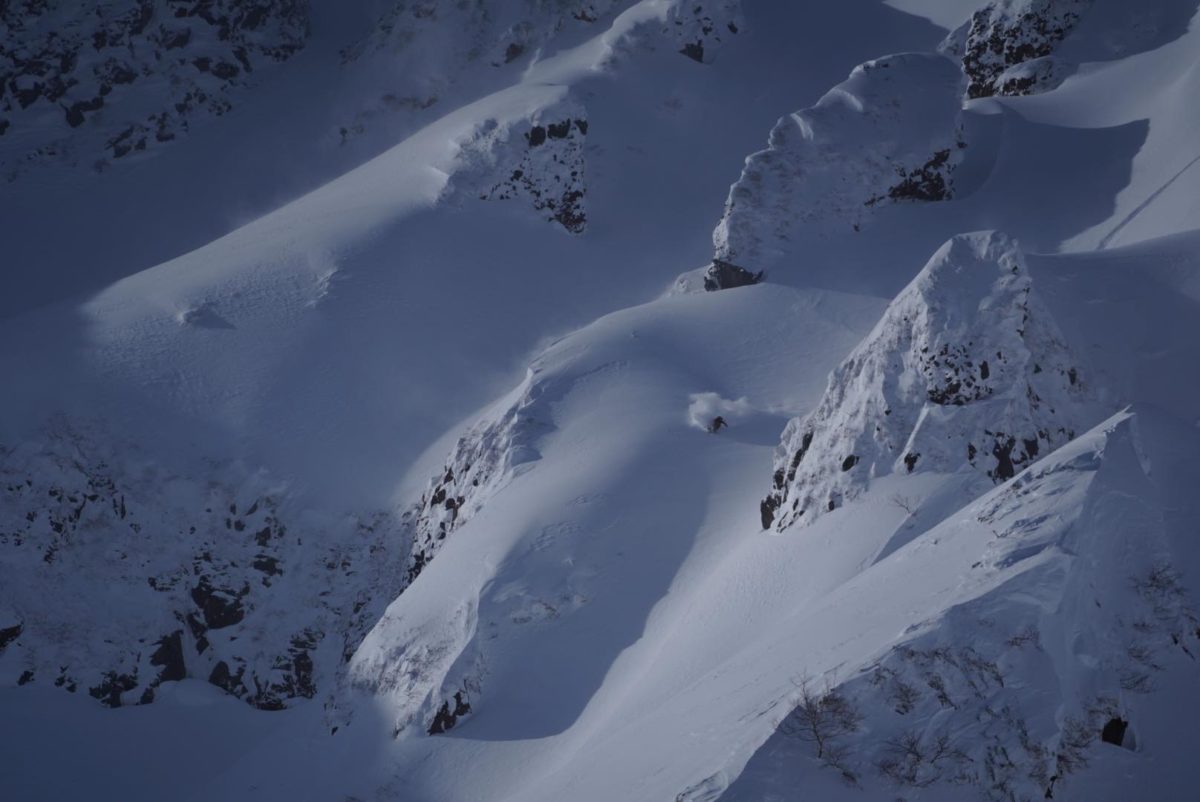
The highlight of last season was the explosive canyon at Optateshike.
How will their activities expand from here?
--You've skied in mountains all over Hokkaido, but which one would you say was the best?
Chiba: "There are so many! I can't even choose. Where should I go? Optateshike, Shunta has been there once, and I've been there twice."
Kimura:"The southeast side, right?"
Chiba:"That's right. It's called Bakuretsuzawa (Explosive Stream). The slopes were great there, and we got some great footage. That place was amazing."
-How far will you climb?
Chiba: "When we went to Bakuretsuzawa with Shunta and the others, it took about five and a half hours, right?"
Kimura:"About 6 hours."
Chiba:"At that time, Imahara-kun, who we were just talking about, wasn't there (laughs). The second time Imahara-kun dragged me around, it was four and a half hours."
-What kind of slope is it?
Chiba: "The elevation difference is about 700m. It's not as steep as Mount Yotei, but it's quite long for a single runway. At the beginning, there are two good launch pads near the peak, and you fly from there. In the middle, the runway splits, and you can go to a narrower runway or a wide, open slope."
The route I took then was a route that took me through a knoll that changed quite a bit, and then merged with a large stream. I wondered what the gradient was like. At first it wasn't steep at all. About 30 degrees. Then at the knoll it was about 40 degrees. It wasn't that steep."
Kimura:"However, depending on how the snow is piled up, it can be unstable, and there are some areas where it looks like an avalanche might occur, so it's quite thrilling."
Chiba:"When I went with Shunta, it was a little too deep."
Kimura:"There was more snow than I expected, so I couldn't go very fast. It wasn't that stinging, though."
Chiba: "At that time, one of the transmitters was broken, right? We couldn't film Shunta's skating, so he took over the filming. That's why he offered to treat me to the best ramen in Hokkaido, which is near my place. Just that one day, I went out to eat after I got home (laughs)."
Kimura:"It was the only one. That's how good Chiba-chan's footage was. The skating and the filming really clicked together. That was the most satisfying moment."
Chiba: "But if we're talking about the most enjoyable way to ski, I'd say Ashibetsu-dake, Honya."
Kimura:"Me too."
--How long does it take to climb Mt. Ashibetsu?
Chiba: "It doesn't take that long to get to Ashibetsu, maybe around 5 hours."
Kimura:"If we went at a normal pace, it would probably take about seven hours, wouldn't it? But our department head Russell (the aforementioned Imahara-kun) was there at the time. He wasn't doing that much Russell work, though. The pace was pretty fast."
Chiba: "When I'm with Imahara-kun, I tend to rely on him. The crux of Ashibetsu is the final part, the return trip. For a little over an hour, you're constantly crossing the river, going left and right. There are some good slopes for skiing, like Honya and A-Gully, but I think that's why not many people come here."
Crossing the river was a pain, so I thought about it a lot. I ended up using a pickle bag that you can get at the supermarket. First you take off your boots, put on your inner boots, put the pickle bag over them, and finally put on your outer boots. That way, the insides stay dry and only the shells get wet, so I thought I'd be able to cross safely. Outer boots have metal in them, so they're prone to tearing. I was putting them on carefully to avoid tearing, but Imahara-kun and Shunta urged me, saying that if I just pushed them in, they'd go in. I did exactly as they said, and after walking three steps, water got into my boots and I got soaked and came home. But it was spring, so it was okay (laughs)."
Kimura:"The pickle bags come in a pack of six for 150 yen. They're great value for money, aren't they?"
-Have you ever gone all the way to the top and then turned back?
Chiba: "I didn't do it even once last season."
Kimura:"I'm thinking of changing the line just a little."
Chiba: "I do change my line sometimes, or avoid knolls. Basically, if I can just slide straight down, I try to do that without putting too much stress on the snow surface."
Kimura:"That's right, going straight is the safest option."
Chiba: "I completely agreed with Akira Sasaki's interview when he said that going straight is the safest option."
-Is there anything you would like to do individually or as a couple in the future?
Chiba: "I have a clear bucket list. There's one big mountain line I want to do: the X-couloir on Ashibetsu-dake. When you look at it from above, the mountain's shape is incredibly cool. I want to film it with a drone in the dead of winter. Well, not just the X-couloir, but I want to ski cool lines on the mountains of Hokkaido in a cool way. I want to do that every year. Also, even if I've filmed the footage, there are parts I'm not satisfied with, so I want to update that every year. Even if I'm happy with the line, I might chicken out at the cliff and not fly straight, and instead fly a little to the side. I want to keep updating those little details."
Kimura: "I feel the same way. There aren't many telemark skiers who ski on steep slopes, and even fewer who can be filmed. If I can ski aggressively with Chiba-chan and other friends who can push me, I'll be satisfied. Plus, I'd be happy if we could gradually build connections within the telemark community in Hokkaido. In the long term, I'd like to build a telemark community."
Chiba: "So, I started telemark skiing too."
Kimura:"They're really good."
Chiba: "I started at Bankei, but it's a place where junior skiers practice, and the slope is practically like an ice rink. When I tried skiing there, I realized that the edges of telemark skiing don't grip at all. I almost gave up after being tripped several times, but then I went to Canmore Ski Resort in Higashikawa Town for night skiing on a snowy day, and I finally understood telemark skiing."
Kimura:"You're quick to reach that level of wisdom (laughs). Even after 10 years, I'm still pretty unsure about it at times... (laughs)"
--Thank you both so much. I look forward to your continued success
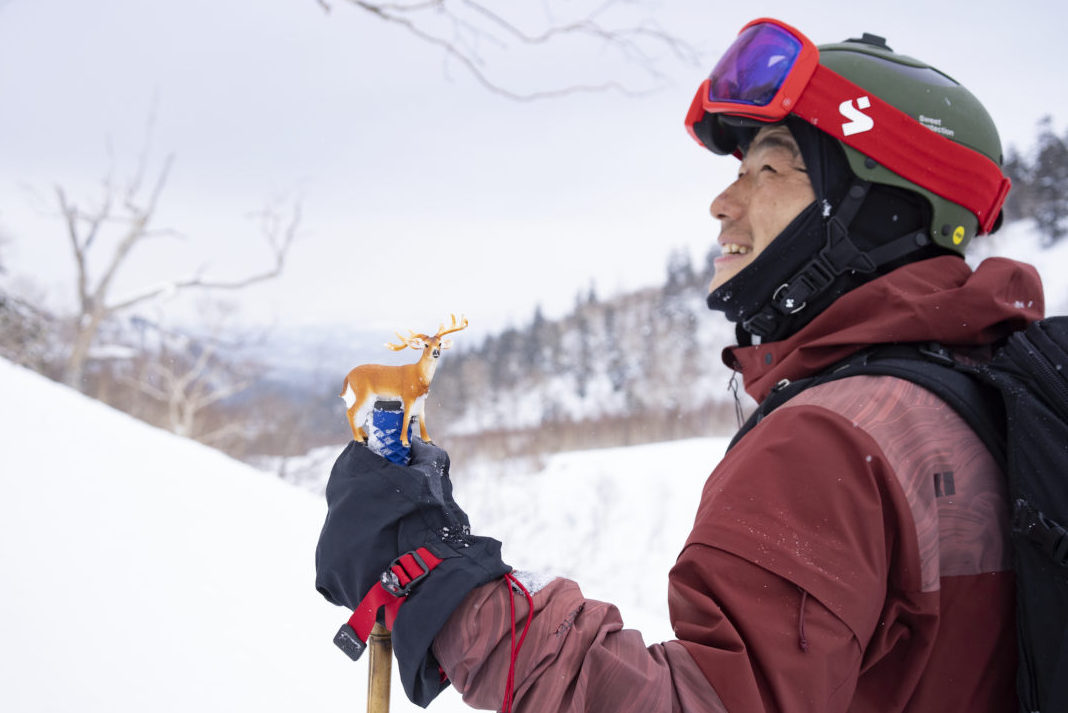
Yutaka Chiba, born June 20, 1992, is from Sapporo. His riding style, which involves leaping off cliffs and tackling narrow chutes in the mountains of Hokkaido, is shared primarily on Instagram, gaining fans both domestically and internationally. He also runs " deerhorn_poles,"
Supported by: @paddleclub_sapporo @armadajapan
Instagram: @yutakachiba.newaccount
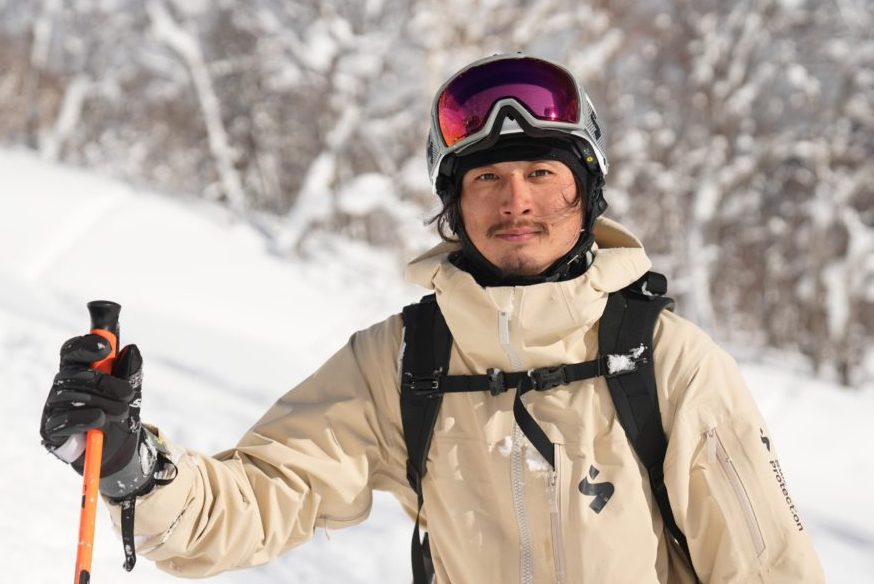
Shunta Kimura, born May 17, 1991, is from Aichi Prefecture. Based in Sapporo, he skis extensively at ski resorts and mountains throughout Hokkaido. His riding style, which focuses on speed and aggressive lines in telemark skiing, has attracted attention. During the off-season, he runs Friluftsliv,
Sponsored by: @sweetprotection_japan @pow_mas @deerhorn_poles @woollayer
Instagram: @dadadadadavo603