

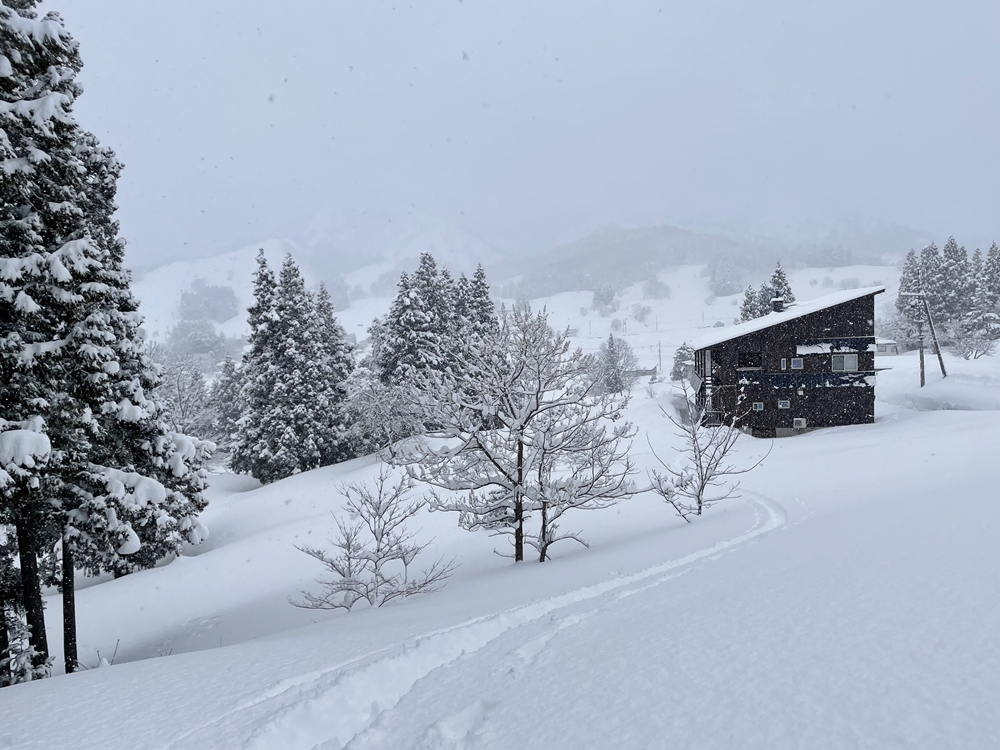
Risa Ohinata, an editor who mainly works on the snow culture magazine "Stuben Magazine," moved from Shonan to Shinshu in 2020 and began her long-awaited rural life. She built a half-built house, supplemented her electricity with solar power, and grew vegetables in her fields. And in the winter, she skis almost every day. What new things has she seen through living in nature, something she has longed for for many years?
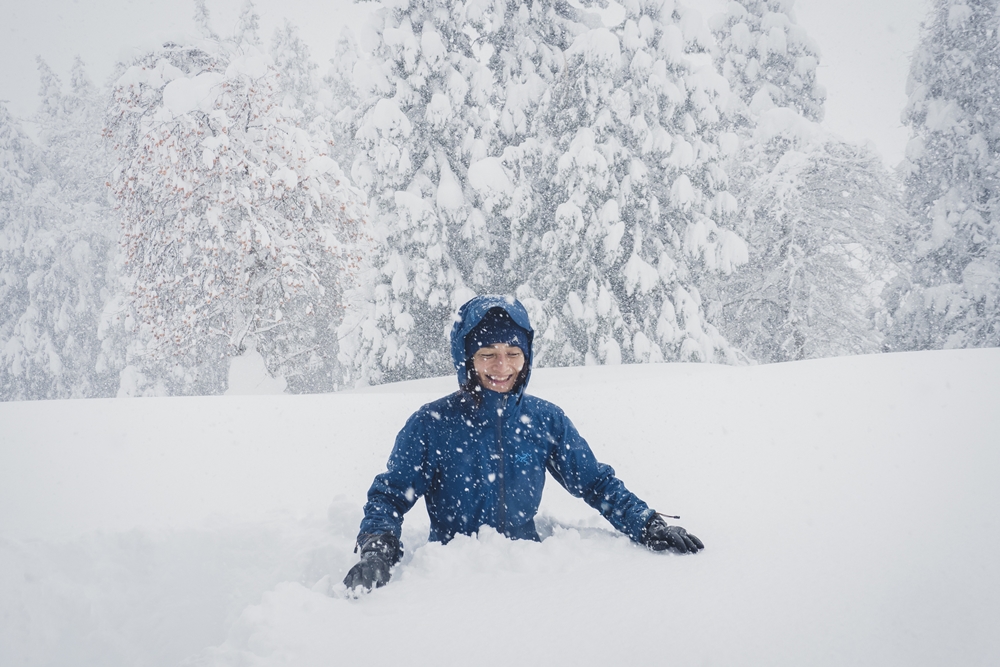
Born and raised in Tokyo, Ohinata started working at a publishing company after graduating from university. He was involved in the production of ski magazines such as "Ski" and "POWDER SKI" and also served as editor-in-chief. Seven years ago, he went independent and launched the snow culture magazine "Stuben Magazine ." He currently lives in Iiyama City, Nagano Prefecture with his partner and is expanding his field of activity as a freelance editor.
Longing for a life where everything "circulates" in nature
--Two years ago, you moved to Iiyama, a snowy region. It seems like it would be more convenient to work as an editor in the Tokyo metropolitan area, so why did you choose to move to the countryside?
Ohinata (hereinafter O): I have been visiting ski resorts and surrounding towns for many years, and have been researching and learning about life in a snowy country. I wanted to try it out for myself
People generally think that the heavy snow is difficult and inconvenient, but when you actually interact with the people who live there, you realize that it is truly "rich" in many ways. In an environment where nature is so close by, self-sufficiency and local production and consumption have long been the norm, and when snow falls, the melted water is stored in the forest and irrigates the fields at the foot of the mountain. This allows crops to grow, and people can eat the bounty of nature. Everything "circulates" throughout the year
On the other hand, when I think about my own life in my 20s and 30s, I was busy editing, using the electricity late into the night, and eating at convenience stores every day... Even though I was writing about people living in snowy regions, I often felt a gap between my own lifestyle and theirs, which was so different from theirs. I began to think that one day I would like to live a life in harmony with nature
--You were also greatly influenced by people you met through work and fellow skiers
O: When I was a rookie and didn't know what to do, the editor-in-chief of the magazine "Ski" I was working for at the time assigned me alone to cover Niseko. The photographer in charge of the shoots at the time was Yoichi Watanabe, with whom I would later co-found "Stuben Magazine." Since then, I've learned more about both work and skiing from him than I did from my actual boss (laughs), and he's become like a mentor to me, so to speak.
Watanabe, who lives in Niseko, has been living an environmentally conscious lifestyle for quite some time. His home and office, built about 15 years ago, is highly airtight and insulated, and is designed to have a low impact on the environment, taking air circulation into consideration. He has planted trees in his garden to nurture a forest, and when they grow large, he thins them out and commissions a local woodworker to use them as a table in his home, practicing sustainable living while having fun. Observing his approach to life in this way from the sidelines has also been a big factor
--You moved here amidst this long-standing trend. So why did you choose Iiyama?
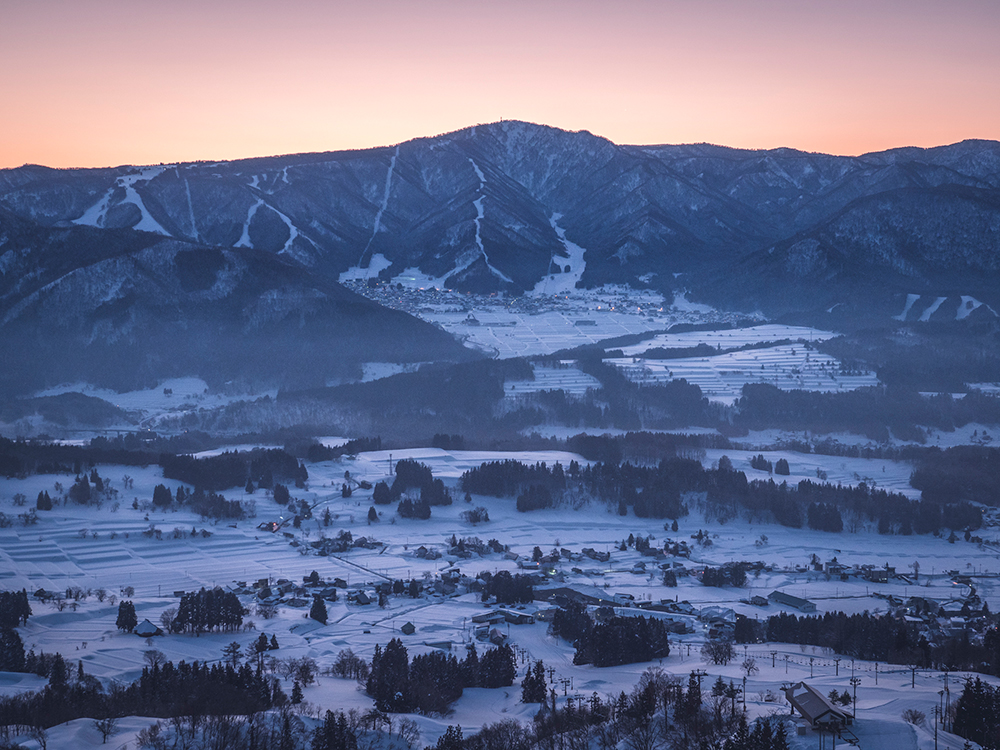
O This area is designated by the government as a particularly heavy snow area, and above all, it's an environment where skiing is readily available. the "Kugenuma Pine Forest" , we also considered the ease of travel to and from the Tokyo metropolitan area. We were also attracted by the friendly atmosphere and the rural feel of the area, which isn't a tourist destination.
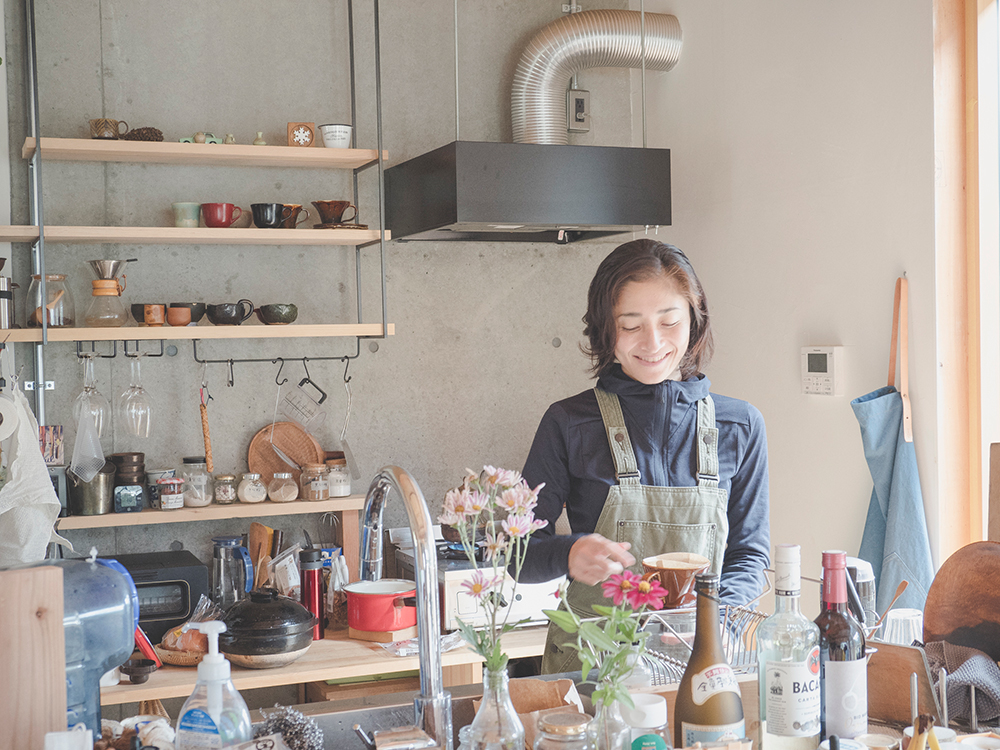
Aiming for a self-sufficient life in a snowy country
--The house they completed in Iiyama was a half-build house, with many parts being modified by the couple themselves. This too shows a great deal of attention to detail
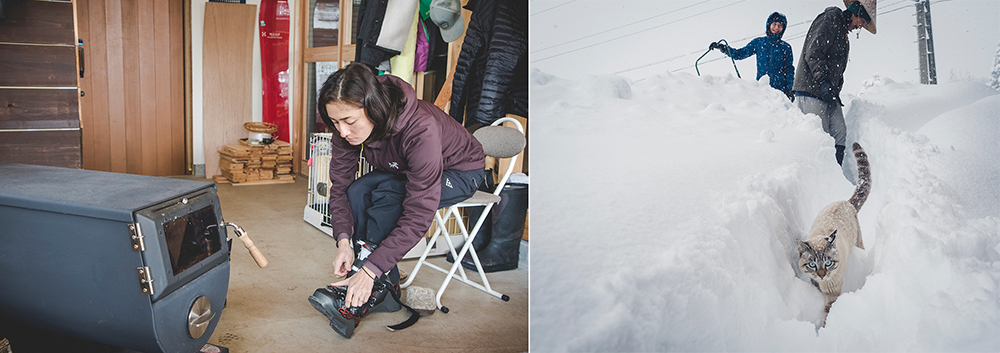
O: Fortunately, we found a piece of land with a spectacular view and close to a ski resort. Aiming to build a house that places as little strain on the environment as possible, we used wood from Nagano Prefecture and made extensive use of natural materials, such as diatomaceous earth for the walls. On the first floor, we installed large windows to eliminate the boundary between the interior and the natural scenery outside, but we also chose airtight wooden sashes for energy conservation. In winter, our main heating appliance is a wood-burning stove. This is also made by a local manufacturer, and the firewood we use is sourced locally and split by my partner. In summer, we grow vegetables in our own garden, which eliminates the need to go shopping. In addition to being self-sufficient, we aim to live a life that uses as little energy as possible
--Two years ago, you also installed a solar power generation system, and are aiming to become self-sufficient in electricity
O I had been thinking about using natural energy for some time. As the effects of global warming, such as the lack of snow at ski resorts, become more apparent year after year, I wanted to live a life that does not rely on fossil fuels that emit carbon dioxide. Then, by chance, I met some solar power generation experts, and with their advice, I was able to come up with an innovative way to generate solar power even in a snowy country
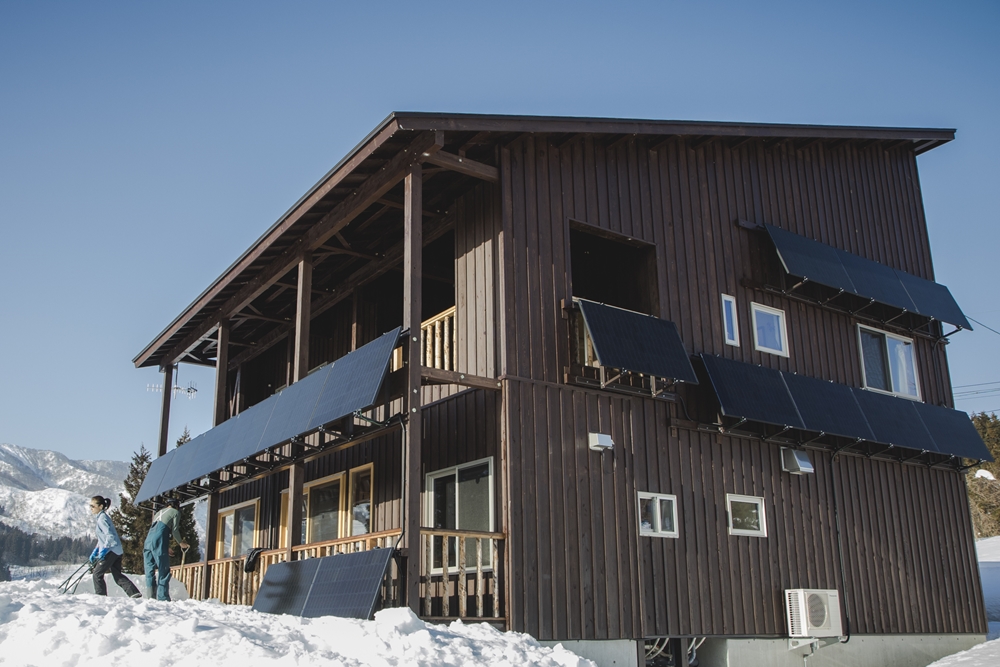
Solar panels, the key to power generation systems, actually do not do well with snow. Ohinata's house overcomes this with a unique method: installing the panels on the exterior wall under the eaves. Specifically, the panels are installed on the exterior wall, rather than on the roof as is customary. The 70-degree angle allows snow to slide off naturally, while also allowing the panels to efficiently capture sunlight. The system was designed to generate electricity efficiently in the winter when electricity usage is high, but the snow on the ground reflects sunlight, resulting in higher-than-expected power generation, making it an innovative model for the solar power generation industry
--Has your life changed since you started using solar power generation?
O: There are many days throughout the year when we can run our lives solely on solar power, which is surprising and gives me a great sense of satisfaction! I've become more conscious of the electricity I used, even though I used it so casually, like thinking, "If the weather's nice today, I'll run the washing machine while the electricity is still being generated during the day." I can store the electricity generated by sunlight in a storage battery and sell any surplus, so I think it's simply amazing that my own home has become a little "power plant."
Solar power generation itself is, of course, not uncommon, but it has been said that installing a system in a snowy region, especially in a heavy snow area like Iiyama, is difficult. However, I am proud that the ideas and ingenuity of many people have shaped this project. I would be delighted if such an initiative were to attract attention and spread in Japan, where snow makes up about half of the country
A fulfilling life centered around skiing
How do you live in the winter?
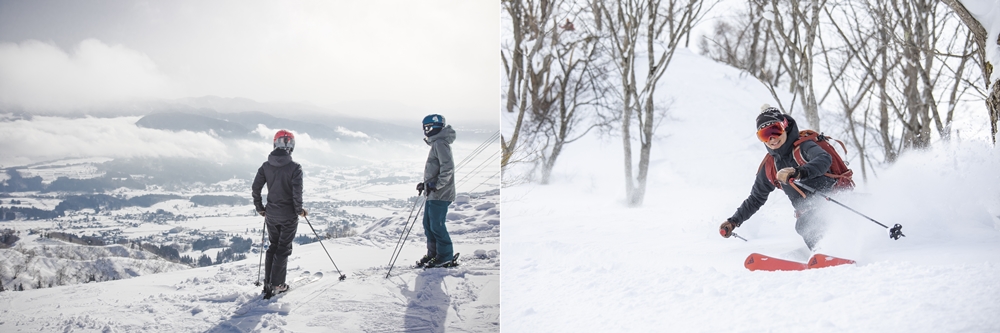
O: In the peak season, I go skiing first thing in the morning. I usually ski for about 1-2 hours, and when I come back, I clear the snow around my house while still wearing my ski gear. After that, I do some desk work, which is a typical day
-How many days did you skate during the 2021-2022 season?
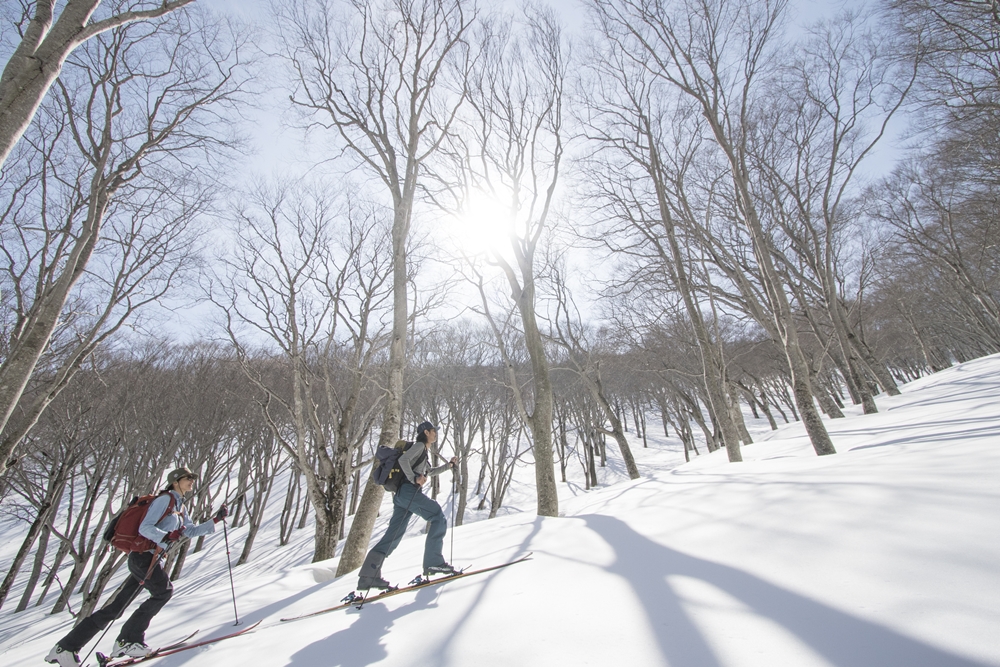
O: About 80 days. Actually, it's about the same number of days as before I moved, but the content is completely different. Skiing is now a part of my daily routine, and it feels like a morning jog. My home slope, Togari Onsen Ski Resort, has a homey atmosphere and many ungroomed slopes, so I never get bored even if I ski every day. Because I ski almost every day, I can easily feel the changes in the snow, and it feels like I'm communicating with nature
Up until now, I'd go skiing with a specific purpose in mind, like an interview, and I'd squeeze in some personal time in between, making plans to go. Now, I don't have to make any promises to anyone, and I can choose the conditions and go. I can choose not to go, but that means I won't miss out on a good day. I think I can do this because skiing is a part of my life
--I'm so jealous
O Sometimes, instead of going to the slopes, I put on my skis and head out to the mountain behind my house. My partner and I go for a little walk, put on our skins, walk for about 20 minutes, and then ski down an ordinary slope. I don't meet anyone, and those times are really fun and enriching, and I feel like I can find balance within myself... I really wish I had moved here sooner
--However, it is one of the snowiest areas in Japan, so I imagine there are many difficult times
Last season, there was a particularly large amount of snow, and even if I shoveled it, it would all be gone after a few hours, and I'd have to shovel it again, over and over again. We don't own a snowblower, so we do everything by hand. Snow revolves around our life, and we plan our schedules while checking the weather forecast, and how we spend our time is affected by the amount of snowfall, so it can be tough, but we moved here for the snow, so we're enjoying it too
--Did living this kind of life have any impact on the creation of the books for "Stuben Magazine"?
O: Stuben Magazine has the concept of "Communicating from Snow Country." The editorial office is in Niseko, and before that I had been frequently visiting Niseko and traveling to snowy mountains both in Japan and abroad, interviewing many snow country dwellers. In addition to articles directly about skiing and snowboarding, there are also many articles about the natural environment and the unique culture of snow country, because we value the perspective of the resident. In that sense, now that I myself have finally become a snow country dweller, I can empathize with more things, and ideas come to me precisely because I coexist with snow
Also, although it's only been three years since I moved here, I think that by gradually becoming more involved in the local community, I'll be able to take a greater interest in the area where I live and the surrounding areas, and be able to report and share information that is more closely tied to the local community. It would be great if, precisely because I'm a newcomer, I could objectively see the charms of the area from an outsider's perspective
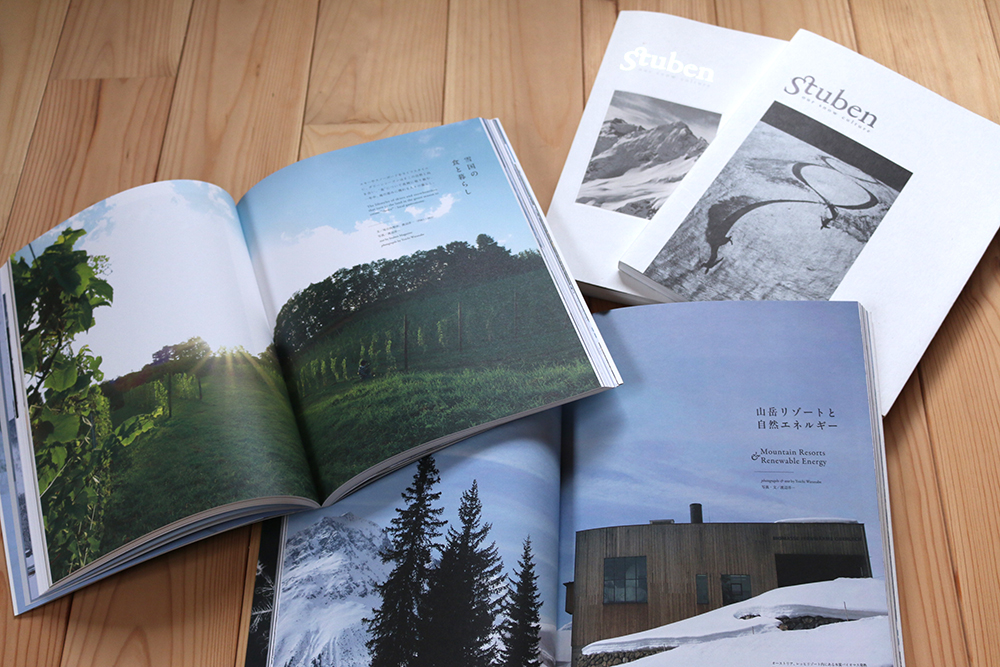
Issue 2, titled "Mountain Resorts and Natural Energy," features regions in Europe and Japan that are pioneering the use of energy sources that utilize natural resources. Issue 3, titled "Food and Life in Snow Country," introduces people in Japan who make skiing and snowboarding their lifestyle, and who engage head-on with food while facing nature during the green season. If you're interested, be sure to check it out. Back issues are available at
the Stuben Magazine online The latest issue, the sixth, is scheduled to be published in late November. As a new initiative, crowdfunding began on June 10th. Seeking cooperation not only from supporting companies but also from readers, the magazine is exploring and challenging new ways of creating books. For more information, click here.
To protect the snow. What skiers can do
--What specific things can we do now to ensure that we can continue to live off the blessings of nature in the future?
O: Speaking of my own efforts, for example, I've been conscious of saving energy, stopped using rice cookers and microwaves, started using eco-friendly plastic wrap and bamboo toothbrushes, avoided plastic products, used cloth made from natural materials that can be used without detergent to wash dishes, made my own shampoo and lotion, etc. These are small things, but I think the accumulation of these things is important
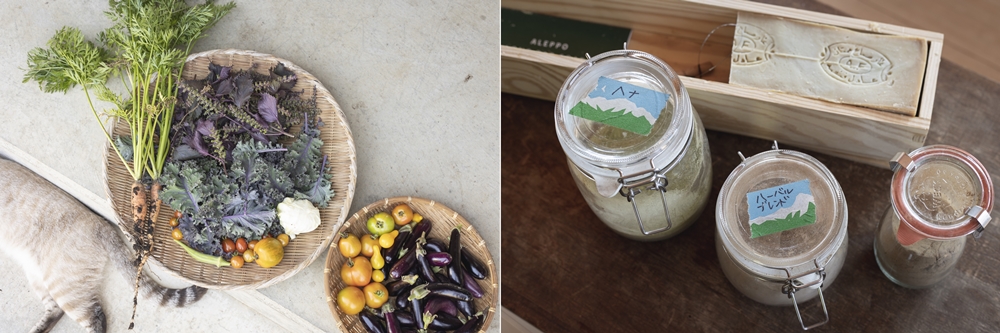
-Do you also grow vegetables in the fields?
O I feel a great sense of fulfillment in being able to grow our own food. Especially from spring to summer, we can get by with just the ingredients from our local area, not only from our own garden, but also from picking wild vegetables and receiving them from our neighbors. We go out shopping less, so we don't travel by car and we don't use any unnecessary packaging. Best of all, the vegetables are delicious! It really makes you realize that your body is made from local ingredients. We compost food waste, turning it into fertilizer and using it in the soil of our fields. I think that this kind of "cycle" ultimately helps to preserve the environment, even if only little by little. I think the secret to continuing is to not be too strict and to simply enjoy it
--It seems like your life in Iiyama has been very stimulating, both as a skier and as an editor
O: Skiing gave me this realization. Being in contact with nature made me want to protect the fields where we play, and to leave an environment where we can ski unchanged in the future. Before, I just wanted to be able to ski, but now I realize how grateful I am to have an environment where I can ski. In Iiyama in particular, nature is so close that you can see the changing of the seasons. In that environment, my desire to protect the environment is even stronger
-What about your future life?
O Up until now, I've traveled all over the place, getting glimpses of rich lifestyles and receiving a lot of inspiration wherever I go. This has been going on ever since my parents took me skiing and camping as a child, and I think my many experiences with nature have led to who I am today. It wasn't until I moved here and friends from the city started coming to visit that I finally understood what it meant to be in the position of welcoming them. I let them try my home-grown vegetables and give them as souvenirs, take them to pick wild vegetables, and show them scenic spots. I've completely come to feel like a country grandma, and I'm proud of the countryside (laughs)
My city friends and their children were delighted, and the conversation naturally turned to sustainable living, with some even saying they wanted their kids to take up skiing. Children plunging into the great outdoors and having all kinds of experiences while playing to their heart's content may one day inspire them to think more deeply about the natural environment and enrich their lives. I would be happy if my own family and friends could take something from this experience, not just through the media
[Profile]
Lisa Obinata
Born in Tokyo in 1980. After graduating from the School of Letters, Arts and Sciences II at Waseda University, he worked for 13 years as an editor for ski magazines such as "Ski" and "POWDER SKI" at Jitsugyo no Nihon Sha. He has served as editor-in-chief of the magazine since 2013. In 2015, he went independent and was involved in the launch of snow culture magazine "Stuben Magazine ." In 2018, he began preserving historical buildings and the surrounding greenery from his home in Kugenuma, Fujisawa City. In 2020, he moved from Shonan to Iiyama City, Nagano Prefecture, where he is currently living a natural lifestyle close to the snowy mountains and nature.
Photo: Takanori Ota, Lisa Obinata