

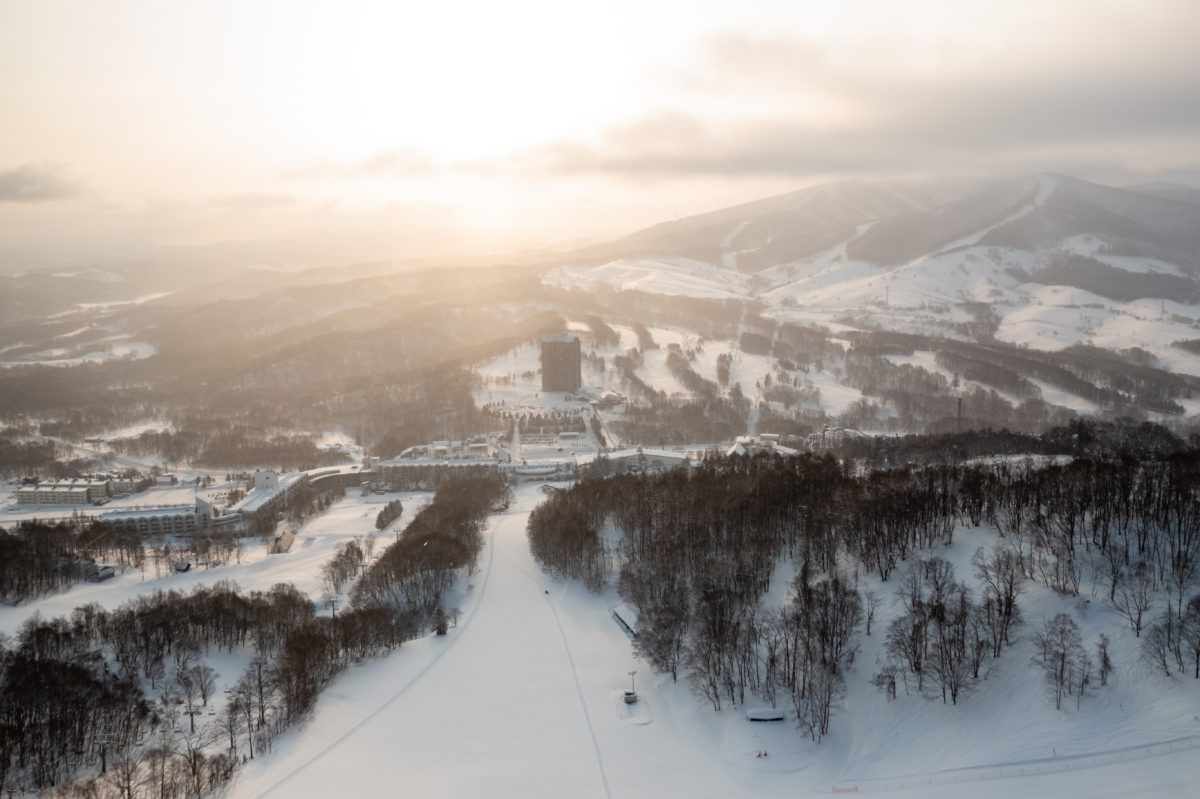
This season has been blessed with even snowfall across many areas. Even in February, popular spots continue to see regular snowfall, accompanied by cold weather, maintaining good conditions.
Although the early part of the season has passed, powder season is still going strong.
Hokkaido, in particular, has a wide range of ski resort options, thanks to its high snowfall and excellent snow quality. If you plan to stay for a few days, the conditions are ideal for powder. Here, we report on our three-day trip to Rusutsu Resort in late January with skier Toru Kawaguchi and snowboarder Masato Yoshida, two riders with a keen sense for interesting terrain and fresh snow.
The largest scale
ski resort in Hokkaido, made up of three mountains
Skier Toru Kawaguchi and snowboarder Masato Yoshida visited Rusutsu in late January. Although there was no significant snowfall during the three days they spent there, about 10cm of fresh snow fell each day, and if you chose the right spot, the snow and wind could reset the slopes. The temperature was below -10°C every morning, making for ideal conditions
First off, here are some of the best shots and video clips from the three days
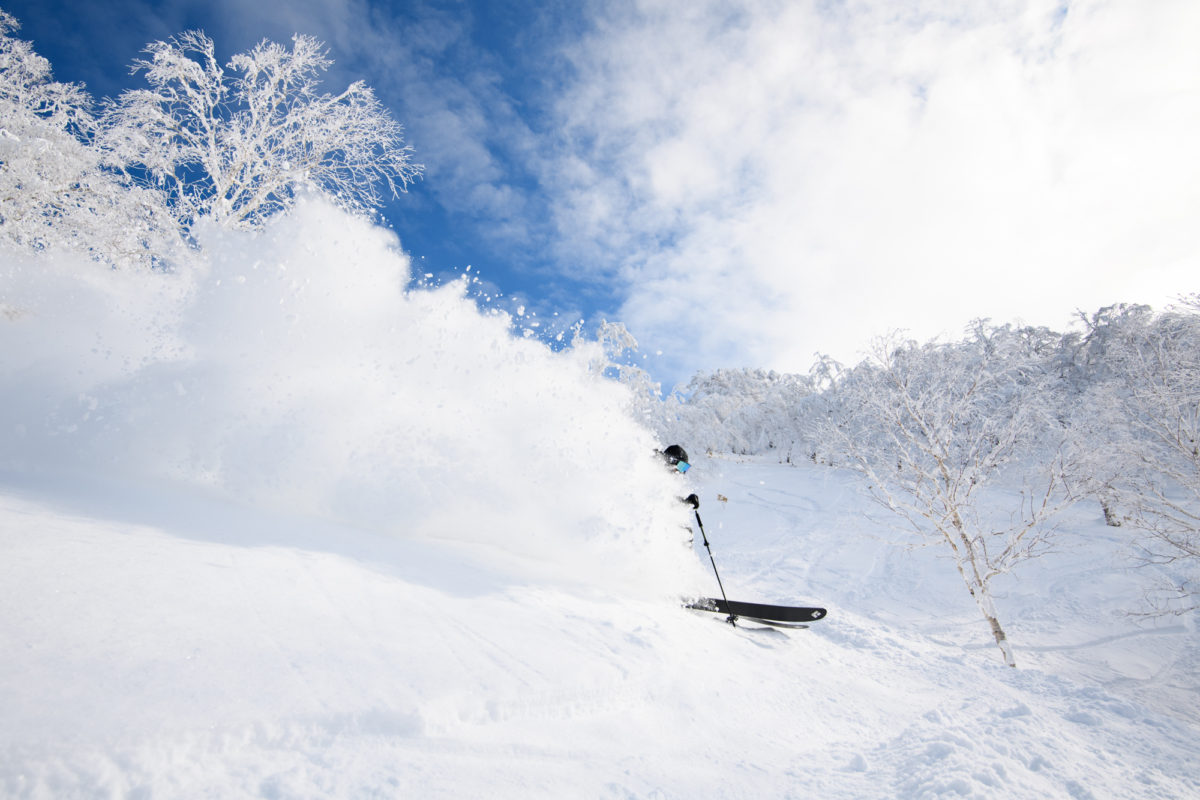
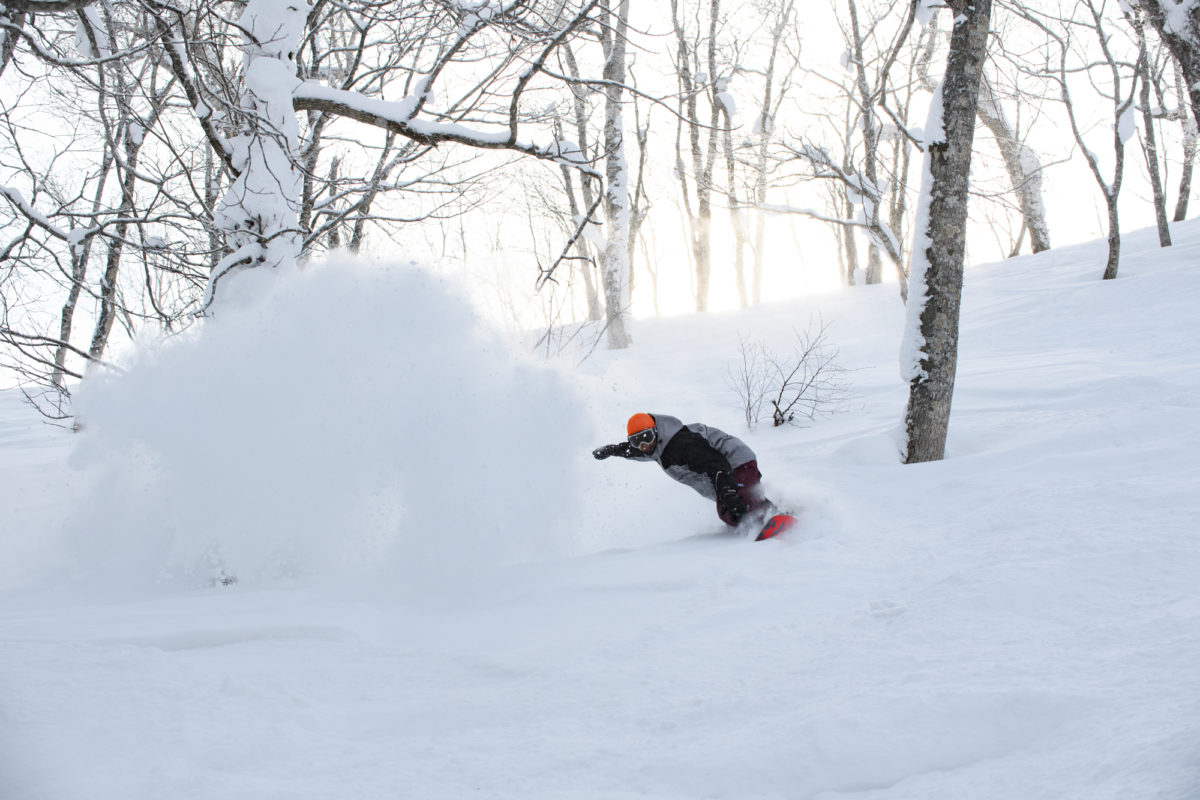
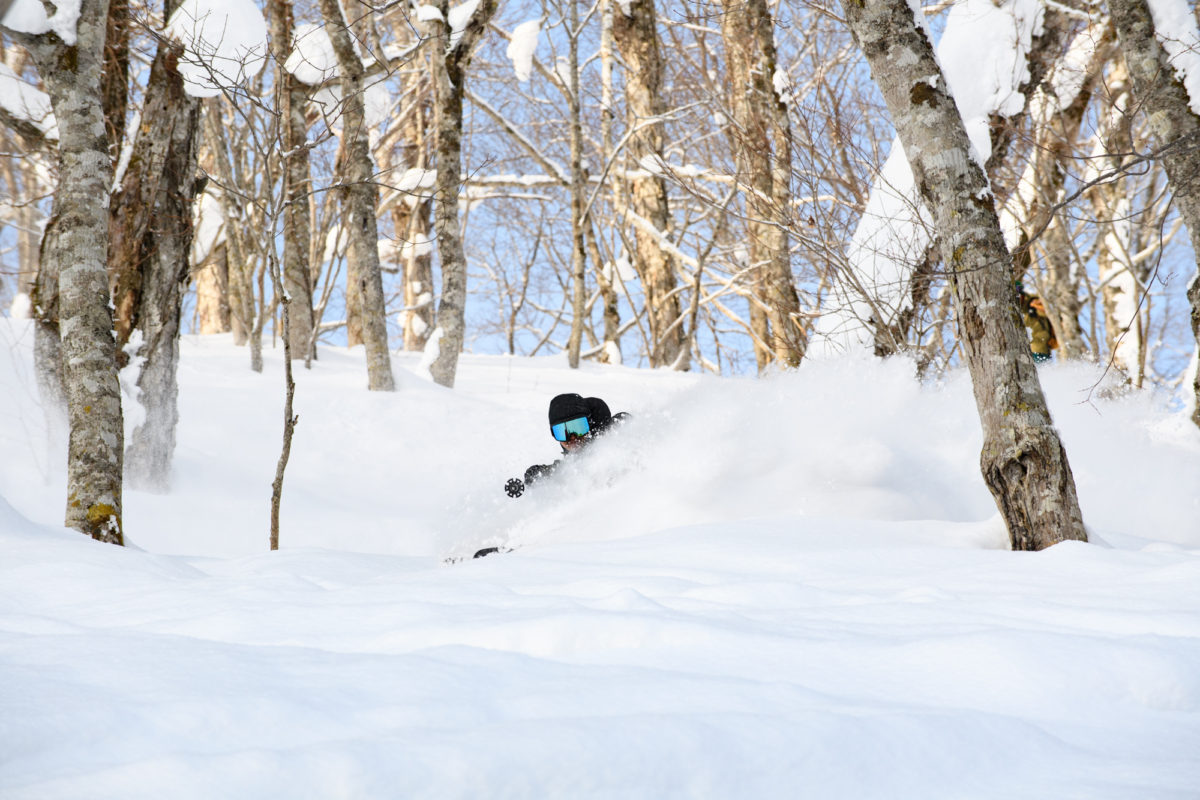
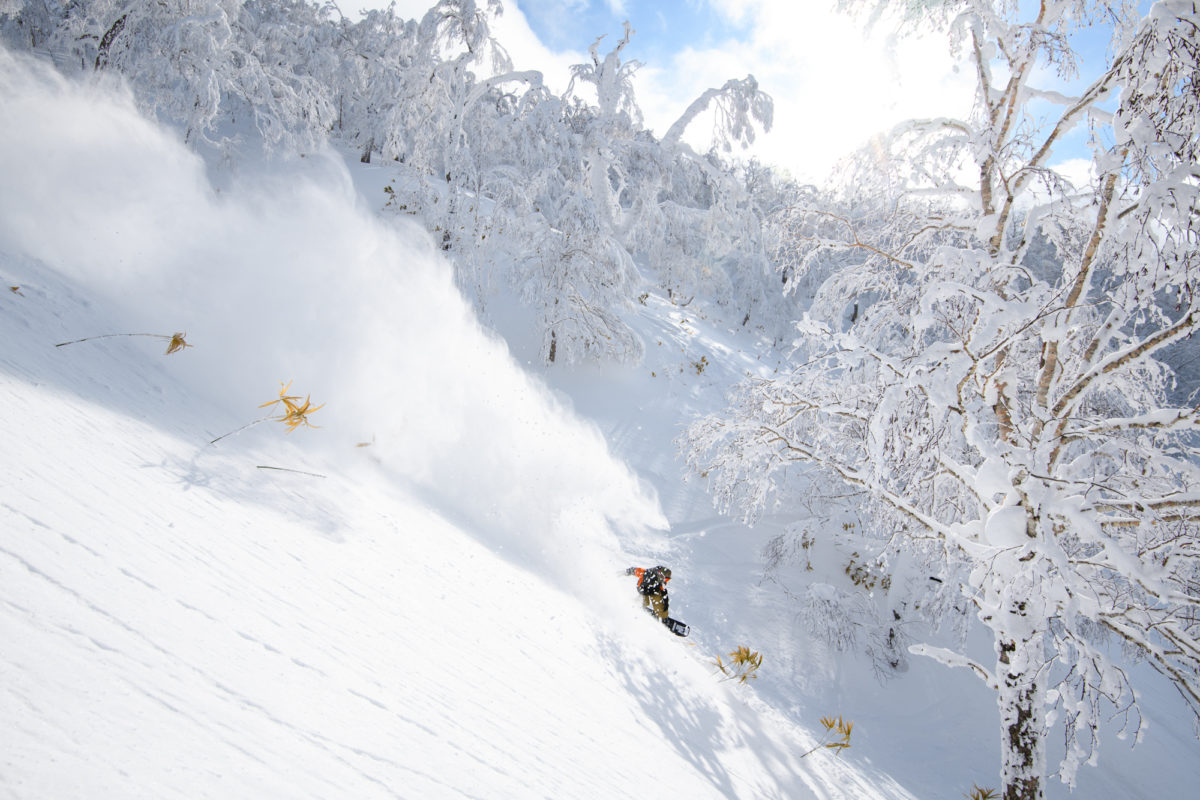
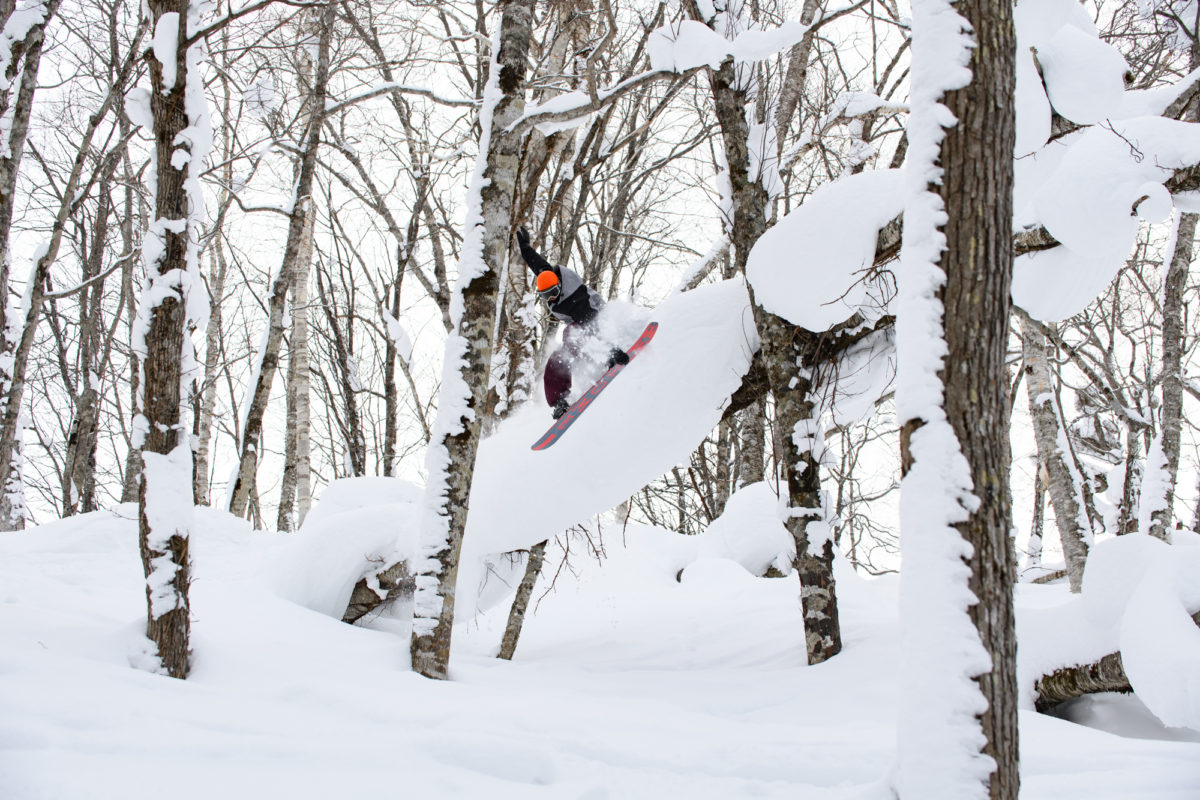
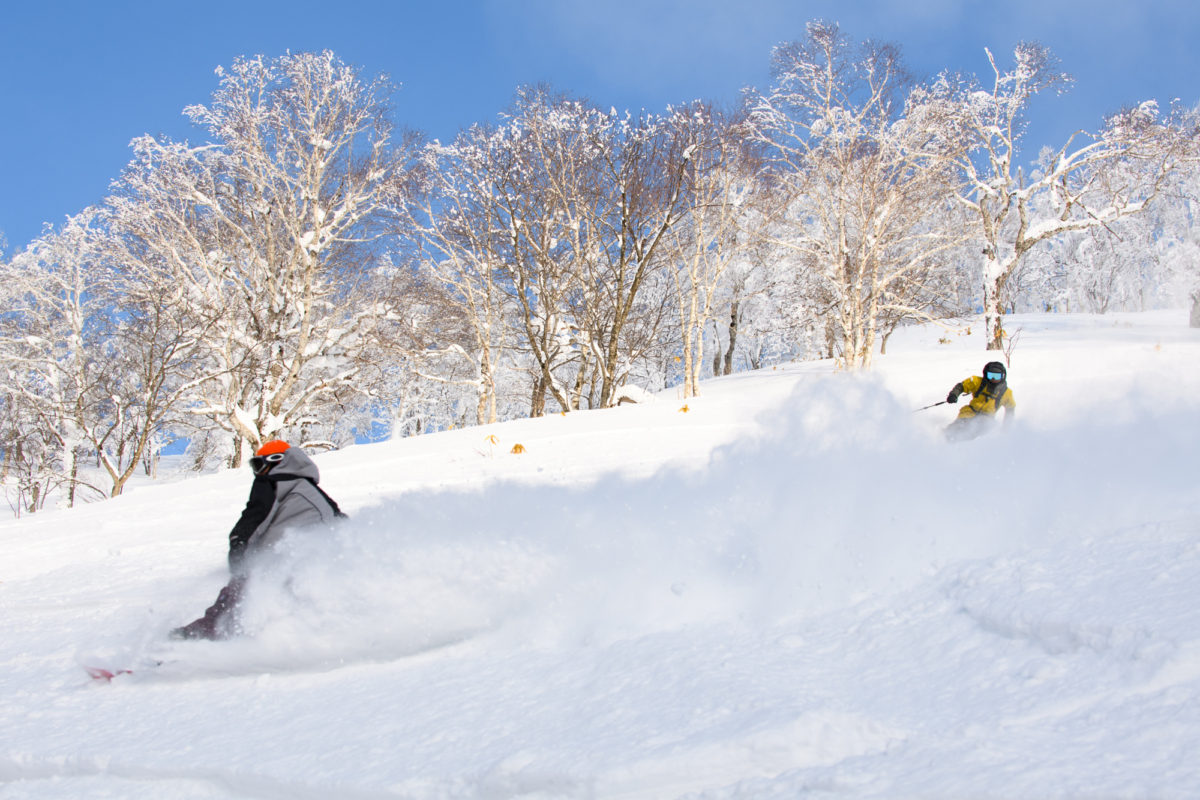
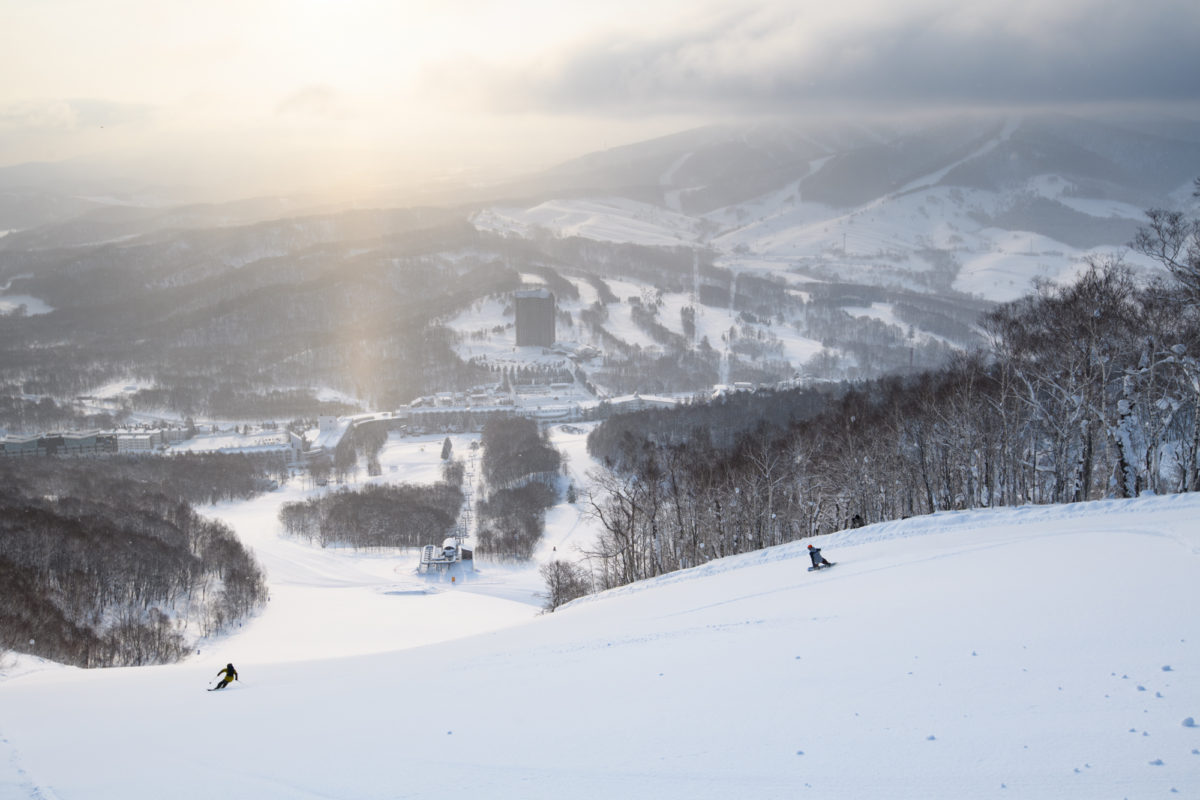
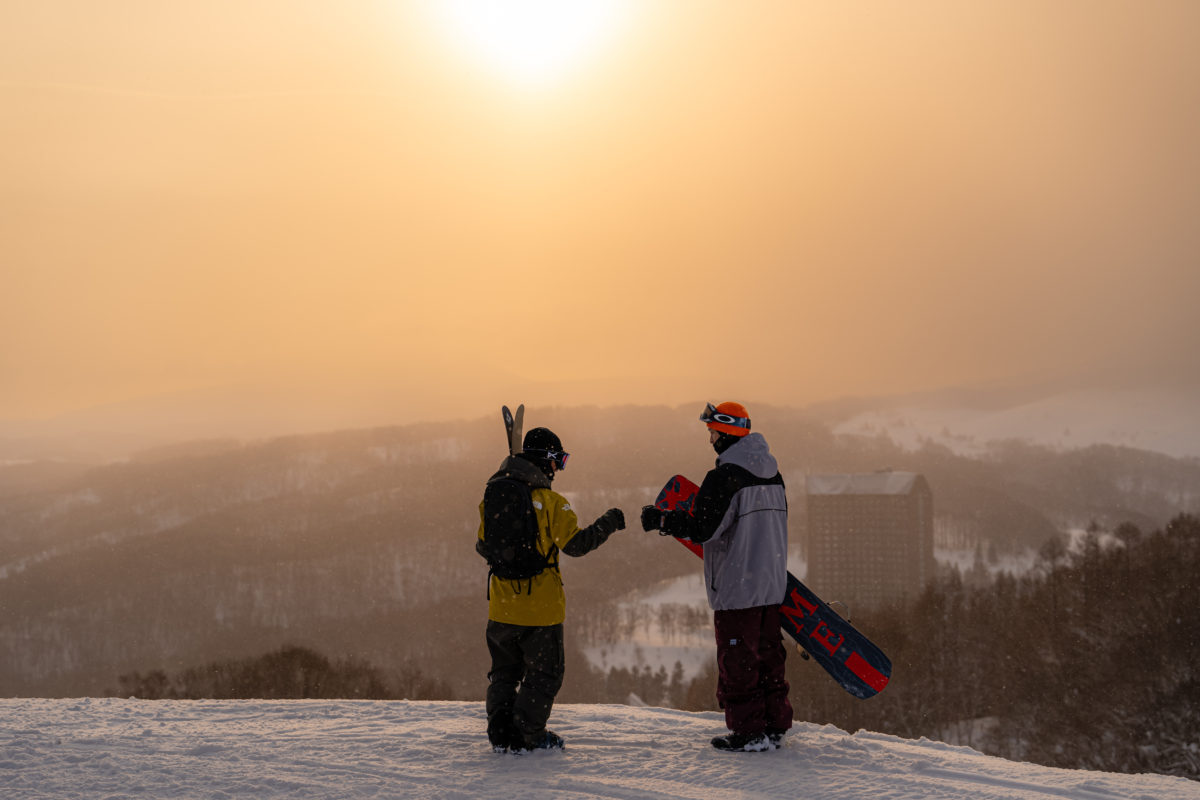
There are probably few places in Hokkaido, or even the whole country, where you can ski as long a distance as Rusutsu.
As you can see from the slope map below, Rusutsu Resort is made up of three mountains.
From right to left, West Mt., East Mt., and Mt. Isola have a total of 37 runs laid out on their slopes, many of which are long runs with plenty of running distance. The total run distance of the runs is about 42km, so it's not something you can ski in a single day.
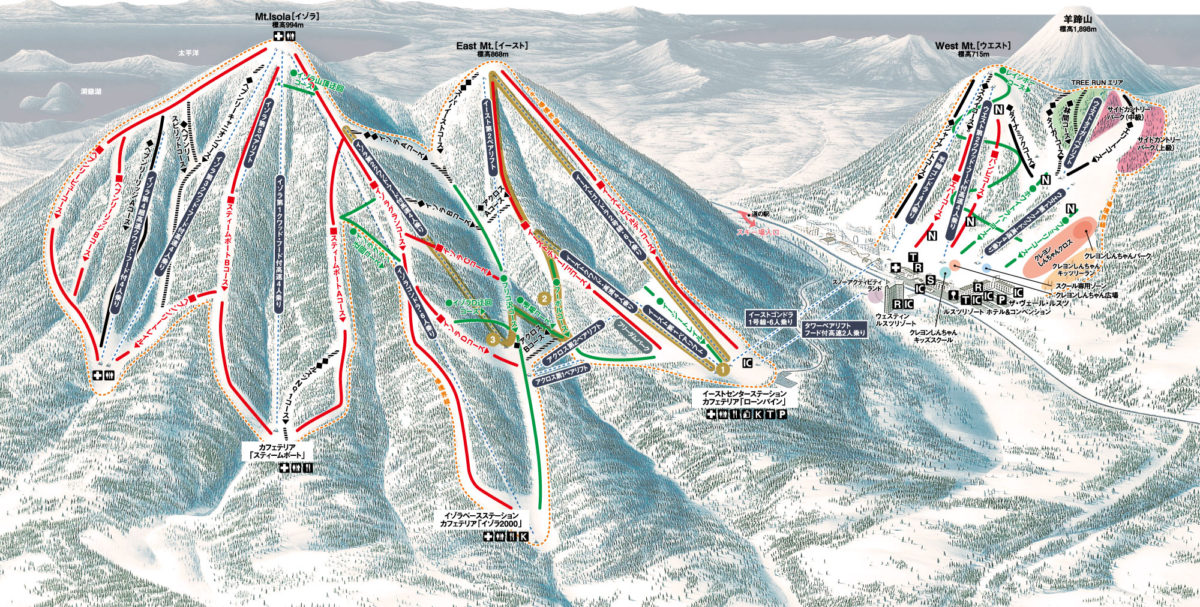
Each of the three mountains has its own unique characteristics. Let's start by getting an overview.
West Mt. is located in the far right of the map, with Mt. Yotei in the background. It's easily accessible in front of the hotel and is a compact mountain. The lower part has a gentle slope, making it popular with families and beginners, but there are also areas where you can enjoy steep single runs and tree runs. It is also open at night, so you can enjoy powder snow at night.
East Mt., which leads to Mt. Isola (see the far left of the map), is accessible by gondola and offers long skiing distances. Starting from the gondola summit station, there are courses along the ridge with great views, courses with medium slopes and easy skiing, as well as the steepest slope in Rusutsu, at 40 degrees
Located at the very back of the ski resort is Mt. Isola. Starting with a 3,500m long run, there are a variety of slopes, including ridge runs and streams that weave through them. This is the area that powder-seeking skiers flock to
Furthermore, all areas outside the ski resort boundaries (dotted yellow lines) are open to the public as a self-responsibility area. The slopes vary in orientation, inclination, density of trees, and terrain such as streams, chutes, and mudflats. These topographical conditions, along with the changing snow conditions every day, make this a place you can enjoy every time you visit
We asked the riders about the terrain and weather conditions
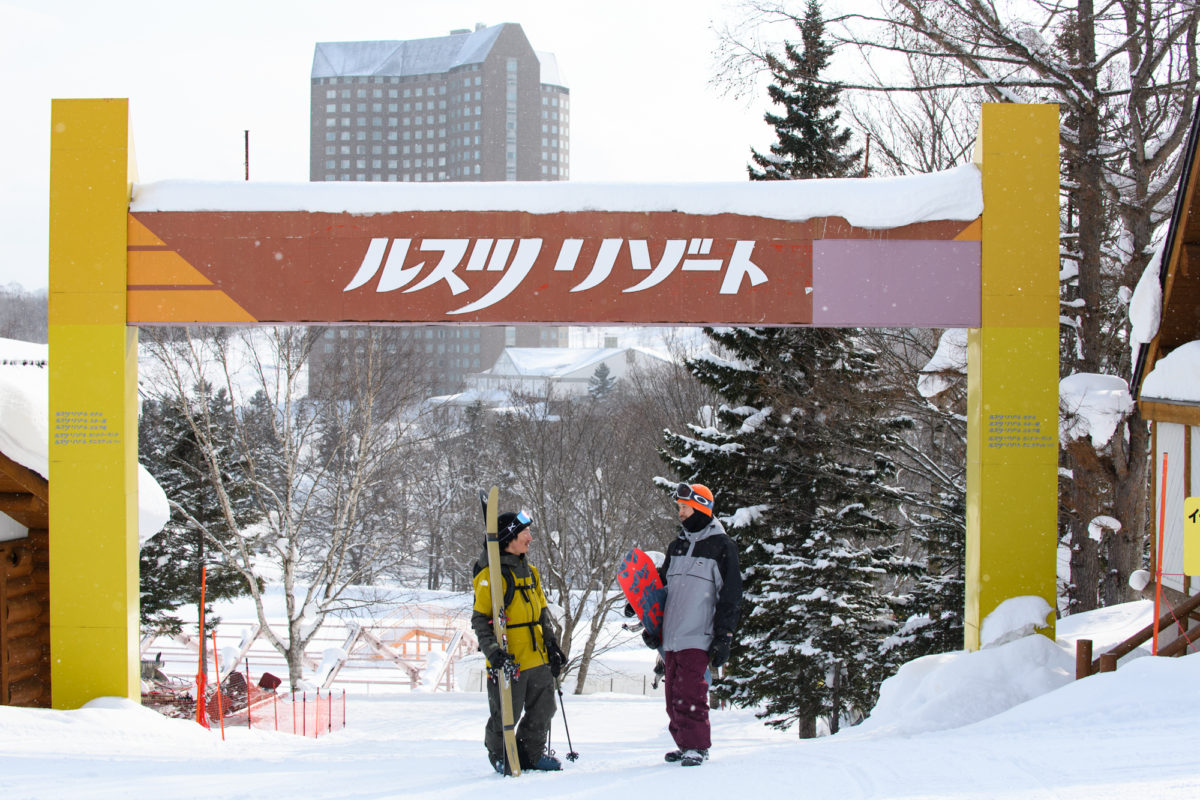
Toru Kawaguchi (left) lives in Rankoshi, and Masato Yoshida (right) lives in Kutchan. They live close enough to Rusutsu to visit frequently
Masato Yoshida has been skiing in Rusutsu for many years and is familiar with the weather conditions and topography here. He often mentions that when it's raining or windy in Niseko, Rusutsu is calm. This doesn't seem to be due to the area's iconic Mt. Yotei
"The ski resort is generally made up of streams, so snow tends to accumulate on the south and east sides due to winds blowing from the north and west. Snow tends to accumulate particularly easily at the bottom of streams, so you can choose from a variety of slopes depending on the snowfall and wind conditions.
Also, when strong cold air from the northwest moves towards the Pacific side, it dumps a lot of wet snow on Niseko, but the amount of snow that falls changes on either side of Mount Yotei. When cold air moves in from a slightly western direction, it's easier for a lot of snow to fall on Rusutsu."
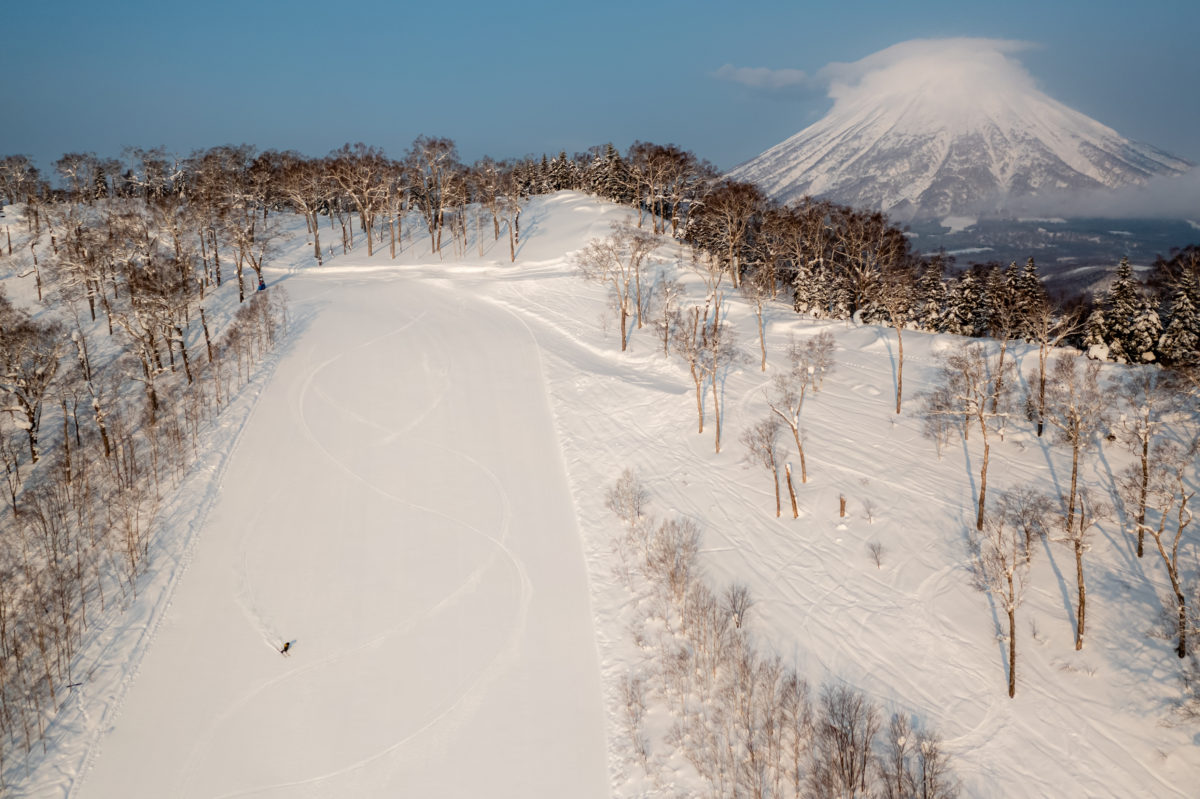
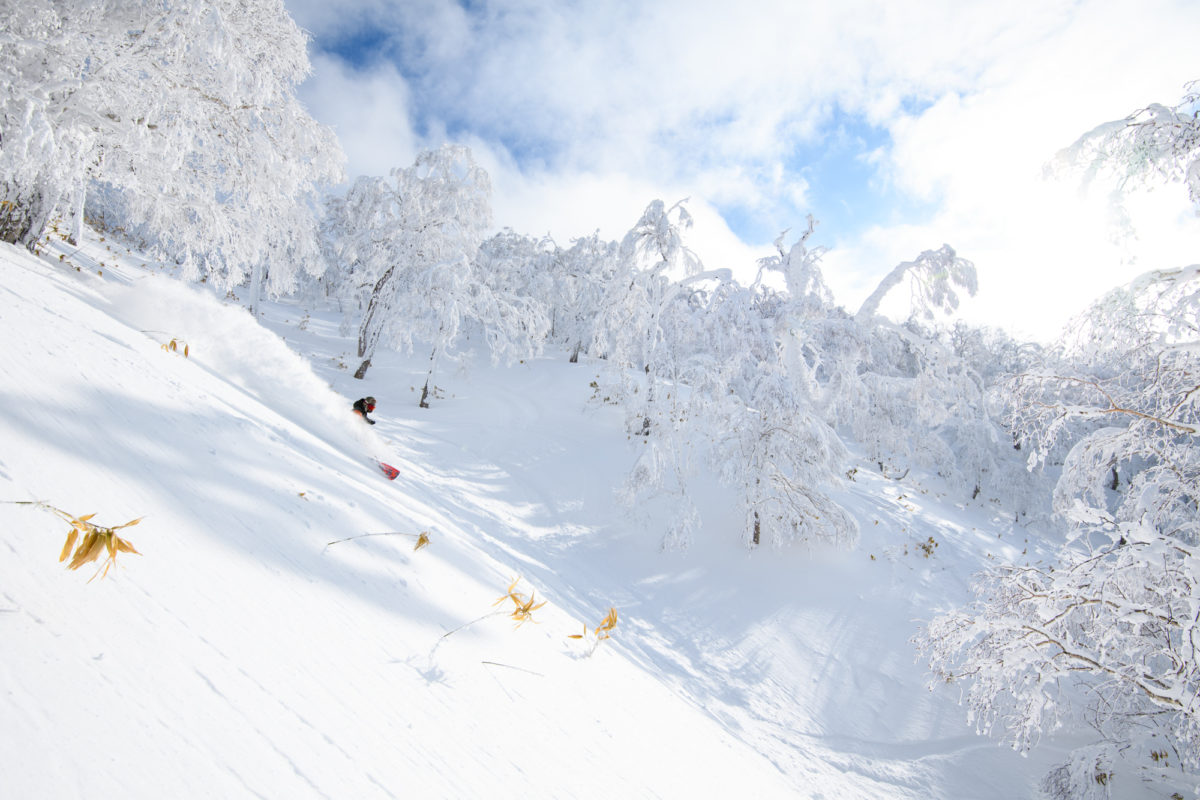
This tree area is located between East Mt. and Mt. Isola. It is on the northwest face of the so-called Sugar Bowl. Because it receives little sunlight, it is easy to keep good quality snow. Riding surrounded by frost-covered trees is an exceptional experience
Meanwhile, Toru Kawaguchi also mentioned the weather
"Rusutsu is more heavily influenced by the Pacific Ocean side than by the weather on the Sea of Japan side. When cold air from the north flows into Niseko, it's a place where the air from the south and the moist air from the north sea collide. Although it's only about 30km away in a straight line, the conditions are a little different to Niseko.
Rusutsu's elevation isn't that high, so it has the advantage of being more likely to have sunny skies after it snows.
Also, the live cameras installed in the Isola area clear the snow at 4pm, so it's a good idea to check them in the morning to see how much snow is falling."
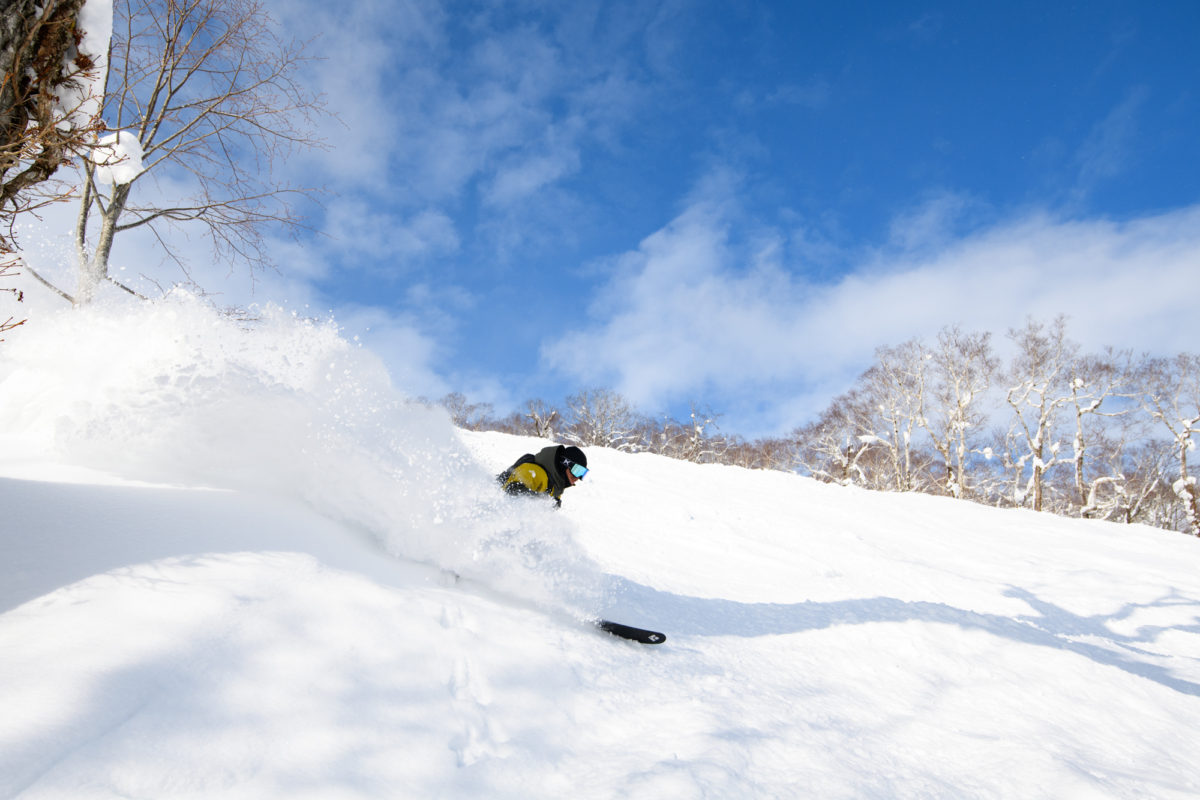
This is located about halfway along the Heavenly Canyon course at Mt. Isola. The ungroomed course along the stream is prone to fresh snow accumulation due to the wind. Because of its popularity, the lines are easily filled, but the sides of the course tend to be left untracked
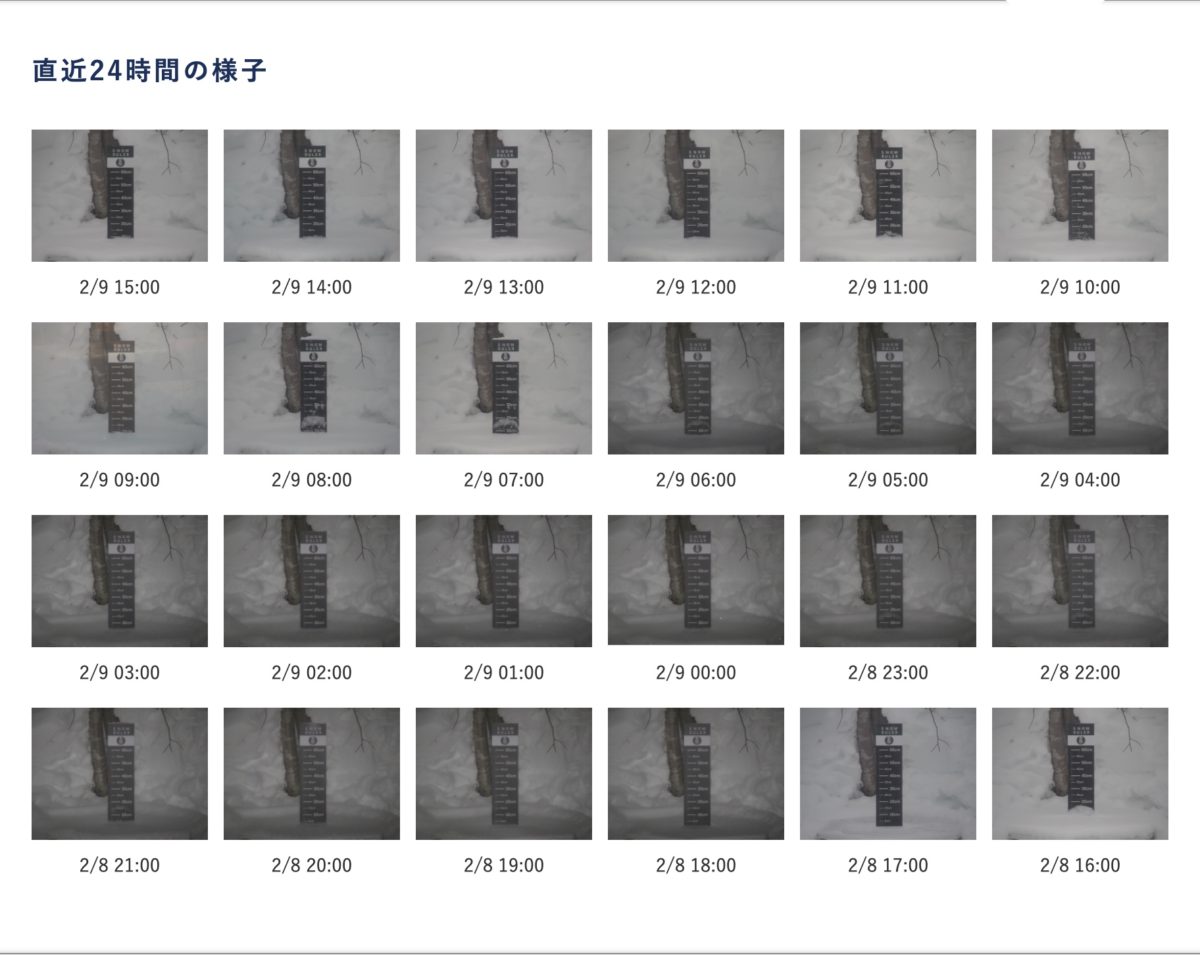
The 24-hour snowfall camera installed next to the Steamport cafeteria on Mt. Isola allows you to check the snowfall patterns on an hourly basis. https://rusutsu.com/live-mountain-cams/
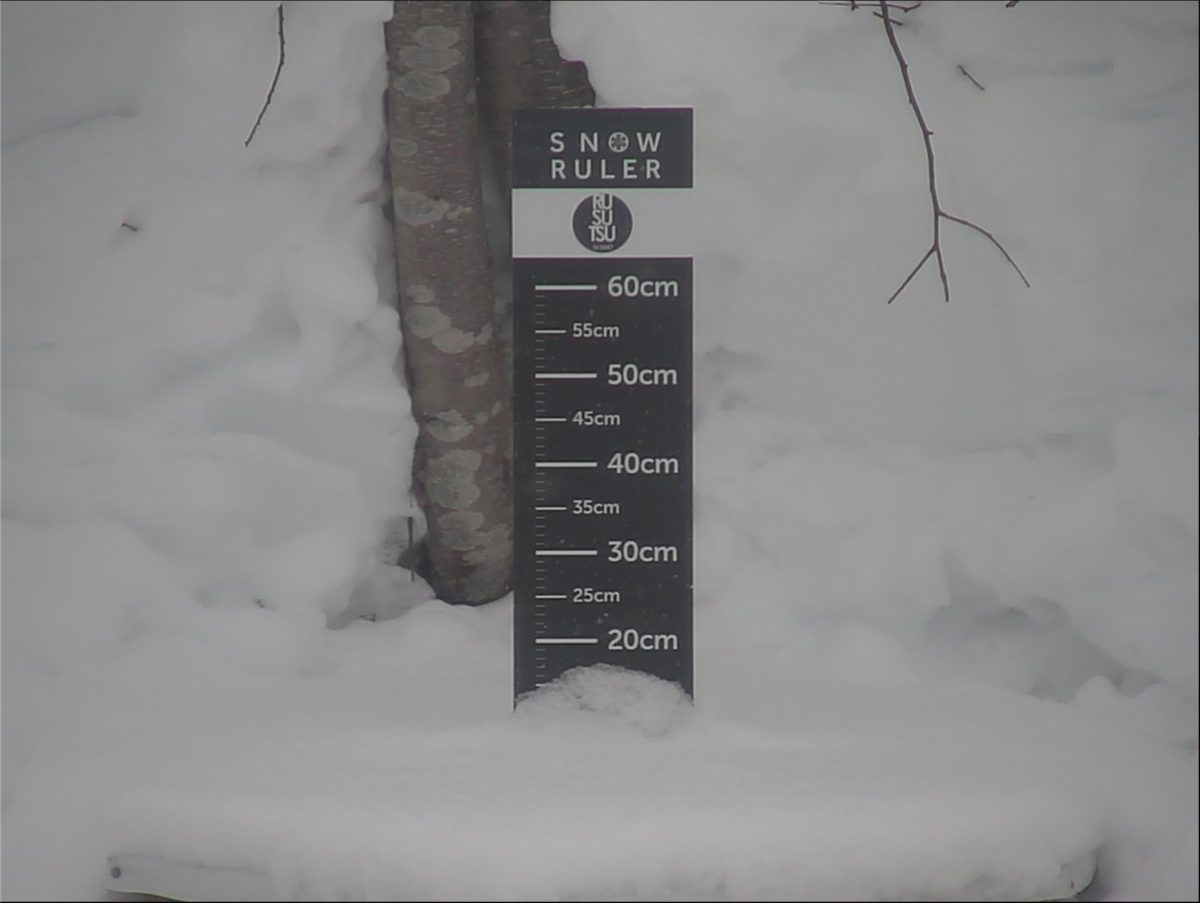
As you can see, you can check the snowfall. You can see that there is about 10cm of snow
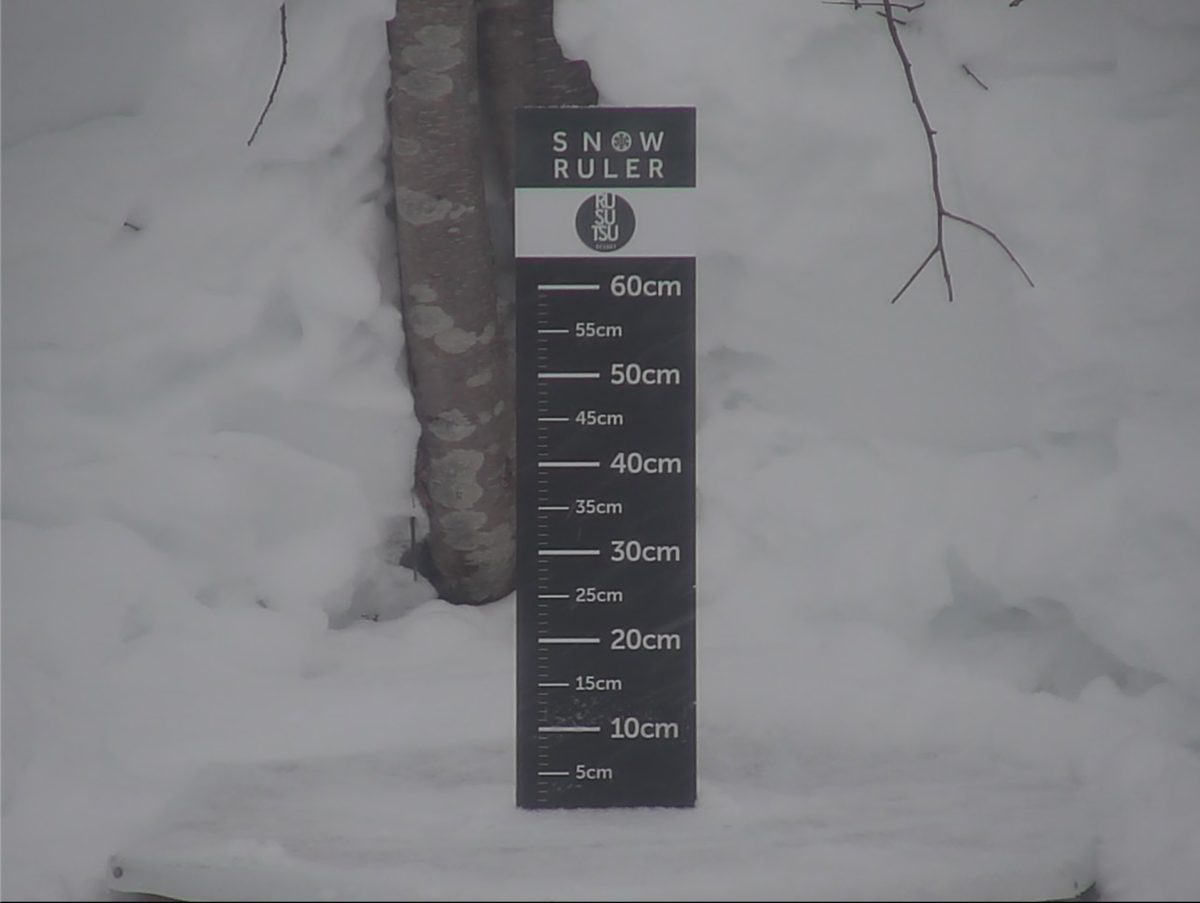
Every day at 4:00 PM, the snow accumulated on the snow gauge is removed. This system allows you to visually see the amount of snow that has accumulated from the time the facility closes until the next morning
Recommended areas and points by the two
skiers: The ungroomed courses and the tree areas are interesting.
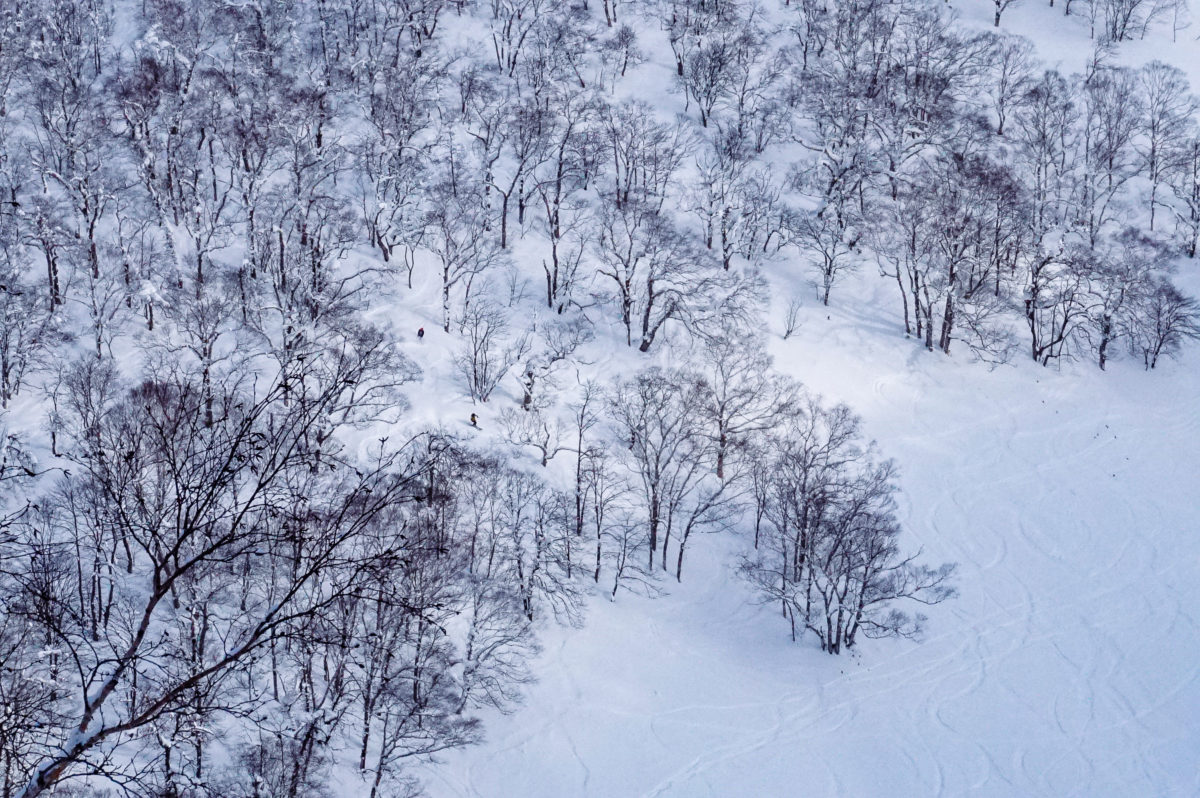
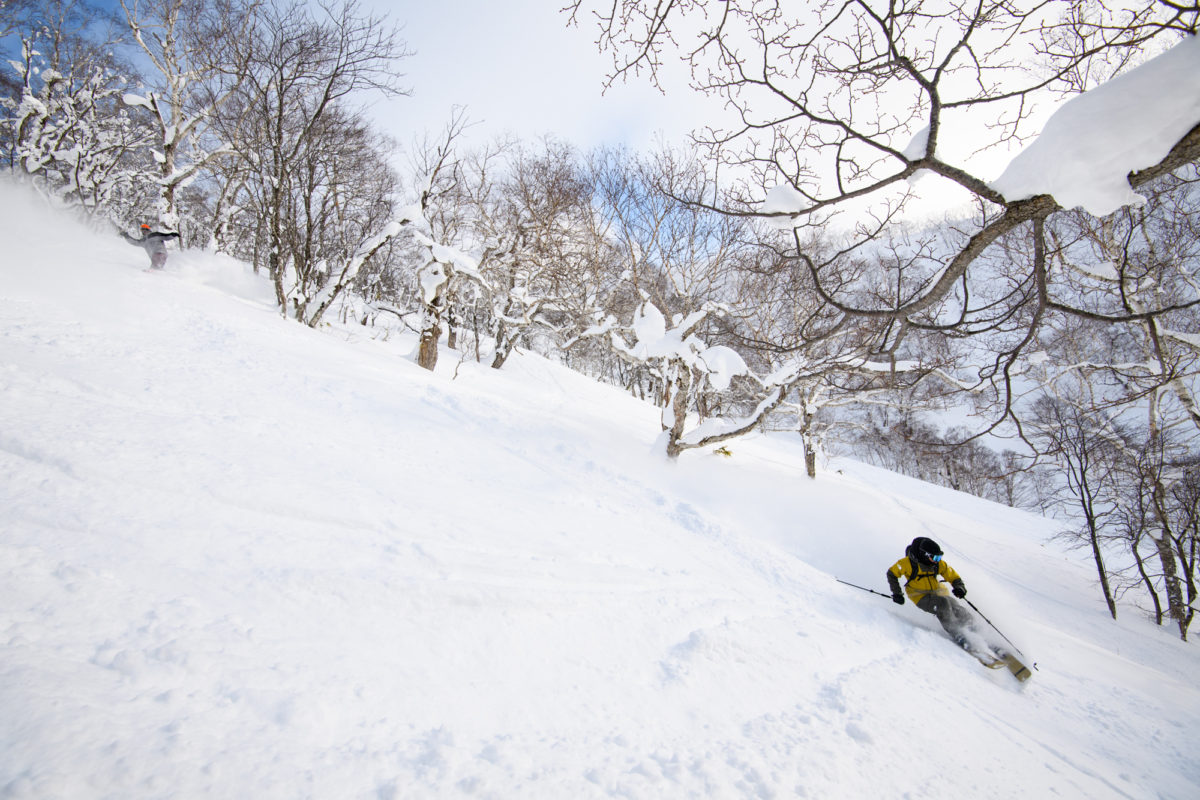
The top two photos are of the northwest face of the Sugar Bowl, a tree area between East Mt. and Mt. Isola. The density of the trees is clearly visible from the opposite slope (photo above). When you actually ski down the slope, the spacing between the trees varies depending on the location. Find the surface that is easy to ski on
What is the usual routine for skiing at Rusutsu? We asked each of them about their routine. First up is Masato Yoshida
"I often ski up Isola. I really like the area around Heavenly because the trees are spaced just right, making it easy to ski, and there are large mash and logs along the sides. The Isola A, B, and C courses on the north slope between Isola and East are located there. They have a nice gradient, packed snow, and no steps where the snow meets, so on days when there's no snow, it's fun to carve along the terrain. Also, powder-seeking and advanced skiers often head to Isola first, so they often skip the East slope. But the tree area between Vivaldi and Tignes on East has a gradient and good terrain. Not many people go there at first, so it's a hidden gem worth trying."
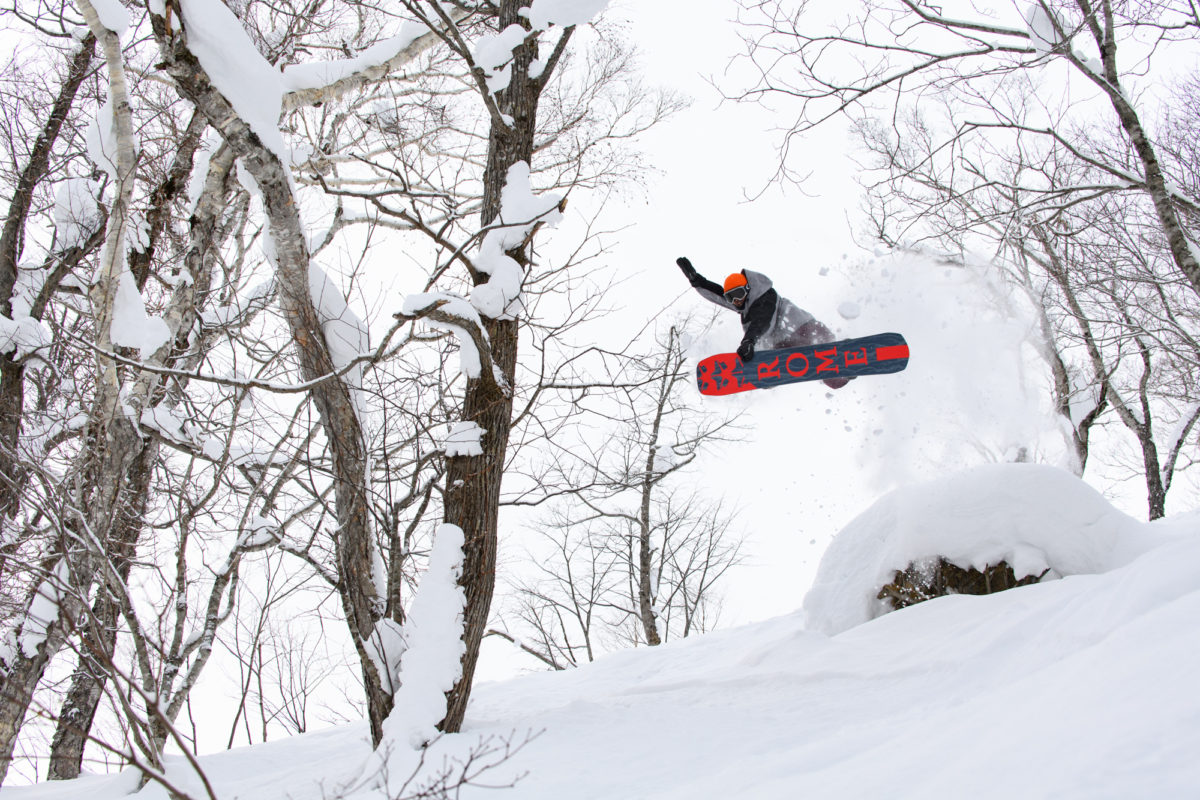
The tree area between Vivaldi and Tignes on East Mt. This treasure trove of terrain is comparable to the tree area on Mt. Isola, and is dotted with large and small mash trees
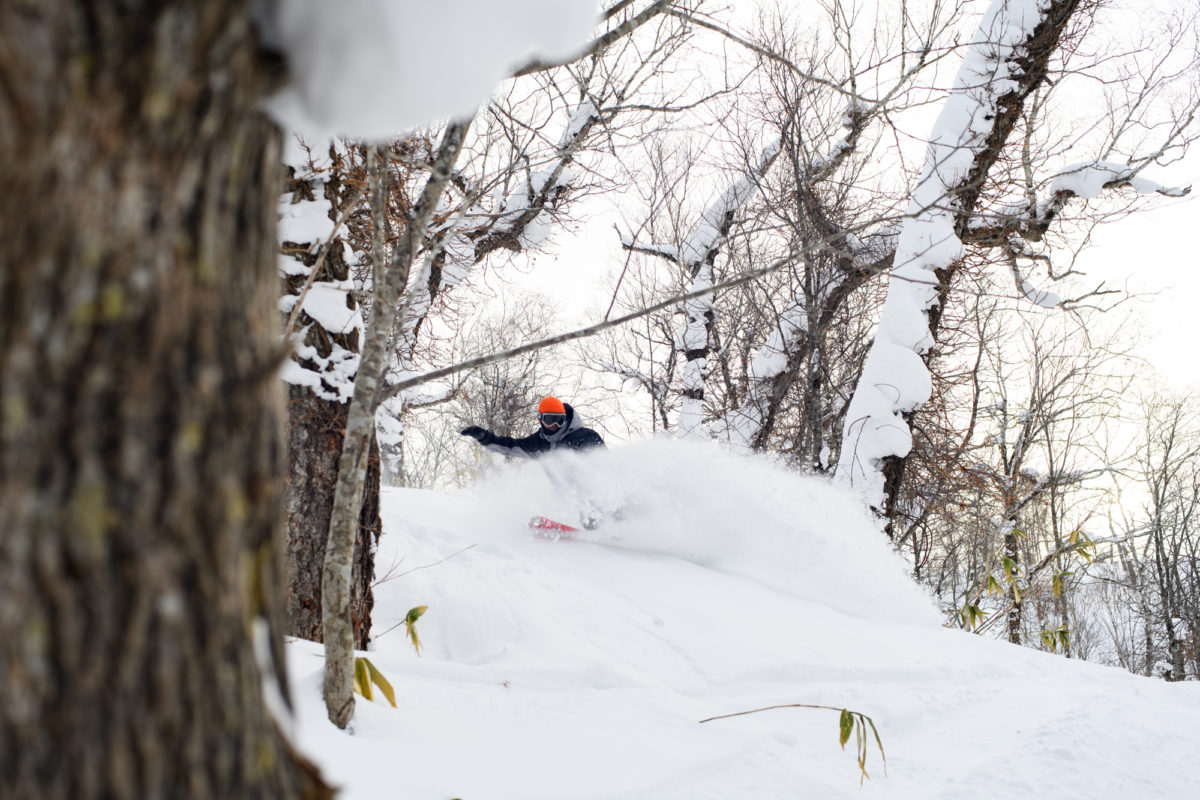
The tree area next to Heavenly Spirit on Mt. Isola. The mountain at the back of the ski resort is less than 1000m above sea level, but the snow conditions are excellent due to the north slope
Toru Kawaguchi shares the same opinion
"If we had to choose a place, I'd have to go to Heavenly. The trees are spaced far apart and there's a wide variety of terrain. The streams have a variety of curves, some deep and some shallow, and in some places there are pillowcases, so there's a whole range of things to do. As Asato said, East is fun because there are lots of lines that no one else aims for. There are also logs and mushes here and there that are easy to jump over, so it's fun to link them together into one line. This can be said for Rusutsu in general, but no matter where you enter the tree area here, you can easily return to the course without any major worries, so I think it's a great ski resort for enjoying tree runs."
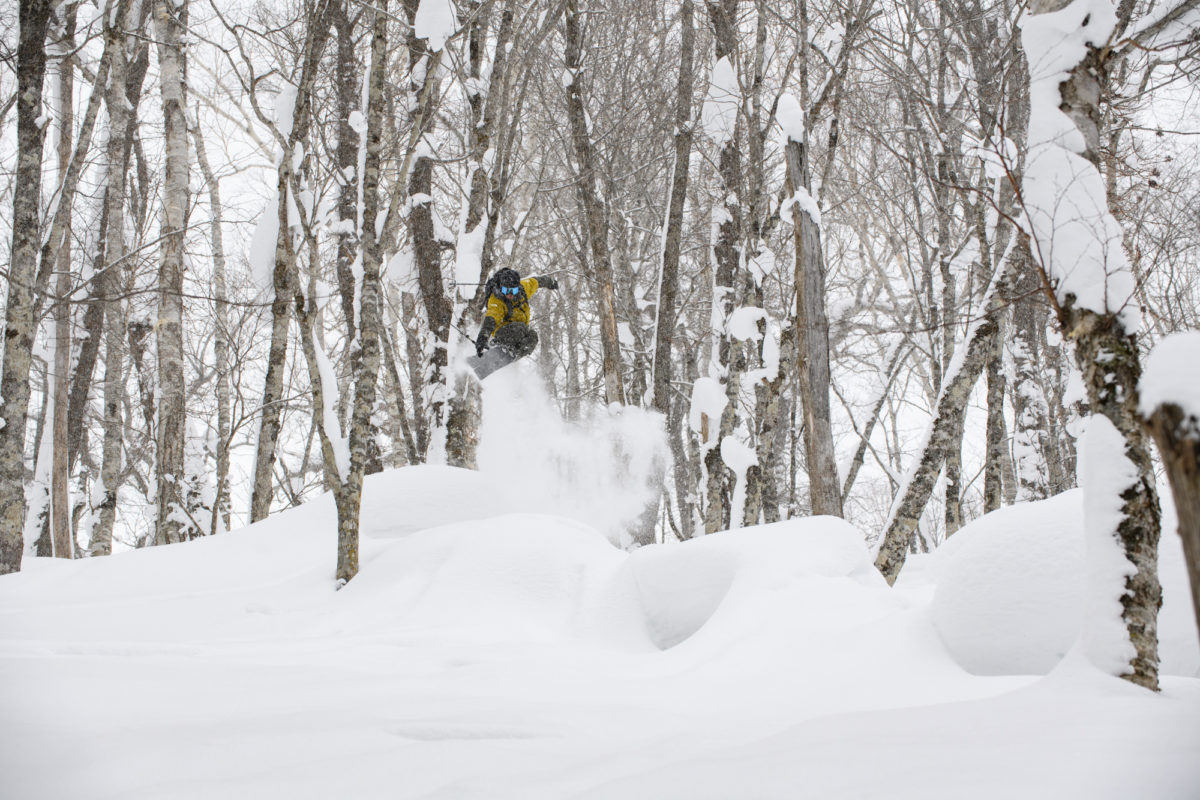
This is also the tree area between Vivaldi and Tignes on East Mt. The trees that fell during the summer have piled up a lot of snow, making it a great place to jump or hit. It's also fun to not only ski on the powder, but also to look for skis that will add some action
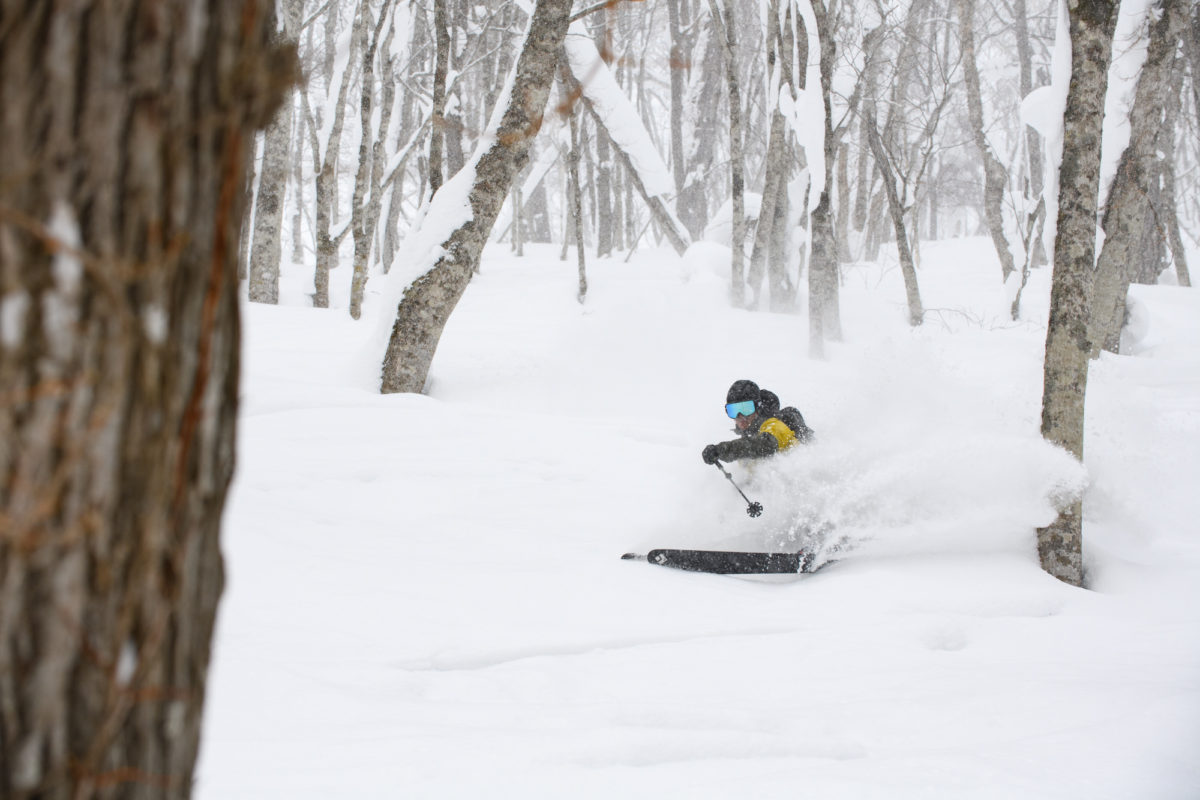
The trees in the tree area are spaced at different intervals. Wider areas make it easier to pick up speed, while narrower areas require more control. The feeling of racing through nature is incredibly fun
The widest tree run and slope variety in Japan in the self-responsibility area
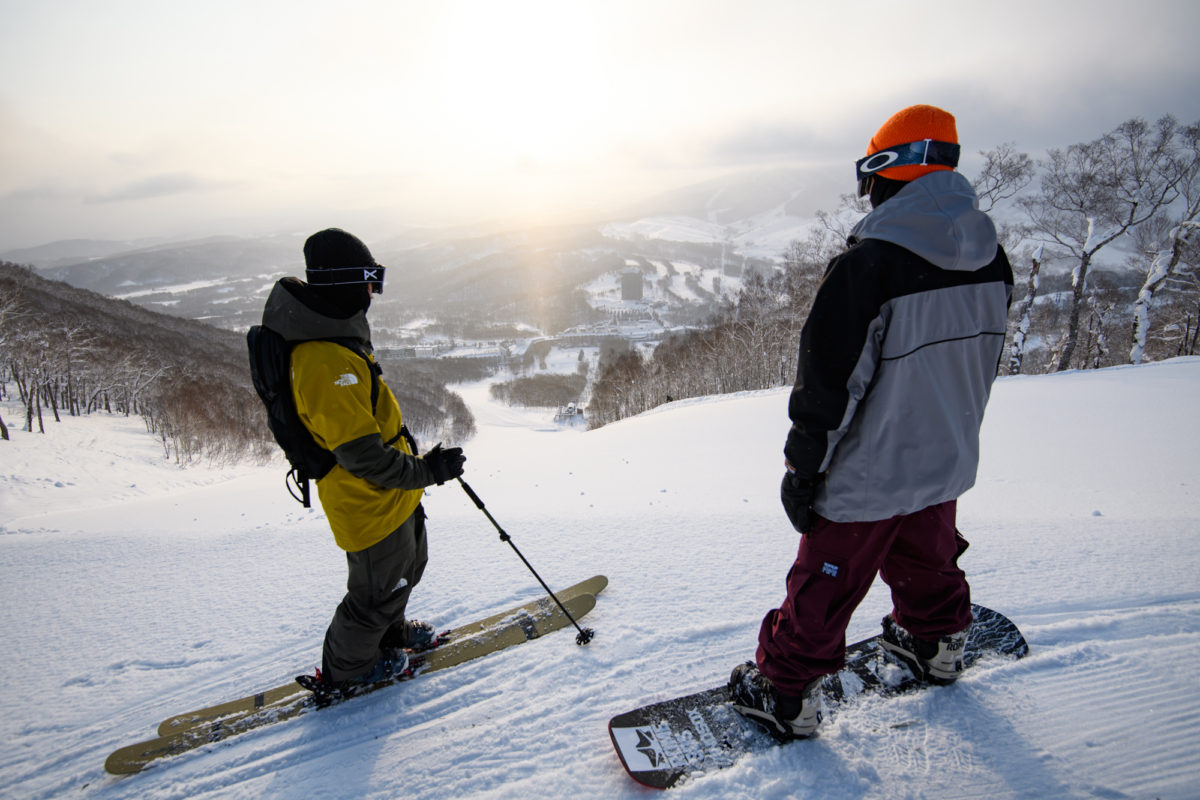
I spent three days skiing after the two of them. The ski resort is so vast that you'll never get bored.
The runs spread across the slopes of three mountains face in directions other than west, so the location of the snow accumulation changes depending on the snowfall conditions and wind direction and strength. Still, considering the run distance and slope composition, the best way to conquer Rusutsu is to start from East Mt. and Mt. Isola.
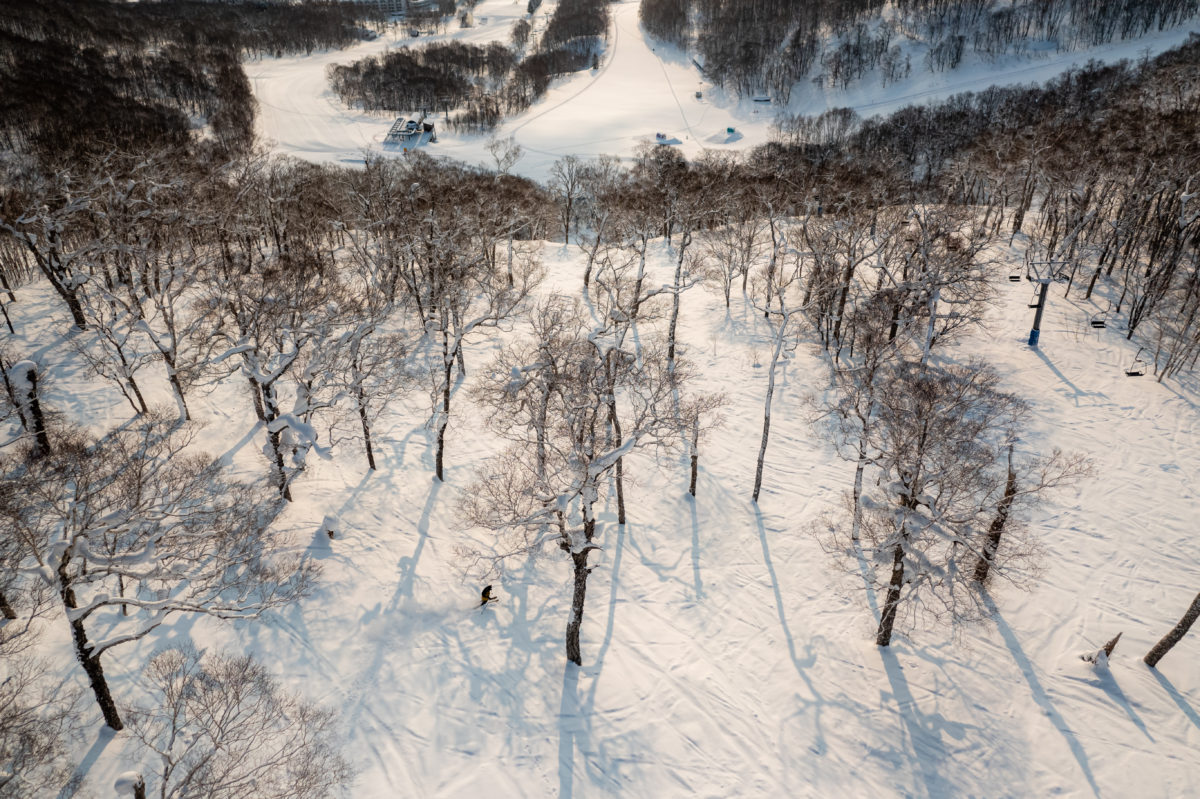
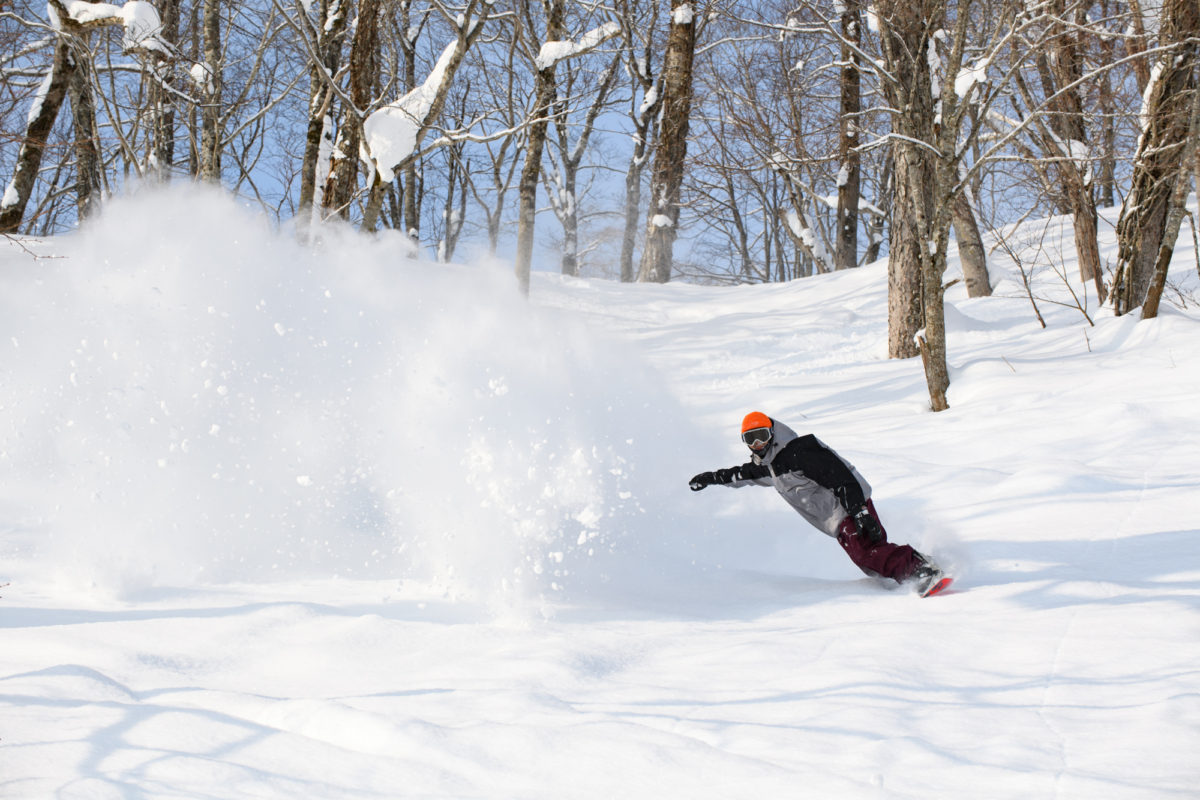
The top two photos are both from the tree area of West Mt. The distance is short, but the trees are sparsely spaced, making it easy to slip. It's the perfect mountain to get used to tree running. Of course, the snow quality is excellent
The variety of slopes in the tree areas of these two mountains is almost endless. It's easy to see why filmmakers from Japan and abroad choose Rusutsu as a filming location. There are many photogenic locations, including open runs, technical slopes with tight tree spacing, mashes formed when snow piles up on fallen trees, and logs with snow on giant trees. The slopes also vary in direction and inclination, so there are a wide range of location options depending on the conditions. This is a major advantage that other ski resorts don't have
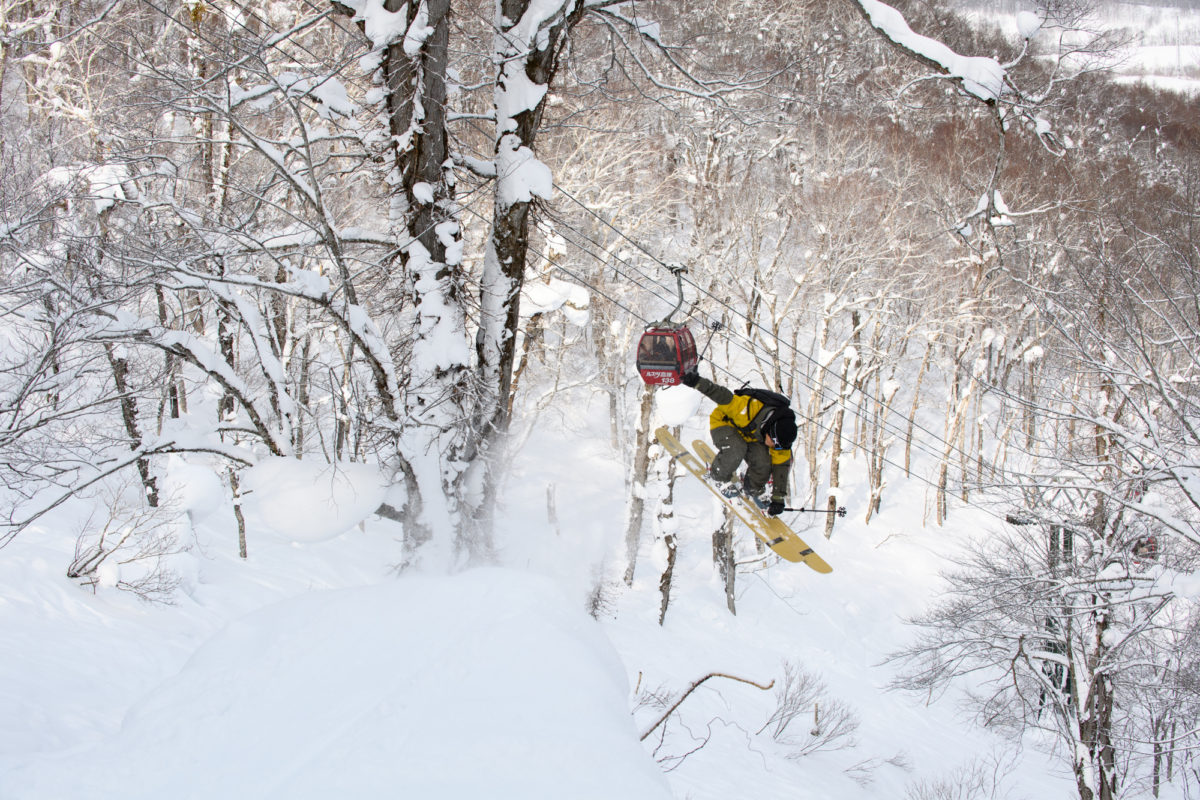
The mash point could be seen from the East Mt. gondola. The trick is executed by an experienced professional who can determine the landing point on the first try and adjust the speed accordingly
As the two of them mentioned, the treed areas (areas at your own risk) within the ski resort boundaries at both East Mt. and Mt. Isola are conveniently designed so that if you simply ski along the slope's contours, it's easy to find your way back to the trail. There are warning signs at no-entry ropes and potentially dangerous areas, so by following these instructions, you'll rarely get lost even if you're entering the treed areas for the first time. Also, the hooded lifts have course maps, so you can check where you've skied while riding. If
you're visiting for the first time, start by skiing along the treed areas right next to the trails. Once you've gotten a feel for the terrain and the location, gradually expand your search. There are countless points to explore in the treed areas. It's also fun to find a slope that suits you that day based on wind direction and snowfall. The thrill of finding a slope that suits your preferences based on terrain and snow conditions is many times more enjoyable than skiing on a set trail. Above all, you can fully experience the thrill of skiing or snowboarding in nature.
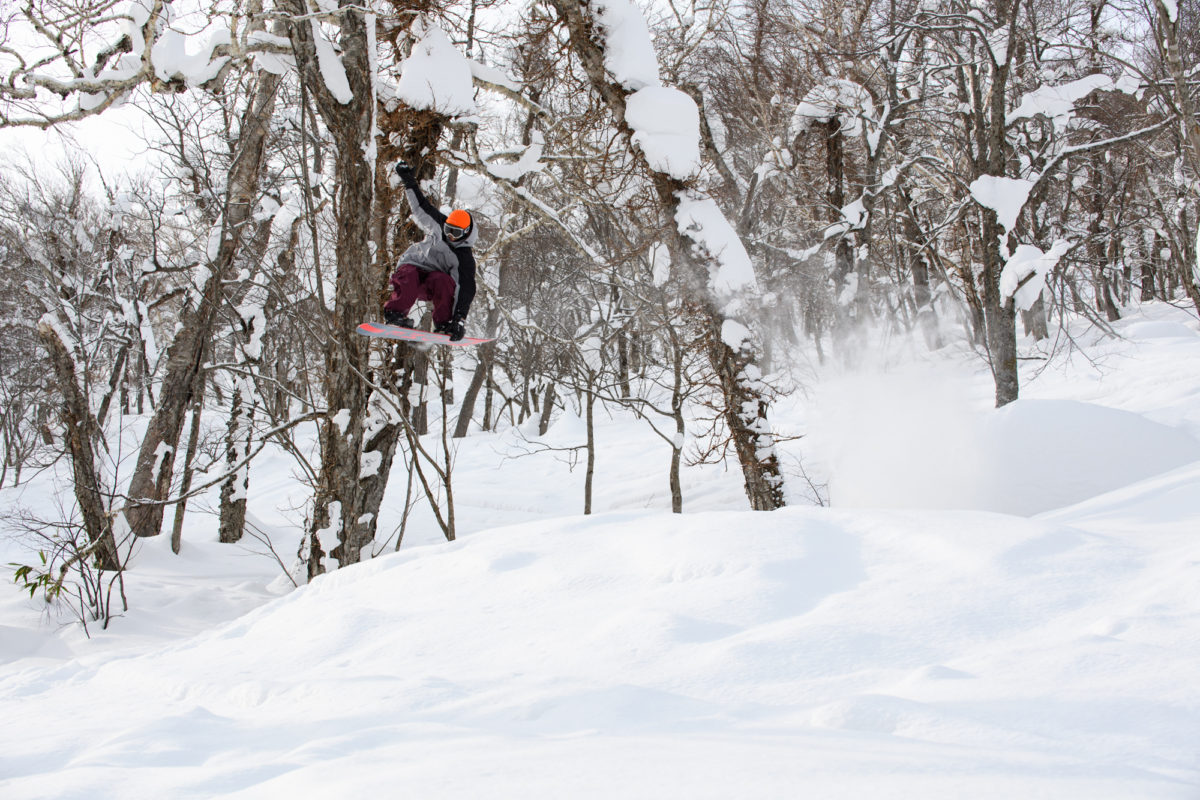
East Mt. (East). I found this mash at the bottom of the tree run area that leads to the Furikozawa course. He did such a clean 360 that even the skiers on the course stopped to watch him perform
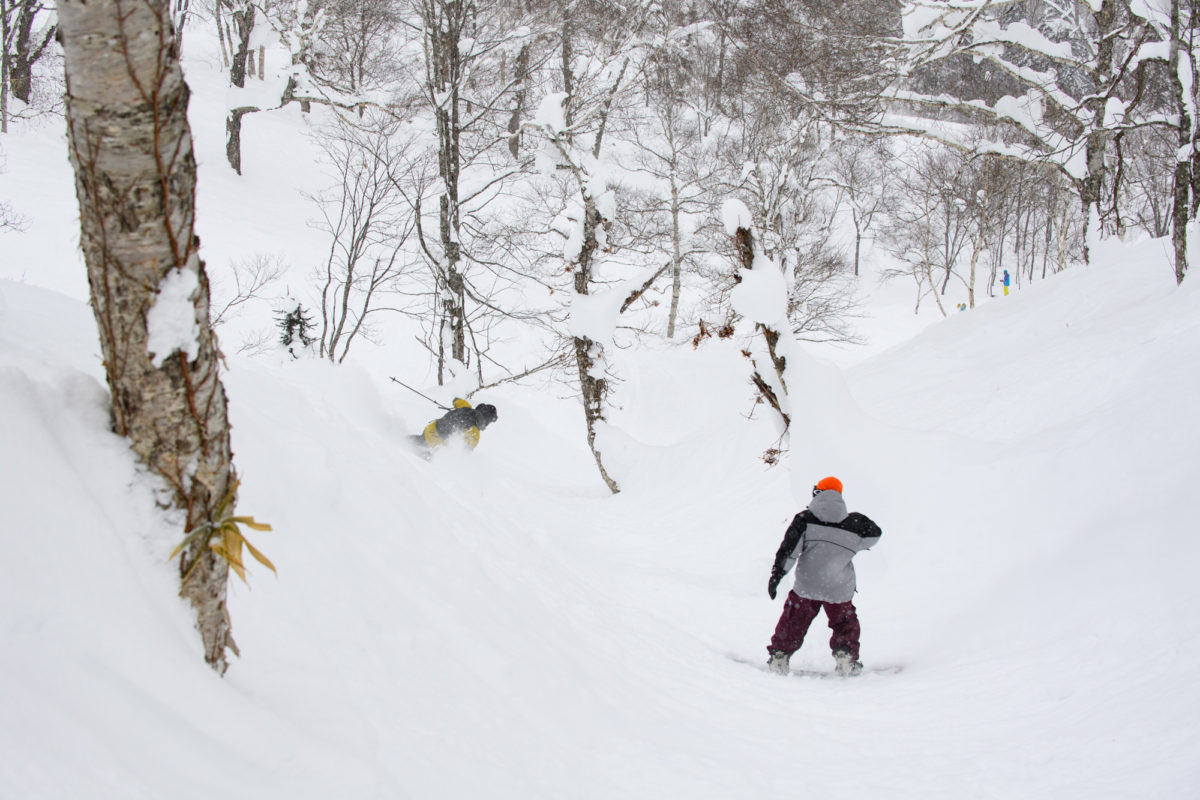
Mt. Isola, a stream terrain in the forest between Heavenly Canyon and Spirit. It's like a natural half-pipe. There are other stream terrains in this area, so you can choose from a variety of shapes and slopes to enjoy
While the tree areas are appealing, the trails on East Mt. and Mt. Isola are particularly interesting, with many sections showcasing the terrain. The Furikozawa Trail, with an average gradient of 7°, located between East Mt. and Mt. Isola, is particularly appealing, and is a waste to simply ski down. The trail runs along the stream, and there are wall formations on both sides, and the key is to connect these. Some sections are designed to allow for artificial kicks and jumps, while others have banked shapes that make turns and landings easier. Even on gentle slopes where it's difficult to pick up speed, using these features can increase speed and make the trail many times more fun. The lower part of the Heavenly Canyon Trail offers a similar experience, with double jumps and large walls that are perfect for landing. There are plenty of slopes for freeriding
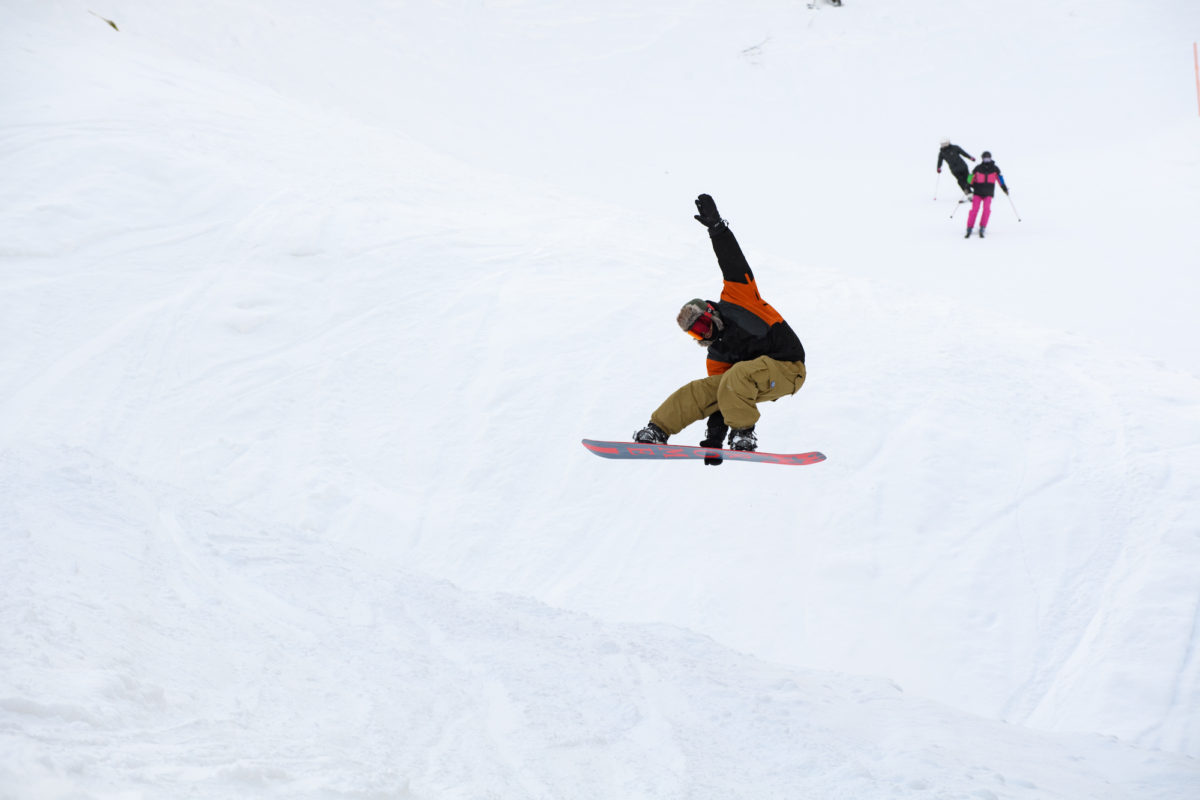
Mt. Isola, lower part of Heavenly Canyon. There is an undulating area where you can make a double jump off the trail. If you look around, you will see this kind of terrain everywhere
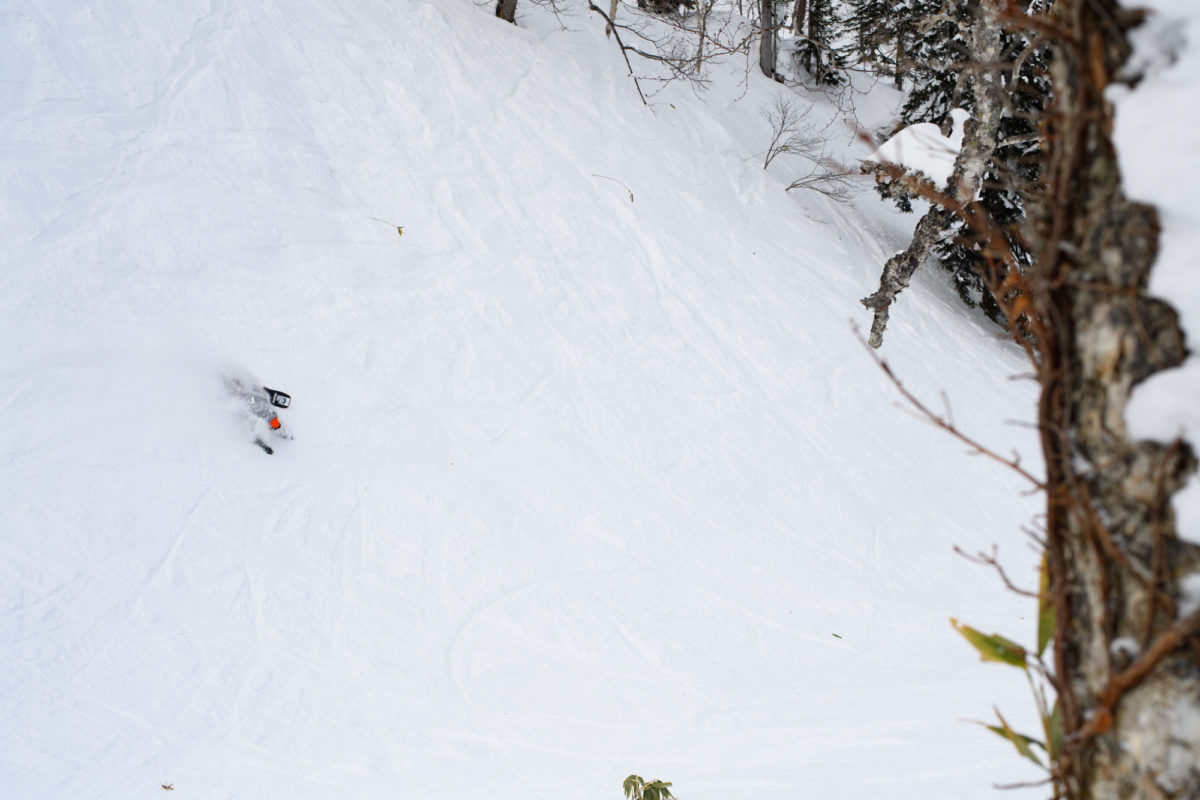
This is also Mt. Isola, at the bottom of Heavenly Canyon. Make a bold turn on the big wall on the skier's left. You can fly, hit it, or draw a turn
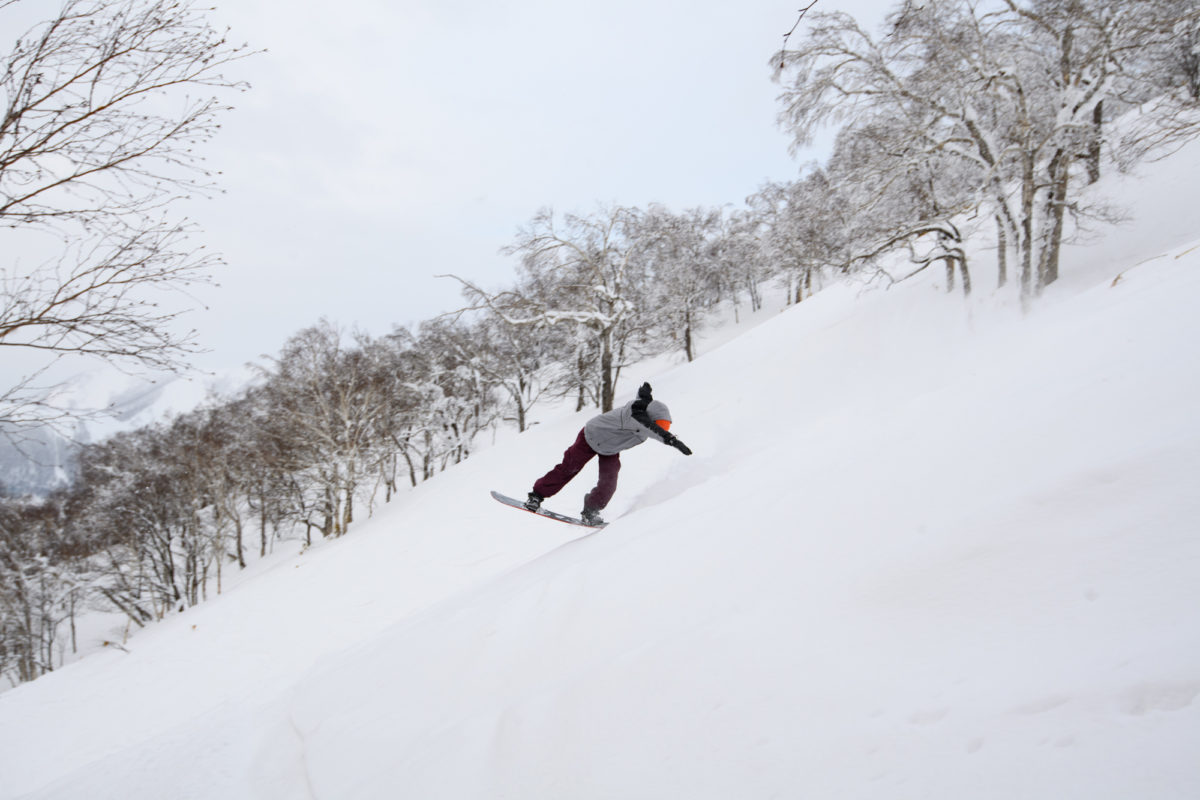
With a variety of terrain, you'll be inspired to try new moves. Hone your sense of sliding down the entire mountain and have fun
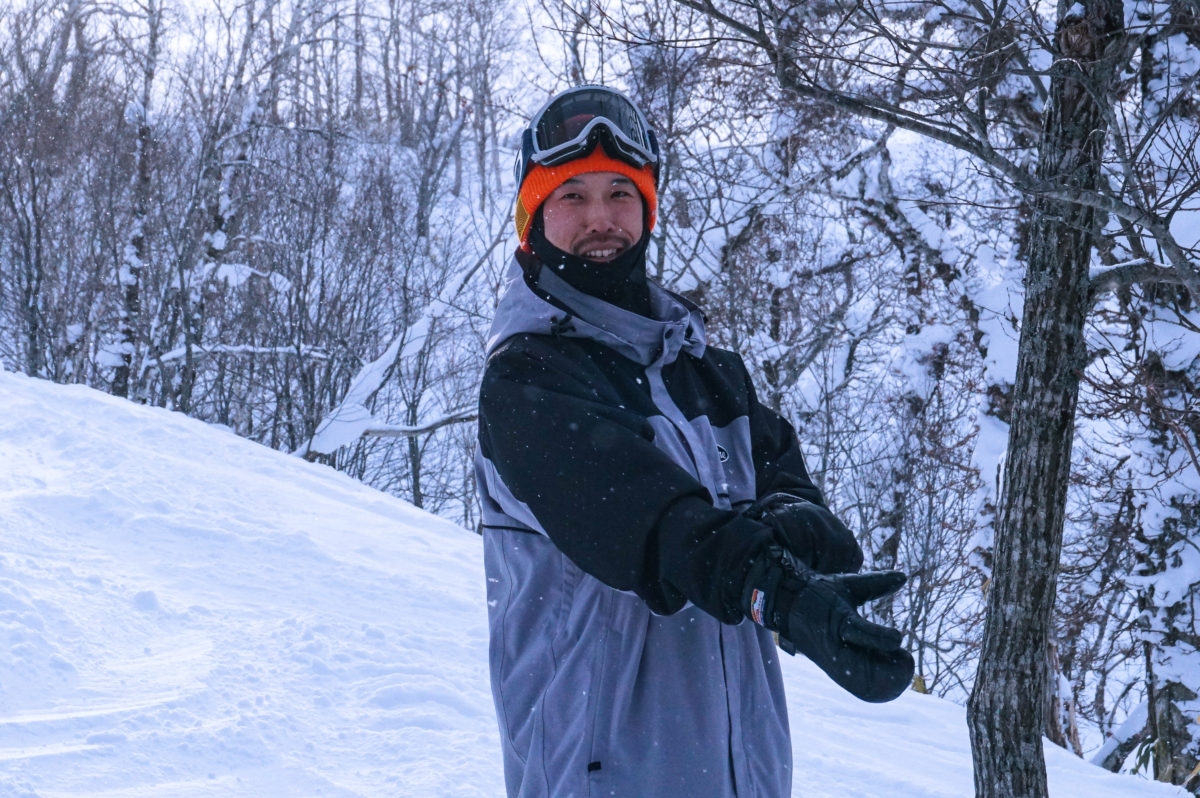
Yoshida
Born in Iwamizawa, Hokkaido in 1987. Currently living in Kutchan, Hokkaido.
He started snowboarding at the age of 9 and aims to compete in the Olympics in halfpipe. He won the JSBA Halfpipe All Japan Championship and after obtaining his professional qualification, he also competed with TOYOTA-BIGAIR. Now, with 25 seasons of snowboarding under his belt, he is active in all fields as a member of the film crew "Underline".
Sponsor: ROME sds, ANDSOX
Instagram: @asato_yoshida
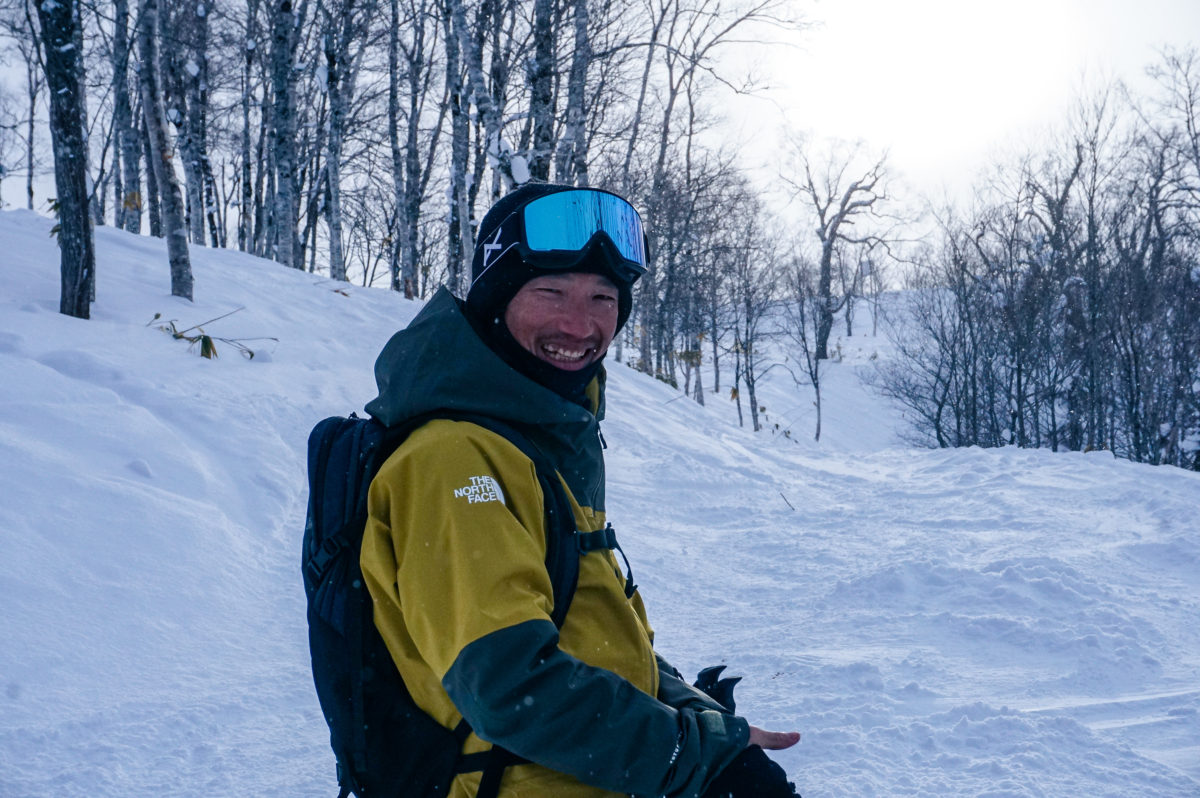
Tetsu Kawaguchi
in Hyogo Prefecture in 1984. Lives in Rankoshi, Hokkaido.
He has been active in freestyle competitions since his teens, and has also left behind a large number of videos on
"mighty_jamming_film_works Currently, as a THE NORTH FACE athlete, he is devoted to product development and promotional activities, while continuing to work in many areas, such as developing skis that embody his own image with VECTOR GLIDE.
Sponsors: THE NORTH FACE, vector glide, hestra, anonoptics, curristick
Instagram: @tetsukawaguchi
Photo by Takahiro Nakanishi , Rusutsu Resort.
Text by Takeru Ogawa.
Movie by Naoki Takahari.
Information
Rusutsu Resort
Address: 13 Izumikawa, Rusutsu Village, Abuta District, Hokkaido 048-1711
Contact: Tel. 0136-46-3331 (Main)
Social Media: Instagram / Facebook / Twitter