

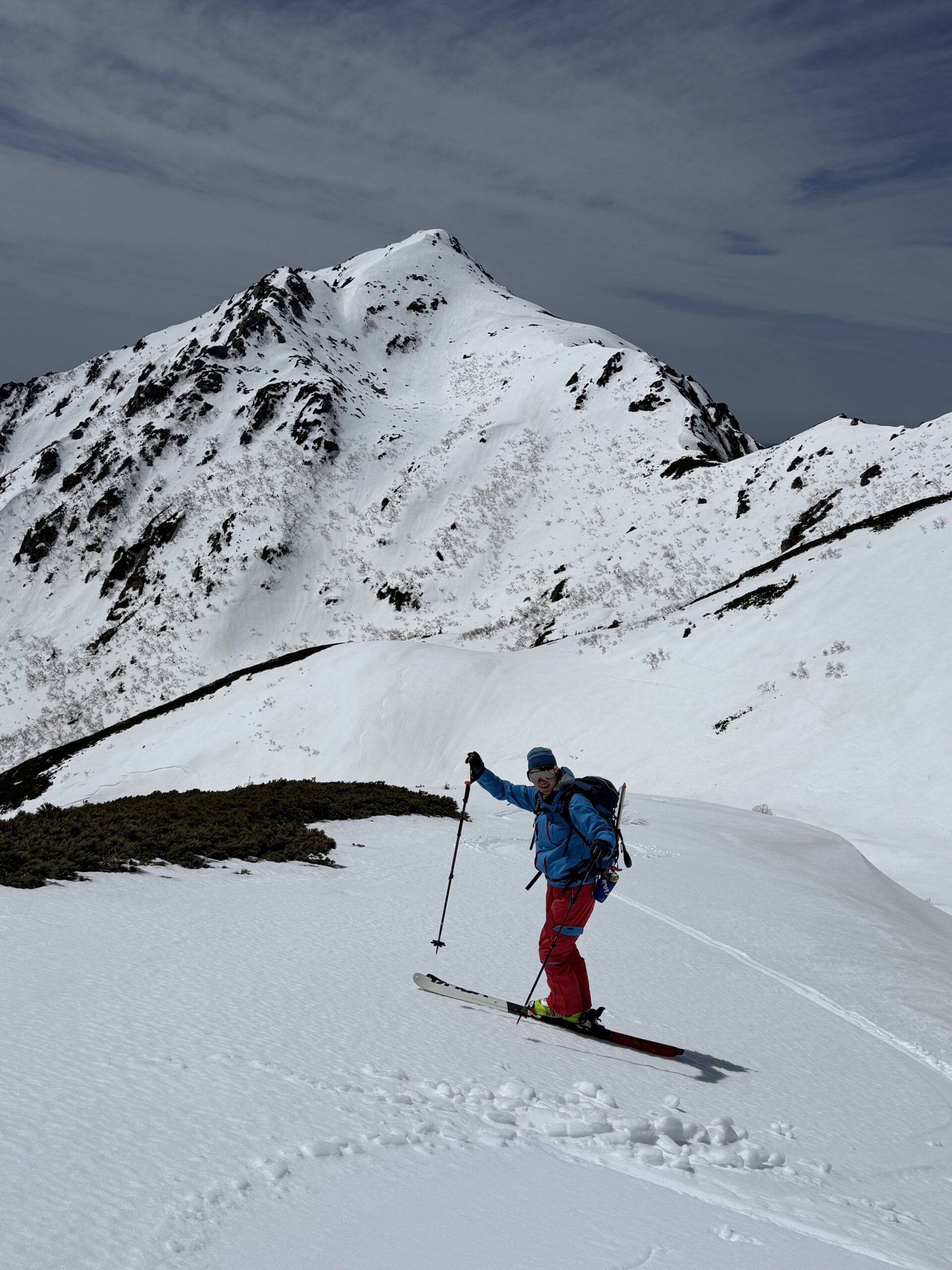
Spring backcountry skiing typically peaks around Golden Week. From the classic Tateyama to Gassan and Chokaisan in Tohoku, Yake-dake and Norikura-dake in the Northern Alps, and Senjojiki Cirque in the Central Alps, there are always exciting granular snow waiting for skiers even after the peak season ends. However, this season's snow conditions are different, and it seems to be melting much earlier than usual
On April 12th, I went to the Senjojiki Cirque on Mt. Kiso-Komagatake in spring
This past Sunday, April 12th, I went to Senjojiki Cirque on Mount Kiso-Komagatake in Nagano Prefecture
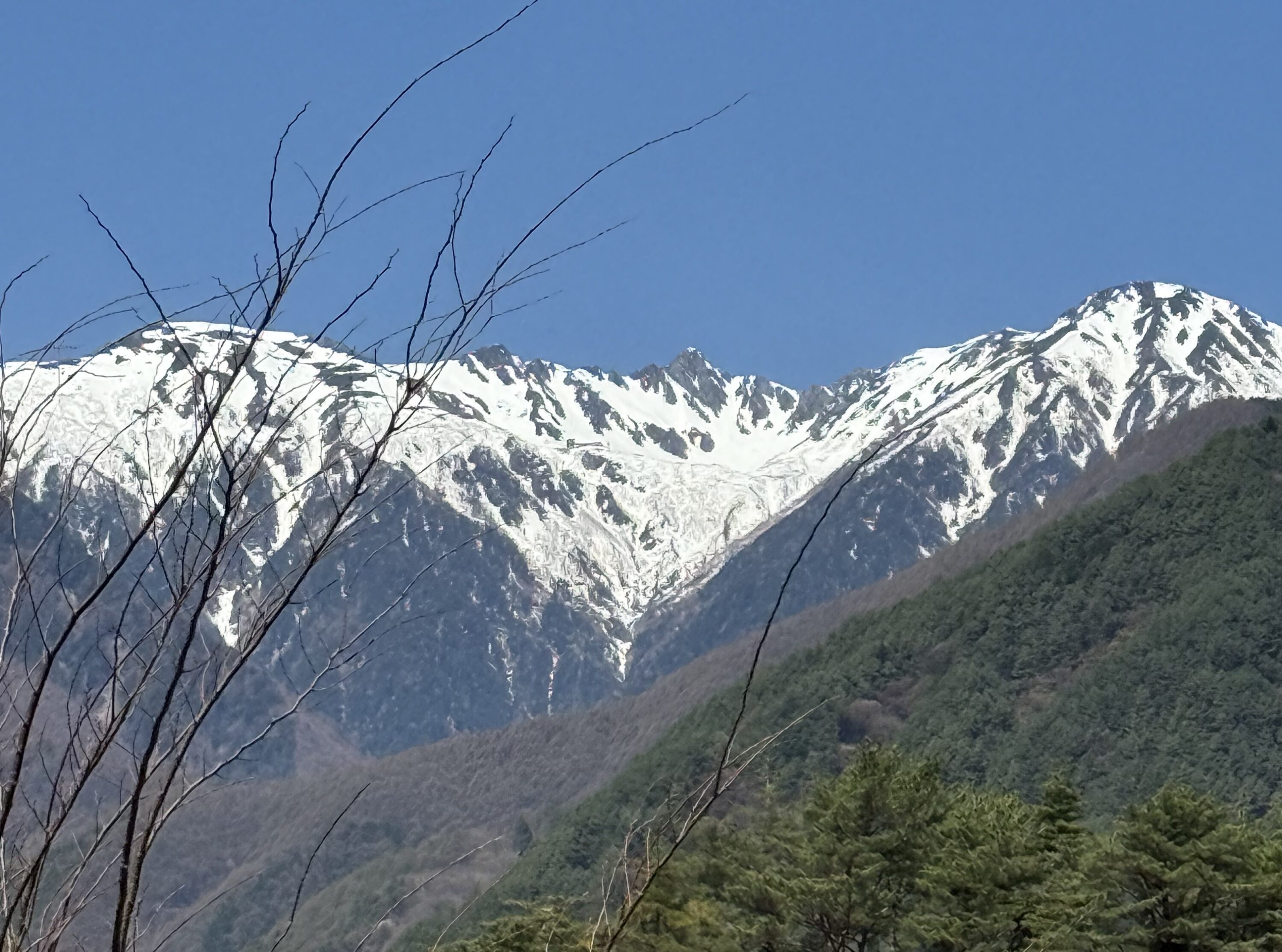
I took the first cable car up in the morning.
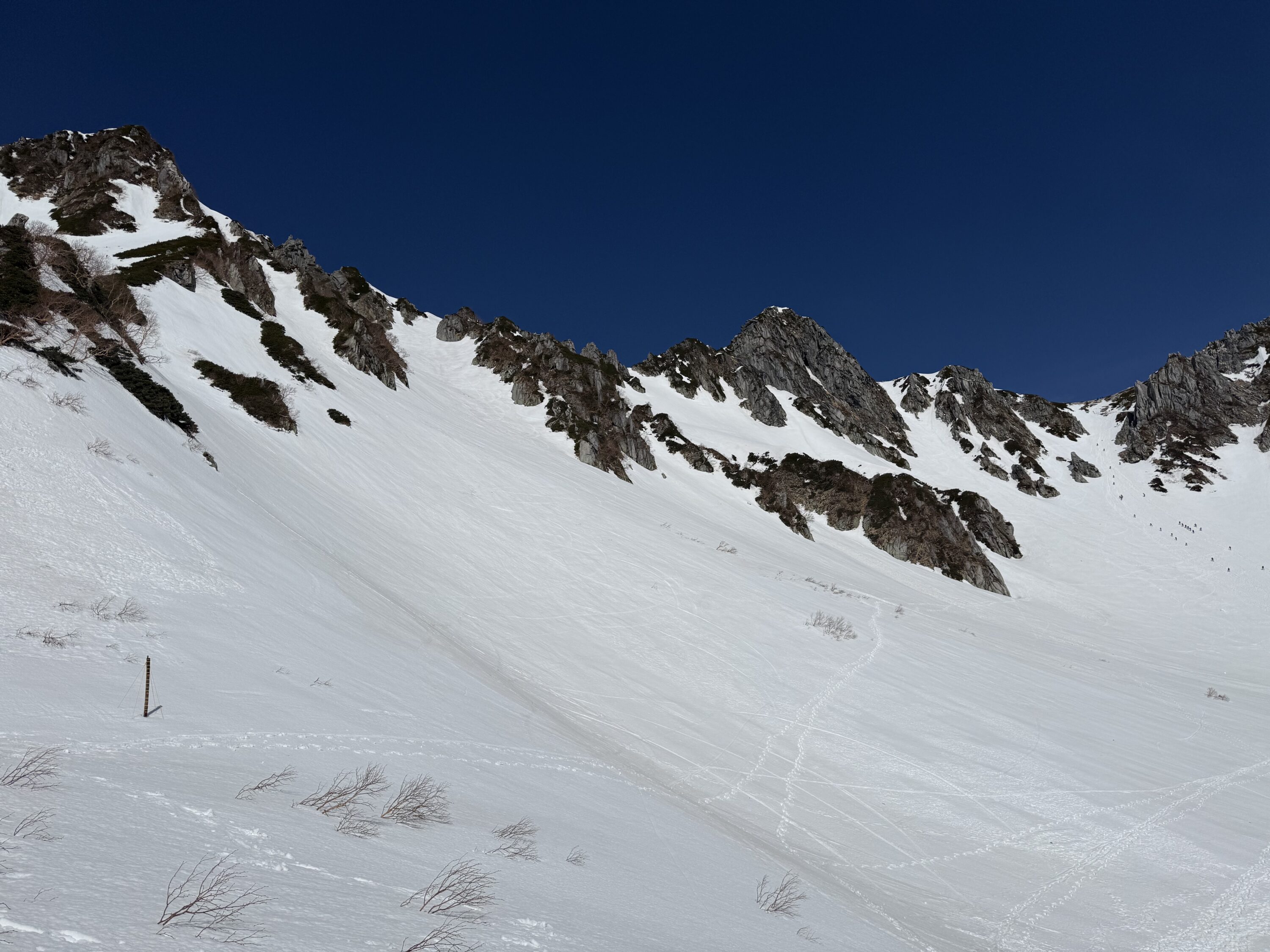
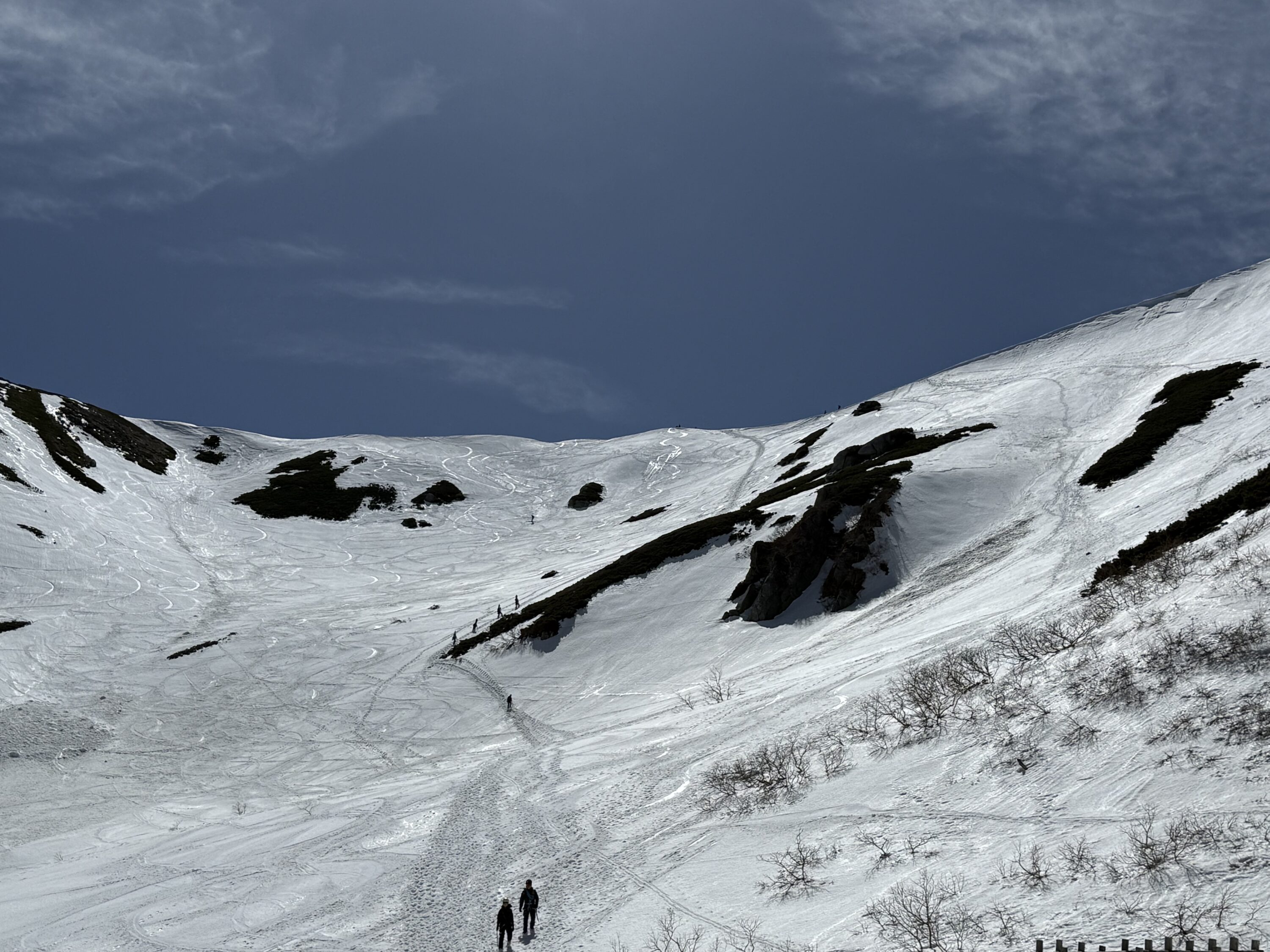
There were many tourists among the snow climbers, skiers, and snowboarders. As I stepped out of the summit station, a vast cirque stretched out before me.
In front of you, the iconic Mt. Hokendake rises majestically, piercing the sky
"Looks like the snow from the latter half of Golden Week
," a voice says from somewhere. Normally at this time of year, the entire cirque would be covered in white snow, and spring skiing would just begin. Just like in the photo below (↓). This is what it looked like on May 3rd of last year (2025).
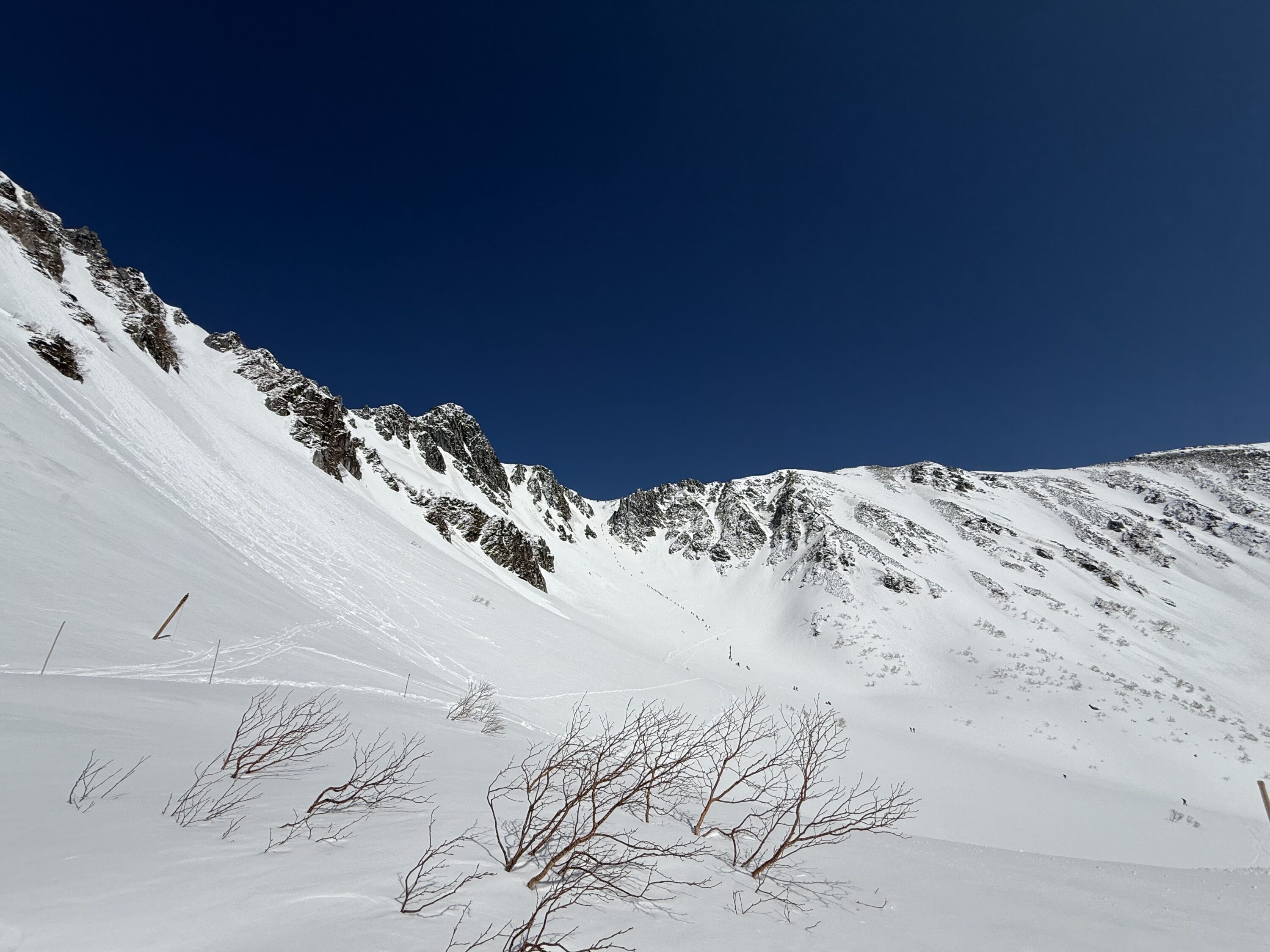
However, this year the scenery is a little different. On the mountain to the right and Gokuraku-daira to the left, black rock faces and dwarf pines are visible everywhere. Even though I'm visiting three weeks earlier than usual, it feels like the latter half of spring backcountry skiing
It takes just over an hour from Nagano city to reach an altitude of 1,662m
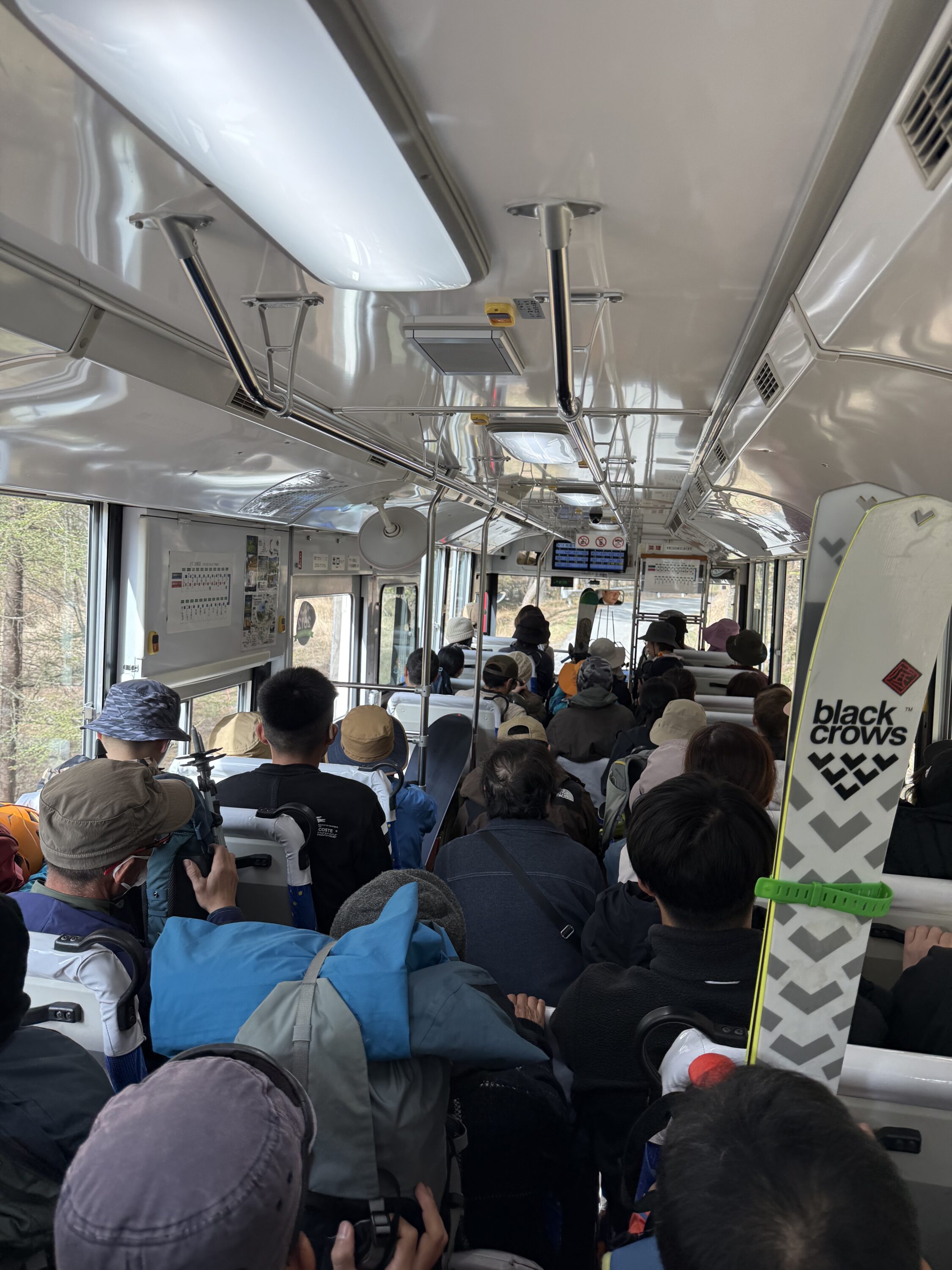

Mount Kiso-Komagatake and Senjojiki Cirque are located in Komagane City, Nagano Prefecture, and are part of the Central Alps. A 30-minute bus ride up a mountain road from the city leads to the Shirabidaira Station of the Central Alps Komagatake Ropeway at an altitude of 1,662 meters. The summit station is at 2,612 meters, making it the highest station in Japan. It is known as a convenient backcountry area where you can reach this altitude in just over an hour from the city
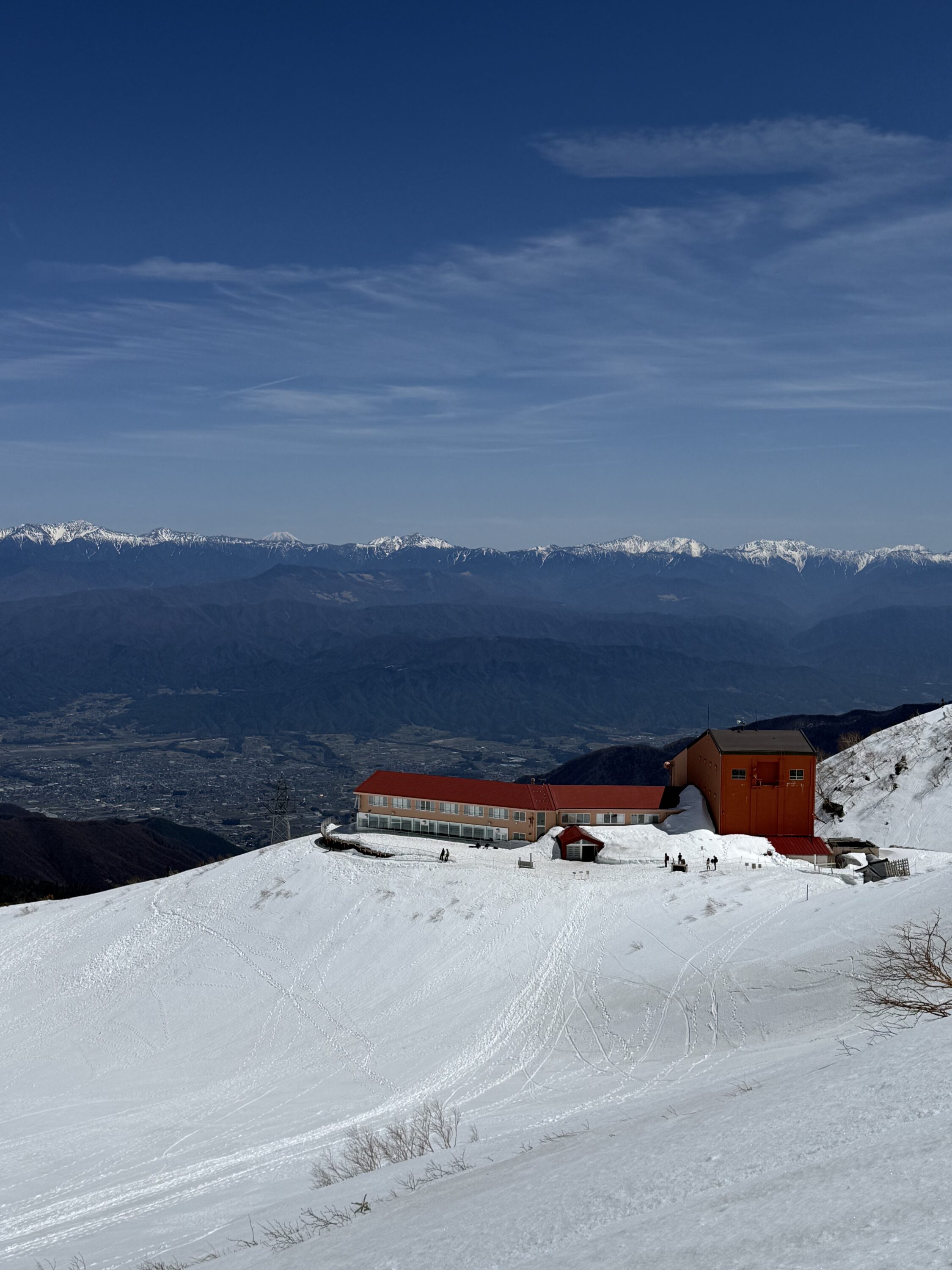
Now, let's head to the diverse skiing areas!
The Senjojiki Cirque offers a variety of skiing options, including an advanced course that starts by climbing the main hiking trail, Hachichozaka, and then continuing towards Maeyama to ski down within the cirque, as well as the Nakadake/Komagai Pond area behind the Hachichozaka climb, and the Gokurakudaira and Sannosawadake areas accessible by hiking from the ropeway summit station. While it doesn't have the vastness of Tateyama, it's popular with many backcountry skiers because you can ski down multiple runs, both steep and gentle, in a single 40-60 minute hike
The area we chose for the day was the San-no-sawa-dake area, which extends from Gokuraku-daira
We immediately started hiking from the summit station, using crampons and ice axes, and carrying our skis on our backs. As you can see in the photo below, the entire bowl-shaped area is normally a skiing course, but even though it's three weeks earlier than last year, a lot of the rock face is already exposed. It takes about 40 minutes to reach the ridge known as Gokuraku-daira. The San-no-sawa-dake area is located on the other side of the ridge
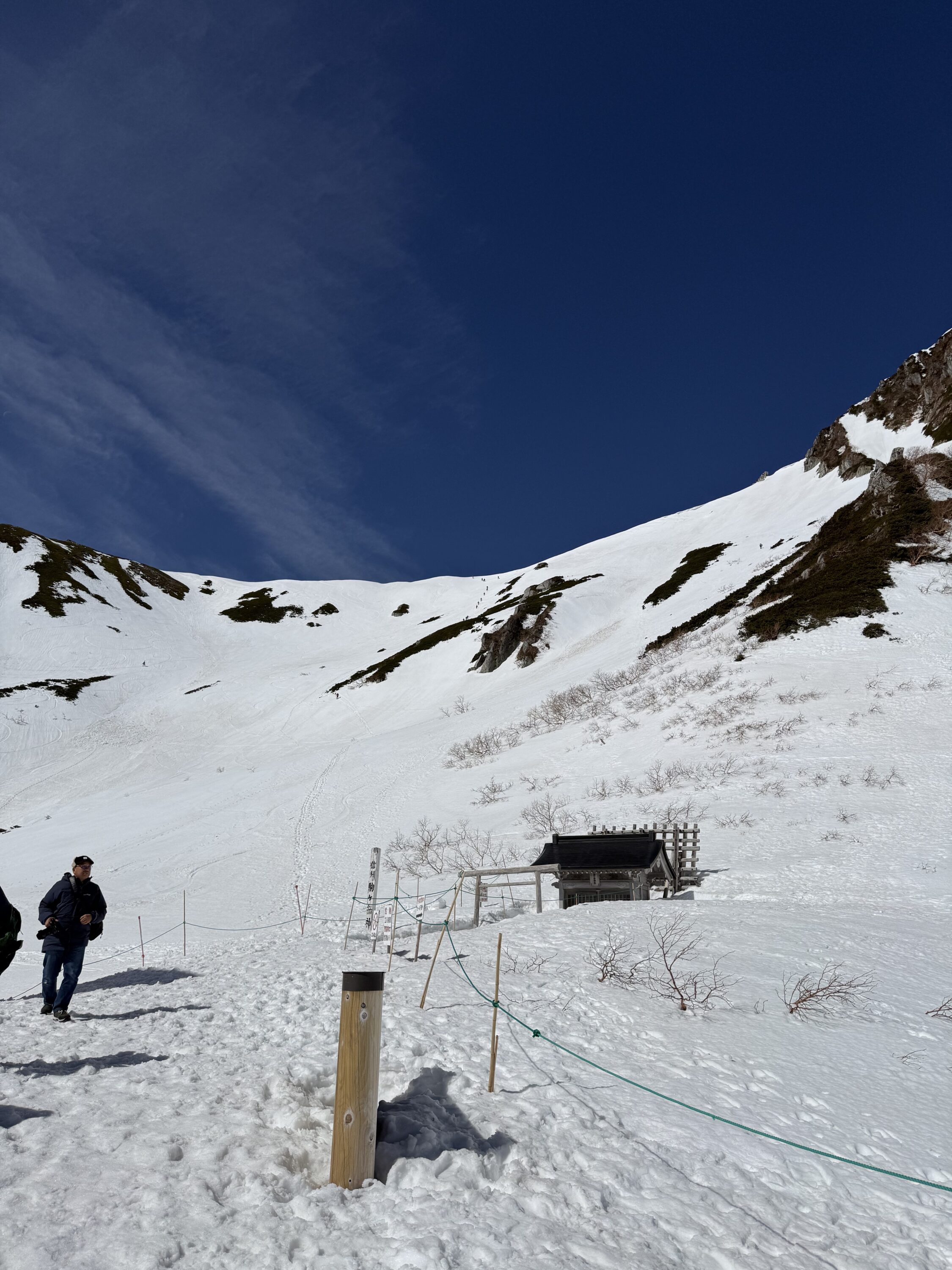
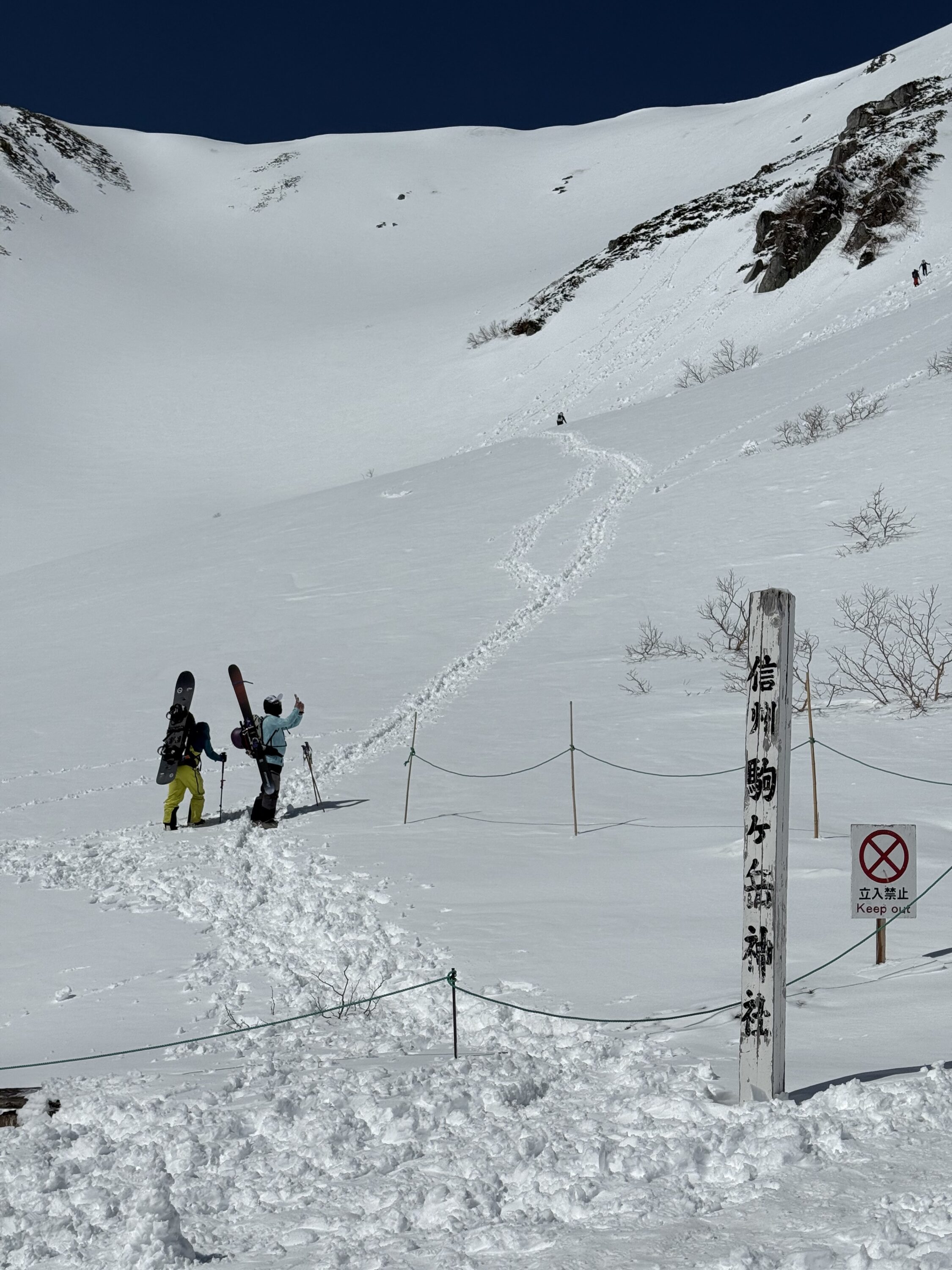
From the ridgeline, we headed towards the wide, gently sloping eastern slope of the San-no-sawa-dake area. Here too, rocky surfaces and dwarf pines are prominent, but the magnificent scenery above the treeline is refreshing.
The temperature at the summit station at 8 a.m. was 2°C. The slopes were hard as a rock in the morning, but after 10 a.m., the spring sunshine created wonderful granular snow.
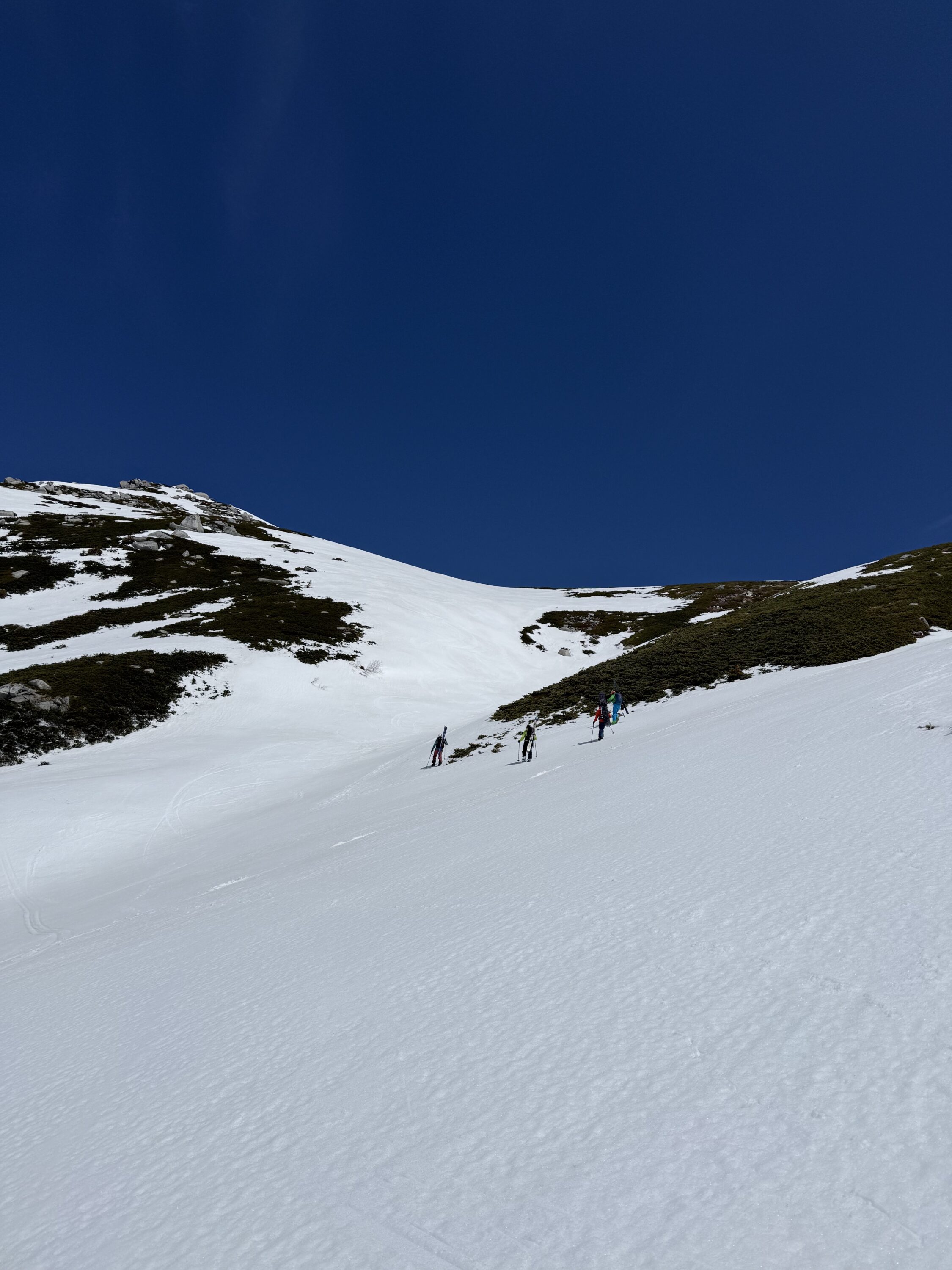
The Sannosawa area features a series of easy-to-ski slopes with a gradient of about 25°, making you want to ski endlessly. However, you have to climb back up for every drop you make, so deciding where to stop is important. From where you stop, it's another 40-minute hike back up to the ridge of Gokuraku-daira
To the famous Senjojiki shoot
Next, we skied down the ravine slope that continues from the top of Mt. Hoken. The large rock faces loomed before us, giving us a sense of the steepness, but this is the true essence of Senjojiki, and it's fun to ski down these sheer, changing slopes. In addition to this point, there are several other points in the Senjojiki cirque where you can descend steep slopes from the ridgeline, making it a challenge for the most experienced skiers
This section isn't very long, only about 400 meters, but it's a narrow course with a slope of around 35 degrees, requiring careful speed control. In peak season, it's a hotbed of avalanches, but in spring, it seems relatively safe to ski. A quick run down this section will bring you back to the center of the cirque

On this day, I did a light backcountry run of about three and a half hours. The weather and snow were perfect, but considering how quickly the snow is melting and how little snow there is already, I feel that Senjojiki, which is usually enjoyable until the end of May, might only be enjoyable until around Golden Week this season
I hear that there's less snow than usual at Tateyama this year. The Snow Valley, which usually has over 20 meters of snow at this time of year, is only 12 meters this year. Last year it was 16 meters, so the lack of snow is quite noticeable. If the situation is similar in other areas as well, I would recommend getting moving sooner rather than waiting until Golden Week if you want to enjoy spring backcountry skiing this season
Report by: Hiroshi Owada (STEEP Editorial Department) | Photography: April 12, 2026 | Cooperation: Kazushige Kobayashi