
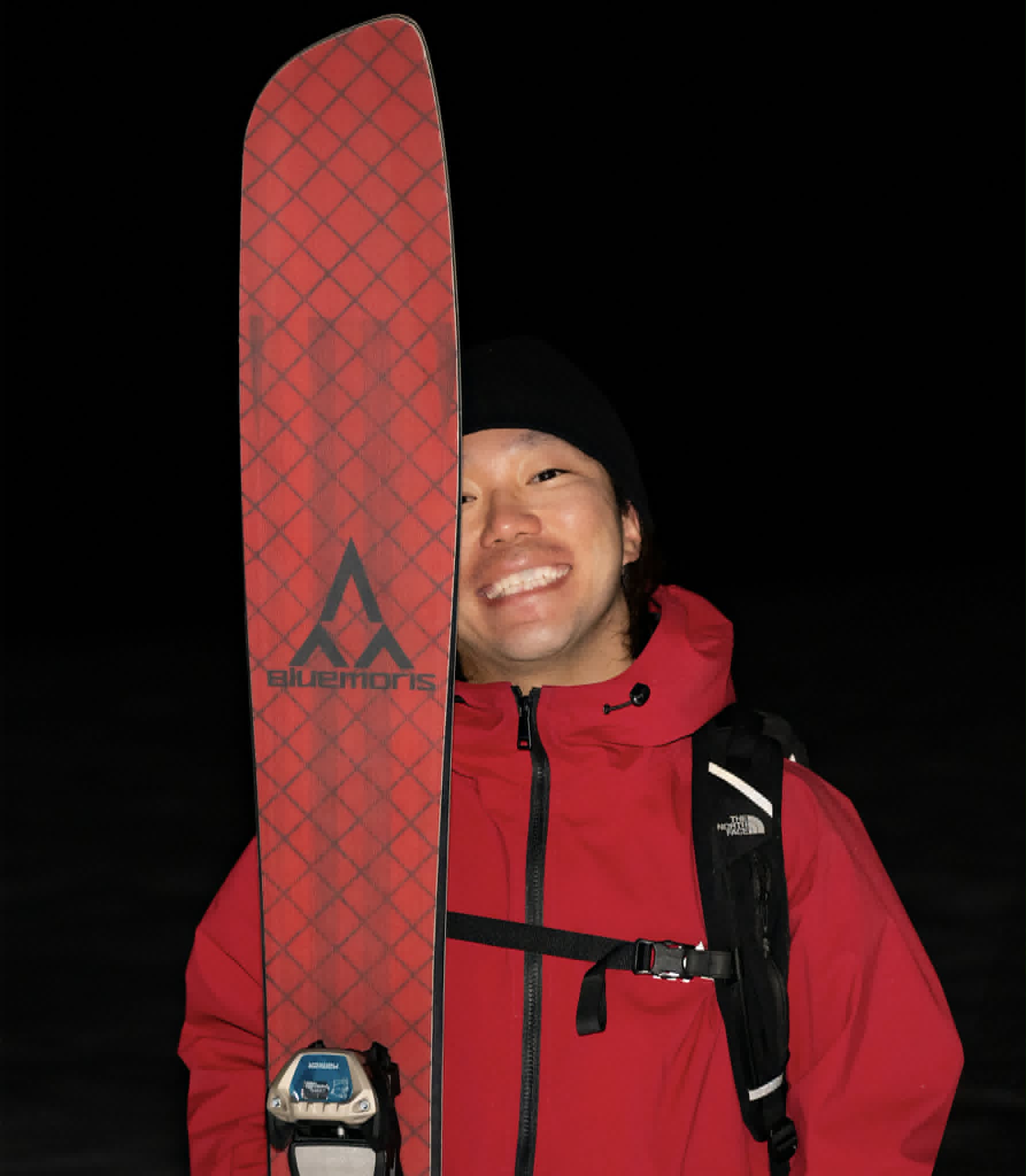

A man who calls himself a "ski developer" but (presumably) knows nothing about skis actually visits a ski manufacturing factory and gets to work on making skis himself.
This is the first of a three-part series that explores the mysteries of ski materials, internal structure, and manufacturing processes in an entertaining way, as we relive this unique experience.
Will an entertainment skier become a ski developer!?

Hello to all STEEP readers, this is Shogo Kono, the entertainment skier.
Those of you who know me will probably think, "Oh, it's that guy," but I'd like to introduce myself first.
You might be wondering, "What's entertainment skiing?" but broadly speaking, I'm a skier in the freeride category
Even though I call it freeride, in my case I've expanded on the word "freedom" to mean a more unconventional style of skiing, where I think, "Why not just do anything and everything that's fun and makes me stand out?"


Four years ago, I had the opportunity to start working with Blue Morris, a Japanese ski manufacturer
Joining a manufacturer meant I was asked for my opinion on "how to make better skis," but before that, my job was simply to ride the skis I was given and promote them. I had almost no knowledge of ski manufacturing
Nevertheless, whenever I was asked for my opinion as a professional, I
like, "The nose feels a little soft, so I think it would be better if it rebounded a bit faster,"
or by wholeheartedly agreeing with senior developers, and that's how I managed to get through the situation.
While doing so,
"Developer of the board"
That title was added to my roster.
However, I lacked the knowledge and experience to match that title. I was the one who was most dissatisfied with calling myself a developer.
Perhaps sensing my vague feelings of uncertainty, Blue Morris invited me to "come and learn how to make wooden planks," and that's how this project began
Blue Morris, the third oldest company in the world

Before we begin, let's briefly introduce Blue Morris
Blue Morris is a Japanese ski manufacturer located in Hiranai Town, Aomori Prefecture, and will celebrate its 103rd anniversary in 2026. It is the third oldest company in the world to have started manufacturing skis
Some of you might be thinking, "It's such a long-established company, yet I've never heard of it." That's because for many years, they've been manufacturing for numerous other brands, and their own brand development is relatively recent
However, the technology they have cultivated for over 100 years is genuine. That's why they are proactive in developing challenging skis, and their free-thinking approach has even led to a project where they invited a mysterious "entertainment skier" to their factory
"Surprisingly easy!?" A whirlwind 4-day schedule that I underestimated
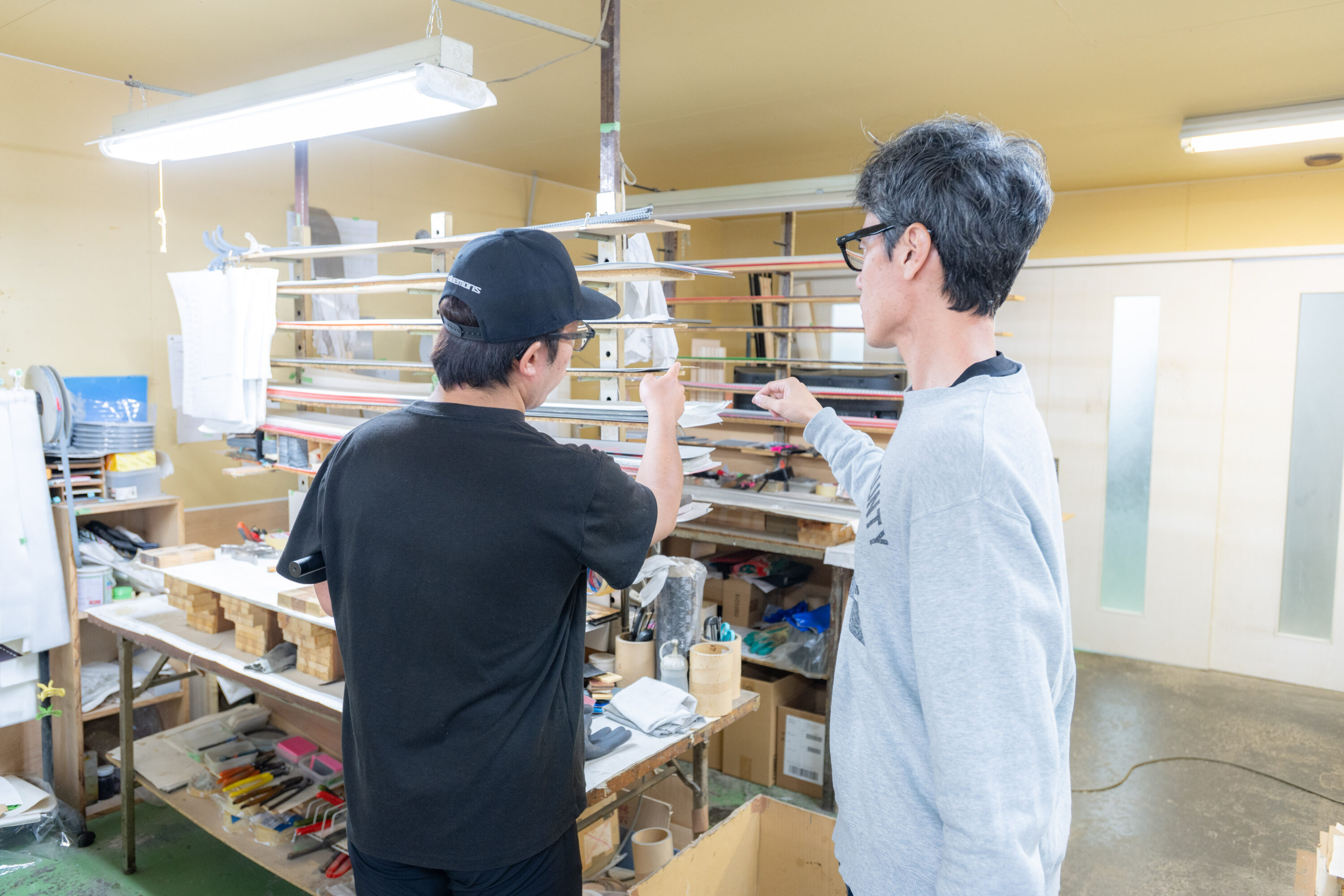
[Day 1]
- See the materials that will be used to make the skis, understand their properties, and how changing certain elements during development affects the skis. Understand how these materials are processed into components.
- In the afternoon, tour the factory and observe the ski manufacturing process.
[Day 2]
- Experience the assembly process, which is essential for board making, and complete a board that meets product standards.
[Day 3]
- Make another pair of boards, polish them together, and pass the final quality test.
[Day 4]
- Review the entire process and supplement any knowledge gained.
That was the schedule. While I thought it was quite a long schedule, the thought crossed my mind, "Oh, so it's actually possible to make boards like that." Day one started with that naive thought
From here, we will explain the materials used in skis, their characteristics, the processing methods for those materials, and then move on to the manufacturing process
"Development = Cool" is a big mistake! Six processes that are much more gritty than you imagine
"Developing skis might sound glamorous, but it's actually a very gritty and hands-on process."
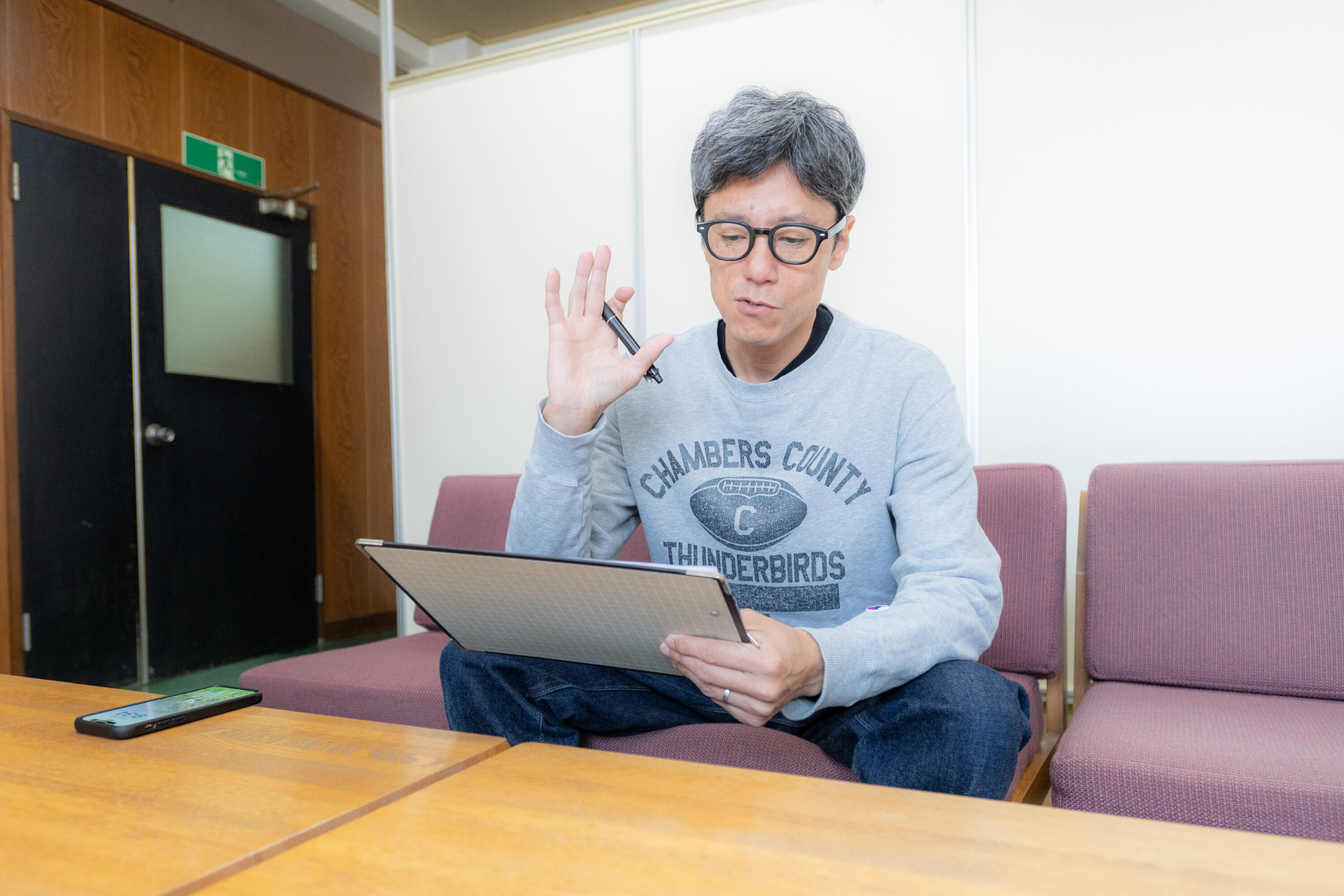
These are the words I received from Mr. Edo, who was in charge of this wood-making training, when he explained the process to me. He said that wood-making development refers to the following process

First, the desired specifications are determined by combining the developers' experience with the riders' opinions. Data is used to estimate what kind of ski will result from using different materials, and then, after further consideration, it is refined into a single ski shape
Next, we create the molds, which are the most important part of ski manufacturing
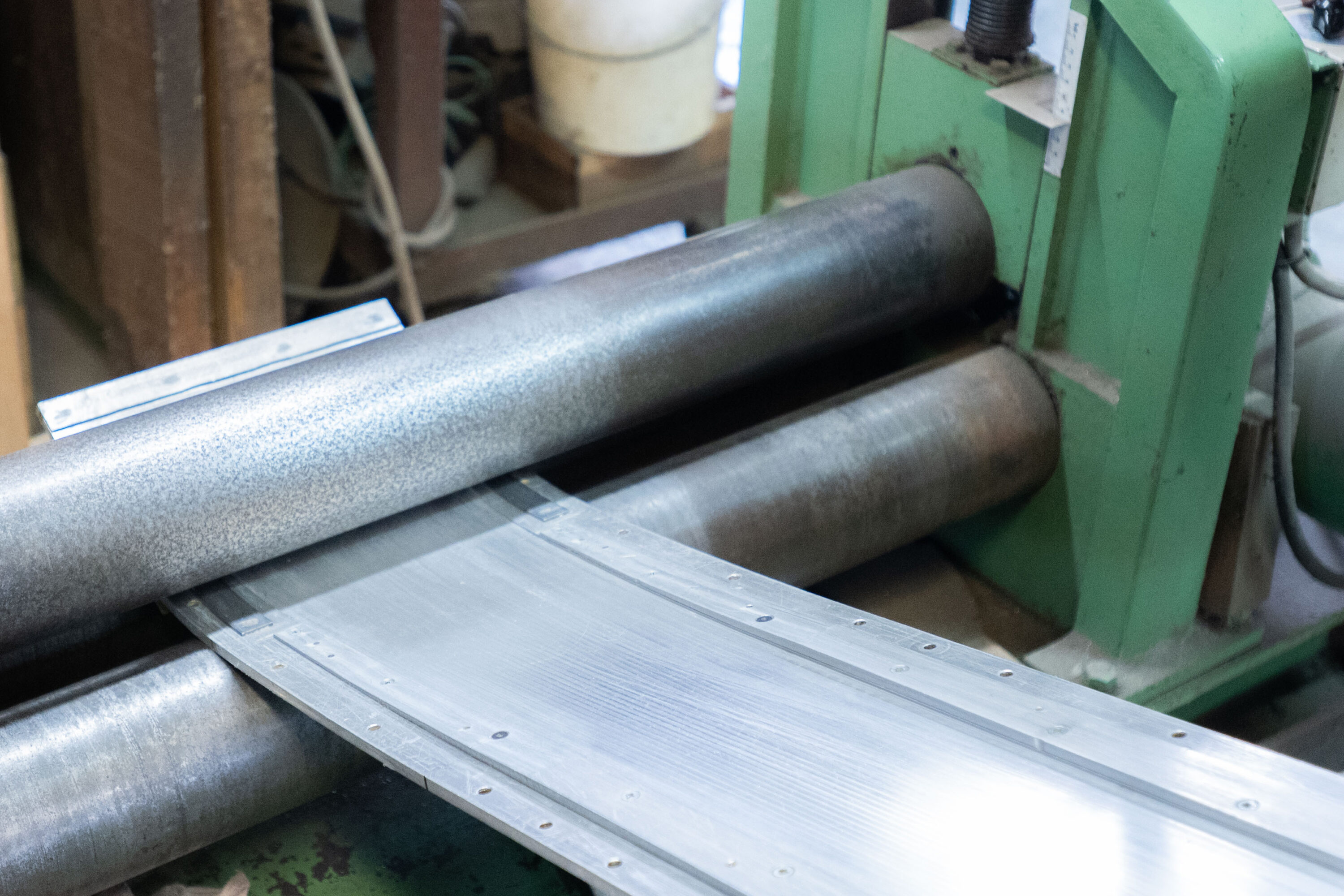
Mold manufacturing is an extremely costly and time-consuming process, and it's an irreversible step. The molds are tools used to create the shape of the ski itself, including its length, shape, rocker, and camber. They involve
cutting grooves into metal and then bending it to form the ski's shape. Of course, if a model comes in three different lengths, three molds are needed.
Once the mold is complete, we can finally make a prototype. From there, we conduct field tests and gather feedback from test riders, such as "I want it to be lighter but also stiffer," "I want it to rebound more sharply," and "I want a more stable ride on uneven terrain."
To determine the ideal riding feel for a pair of skis, the development team at headquarters repeatedly fine-tunes the material combinations and structure based on feedback from test riders. It's rare for the first prototype to work well; they test many different materials and structures, and only after trial and error do they finally arrive at a satisfactory product
Let's look at the materials used to determine the characteristics of skis.
Not all of the following materials are used in a single pair of skis; the necessary and unnecessary amounts are determined based on the characteristics of the skis being made.
Half of a ski is made of "wood and that thing"!?
11 brain-boggling materials
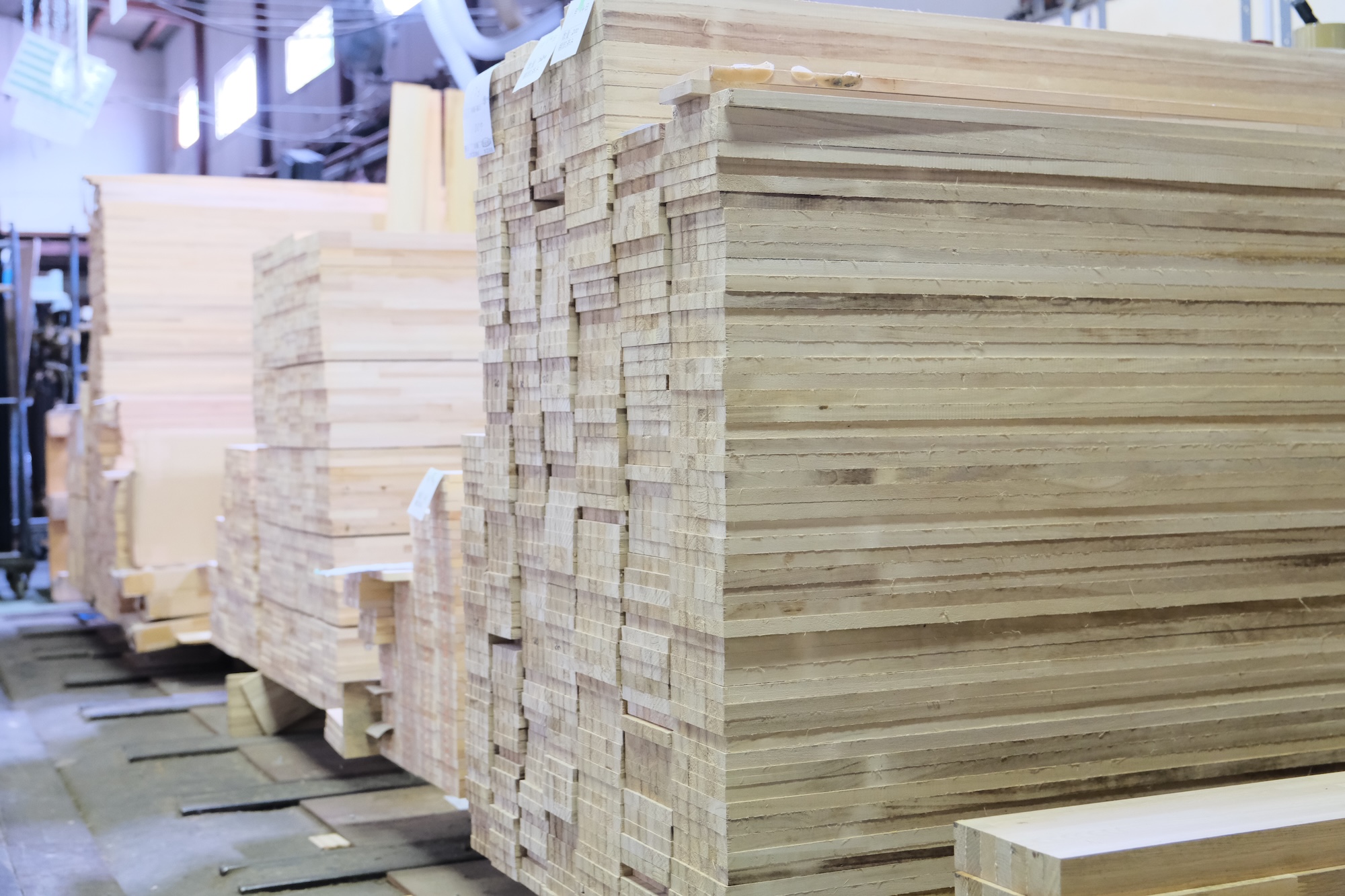
wood is imported in the form of compressed sheets, with the wood species chosen to suit the characteristics of the skis. The density, weight, and properties of the wood are combined according to the required ski characteristics to create plywood. The core wood of the ski is mainly composed of one to three types.
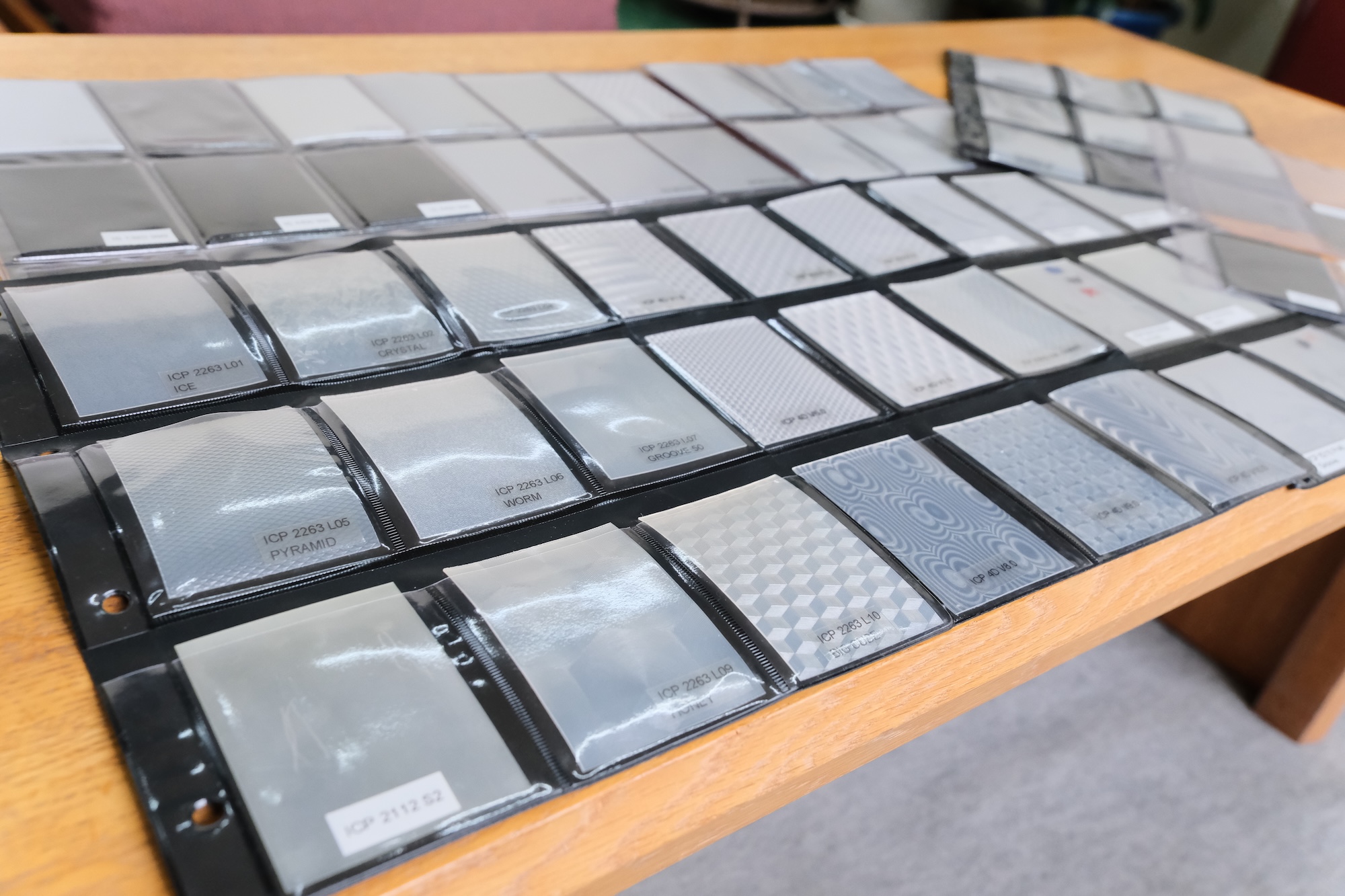
and print on it. There are also transparent sheets with pre-designed structures. Choose the printing method based on the desired ski performance and the design you want to achieve with the top sheet. This will involve choosing between sublimation printing or digital printing, and front-side or back-side printing. Sublimation printing is characterized by its good color reproduction and resistance to peeling. On the other hand, it is not good at expressing shading or special textures. Digital printing offers greater freedom in expressing textures. However, it is more susceptible to deterioration from scratches and wear. Consider the advantages and disadvantages and decide whether to print on the front or back.
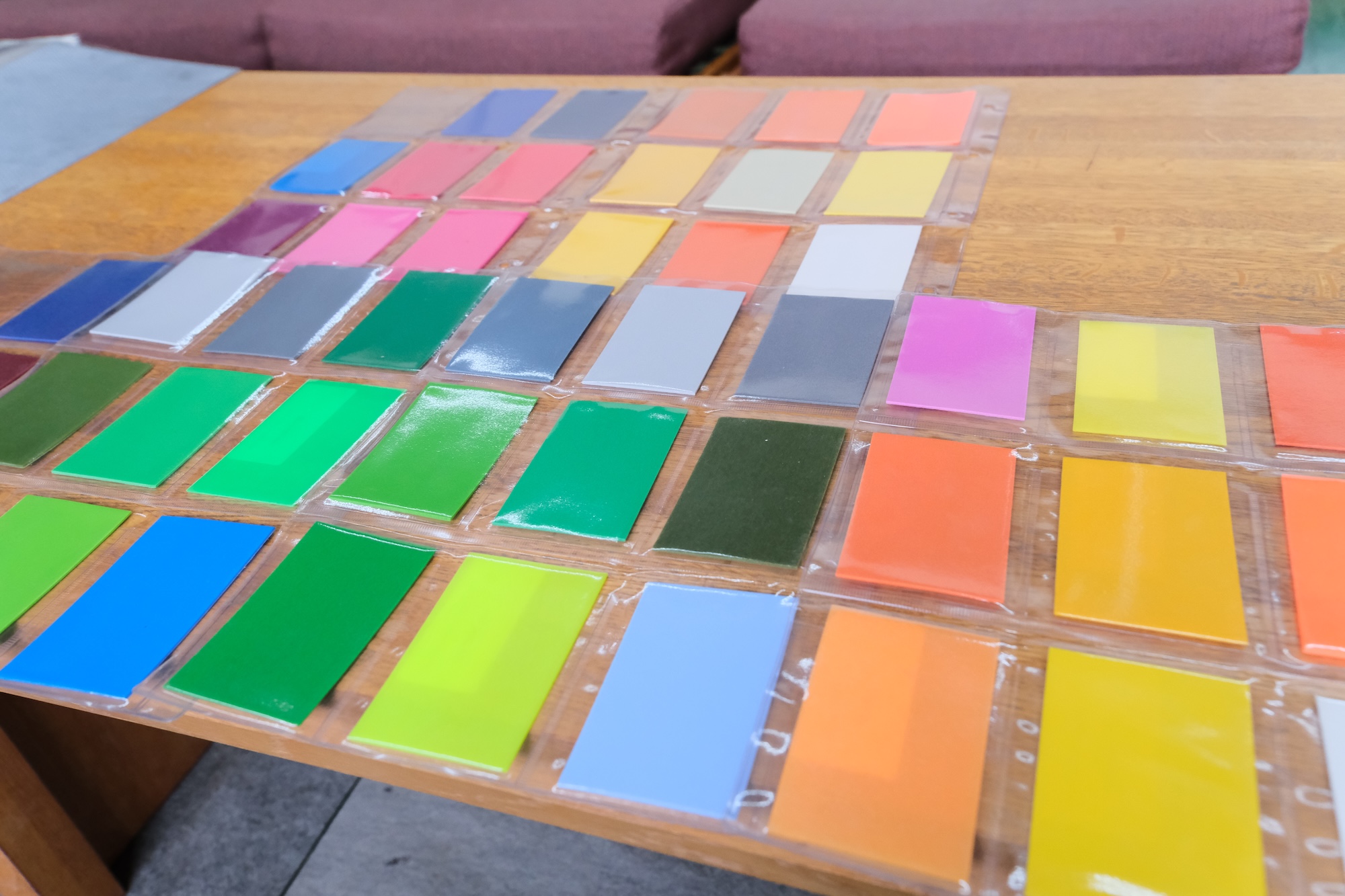
is determined based on the desired performance of the ski, and the sole material is purchased from black, transparent, or colored options. Generally, the higher the molecular weight, the better the sole will absorb wax, glide smoothly, and be more wear-resistant.
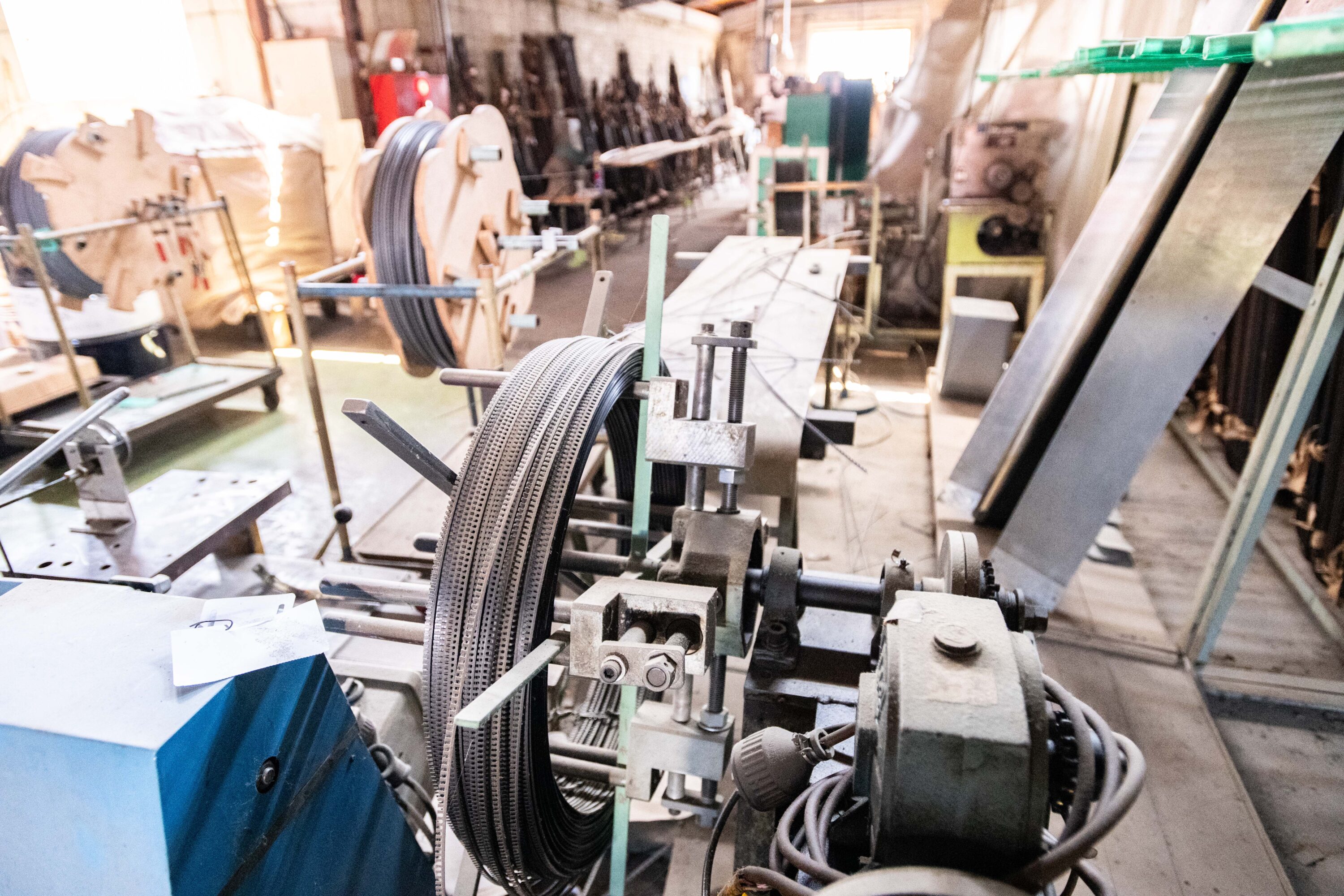
the ski . Choose from options such as a one-piece edge (round edge) that covers the entire sole, or a two-piece edge, depending on the ski
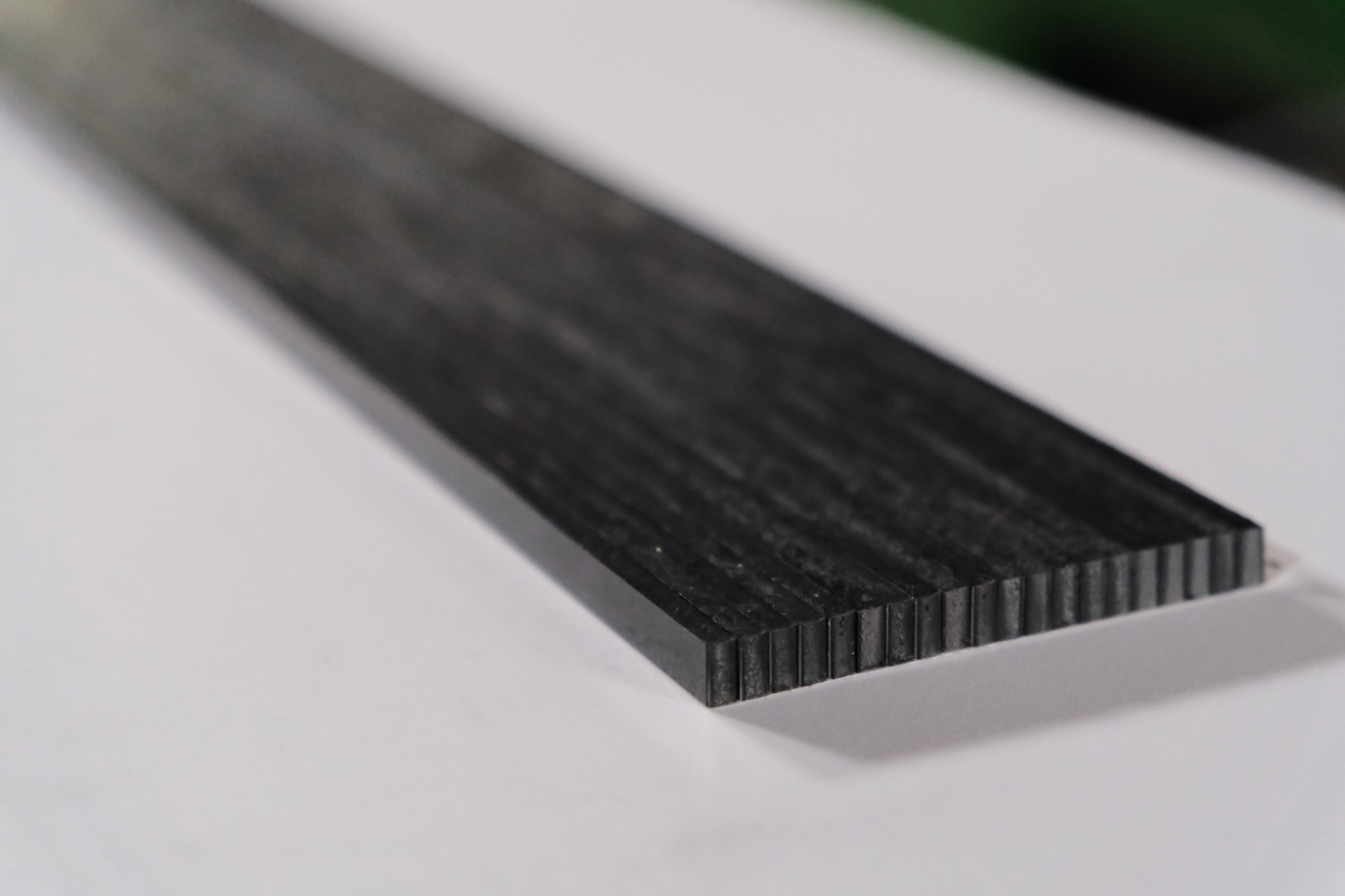
ski board and the top sheet. Mainly ABS resin or reinforced plastic. The choice of material depends on the desired ski performance, and several different materials are available
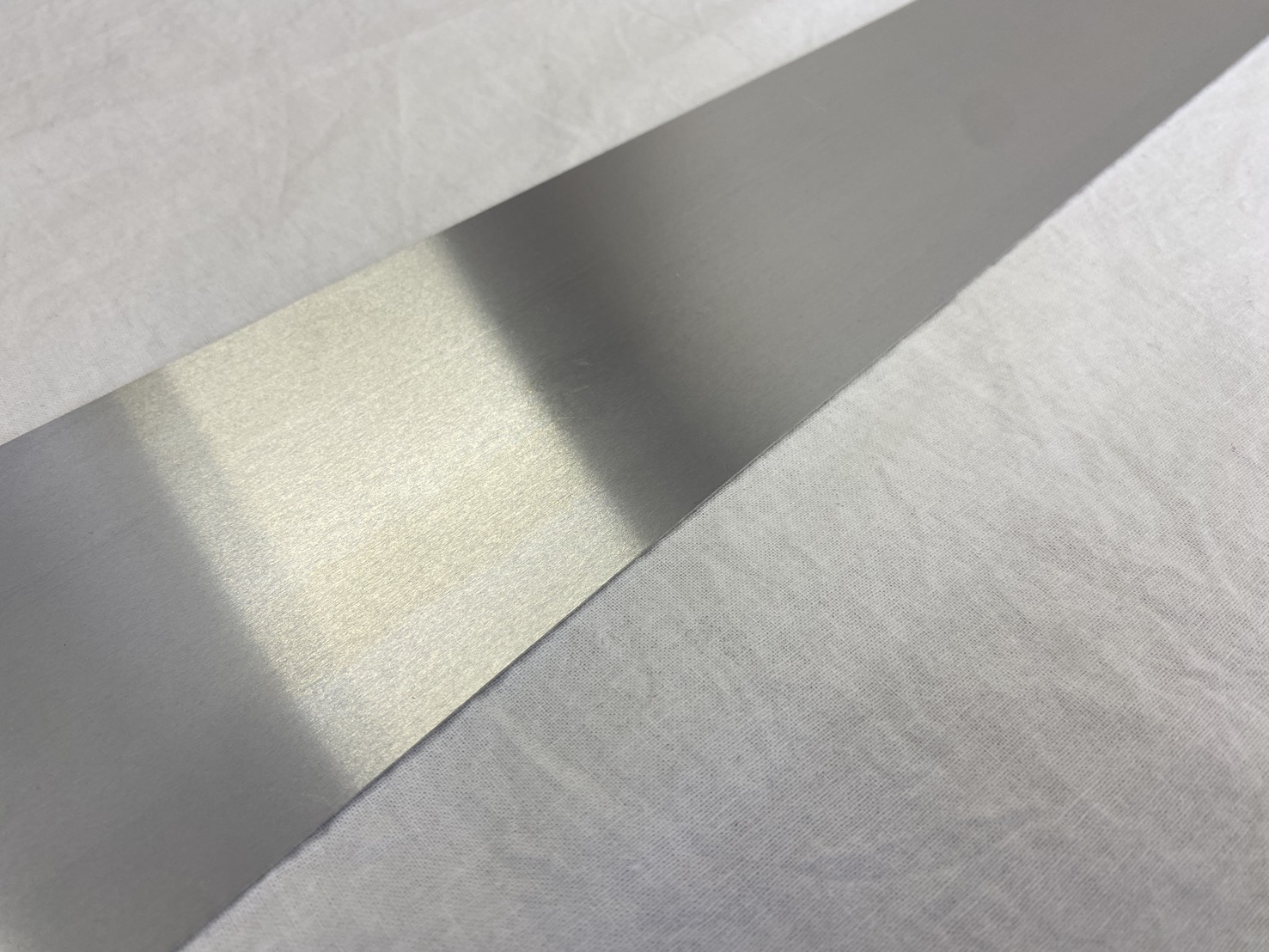
plates, they are sometimes inserted as sheets inside. When using lightweight wood, they may be added only to the binding mounting area for reinforcement.
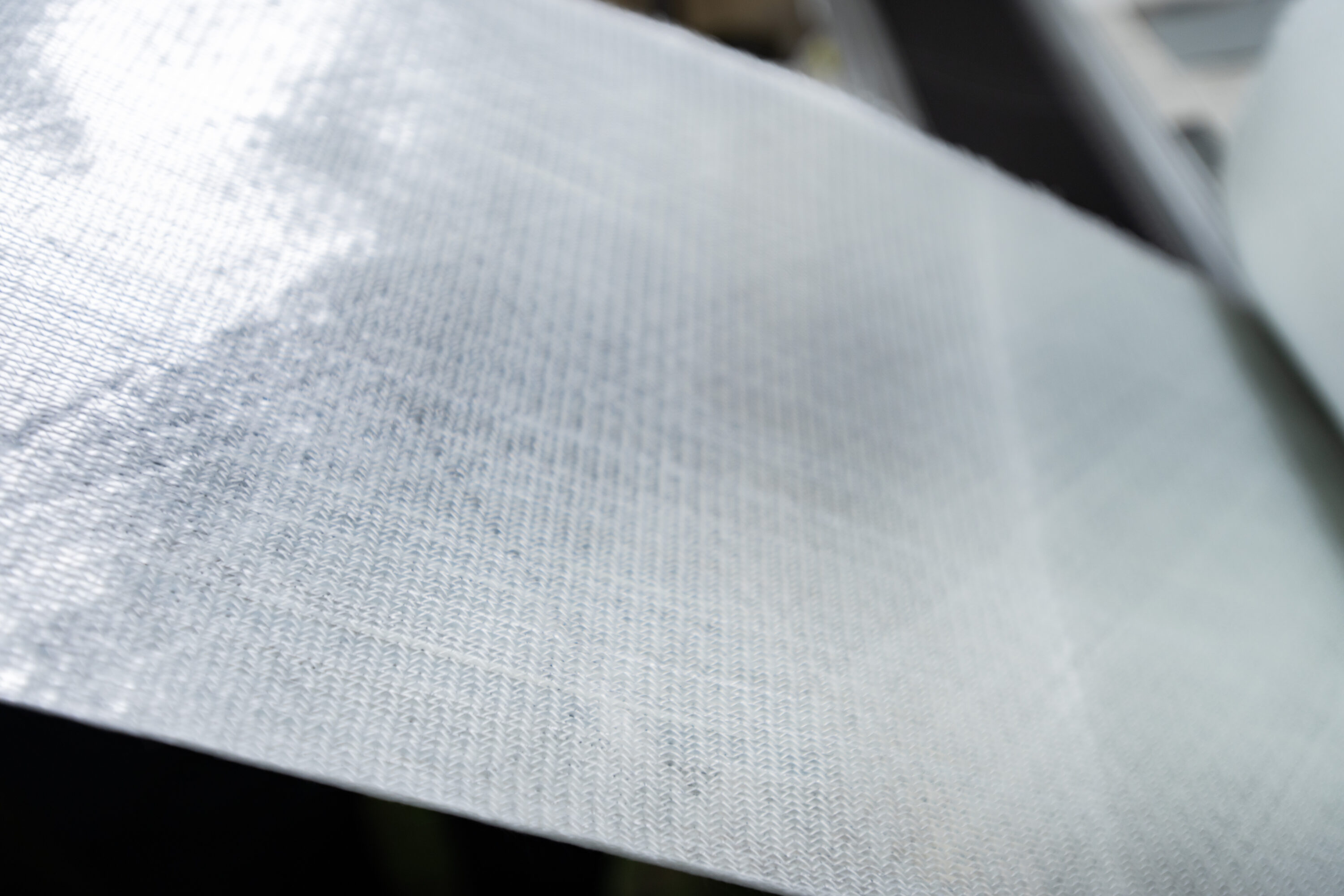
fiber-reinforced plastic) glass fibers. Some versions also contain carbon fiber. The specifications are selected based on the desired ski performance, including the direction of weaving, the amount of fiber, the thickness, and the weight. It is a reinforcing material used to improve the durability of the skis and to adjust the feel of the torsion and flex. It comes in both fabric and sheet-like forms.
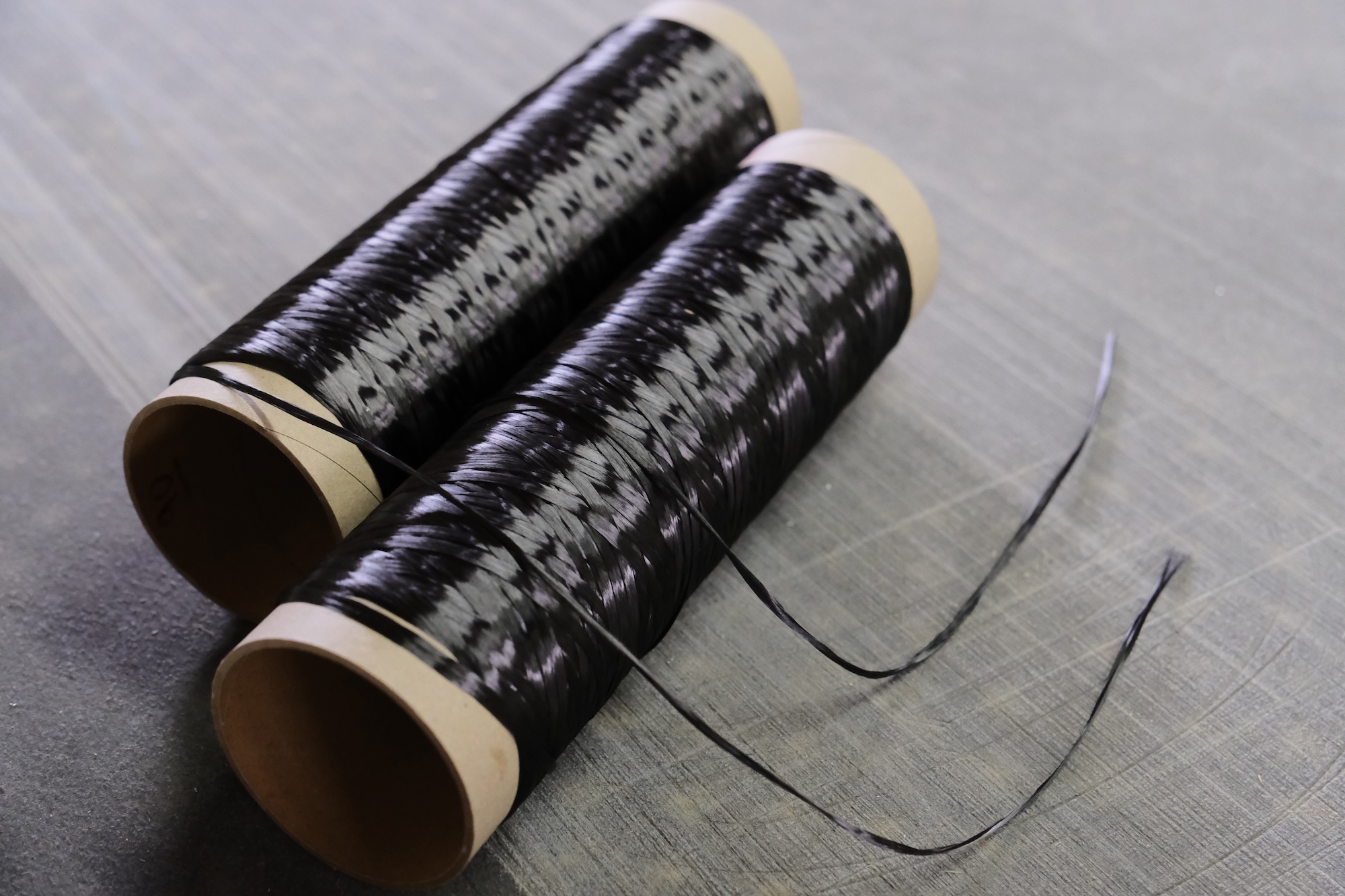
is a material made by weaving together carbon fibers. The direction of weaving, the amount of carbon fiber, the thickness, and the weight are selected according to the desired performance of the ski. Even a small amount of carbon fiber can produce rebound and significantly change the characteristics of the ski.
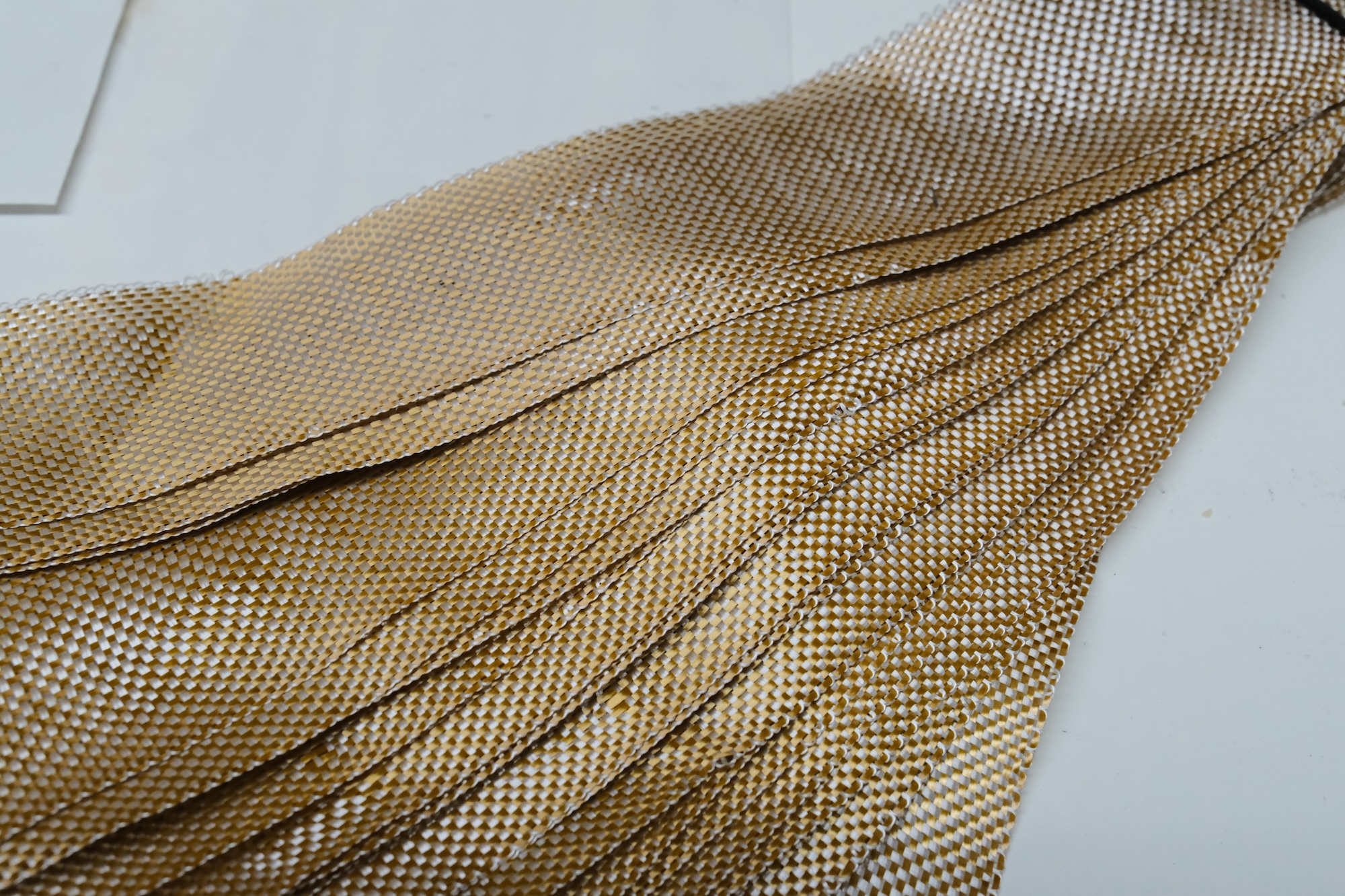
are materials with a high vibration dispersion rate. They are often used to suppress fluttering of boards.
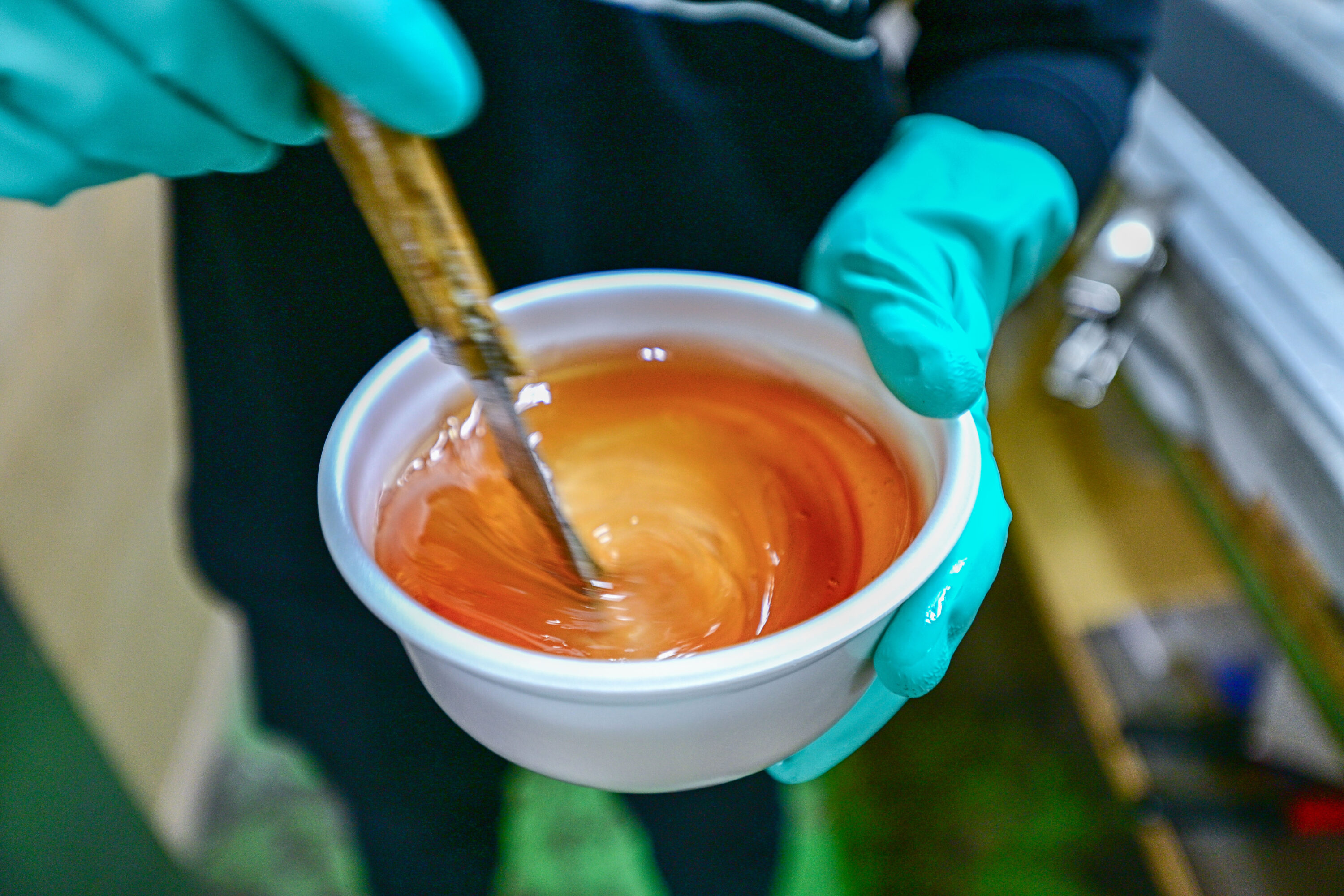
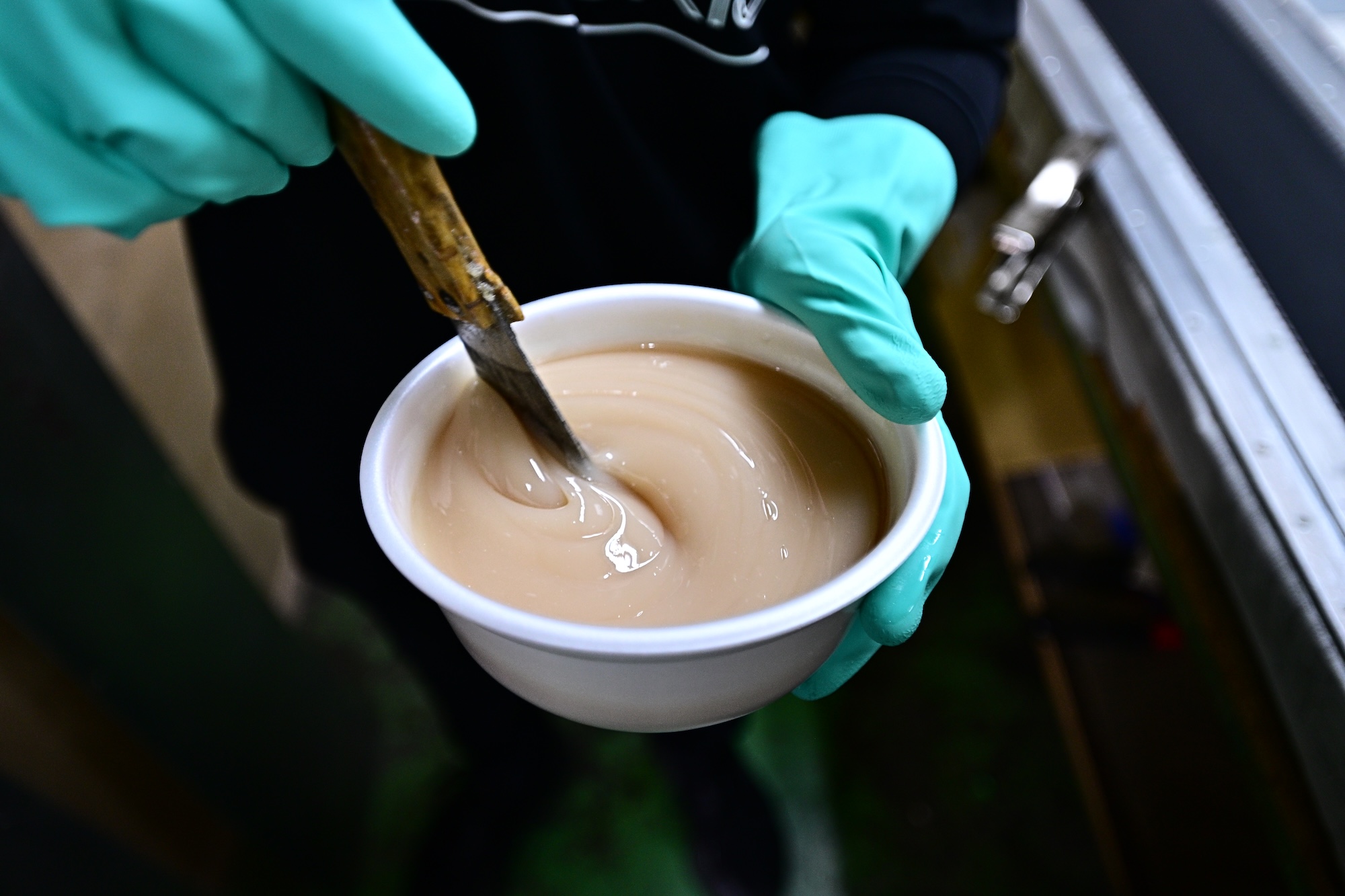
is made by mixing our own selected epoxy material and hardener. It doesn't become too hard, nor does it have the elasticity of rubber. It is used to allow for a moderate degree of flexibility.
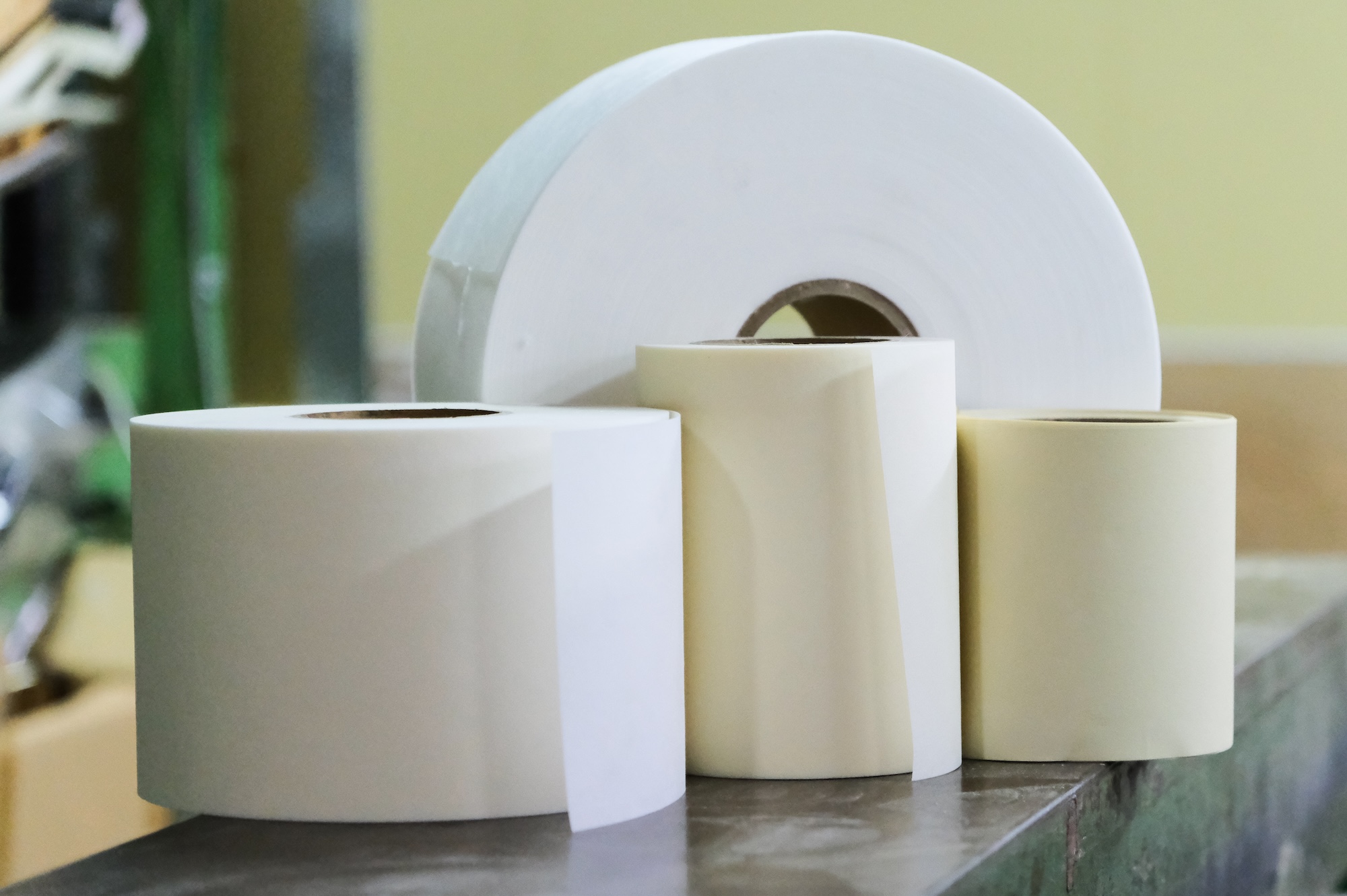
help to effectively bond materials that are difficult to bond together, and prevent materials with different elastic moduli from delaminating. They play a role in improving adhesion.
What's interesting is that more than half of a ski's weight is made up of the wood core and adhesive. The question of whether a ski is truly a ski is answered by the fact that it's made of wood, with adhesive accounting for half of its weight
Each material can range from a few types to over several hundred. To achieve the desired characteristics of the ski, the materials are selected from an almost infinite number of combinations
This experience has made me realize once again just how incredibly daunting development truly is
The materials change throughout the processing steps
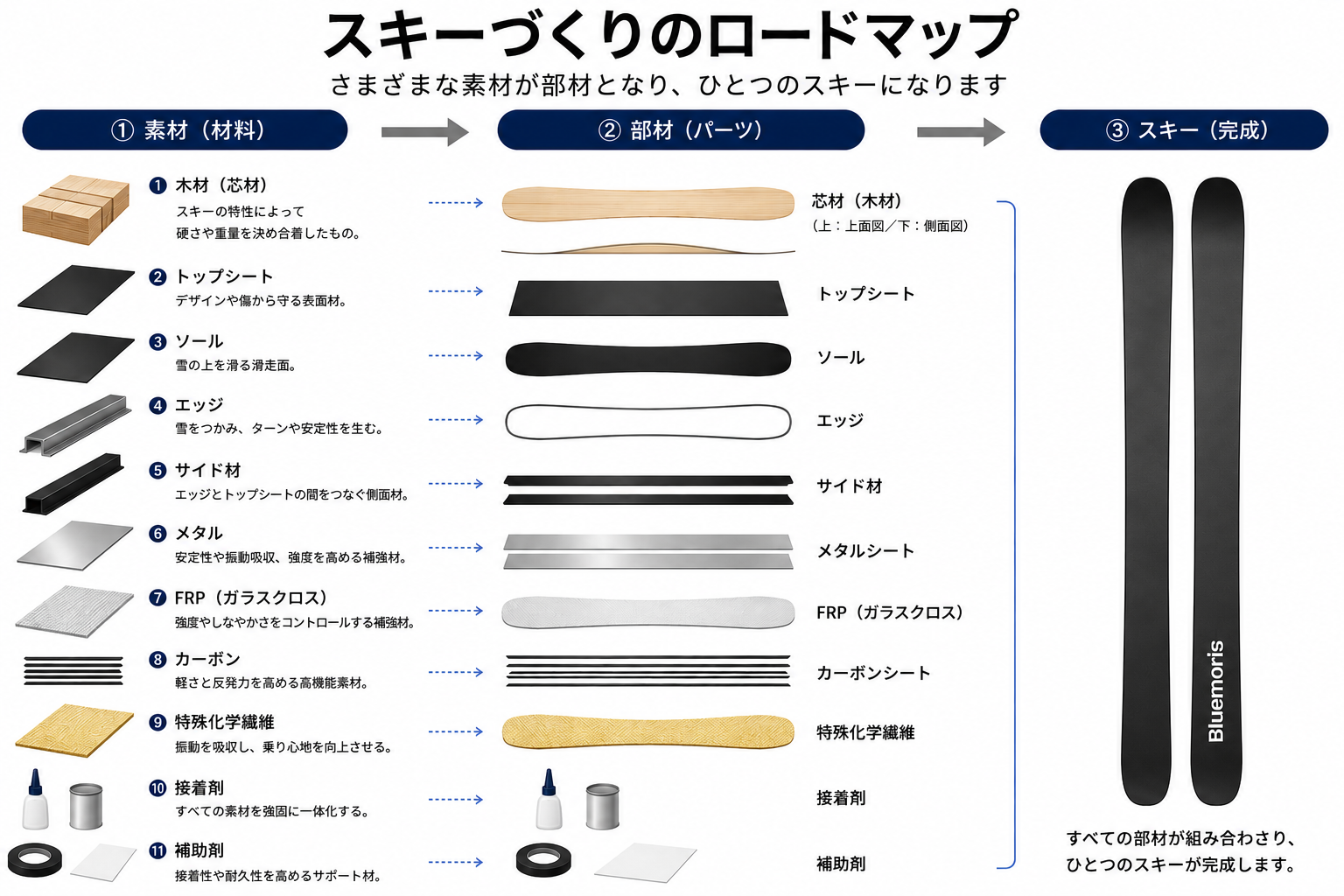
Next, before moving on to the board-making process, we will process the materials into components
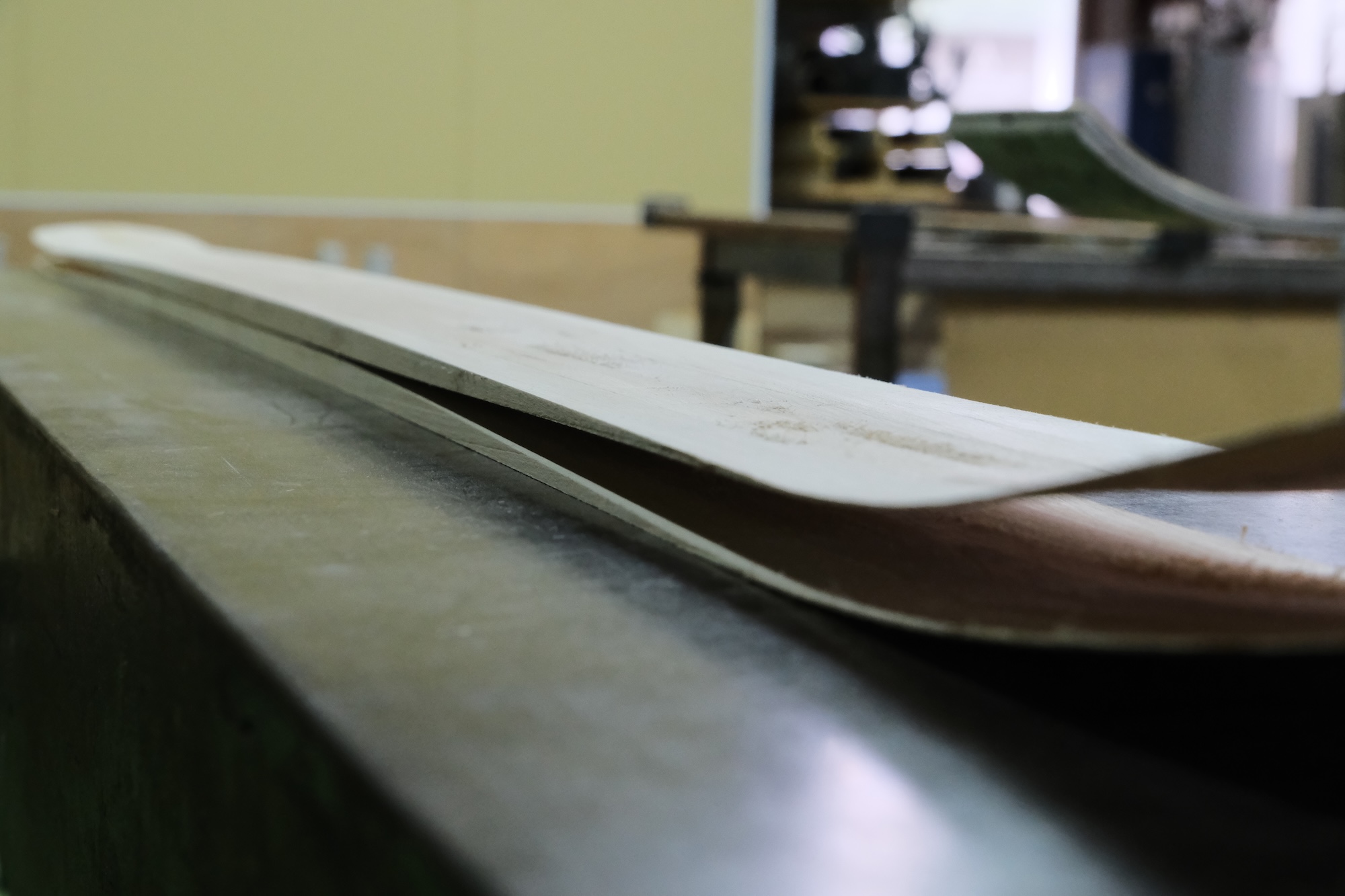
After carving the plywood-like wood mentioned earlier into the outline of a ski, the uneven thickness is then created. "Uneven thickness" might be an unfamiliar term, but the process of carving the ski into the shape seen from above is called creating the outline, while the process of carving it into the shape seen from the side is called creating the uneven thickness. It involves carving out thin areas, thick areas, and areas that are curved.
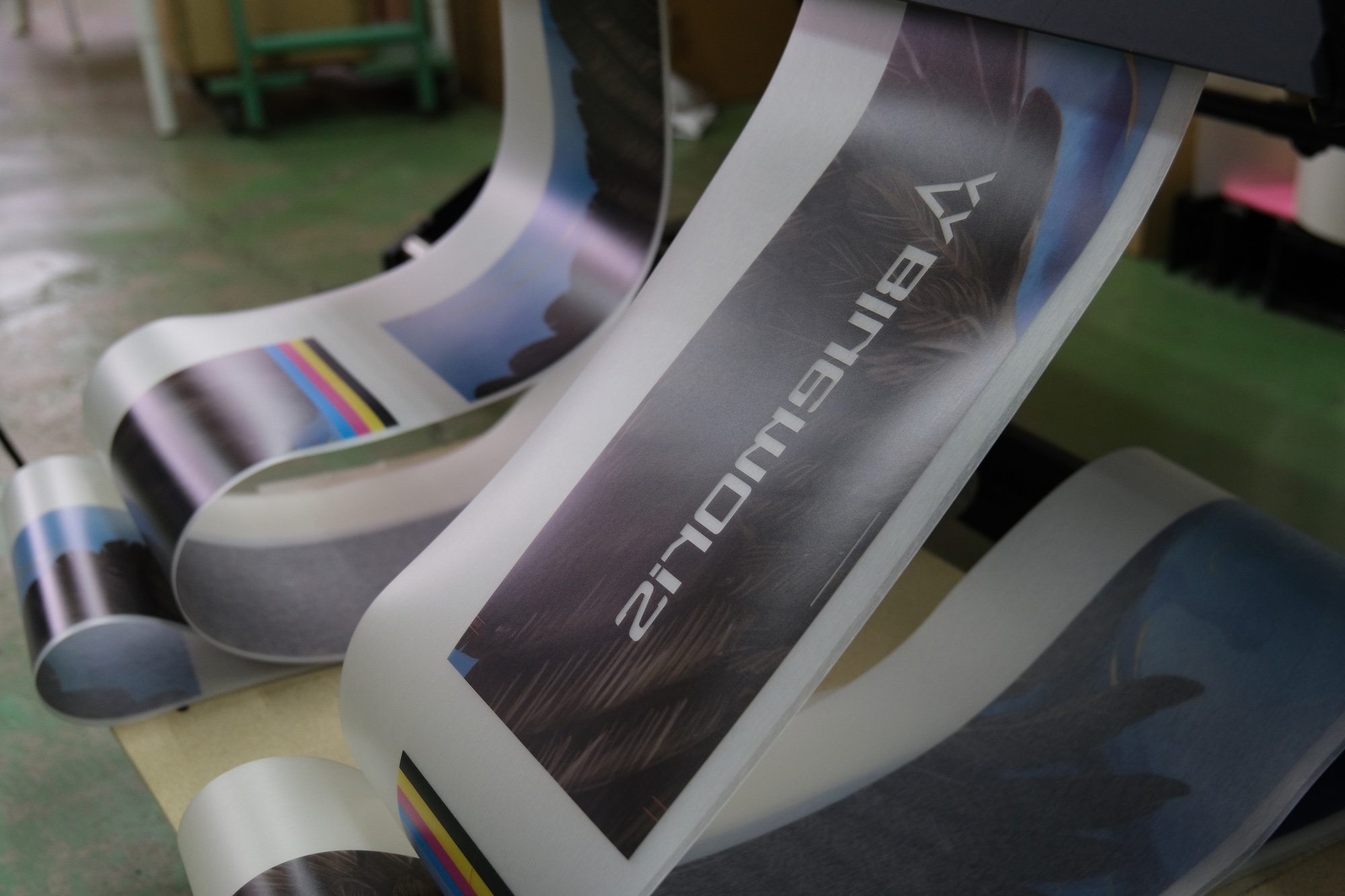
is made into a sheet that fits the ski shape using various printing methods.
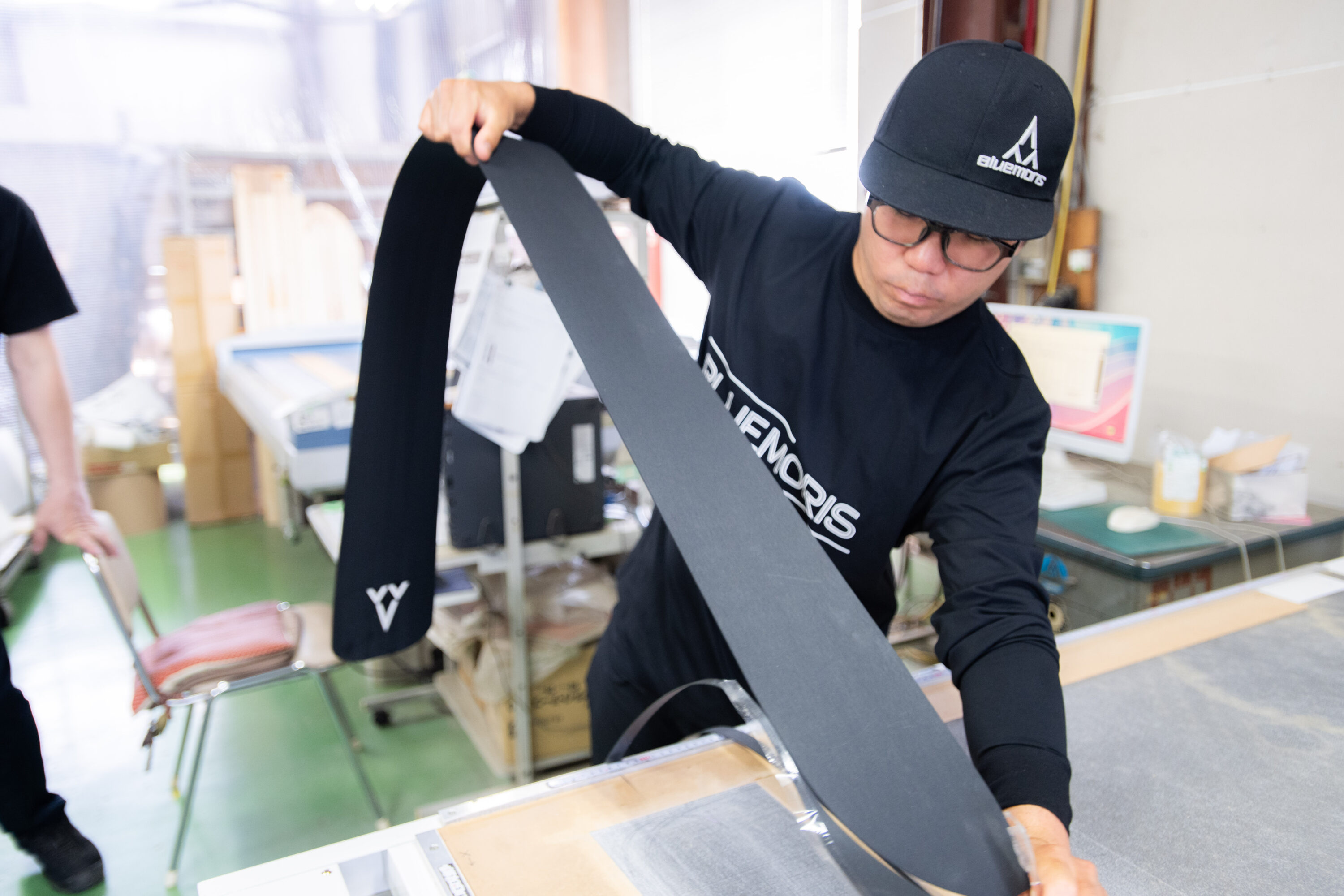
sole printing or die-cutting, the ski is cut to shape using a die-cutting machine
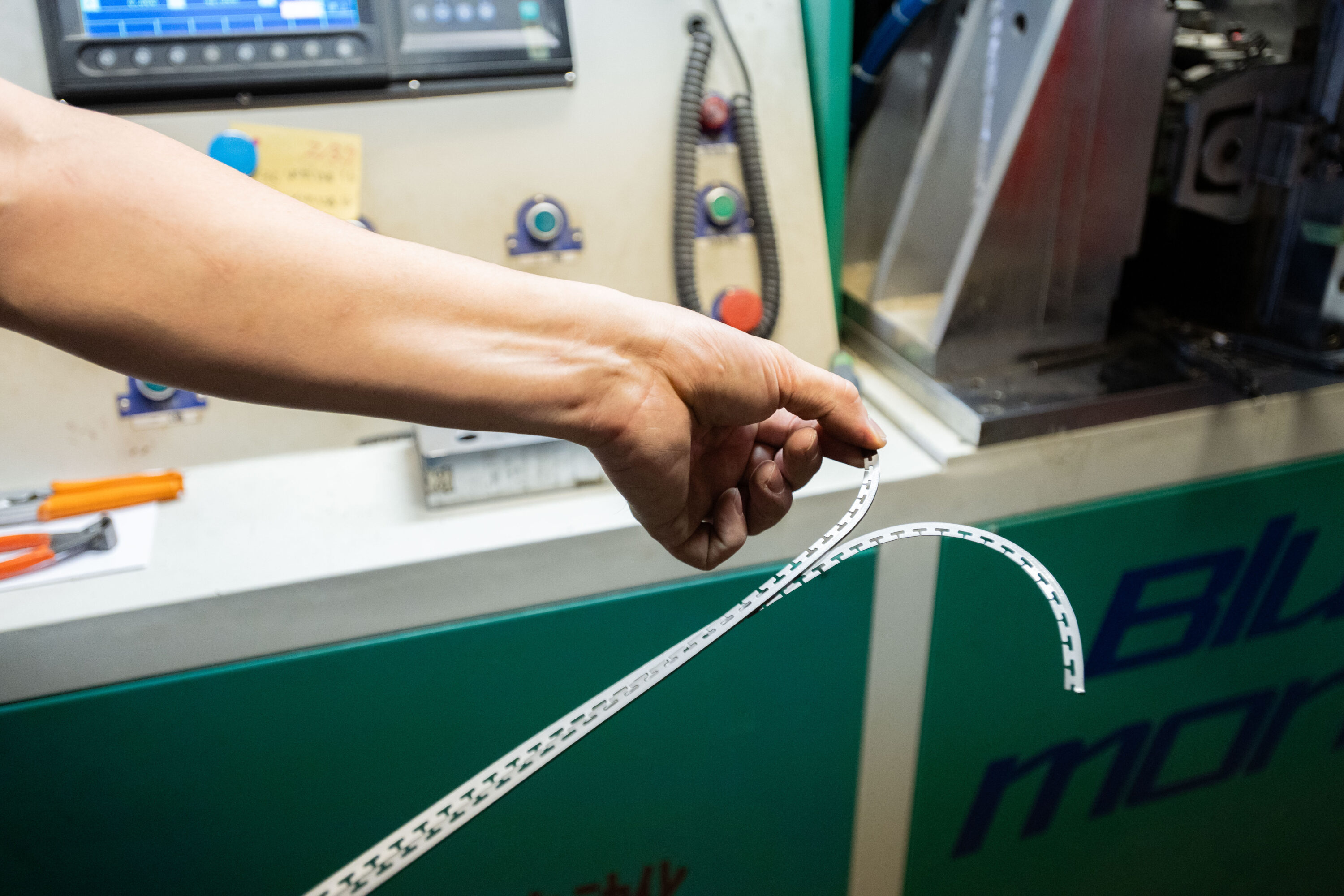
's proprietary bending machine performs machining on 4 axes (XYZ + twist).
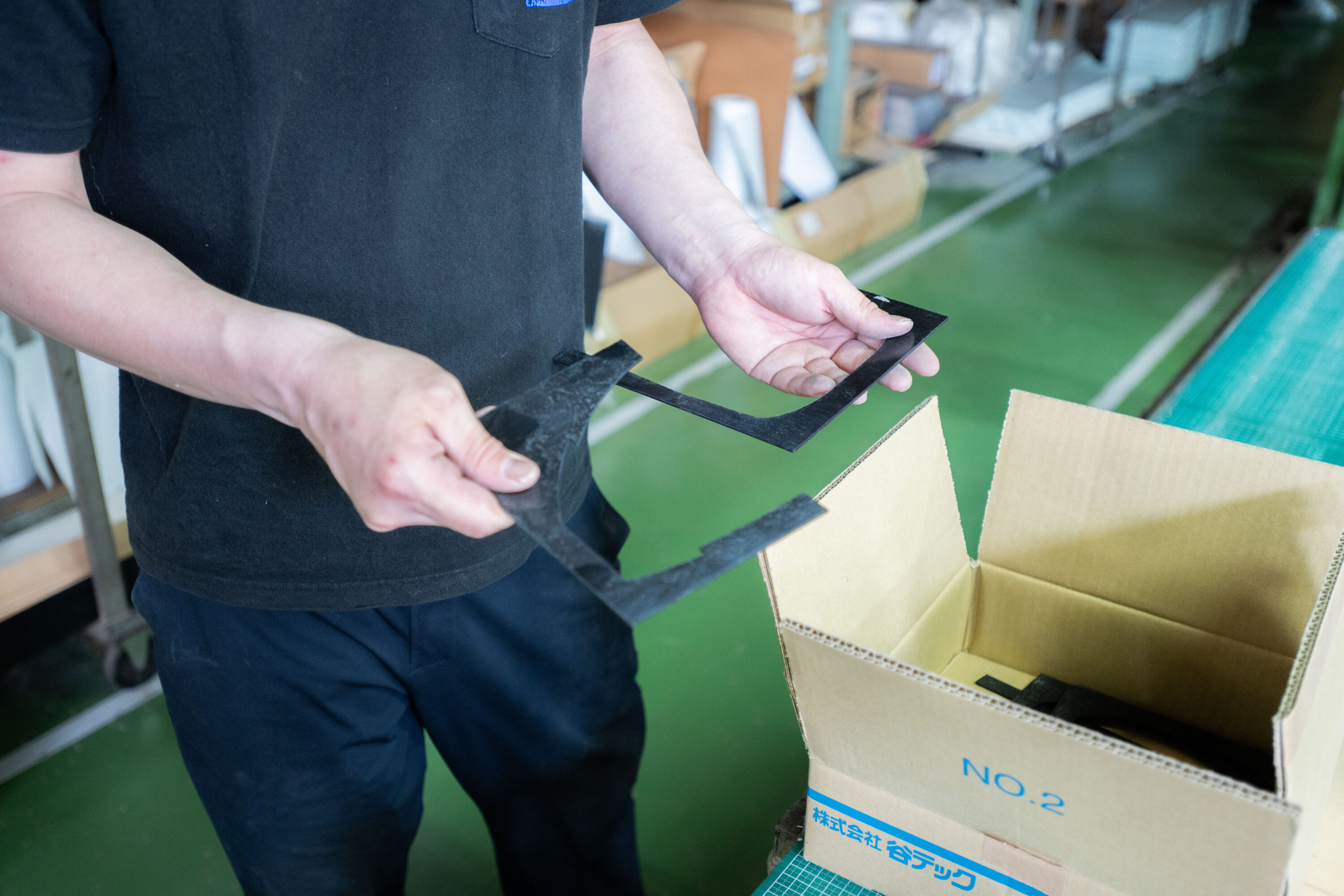
to match the uneven thickness of the ski, making it easier to bond.
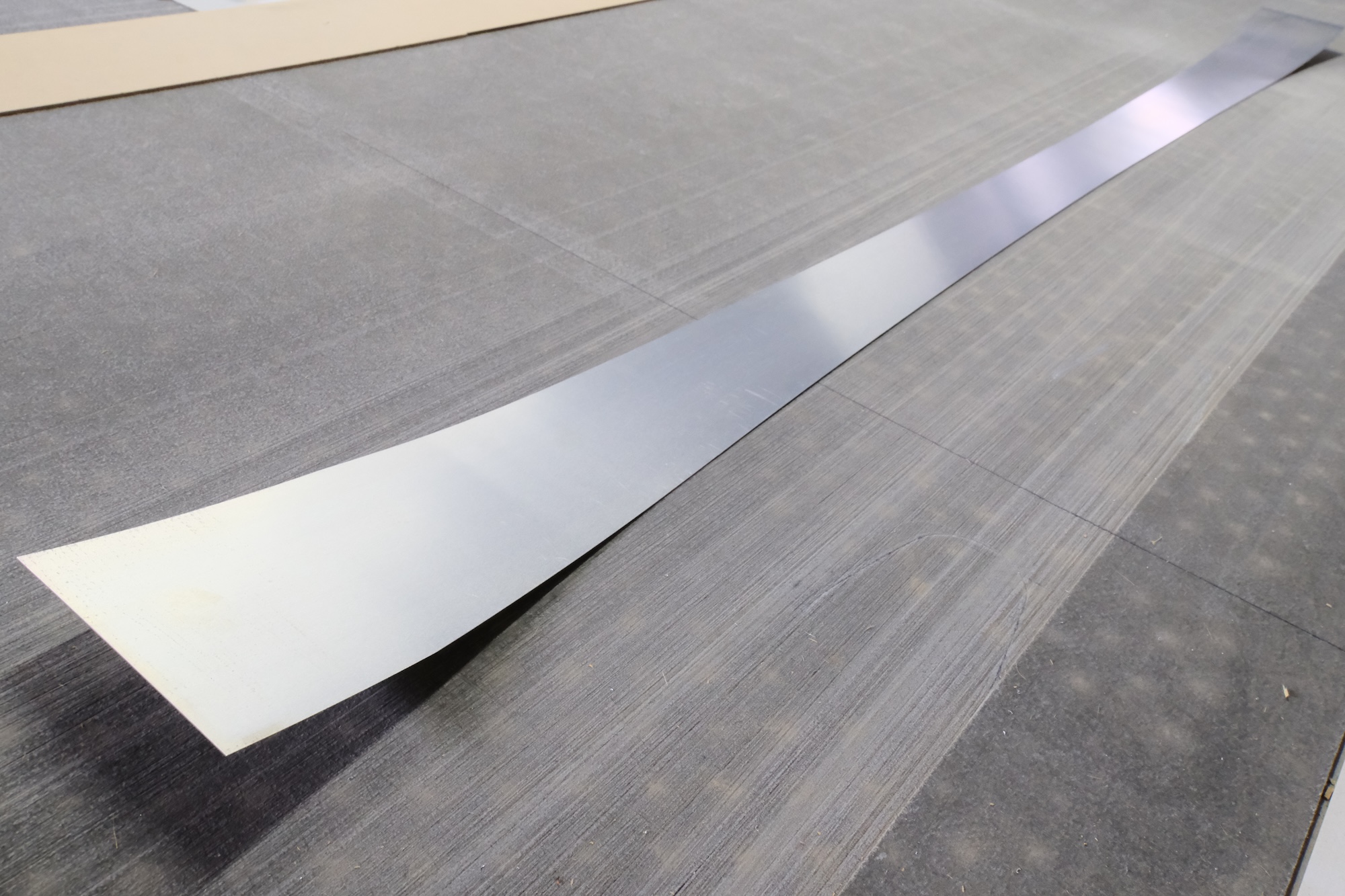
metal materials for the entire project or only for specific parts, and then prepare them
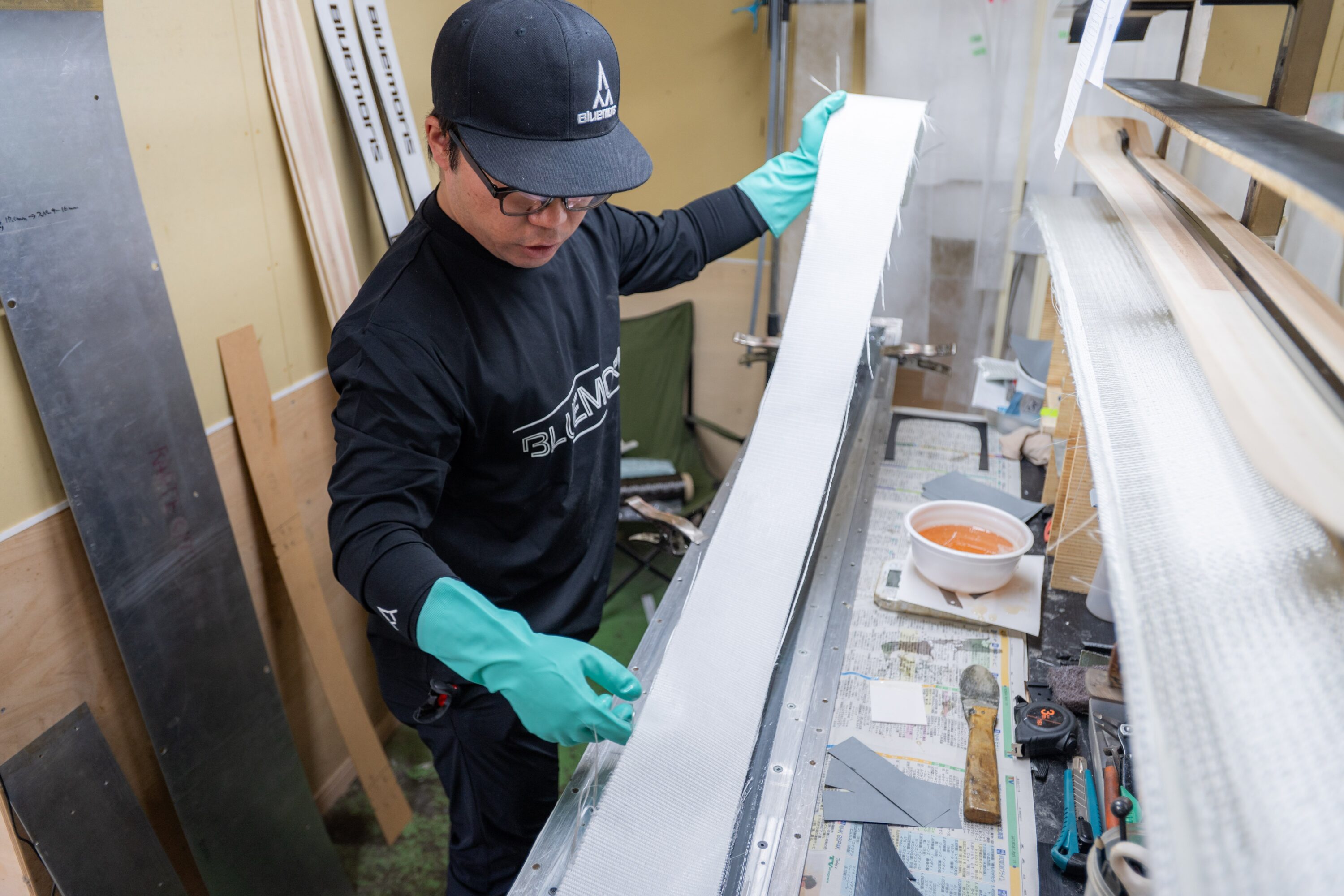
fiber-reinforced plastic) is cut from its flat sheet form to fit the ski shape.
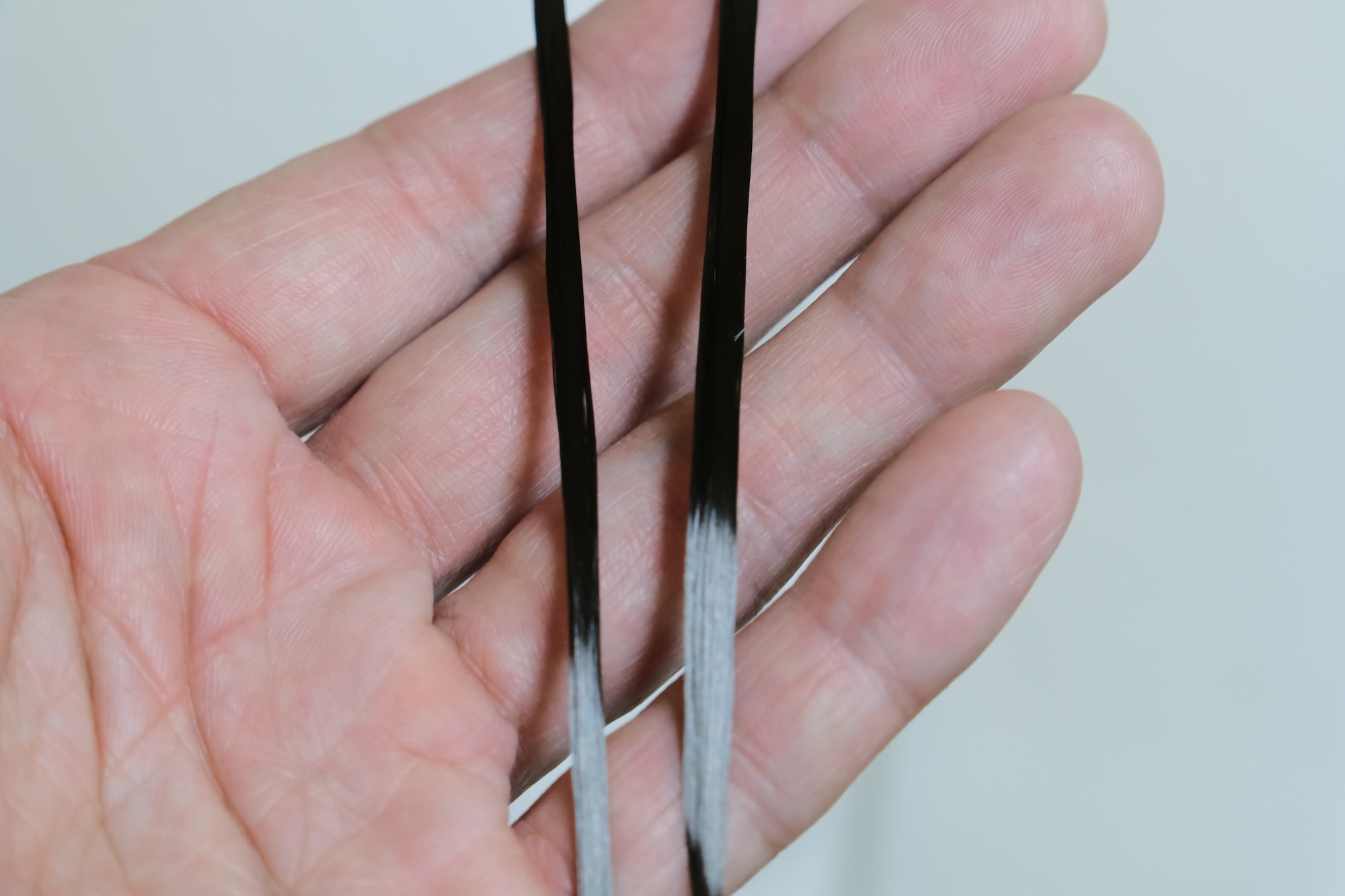
fiber throughout or partially, and then set it up.
the adhesive board and the number of layers of materials used
Although not shown in the photos, special chemical fibers and auxiliary agents are also used, with the required amounts set for each specific area
As described above, the materials are processed into individual components, which are then incorporated into the skis
The craftsman's intuition surpasses even databases! And then came the "destructive testing."
While I was studying these things, Mr. Satomura, who was in charge of ski development at the head office, was working on changing the material of a ski that was already on the market. He
was manufacturing a new ski that was lighter but did not lose any of the rigidity of the ski.
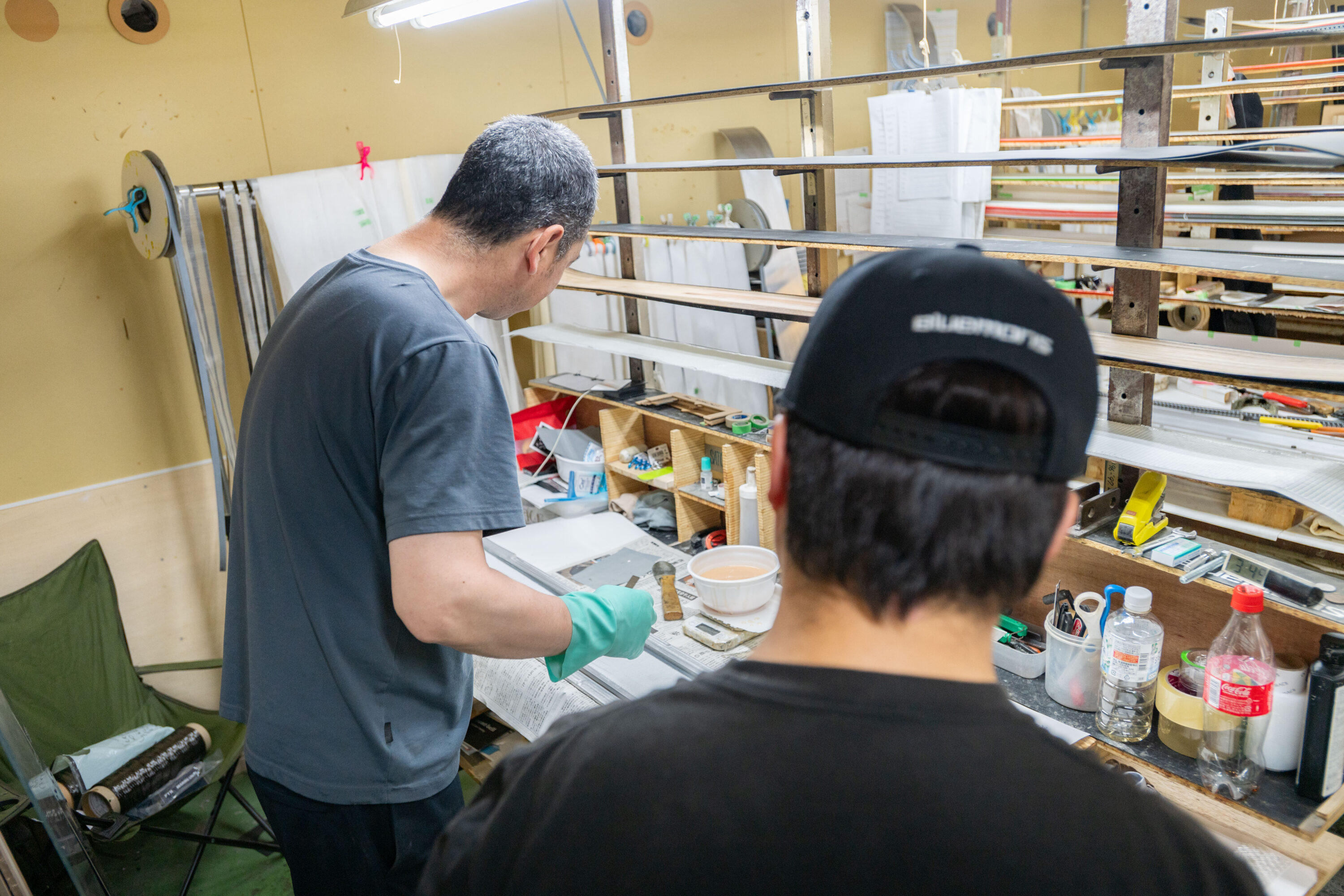
Blue Morris has its own database based on past experience, and by inputting data on changes or increases/decreases in materials, it can instantly calculate how much the weight and rigidity will change
However, that doesn't always work perfectly
In reality, even if the weight and rigidity feel sufficient when held, mass production is not possible if destructive testing or other methods fail to meet the required standards
Next, Satomura was working on reducing the weight by making the FRP as thin as possible and attaching carbon fiber to it
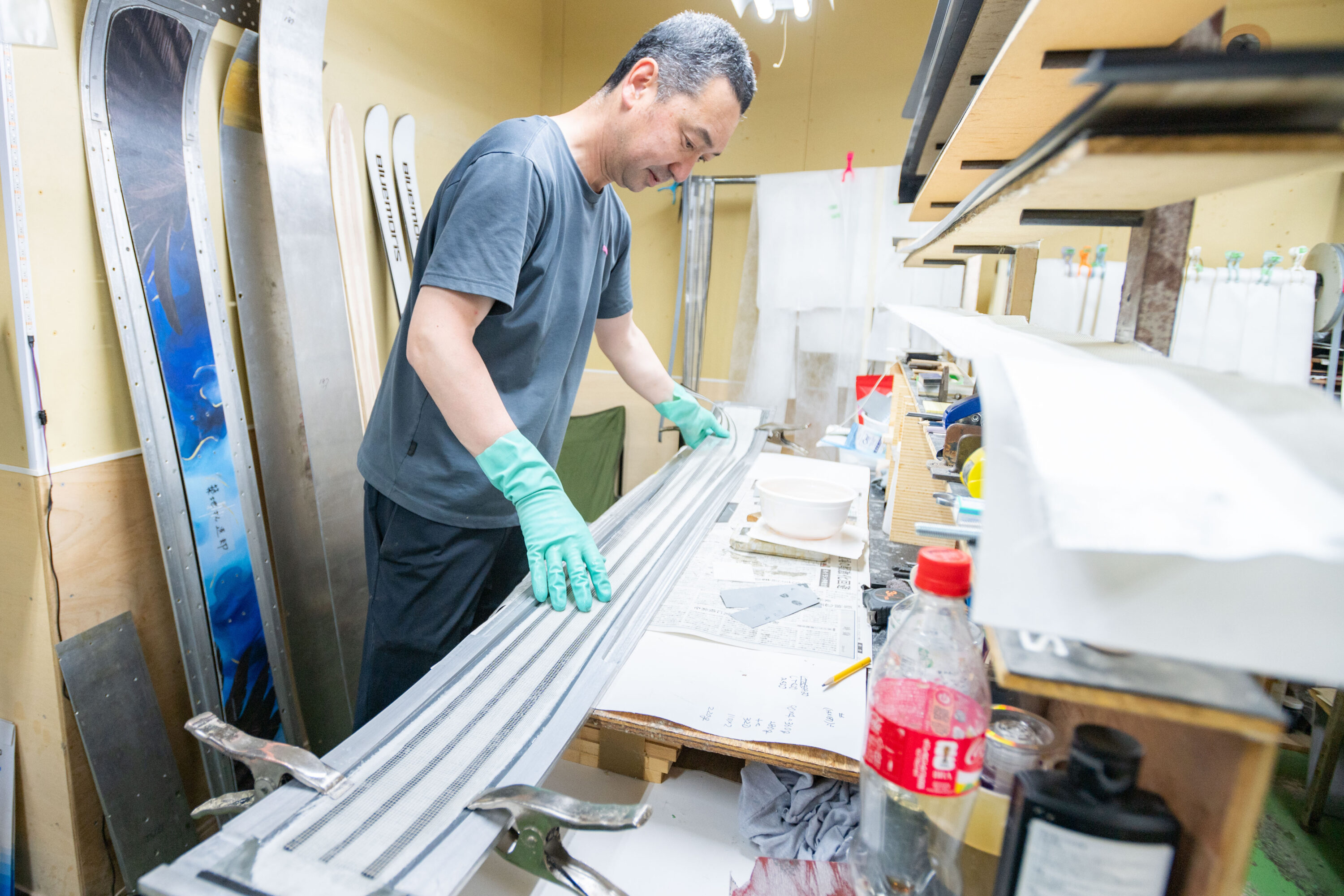
Once the ski's characteristics are roughly determined, the next step is destructive testing.
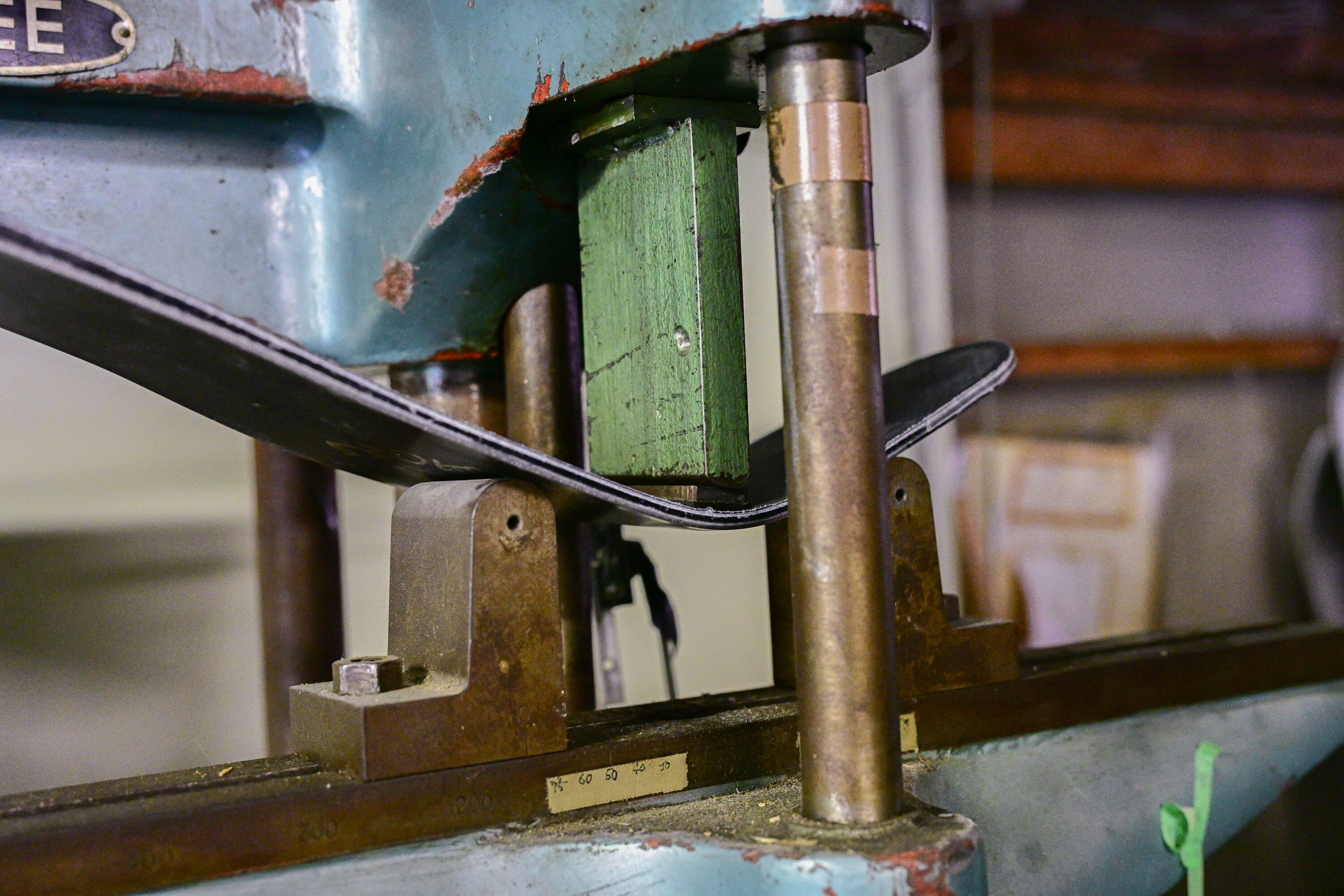
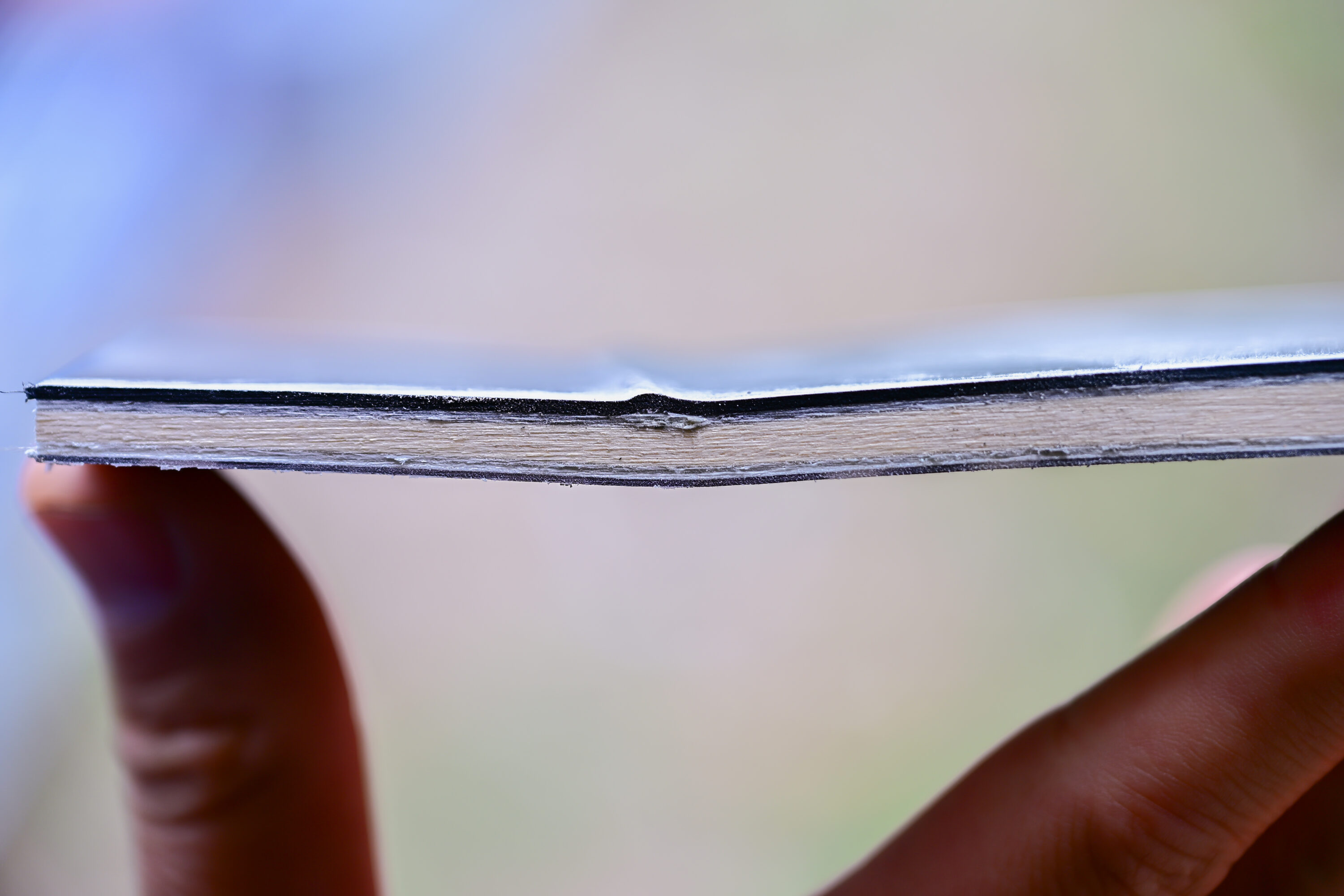
There are three types of destructive testing: tensile strength of the binding mounting screws, strength against the plane of the ski, and torsional strength. These tests are performed by applying force until the ski breaks.

The "U-shaped" route where skiing originated
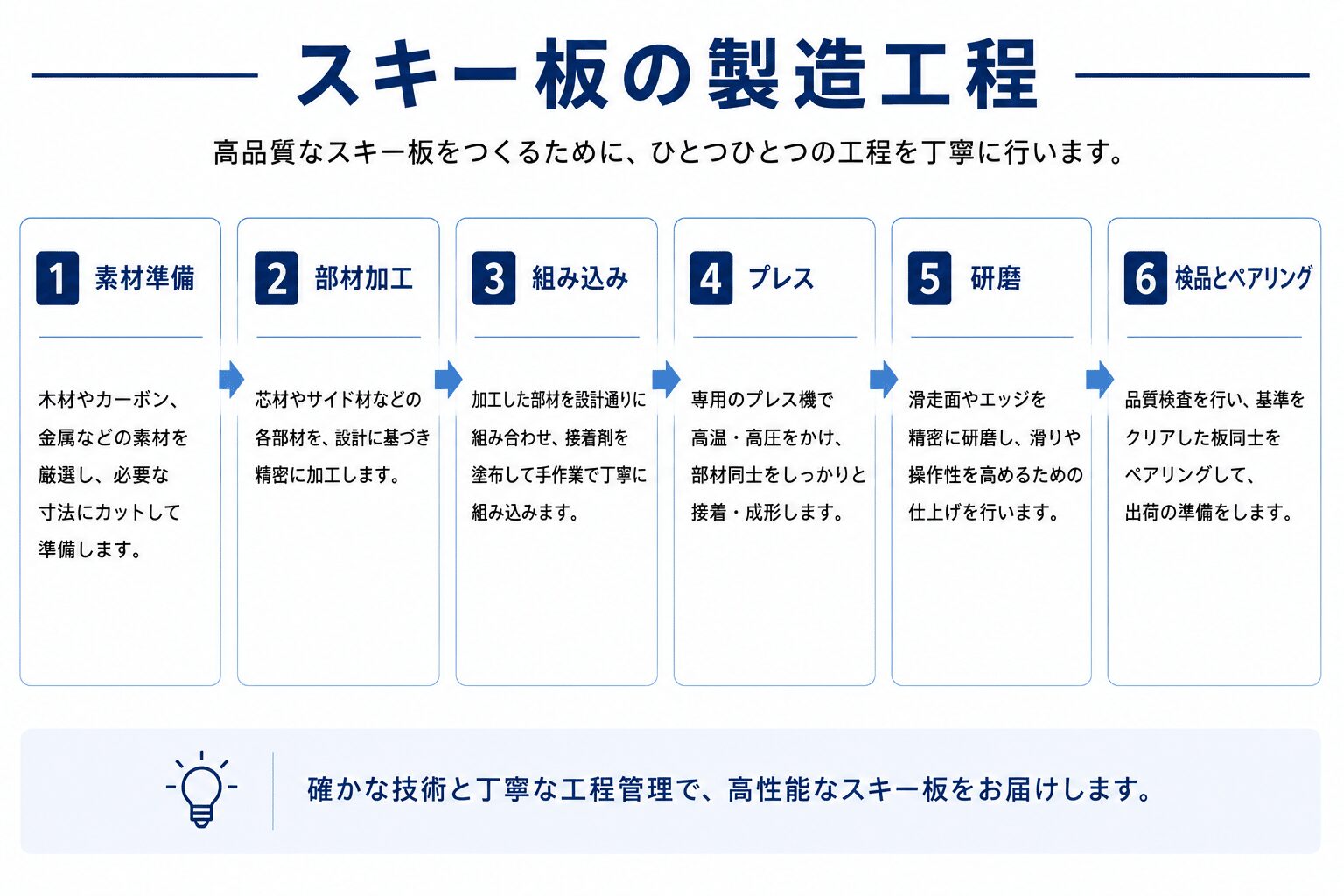
Now, let's finally look at the board-making process.
The above steps describe the process after the prototype has been made and the mass production stage has begun.
At the Blue Morris factory, each process is prepared according to the path you walk through, and the flow is such that you enter the U-shaped factory and come out to find a finished ski.
This time, I will be apprenticing under Mr. Satomura and working on the ski assembly process. This is the most important task I need to learn on my first day.
'Assembly' is the core of the ski manufacturing process and refers to the process of accurately and quickly putting the components into the mold.
Incidentally, at the time I didn't understand why I had to assemble the parts into the mold "quickly." This would later lead to a very big mistake, but I'll tell you about that next time
It seems I'll have to do the 'integration' work all by myself tomorrow. So, I'm going to have Satomura show me how he actually does it
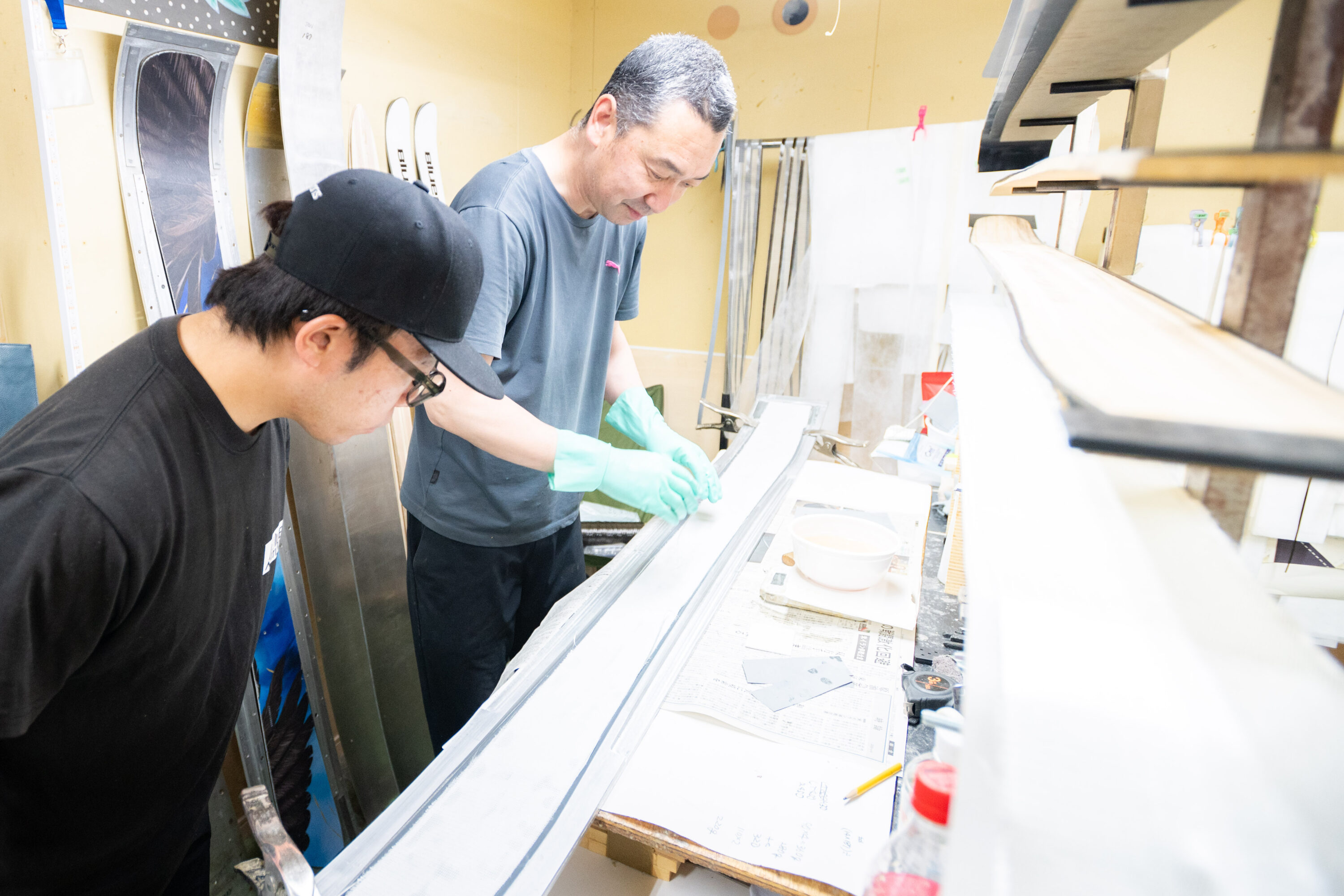

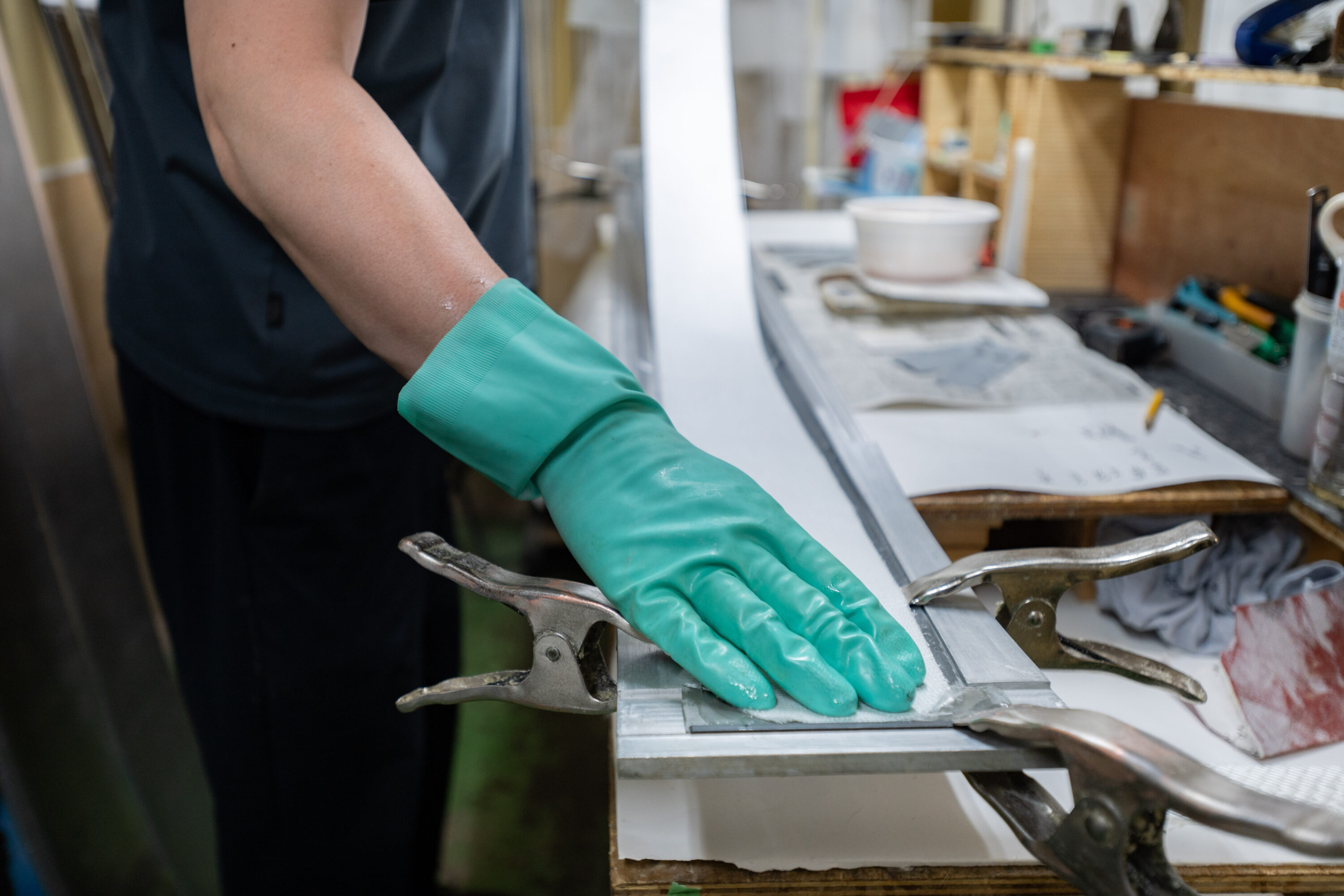
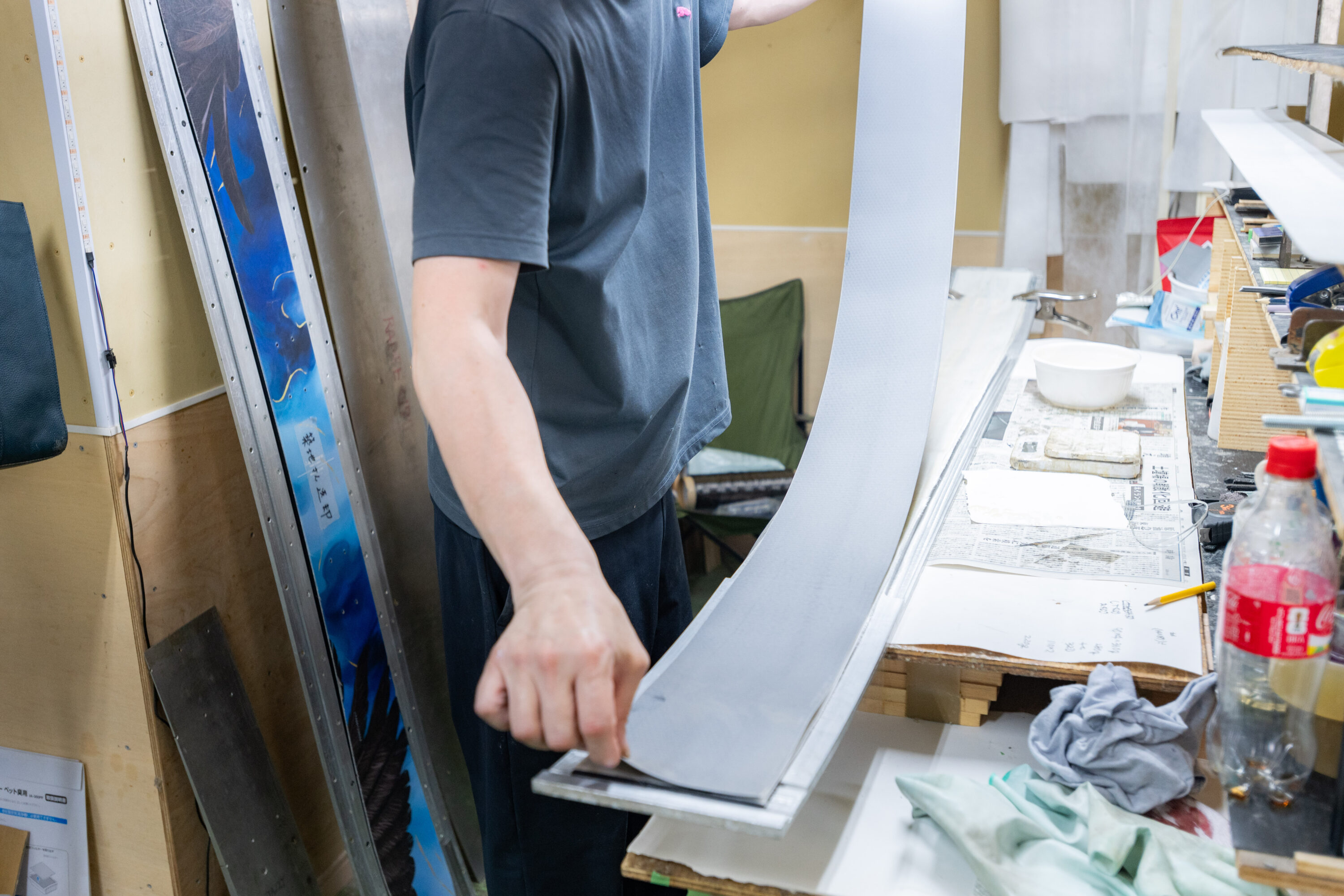
"Oh, I see. I see, I see."
I was nodding along, the kind of response you'd expect from someone who didn't really understand. When I saw a skilled craftsman, it seemed easy. But I still didn't really understand what they were actually doing
"Don't worry, I'll put them in the correct order for you, so all you have to do is stack them according to the blueprint."
Ms. Satomura was smiling brightly. I thought, "Then it should be alright, right?" and continued listening
"Well, I'll prepare it, and if there are any defects, buu—lol"
...Wait!? He's saying something rather ominous. Whether he continues with "punch..." or "kill...", it sounds dangerous. Is he the type of person who's scary behind a smile? A sense of tension fills the air
My brain completely exploded! A night in Aomori spent studying intensely while crying

The above content is a supplement to what was roughly explained on the first day, covered through several days of question-and-answer sessions.
To be honest, after finishing the first day of training and leaving the factory, I wonder if you can understand the feeling of wanting to cool down your brain by looking at the sunset over Mutsu Bay and thinking, "Ah, that's beautiful."
The more you understand, the more questions arise that you don't understand
Or rather, it's even a mystery whether what I think I know is truly what I know. This is the situation even after finally being able to organize my thoughts. This is not the amount of information that someone who truly understands nothing should be cramming into their brain
And separately from all that, I'm already starting to forget the technical aspects, like the assembly process on the second day. My brain is overloaded, and my mind is filled with nothing but anxiety
I frantically tried to put together a summary by looking at the photos the photographer had taken, the information I had scribbled in my notebook, and the videos and photos I had taken with my smartphone
The hotel offered an all-you-can-drink option, including alcohol, from check-in until 9 PM, which was a paradise for anyone who loves to drink. However, I didn't drink a single drop as the night in Aomori wore on
To be continued in Episode 2: Board Assembly.
Blue Morris https://bluemoris.com/
Photo by Hodaka Ando