
A "next level" stage created at Yunding Snow Park
Located about 180km northwest of Beijing, the Zhangjiakou area is one of China's most popular snow sports destinations. Yunding Snow Park, part of an existing ski resort, will be the venue for the Olympic slopestyle events. To ensure optimal conditions for the Beijing Olympics, 90% of the snow is artificially generated
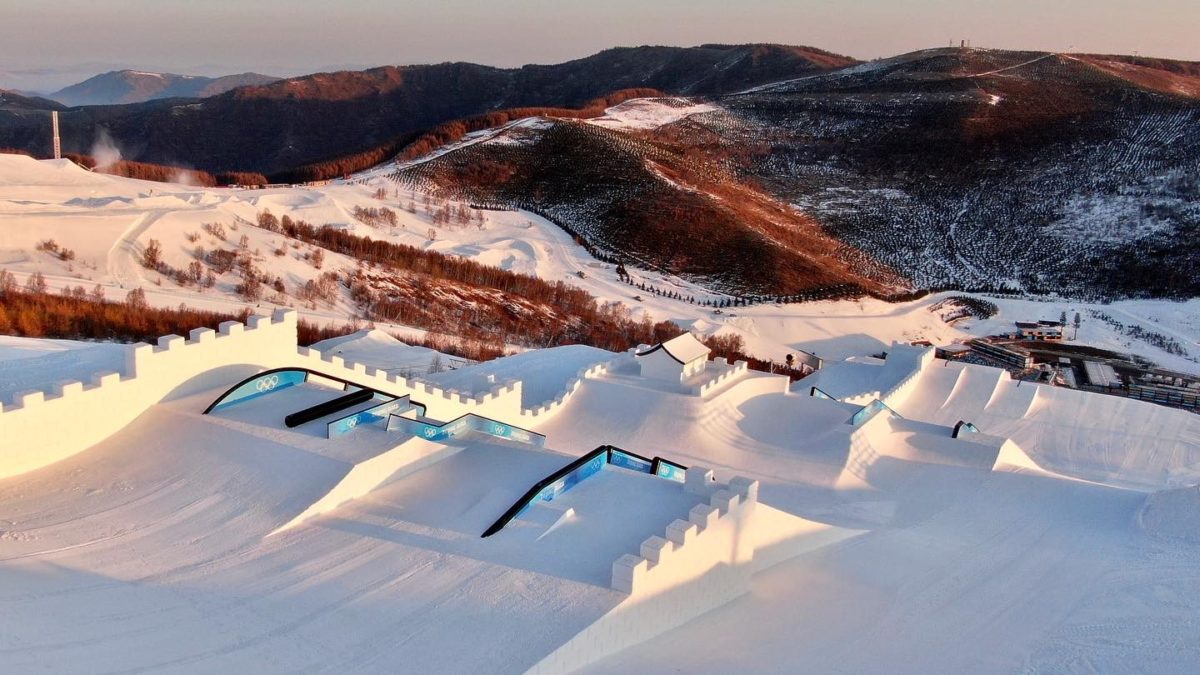
Here is the slopestyle course that was unveiled the other day. What immediately catches your eye is its design, which is full of Chinese cultural influences. The snow walls, reminiscent of the Great Wall of China, actually function as windbreaks for athletes as they ski down the slope. The six sections are laid out like stairs from the top, another idea that takes wind flow into consideration
The design and construction was handled by Schneestern GmbH & Co, a German company world-famous for producing snow parks, MTB courses, skate parks, and more, who also designed the snow park for the PyeongChang Olympics in 2018. In this video, Schneestern's head shaper and designer explain the course
The course is divided into six sections, roughly divided into three jib (rail) sections and three jump sections. The variety of items, the size, and the perfect conditions make this an artistic course that is highly praised as being "next level." Let's take a look at the items in each section
Six sections and their items and highlights
Section 1
Section 1 features a lineup of five different jib items. The high walls on both sides of the rail are intended to provide wind protection. Each item allows for a different style of expression - rainbow rail, tank, flat rail, kink rail, and mailbox, which is ridden by jumping from the rail - so the rider's creativity will be tested by which line they choose

1. Rainbow to Down
2. Tank
3. Flat Rail
4. Down-Flat-Down Rail
5. Transfer Mailbox
Section 2
Section 2 is a proud section that expresses the essence of Chinese culture with a replica of the Great Wall of China. Schneestern has said that this is a photogenic section that can be said to be a symbol of the Beijing Olympics. There is no doubt that this will be the highlight of the first half of the event
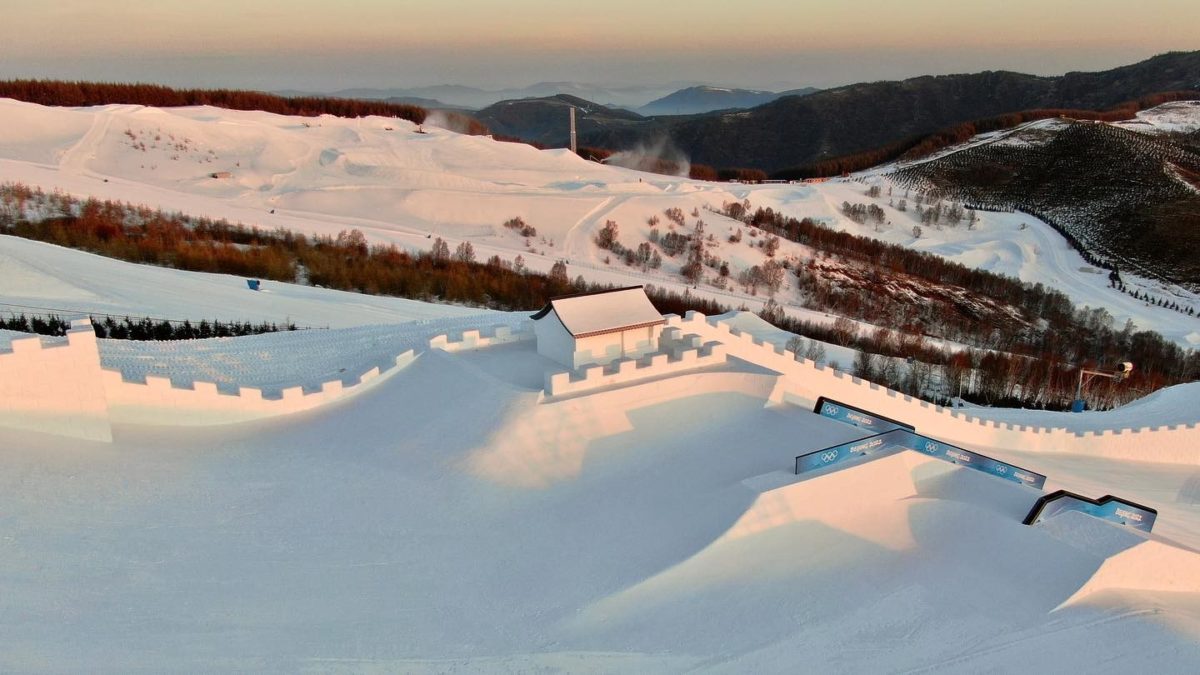
Here are the details of the four items:
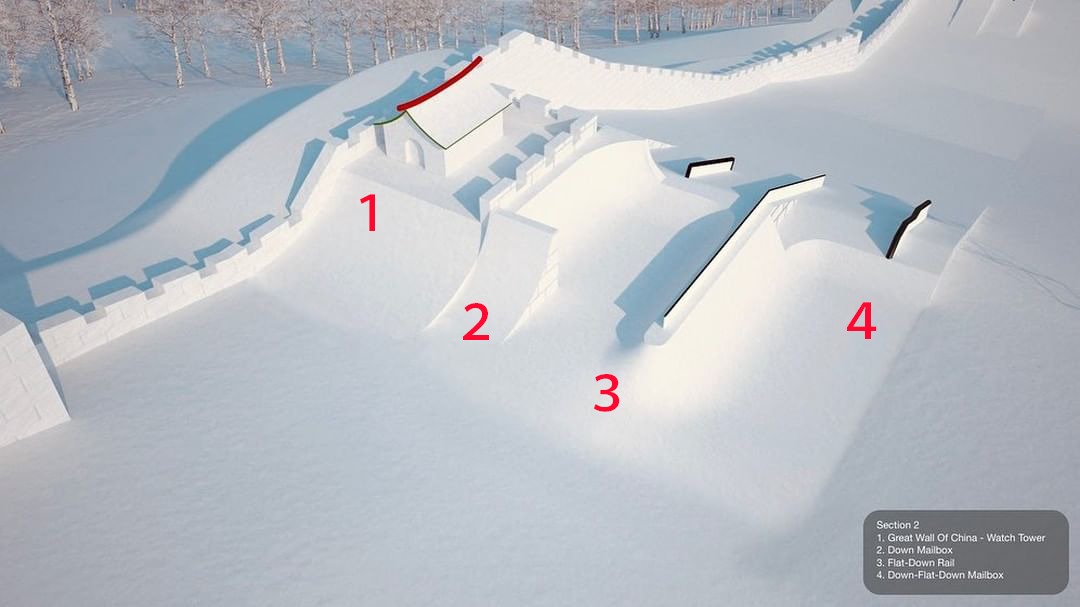
1. Great Wall Of China
2. Down Mailbox
3. Flat-Down Rail
4. Down-Flat-Down Mailbox
Item 1 is called "Great Wall Of China" and is unique in that it involves hitting the curved part of the roof. When you skate, it creates a truly photogenic scene, like this (photo below). All four items are perfect for showcasing technique and style. It will be interesting to see which one you choose to impress the judges
Section 3
The flow of sections 1, 2, and 3, the slope of the course, and the distance between sections look like this. The key is how smoothly you can take the line from sections 1 and 2 to 3 and get into the jump item waiting in section 4
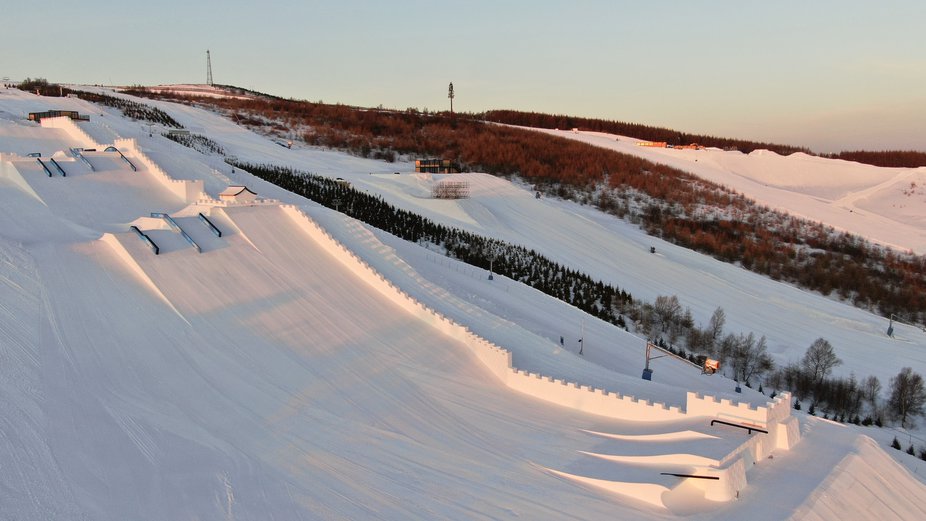
Here are the details of the items in the three sections. They consist of items that can be added without killing the speed from above
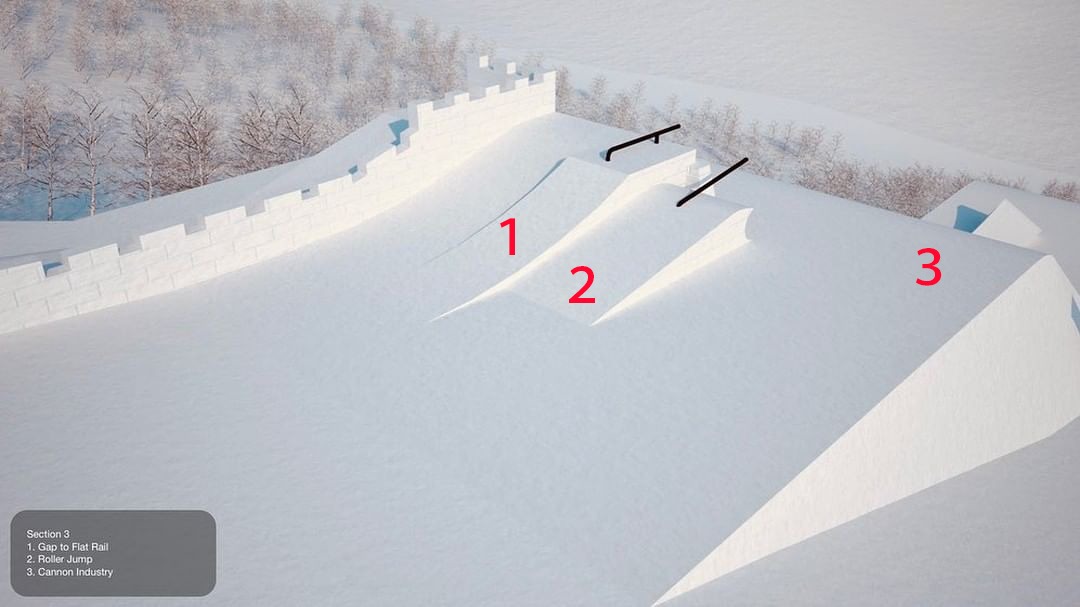
1. Gap to Flat Rail
2. Roller Jump
3. Cannon Industry
Section 4
The most technical highlight of this slopestyle event is Section 4, the "Skew Jumps." This is the return of an item that made a sensational debut at the 2018 PyeongChang Olympics and stole the show. Entry is possible from either direction, with the takeoff occurring from a perfectly angled R. While this perspective illustration may be a little hard to visualize, it's a huge jump, with a distance of 19 meters from the top to the landing burn. Depending on how the entry and R are used, the jump can take on any parabola. From the entry to the tricks in the air, the performance will truly test the skater's creativity and technical ability in the second half of the event
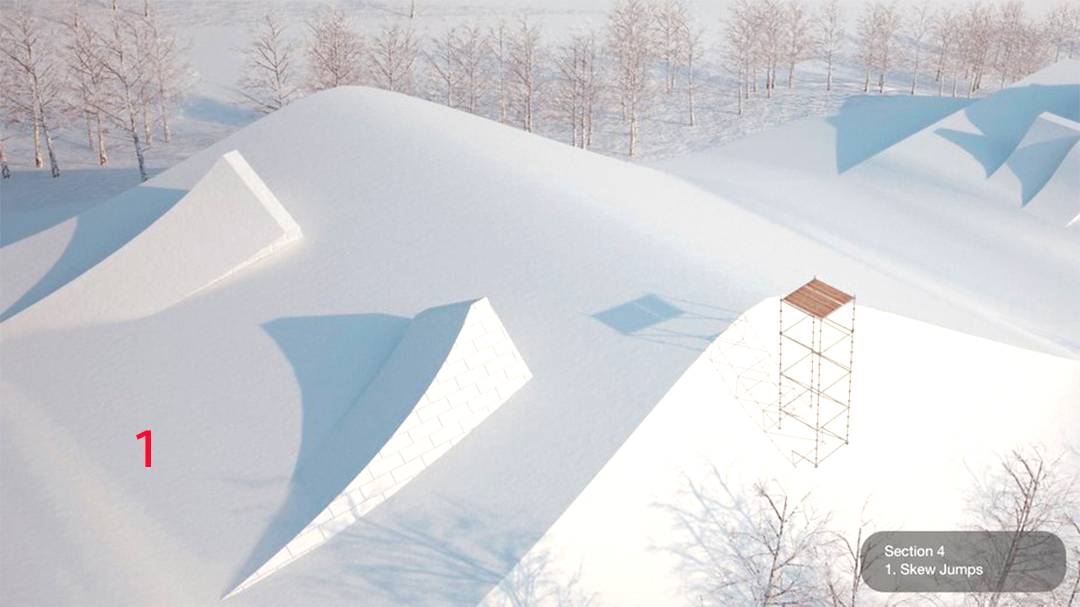
1. Skew Jumps
Section 5
Section 5 features three classic items that are known as "standard" in Japanese and "old-fashioned" in English. Number 1, "Roller To Knuckle," is an item that allows you to express the buttering, or jibbing style of sliding as if licking the snow surface, and its top is 9m high. Number 2, "Transfer Jump," is a 5m kicker, and number 3 is a quarter pipe. All three have the same landing spot, and the jump from the 5m kicker is a whopping 21m. This is the course with the most freedom in terms of how you choose to slide on each item. How you attack the final part of the course could be said to be the deciding factor in the outcome
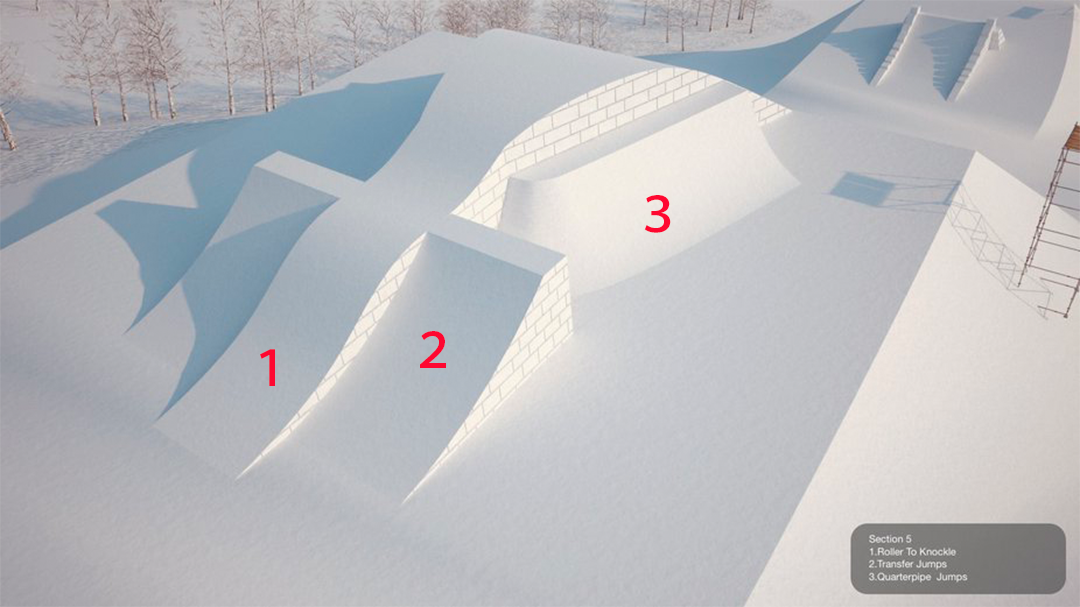
1. Roller To Knuckle
2. Transfer Jumps
3. Quarterpipes
Section 6
The final section, Section 6, featured a 5m Big Air decorated in the style of the Great Wall of China. It was a classic straight jump with a distance of 21m. The final jump of the victory run towards the pinnacle of the world and the gold medal was a straight-forward contest with no tricks, focusing on how big, technical and stylish the jump would be
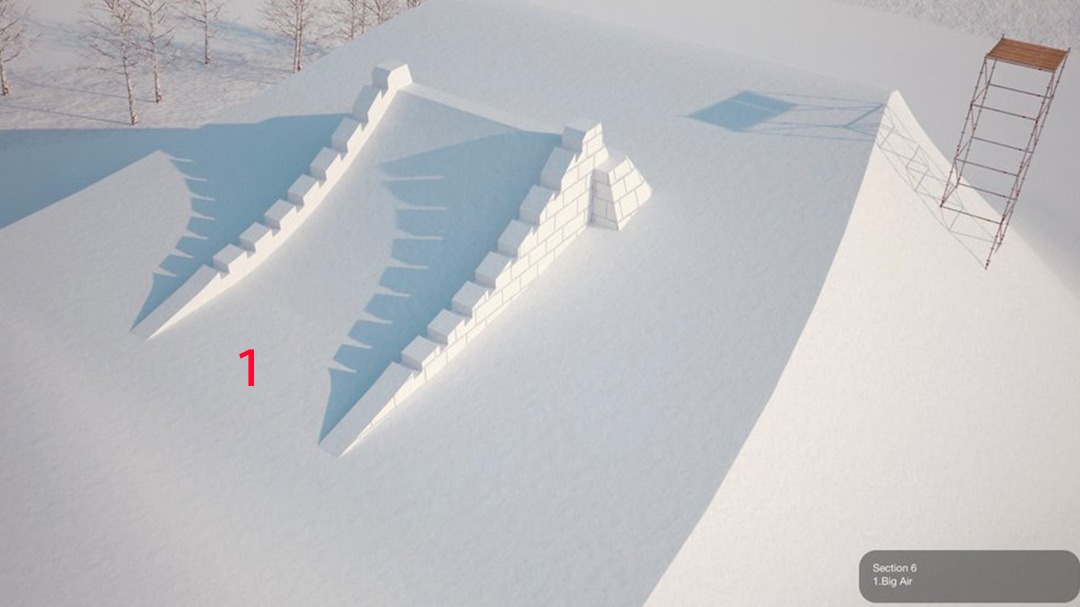
1. Big Air
The battle unfolds!