Ph : special thanks to Makoto Kondo
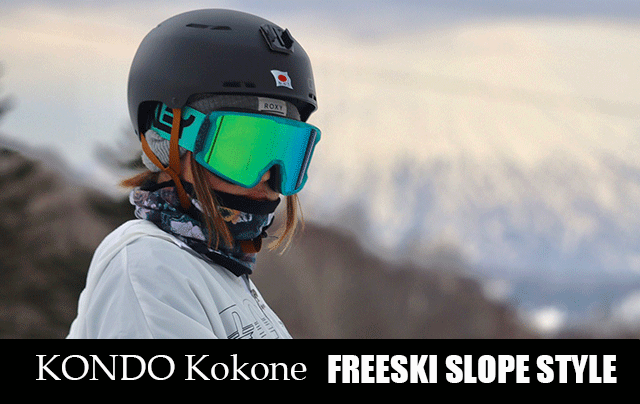
The Beijing Olympics have finally begun. Let's introduce Kondo Kokone, the only Japanese skier to compete in the freestyle slopestyle big air event
Kondo
Kokone
Kondo Kondo is an 18-year-old high school student freeskier born in Hakuba, Nagano Prefecture, who competes in the FIS World Cup in slopestyle and big air, and is a member of the global competition scene. Kondo has participated in a skier development program since childhood, and has been training with her family with the goal of competing in the Olympics. At the last PyeongChang Olympics, Kondo's ability was close to qualifying, but she was disappointed by the age limit
Overcoming the handicaps of a serious injury and the inability to train overseas due to the COVID-19 pandemic, she achieved strong results in the 2021-2022 World Cup, achieving her best result of fifth place in the final competition in France, significantly boosting her world ranking and finally earning her long-awaited ticket to the Olympics. She is the only Japanese competitor in freeski slopestyle big air, a remarkable achievement. She possesses a dynamism and style that is unmatched by "women." She will be competing in Beijing with tricks that no other female skier in the world has yet attempted, and attention is focused on her performance
☟By the way, this is Cocone Kondo's Instagram account. She posted about her joy and determination after being selected for the Beijing Olympics.
@cocone_kondo
■ Profile
| date of birth | Born February 19, 2003 |
| Birthplace | Hakuba Village, Nagano Prefecture |
| Affiliation | Oriental Bio |
| Major battles in recent years | '21 World Championships Slopestyle: 9th place, Big Air: 15th place; '21 World Cup Slopestyle: 7th place in the USA, 5th place in France |
| Gear used | Skis: ARMADA |
| @cocone_kondo |

■ Kondo Kokone - Skating video
He placed 5th at the final World Cup competition in France in January 2022 (from his Facebook page)
■ Comments from the "Online Press Conference to Determine Representatives" just before the Beijing Olympics
With the Beijing Olympics just around the corner, the All Japan Ski Association held an online press conference to determine the Japanese representatives. Here are excerpts from Kondo Kondo's comments. "Q" is a question from a journalist

January 23rd (Sun) 19:00-19:30 From the online press conference to decide the representatives
Q. How do you feel now that you've qualified for the Olympics?
— First of all, I feel a great sense of relief. I've been thinking about how to make a plan to qualify for the Beijing Olympics and working towards that goal, so I'm filled with joy.
Q. What was your plan for the four years from Pyeongchang to Beijing
? — Around the time of the Pyeongchang Olympics four years ago, I was just starting to compete in overseas tournaments and participate in World Cup events for the first time. At that time, I knew I had to gradually advance through the World Cup, but I had no idea how to do it. From around 2020, I started working with the goal of definitely being able to participate in the Olympics. Along the way, I suffered various injuries and my mental state was unstable, so I couldn't quite get my technique in perfect order. However, I continued to work hard, never forgetting the important things like basic training and mental aspects, and I think that ultimately led me to where I am today.
Q. How did you overcome those painful injuries?
— The biggest injury I suffered was a torn anterior cruciate ligament in my knee, which I sustained during the 2018-2019 season. It was the last injury I wanted to suffer in my skiing career, so I was very confused about what to do at the time, but many people involved in skiing gave me a lot of advice. Also, my doctor, who was an acquaintance of my parents, carefully taught me how to do rehabilitation and helped me with training by creating a plan to avoid making the same injury again, which I think was the biggest factor in my recovery. Even so, it took me about 10 to 11 months before I was able to ski on the slopestyle competition course again.
Q. What kind of presence have your parents, who have always supported you, been to you?
— Ever since I decided to take up this sport seriously, they have always been by my side, providing me with a good training environment, and supporting me no matter how far away or expensive my trips were. I can't thank them enough. If it weren't for my family, I would never have had the strong desire to compete in the Olympics or the World Cup, so I think they are the most irreplaceable and important presence in my life.
Q. What do you consider to be your strengths?
— In slopestyle, you don't get points or win just because you can do one difficult trick. What's important is how technically and stably you can execute each item and how cleanly you can go through the entire course. Up until now, judges have often appreciated the cleanliness of my flow and my style, so I think my strengths are the overall flow and style.
Q. What are your favorite tricks and tricks you're good at?
— I like both jumps and jibbing. There's a trick called the "Switch Blender 720," and I think that's my strongest weapon. I'm only good at approaching the kicker backwards, looking at it from the right, and jumping (spinning) into the air from the right side. Improving that was my challenge, but during practice, I came up with a trick where I look at it backwards from the right, and then turn left (spin counterclockwise) at the moment of jumping. No one in the world, male or female, was doing that yet, so it was considered rare and was the trick that received the most praise. So I think the "Switch Blender 720" is my strongest trick.
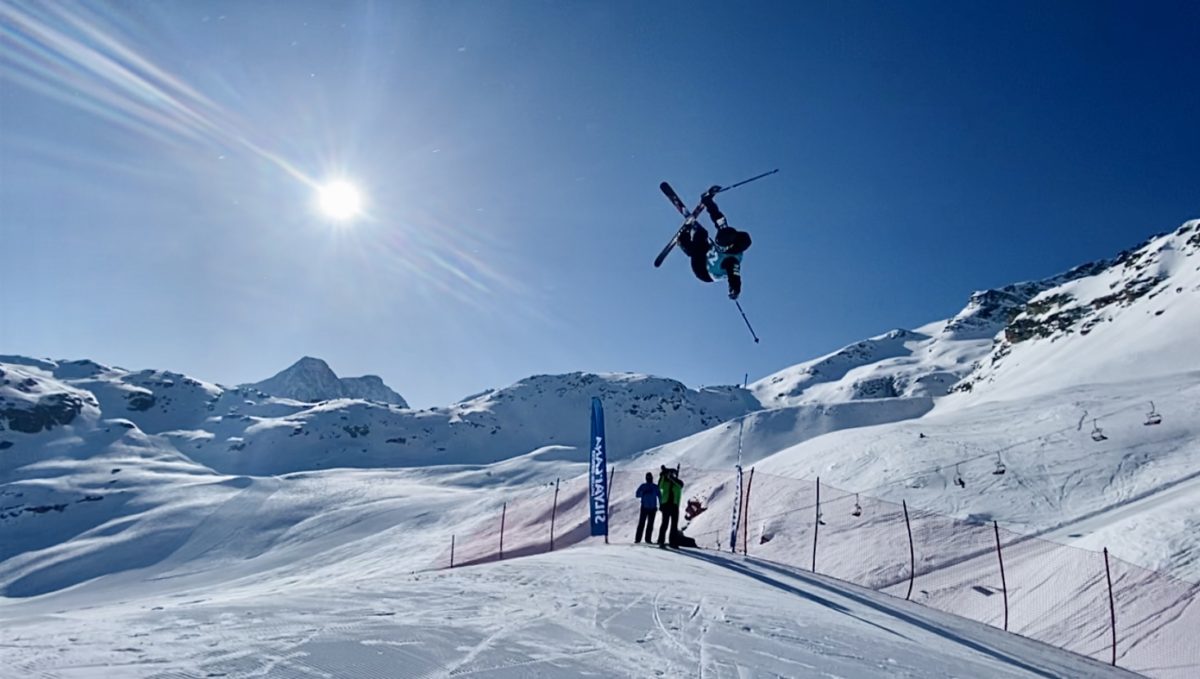
*The first air jump in the final World Cup, where she placed 5th, as shown in the "Kondo Kokone Riding Video" mentioned earlier, is that "Switch Blender 720"!
Q. Your father was a top skier who competed in moguls, right? What made you choose slopestyle instead of moguls?
— I started competing seriously in the fifth grade of elementary school. Until then, I just liked skiing, I liked moguls and I liked the park, but when my parents asked me in the fifth grade, "Which do you want to do seriously, moguls or slopestyle?", slopestyle was the first thing that came to mind. I found slopestyle more interesting when I tried it, so I chose that.
Q. What does the Olympics mean to you, Kondo?
— I believe that winning a medal at the Olympics means being at the very top of your sport. My biggest goal is to be the best in the world, so I want to aim for a gold medal at either the Olympics or the Winter X Games.
Q. I heard you became the first Olympic athlete to come from the "Swan" athlete development project organized by your home prefecture of Nagano. What did you learn at Swan?
— It was a big deal for me to be able to train with kids from various winter sports like speed skating and alpine skiing, and I feel like I learned a lot. We did some really tough and intense training during short-term camps, and ate a lot of food to build up our strength... I learned a lot of things, like nutrition and how to take care of my own body. I joined the Swan project knowing nothing, but it was a great opportunity to realize that in order to become an athlete, you have to learn a lot of different things.
Q. Could you tell us how you feel about competing in the Olympics now
? — I see these Olympics as a stepping stone to the next competition in Italy, so rather than focusing on the results, I want to showcase my strengths and best qualities, show a cool run, and convey the appeal of slopestyle to more people who are watching. First and foremost, I want to enjoy myself and give a run that I can be satisfied with. I'll do my best!