


Kenta Uraki once competed in World Cup races, and in 2018 returned to the snow as head coach of the All Japan Alpine Team. The following year he moved to Innsbruck, Austria, and is now the exclusive distributor of Kessle Ski in Japan. He will be bringing you the latest information and interesting topics from a global perspective from overseas
The secrets of alpine gear that supports extreme technique and speed
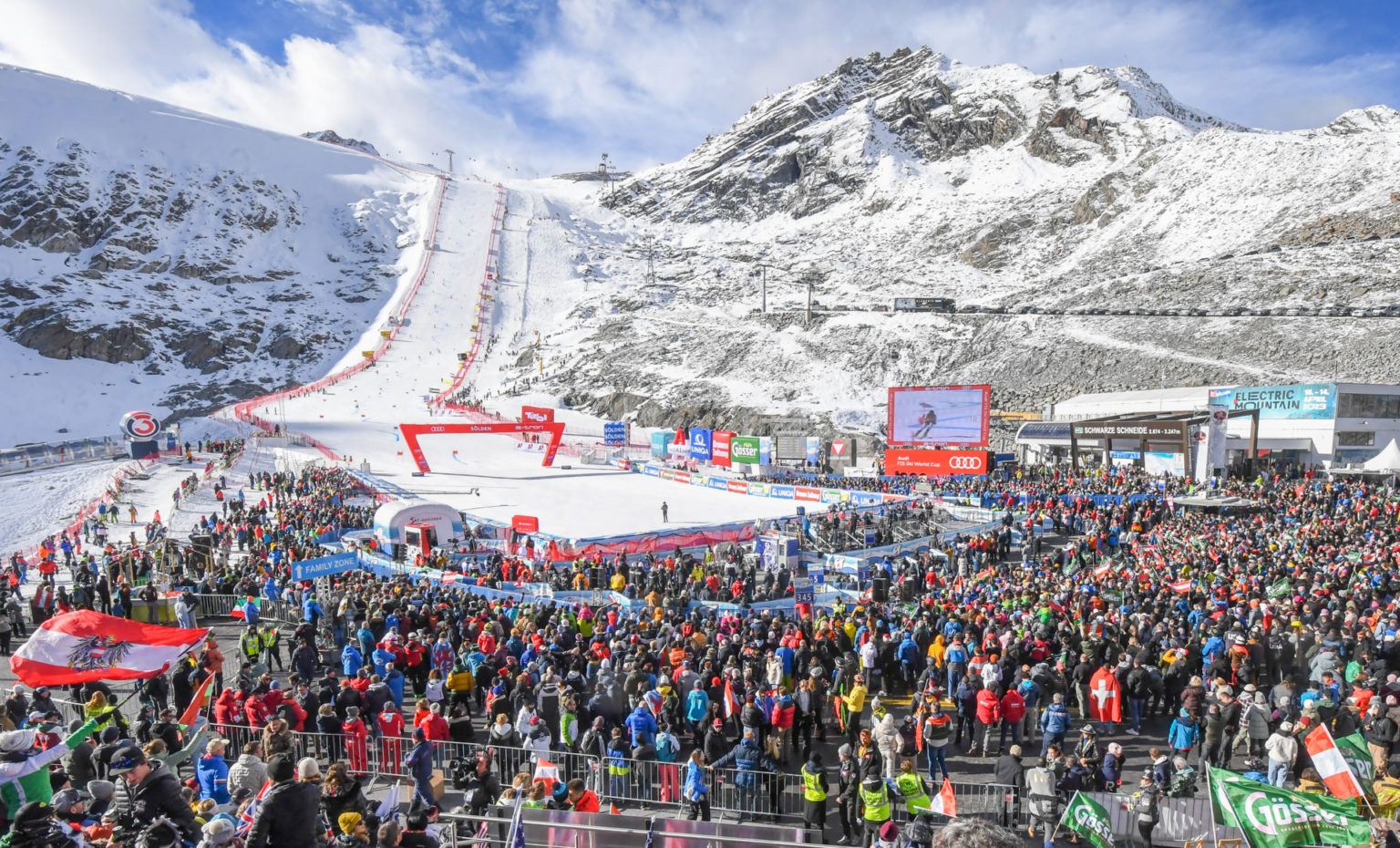
The Milan-Cortina Winter Olympics will finally begin on February 6, 2026. In Japan, attention tends to be focused on snowboarding and ski jumping, where medal hopes are high, but in Europe, alpine skiing is the undisputed star of winter. This is because, especially in the European Alps, alpine skiing is a national sport on a par with soccer
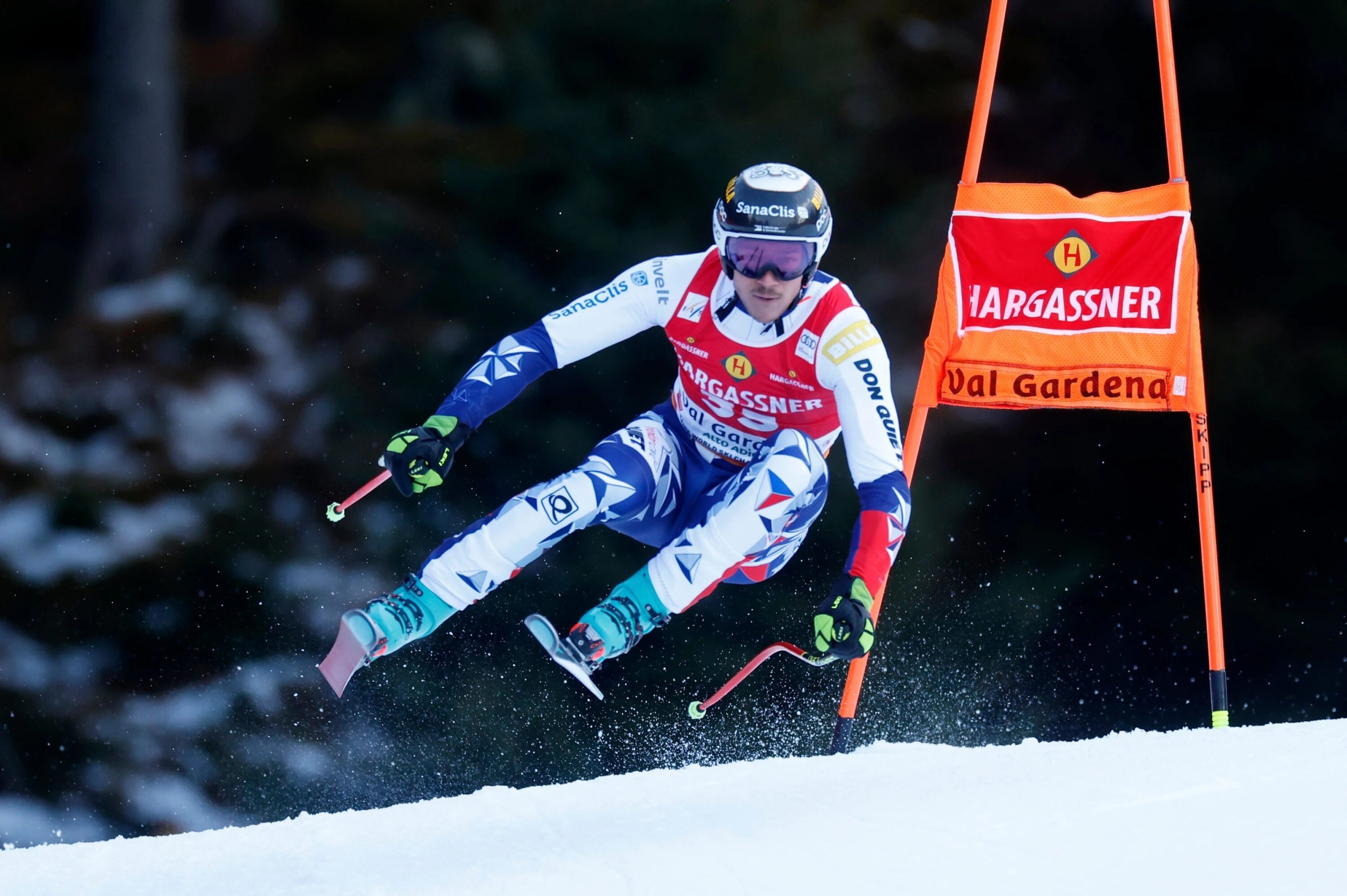
The FIS World Cup is broadcast live on national television, and top athletes are treated as superstars representing their countries. When it comes to the Winter Olympics, the excitement is on a whole new level. This time, we'll be taking a look at the gear used by top alpine skiers ahead of the Milan-Cortina Olympics. What features and secrets are packed into the skis and ski boots that support their extreme technique and speed?
the characteristics of the skis used by top athletes?
Copyright: Kästle GmbH
In alpine ski races, large amounts of water are sprayed beforehand to create hard, packed "ice slopes" to prevent the course from becoming rough no matter how many people ski on them. In the World Cup, the ice is even harder, and even advanced skiers cannot even ski down the slopes without sharp, well-honed edges
Because alpine skiers sometimes ski down such courses at speeds of over 140 km/h, the skis used by top skiers are completely different from the commercially available models used by average skiers.Alpine skiing consists of four disciplines: slalom (SL), giant slalom (GS), super-giant slalom (SG), and downhill (DH), each of which has strict regulations set out by the International Ski Federation (FIS), with ski length and side curve clearly defined for each discipline
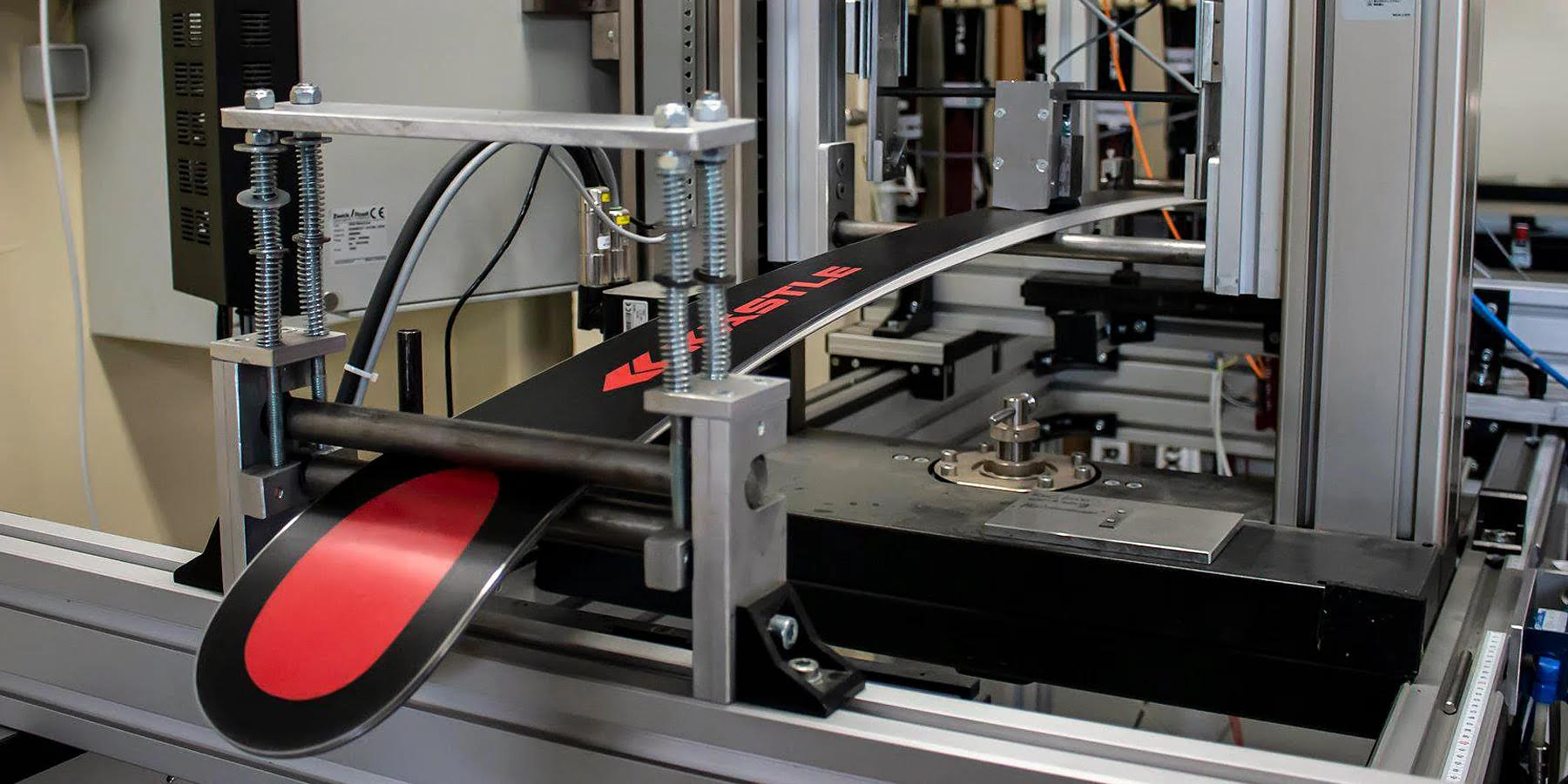
The Alpine World Cup is not only a battle between athletes, but also the forefront of the technological competition between ski manufacturers. Each manufacturer conducts daily research, conducting repeated tests while making minute changes to the materials and structure they use. Today's racing skis are mainly based on a wood core such as poplar or beech, with a multi-layered structure that combines titanium, fiberglass, and carbon. On top of that, the top sheet, running surface, sidewalls, and edges are assembled with extremely high precision
By precisely controlling the balance of these elements, flex and torsional rigidity are increased, maximizing edge grip on hard icy slopes. This is the greatest feature of racing skis. Furthermore, at the top level, the flex and internal structure are fine-tuned for each individual skier, and it is not uncommon for skis to be "completely different inside" even if they are made by the same brand and have the same model name
At this point, let's expand on our imagination of the alpine scene from footage from the last Beijing Olympics
Number of skis, service staff, manufacturer support
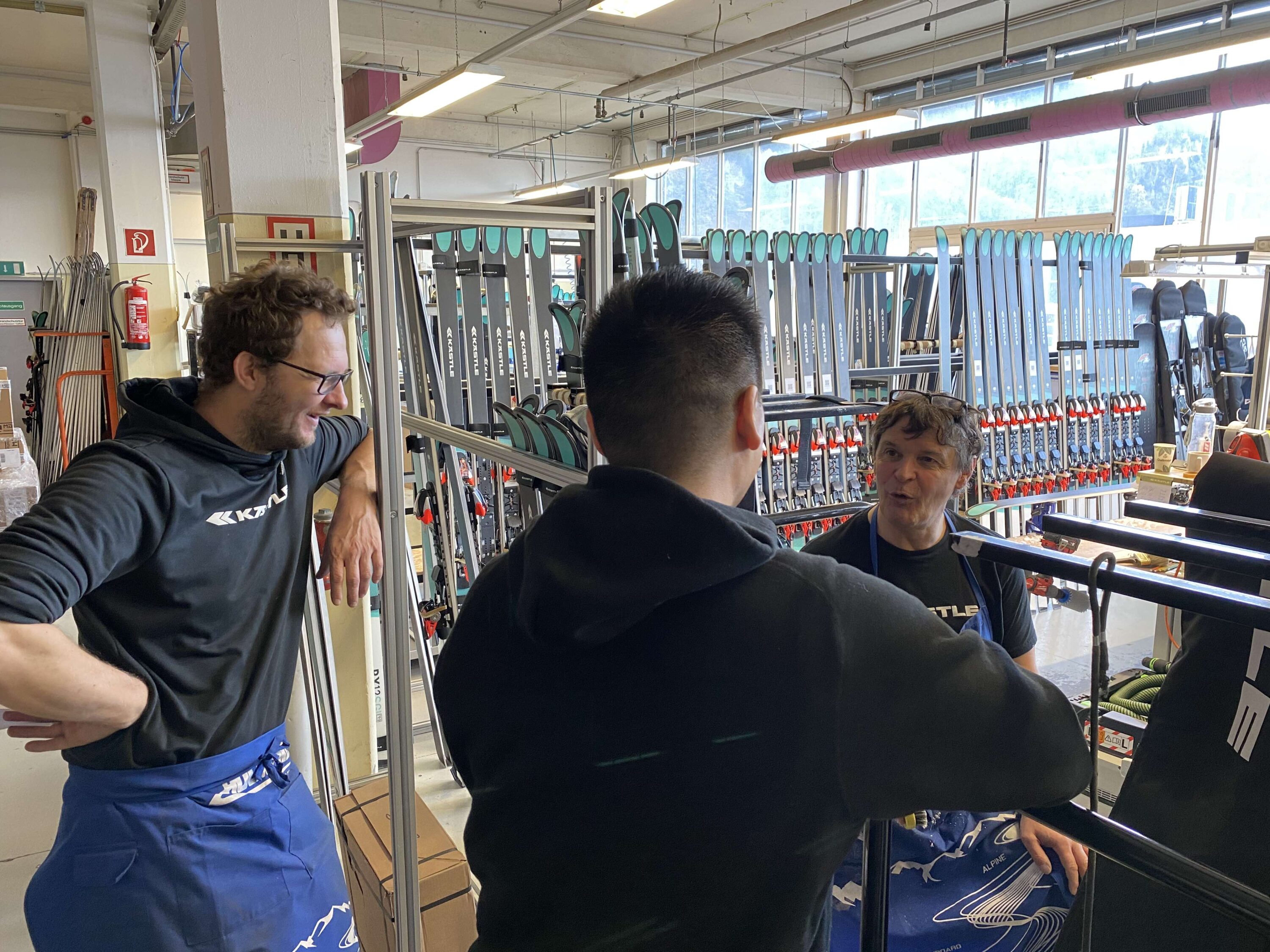
When I was still active, I did all four disciplines, so I would take a lot of skis with me on trips. I needed about 15 pairs of skis for each trip. Each pair weighed more than 10kg, so if I put them in a sturdy case, that alone would weigh about 200kg. The first "battle" I faced on an overseas trip was negotiating the excess weight at the airport check-in counter
Putting that aside, I recently asked Mr. Chunty, the serviceman for Esther Ledecka, the ace female skier in the Kesle skiing world, how many pairs of skis she carries around with her, and he told me that even though she only competes in speed events, she always has 40 pairs of skis on hand. Mr. Chunty used to be in charge of service for Alexis Pinturault, the star French skier who competes in all events, and he said that Alexis uses an astonishing 160 pairs of skis a year
Speaking of servicemen, top skiers generally have one, similar to a mechanic in car racing. The serviceman's main job is tuning up skis. In particular, the edges must be precisely angled, sharp as a knife, and scratch-free, a skill that requires great skill to master. In addition to providing support on the snow, building a good relationship with the serviceman can also have a major impact on the athlete's mental health
Just looking at skis, there are so many things, people, and money involved - carefully selected materials, service staff who prepare them, and ski manufacturers who financially support them - and it's not a world where you can compete alone
Ski boots used by top athletes and their features

Ski boots have an even more direct impact on a skier's feel than the skis themselves.
For example, a flex of 150, considered the stiffest in commercially available models, falls into the soft category among ski boots, which are broadly categorized into hard, medium, and soft. Shell stiffness is further selected from more specific categories, and skiers may even vary the stiffness of the upper and lower shells, depending on their individual preferences.
Cant adjustment is also crucial. Cant plates are inserted at the joint between the upper and lower parts of the boot, or between the lifter plate on the bottom of the boot, and the optimal setting is adjusted down to the millimeter to suit each athlete's unique skeletal structure and balance.
Many top athletes use different boots for each discipline, such as SL, GS, and speed skiing. If the skis change, the boots change too. The role of each is that clear. What is surprisingly little known is the importance of boot sizing. Top athletes tend to wear boots that are significantly smaller than those of average skiers.
The reason is that applying pressure at a point allows you to transmit power more directly to the snow surface than transmitting force over an area. Racing boots are originally made to be tight, and painful areas are trimmed down to fit the foot. However, this isn't just done on the sides; the toes and heels are also trimmed down to maximize the fit. In a world where every hundredth of a second counts, it's only natural that performance takes priority over comfort

Photo: AFLO
A familiar example is when Akira Sasaki, at the age of 20, was using slightly loose racing boots because he loved freeriding. During a period when his performance was stagnating,service technician Yuki Ito, and his results improved dramatically. Also, Seigo Kato, who is still competing at the top level in the world, usually wears shoes in sizes 27.5-28cm, but apparently uses 25.5cm ski boots.
Of course, this applies to athletes competing at the world's top level. For average skiers, we recommend choosing boots that fit just right and allow you to ski comfortably all day long
Gear for athletes evolves to protect themselves
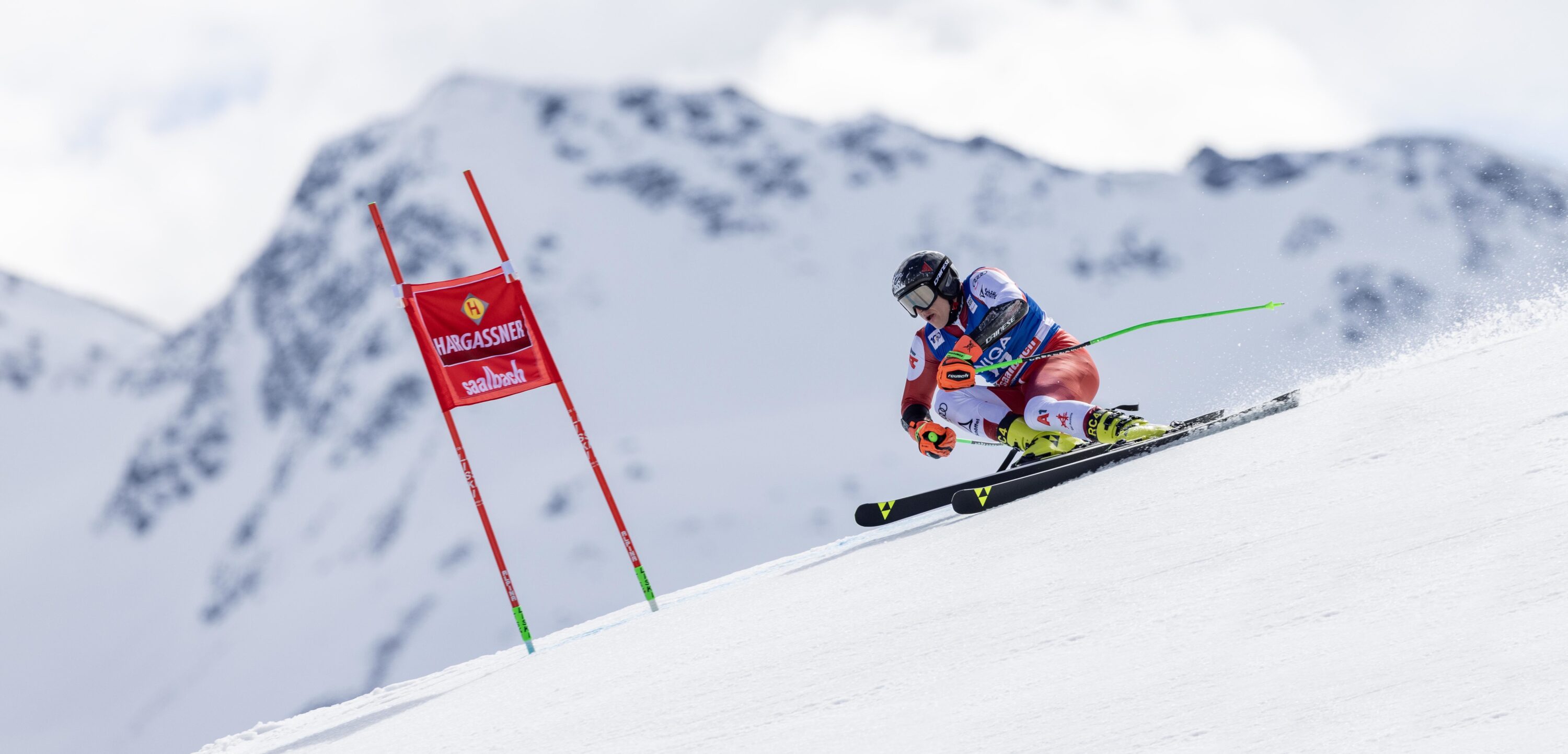
Alpine skiing, while glamorous, is a sport that is always fraught with significant risks. Protective gear continues to evolve to protect against crashes at high speeds. New regulations established by the FIS for the 2025-2026 season mandate the use of airbag systems in speed events, and cut-resistant underwear (lower body) is mandatory in all events
The airbag system is worn under the racing suit, and when it detects a risk of a collision, the airbags inside the jacket instantly inflate. Covering the torso, shoulders, and back, it prevents serious injury. Equipped with an accelerometer, gyroscope, and GPS, the control unit monitors sensor information 1,000 times per second to detect an imminent collision. In high-speed events, this is what causes the upper body to appear to bulge
Cut-resistant underwear uses special fabrics to protect the body from cuts and lacerations caused by ski edges. A few years ago, when cut-resistant underwear was not yet a standard, I witnessed a skier fall on a World Cup course, cut his calf deeply on his own ski edge, and was unable to stop the bleeding, requiring him to be taken to the hospital by helicopter. The skier has not returned to snow since
Specialized gear, including helmets and back protectors, are essential for athletes who tackle icy slopes without hesitation. Alpine skiing is not a sport where victory or defeat is decided solely by the athlete's skill or mentality. Skis, boots, protectors...the "collaboration" with gear creates a world where every 0.01 seconds counts
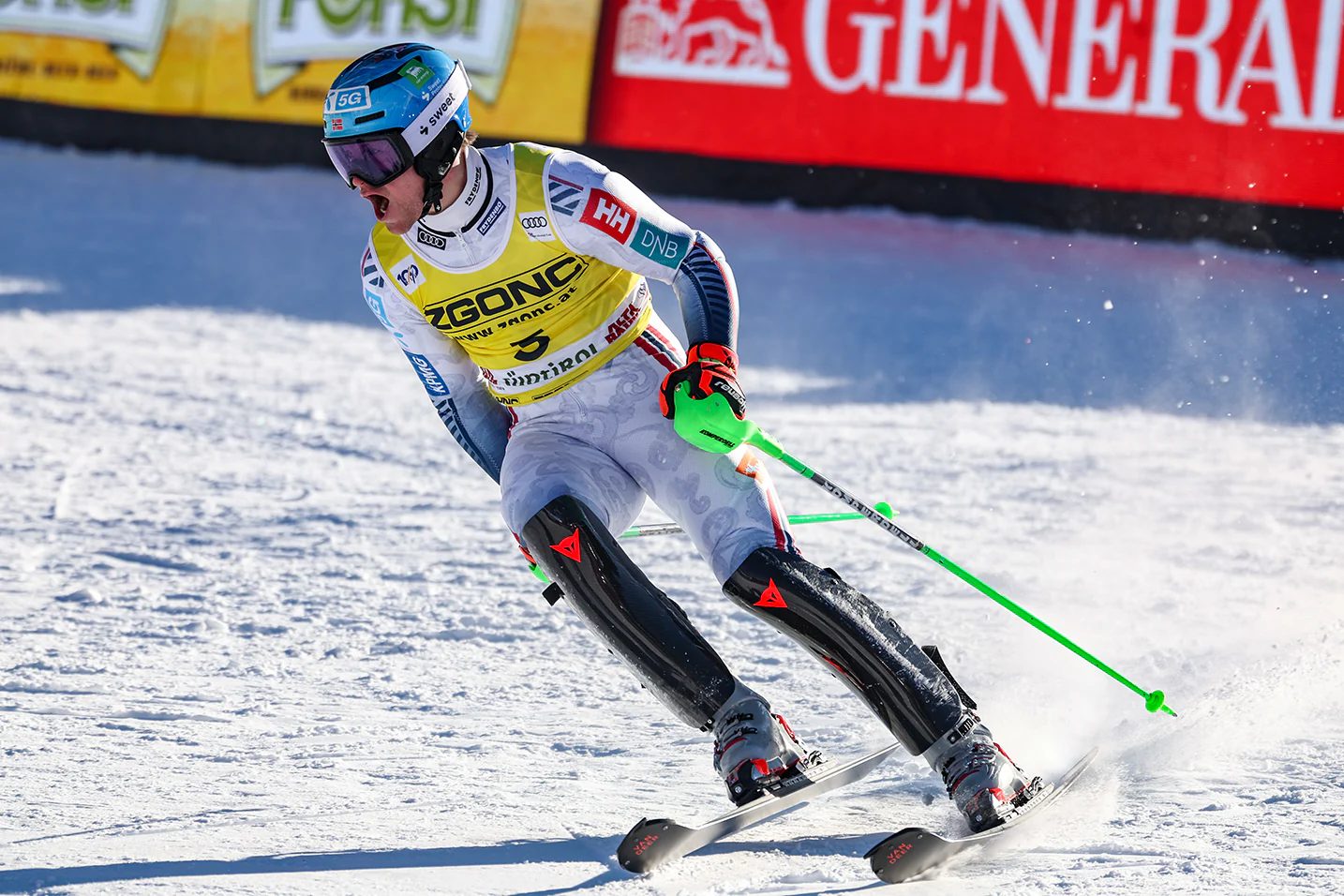
(Provided by VAN DEER-Red Bull Sports)
lastly
At the Milan-Cortina Winter Olympics, in addition to the athletes' battles, major attractions will be which brands of skis and boots will be on the podium and what kind of gear they will be using. Paying attention to the athletes' gear will make watching the Olympics many times more interesting. And even if you haven't had much experience with alpine racing until now, I hope it will inspire you to give alpine racing a try