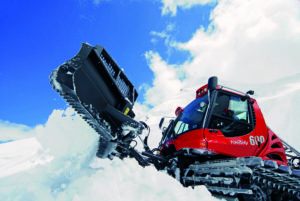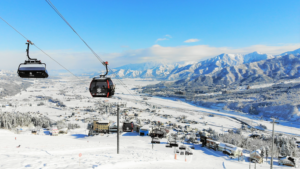

This series will provide a variety of insights into Japan's ski resorts, providing detailed, enthusiastic commentary. The third installment focuses on snow machines and snowmaking machines, which help start the season early and address the issue of lack of snow. In the second part, we will introduce some fascinating aspects of snow machines and snowmaking machines, such as ski resorts that use them to start the season earlier than anywhere else, and the background behind this
 Part 1 is here
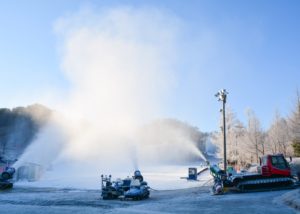
Behind the scenes at Snow Town Yeti, the earliest snow town to open in Japan every year
For many years, Snow Town Yeti in Shizuoka Prefecture has held the prestigious title of "Japan's earliest opening ski resort." Since 1999, it has not lost this title to anyone else. Every year, the opening day is covered by various media outlets and is broadcast on television. Many people have probably seen the news
Formerly known as "Nihon Land HOW Ski Resort," the resort has since rebranded to "Snow Town Yeti" and is particularly focused on opening early. The ski resort, located at the base of Mount Fuji, can experience temperatures as low as -10°C in midwinter, yet rarely experiences snowfall. For this reason, operating a ski resort without snowmaking and snowmaking machines is virtually impossible. The snowmaking machines are the driving force behind this early opening.
There are a total of four snowmaking machines, stretching from the base to the middle of the slopes. Approximately 10 days before opening, they operate 24/7, with three shifts of operators working to create snow. Currently, work is underway in preparation for the October 30th opening, with the snowmaking machines running at full capacity around the clock. The resort uses approximately 500-600 tons of water per day. Since 1 liter of water equals 1 kilogram, 500 tons equals 500,000 liters. This represents an unimaginable amount of water.
In the process of creating a course using snow-making machines, it is not possible to create enough snow to cover the entire course at once, so the snow is piled up in the order it is made. When the weather is sunny and the temperature rises, the older snow melts from the bottom up. To prevent this, the snow is covered with a cover to prevent direct sunlight from hitting it, but the mountain still gradually shrinks. Rain, wind, and typhoons are also natural enemies
Karuizawa Prince Hotel Ski Resort, the second ski resort in Japan to open in the 2020-21 season,
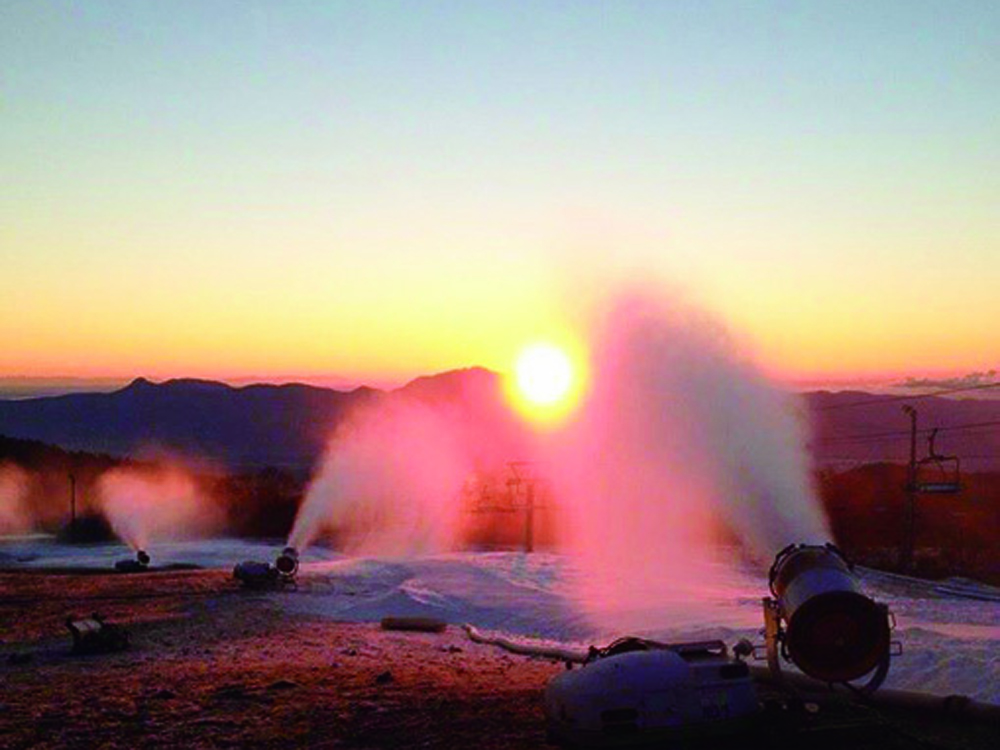
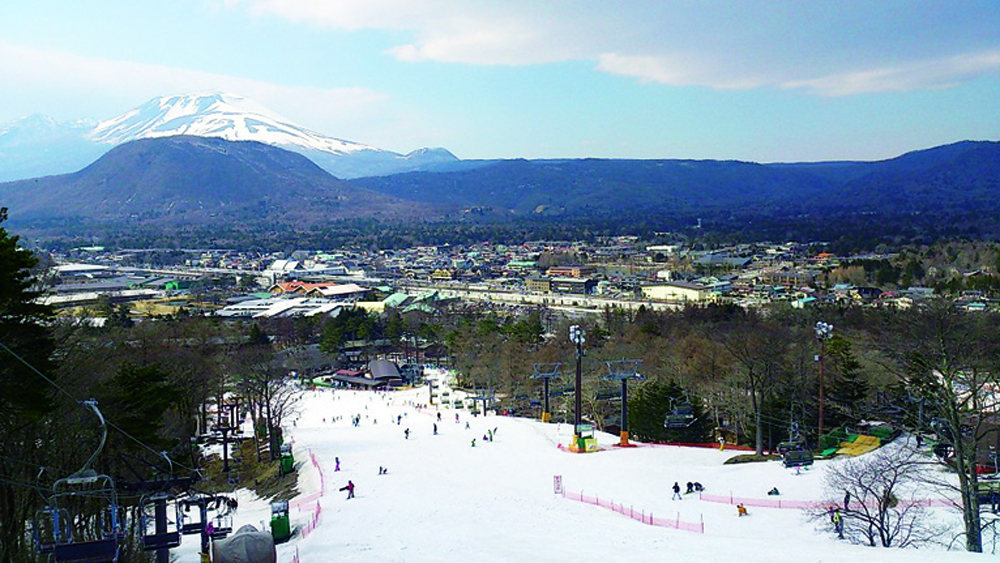
Karuizawa Prince Hotel Ski Resort will open on Tuesday, November 3rd (national holiday), the earliest in Nagano Prefecture and the second earliest in Japan. Along with Yeti, it is synonymous with the start of the season. Eight snowmaking machines will begin full operation on Sunday, October 10th, and upon opening, the approximately 400m-long Kurinoki Course and Prince Slope will be open for skiing.
Approximately 450 tons of snow will be produced per day, totaling approximately 6,000m3 in the 24 days from the start of work on October 10th until opening. Until the opening, the snowmaking machines will be in use regardless of the temperature. Even after opening, snowmaking work will continue, with the aim of having all nine courses open by the end of the year.
Karuizawa Prince Hotel Ski Resort owns eight snowmaking machines and a whopping 195 fan-type snowmaking machines. They make snow with the snowmaking machines from October to November, and switch to snowmaking machines from mid-December
How much do these amazing snow machines and snow making machines cost?
Just how much do these amazing machines that can create a skiable area from absolutely no snow and even make a ski resort possible cost?
●Fan-type snow machine
Fan-type snow machines are expensive per machine, but they can make a lot of snow at once and are energy-efficient. They come in two types: large, electrically powered and hydraulic. The electric type costs around 6 million yen (reference price) per unit, while the hydraulic type, with its portability, is considerably more expensive at 13 million yen (reference price). They also have a long lifespan, with models from several decades ago still in use
Gun-type snow machine
The unit price of a gun-type snow machine is approximately 1.5 million yen (reference price). This is significantly cheaper than a fan-type snow machine. It can work reliably even at high temperatures (-1 to 3°C), but it requires a large amount of air, which increases running costs. Also, due to the capacity of each machine, it is necessary to install many units

However, new models known as "stick type" and "low air type" have achieved energy savings, and the cost situation is changing as machines evolve

●Snow making machine
The running costs of a snowmaking machine are significantly higher than those of a snow machine. A 50-ton plant costs a surprising 90 million yen (reference price)
Artificial snow cannot be made without securing water
Artificial snow is made from water, and it takes a lot of water to make or create a large amount of snow (several hundred liters per minute per machine)
While riding the lift, you might overlook the artificial ponds thinking, "Wow, that looks cold," or "I'd hate to fall in there," but the water that collects in these ponds is the source of artificial snow. Because it is an artificial pond, the water is mainly drawn from nearby streams, and in some cases well water
But why doesn't the water in that reservoir freeze at cold ski resorts? Of course, it's because they're designed to keep it from freezing. Pumps are used to stir the water inside and prevent it from freezing. Securing this reservoir and water is a major challenge when introducing new snow machines or snowmaking machines. Ski resorts are generally located on top of mountains. This means that nearby streams are narrow and there isn't much water. Furthermore, you can't just draw water from the stream. Only once these physical and social issues are overcome can artificial snow become a reality
It costs so much money!
The "costs" mentioned above only apply to the machines. Securing water and electricity is also an issue when operating snowmaking and snowmaking machines. As a result, the costs vary greatly from ski resort to ski course. When installing new equipment, huge costs must be estimated. Maintenance costs are also required
By the way, it costs 7-8 yen/m3 to make snow with a snow machine, and 40 yen/m3 with a snowmaking machine. This shows how expensive the running costs of snowmaking machines are. Therefore, it is said to be cost-effective to use snowmaking machines when the temperature and humidity are not suitable for making snow, and snowmaking machines when conditions are favorable.
Incidentally, the running costs of operating Karuizawa Prince Hotel Ski Resort's eight snowmaking machines (seven 50-ton machines + one 100-ton machine = a total of 450 tons/eight machines) for one day are said to be around 400,000 yen. A simple calculation of the 24 days it takes to prepare for opening using eight snowmaking machines comes to 8.8 million yen.
Karuizawa Prince Ski Resort usually switches to snowmaking machines in mid-December.
Ski resorts that rely heavily on artificial snow
In addition to Yeti and Karuizawa Prince Ski Resort, there are many ski resorts in Japan that rely heavily on snow machines and snowmaking machines. These are places where the weather conditions are generally cold but not much snow
Located in Sakudaira, the home of Kashiyama Kogyo, Saku Ski Garden "Parada" is in a unique location, directly connected to the expressway. Here too, there is often only snow on the slopes

Many of the ski resorts in the Yatsugatake area, accessible from the Chuo Expressway, are of this type. Many ski resorts in the Chukyo and Kansai regions also operate using snowmaking and snowmaking machines.
Conversely, there are also ski resorts that boast 100% natural snow. Nagano Prefecture's Nozawa Onsen is a prime example, as are Hakuba Cortina and Okushiga Kogen. On the other hand, even ski resorts with heavy snowfall, such as Niigata Prefecture's Kagura, sometimes install snowmaking machines, perhaps to stabilize operations.
summary
Snow machines and snowmakers are the unsung heroes behind the scenes, helping ensure an early start to the season, supporting stable ski resort operations, and addressing snow shortages. The cost, energy, and labor required to start the season early are unimaginable. But thanks to them, the long-awaited season is finally here!
Time to go ski!
Interviews and photos provided by Kashiyama Kogyo Co., Ltd. , Karuizawa Prince Hotel Ski Resort , Snow Systems Co., Ltd. , Snow Town Yeti (in alphabetical order)
Currently, he is also a "Showa culture researcher" and writes and edits in various fields other than skiing. He is based in the most indoor position in the outdoor world and the most outdoor position in the indoor world.
https://www.d-mizorogi.com/
*Also recommended: "The Road to Becoming a Ski Resort Maniac" series