

What would you think if you heard that you could build your own skis?
You probably won't get it
This is because only the most dedicated DIY enthusiasts or a select few top professionals who can create signature models can do this, and there is no factory where anyone can do it. In other words, I have never seen such a service before.
How would the way you enjoy skiing change if you could create the shape, weight, and performance you envisioned in your head? Just imagining it gets me excited.
Well, that's the only thing I've heard
The day has come when you can create your own unique pair of skis with your own hands
A place where you can make your own original board
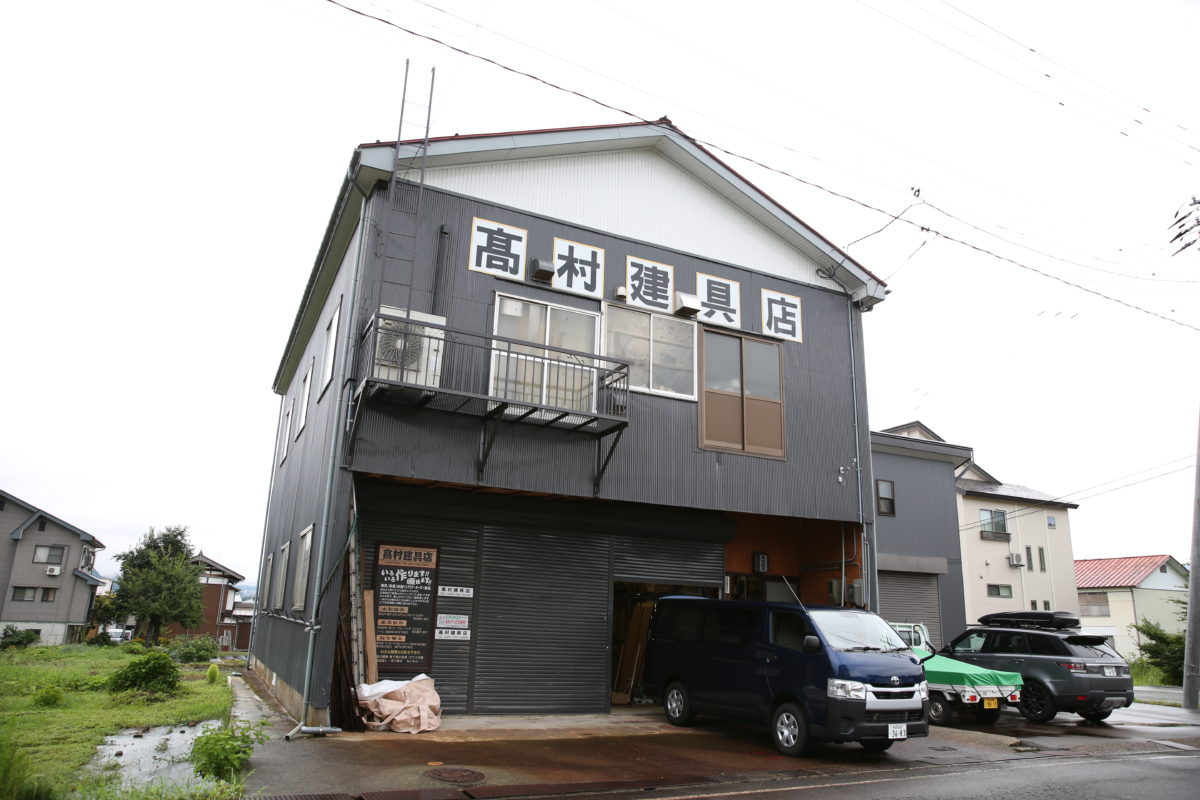
This was made possible by a small garage brand in Minamiuonuma City, Niigata Prefecture: VOLTAGE Design. It would be more accurate to say that they "were" a garage brand.
They were a ski and snowboard brand based in Minamiuonuma, but now they have become a "manufacturer" that develops their own equipment and creates original boards.
Mr. Nagai, the manufacturer's representative and mountain guide, thought to himself every day while out in the fields,
"If I could ski on my own board, every day would be more fun."
Development of the original skis and snowboards began in June 2021, a little over a year ago. From there, they rapidly acquired the technology through repeated trial and error, and before the arrival of last winter, they were able to create prototype original skis. Now, the technology has evolved even further, and they have reached a point where they are impeccable in terms of graphics, performance, and finish
They have now started a service that allows ordinary users to create their own original skis
This not only allows you to make your own skis, but also gives you the experience of seeing the actual ski-making process and participating in the work. Being able to see the ski-making process is a unique and valuable experience
So, our editorial team actually went and made their own original skis.
Let's take a look at the whole process.
Preparing the board materials
Voltage Design skis are built with what's known as a sandwich construction, so let's keep that in mind as we move forward
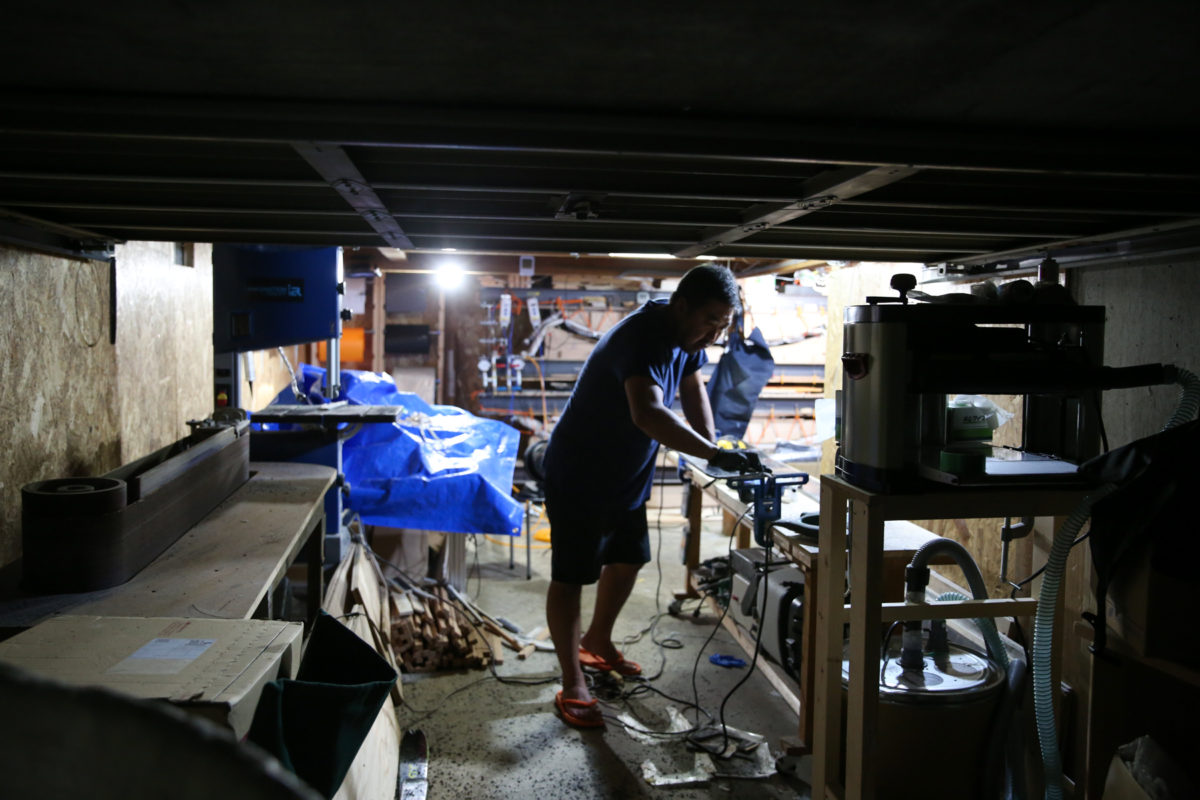
First of all, the main material used to make skis is wood. Skis are made by combining different types of wood, each with its own unique characteristics, in the right places. Types include poplar, cypress, bamboo, etc
The ski that is made up of this combination is called the core. The role of this core affects the stiffness, rebound, and weight of the ski, and is a major factor in determining the ride feel
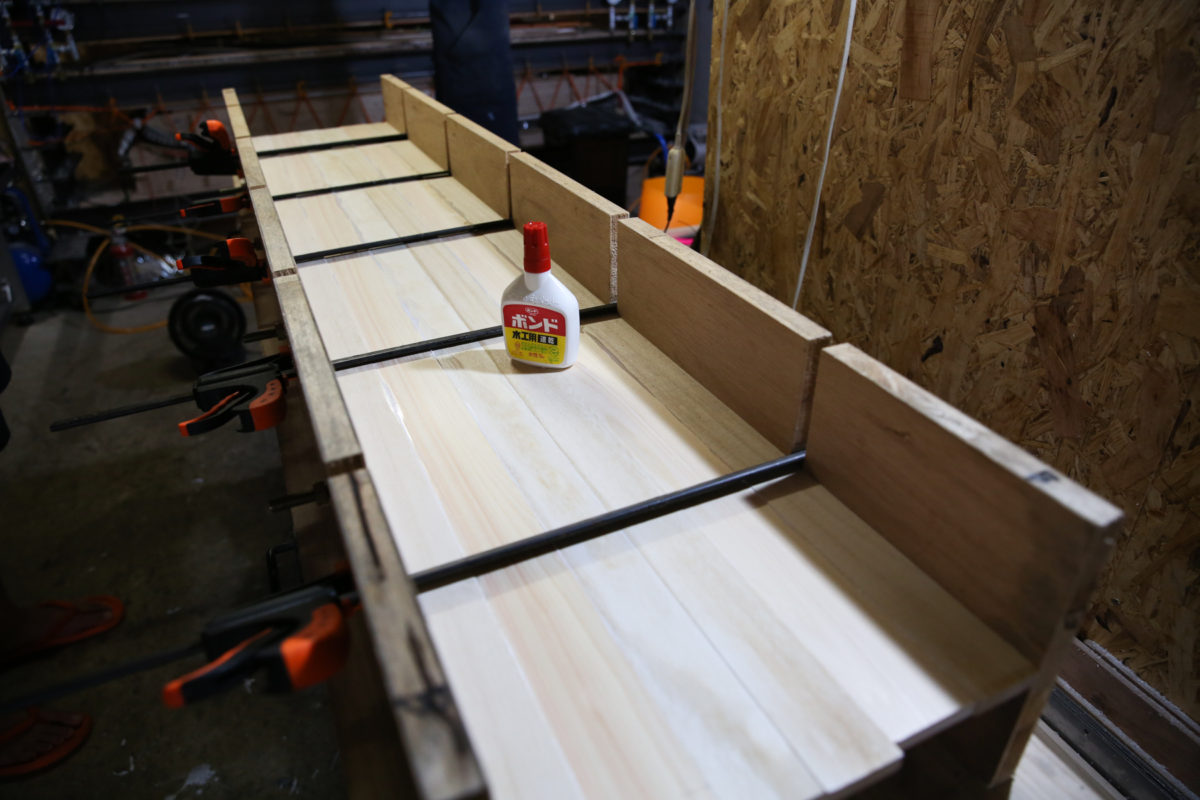
Voltage Design's boards are primarily made from local cypress, with kiri on both sides.
This is because cypress has just the right amount of hardness, and the combination of this with the lightness of kiri gives the board just the right amount of firmness and lightness.
While there are many different types of wood to choose from, the brand is committed to these two types.
This is because they have decided to use materials produced within the prefecture or domestically when making their boards. This is done to stimulate domestic demand and reduce CO2 emissions from transportation.
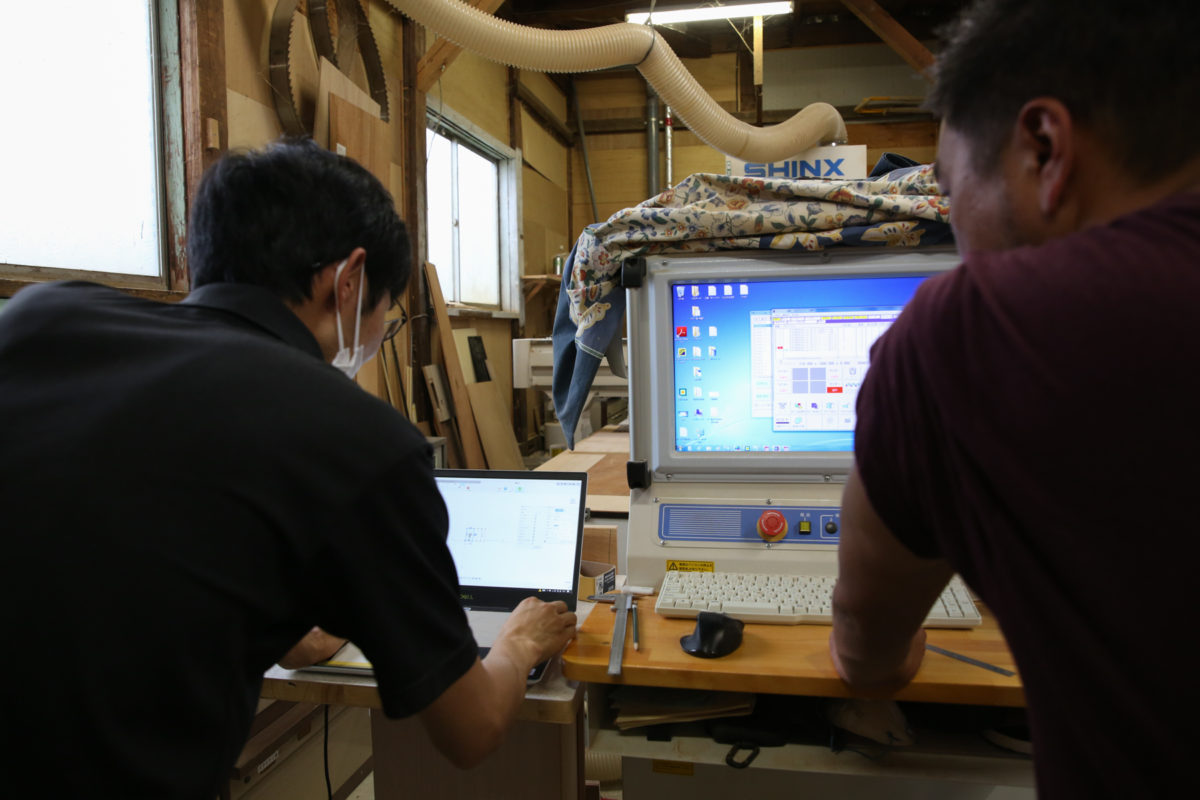
While the wood is being glued together, I use design software and CAD software to design the skis.
Since I'm making them anyway, I thought I'd try making a ski with a shape I've never seen before.
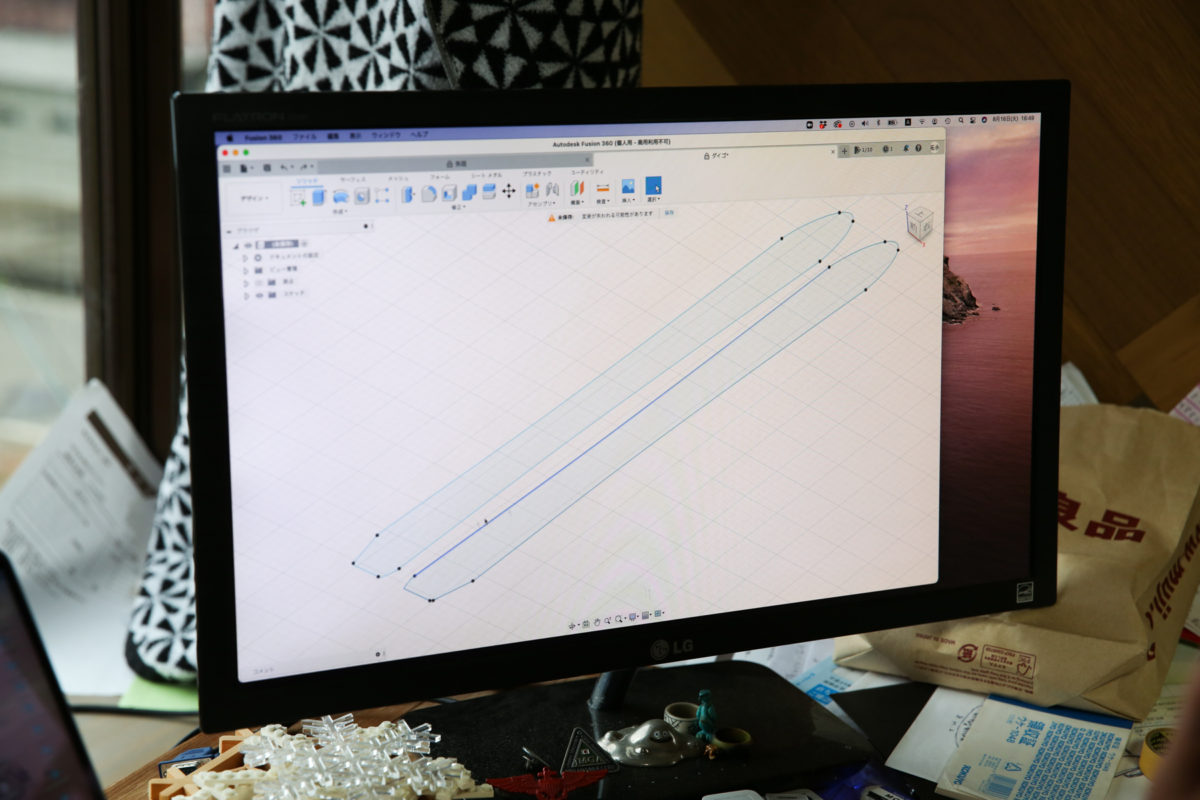
In general terms, the board has a center width of 116cm, nose width of 148cm, tail width of 137cm, and a total length of 178cm, and is designed for powder skiing and cruising on the slopes. I designed the nose to be pointed (a personal aesthetic preference for visual appeal), and the effective edge of the tail to be longer on the inside of the board and shorter on the outside. This is because I wanted to be able to push the edge firmly when turning with my back foot, and to have good edge release when turning with my back foot, improving maneuverability. This is entirely experimental, and I won't know if it will work until I actually try it out on the snowy mountain
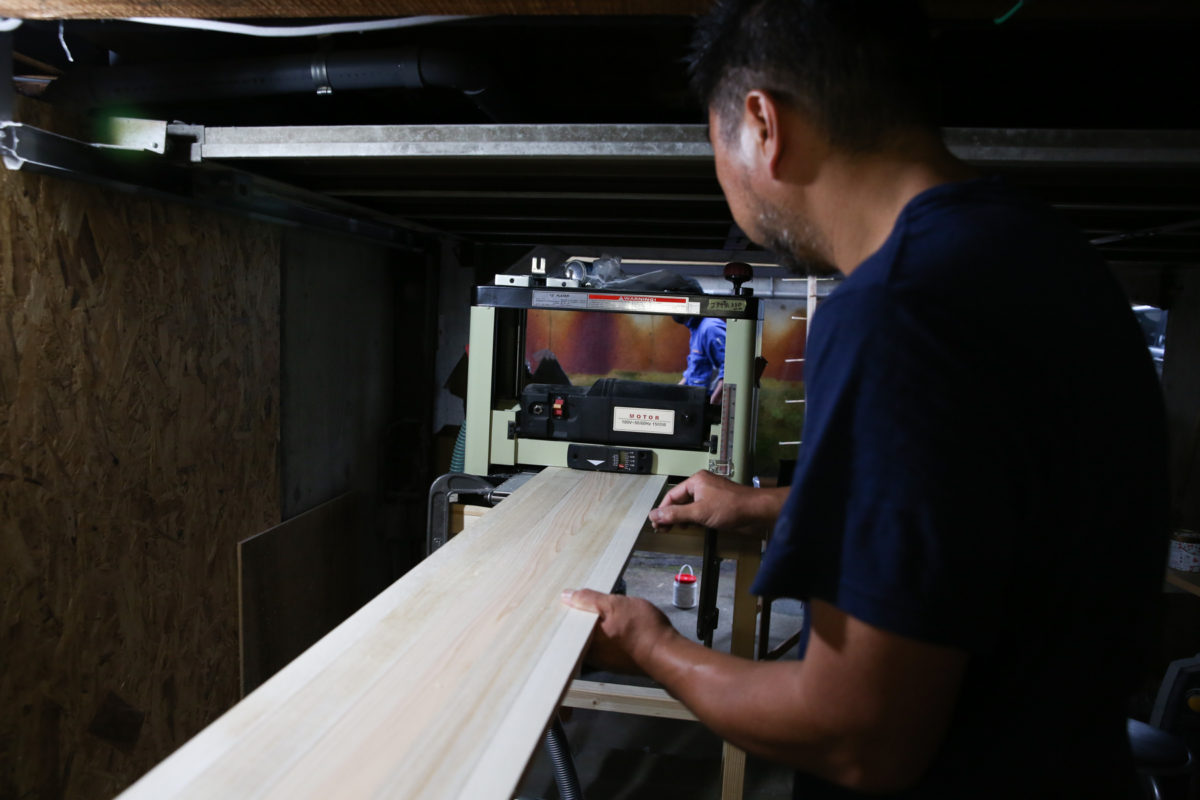
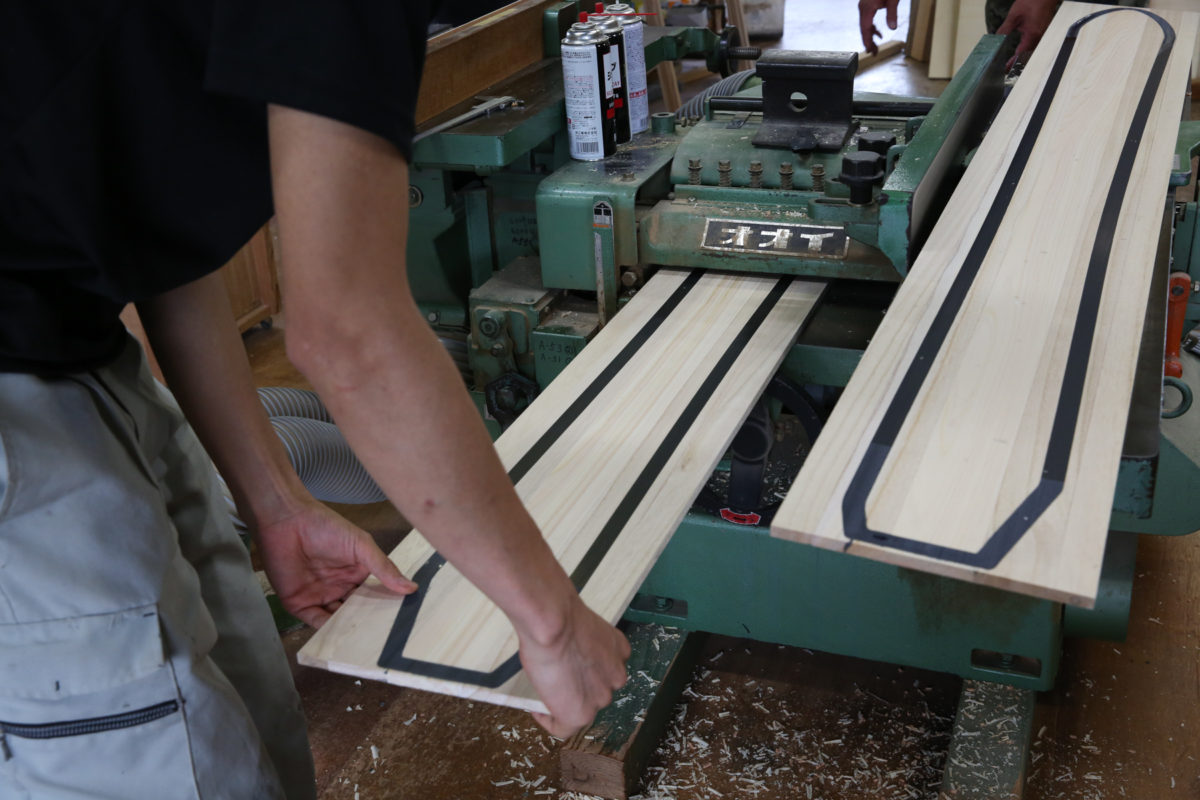
Once the design is complete, the wood is glued together. The core that has just been glued together varies in thickness, so it is shaved down to an even thickness using an automatic planer
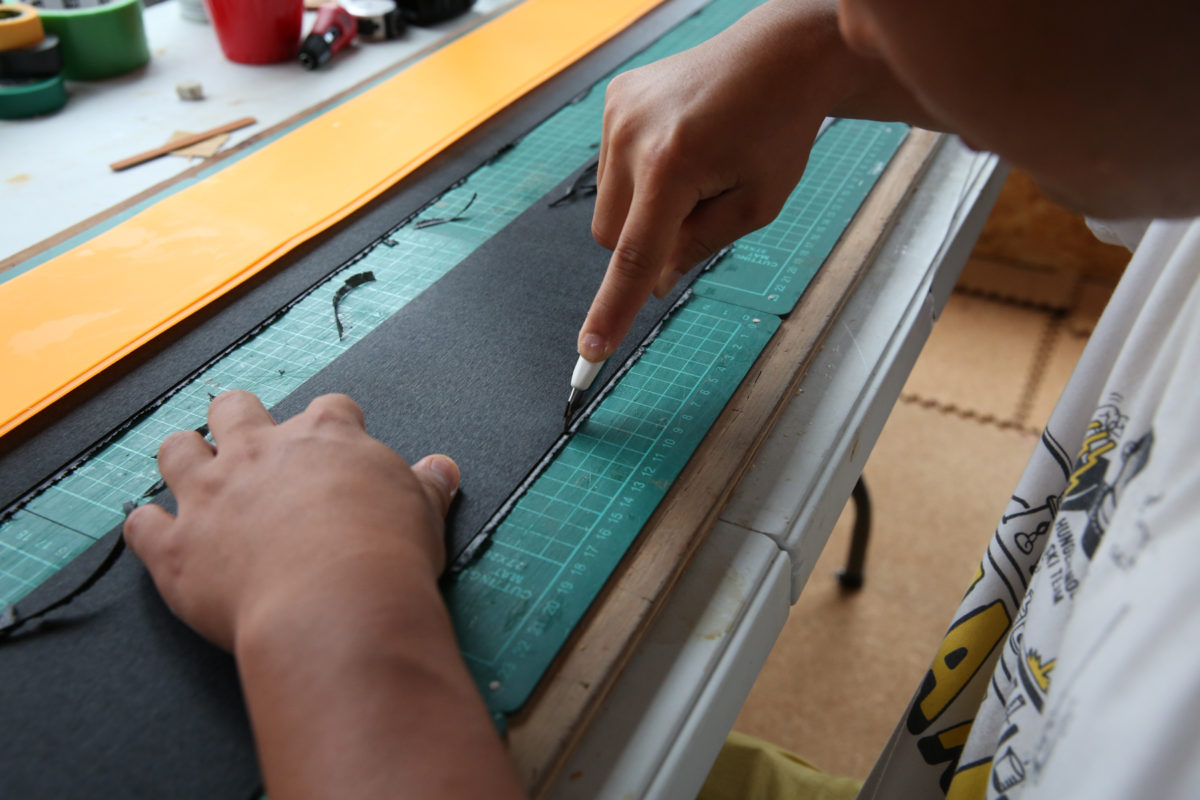
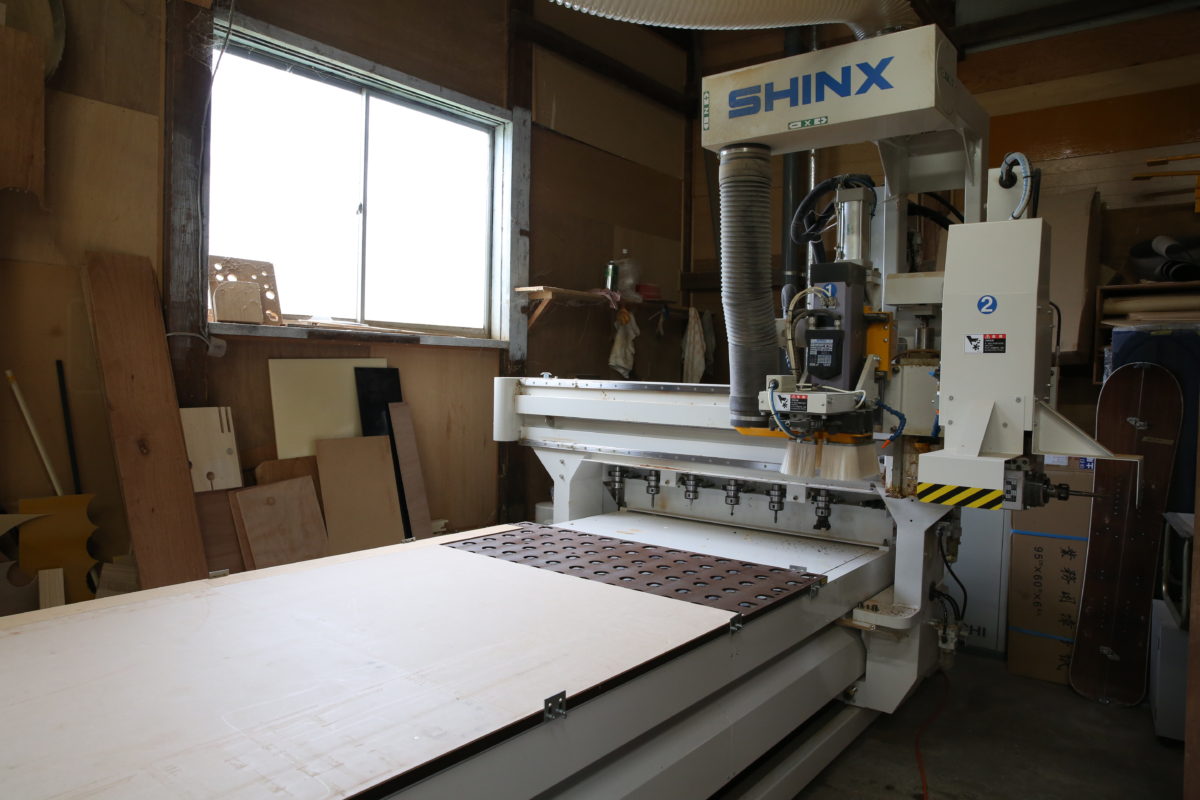
Once the thickness is uniform, the drawing data is imported to a local joiner and they dig grooves on the outside according to the design they made earlier. They also make a template that will serve as the basis for the designed board. The sole, top sheet, reinforcements, etc. are then shaped according to this template, so even if the materials are prepared separately, they can be layered together without any dimensional deviation in the end.
Incidentally, large manufacturers make molds rather than templates in order to produce a certain amount of material.
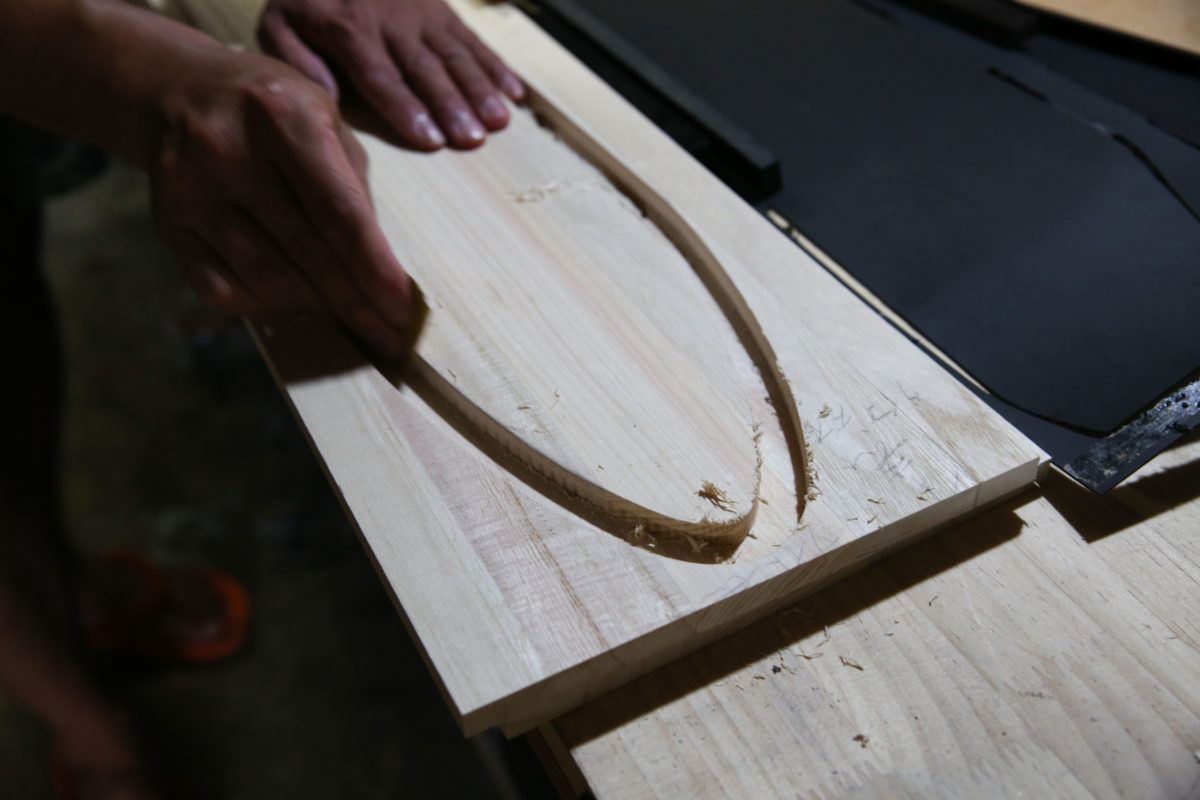
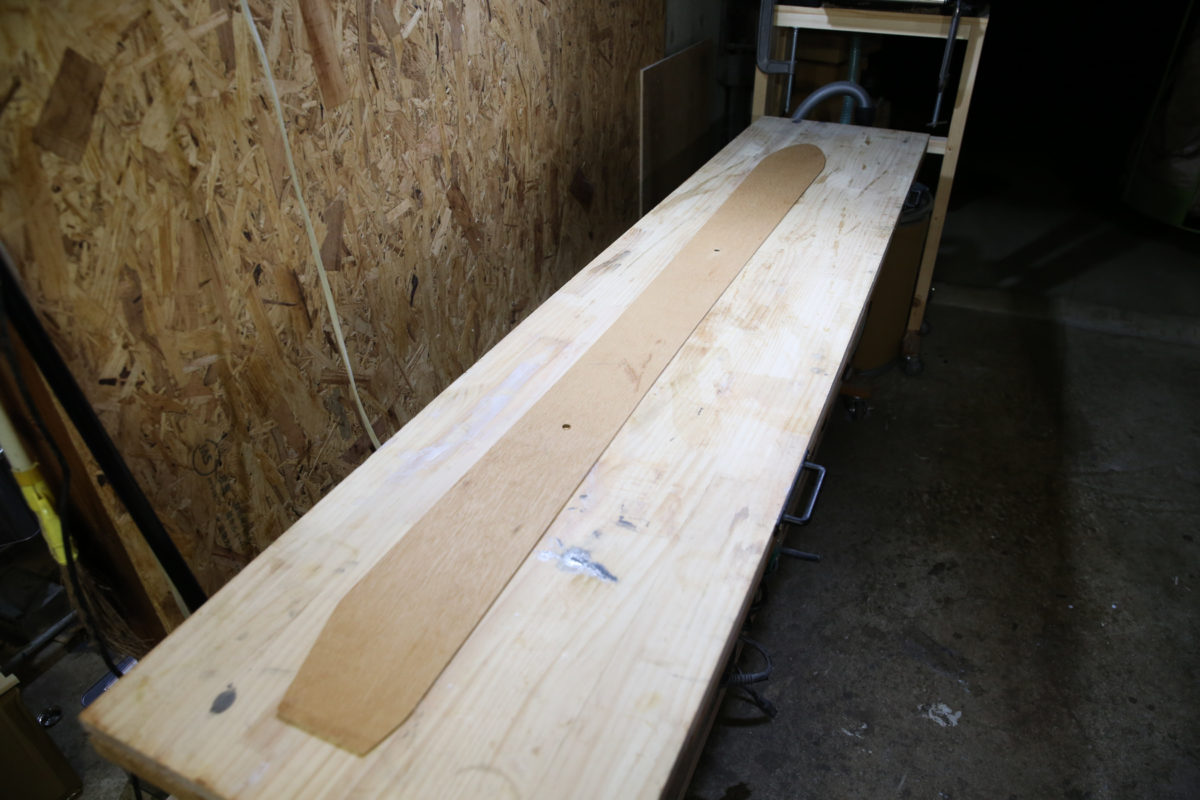
Next, ABS resin and urethane foam are placed in the grooves made by the joiner. This becomes the sidewall. The role of the sidewall is to improve edge grip. Almost all manufacturers use similar materials for this ABS resin, so there are not many differences. The ABS resin is placed about the length of the effective edge, and the tip of the nose and tail is filled with urethane foam. This is because it is easy to process and to cut costs
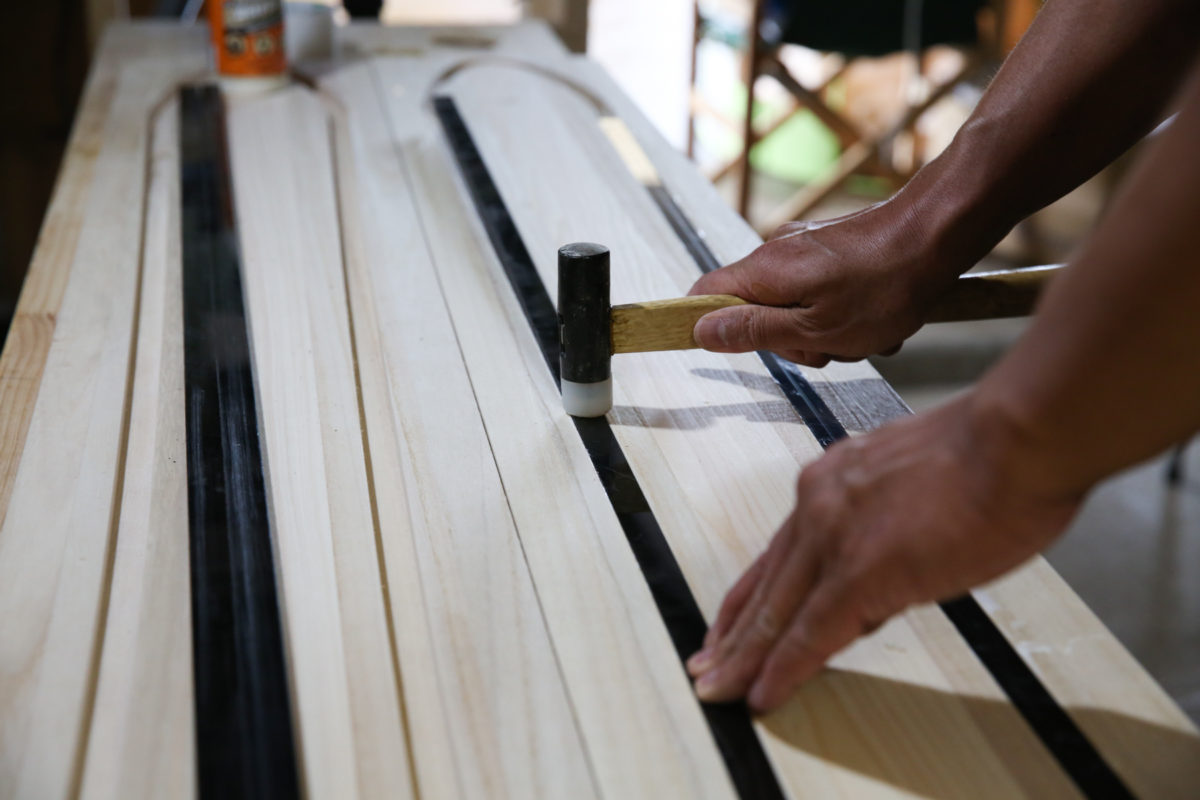

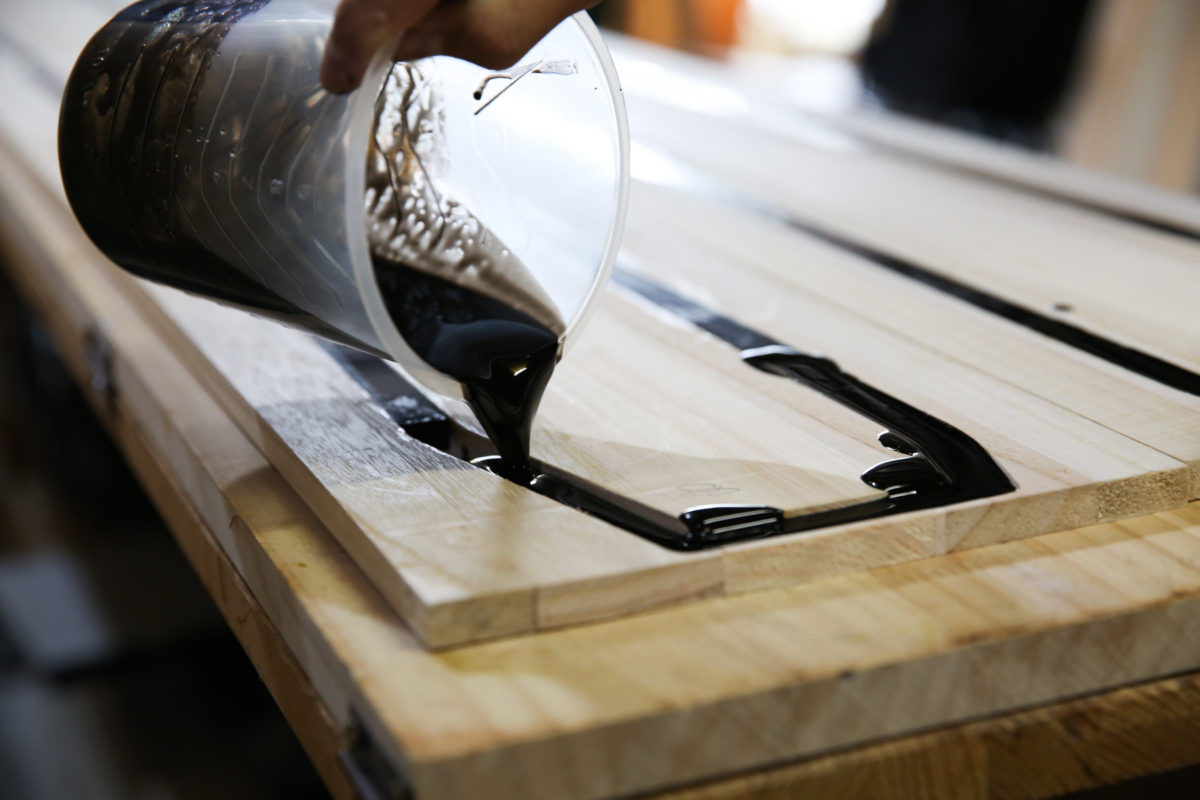
Once the urethane foam has hardened, we move on to the next step: cutting out the sole. The sole is made from a 40,000 molecular weight sintered sole sourced from a domestic factory. The higher this number, the better the gliding performance. 40,000 is on the high side. This is because we want to create something with excellent gliding performance
Once the foamed urethane has hardened, the skis are sent back to the joiner. Here, an automatic planer that can be controlled to within a fraction of a millimeter is used to make the skis as thick as possible to achieve the desired final thickness. Once the thickness is adjusted, the next step is to thin out just the nose and tail. As you know, skis are thick at the base, but the nose and tail are thin to improve maneuverability
Next, we move on to edge processing. We use steel edges procured from an edge company in Joetsu City, Niigata Prefecture. We bend a single long edge by hand. Bending it along the subtle curve of the board is more difficult than it looks. This is then fully wrapped from the tip of the nose to the tip of the tail
Once you have the edges, it's time to design the graphics for your skis. This is completely up to you. You can use your own photos or drawings, or leave them blank. You can add any words you like, or whatever you want. Just make sure you give your skis their own unique look
Up until now, the main focus has been on preparing the materials, but from the next page onwards, the ski making will reach its climax