
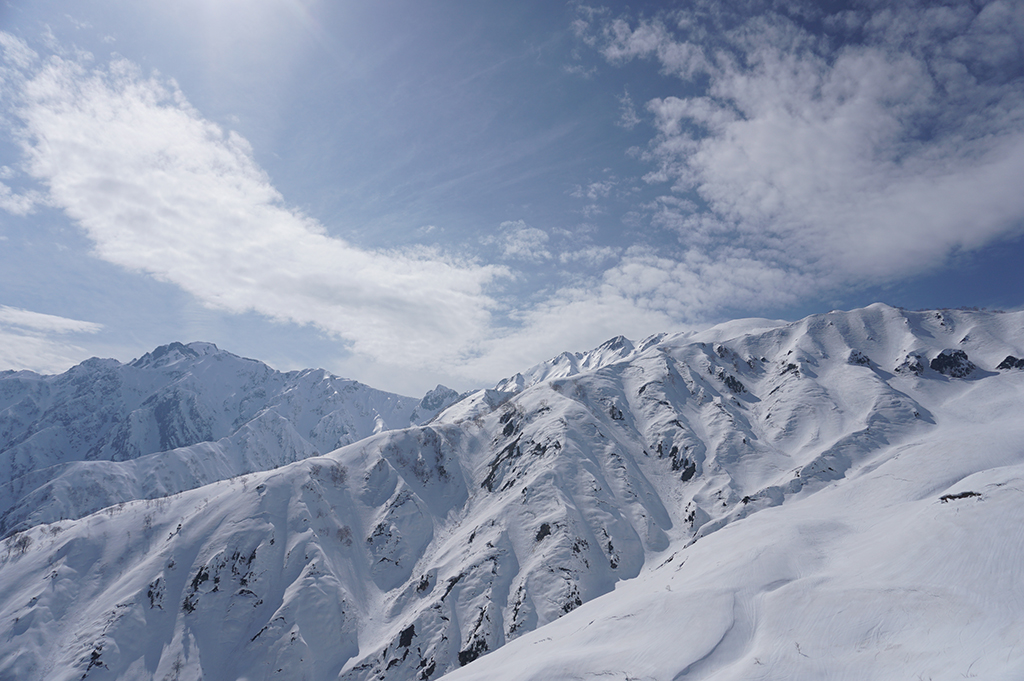
By April, the mountains are well into spring mode. We often hear that "spring is a great season for backcountry skiing and snowboarding." Want to continue enjoying the spring backcountry skiing season after the harsh winter powder season?
We asked a professional guide to explain why spring is the perfect time to head out into the backcountry.
Why is spring the best season for backcountry skiing? The differences between spring and winter are becoming apparent
1. The length of daylight hours is clearly different
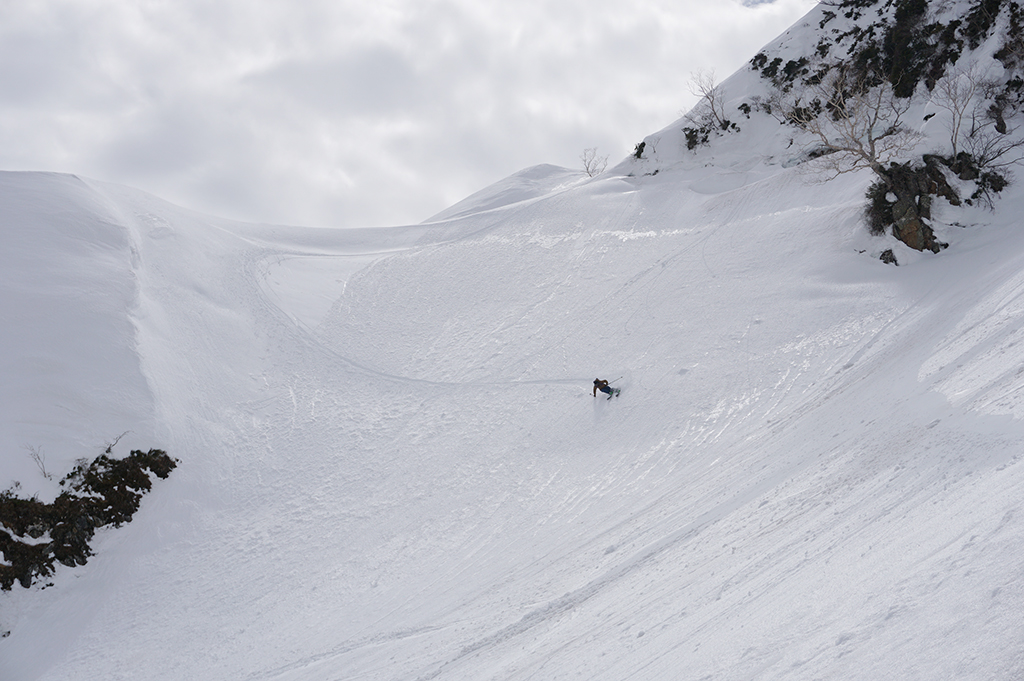
In spring, the sun rises earlier and the days are longer than in winter, meaning the length of daylight hours is significantly different. Incidentally, the daylight hours in Tokyo on the summer solstice (around June 20th), when the sun is at its highest point in the year, are 15 hours and 35 minutes, while on the winter solstice, when the sun is at its lowest point, the daylight hours are 9 hours and 45 minutes, a difference of 5 hours and 50 minutes.
Because the daylight hours are significantly longer than in winter, you can spend more time in the mountains. The brightness itself is also completely different. This gives you more freedom of movement, making it easier to move around, and is also beneficial in terms of safety. And because you have more time, you can go deeper into the mountains. This can be said to be one major reason why spring is "good."
2. It's easy to understand the snow conditions
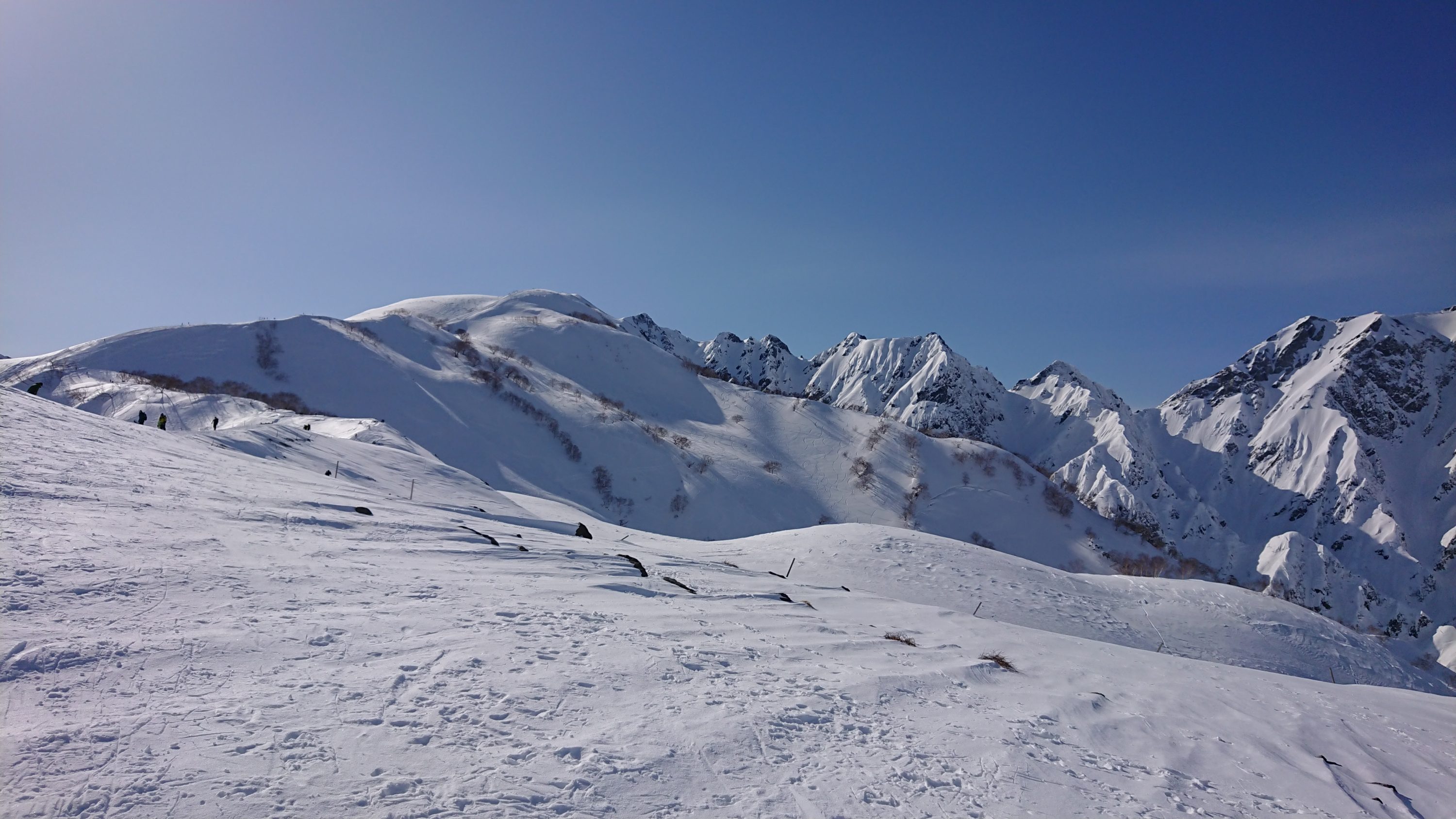
In terms of judging the slopes to ski, it is easier to grasp the snow conditions in spring as the snow quality is clearer. There is also a change in the choice of skis, with skis that are more maneuverable being more suitable than big fat skis that provide the buoyancy of powder
3. The weather will be stable, reducing the risk of surface avalanches and getting lost
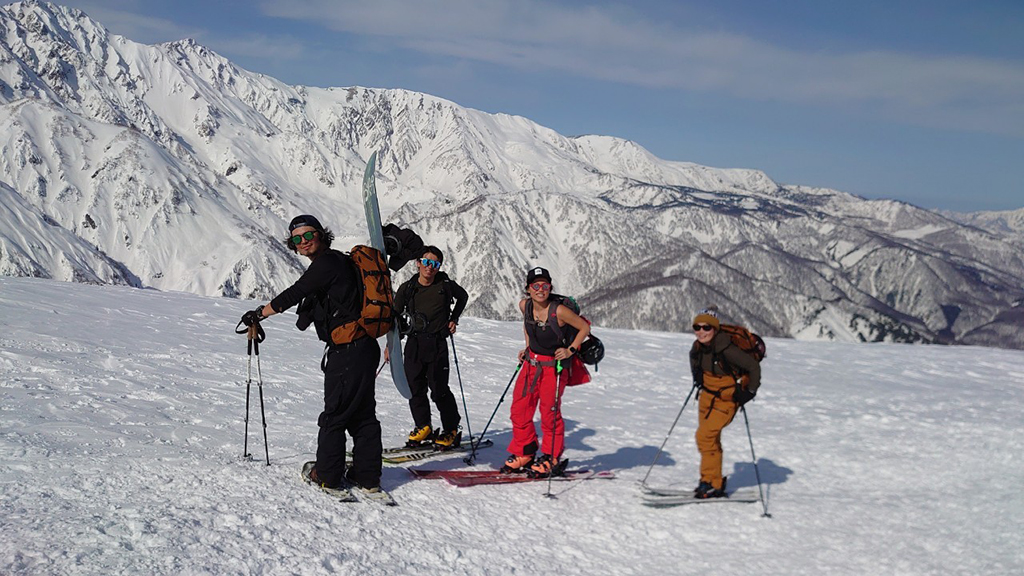
A surface avalanche occurs when snow piled up on a weak layer within the snowpack collapses. As April approaches, the weather tends to be more stable than in the high season, so the risk of a surface avalanche decreases compared to winter, when new snow falls frequently. You should never let your guard down when it comes to mountain weather, but by May, blizzards are rare. The risk of being unable to move due to whiteouts caused by poor visibility or getting lost because you can't see your surroundings clearly decreases
However, be careful in rainy weather. Rain can cause snow to melt rapidly, cracking snow bridges and causing people to fall through hidden holes. There is also a risk of rivers flooding. It is common for rain at the foot of the mountain to turn into snow at higher altitudes. Be aware of changes in snow quality. If the weather looks uncertain, bring a change of base layer to avoid getting soaked and becoming hypothermic
4. The reopening of closed roads will make it easier to access farther away, increasing the number of slopes available for skiing
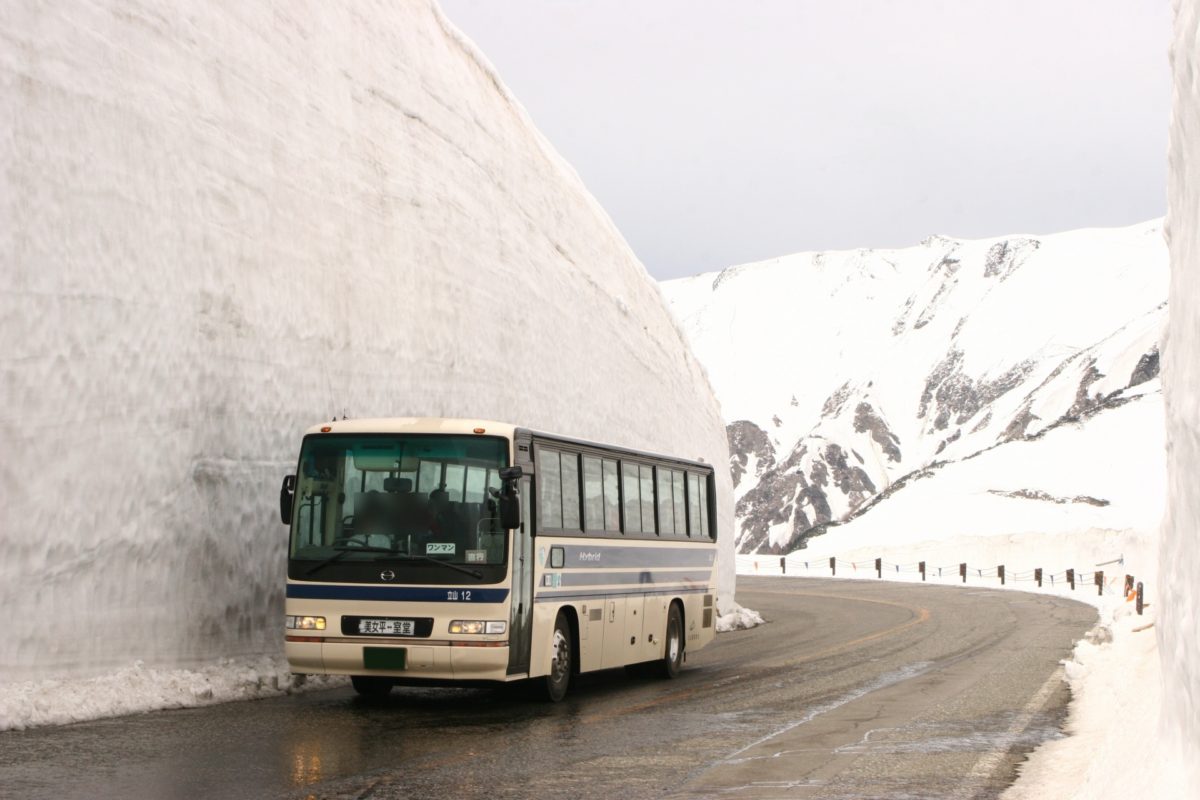
As spring approaches, roads that are closed in winter gradually open up, so slopes that would take six or seven hours of walking to reach in the middle of winter can now be accessed quickly by car. This means there are far more slopes to ski on than in winter. The places that can only be reached after roads that were closed in winter reopen are naturally remote areas, so the charm of the backcountry can be felt even more. Being able to venture deep into nature is also a major attraction of spring
5. The snow compacts and becomes easier to walk on
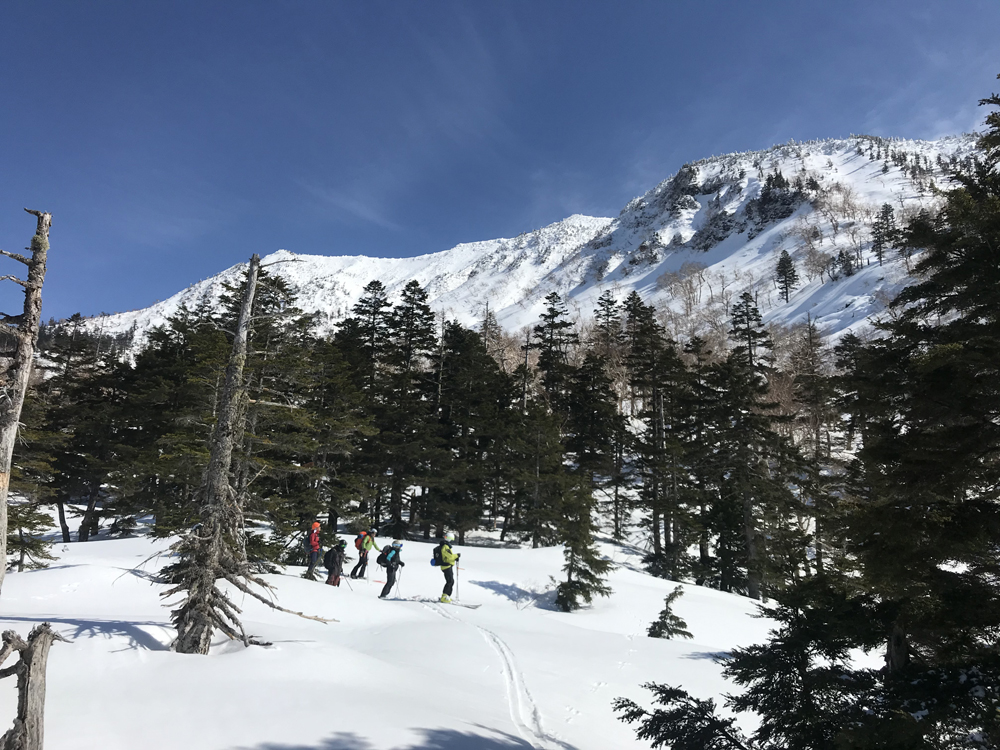
In the middle of winter, guided tours for beginners limit the hiking time to about an hour. Otherwise, participants will get tired and it will be difficult. However, from April onwards, it is easy to schedule the hiking time to about three hours. Even people who are new to backcountry hiking will find it easy to walk in the spring. One of the good things about spring is that you can walk a much longer distance than in winter
6. Even if you're not good at powder skiing, as long as you have the skills to ski on the slopes, you can still go
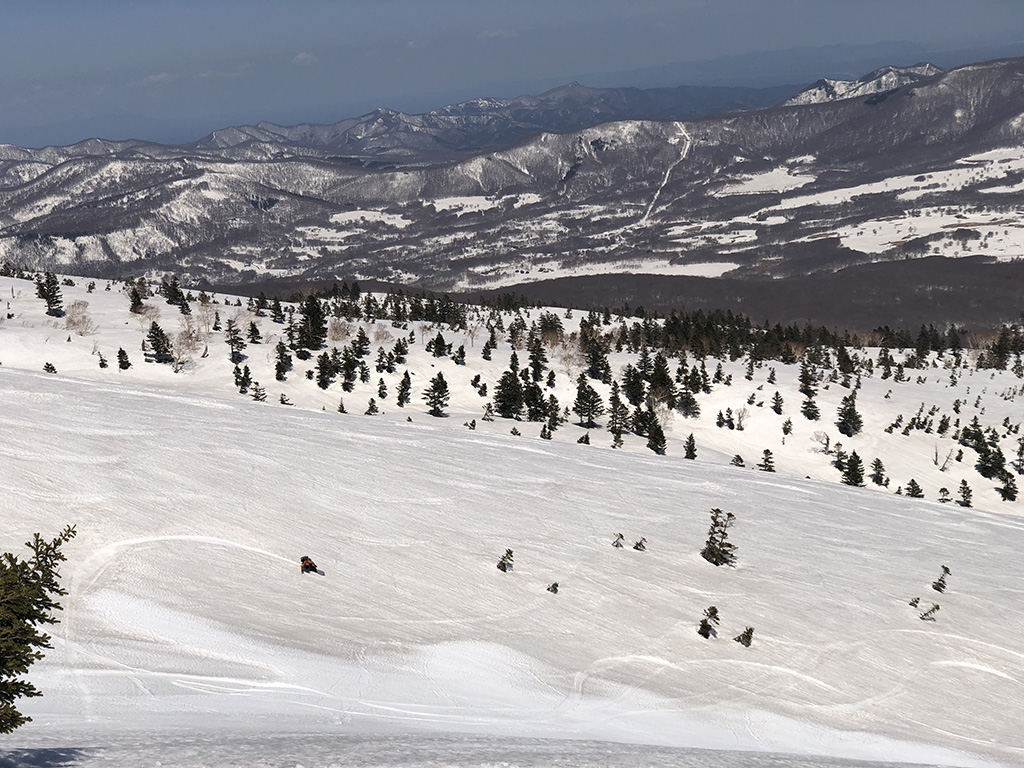
From April onwards, there is almost no deep powder in the spring mountains that your skis can sink into, meaning that even people who don't usually ski in deep snow can easily try backcountry skiing. Even if you're not good at powder or don't have any experience, as long as you have the skills to ski down the slopes at a certain level, you can still go. This is another benefit that only spring can offer
7. In spring, new terrain appears, so it's fun to watch the natural changes in the terrain
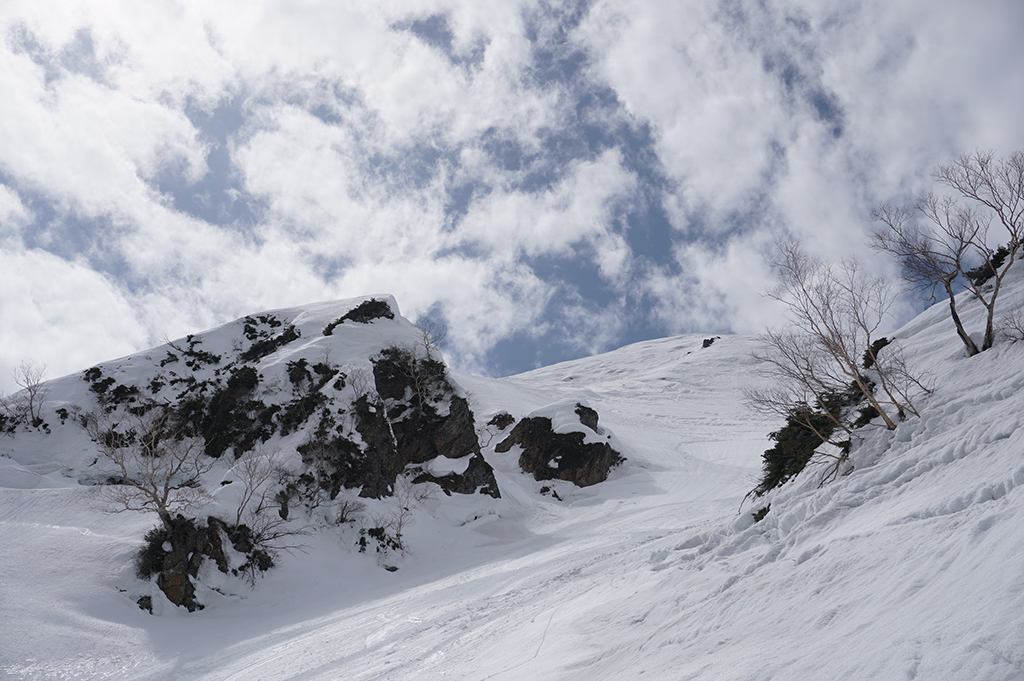
As the temperature gradually rises and the snow begins to melt in spring, the natural terrain begins to emerge, and the enjoyment of skiing across a variety of terrain increases
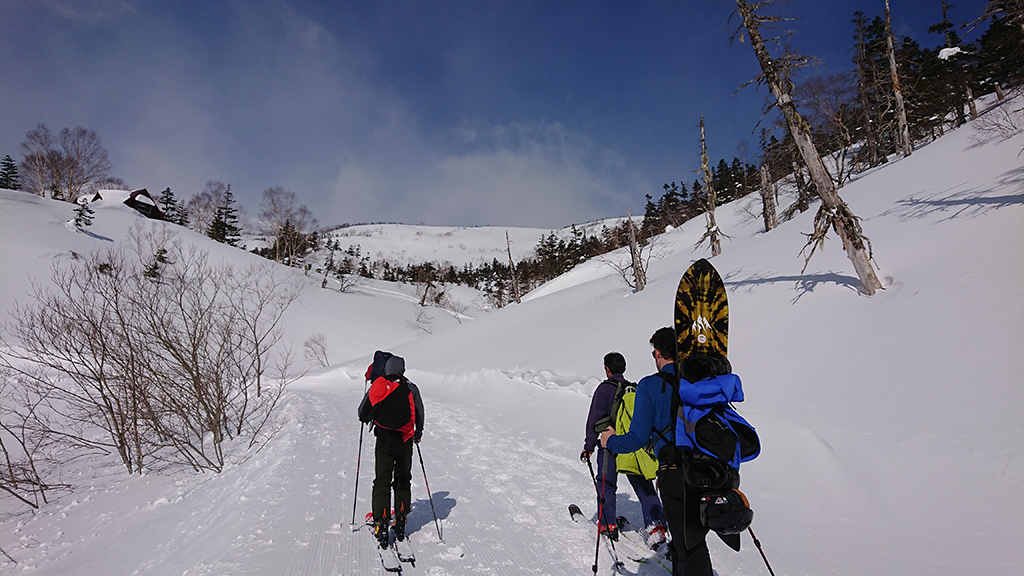
8. It's nice and warm even when you're moving or taking a break
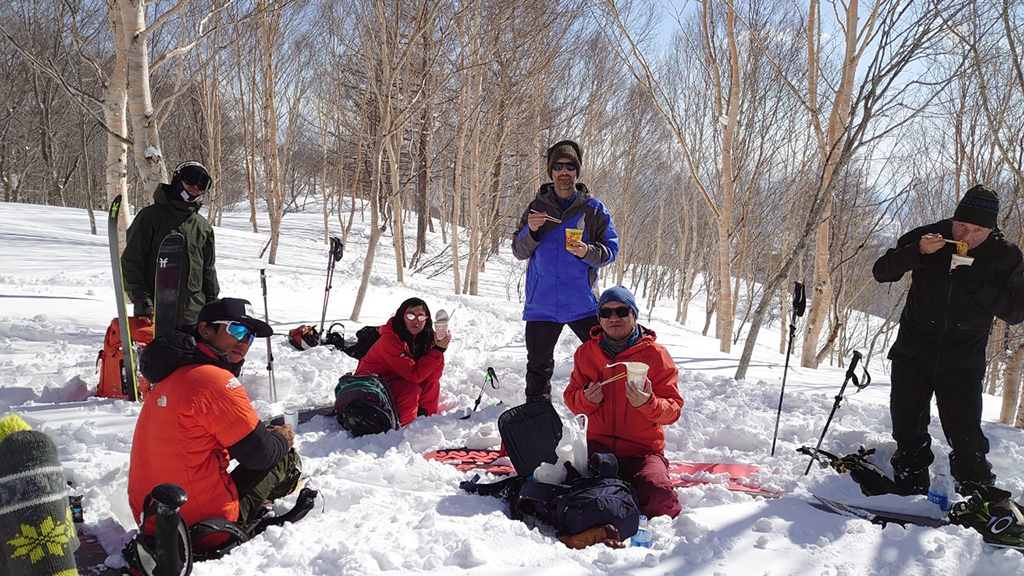
Spring is warm and pleasant, whether you're traveling or taking a break. Snow trekking under the blue sky is fun, as is skiing, and enjoying the natural scenery. Being able to spend more time on the move gives you more time to relax. For lunch, you can boil water and eat instant ramen, drink delicious coffee, or simply enjoy a picnic
9. It makes the most of your day and adds a little extra fun
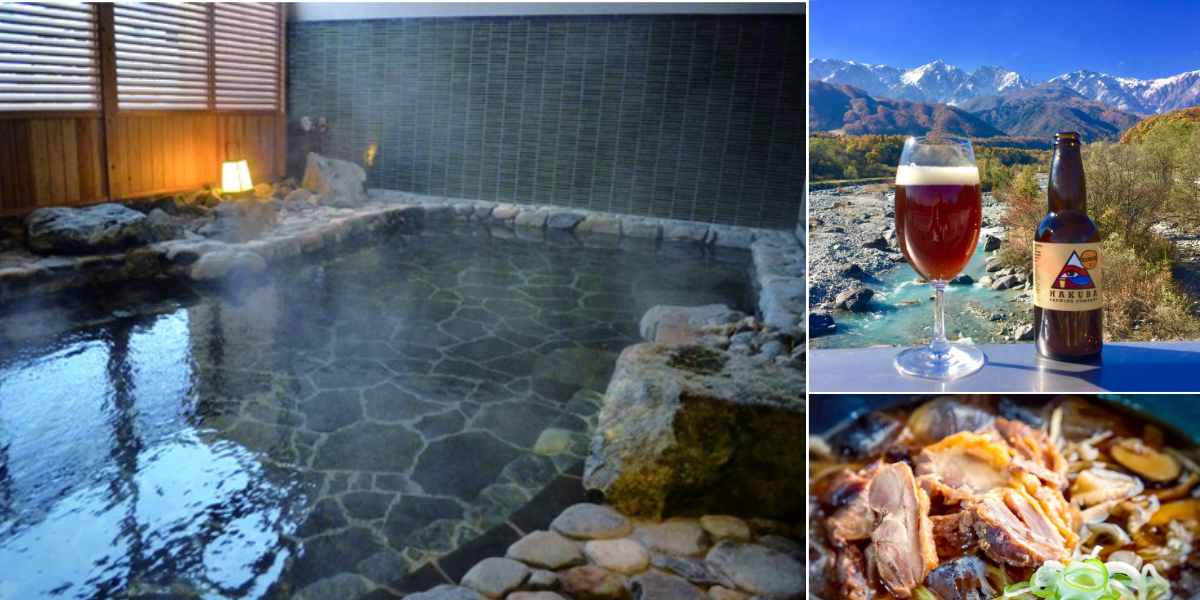
Longer daylight hours mean more time in a day. Long hikes in the middle of the day can be hot and tiring, so if you leave early in the morning, you can enjoy plenty of skiing and still come down the mountain by mid-afternoon. Still, having about six hours to play is a major benefit of spring. In the afternoon, you can relax in a hot spring, enjoy delicious local cuisine and craft beer. The charm of spring is that it brings with it fun bonuses that go beyond skiing
Spring backcountry gear
Considering the spring season, the equipment you need to take out into the backcountry is a little different than in the peak season. What additional equipment should you add or adjust? Let's take a look at spring preparations, focusing on the basics
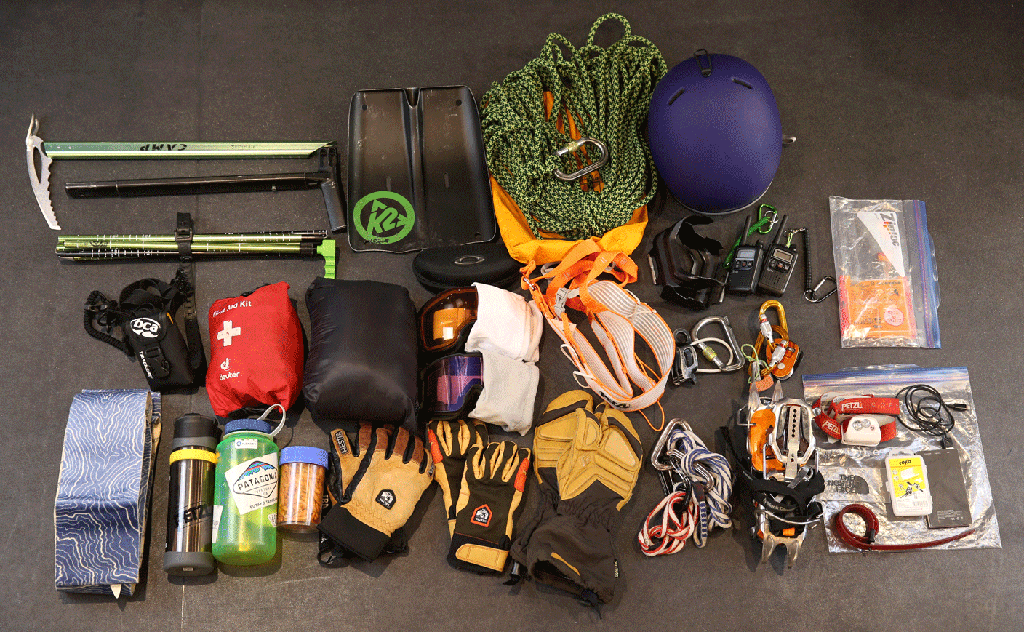
Tools to add
The equipment is basically the same as in mid-winter, but in spring, there is a possibility of ice rinks, so if you're in April, it's a good idea to add ski crampons. When the days get longer, it gets hot during the day, so tours sometimes depart early in the morning, around 6am. The snow is often still hard at this point. In spring, you can start walking early in the morning with crampons, hike for a few hours, and then enjoy a comfortable ski downhill when the snow softens
Wear
In the spring mountains, clothing and layering changes slightly. Use a thin base layer and thin tights underneath. You can also adjust the ventilation in your shell. Depending on the timing, the weather can suddenly change and it can snow, so it's a good idea to keep a thin ration in your backpack. By the way, this is the layering I use in the spring season
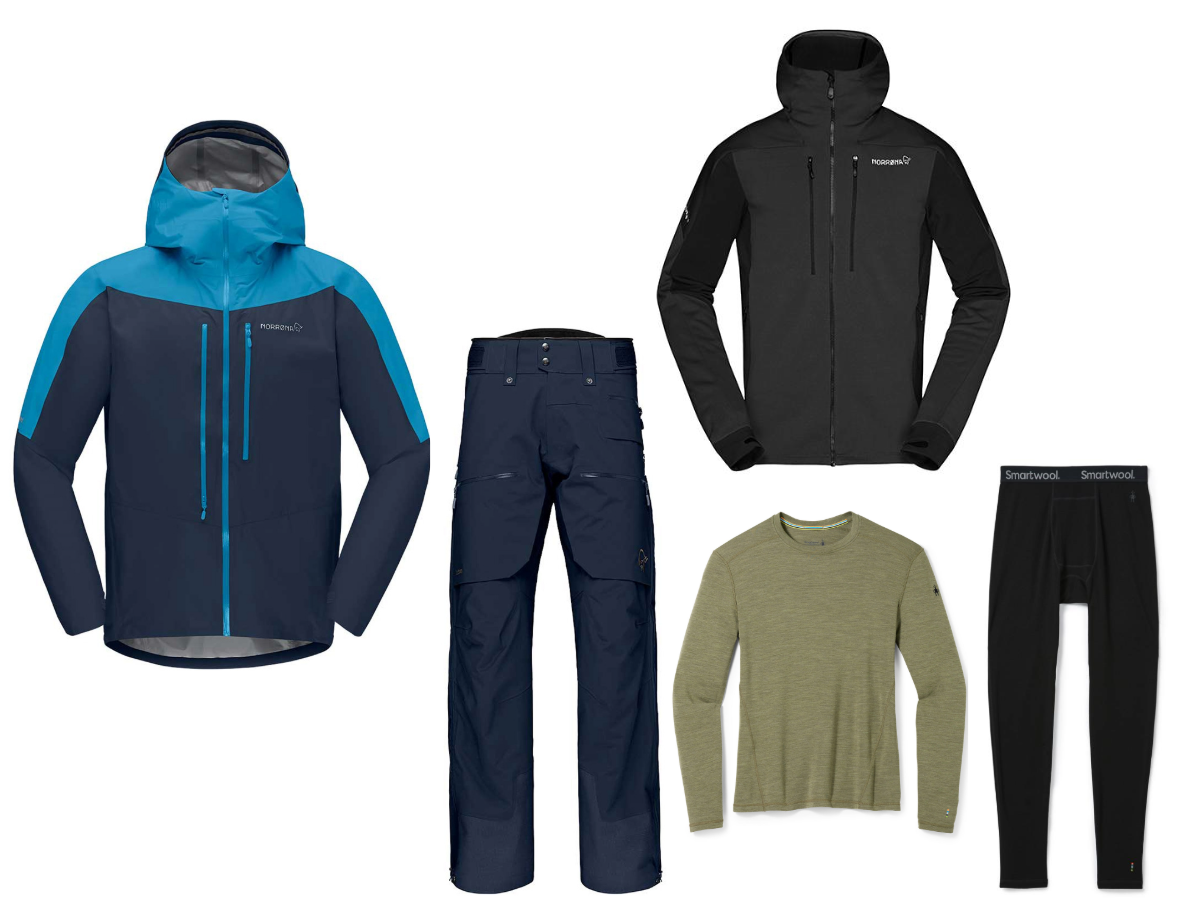
Outer layer: NORRONA | falketind Gore-Tex Paclite Jacket & lofoten Gore-Tex Pro Pants
Middle layer: NORRONA | trollveggen Powerstretch Pro Zip Hood
Base layer: Smartwool | Classic all-season merino base layer top and bottom
Other must-have items
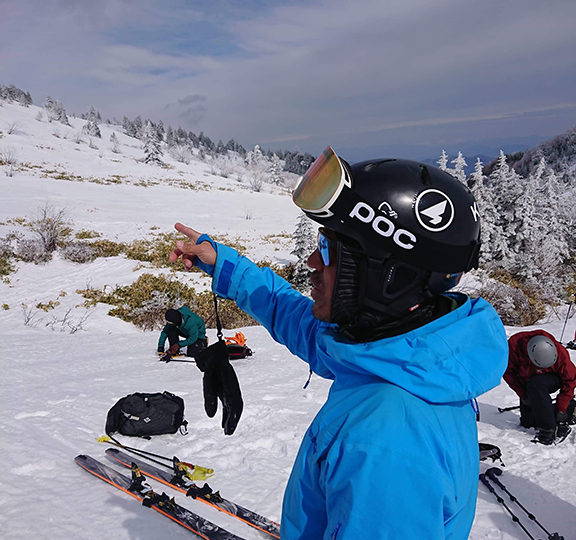
The sunlight is strong in the spring mountains, so goggles with dark lenses are recommended. Sunglasses are also essential. Sunglasses with completely black lenses are also fine
In spring, there is a risk of falling rocks and slipping, so you should wear a helmet. When hiking, wear a wide-brimmed hat to protect from the sun
A thin balaclava, different from winter fleece, is also a good idea to protect yourself from the sun
Snacks
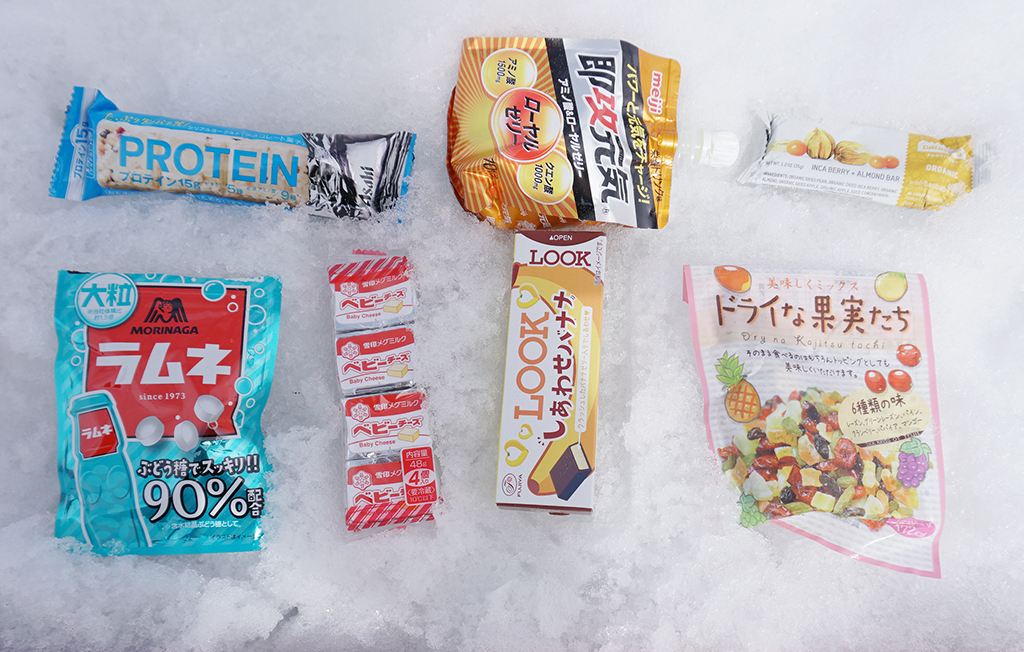
Snacks vary depending on the mountain you are climbing, but considering that spring mountain climbing is a long, drawn-out event, I recommend packing small amounts of food that can be eaten once an hour. Foods that are not bulky and have high nutritional value, as well as foods that are high in sugar and salt, are also good
It's best to bring sports drinks like Aquarius or Pocari Sweat that contain salt minerals, rather than fresh water. When you sweat, all the minerals leave your body, so it's best to replenish them
Things to keep in mind
In spring, the weather becomes milder and it's easier to judge the snow conditions, so many people start heading out to snowy mountains at altitudes above 2,500m. However, there is still a chance of heavy snowfall from April to Golden Week, and avalanche accidents are not uncommon during this time. Just because it's spring doesn't mean you can do anything, so you should get the right information and be fully prepared before heading out, just as you would in the middle of winter
In terms of activities, it's even more important to be mindful of taking good care of your body than in the middle of winter. You'll sweat a lot, so make sure to drink plenty of fluids, you'll be active for longer periods, so make sure to replenish your energy with sugar, and the sun's rays are very strong, so take precautions against sunburn. If you prepare and head to the mountains with the mindset that mountain climbing will be more common from spring to early summer, you'll be able to keep enjoying the experience
If you have no backcountry experience or are unsure of your own judgment in any way, it's a good idea to join a professional guided tour

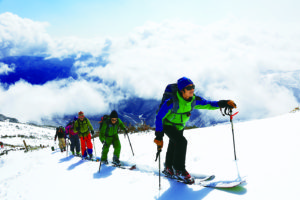
How to choose a guided tour
First, check to see if a guide club is organizing tours for the place you want to go. Each guide club has a base, an area or mountain they specialize in. Then, think about your backcountry experience and skiing level and take a good look at the tour contents. Consider what you need, such as tours that separate groups into groups based on experience and level, tours with a good number of guides in terms of guide ratio (balance between participants and guides), and whether or not gear rentals are available
In this case, it is also a good idea to check the guide club's website or past blogs to see if they have published tour experience reports or how many years of experience they have in running tours
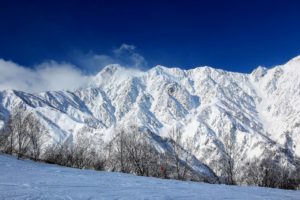
Finally, let me tell you about my personal favorite, Haruyama
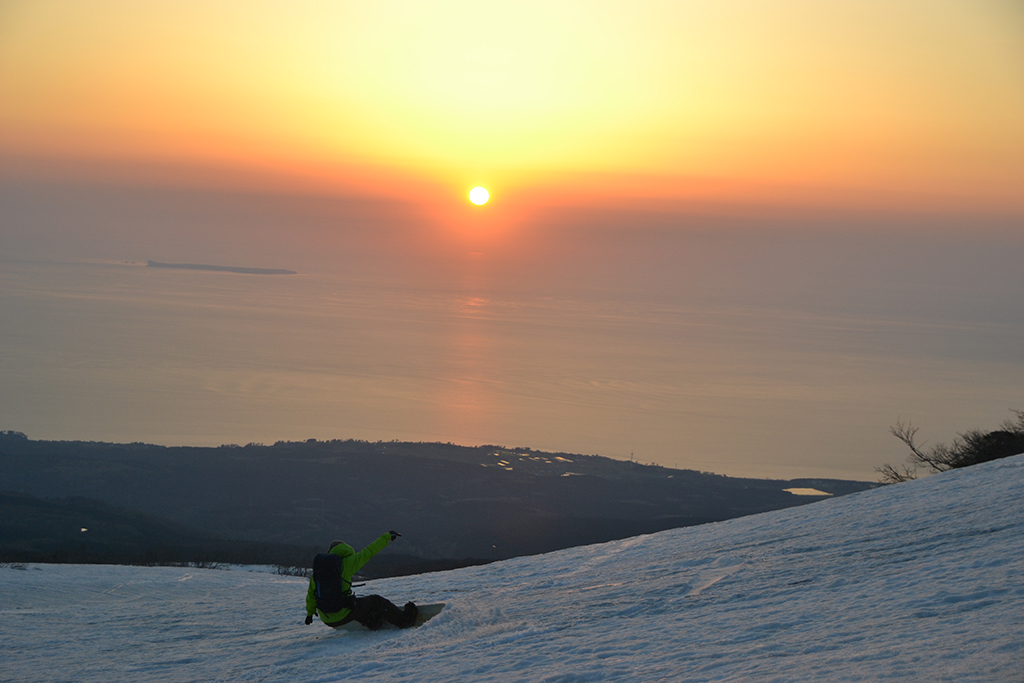
I often go to the mountains in Tohoku in the spring. I used to go to Tateyama a lot, but for the past six or seven years I've really liked Tohoku and have been going to Mount Chokai, which straddles Yamagata and Akita prefectures, often. The road opens just in time for Golden Week, so you can drive up to a fairly high altitude and then hike down to ski, but the location is simply amazing. One of the great attractions of Mount Chokai is being able to ski while looking out at the Sea of Japan, as shown in the photo above. The mountain is conical, so you can ski 360 degrees, and there are various entrances, so there's something different to enjoy every day
A distinctive feature of the Tohoku region is that snow remains abundant until late in the season. Ski resorts on Mt. Gassan are open until July, and backcountry skiers can ski even further into the mountains. Mt. Hakkoda offers long routes that aren't accessible in midwinter until around Golden Week, as does Hachimantai. The Iwakisan Skyline opens during Golden Week, allowing visitors to take the bus, climb a little, ski, then pick up the bus and return to their car.
KinTouN Backcountry Guides offers guided tours in these areas, staying overnight in their cars and allowing guests to join at any time. Everyone gathers in the parking lot, drinks at night, climbs the mountain early the next morning, skis while enjoying the spring scenery, and returns by lunchtime. Afterward, we enjoy a hot spring, buy ingredients at a local supermarket, and have hot pot in the parking lot. Tohoku is simply a truly enjoyable place. Why not join us this spring?
The person who taught me
KinTouN Backcountry Guide (Kintoun)
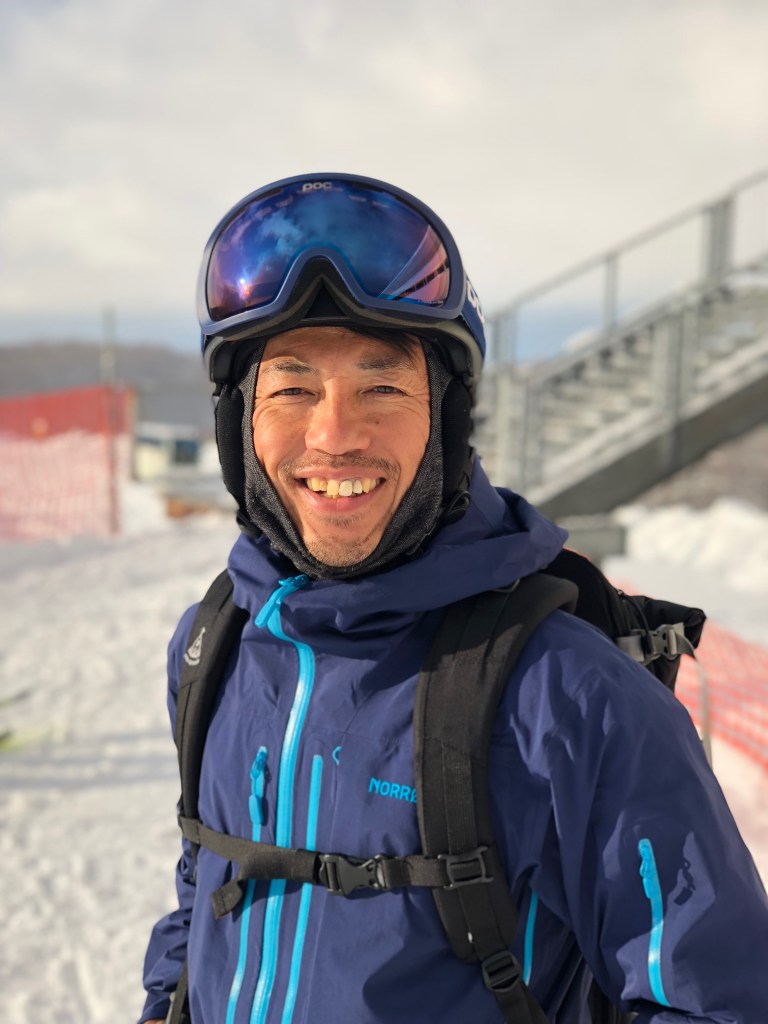
Minegishi Kenichi
[Main guide area] Kanetsu area
[Profile]
Backcountry guide since 2003. Organizes a members-only club, "Valley of the Wind," an old-style campsite in Yamakita Town in western Kanagawa Prefecture. Together with members he has connected through backcountry skiing, he has built campsites and playgrounds in the mountains using DIY methods. "Just like skiing on the waves, which are the energy of nature, I want to ski on natural snow-capped mountains, climb mountains on my own two feet, and ski as I please. It is precisely because there is risk that I feel a sense of freedom."
[Qualifications]
JMGA Ski Guide Stage II