

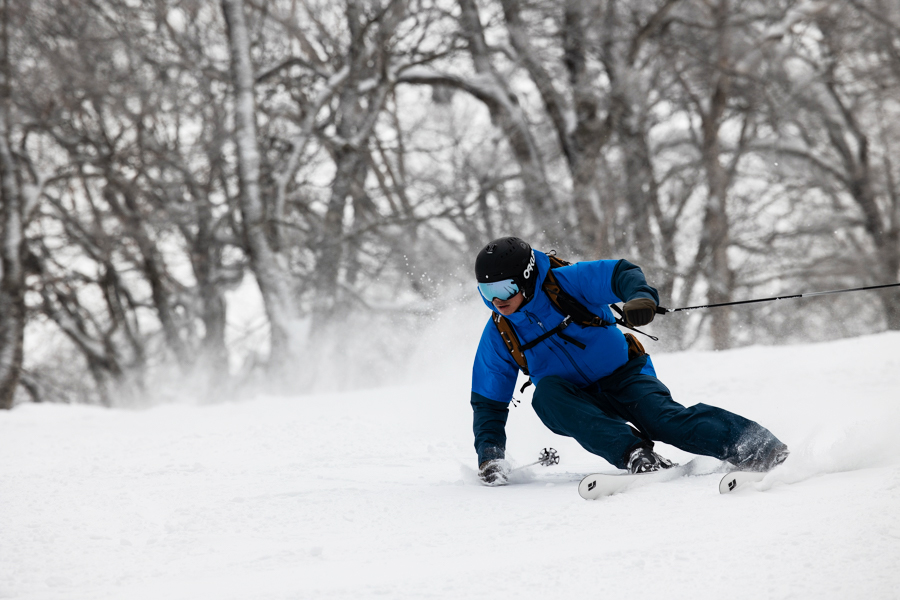
Interviewer: Risa Ohinata Photo: Hiroshi Suganuma

INDEX
Nozawa Onsen Green Season Projects: Flowers bloom one after another
──So that's how Greenfield started
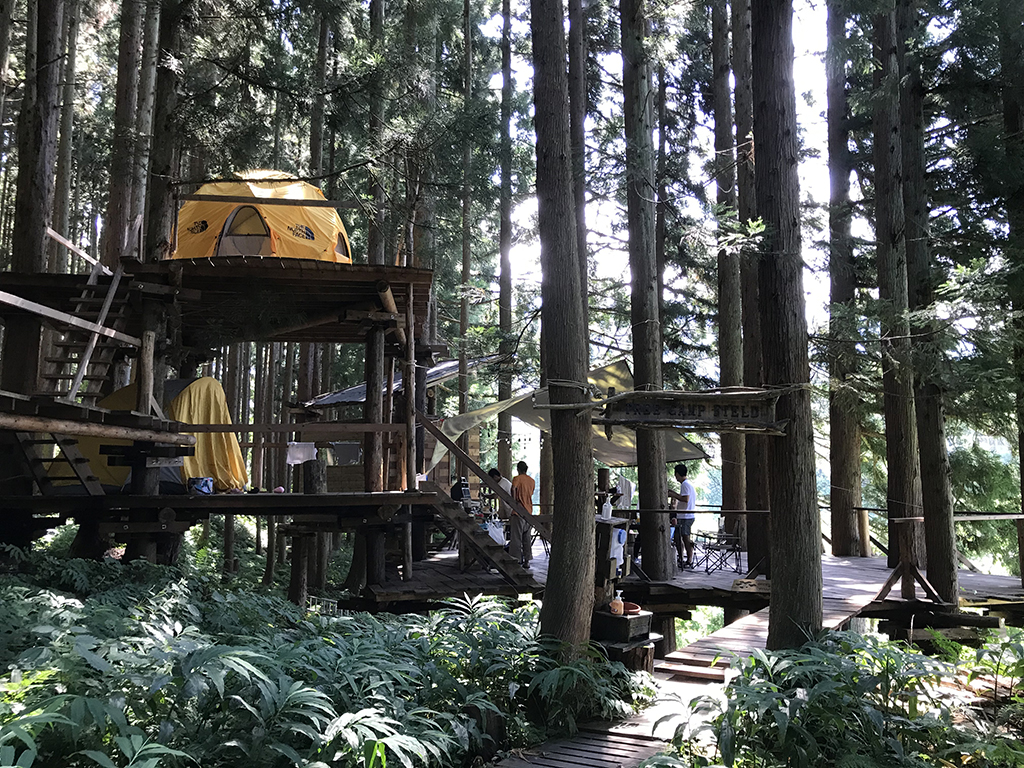
That's right. At first, we weren't really thinking about business, but we just wanted to try building a treehouse, so we started out by hand with a friend. We worked in a neglected cedar forest, thinning out the trees and using them to build a deck. We created a comfortable space, so we expanded it little by little and opened it as a private campground in 2016, accepting only one group per day
──Not only can you stay overnight, but you can also experience nature, right?
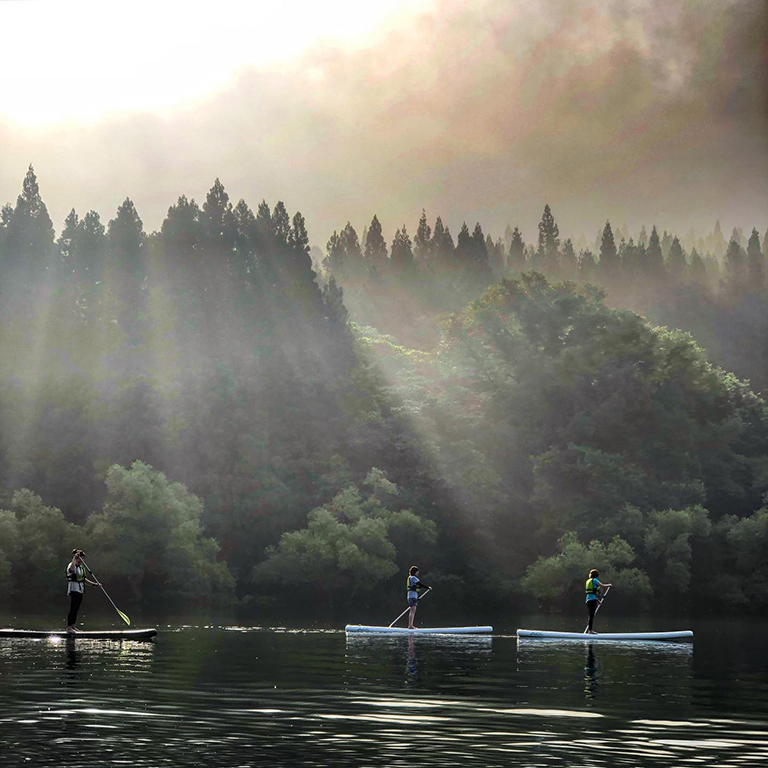
Yes. Just below the treehouse is a green farm where guests can enjoy organic vegetables, and they are free to harvest them as they please. We also hold seasonal events such as rice planting in the spring and harvesting in the fall, and our popular SUP (stand-up paddleboard) tours on Lake Hokuryu (*1) are also popular
──When did you start SUP, Kenji?
It was in 2009. I used to incorporate it into my training when I was a ski cross racer. After that, when I went down the Chikuma River on a SUP for the first time, I found it so much fun that I decided to make it a service
──You also launched a SUP brand。
Yes. When we thought about SUP tours, we needed to have about 10 bikes to rent out to customers. At the time, we didn't have the ideal brand, so we thought why not make our own SUPs? Our business partner was making fixed gear bikes, so we followed that trend and did some research before launching our own company in 2015 under the name PEAKS5
──The idea of making something that doesn't exist is quite original. What makes PEAKS5 different from other SUP brands?
At the time, the main field for SUP seemed to be the sea. We live in the mountains, but there are lakes and rivers near Greenfield. There are also many riverside and lakeside areas around campsites, so we thought we would propose linking camping and SUP. A compact, foldable inflatable SUP is easy to take anywhere, and we travel to various places ourselves to shoot promotional videos to spread the appeal of SUP
──What was your most memorable SUP trip?
It's the Shimanto River in Kochi. I've been going there for four years now. The water is so clear, there are no houses nearby, and we paddle 30-40km through a truly magnificent natural landscape. The first year was a project in collaboration with The North Face, and from the second year onwards we also brought Greenfield customers and loaded our SUPs with camping gear and food for a two-day, one-night SUP camp. The term "SUP camping" didn't even exist back then, so I think we were able to propose a new form of recreation
──There was a SUP event held at Lake Hokuryu this fall too。
That's right. It was our first attempt, but in September we teamed up with SUP racer Kenny Kaneko at Lake Hokuryu and held a SUP race event that anyone could participate in. Kenny used to come to Nozawa Onsen often, but all competitions were canceled due to the effects of COVID-19, so we thought we'd do something together.
This time, a considerable number of SUP racers gathered from all over the country, and next year we're thinking of making it a "RUN & SUP" event so that more people in Nozawa can participate. Kosuge Shrine is at the end of Lake Hokuryu, so we'd like to run to the inner shrine and then go around the lake. That way, local cross-country racers could also show off their skills.
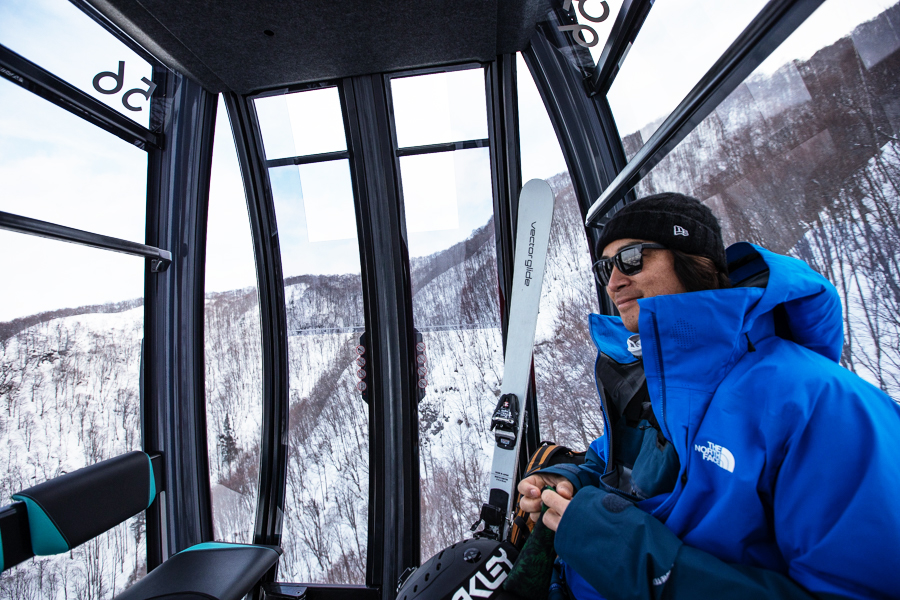
With a new partner, Vector Glide
──What were your plans for winter activities after retirement?
I just wanted to ski. It was around that time that I was approached to help out with Vector Glide. Up until then I had been working with overseas brands, but I felt uncomfortable with the lack of direct communication between them, where decisions were made in the home country and communicated to customers through an intermediary.
At the time, I had also launched PEAKS5, so I was very interested in creating products for use in the field. There's something fascinating about being able to communicate the things you make yourself directly to customers.
──Were you always interested in making skis?
I've had the opportunity to work as a ski tester for ski magazines on several occasions. I test rode around 80 skis from various manufacturers and wrote reports. By riding that many skis, I was able to see what length, shape, and flex were best for me. At the time, I had an idea of what my ideal skis would be like. There were no skis on the market that met my specifications, so when I decided to develop skis at Vector, I put that experience to good use
──Will a prototype be created based on these numbers to create the ideal ski?
Surprisingly, we were able to get it to work quite well from the first ski. After repeated fine adjustments, the shape was decided on around the fifth ski. Of course, if I, with no experience in ski making, had started from scratch, it wouldn't have turned out this well, but thanks to Akiba-san's long experience, it all went smoothly. The ski that was born from this is the Polave model. The concept is to create a ski that can be enjoyed in a variety of situations with just one ski
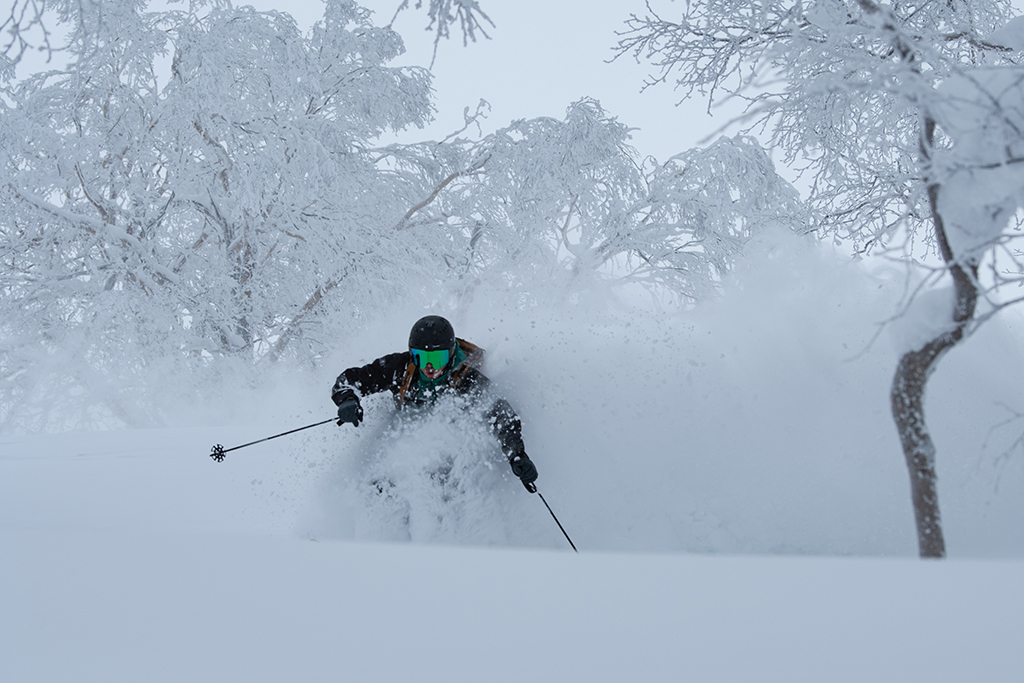
──Do you feel differently when putting on skis that you helped develop?
It's completely different. It's especially the feeling I get when I'm showing customers around. I can communicate in my own words, and it's not just about selling the skis and leaving it at that. I get to ski with them on the snow and provide after-sales support, like helping them figure out how to operate the skis to get the most out of them
──You've been involved with Vectorglide for about four years now. How is it actually working on it?
It's interesting. There are so many things I want to do that I can't even take a break. I'm always on. There's no boundary between work and rest. But I think that living a life where you're always on is interesting
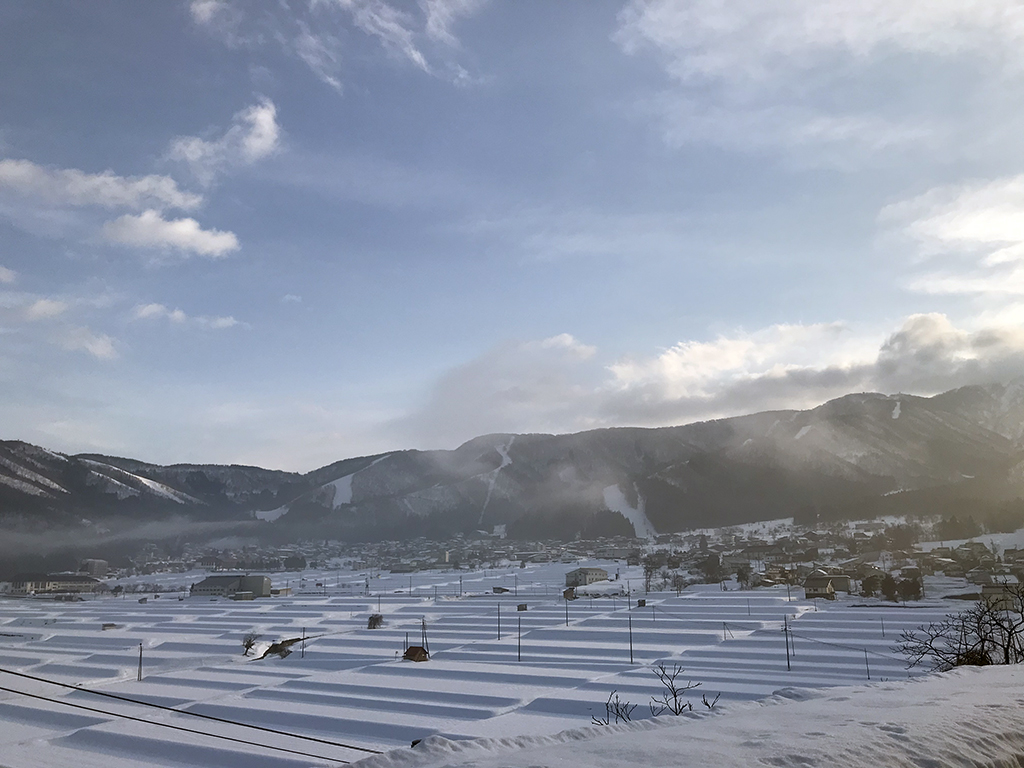
The value of Nozawa Onsen as a tourist destination
──I heard that you were appointed chairman of the Nozawa Onsen Tourism Association in June. What specific activities are you involved in?
As chairman, I show up at various places, attend meetings, and say hello. I value being able to listen to opinions by getting close to people of a higher generation, such as the village mayor and the ski resort president. I think that for the first one or two years, it's more about understanding the current situation than trying to do something new. It
's the same with backcountry skiing; you decide your line after understanding the conditions and situation of the day, not just your own skiing. Just like how developing a tourist destination won't work if you just recklessly do what you want. If you ask the people above you about the history and past, they'll teach you a lot, and if you can build close relationships with them, I think it'll be easier to get their understanding when you start something new.
──That's a very important point. What are the challenges facing Nozawa Onsen Village as a tourist destination?
Maybe it's the lack of successors to the inns or the lack of visitors during the green season. But I'd like to conduct a proper survey to see how satisfied the operators are.
If they're reasonably satisfied with the current situation, it might be better to improve quality rather than just thinking about attracting visitors. Before COVID-19, ski resorts attracted around 420,000 visitors, and if they bring in more than this, customer satisfaction could decline, so perhaps they should restrict entry. But if they can attract a certain number of visitors during the green season, I think they can do that with ease. I've been thinking about this a lot lately, but it would be great if we could increase the quality of life for the people who live there.
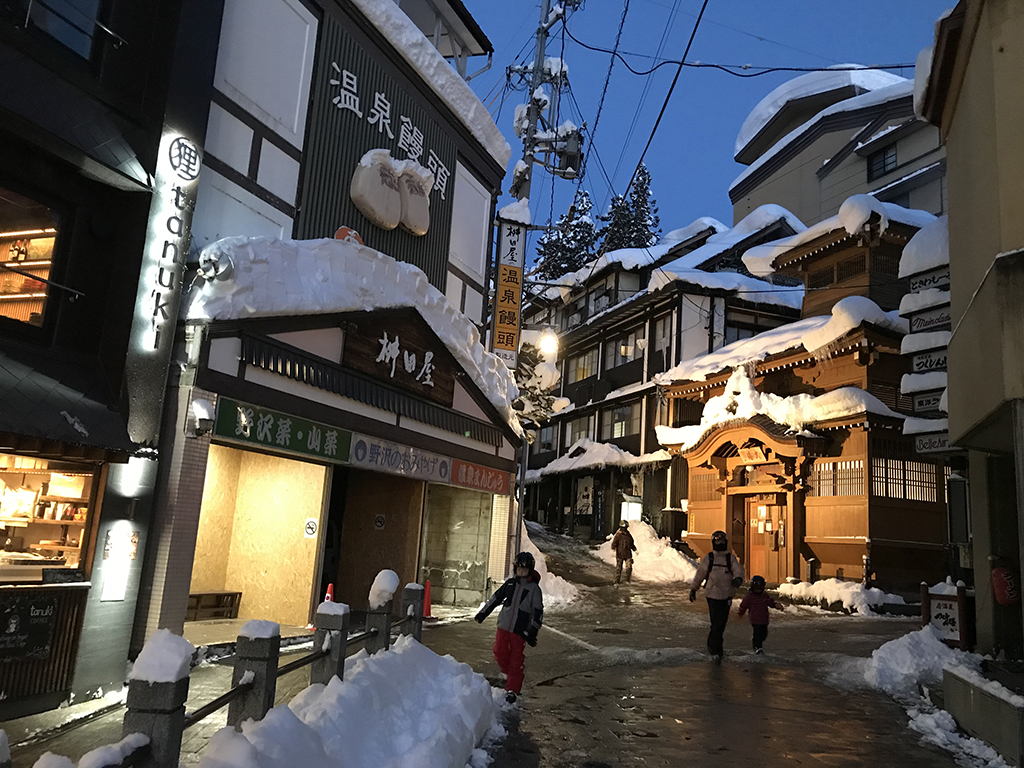
──What is the wealth of the villagers?
One of the great values of Nozawa Onsen is its outdoor bath culture. I think it's amazing that our ancestors decided to open up the hot springs they had originally used for themselves to tourists because they thought they were so good. This is the mindset of Nozawa as a tourist destination, where people feel rich and satisfied and want to share that feeling with others.
Recently, some people have been saying that the baths should be locked because of bad manners, but that ultimately means they don't trust people. Nozawa's greatest branding is its generosity, that anyone is welcome to bathe. So, depending on whether the residents are satisfied with their lives, the services that can be provided will change and it will also enrich the tourist destination.
──What was the concept behind the Life Farming Camp that you planned this fall?
The Life Farming Camp is a three-day, two-night camping event that I organized this fall for the first time in collaboration with a Tokyo organizer, introduced to me by Yao Ryotaro of Nozawa Onsen Lodge. The camp, with the theme of "Getting to Know the Water Cycle and the Mountains," will allow participants to experience the natural richness and cuisine of Nozawa Onsen firsthand.
Since the abundant water and hot springs are thanks to the beech forests, the camp's activities include walking through the beech forest with a guide, cooking outdoor meals with a local chef, practicing zazen at Kenmei-ji Temple, where Nozawana was first grown, learning about the local climate, and going mushroom hunting with a mushroom expert, all while allowing participants to interact with the villagers.
──What kind of customers are you serving?
This year, we invited some acquaintances as a test, so most of the participants were from Tokyo. People from a variety of industries participated, including those in the music industry and the president of an electric power company, and they all said they wanted to come ski in the winter! It was a really wide-reaching event. We even invited the village mayor and my dad to join us just for the meal. Because it's a small village, it tends to seem like Kenji is doing something with people from Tokyo, so we made a conscious effort to involve as many villagers as possible
──It must have been a valuable experience for the customers, something they wouldn't have had on a regular trip。
From now on, I'd like to propose travel through sports. Skiing and hot springs are available everywhere, aren't they? Why not take it a step further and create a concept of health tourism or wellness tourism?
As an athlete myself, I know that the three basic elements of physical fitness are exercise, rest, and food. Nozawa Onsen is all high quality and has all three of these resources. Of course, ski resorts and restaurants are taking measures against COVID-19, but I think the most important thing is to boost your own immune system. Rather than being exhausted and cooped up at home all day, I'd like to propose travel that boosts your immune system.

Skier Kenji Kono's future
──What will you be doing this winter?
I've been touring around the country in Vector Glide's Glide On Groove (*2) and holding user camps. This year, we opened a direct store and online shop (*3), which has made it much easier to guide customers. If someone likes a ski at a test ride, they can now purchase it right there and then. I've also
been running a riding academy for the past 3-4 years, and it's become so popular that when I make information public, reservations fill up within 24 hours.
──What kind of lessons do you offer at the Riding Academy?
It's an orthodox technique for skiing. I teach it in four key points that can be used on any slope or in any condition. As muscle strength declines with each passing year, it's important to compensate with technique, so I practice it myself in the field and make sure I can communicate it clearly in words
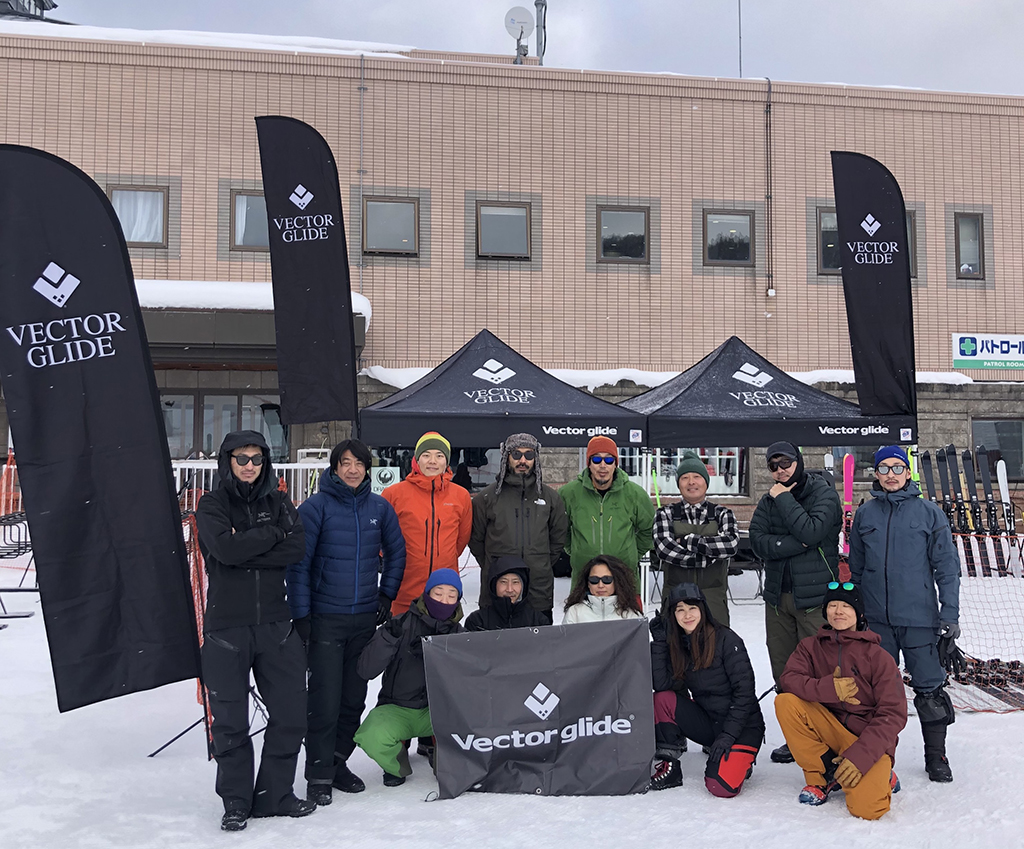
──It must be special for customers to be able to learn directly from the person who made the skis。
There are things we can communicate through our products, and it's interesting for us to be able to interact with customers in a holistic way. When I was in my twenties, I thought it was fun to ski by myself, but now the joys of skiing have expanded to many different areas. I really enjoy guiding people who are skiing for the first time
──It's great to be able to enjoy not only your own skiing, but also the improvement of others. Finally, are there any challenges or goals you would like to achieve as a skier in the future?
I don't really have any particular mountain I want to ski or anything like that right now, but I think it's simple: I just want to keep skiing like I'm cool. I often see people who work in the ski industry being so busy in the winter that they end up not being able to get out to the field much, but I want to aim to be a "cool dad" who makes skis, stands on the snow, and skis with all kinds of people on a daily basis.
All of my green season activities are connected, and I have many connections with people outside of skiing. I think it's my role to convey the appeal of skiing to these people and to collaborate with them. I'd love to spread the appeal of skiing from all kinds of angles.
❖ Kenji Kono's latest riding video
*1 [Lake Hokuryu]
A lake close to Nozawa Onsen. Surrounded by mountains, this quiet lake is perfect for SUP beginners.
*2 [Glide On Groove]
A test ride event where you can experience everything from Vector Glide's classic models to the latest models. This season, it will be held at five locations nationwide. https://www.vectorglide-japan.com/single-post/glide-on-groove-registration
*3 [Online Shop]
WHITE TIME is an online shop where you can purchase all Vector Glide models and related goods. A direct store of the same name will open in Tokyo in June 2020.
https://www.vectorglide-japan.com/shop
Nozawa Green Field
Official website: https://www.nozawagreenfield.com/
https://www.facebook.com/nozawagreenfield/
https://www.instagram.com/nozawagreenfield/
Interviewer/Editor + Writer
Lisa Obinata
Born in Tokyo in 1980. After graduating from the School of Letters, Arts and Sciences II at Waseda University, she worked for a publishing company for 13 years as an editor for ski magazines such as "Ski" and "POWDER SKI". Since 2013, she has served as editor-in-chief of the magazine. In 2015, she went independent and founded the snow culture magazine "Stuben Magazine" together with photographer Yoichi Watanabe. In 2020, she moved from Shonan to Iiyama City, Nagano Prefecture, where she is currently living a natural lifestyle close to the snowy mountains and nature.