
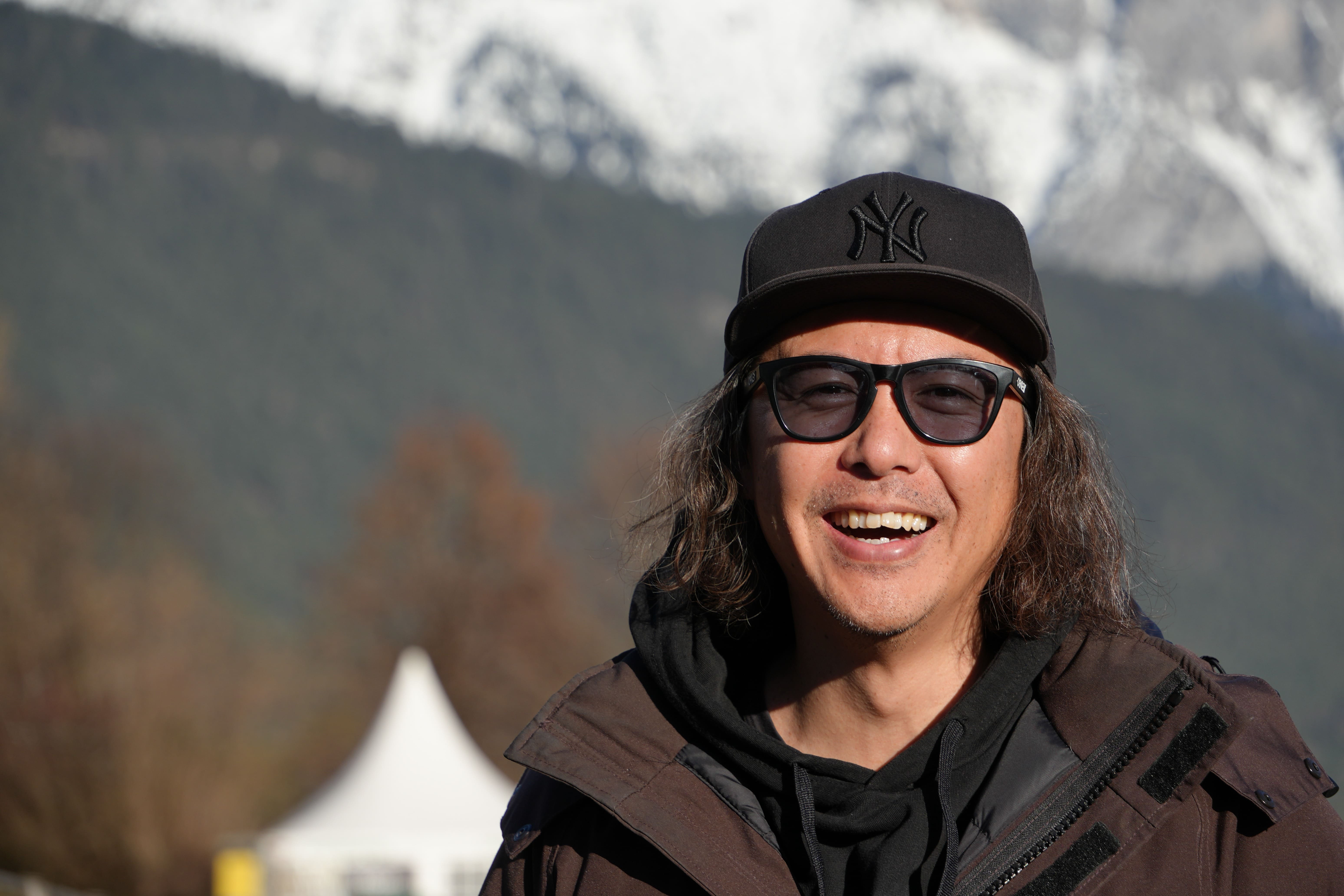

After competing in World Cup races, Kenta Uraki returned to the snow in 2018 as head coach of the All Japan Alpine Team. The following year he moved to Innsbruck, Austria, and is now the exclusive distributor of Kessle Ski in Japan. From a global perspective from overseas, he will be bringing you the latest information and interesting topics on European snow culture, gear, and technology
’24/25The Alpine Skiing World Cup kicks off in Sölden, Austria!

This year, the FIS Alpine Ski World Cup, organized by the FIS (International Ski Federation), will kick off at the end of October.
Held annually since 1967, the Alpine World Cup runs for approximately five months, from the end of October to the end of March, with about 40 races held annually for both men and women in all four disciplines (DH/Downhill, SG/Super-G, GS/Giant Slalom, SL/Slalom). World Cup points are awarded to those who finish in the top 30 in each race, and the overall champion and individual discipline champions are determined by the total points earned.
This season's Alpine Ski World Cup will kick off in Sölden, Austria at the end of October, with the women's giant slalom (GS) taking place on Saturday, October 26th, and the men's GS on Sunday, October 27th. The first
World Cup opening race in Sölden began in 1993. I also participated in the second Sölden opening race in 1996, but at that time, the opening race was held in a different location each year, with the main venues being Tignes in France and Park City in the United States.
Since 2000, Sölden has been the opening race every year, making it the 25th consecutive year that Sölden has been chosen as the venue for the opening race. (The reason why the opening race is held in Sölden, Austria at the end of October is explained in the previous article .)

Speaking of the opening race, one of the highlights is checking out what kind of skis and racing suits each team will be using, as they will be employing new equipment.
In addition, the 24-25 Alpine World Cup is full of different topics than before, such as the return of legends and changes to the FIS rules. As a preliminary measure for the opening race, we have compiled information mainly on the men's World Cup and Japanese athletes.
With Hirscher's return to the World Cup,the FIShas moved to revise the rules!
First, we should focus on Marcel Hirscher, who has decided to return to the World Cup after a six-season absence.
He achieved an unprecedented eight consecutive World Cup overall victories by the 2018/19 season, and announced his retirement in September 2019, just before the start of the following season. Since then, he has launched his own ski brand, "Van Deer RedBull Sports," and has been focusing on developing the brand.
This season, along with his ski brand, he has changed his nationality from Austria to the Netherlands, his mother's country of origin, and is returning to the World Cup.
With Hirscher's return, the FIS moved to revise the rules, likely seeing it as an opportunity to increase the popularity of alpine skiing and the World Cup.
The new rule is the "wild card." This system is available to legendary athletes who have won five or more World Cup races, or have won an overall title, or a gold medal at the Olympics or World Championships, and who have been retired for more than two years but less than ten years.
Specifically, even if they are not ranked, they are guaranteed entry into the World Cup and the 31st starting position, right after the seeded athletes.
FIS President Eliasz was also positive about establishing this system, so by summer, the adoption of wildcards starting this season gradually became a reality.
Perhaps because of this, Hirscher, who was scheduled to participate in FIS-sanctioned races during his August tour of New Zealand to qualify for the World Cup, only trained and returned home without competing in any races.
However, this wildcard system drew criticism from some countries and riders, citing concerns about fairness to riders and the loss of opportunities for younger riders.
Ultimately, it was decided that riders would not be granted season-long entry rights, but rather the right to use the wildcard only if they applied for and were approved for each race. Nevertheless, the wildcard for the opening race of Sölden was approved.
However, Hirscher himself is having trouble with his equipment setup, so it seems that his decision on whether or not to participate in Sölden will be made just before the race.
▼The message he sent on Instagram about his return
[Translation]
Hi, this is Marcel. I felt I needed to say something too.
A lot has been reported in the media, but yes, I'm going to get back into ski racing, and I'm very happy about that.
Why am I doing it again?
For me it's pretty clear: the joy of skiing drives me. I
've been away from the racing scene for the past five years, but I'm just going back to my favorite place, where I've always been, and just having fun.
I'm really happy to be able to do that again, and I'm really looking forward to what's to come.
And the consultations with the Austrian Ski Association and the people in the Netherlands have been very good. We all think that making this project happen is a good thing for the Dutch Ski Association and it's not difficult at all. And what's very important to me is not to take away valuable resources from young Austrian athletes. I want to cherish their dreams of glory and their positions. The future belongs to the young people. For me, at 35 years old, this decision is very clear, and I think it's necessary for youth development and the future of Austrian skiing.
And I believe it can do a lot for the Dutch Ski Association. I'm also grateful that my dual citizenship makes this project possible. So I'm really looking forward to what's to come, especially since we started "VAN DEER-Red Bull Sports" two years ago, and I remember*1was as a super winner in the World Cup, and how Tim Hermann Haug*2had a fantastic season last year. I'm really excited to be able to compete in FIS races with them again. And I might even be able to take advantage of this amazing opportunity to train with Lucas Braathen*3. I think that would be a really cool and great opportunity to pursue my passion and bring out the best in myself.
I've competed in 247 races so far, but I'll continue to quietly and passionately work for my country and for my passion. I'm looking forward to sharing beautiful moments with all of you who support me. Have a great summer! See you in winter! Ciao!
Marcel Hirscher
Movements surrounding the return
Hirscher isn't the only one making a comeback.
Lucas Braten, who won his first World Cup title in Sölden in 2020 and the slalom title in the 2022/23 season, announced his retirement just before the start of the following 2023/24 season.
However, he has decided to return to the World Cup this season, having changed his nationality from Norway to Brazil, his mother's country of origin. It has been reported that the reason for his retirement was a conflict with the federation over his image rights, so it's possible that Braten himself retired with a comeback in mind.

It is unclear whether this is the reason, but FIS has revised its marketing rules, allowing each athlete to have two head sponsors on their helmets instead of one, starting this season
While the rule changes are favorable to athletes, what will happen in countries like Norway, where head sponsorship is unified across the entire team rather than being an individual right?
Given the Braten case, the Norwegian Ski Association will have to be cautious in its response.
Braten, who will be competing from Brazil, will have more freedom in using his image rights and selecting sponsors, and his return to Sölden has been decided with Red Bull as his head sponsor.
In contrast to Hirscher, who has been away from the World Cup for five seasons, Braten's break is only one season, and he will be arriving in Sölden in top physical and mental condition.
Furthermore, with the introduction of the new FIS "wild card" rule, there have been rumors in Europe that female skiers may be returning to the sport. Lindsey Vonn (USA), 40, who has 82 World Cup victories, has had an artificial knee and is currently training for a comeback. Furthermore, Anna Weiss (Austria), who retired in 2020 after two overall victories, recently signed with Kesleski, sparking rumors that she may be working toward a comeback. While the truth is unclear, the fact that rumors are spreading is a testament to the attention being paid to the Alpine Ski World Cup in Europe
The Japanese team will feature the promising Seigo Kato! Who are the other players?

Now, what's interesting is the performance of the Japanese team. In particular, the men's team has secured four spots in the GS (Giant Slalom) World Cup in the first half of the season, including a national quota.
Seigo Kato (Nozawa Onsen SC) qualified by being in the top 60 in the GS World Cup points, Hayata Wakatsuki (Hotel Rosso Ski Club), who is the top-ranked Japanese skier in the GS FIS points ranking and will be competing through the national quota, and Shintaro Sato (Oki Tamaki) and Ryoma Katayama (Tokai University), who qualified through the Far East Cup.
The latter two have yet to compete in a World Cup, but a total of four athletes are scheduled to participate in the opening round of the Sölden tournament.
On the women's team, Miki Ishibashi (Gaswan Ski Team), the winner of the GS event at the Far East Cup, will be competing in her second World Cup since January 2022.
Many Japanese skiers have achieved success in the slalom (SL) event, with Tetsuya Okabe and Akira Sasaki achieving the highest ranking of second place. However, in the giant slalom (GS) event, the gap with the world's best remains significant. In the men's event, the highest ranking achieved was 20th place by Seigo Kato last year in Schladming, Austria.
This was the best result since Akira Sasaki's 24th place finish in 2004.


However, there are also bright signs. In particular, the Sölden course presents a great opportunity for ace Kato.
In 2020, he came 35th, just 0.18 seconds behind 30th place, and in 2021, he came 33rd, just 0.09 seconds behind, coming very close to advancing to the second run. Although he hasn't competed in the last two seasons due to injury or race cancellations, it can be said that this is a course he is relatively good at.
He has the handicap of a late start due to poor FIS points, which determine the starting order for seeded players (top 30 in World Cup points), but he gained confidence this season after achieving the best result ever for a Japanese male in the Men's GS World Cup last year, finishing 20th.
We hope he will get off to a good start in the opening race and perform well throughout the season.
And then there's Hayata Wakatsuki, who has been steadily building his skills in European races while belonging to the Italian-based private team WRA (World Racing Academy).
He has recovered from a torn ligament injury and has rapidly climbed the world rankings in the latter half of last season. To overcome the handicap of being small in stature, he seems to have also been able to try new approaches to physical training during the summer.
Having grown stronger through more hardship than anyone else, and now being in top physical and mental condition, we look forward to seeing Wakatsuki's performance.
▼ Hayata Wakatsuki's Instagram @hayata_wakatsuki_waky

Then there are Shintaro Sato and Ryoma Katayama, who earned their spots in the Far East Cup.
This Sölden World Cup will be their first appearance in the World Cup, and for these two who have yet to achieve significant results in Europe, it will likely be a major challenge.
For the women, this will be Ishibashi's second World Cup appearance, but she went off course in the first run last time, and she still has limited experience racing in Europe.
However, for all three of them, having earned individual World Cup qualifications is a huge advantage. Hopefully, by skiing on the world's best course alongside top racers, they will be able to clearly see the difference in skill and physical ability and use that experience to improve their own level.
Who will take the overall title? And what are the chances of the Japanese team?

In the men's events, Marco Odamatt (Switzerland) has been outstanding.
In the giant slalom, although he went off course in the second run of the final race last year, he had shown overwhelming strength up to that point, winning 12 consecutive races from the previous season. Odamatt is undoubtedly the top favorite to win Sölden.
Furthermore, in the speed events of downhill and supersport, he has secured podium finishes in 11 out of 15 races, including 4 wins, and has won the individual titles in three of the events other than slalom. Who can stop Odamatt from winning the overall title?
Marco Schwarz (Austria), a strong contender, tore the ligaments in his right knee last December and was preparing to return this season.
However, as soon as he returned to the snow, his back pain worsened, and he underwent surgery for a herniated disc in late August. It looks like it will still take some time before he can return to racing, and it seems unlikely that he will be able to return this season.
Another rider who could challenge Odamatt is Alexander Aamodt Kilde (Norway), a past overall winner. However, he too has been undergoing rehabilitation to return to racing after a major crash at Wengen DH last season, but currently, his return is uncertain due to a shoulder infection.
In the women's race, the competition is likely to be between Lara Gutt Behrami (Switzerland), who won the overall title last year, and Mikaela Shiffrin (USA), who won the overall title the year before. However, Gutt is 33 years old, and Shiffrin will turn 30 in the second half of the season.
There are also a growing number of promising young riders, and it will be exciting to see how Alice Robinson (New Zealand), Zlinka Lütic (Croatia), AJ Hart (USA), and Lara Kortuli (Albania), all in their teens and early twenties, perform.
Earlier, I mentioned the Japanese team's opening GS race, but in SL, they also have the right to compete in the World Cup at the beginning of the season, with 4 spots for men and 3 for women. The opening races for both men and women's SL are in Levi, Finland, but the men will likely use all 4 spots as they have the European Cup the week after the World Cup at the same venue. The
skiers to watch are Seigo Kato, who thrilled the crowd last year at Wengen by coming in 23rd place in the first run from bib number 51, and Yohei Koyama (Benefit One Ski Club), who came in 8th place at the Madonna di Campiglio World Cup in December 2021.
Koyama has been in a tough situation since that result, not being able to achieve any notable results in the World Cup, but he is undoubtedly the top Japanese skier in this event.
We hope you will look forward to Koyama's performance in the World Cup, as he excels on steep and challenging courses.
▼Yohei Koyama's Instagram @y0heik0yama

In women's slalom, Chisaki Maeda (Murase-gumi Co., Ltd.), who has earned the right to compete individually, and promising young skier Airen Watanabe (Tokai University) are preparing for the opening race of the season. According to
information from head coach Anjiki, Asa Ando (Nissin Medical Foods), who is recovering from injury, is training hard and adjusting her training to be in top condition for the season, so the timing of her return is something to watch.
In Japan, the sports channel J SPORTS will broadcast and stream all of the men's SL and GS races, as well as the notable DH and SG races, and a digest of the women's SL. The men's opening race in Sölden will be broadcast live from 5:45 PM Japan time on Sunday, October 27th. Don't miss this opportunity to watch the Alpine Ski World Cup, which is hugely popular in Europe

Alpine Skiing FIS World Cup 2024/25
- Men's Giant Slalom (GS) -
Sölden, Austria
Broadcast Date: Sunday, October 27, 2024
Broadcast Time: 5:45 PM - 11:00 PM
https://www.jsports.co.jp/ski/alpine/

