

The recently released "STEEP SKI BOOK 2027" covers a wide range of alpine brands from both Japan and abroad, and includes numerous test ride reviews by experts and general skiers. Intermediate and advanced skiers who are seeking superior ski performance and turn quality should definitely take a look at the world of heel-free skiing.
Skiing like you're traveling. A recommendation for a cross-cultural skiing experience
STEEP occasionally features the world of backcountry cross-country and telemark skiing. In contrast to alpine skiing culture, where skiers, helicopters, or even the skiers themselves gain altitude and enjoy the descent, in backcountry cross-country skiing, moving across snowfields and forests is not a means to an end, but rather an end in itself
Its roots lie in Nordic skiing, which developed in Scandinavia as a means of transportation. It involves traveling through a world of snow and ice, enjoying the land, nature, and conversation. The original aspect of skiing as a "tool for getting around" remains strong, and it has long been popular in Scandinavia and North America, especially in Norway, where it originated
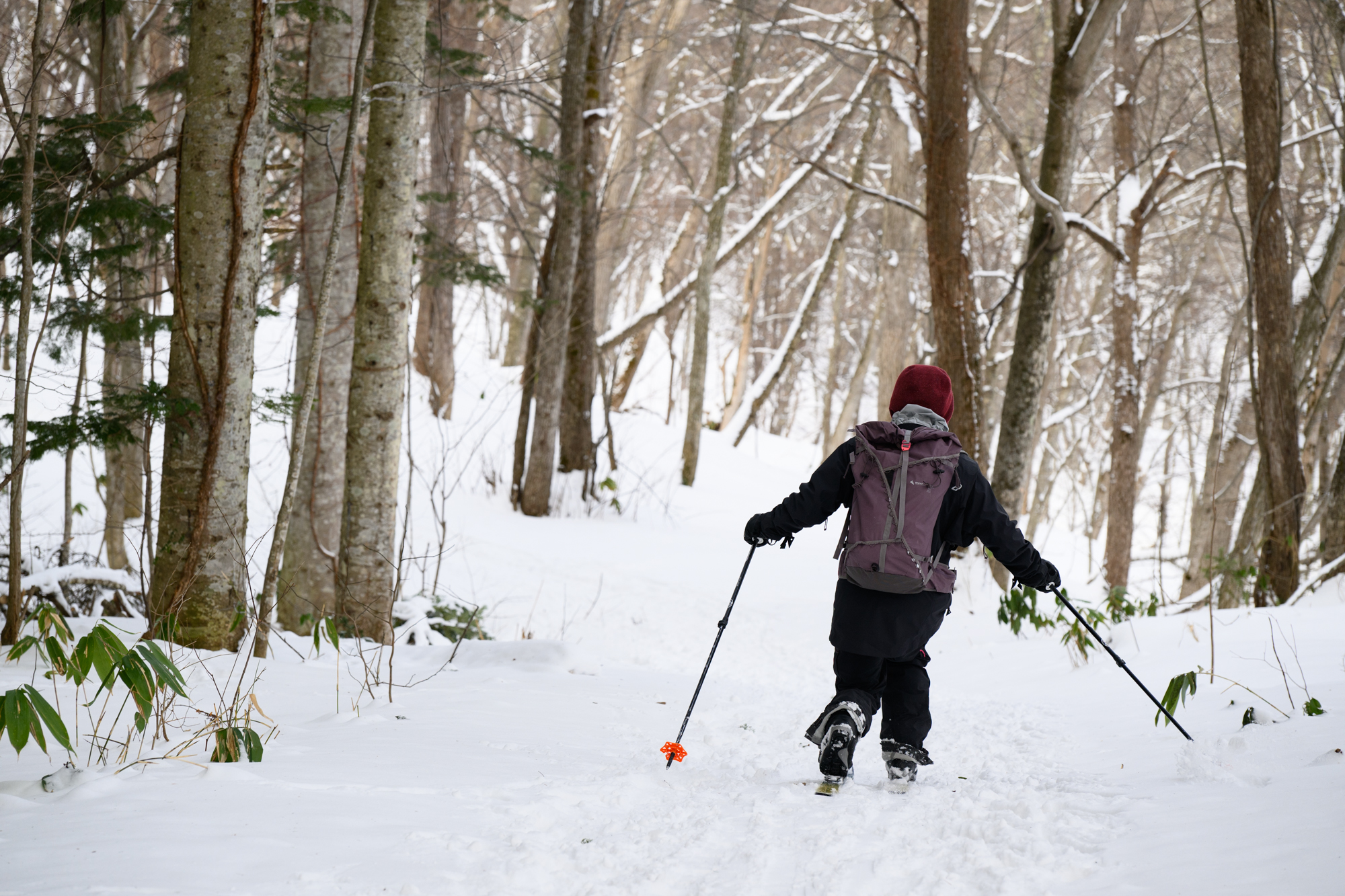
Rather than focusing on the specifications of the skis, I find myself wanting to talk about the experiences I had that day. It's about a more comprehensive form of play on the snow. Now, with the increasing diversity of ways to enjoy skiing, it's interesting to explore this kind of culture
What exactly is BC Cross-Country?
Many people may have heard of telemark skiing, but are still unfamiliar with backcountry cross-country skiing. Backcountry cross-country skiing is a style that combines the maneuverability of cross-country skiing with the freedom of backcountry skiing. It allows you to move freely through mountains and fields, enjoying skiing according to the terrain. It's similar to hiking or trekking while wearing skis, and can be enjoyed not only in mountainous areas but also in nearby foothills. Overseas, it is sometimes called "Light Backcountry" or "Light Telemark," and is also positioned as an entry point to heel-free skiing culture
" well-tuned ," one of the few ski hiking specialty shops in Japan, opened in Iwamizawa City, Hokkaido in December 2025. Check out what owner Kota Ito has to say about the appeal and enjoyment of backcountry cross-country skiing, as well as introductions to equipment and actual tours.


"Surprise points" and setup for Japanese people
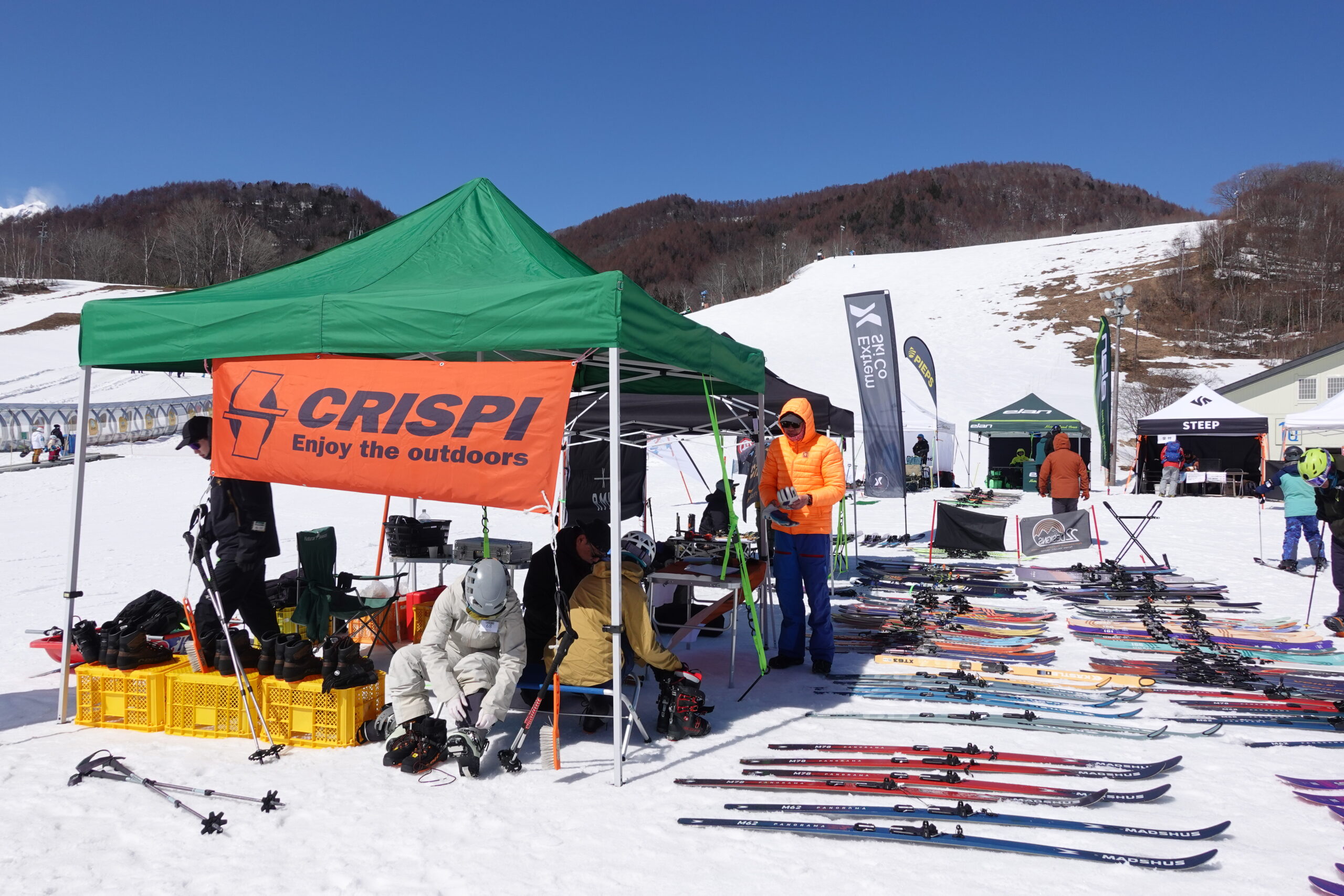
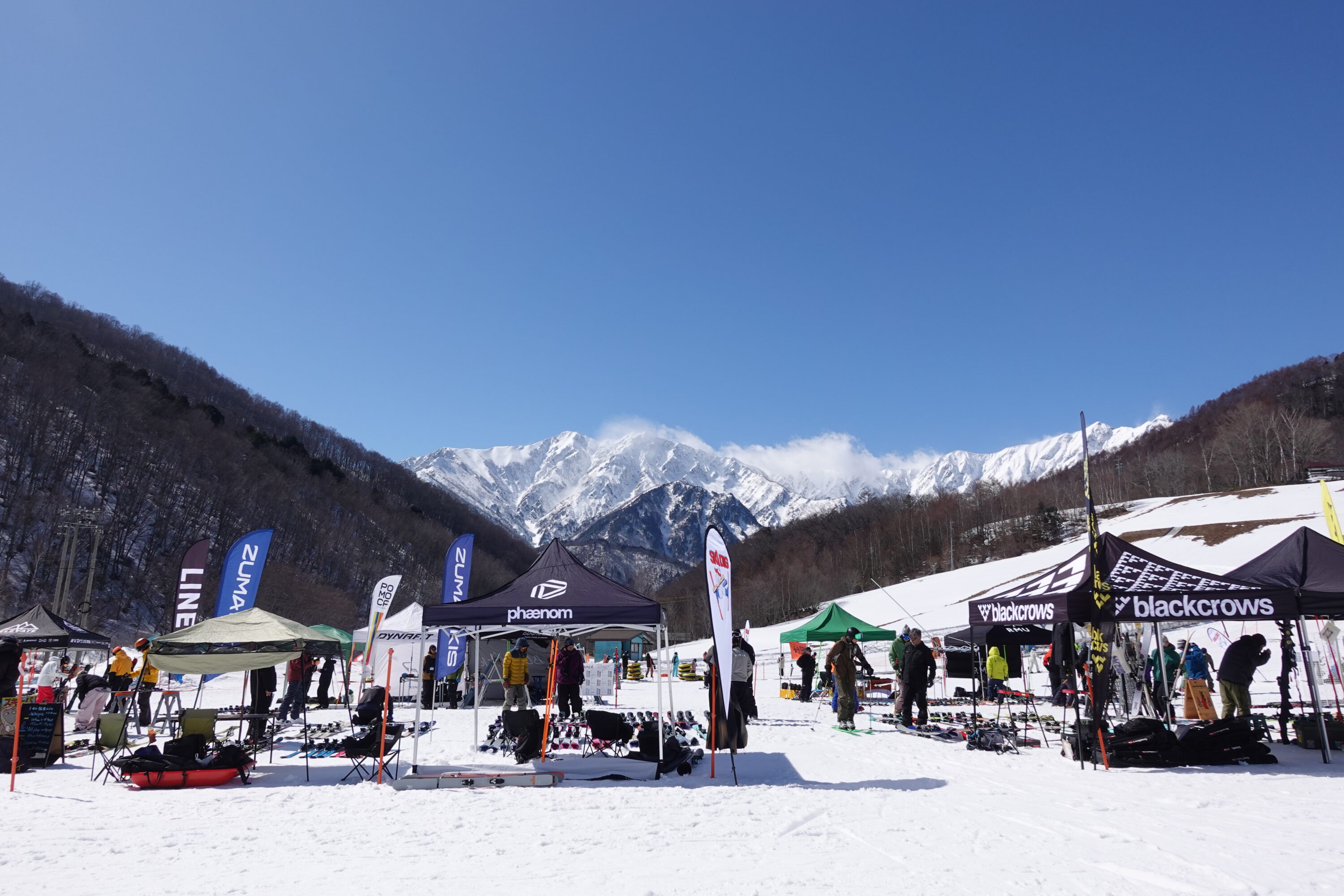
Meanwhile, the All Japan Technical Ski Championships, which have developed as a unique aspect of Japanese skiing culture, were being held that same weekend. STEEP was hosting its first-ever ski test event, "SKI DIG," at Kashimayari
Under the corporate philosophy of "respecting the changes and cycles of nature," Miyako Sports imports and distributes outdoor and ski products that enrich diverse lifestyles. At their booth, the latest heel-free gear, rarely seen in regular ski shops, was on display, and visitors could try it out on the snow
Listening to the stories, even our editorial staff, who primarily focus on alpine skiing, found many new and interesting discoveries. While the standard for backcountry cross-country skiing used to be a combination of narrow skis, leather boots, and three-pin cleats, recent advancements in equipment have broadened the options. The enjoyment of choosing gear, in addition to the pleasure of walking and skiing, has increased, making the world of heel-free skiing more accessible
As you improve, you'll begin to see the origins and other possibilities of skiing as a tool. From here, I'd like to introduce its appeal and noteworthy gear, based on what I've heard on-site
Wax-free "scale sole"
The first thing that surprised me was the comment that "it's not designed for skiing on groomed slopes." In recent years, resort carving has become increasingly popular in Japan, and most alpine-style touring models are designed with groomed slopes in mind. However, when I was shown their top recommendation, the sole had a pattern of bumps and grooves resembling fish scales
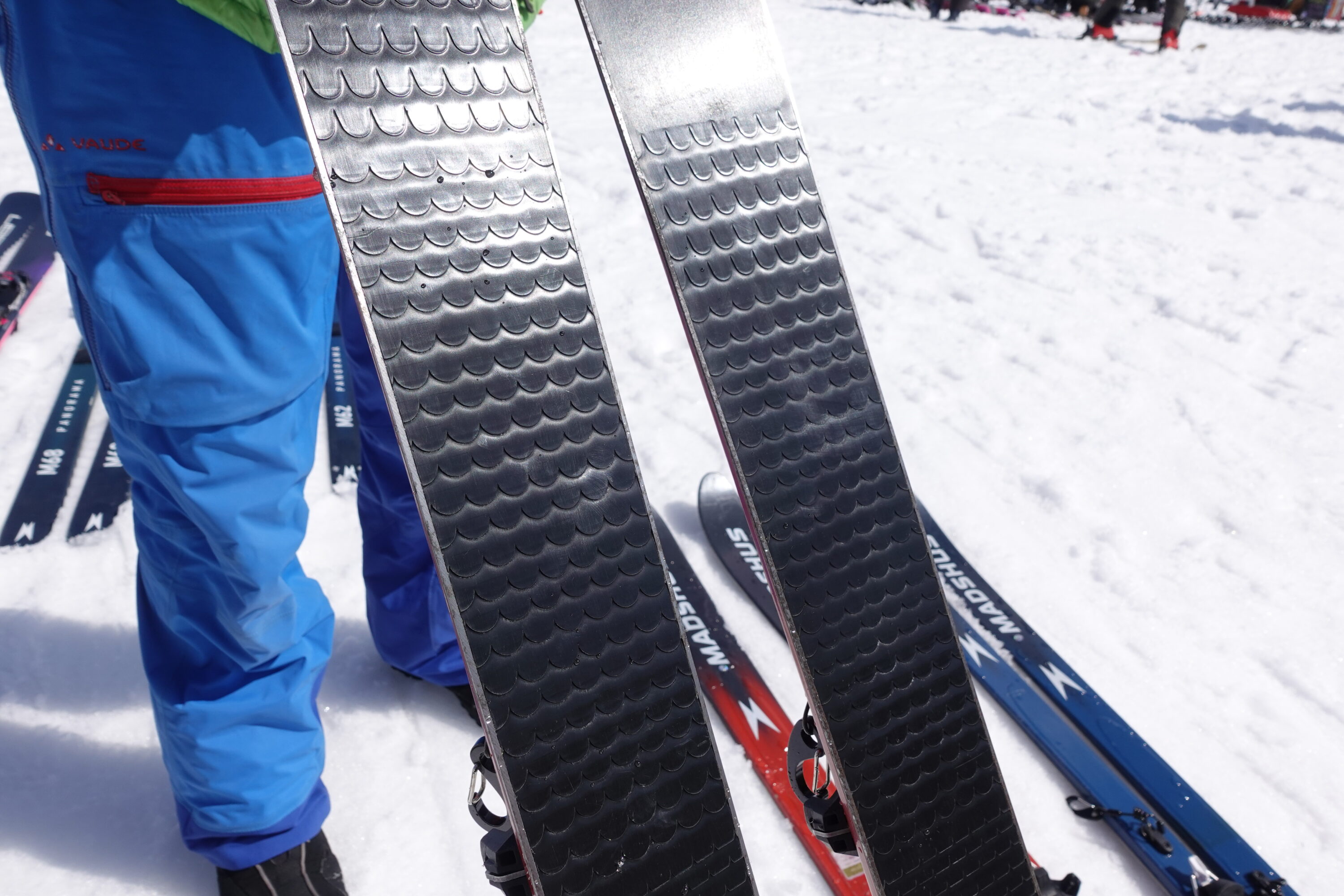
These are commonly known as "step soles" or "scale soles," but the name varies depending on the region and brand. Fischer calls them "Crown Base," Rossignol calls them "OmniGrip," and Madshus calls them "Positrack Base," among others. In English-speaking countries, they are often called "fish scales" or "waxless bases."
While alpine skiing adjusts gliding performance through wax and structure, this system balances grip and gliding through the shape of the base and the division of the skis into front and rear zones. It slides forward and grips backward. Apparently, it's possible to climb beginner-level courses without skins
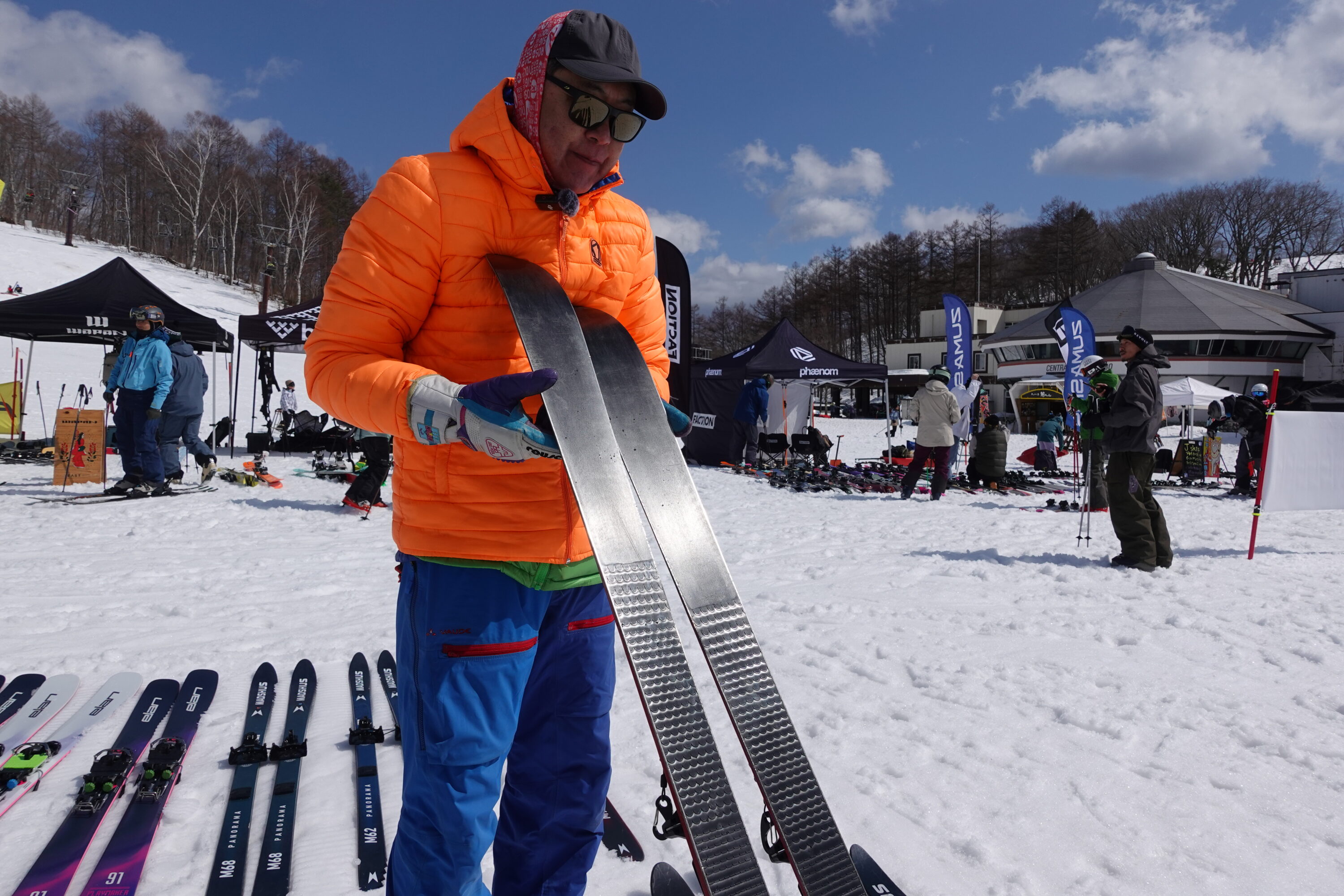
There are three types in the lineup
MADSHUS, a Norwegian company, is one of the oldest existing ski manufacturers in the world. The PANORAMA series combines the agility of cross-country skiing with the gliding performance of telemark skiing and comes in three different waist widths: a 62mm for easy walking, a 78mm suitable for multi-day tours, and a balanced 68mm in between
The "PANORAMA M68" offers a good balance between walking and skiing, featuring full-length metal edges, a moderate sidecut, and a waxless "Omnitrack" base. If we were to compare it to alpine skis, it would be positioned as an all-mountain model. It's a recommended choice for skiers who prefer skiing



Apparently, cross-country skis from a while ago had narrower waist widths (40-50mm) and were mainly used for moving on flat ground, making it difficult to change direction. However, nowadays, there are more wide models with metal edges and sidecuts
A next-generation binding system optimized for Japanese users.
Next, I'd like to introduce the latest binding system, "Xplore," which has also won the "Red Dot Award," considered one of the world's three major design awards, alongside Germany's "iF Design Award" and America's "IDEA." Developed by the renowned Norwegian company Rottefella, a leader in the backcountry cross-country skiing world, it pairs well with Madshus skis, also from Norway
The company name, which means "mouse trap" in Norwegian and originates from the founder's inspiration for the first prototype from a mousetrap, is interesting, but what's truly surprising is its lightness. The majority of the binding is made of high-strength resin, resulting in a weight comparable to or even lighter than tech bindings. It's about a quarter the weight of typical alpine bindings. A key feature is its design, tailored for Japanese skiers who tend to be smaller than their European and American counterparts, ensuring a secure, close fit to the skis even with lighter weight
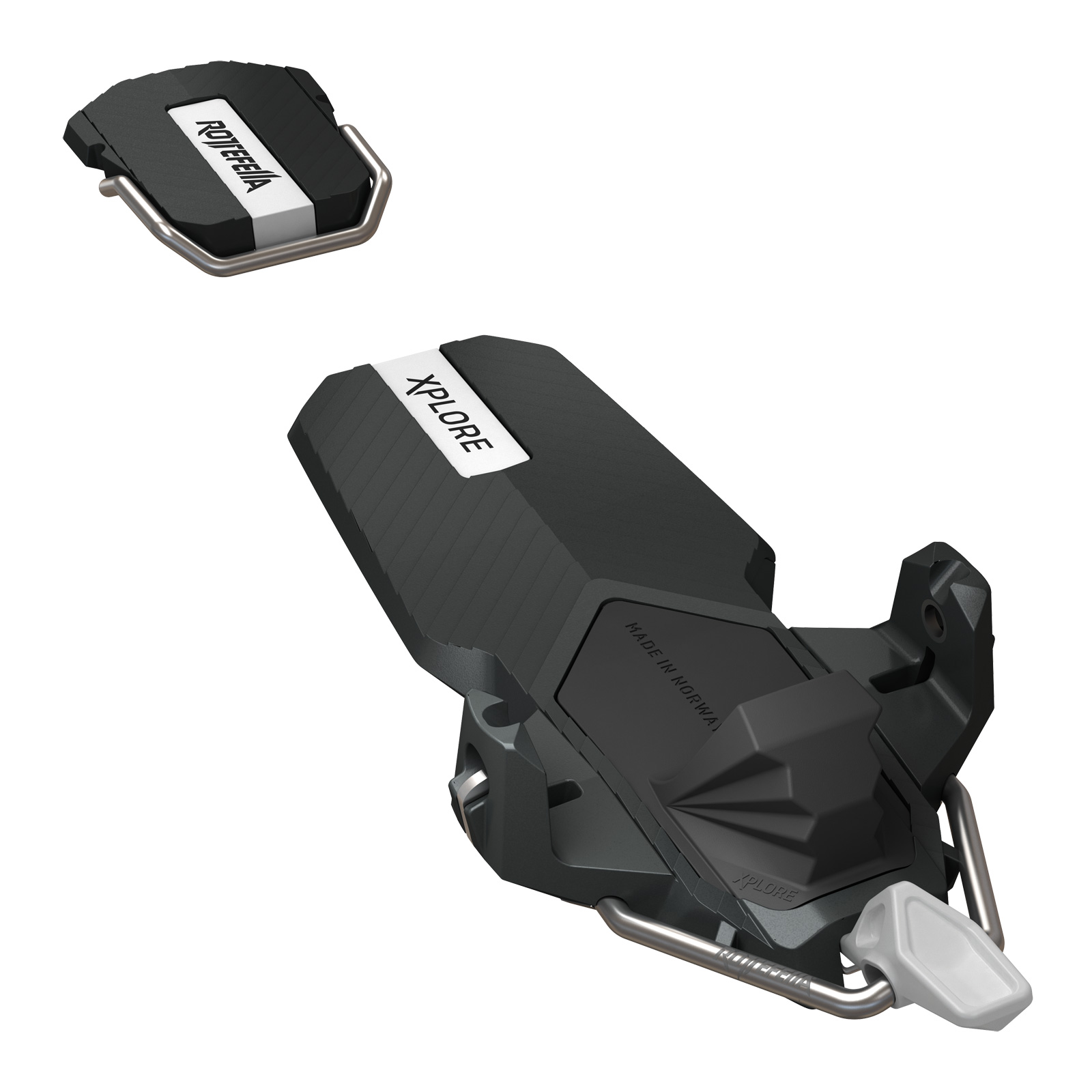
Weight: 374g
¥36,850
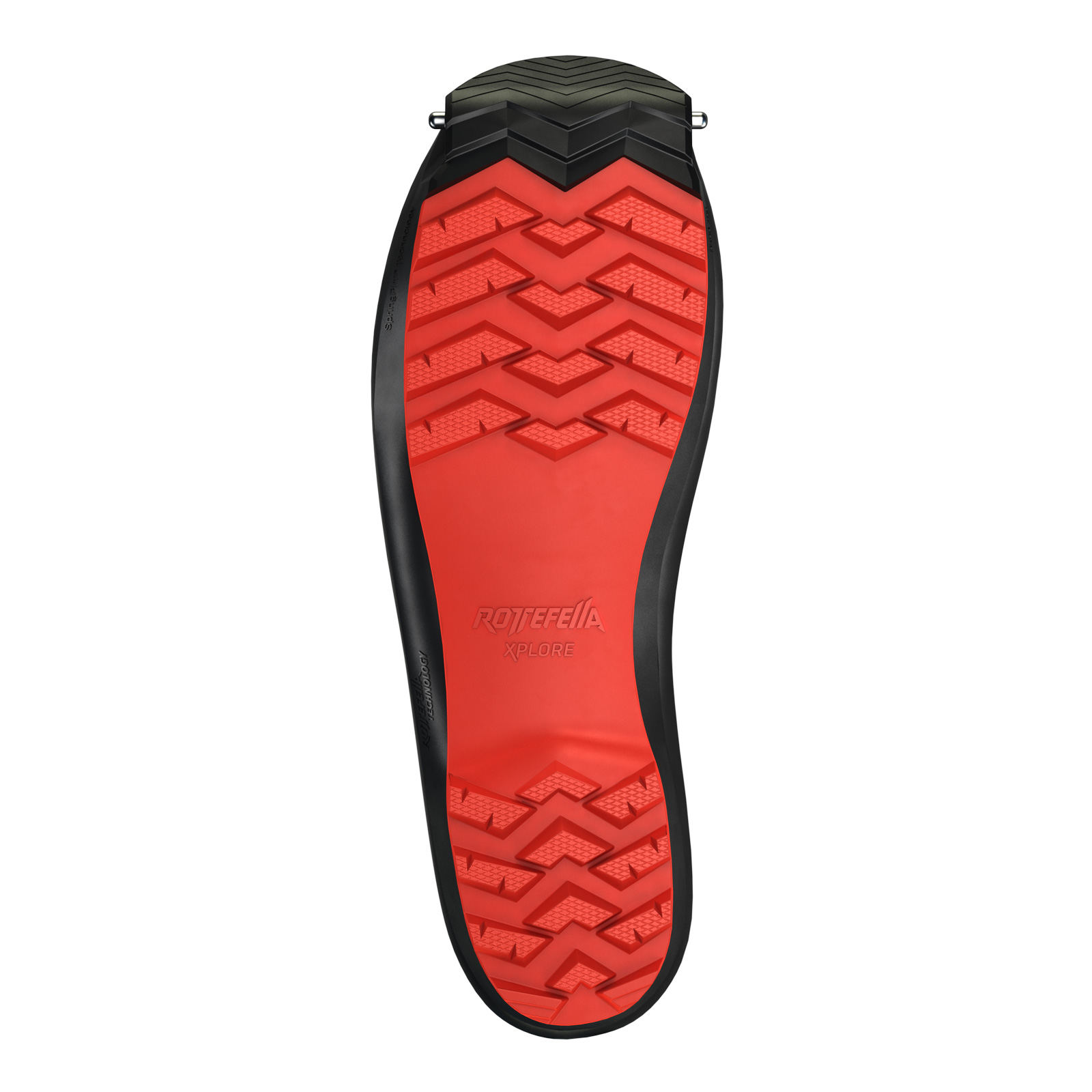
Connects via a pin at the tip
(sole image)
The "Xplore," considered the next-generation standard in the backcountry cross-country skiing world, addresses the weaknesses of previous standards, such as lateral weakness and instability on descents and in deep snow. The lightweight body has a simple structure composed of 12 main parts. The "Spring Pin Technology," which secures the pins on the boot side, prevents snow from getting stuck, and release is easy with just a push of the front lever. In addition, the "heel lifter" makes skinning uphill and long-distance travel easier, and its versatility makes it appealing not only for backcountry cross-country skiing but also for telemark skiing
Two types of optional plates
Furthermore, the toe flexor (rubber damper that adjusts resistance) is replaceable depending on the intended use. Use the hard type for gliding and the flat type for walking. Standard models come with a balanced Standard type
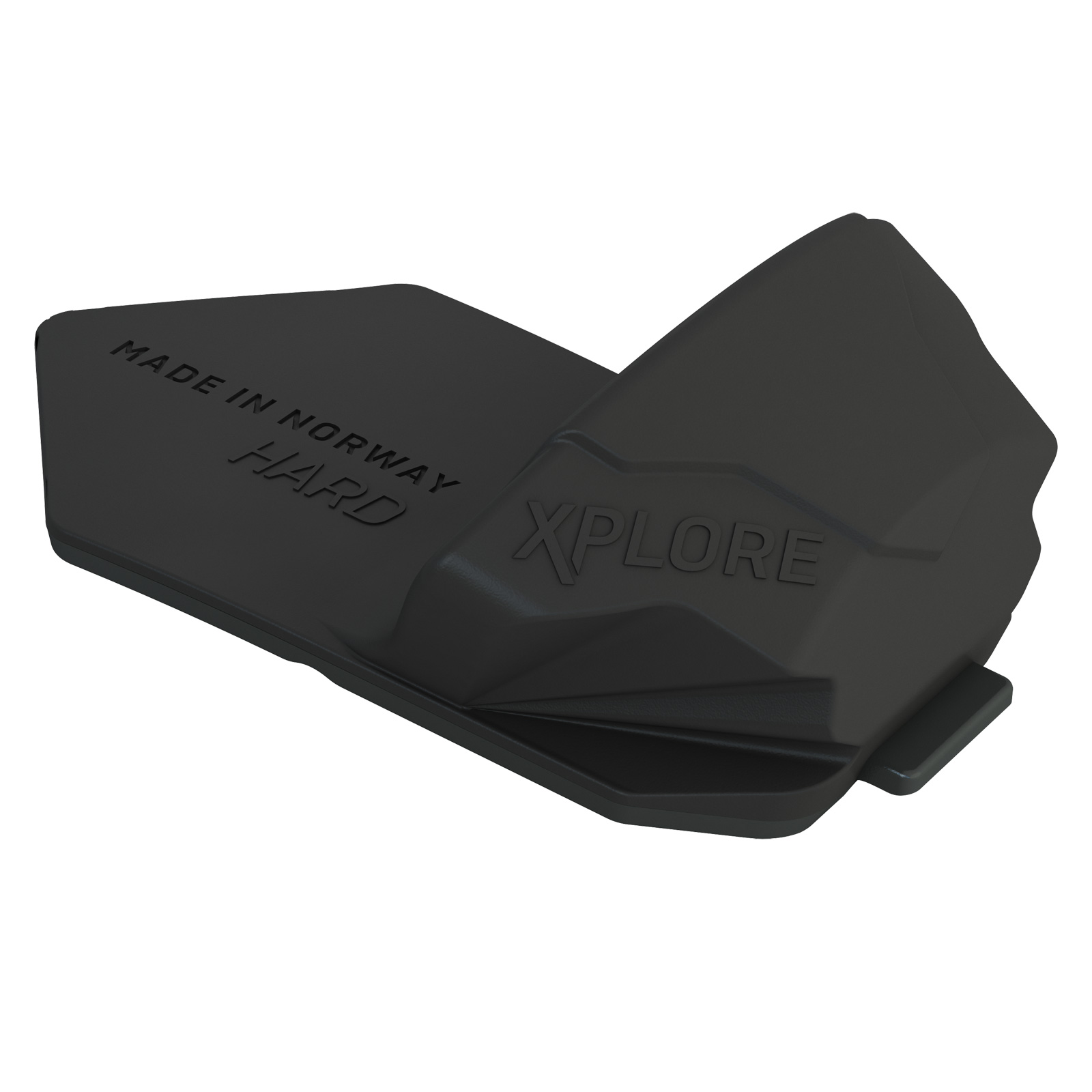
A hard type ski designed for superior skiing performance and stability.
Offers strong resistance during telemark turns.
¥1,650
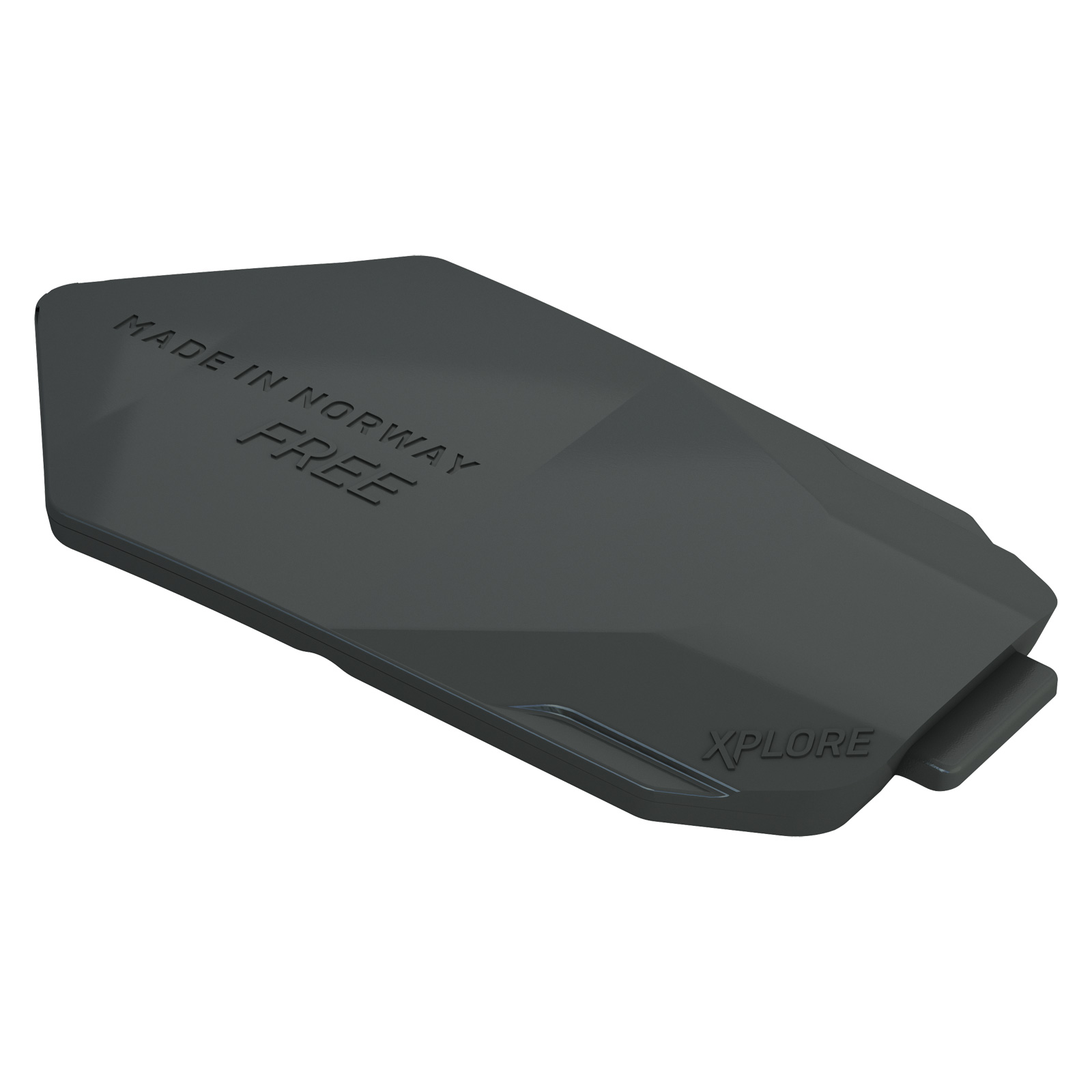
: Maximum range of motion with its free pivot function.
Ideal for steep climbs and long-distance tours.
¥1,650
Nordic bindings have evolved from the early "Super Telemark" (commonly known as the 3-pin type) which clamped the boot tip with metal fittings, to the wider "75mm standard," the lighter "NNN (New Nordic Norm)," the more rigid "NTN (New Telemark Norm)/BC," and finally to the latest "Xplore." While there are differences such as the lack of a release mechanism and the ability to perform telemark turns, the trend towards weight reduction and improved skiing performance is common to alpine bindings as well
In Japan, sales are reportedly increasing along with the growing popularity of backcountry cross-country skiing and the rise in new entrants into telemark skiing
▼Introduction by Yoshiyuki Ogawa of Miyako Sports
Exquisite craftsmanship, these are top-quality Italian leather boots
Finally, there are the CRISPI boots, which are highly regarded by world-class telemark skiers. Although they look like mountaineering boots, they are full-fledged ski boots designed for backcountry cross-country skiing. These boots, which combine leather boots finished by Italian craftsmen with the brand's unique technology, are a pair you should definitely try on and feel the quality for yourself
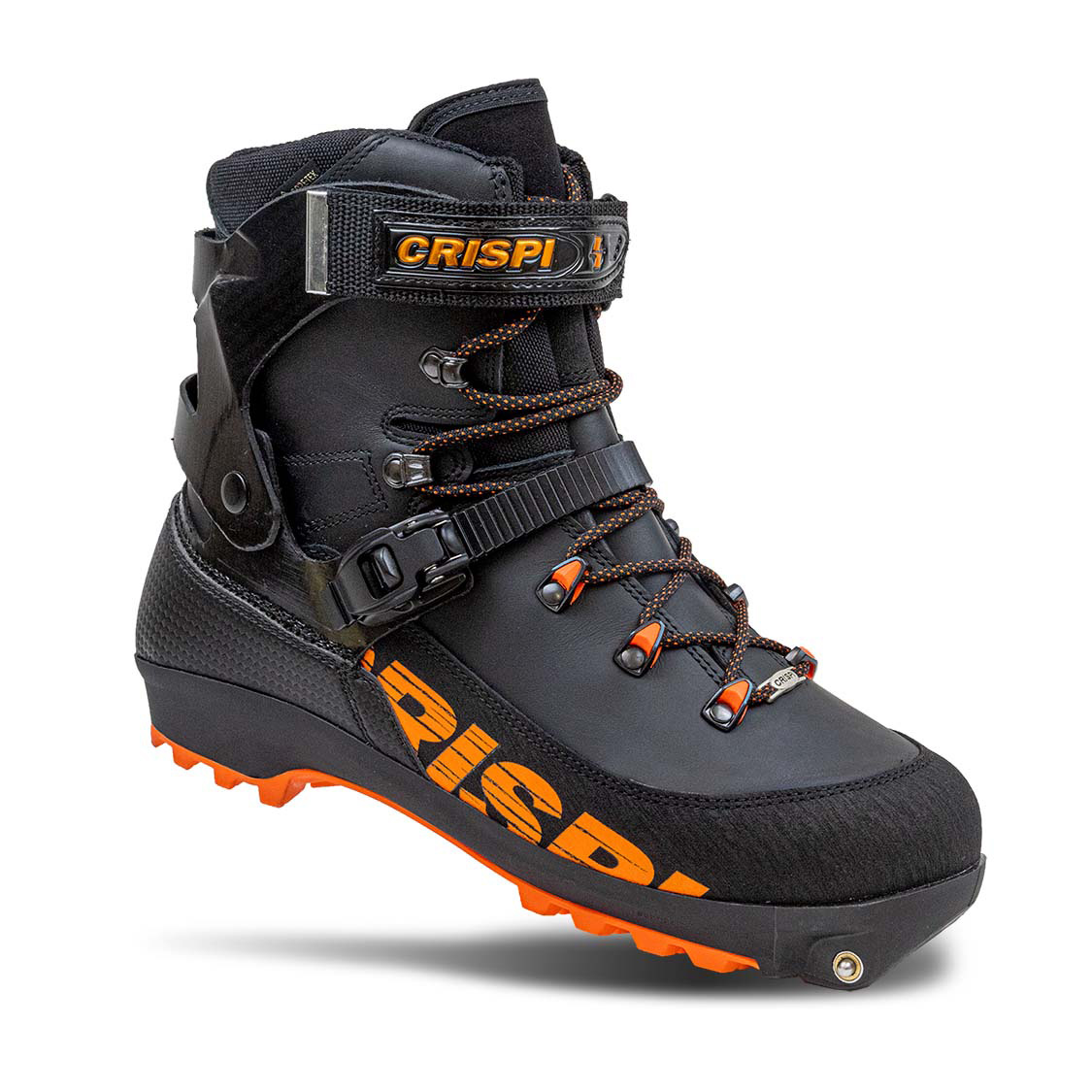
FUTURA PRO XP GTX®
These backcountry ski boots offer superior comfort and control, significantly enhancing your skiing experience. They are compatible with Rottefella's "Xplore" soles
Size: EU36-46 (approx. 23.0-29.5cm)
Flex: Medium-Soft
Weight: 950g
¥101,200

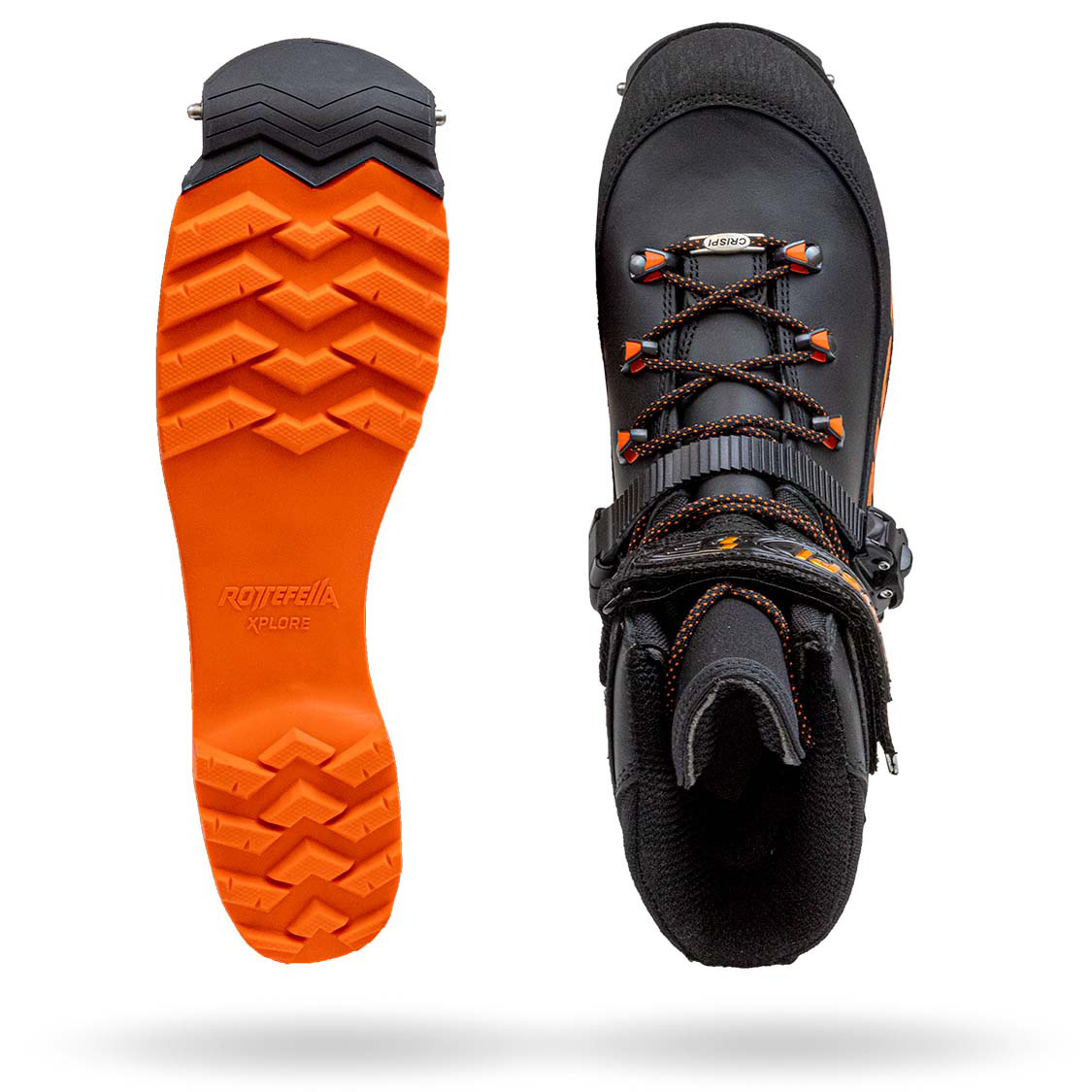
The main body uses supple, full-grain leather that conforms to the foot. While older backcountry cross-country boots sometimes gave the impression of being somewhat flimsy, recent advancements in GORE-TEX and resin reinforcement technology have greatly improved waterproofing and support performance
Featuring "Crispi® EFX BC Technology" to promote natural flexion and "Crispi® Skeleton Frame" to support the ankle, these boots offer a balance of walking comfort and skiing performance. They are lighter than telemark boots and are also suitable for the free-style backcountry cross-country skiing
Voices from "SKI DIG" participants
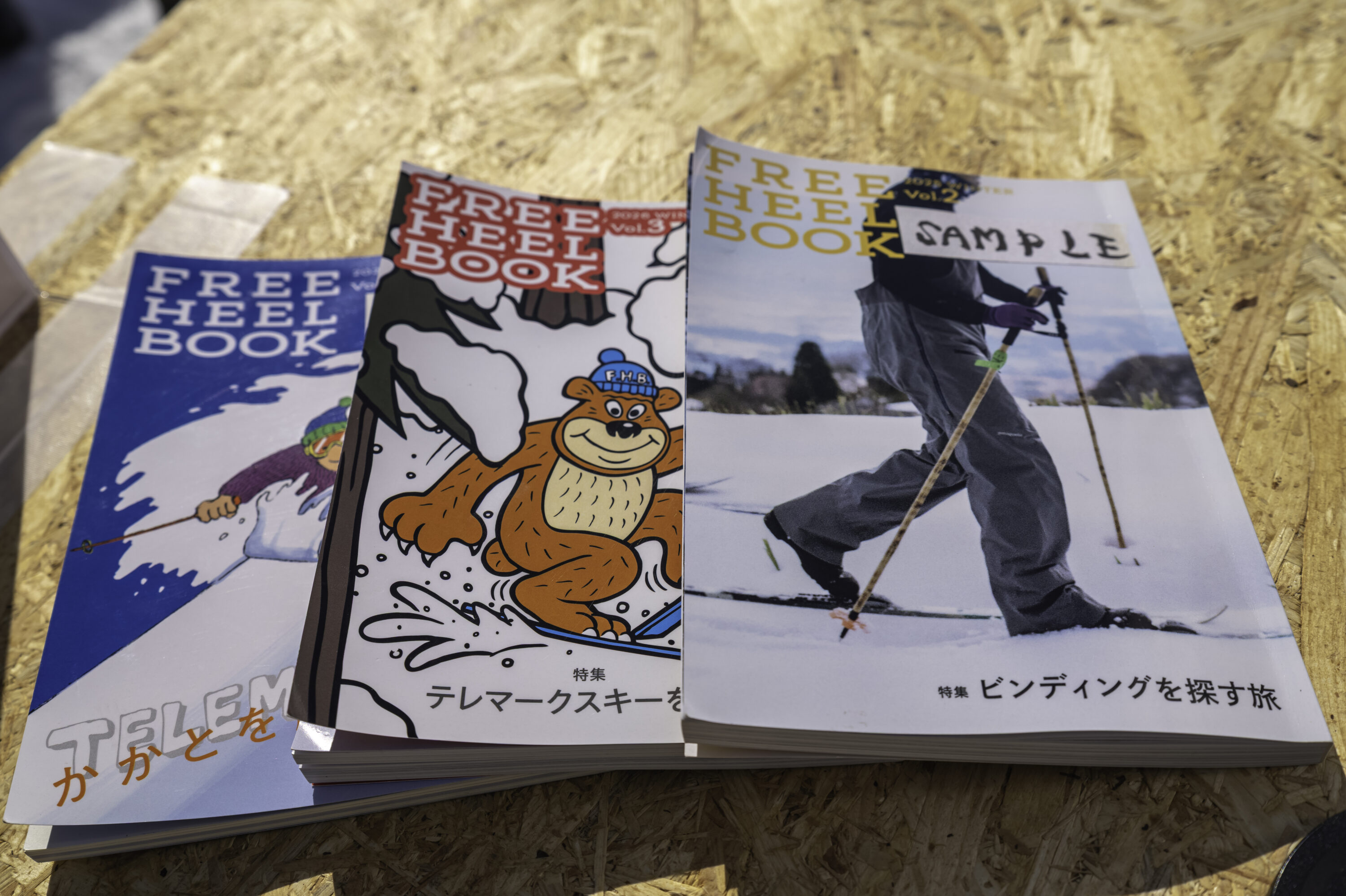
Surprisingly, many telemark skiers attended this inaugural event. Next to the reception area, there was a booth selling the original book " FREE HEEL BOOK ," which is filled with love for telemark skiing
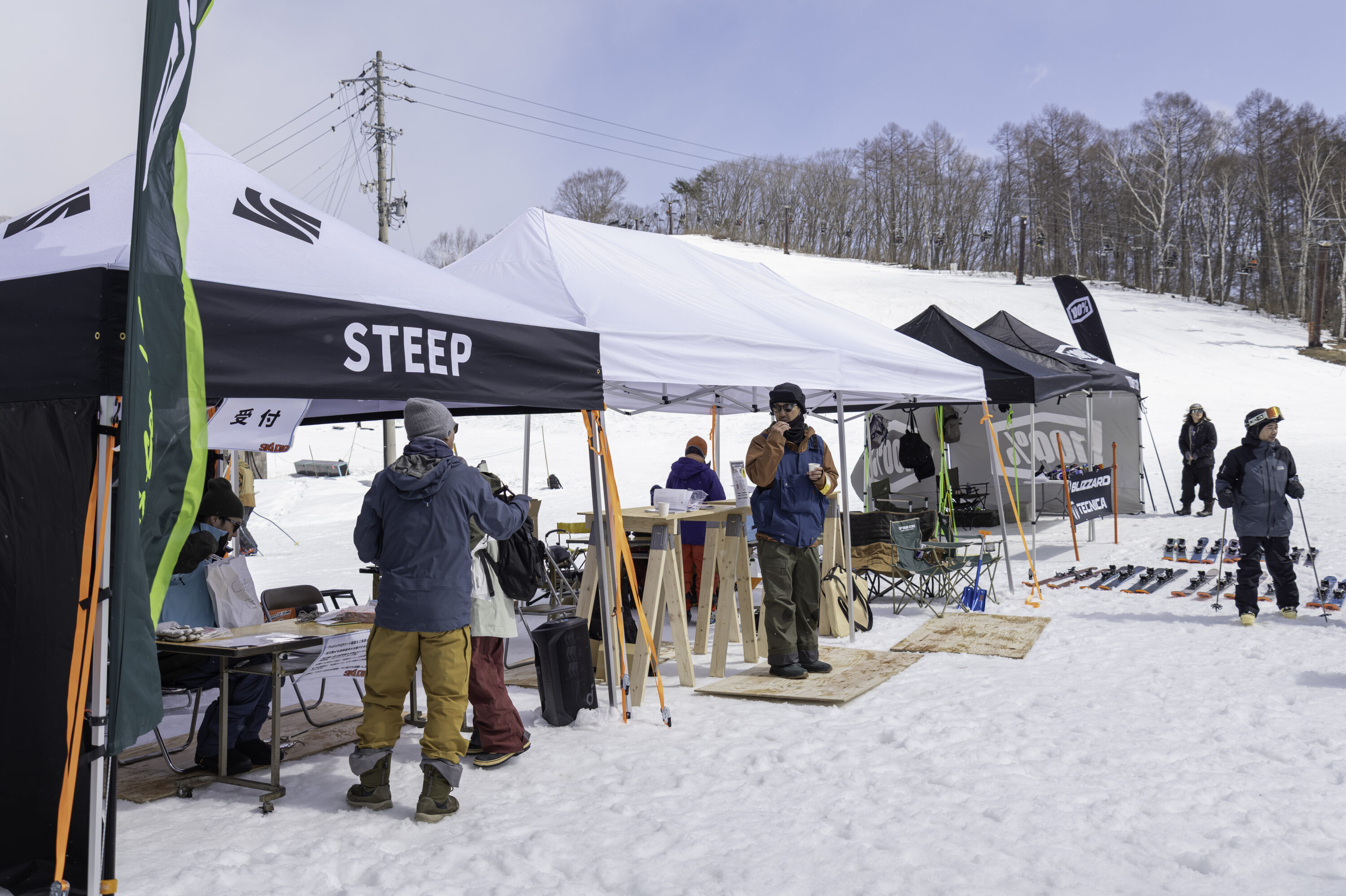
The Miyako Sports booth was bustling with activity all day long. We managed to interview a couple who were diligently trying on different boots.
They live in Iiyama City and enjoy strolling along the snowfields beside the Chikuma River. They originally enjoyed regular skiing, but became interested in backcountry cross-country skiing and other "walking skiing" activities because there were many people in their area who enjoyed it. Since then, they have been going back and forth between the world of alpine skiing and this other world.

Regarding the appeal of backcountry cross-country skiing, one person said, "There's no hassle of attaching and detaching skins, and you can wear the boots for long periods of time. The ease of being able to enjoy it like a stroll is great." On the other hand, they also said, "The scale pattern is only on the underfoot, so where you step is critical. The narrow skis that make climbing easy feel like tightrope walking when skiing down." It seems that it will help hone your positioning and sense of balance, leading to improved skills
It's not a bad idea to turn your attention to the nearby countryside and, from time to time, take a walk back to the origins of skiing
Information
Miyako Sports
Official website:https://www.miyakosports.co.jp/
SNS:Instagram