
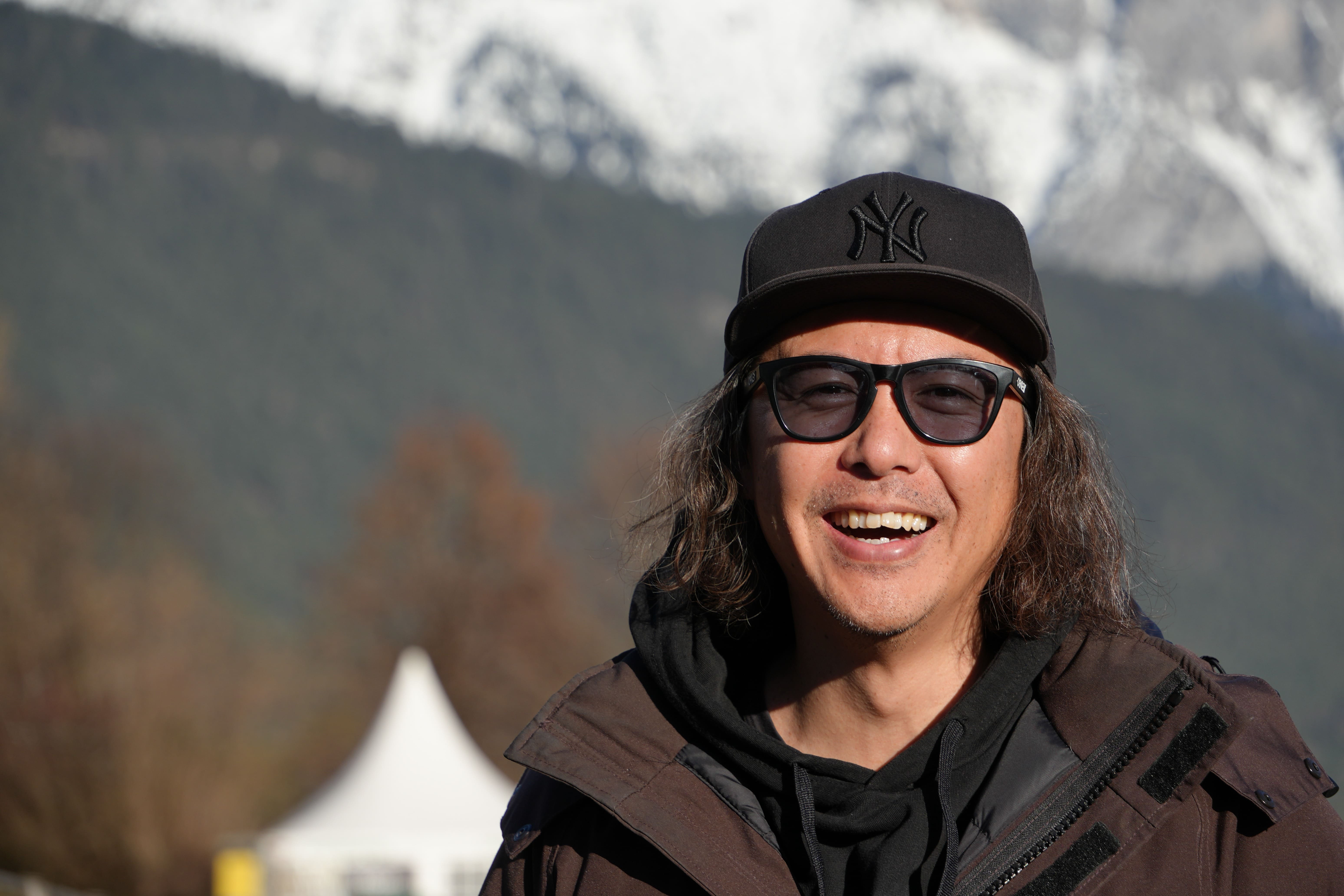

After competing in World Cup races, Kenta Uraki returned to the snow in 2018 as head coach of the All Japan Alpine Team. The following year he moved to Innsbruck, Austria, and is now the exclusive distributor of Kessle Ski in Japan. From a global perspective from overseas, he will be bringing you the latest information and interesting topics on European snow culture, gear, and technology
Records! Surprises! Happenings! The opening round of the 2024-2025 Alpine World Cup was full of buzz
With the world's attention on the event, the 2024-2025 Alpine Ski World Cup finally kicked off this season with the opening rounds of the women's GS (Giant Slalom) on Saturday, October 26th and the men's GS on Sunday, October 27th in Sölden, Austria. Let's take a closer look at what kind of races were held there and what the highlights were
A whopping 67% viewership! Over 1 million people watched the match on TV in Austria

Although attendance at this year's opening race was around 16,800 for the women's race and 17,200 for the men's race, the same as in previous years, Austria's national broadcaster ORF announced that the number of television viewers exceeded its previous record, with 622,000 viewers for the women's race (47%) and an astounding 67% viewership for the men's race, bringing the total to over one million. Considering that the viewership for the Formula One Mexican Grand Prix car race, which was broadcast on ORF on the same Sunday night as the men's race, was only 27%, it is clear just how much attention this year's Alpine World Cup attracted
In the end, the excitement was at its peak, with the return of Marcel Hirscher (Netherlands) and Lucas Pinheiro Braaten (Brazil) and new records being set in both the men's and women's races. However, an unfortunate incident occurred for the Japanese team, making this the opening race that was full of topics
In addition to the race results, we will also be shining a spotlight on other aspects of the opening race, such as the new worldview that Hirscher and Braaten brought to the alpine skiing world, and the unreasonable competition management that occurred behind the scenes of the exciting race
First, let's take a look at what happened on the day!
Here is a digest post from the German wax manufacturer "Holmenkol" about the day's events. They commented that Marcel Hirscher and Lukas Bladen were back in the race. Check out the video on Instagram
The mysterious response to Seigo Kato: Why did the FIS not allow a re-race?
The men's opening race was a memorable and exciting event, but a surprising incident occurred for the Japanese team that could not be overlooked. We will share the details of what happened so far, including information from the men's chief coach Kyosuke Kawano and Seigo Kato (Nozawa Onsen SC) himself.
In the men's giant slalom, 74 athletes started the first run, and the third to last to start was Seigo Kato, the ace of the Japanese team.
He passed the first checkpoint in 28th place with a good time, and was about to enter the second checkpoint when a member of the Austrian team wearing blue uniforms (later discovered to be Herbert Mandl, the Austrian Ski Federation's Alpine Director, who oversees all alpine events) slipped on the course, and Seigo stepped off the course to avoid him. According to the rules, in such cases the race would be restarted immediately, so the jury would make arrangements for the restart, and the athletes would act according to their instructions
However, Markus Waldner, the World Cup race director, informed Seigo that the decision was to overturn the FIS rule (ICR 623 / Rules and Regulations Regarding Re-races) that there would be no re-race. Naturally, the Japanese team lodged a strong protest with Waldner, but the decision could not be reversed. Waldner reportedly told the Japanese team that "delays in the race will affect television broadcasts and could result in significant financial losses."
Discussions between the Japanese Alpine team and the FIS have continued since then, but the response so far has been to "impose a penalty on the Austrian team in the form of a fine and send that money to Kato." However, that is not the real issue. It was Austria's Mandl who actually caused the obstruction, but if a re-race had been held, an apology from Mandl would have sufficed.
The problem is that the FIS was not adequately prepared to hold a re-race.
In fact, for that day's race, the usual starting interval would be 45 seconds from the 30th rider onwards, but the race was run with an unusual arrangement where the interval was 1 minute and 25 seconds up to the 41st rider, Braten. As a result, the race was running behind schedule. Despite acknowledging such arrangements, it appears that the procedures for dealing with problems when they arose were not adequately discussed. In any case, the discussion should have started with the FIS admitting their fault and apologizing to Seigo Kato and the Japanese team.
Seigo Kato was obstructed on the course
Seigo himself has now shifted his focus to the next race, rather than lamenting the time that will never come back. However, the Japanese team and the Ski Association of Japan cannot let this end like this. Naturally, they intend to continue fighting until they receive a clear response from FIS. This matter has become a hot topic among many athletes, and action is being taken. Voices, mainly from athletes representing small nations, have reached FIS directly, and it will be interesting to see what kind of response they will receive. For athletes who devote their limited careers to competing wholeheartedly, FIS's unreasonable response, such as this, must never be tolerated
The women's team broke the record for the oldest winner!
The women's Grand Slam was a much talked about race, as the favorite to win, Lara Gut-Behrami (Switzerland), withdrew from the race just before the race due to lack of preparation. However, in the end, Federica Brignone (Italy) broke the record for the oldest woman to win a World Cup race, making it a historic event
▼Posted by Alice Robinson (left) from New Zealand, who won second place, Federica Brignone (center) and Julia Scheib (right) from Austria
Brignone has now won 27 World Cup races. At the age of 34 years, 3 months and 12 days, he came from third place in the first run to win the race in Sölden for his 28th victory. He also won his first World Cup race in Sölden in 2015 at the age of 25, so this victory at a place that holds many memories for him, his first in nine years, now comes with the added bonus of a major record. Incidentally, the oldest male winner was Didier Cuche (Switzerland), who achieved this at the age of 37 in the downhill race at Lake Louise (Canada) in 2011
Norway sweeps the men's podium for the first time!
The following day, a major record was set in the men's race. With the absolute favorite, Marco Odamatt (Switzerland), going off course in the first run, the race was expected to be a close contest, but in the end, Norway swept the podium, taking first, second, and third place. This was the first time this had happened in the men's giant slalom event. The winner, 23-year-old Alexander Steen Olsen, was his second World Cup victory.
Second place went to Henrik Christoversen, who was on the podium for the 87th time in his career, and third place went to 24-year-old Atre Lie McGrath, just a hundredth of a second behind Christoversen. Incidentally, fourth place went to Lucas Pin Halo Braten, who was on the Norwegian team until last year and is competing for Brazil this season.
▼Posted by second place winner Henrik Christophersen (left)
The Norwegian men's team has consistently produced top athletes in the Alpine World Cup. While the now-retired Aksel Lund Svindal and injured Alexander Åmodt Kilde have both competed for the overall title, the team is also developing young, unique athletes. Norway's training system, which boasts organizational strength superior to that of the skiing powerhouses Switzerland and Austria, could be a model for sports teams not only in Japan but around the world
Marcel Hirscher delivers results in his return after six seasons!
Marcel Hirscher, who achieved an unprecedented eight consecutive overall victories in the Alpine World Cup by the 2018-19 season and retired at the end of that year, decided to make a comeback in the 2024-25 season after a six-season hiatus, having changed his nationality from Austria to the Netherlands, his mother's home country. However, reports of him struggling with summer training and adjusting his equipment have led to criticism that his return to the World Cup is merely a publicity stunt for his own ski brand, "VAN DEER RedBull Sports."
Amidst this situation, the FIS (International Ski Federation) announced a rule change that would be a boon for Hirscher. This was the "wild card" rule (details of the rule are described in the previous column). Known by those involved as the Hirscher rule, it is an unprecedented special rule that was made for Hirscher, making it easier for past superstars to return to racing. In addition to World Cup qualification, it grants a favorable starting position even if no points are earned.
Even after the wild card was decided, it remained uncertain whether Hirscher would participate in the race due to insufficient preparation, but with less than a week until the race, he announced that he would participate in the opening race. Due to the negative media coverage up to that point, and the fact that Hirscher himself had not decided whether to participate until just before the race, expectations among those involved had waned, and most predicted that it would be difficult for him to qualify for the second run by finishing in the top 30 in the first run.
Having earned a wildcard entry and the right to ski immediately after the top 30 seeded players in the opening round, Hirscher actually started 34th, behind three other skiers with over 500 World Cup points. Due to the high temperature, the ice-covered course was slightly rutted, but not too difficult to ski.
In these conditions, he displayed remarkable stability and aggressive skiing, befitting his return to the World Cup after six seasons, and finished 28th, just 2.29 seconds behind the leader. Then came the second run, where he was the third to start. On a smooth course, he finished with a powerful and technical run that showed almost no signs of decline from six years ago, and in the end, he had the third fastest time in the second run! His total time placed him 23rd. He achieved a result far better than anyone had expected.
Indeed, Hirscher's return may have been primarily for the purpose of promoting his own brand. Whatever the reason, his performance and results, which showed no signs of a long break from skiing, surprised the tournament organizers, all the participating athletes, and ski fans around the world, and it goes without saying that it provided the best possible brand appeal.
A photo of Hirscher with a big smile that he posted on his Instagram has been striking.
It has received 73,000 "likes," and there have been countless warm comments from fans who are happy about the superhero's return, such as, "You are a man with a true vision and you are contributing to redefining sports, industries, and ways of life," and "I knew you could do it. From now on, it's all for the fun. For you and for us. We missed you, Marcel." His
next race is the slalom opening race in Levi, Finland. Hirscher is also training hard for this race.
▼Posted by the player himself while training in Sölden in preparation for the opening match
The special presence of Lucas Pinheiro Braaten
Lucas Pinhelo Braten (Brazil), who won the slalom event as a Norwegian representative in the 22-23 season at the young age of 22, announced his retirement just before the start of last season, when fans were expecting him to win the overall title. (Details are in the previous column.)
This year, however, he announced his return to the World Cup, having changed his nationality from Norway to Brazil, his mother's home country. This also surprised many, and this opening race marked his return after about a year and a half.
Having been away from racing for an entire season, his starting position was lower, and he started 41st in the opening race in Sölden. However, as most people expected, he showed no signs of decline in his skiing, and in the first run, he was in a good position, 19th place, just 1.68 seconds behind his former teammate Steen Olsen. In the second run, he showed a perfect run full of confidence, setting the fastest time overall, and as a result, he finished in 4th place, a perfect comeback race that he was very satisfied with. The title of her Instagram post was "I'M BACK HOME BABY💚".
Braten's results alone are noteworthy, but more than that, he exudes a unique presence unlike anyone else. This time, too, he entertained not only the crowd at the stadium but also television viewers around the world with a dance reminiscent of Brazilian samba immediately after scoring his second goal.
(The following is a post from his Instagram)
Many of the skiers who came down after him were unable to surpass Braten, and the first to finish ahead of him was his former teammate and close friend, Atle Lie McGrath, who finished 5th in the first run. Immediately after crossing the finish line, McGrath pointed at Braten with a smile from the finish area, and Braten also jumped into the finish area with a big smile, congratulating McGrath on his great run, and the two shared a firm hug. I'm sure I wasn't the only one who could see the bond between the two and the time and effort they had spent together up to that point in that exchange.
Braten was shown on the TV screen in front of the leaderboard for a long time after crossing the finish line in the second run, so I think many people noticed that his head sponsor was "Red Bull," and his racing suit was from "Moncler," a brand that has grown into a global luxury brand with down jackets and other products.
Starting this season, Moncler will essentially be supporting the Brazilian team, with Braaten as the sole member, but the fact that a fashion giant has entered the alpine skiing market is newsworthy in itself, and this new brand's entry into the alpine skiing market would not have been possible without Braaten
Braaten describes herself as an athlete, artist, and pioneer. In addition to her talent, she is more than just an athlete; she stands out from the crowd with her unique presence, combining an artistic worldview and pioneering spirit. There was a lot of footage of young women watching the race on-site, and it's easy to imagine that many of them were Braaten fans
Not only as a skier, but also as a person, how much will he grow and entertain those around him? It will be fascinating to see what Braaten does next, not only on the snow, but also off the ice, and it looks like he'll make an impact in other areas too. His registered name, Lucas Pinheiro Braaten, is the name he has used since his transfer this season. He originally competed under the name Lucas Braaten, but after moving to Brazil he added his mother's maiden name, Pinheiro
I can't wait to watch! The opening slalom race at Levi
The next race will be the opening round of the slalom competition in Levi, Finland. The women's race is scheduled for Saturday, November 16th, and the men's race is scheduled for Sunday, November 17th
* Click here for more information about LEVI's SL opening race.
In the women's competition, the main question is whether Mikaela Shiffrin (USA), who has extended her record for most World Cup victories to 97, will reach 100 wins this season. In
the men's competition, Manuel Völler (Austria), who won four slalom events last season and secured his first individual title, and Linus Strasser (Germany), who came in second in the individual event and narrowly missed out on the title, seem to have a slight advantage, but it's a close race where anyone could win. In addition, Hirscher, who won the individual event title in the 2018/19 season before his retirement, and Braten, who won the individual event title two years ago, are also likely to participate, making it an exciting race for spectators.
Manuel Ferrer's Instagram post of his skating at the opening round in Sölden
The Japanese team will have Maeda Chisaki (Murase Gumi Co., Ltd.) and Watanabe Airi (Tokai University) competing in the women's slalom, while the men's slalom will feature Kato Seigo, Koyama Yohei (Benefit One Ski Club), Yohei's younger brother Koyama Takayuki (Izumi Sangyo Co., Ltd. SC), who will be competing in his first World Cup, and Katayama Ryoma (Tokai University), who will be competing in his second World Cup after his first appearance in Selden
Yohei Koyama placed 8th in the World Cup at Madonna di Campiglio in December 2021. He needs to break the bad streak of the past two seasons, in which he hasn't achieved any notable results, and get off to a good start. The Levy course has a series of gentle slopes right after the start, which he struggles with, so how close he can get to the leaders there will be the deciding factor.
And Seigo Kato, who suffered misfortune this time, also placed 23rd in the slalom in his first run at Wengen last year, starting from 51st place. Although he made a mistake in his second run, he has considerable talent in slalom as well. We hope he will use the humiliation he suffered at Sölden as motivation to deliver a superb performance.
Information
◆In Japan, the sports channel J SPORTS will broadcast/stream all men's SL and GS races, as well as notable DH and SG races, and a digest of the women's SL. The opening men's slalom race, to be held in Levi, Finland, will be broadcast live from 17:45 Japan time on Sunday, November 17th
The "Pre-Opening Race Information" article, published a week before the opening race, received a great response, and we would like to thank everyone who shared it on social media and blogs.
▼Click here for the previous article
